Register for an account and never miss a forecast again!
North Coast
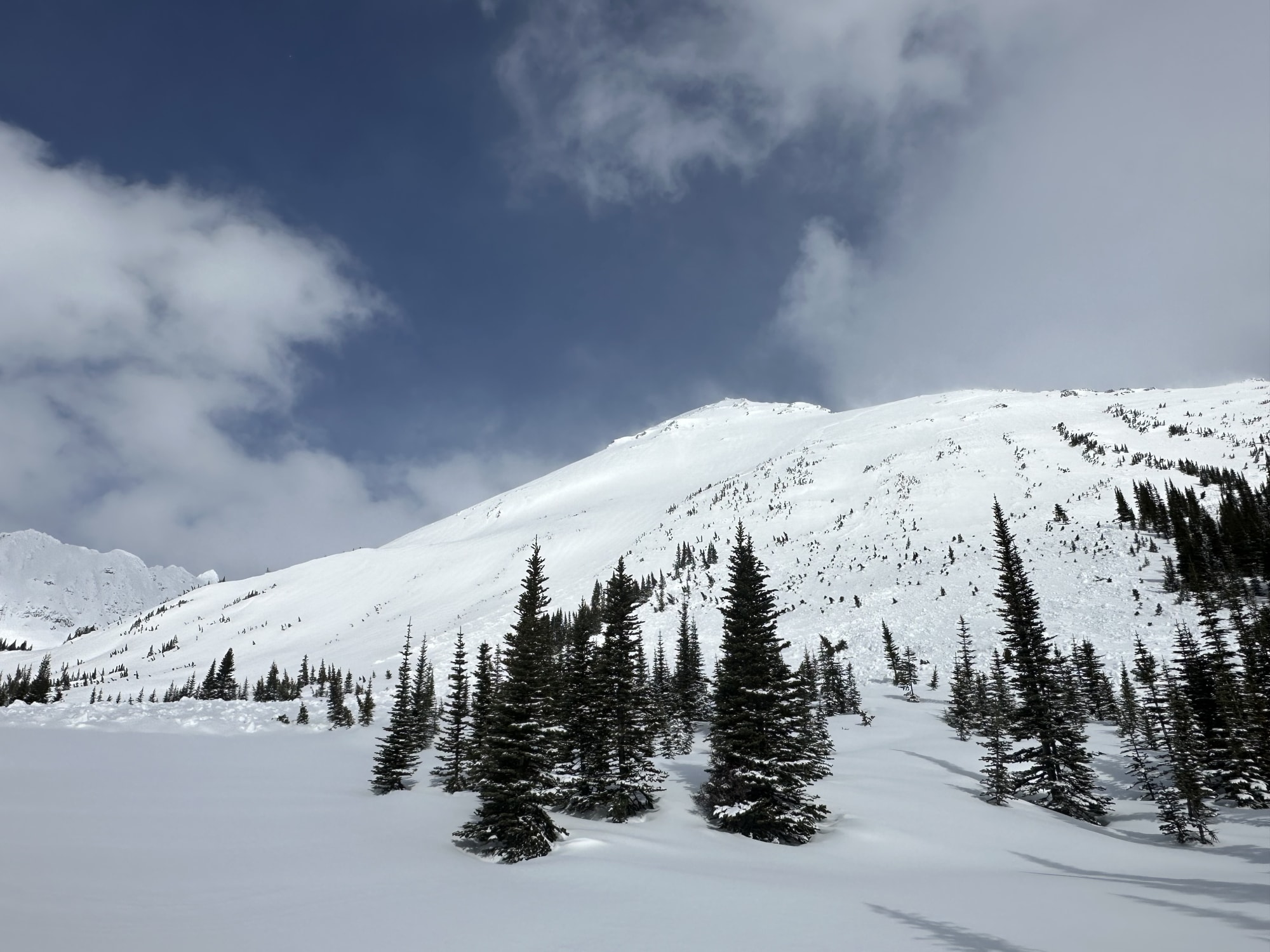
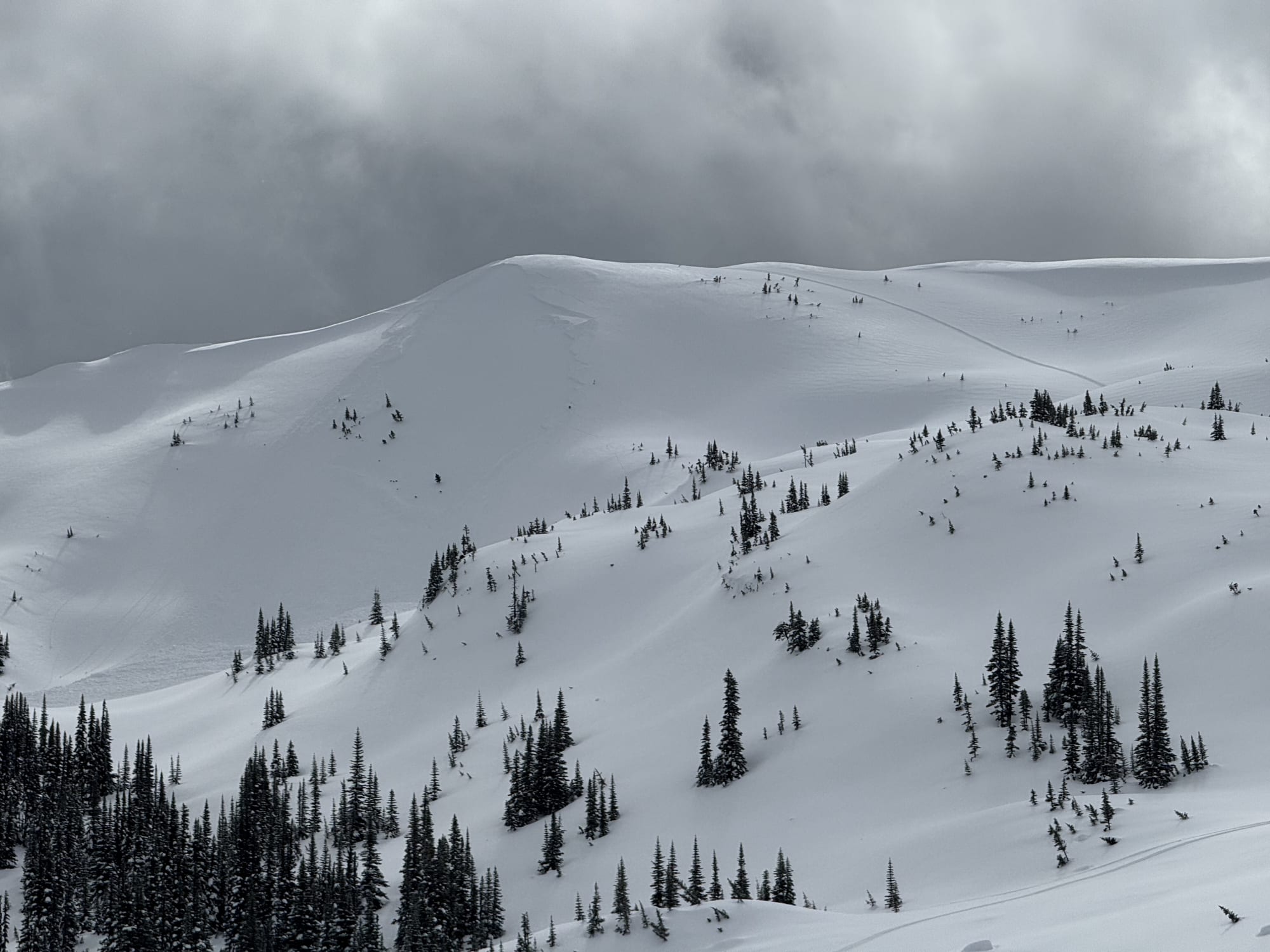
April 14, 2022 Comeau to Blue Lks alpine conditions were overall covered with a 5cm freshly wind deposited soft slab reactive to skier traffic, gliding over the most recent windslab, which is about 40cm thick overlying the buried crust surface below. Observed only 1 natural 0.5 soft slab in action with boot top crown thickness originating at a convex roll, triggered by constant wind loading on northerly ridgetop elevation. Approaching storm generated on average 30km/hr wind in PM with strong gusts up to 50-70km/hr. Great overall travel condition up & down, no ski crampons needed, from ridge top to lower blue lks elevation. No whumphing, settlements, or shoot cracks observed, just the 5cm of sluff management on steep slopes as well as un-ran start zones to be cautious of.
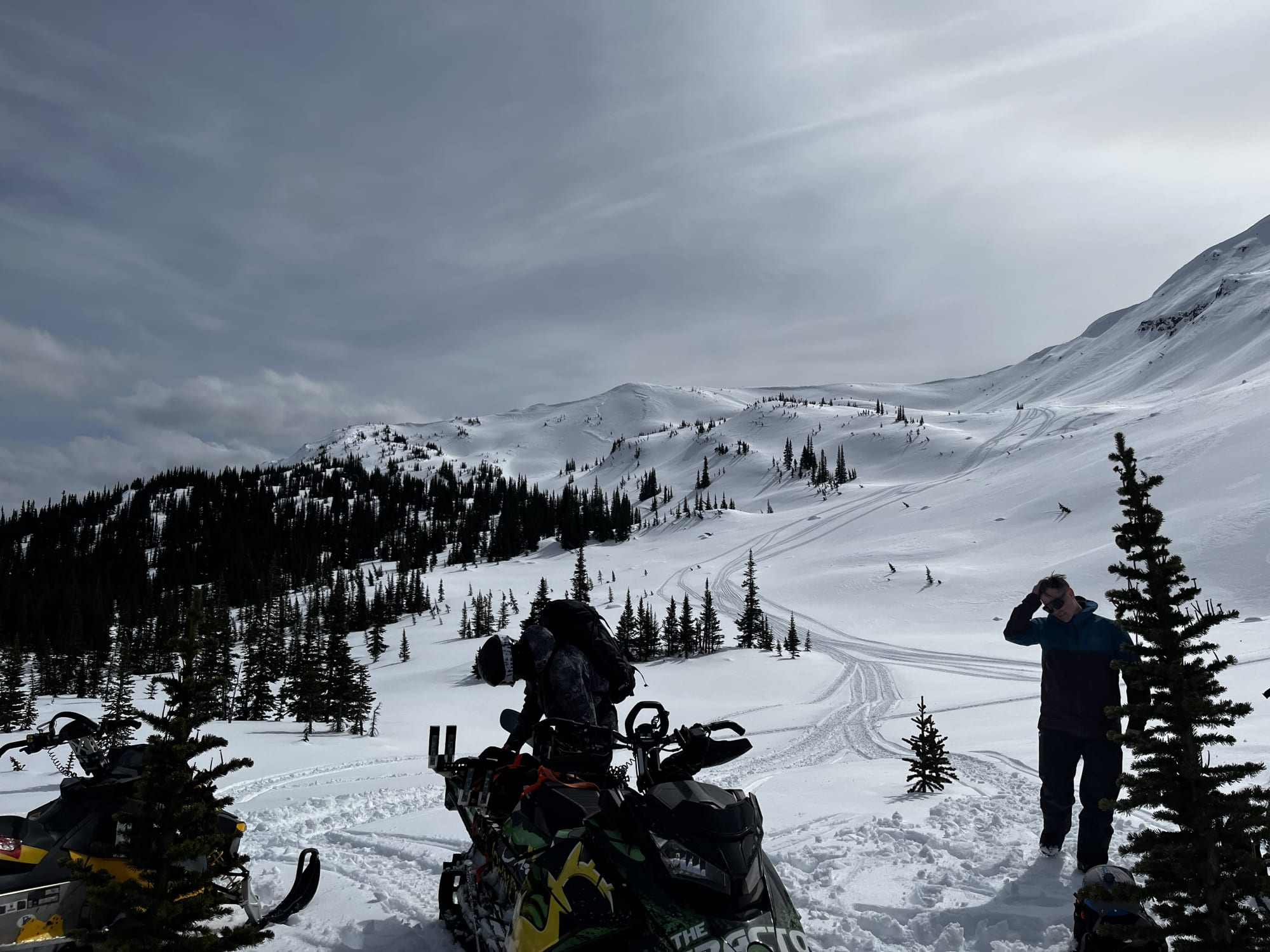
Today we sled-skied in the Blunt Range. We had clear skies with a light westerly breeze at ridgecrest. Alpine temperatures are still below freezing. We skied a west facing slope and found good skiing conditions with 5 - 10 cm of cold snow over firm older surfaces, all the way down into the trees at 1300m. We didn't see any new avalanches. Cornices are large right now so we made sure to avoid these, travelling well back from ridgelines and not travelling underneath slopes with overhead cornice hazard.
Found amazing winter cold dry mid boot ski pen powder at the east boulder basin on all northerly aspect, on April 2nd! Decent snowpack coverage throughout compared to other low snow years below treeline. Alpine is still getting the wind so expect windward slopes to be extra wind affected/firm in the alpine and possible windslab & cornices building lee slopes. Zero signs of instability throughout the day on northerly aspect. New snow seems to bond well to the underlying firm surfaces. Avoided all south facing slope getting baked (sun crust forming below treeline) and observed some new snow avalanched in form of wet heavy goo, with southerly start zones in mid alpine originating from point releases. Enjoy the snow & blue bird!
Today we sledded at Seaton Basin. We had partly sunny skies with light southwesterly winds. We saw several new size 1-1.5 loose dry avalanches from steep alpine features. We didn’t see any other new avalanches. We saw one older size 2 wind slab from a steep, rocky, alpine northeast facing slope. The avalanche may have occurred in the last storm cycle. We dug on a north facing slope at 1600 m and found 180 cm total snow depth. There are several crusts in the middle and lower snowpack, but we got no significant test results at all. We did multiple Extended Column Tests with no results. There is 70 cm of faceted snow near the ground which we are monitoring. At the surface there is 10 cm of powder snow, or some areas that are wind affected from previous moderate northwesterly and southwesterly winds.
Today we rode at Harold Price. The recent snow and cold temps have been preserving snow in sheltered areas and making for great riding conditions at tree line and below. We ventured into the alpine and found hard wind slab on all aspects, although some sheltered places provided good riding quality. The recent wind and new snow have formed massive cornices as you will see in the attached photos. these cornices have been failing and producing avalanches on the slopes below them. We observed a size 2.5 and two size 1.5 avalanches on a north east slope at 1700m that were all triggered by cornice fall.
It was a cold, clear, sunny day up at Mount Seaton today. The trail in to the meadow is in good condition, with not too large of whoops. As we got into the meadows, we found there was evidence of wind effect that had filled the previous sledders tracks, but the snow was still quite soft for riding. When we headed further up into the bowl, we saw multiple large wind slab avalanches (size 2-2.5) that appeared to be 72 hours old on all aspects in the alpine. While there was still excellent riding to be found in sheltered areas, we stayed out of the exposed treeline and alpine due to the likelihood of wind slabs still existing and the likely poor riding conditions from the wind effected and stiff snow. In our snowpack tests in a relatively sheltered area just above the meadow we did not find any results.
Today we went sledding at Seaton Basin. It was deeeeeeeep. We saw 2 size 2 storm slab avalanches at treeline on North and Northeast facing slopes. These avalanches were 50 - 80 cm deep. We also saw cracking 30 cm deep in front of our feet when we stepped off the sleds on a small test slope at treeline. There is up to 80 cm of new snow over the Jan 25 rain crust. We avoided avalanche terrain today and made sure to stay within sight as we wanted to avoid triggering storm slab avalanches, as well as other hazards like snow immersion and treewells. We dug on a north facing slope at 1400m and found 30 cm of storm slab that failed very easily in a Compression Test (while cutting out the column). The block also failed 55 cm deep on another storm layer with easy taps (CT E 9 RP down 55 cm). Sleds were penetrating 80 - 100 cm into all the new snow and boot penetration was about 50 cm. There was continued snow throughout the day, light southerly winds and poor visibility.
Today we rode at Seaton. There was up 30 cm of new snow over the rain crust from the warm weather last week. The rain crust was unsupportive to snowmobiles and we could barely feel it while riding. We dug on North West and East facing aspects. In both pits we were able to produce easy results on the Jan 5th layer down 35cm's. We were able to produce one size 1 avalanche by walking over a 35 degree slope. Other than this we did not notice any other recent avalanches but the visibility was poor.
Today we went sledding at Seaton Basin. We saw no new avalanches, but visibility into the alpine was poor. At treeline, we found 200 cm of snow on a northeast facing slope. We dug on this slope and were able to produce propagating Extended Column Test (ECT) results 50 cm deep. Moderate southerly winds were transporting snow at ridgecrest and forming new wind slabs.
Today we found a thin, weak snowpack at 9 mile. We Dug at 1500m and had 120cm's of snow. The Jan 5th surface hoar/ facet layer was down 20 cm's from the snow surface. We observed small surface hoar and facets on this layer but produced no results during compression tests. The Dec 23rd surface hoar/facet layer was down 55cm's. Below this size 3-5mm facets dominated the bottom of the snowpack.
Dry loose avalanche on north aspect within 24 hours. 5-10cm fresh snow over yesterdays tracks with moderate transport on alpine ridge
Today we went sledding at Seaton Basin. The wind has effected both alpine and treeline slopes. At ridgecrest, many areas are stripped back to rock. There is evidence of wind from all directions with reverse and cross loading patterns. Today, winds were moderate to strong from the NW and were transporting remaining snow. We saw one older size 2 wind slab avalanche on a SE aspect at 1900m from steep rock bands, but otherwise no new avalanche activity. We dug on a SE aspect at 1700m and found 35cm of wind slab overlying older, softer snow. The slab failed easily during a Compression Test (CT) (CT E 3 RP down 35cm). We did not find any layers of note deeper in the snowpack. Total snow depth here was 200cm, but this is highly variable. The day was windy but warm, with an inversion producing 0 degree temps around 1500m.
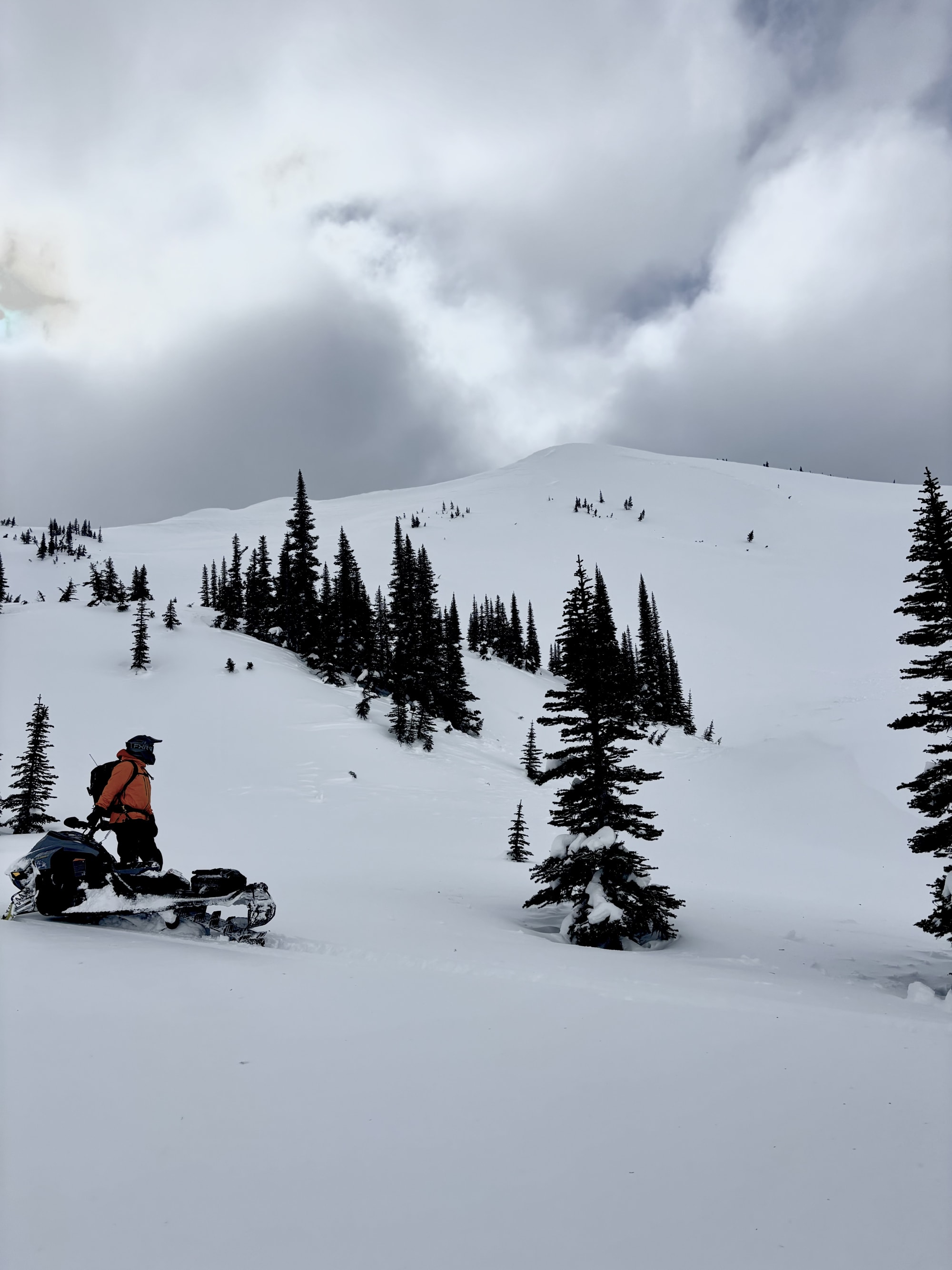
Today we went sledding at Harold Price. We found amazing powder in all the sheltered meadows. We didn’t see any new avalanches or signs of instability (like cracking or whumpfing). At treeline there is 50cm+ of unconsolidated snow available for transport. In the alpine, there is some previous wind affect at the surface, but in general about 20cm of soft snow at the surface available for transport. We didn’t find any layers of note within the snowpack. The total height of snow is variable but about 100cm at treeline.
Today we rode in Seaton basin meadows, riding quality was excellent at treeline. We observed the alpine and saw no new avalanches but strong to extreme winds over the previous days have scoured alpine slopes. Today there were light winds through the day and trace amounts of precip We dug a snow pit at 1500M on a SE aspect. A layer of small facets down 30 cm was producing Moderate to Hard sudden planner results in compression tests, but was not propagating during extended column tests. We will be keeping track of this facet layer but are not overly concerned for the time being.
Skiing was good in sheltered snow, crust on wind effected slopes. 0-10cm ski penetration. Came across a number of glide cracks which don't appear to be too old. 3-4 crowns on steep east facing slows which appeared to be a couple days old with just a light dust on a debris fields.
Snow pack depth was very variable with lots of exposed rock on steep terrain and up to ~70cm near tree line on northeast aspects. Snow varied between faceted and wind pressed snow. A hand shear test at 1650m produced no distinct results and showed no defined layers in the snowpack (with facets making up the whole snowpack depth). No noticeable/defined crust at any observation points. Large hoar frost was observed below tree line along roads and in cut blocks, hoar frost was not observed in dense trees or above tree line. Ski quality was surprisingly good on northeast aspects and in sheltered trees where tree bombs had not refrozen.
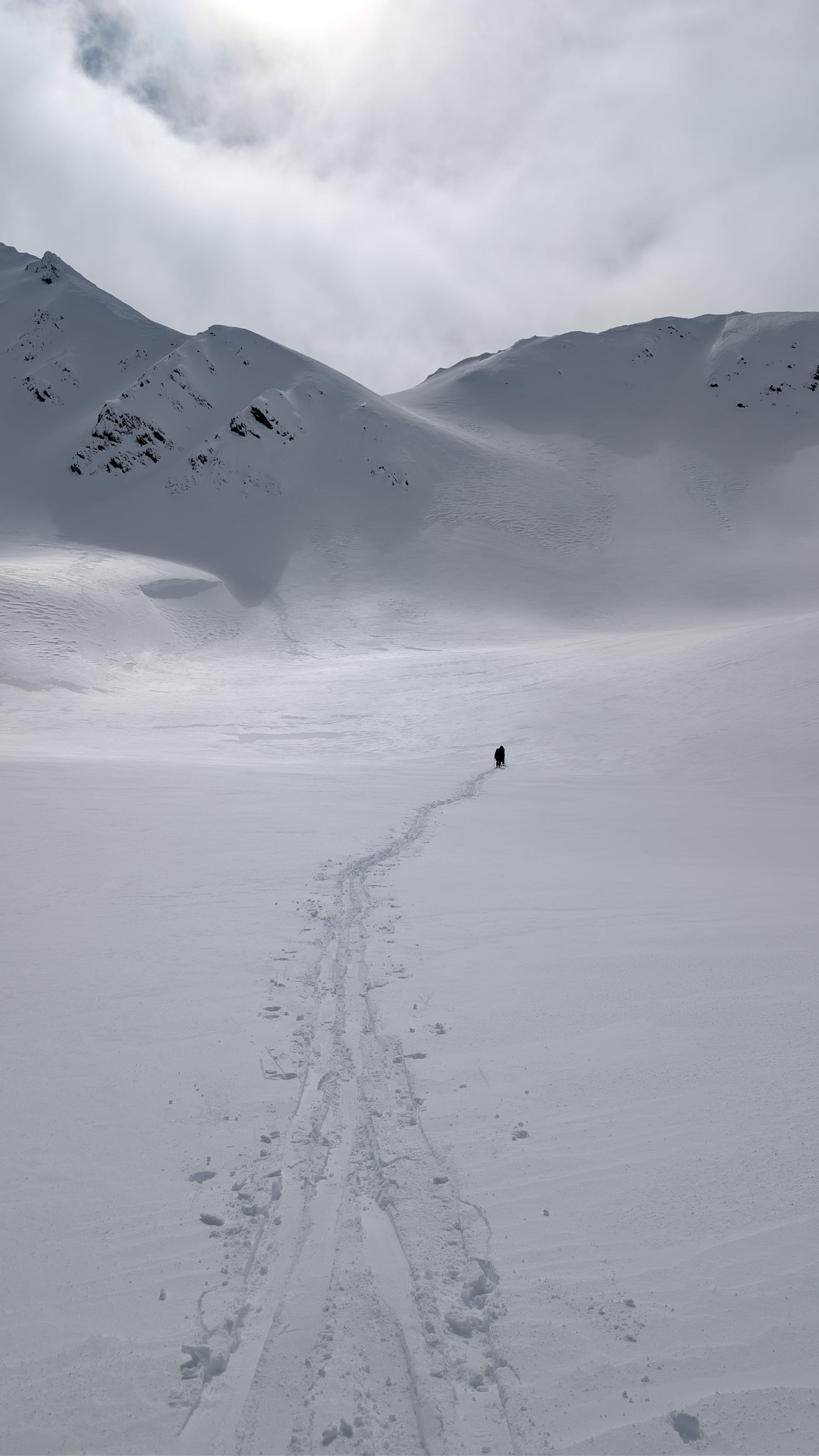
Started the morning walking up station cr in gum boots over ice and dirt for over 1.5hrs to the old cabin site. Put skis on from there for the rest of the day. Cold and dry 30-50cm of soft powdery non slabby over buried firm crust surface from treeline all the way to peaks elevation, exists on both Station and Blue Lakes drainages. It's winter up in the Hazelton alpine, get out there b4 the powder fields switch to Spring! Also observed multiple significant recent past avy activities on a big and wide west facing slope below the upper blue lakes elevations. Thx again to Sean F. for yr flagging job from lower blue Lks to Pangea trail.