Dashboard Regions Weather Stations Radar Alerts Glossary
Contact About
Log In

Register for an account and never miss a forecast again!

Register

Lizard-Flathead

Bookmark
Email notifications
Forecast Notifications An email every time a forecast is published for this region
Weekly Roundup Every Friday at 6PM you'll get an email with a round up of the weeks' forecasts and observations
Stay informed about Lizard-Flathead
Create a free account to receive email alerts when new forecasts are published for this region, plus weekly roundups of all avalanche activity.

Spring at Thunder

Published: Apr 21st, 2026
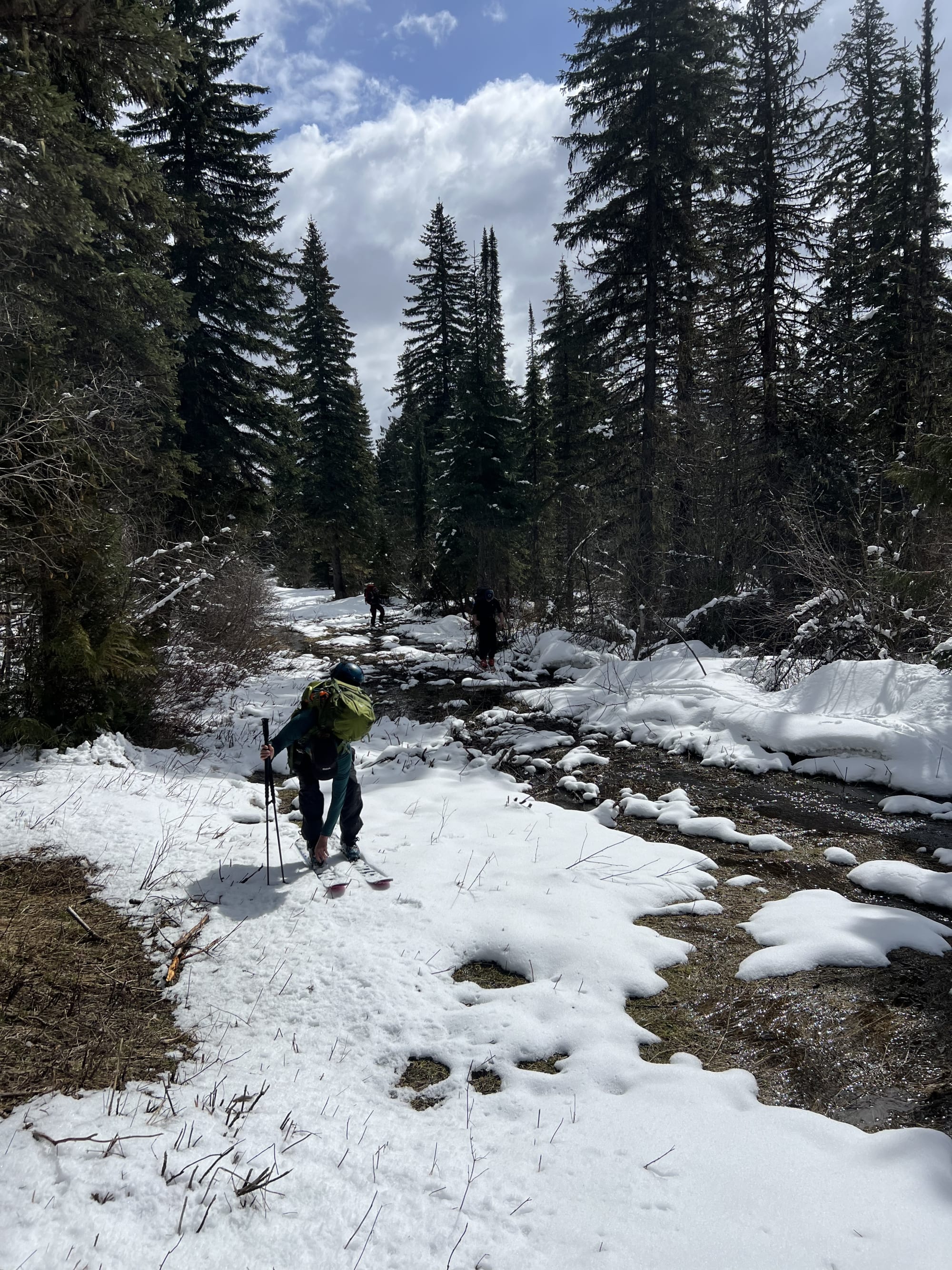
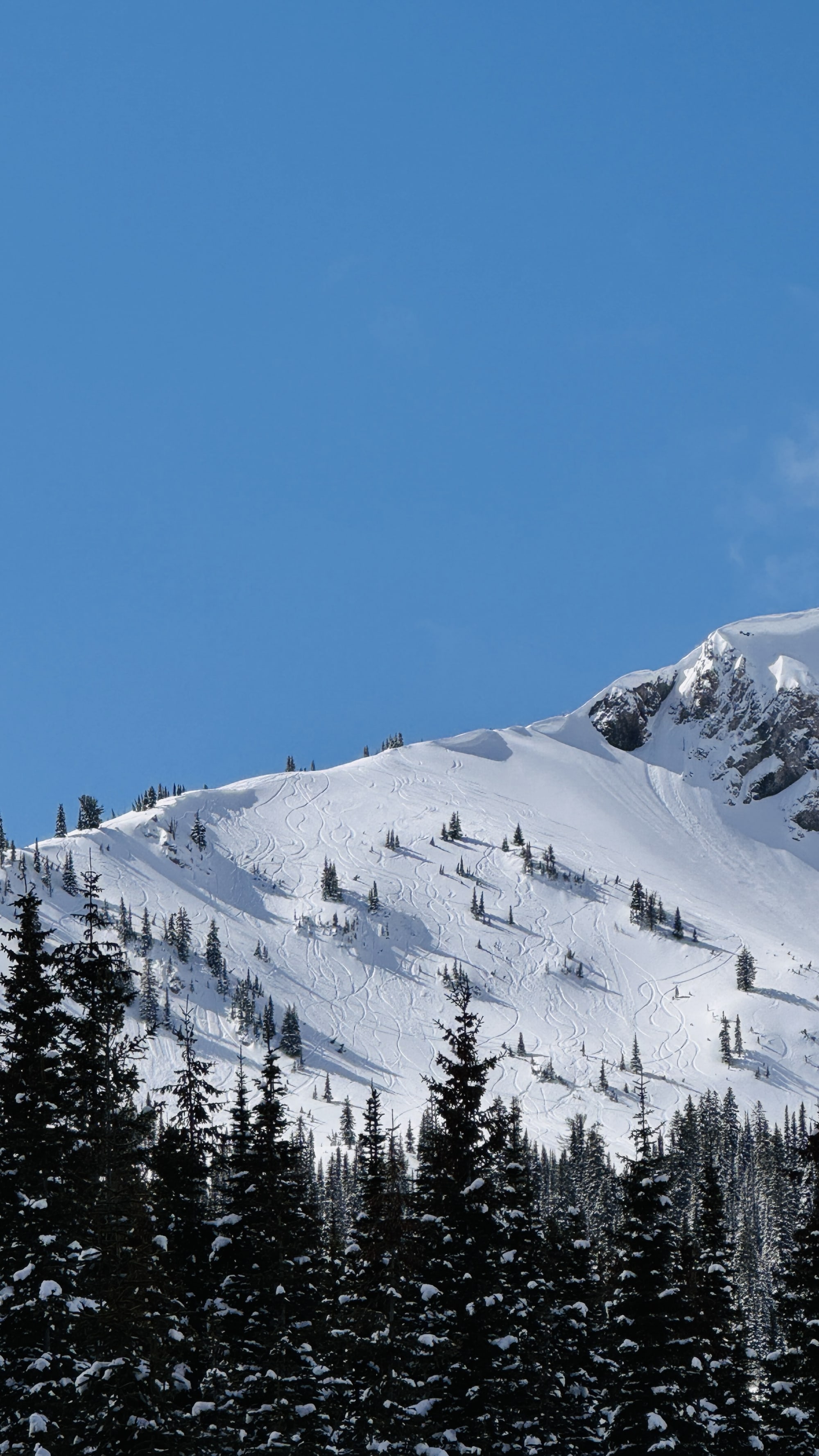
Spent the weekend out at Thunder Meadows hut, access and egress was good. Used the xc trails from Island lake and was able to ski the majority of the way in and out. The creek crossing into cabin bowl is swollen, will require a boots off maneuver. Friday and Saturday held good skiing, cold snow on polars and warming on solars. No signs of instability were observed on friday and saturday. Sunday and Monday had increasingly weak refreeze overnight and hot wet skiing everywhere. We were able to ski steep alpine terrain on Saturday, and then stepped back from terrain as the warming increased. We witnessed a widespread natural cycle of wet loose and some cornice fall to size 1.5. By Sunday many glide cracks were growing in the area, we witnesses no glide releases. Monday afternoon while exiting we began to make wet slab avalanches while navigating thru steep terrain at the bottom of orca bowl and had one wet slab Sa at size 2. The rider was able to ski out of the avalanche. Below 1500m the Lizard range is below threshold. Above 1500m coverage increases fast and is over 3 m of snow at the cabin. The snowpack continues to be isothermal up to ridgetop and will need a good refreeze before the corn harvest begins! The cabin is in good shape, well buried and the pressure of the snow has moved the door slightly out of alignment. Bring mouse traps if you are heading up! The bathroom has snow/ice plugged into the puck board poop slider but hopefully that clears up with warming temps!

Tunnel Ridge And Mercury Min

Published: Apr 18th, 2026
We skinned up the Sunnyside trees from tunnel creek hut at 8am and observed a large wet loose debris slide that seemed to come from a single point potentially dropped off a tree. We approached the ridge and looked into mercury basin which had further evidence of natural wet loose debris and big pin wheel debris. The snow felt heavy and wet in sun affected areas which turned to a crust layer when out of the sun. The softest snow was found directly under the trees. We dug a pit on the west facing slope of tunnel ridge which faced into mercury bowl. The snow pack depth was 250cm at this point. The snowpack clearly showed the heavy wet recent storm slab snow of 50cm sitting on a ice hard pack for the lower section of the snow pack. The interface between the two sections had a layer of groupal polystyrene ball type snow. We performed two propagation tests, the first showed no weak layer instability.this was performed across the full 90cm wide column. The second was performed on a smaller isolated column. This test showed the interface between the new storm snow and the hardback below failed at around 28 CP (One of first pits tests I've witnessed, but I understand this to be 10 with wrist,10 with forearm and 8 with shoulders). The slope was around 25-30deg, 1900m elevation. We skied in the trees of mercury basin and saw no new avalanches but often large pin wheels or heavy slabs of snowpack break off. The skiing was still very fun, great last hut trip to finish off my first season in the backcountry.

Thunder Snow

Published: Apr 7th, 2026
Went out for a little adventure to Ridge 2000 from the ski resort today. The day was off to a rough start skiing down Cedar Bowl getting hammered with a snow rain mix…snain, and slapped our skins on in the pouring snain at the haul back while we contemplated our choices in adventure. Just as we started skinning we experienced some thunder snow, and hoped that the convective cell would pass quickly. It did. By time we made it to the bottom of Fish Bowl it was getting sunny and the adventure was looking more promising. We crossed the bottom of the bowl as we gawked up at the sunlight ridge with slightly clenched sphincters noticing old wet loose avalanches and a couple large glide cracks. We climbed up the ridge on 5-10cm of wet shmoopy snow and as we climbed the wind got stronger and stronger. We noticed that the previously unfrozen surface snow was beginning to form a cream brulé crust on anything but the most solar aspects. As we neared the top of the ridge I was slowly getting strangled by my own jacket as my hood parachuted backwards with my face to the wind which was honking from the NW. Deciding that we didn’t want to get blown into the Cement Chutes, we decided to call it there and made a plan to descend the ridge avoiding any terrain below the glide cracks we observed earlier. We had great visibility of the terrain below us and could confirm that no other parties were around so we decided to shmoopalanche the slope and ski the bed surface which produced reactive wet loose and provided really great skiing on the bed surface. As we descended we noticed that the snow became less reactive and a very interesting snow surface (see pic). As we exited fish bowl back to the resort we observed new wet loose avalanches around the glide crack and that the glide crack itself was noticeably larger than earlier. Overall it was a great adventure packed with all kinds of weather from thunder snow to sun and honking wind. **we also observed several trees failing in the wind today especially in the BTL, heads up hockey out there.

Cmon Corbin!

Published: Mar 25th, 2026
Today the South Rockies team took a chance on riding from Corbin staging and were pleasantly surprised at the quality of access! The recent snow made a big difference for the trail, there was a thin fresh coating of wet snow right from the parking lot! The old grooming held up to the rain reasonably well, only a few patches of thin coverage over dirt. As we climbed towards Rain gauge the snow quality improved steadily and we found 20 cm of dry new snow above 1800 m. Below the new snow there is a supportive crust which made for some slippery riding while getting into the throttle or descending slopes. We did not venture above treeline today. Strong to extreme westerly winds in the alpine made for uncomfortable and potentially dangerous conditions at higher elevations. We observed intense snow transport at ridge tops this morning. Exposed areas are scoured down to ice. Significant snow drifting and deposition is occurring on a variety of aspects in the treeline and alpine. We dug a profile in a sheltered area at 2100 m. Snowpack depth is 220 cm at our profile location. The upper snowpack contains many layers of crust and a variety of snow grain types but is not producing any concerning failures below the recent storm snow. We had easy resistant planar failures of the storm snow/crust interface at CTE 6. No propagating results with ECT. We did not see any evidence of large natural avalanches during the recent rain event. Overall better quality riding than we anticipated. Springtime conditions are beginning to shape up nicely, but the snowpack still needs more time to settle before we would consider stepping out to larger features.

Rolling Hills Roopin'

Published: Mar 12th, 2026
Today the South Rockies team went for a braap in the Rolling Hills area. We intended on accessing from the Coal Creek trailhead however we were uncertain about driving higher up than the staging kiosk, and there was a lack of snow to ride right from valley bottom. We pivoted and accessed via the Morrissey upper staging, and signage was very clear on where to drive and park! There was about 5 minutes of low snow riding on the road before we hit good trail conditions the rest of the way! Our aim today was to assess surface snow conditions after last nights storm, and test the Persistent Slab problem in our snow pit again after some additional loading. Above 1500m there was 20-30 cm of new snow that had been redistributed by wind forming large cornices and drifts. We found the best riding in sheltered low angle lee slopes where the wind had stacked up a little extra snow! Windward aspects near ridgetops and open areas were largely stripped back to a firm crust. We were able to get storm slab results on small loaded test slopes with crown depths of 20-80 cm, and we observed a recent natural avalanche from a steep north facing lee slope at 2000m. This slope is a common performer near the Rolling Hills Cabin, see image. Below the recent snow there is a widespread 5-15cm crust on all aspects below 2000m. Our snowmobiles were not able to penetrate this crust. In our snow pit, we had moderate propagating results (ECTP 12), storm snow failing on crust/graupel down 25cm. We had no results (ECTX) on the Persistent Slab problem, however we were still able to identify preserved surface hoar buried 90 cm deep. In places where the crust is less supportive, human triggering of the Persistent Slab problem is still a concern. Overall a nice day out with some decent riding, and there is still plenty of fresh left in sheltered areas to enjoy some fun, supportive tree riding! We avoided steep wind loaded slopes, gave cornices a wide berth, and had a great day out in the hills!

Cold Feet Beats the Heat

Published: Mar 11th, 2026
Today we went for a ski up at Cold Feet near the 3 Sisters. Our goal was to find out what happened to the snowpack during this weekends warm and stormy weather, and once again test our Persistent Slab problem in this region. Access from Hartley staging is good right from the parking lot, and enough dust on the crust to keep the sleds cool! Below 1900m the crust from this weekend is 10-15 cm thick and supportive to skis and snowmobiles. There was 10 cm of new snow on top this morning, and more snow thru the day added up to 20 cm on top this afternoon! Winds were light from the SW at ridgetop today. The surface snow is low density and is not exhibiting any slab properties, but sloughing in steep terrain is entraining snow and running long distances on the crust. Above 1900m the crust dwindles to 3-5 cm thick and is not supportive to skis. We dug on a South aspect at 2100m and were able to produce propagating results on the Jan 26 Persistent Weak Layer (PWL). ECTP 28 down 85 cm. On a North aspect at 2100m we were not able to produce propagating results on the Jan 26 PWL, or the Feb 7 PWL. We had ECTN 22, and CTM 12 SP down 40 cm on the Feb 7 PWL. We were only able to identify preserved Surface Hoar within the Feb 7 PWL on North aspects, and within the Jan 26 PWL on South aspects. Where the crust is thin and breakable, triggering a large persistent slab avalanche is still a concern. We are being extra cautious about slopes with likely trigger points such as buried rocks/logs, thin to thick areas, and steep slopes/convexities. The persistent slab is transitioning to a low probability/high consequence problem, and will continue to change with additional load. Choosing low angle terrain not only avoids this avalanche problem, it also provides better ski quality in the "dust on crust" conditions that exist currently!

McClatchie McTricky

Published: Mar 3rd, 2026
A fine sunny day for a toodle in the flathead region. We were able to drive to KM 46.5 on the McClatchie FSR, there is active logging in the area so make sure you have your radio and call your KM if you head up that way. We headed towards Next of Kin to investigate the sensitivity of the Persistent Slab problem that has been ongoing in this region. We found 30-65 cm of snow on the weak layer, and had multiple audible whumpfs while travelling on foot through mellow sheltered terrain between 1800-2000m. Rutschblock tests on North and south aspects produced easy repeatable results RB 1 and RB 2 whole block failures. The persistent weak layer in this area is 10 cm thick and consists of 15-20 mm surface hoar and facets over a supportive crust. This layer is not showing any signs of healing, and is widespread in the tree-line. While natural avalanche activity is tapering off in the flathead, human triggered avalanches are still likely. Below treeline is still very thin coverage, and warm temperatures have made the snowpack become isothermal. Alpine features have been largely affected by continued moderate winds. Loaded areas are suspect to have a wind slab problem, and wind stripped areas are a mix of ice, sastrugi, and rock. Unfortunately the reality is that where good ski quality exists, a reactive persistent slab problem is a dominating concern. This sent us home early with our skins still on, and with no travel in avalanche terrain today.