
Quick report
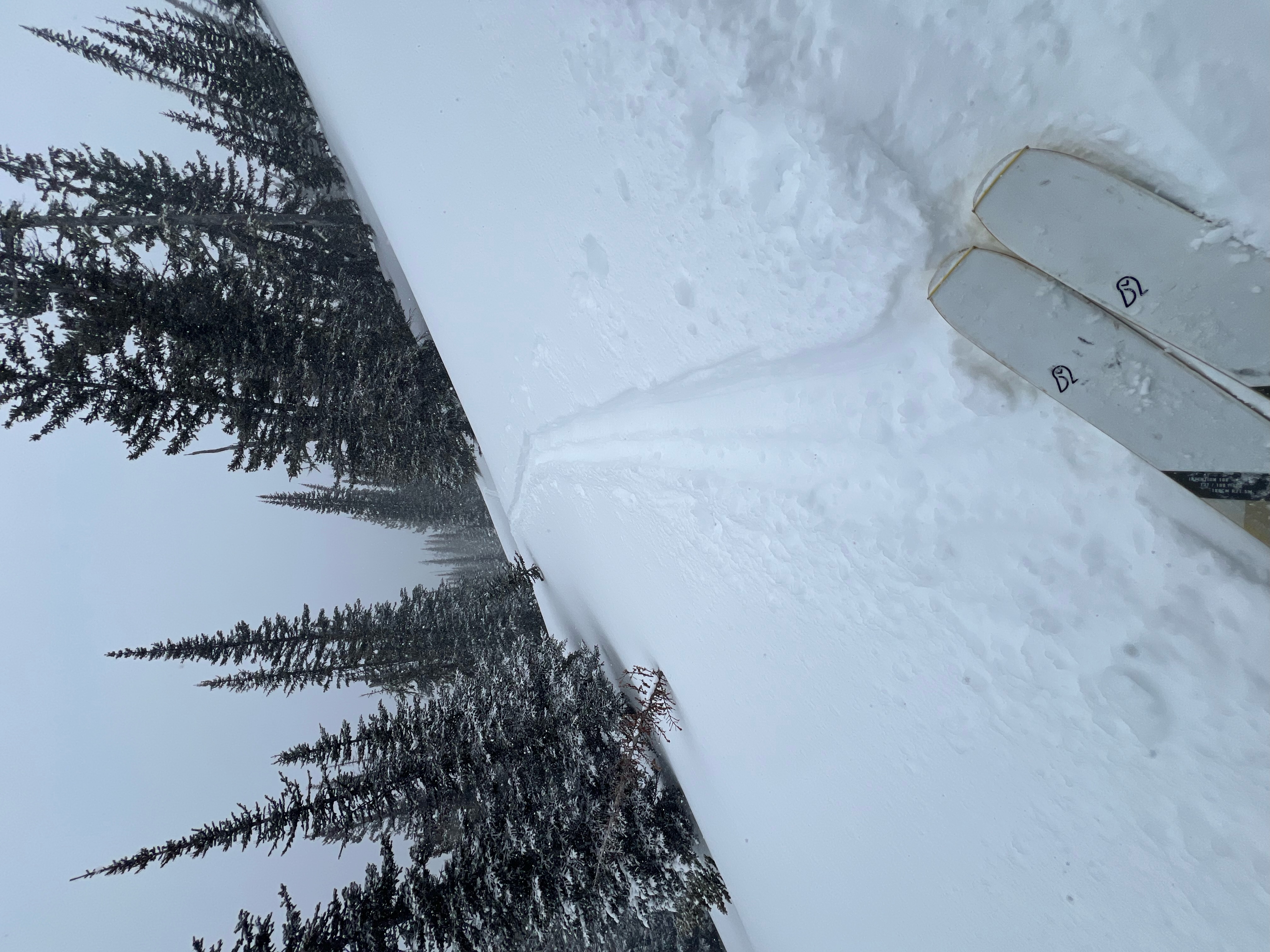
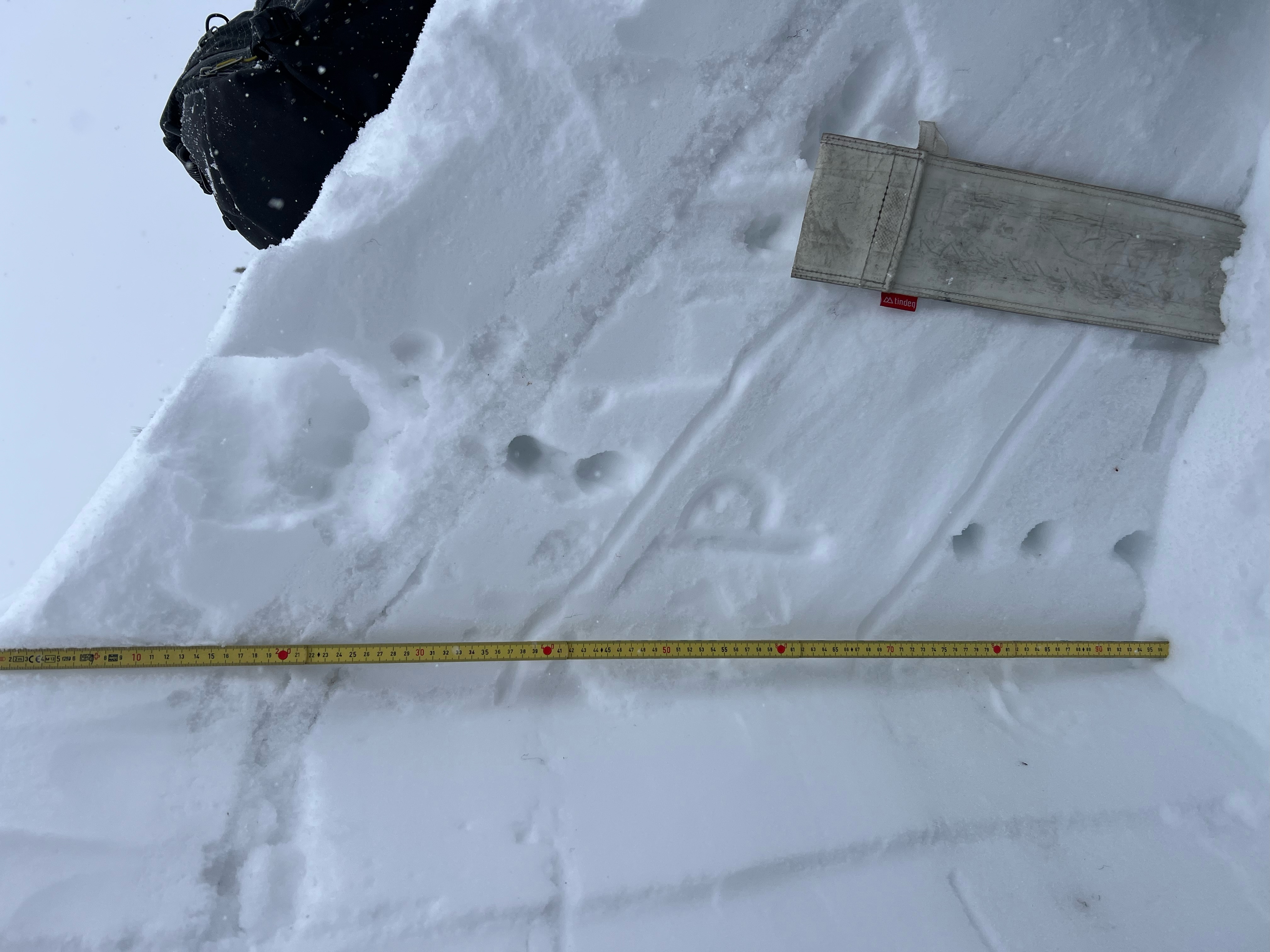
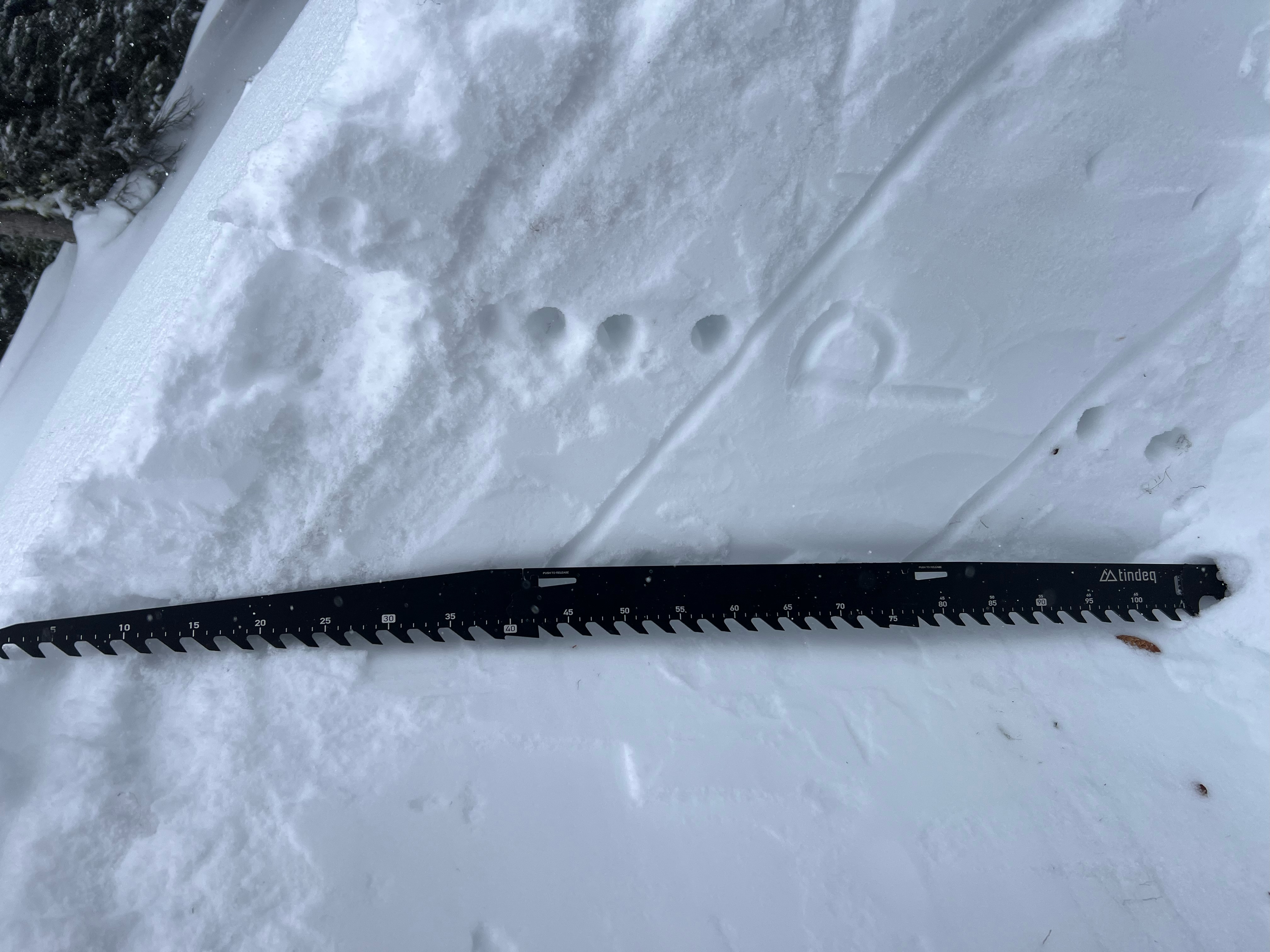
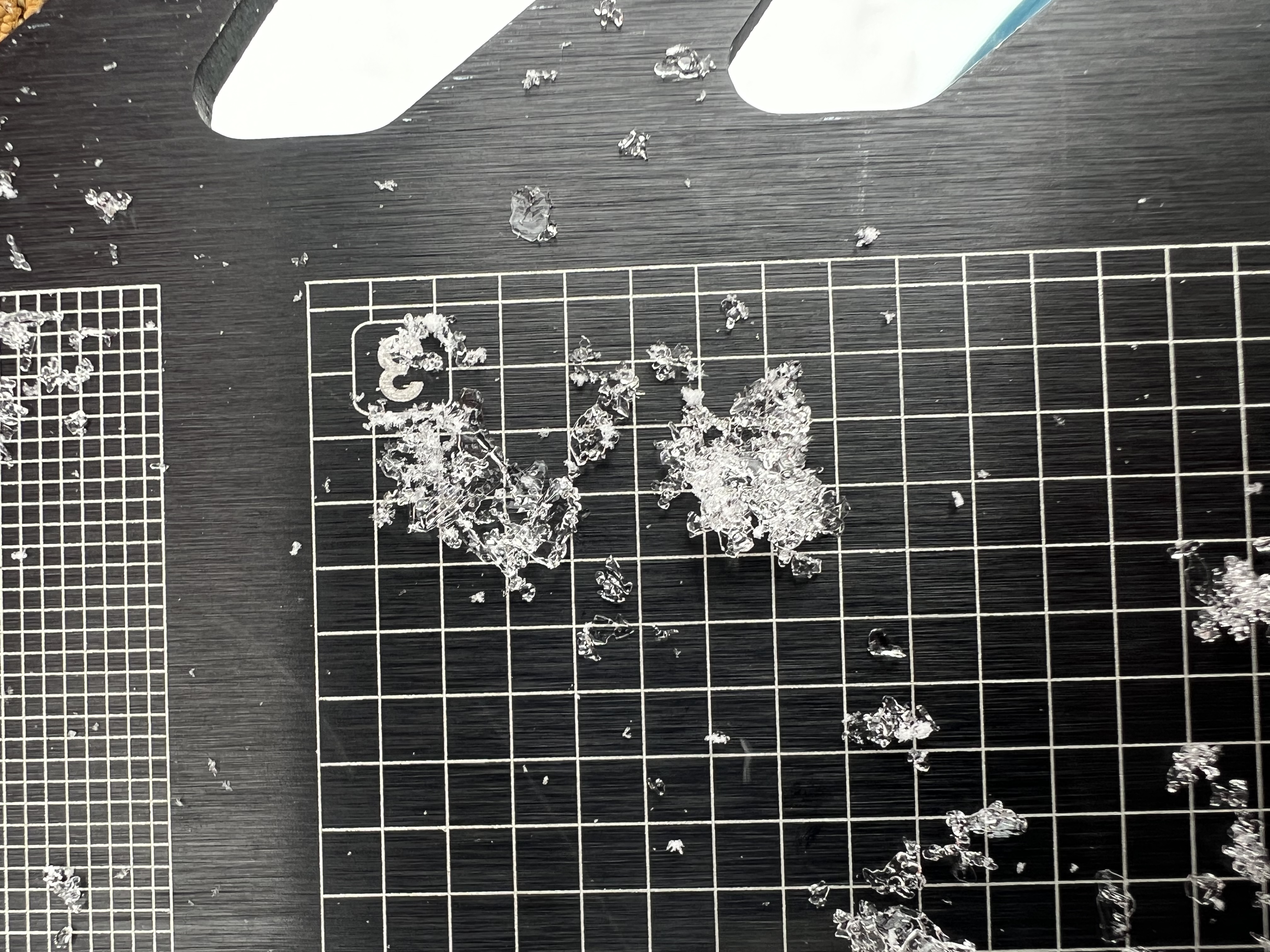
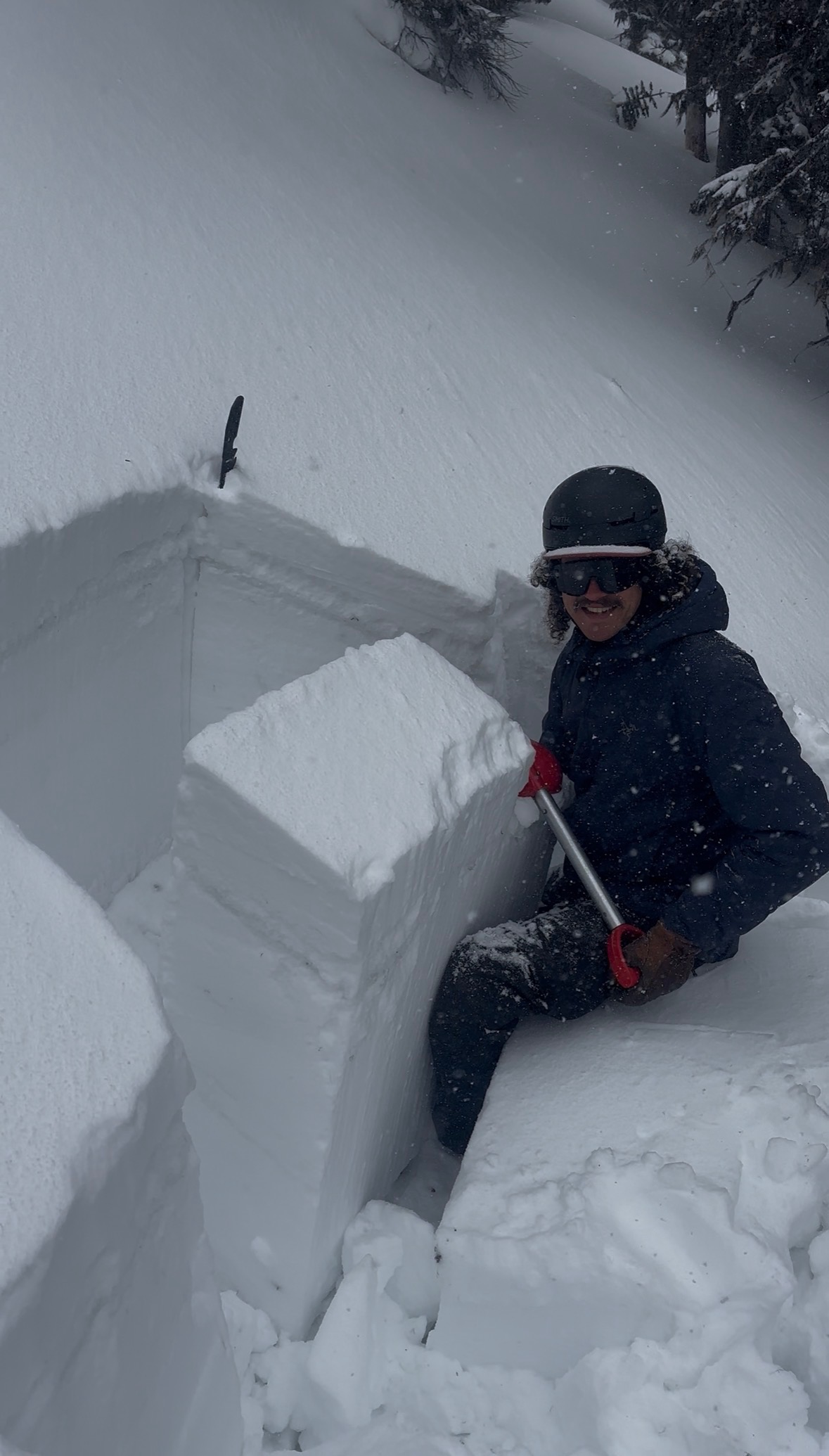
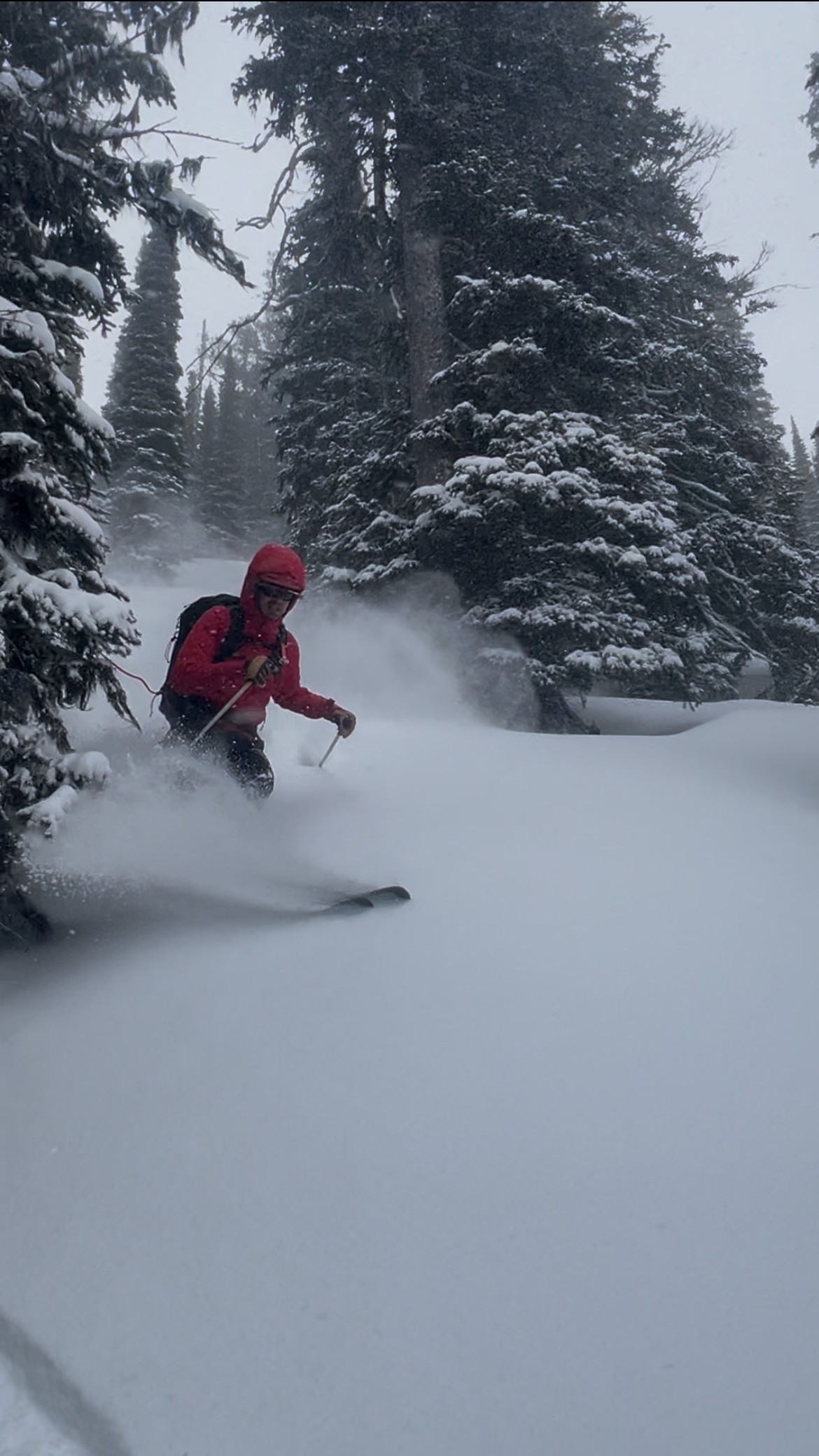
Today we went for a ski up at Cold Feet near the 3 Sisters. Our goal was to find out what happened to the snowpack during this weekends warm and stormy weather, and once again test our Persistent Slab problem in this region. Access from Hartley staging is good right from the parking lot, and enough dust on the crust to keep the sleds cool! Below 1900m the crust from this weekend is 10-15 cm thick and supportive to skis and snowmobiles. There was 10 cm of new snow on top this morning, and more snow thru the day added up to 20 cm on top this afternoon! Winds were light from the SW at ridgetop today. The surface snow is low density and is not exhibiting any slab properties, but sloughing in steep terrain is entraining snow and running long distances on the crust. Above 1900m the crust dwindles to 3-5 cm thick and is not supportive to skis. We dug on a South aspect at 2100m and were able to produce propagating results on the Jan 26 Persistent Weak Layer (PWL). ECTP 28 down 85 cm. On a North aspect at 2100m we were not able to produce propagating results on the Jan 26 PWL, or the Feb 7 PWL. We had ECTN 22, and CTM 12 SP down 40 cm on the Feb 7 PWL. We were only able to identify preserved Surface Hoar within the Feb 7 PWL on North aspects, and within the Jan 26 PWL on South aspects. Where the crust is thin and breakable, triggering a large persistent slab avalanche is still a concern. We are being extra cautious about slopes with likely trigger points such as buried rocks/logs, thin to thick areas, and steep slopes/convexities. The persistent slab is transitioning to a low probability/high consequence problem, and will continue to change with additional load. Choosing low angle terrain not only avoids this avalanche problem, it also provides better ski quality in the "dust on crust" conditions that exist currently!