Register for an account and never miss a forecast again!
Selkirks
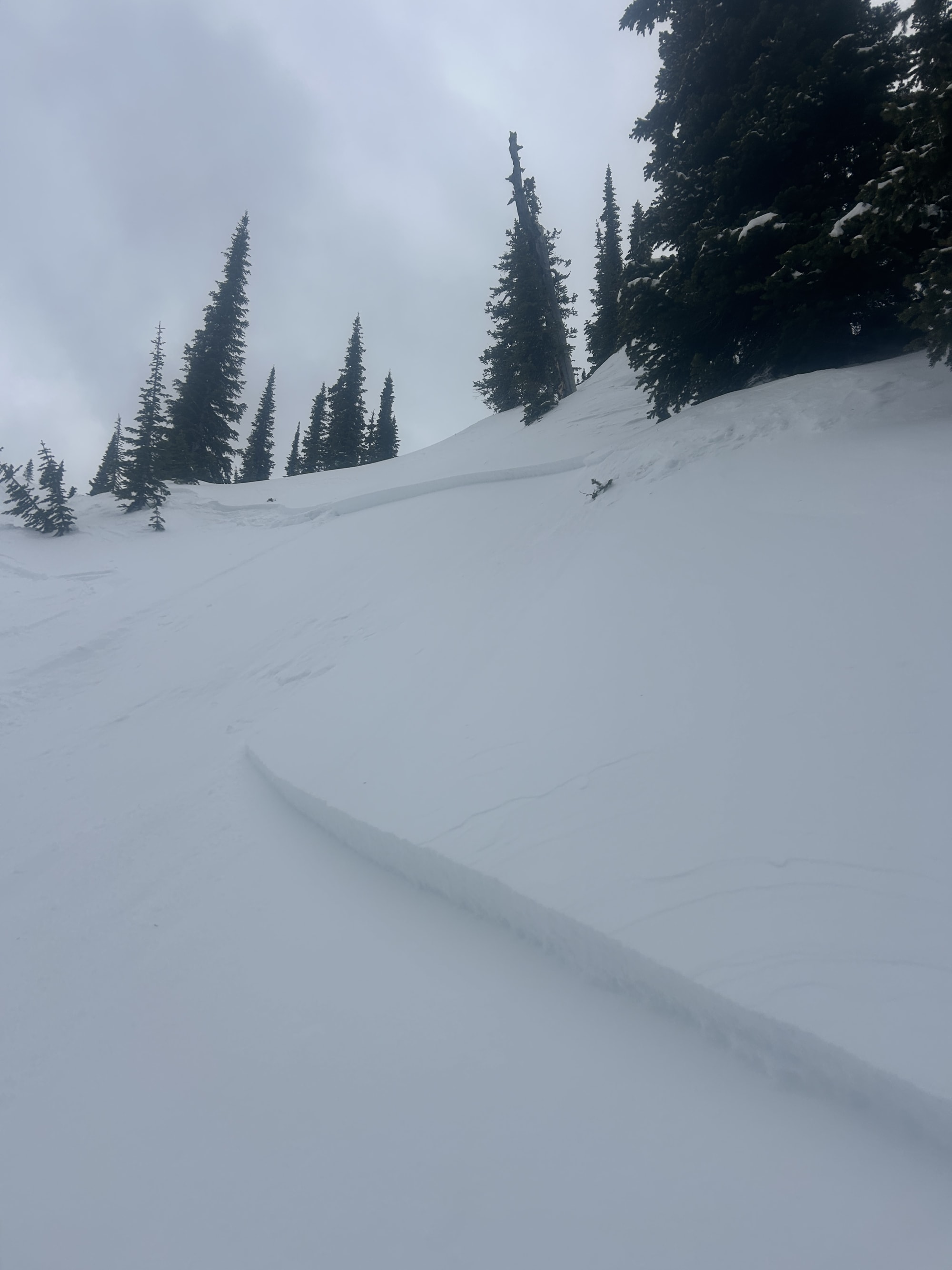
The warming we got Friday seemed to have stayed below 1600m ish and the snow above that was amazing, a little heavier than normal but still super fun! We rode between 1600m and 2000m and stayed away from any slopes larger than 30 degrees because we saw signs of slab avalanches on small convex micro features releasing on the Jan 4 surface hoar layer and signs of instability throughout the day (shooting cracks). Visibility was very obscured and foggy throughout the day. Precipitation of "icy snow" that stuck to our goggles in later afternoon made visibility even harder.
the vision was very bad with some ice raining on the morning. It changes in snow flacks stick together to for big one. We made our day 2 of the AST 1 and dog our pit on a cut block before lady bird. First layer of December 26th was easy, the seconde one of december 17 is moderate and she’s tricky because it’s form by 3 small layer. It has facets between those 3 layer. The last one of november 21th is hard. This last layer is on soft sown ( facets) and could be reactive. It slid after 7 tap from the shoulder if i remember well. I’m trying to put in practice what i learned sorry if i didn’t use the good term 😅
We conducted a hand sheer test at 1500m that produced a slab about 30cm thick above the mid december melt freeze crust. We also observed the mid november persistent slab in this test. other than this the snow pack seemed quite stable in the mellow terrain that we rode.
We made a block at 1300m and we can locate the two persistant deep slab. It's made from november and december. We can feel the hard crust made by those two warmer events. Soft snow are on the very top and at the bottom of the snowpack.
we had an easy sudden collapse fracture on the Jan 14 melt freeze crust down 16cm and a hard sudden collapse fracture on the Jan 11 melt freeze crust down 23cm.
a layer of hoar frost forming, temperatures warming, sunny with a bit of wind. evidence of recent heavy winds from south west.
Had roughly 35cms of new snow overnight. 5 Extended Column Tests at 2170 meters with no results on a NE aspect. The pits were dug in a sheltered area, the majority of the face was wind hammered and had significant wind transport overnight and in the morning. The large NE face had many size 1s and some size 2s overnight. South aspects had some wind transport as well. Saw Search and Rescue responding to a call at the end of the day.
Extended Column test. We had moderate results on the storm slab that was down about 35cm We had easy results in the present layer that was down 100cm in our extended column test. Reusche block test we had no results with a snowmobile on top All tests were done between 20-30 degree slope. Elevation of 1700- 1750 meters done on SW aspects Cloud, over cast
On our extended collumn test we had moderate results on the storm slab about 30 cm. We had easy results on the persistent weak layer that is down 100cms in our extended collumn test. Reusche block test we has no results with a sled on top. All tests were done between 20-30deg slope at an elevation between 1700-1750m and on SW aspects
Rode the drainage north of Ladybird Cabin, predominantly N/NE slopes. No avalanche activity observed. Strong stability while riding even on convex slopes. Wind loaded on N/E aspects.
Moderate West winds observed 2/15 during the day and into the night with 20cm of new snow falling. Light West winds on 2/16.
Sled ride up goose cr. Trail was rough up to about 2k past cabin. 10”-12” powder on a covered crust. Felt 2 hard snow layers with probe. First about 12” deep then second was another 20” past the first. About 4 feet of snow in most areas where we rode. No signs of avalanche activity. Beauty day.
Dig a pit in an open area to check for the layers, all were as the report and the early season rain layers are really thick but have good bonds. The most recent storm snow down approx 50-60CM’s is prettty loose. Today never seen any woomfing or fractures. As the day went on most south facing aspects thawed out and top layer became heavy then lightly froze on the way out.