
Quick report
- Collapsing
- isolated
Cache Creek holds a shallower snowpack than many of the surrounding mountain ranges. This remains consistent with a previous observation in this canyon on 1/22. Fortunately, a long-lasting storm and a short period of due south flow have delivered ~16 of snow to the lower elevations over the past week. I would surmise that upper elevations have seen a much larger amount of snow, especially as you move deeper into the Gros Ventre Range.
No signs of avalanches today. I did observe an isolated collapse in the low-angle meadow around 7000'. This collapse likely occurred on the faceted layer below the rain crust. The sky remained overcast today, preventing direct solar radiation on any solar aspect. Ambient temperatures below 7000' were near or above freezing - causing surface snow to moisten slightly. This was also confirmed by the number of 'tree bombs' falling from the branches. Although surfaces were beginning to warm, no signs of wet snow instability were noted.
One small collapse was noted while walking through a low-elevation meadow. No other collapsing was observed.Weather
- Air Temp
- 32
- Cloud Cover
- overcast
- Wind Loading
- none
- Snow Avail For Transport
- small smounts
Overcast skies remained throughout the day. The parking lot temperatures were in the low 30s F, and above 7000, they remained below 32F. Winds were calm throughout the day. No precipitation was observed.
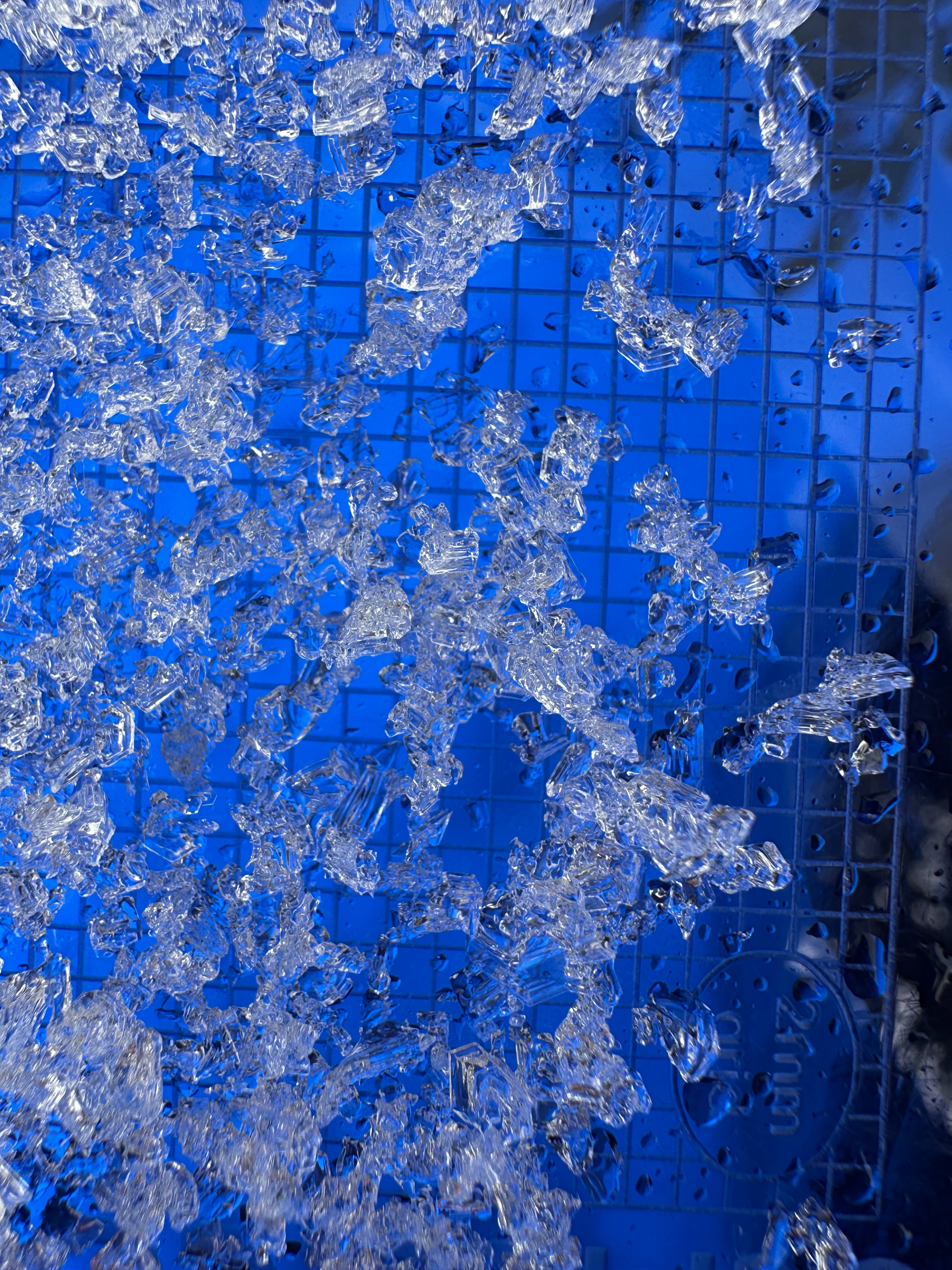
Snowpack
Low-elevation snowpack remains thin with varying weak layers in Cache Creek. This structure is similar to other areas of the forecast region (rain crust, near-surface facets, weak basal layer) but is a thinner snowpack. Snow from the last extended storm now totals ~16 inches above a melt-freeze crust. The rain crust from early February (2/6) is starting to decompose. Stability tests showed collapsing, but no propagation, just below the rain crust in extended column tests. A propagation saw test yielded a PSTend 45/100 cm on the same layer. The base of the snowpack still holds ~10cm of well-developed depth hoar. These crystals are beginning to round, have 4F hardness, and did not produce results in pit tests.