
Quick report
- Cracking
- Observed
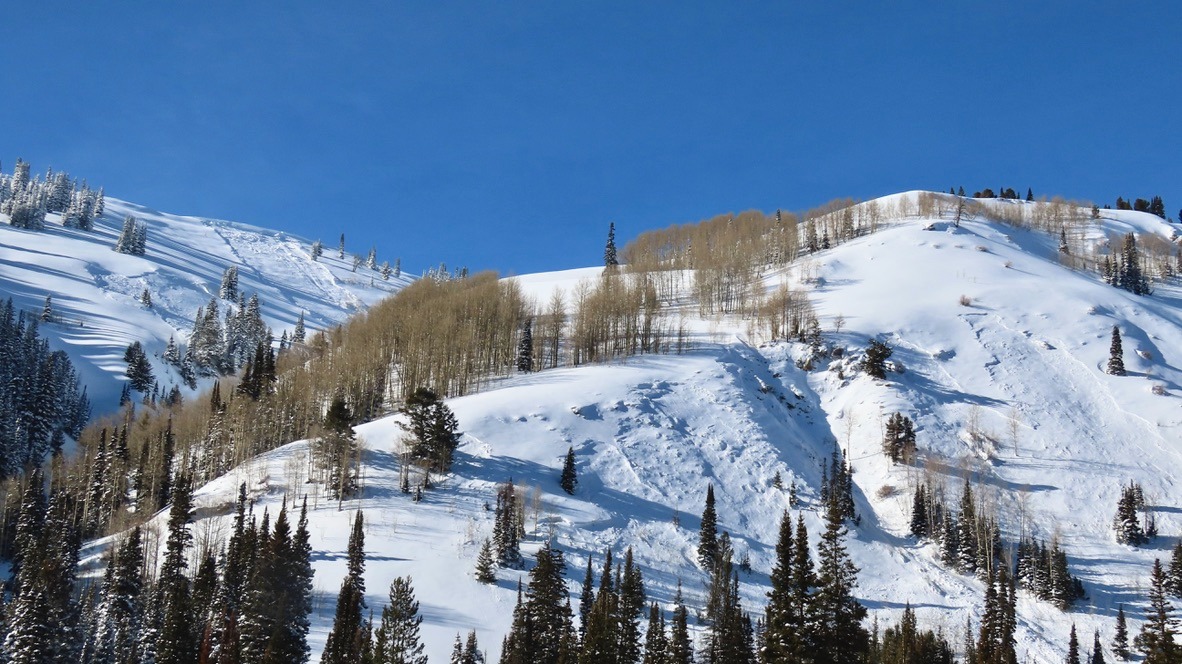
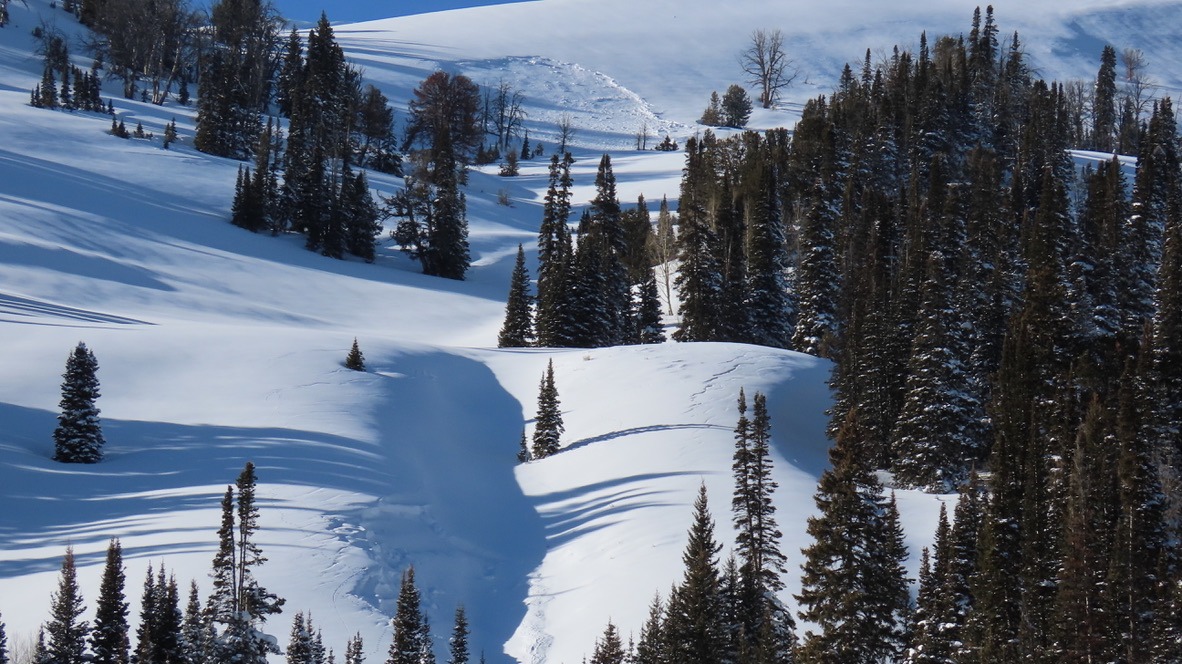
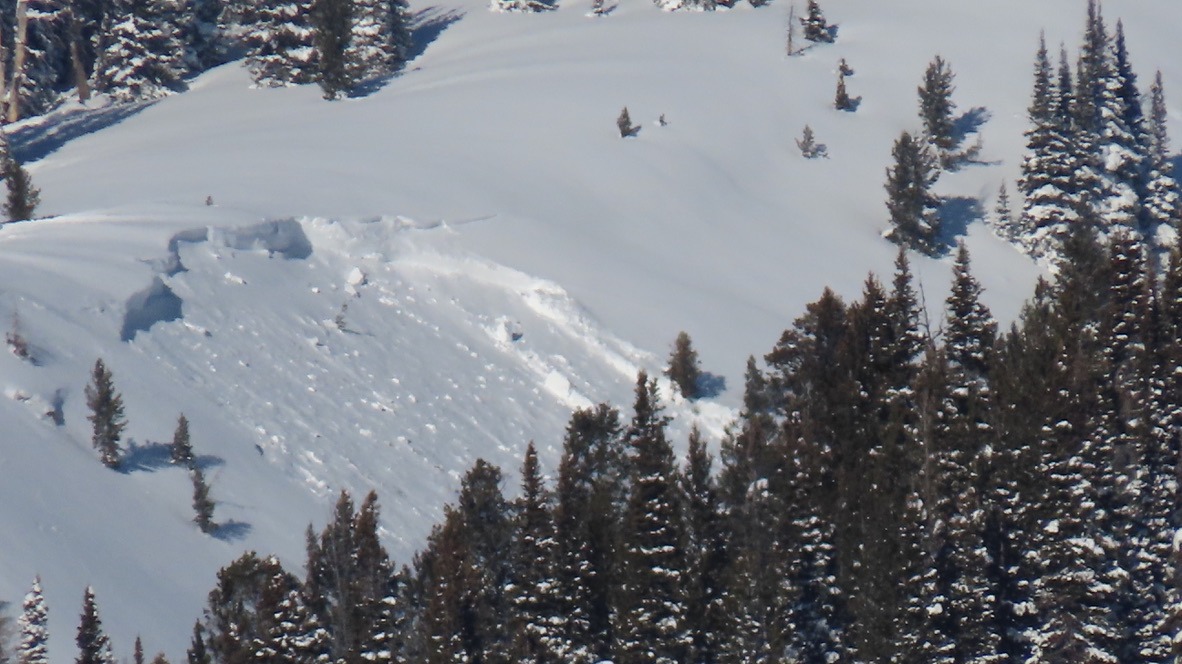
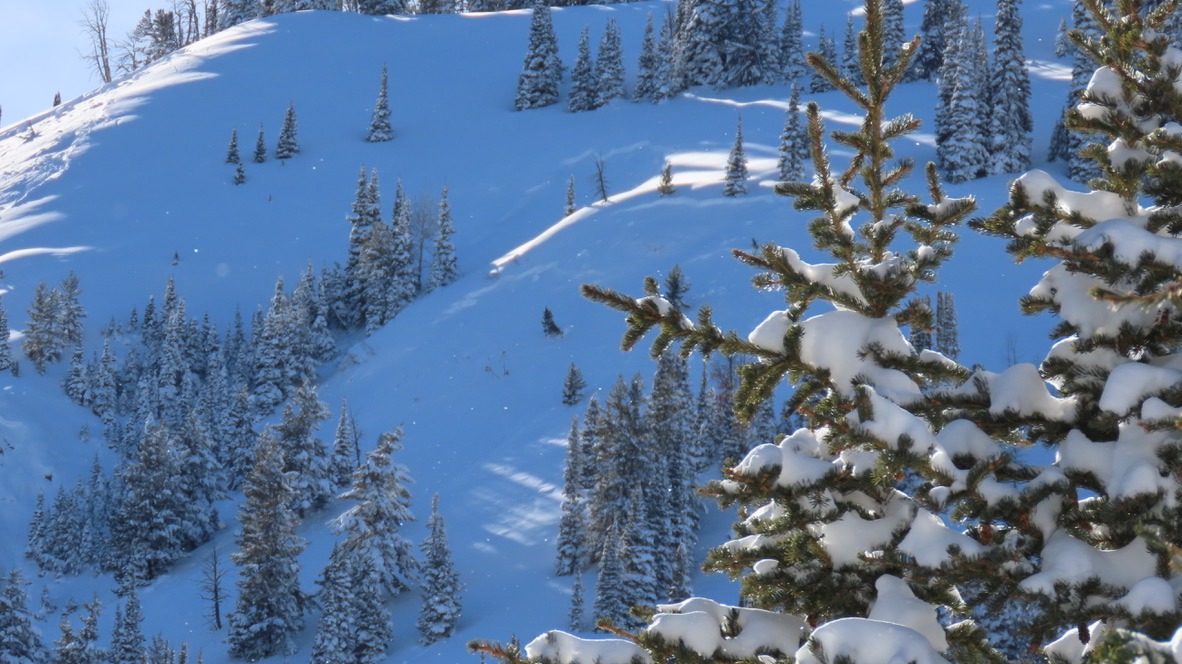
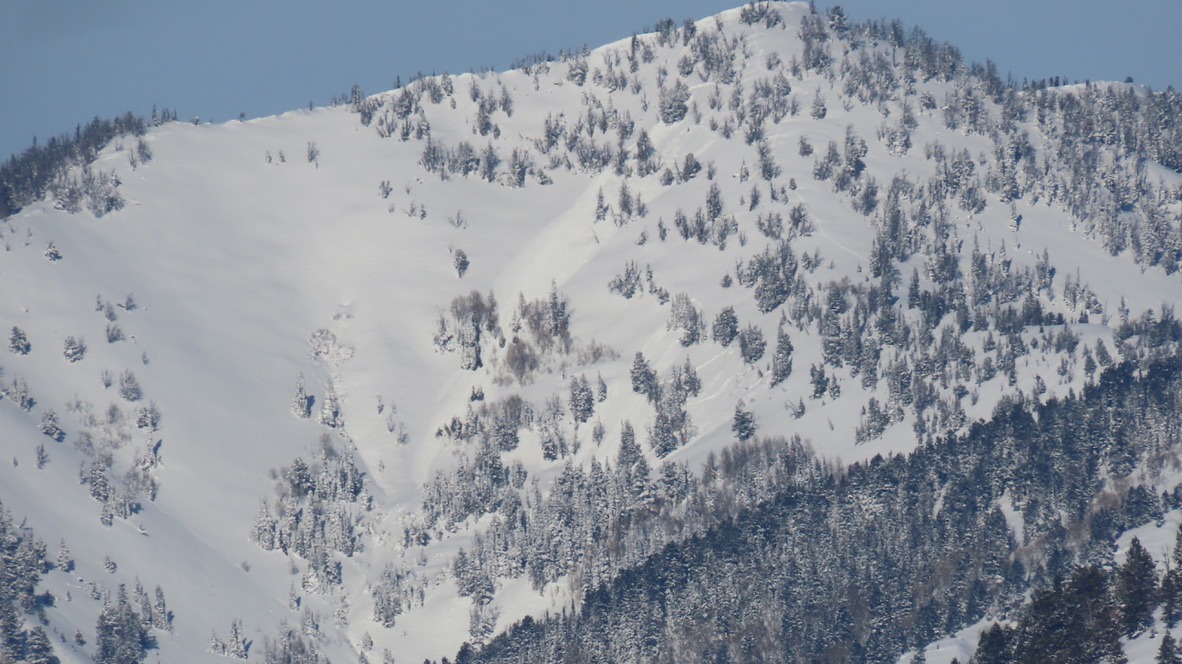
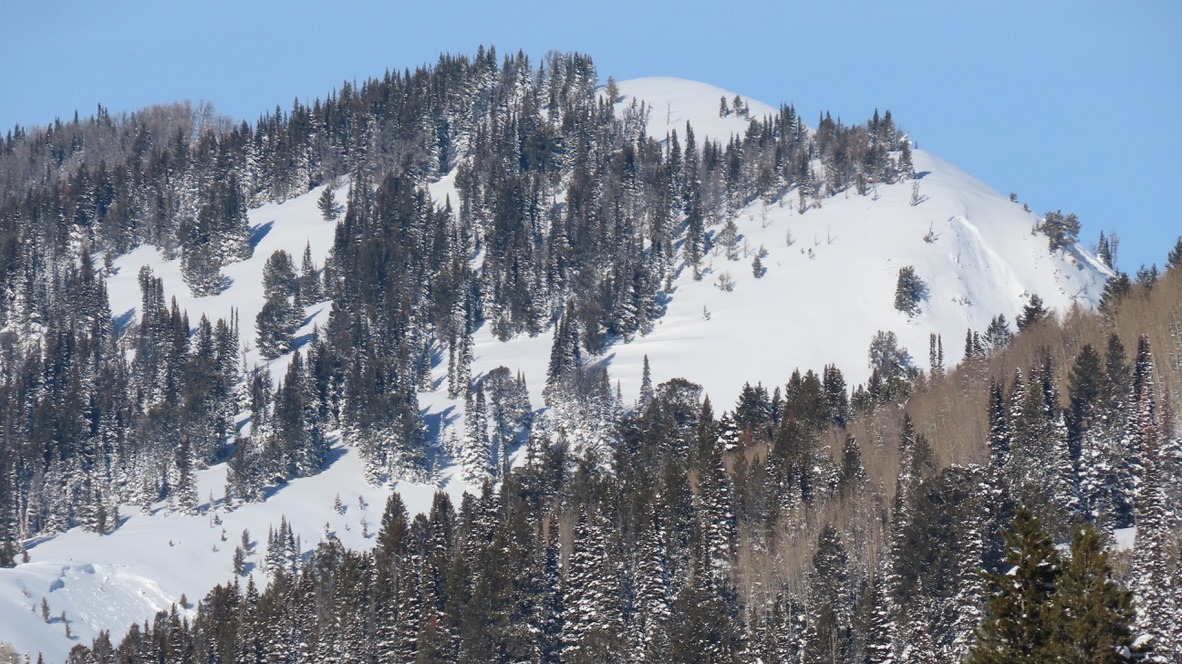
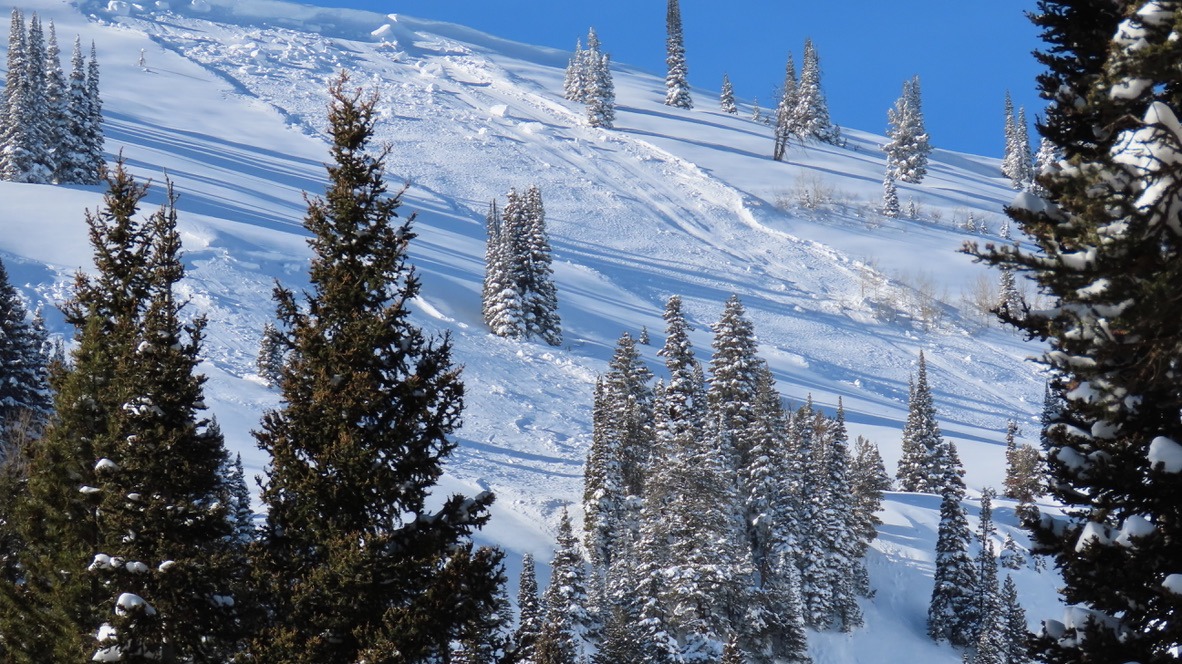
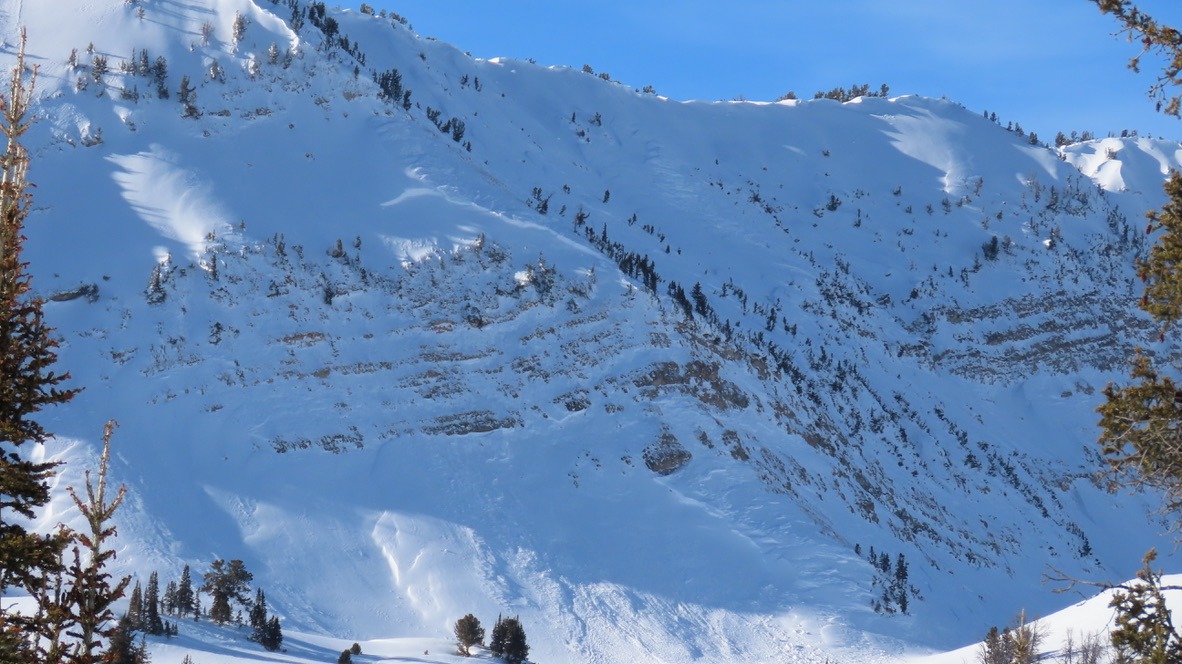
We chatted with multiple local folks today who mentioned they haven't seen as extensive of an avalanche cycle here in previous years. That speaks for the stability across this zone (and all of our zones, for that matter) in and of itself. The December drought snow (also called the Jan. 4 layer because of its burial by snowfall starting on that date) is wreaking havoc on the slopes across the Salt, Snake, and Wyoming Ranges. We noted several recent avalanches in the Snake and Salt on the drive down, as well as observed the crown of the Prater fatality. More snowfall and wind will keep this snowpack at its hair-trigger status. These are incredibly challenging avalanche conditions to recreate in with a wide margin. Meadow skipping and carving around in protected, small pieces of terrain clear from being adjacent to or at the bottom of steep slopes will be key (and still very enjoyable). When making terrain choices, bear in mind that this weak layer of snow has proven to be exceptionally fickle, and normal "fall-back" slopes that don't avalanche with great frequency--may. Most avalanches we noted were 1-3 feet deep and, like many of the drainages in the area as well as in the Salt and Snake, run directly into creekbeds or gullies. Several larger avalanches appeared to have stepped down to weak snow from November. All in all, the incoming storm will deliver more water and wind. It is rare that we are gifted more certainty in avalanche forecasting because snow is so complex; in this circumstance, however, there is great certainty amongst the forecasting team. Danger will be rising in all zones tomorrow and in the days following, and dialing back terrain choices as this storm hits will be necessary.
Weather
- Cloud Cover
- clear
- Wind Loading
- previous
- Snow Avail For Transport
- small smounts
Avalanche
- Size
- D2 R2
- Type
- SS
- Count
- 3
- Aspect
- E
- Trigger
- N
- Elevation
- 9100 ft
We noted around 20 recent natural avalanches on aspects spanning NE-E-SE, most of which were noted between 9,000 feet and 10,000 feet.