
Quick report
- Cracking
- isolated
- Collapsing
- specific
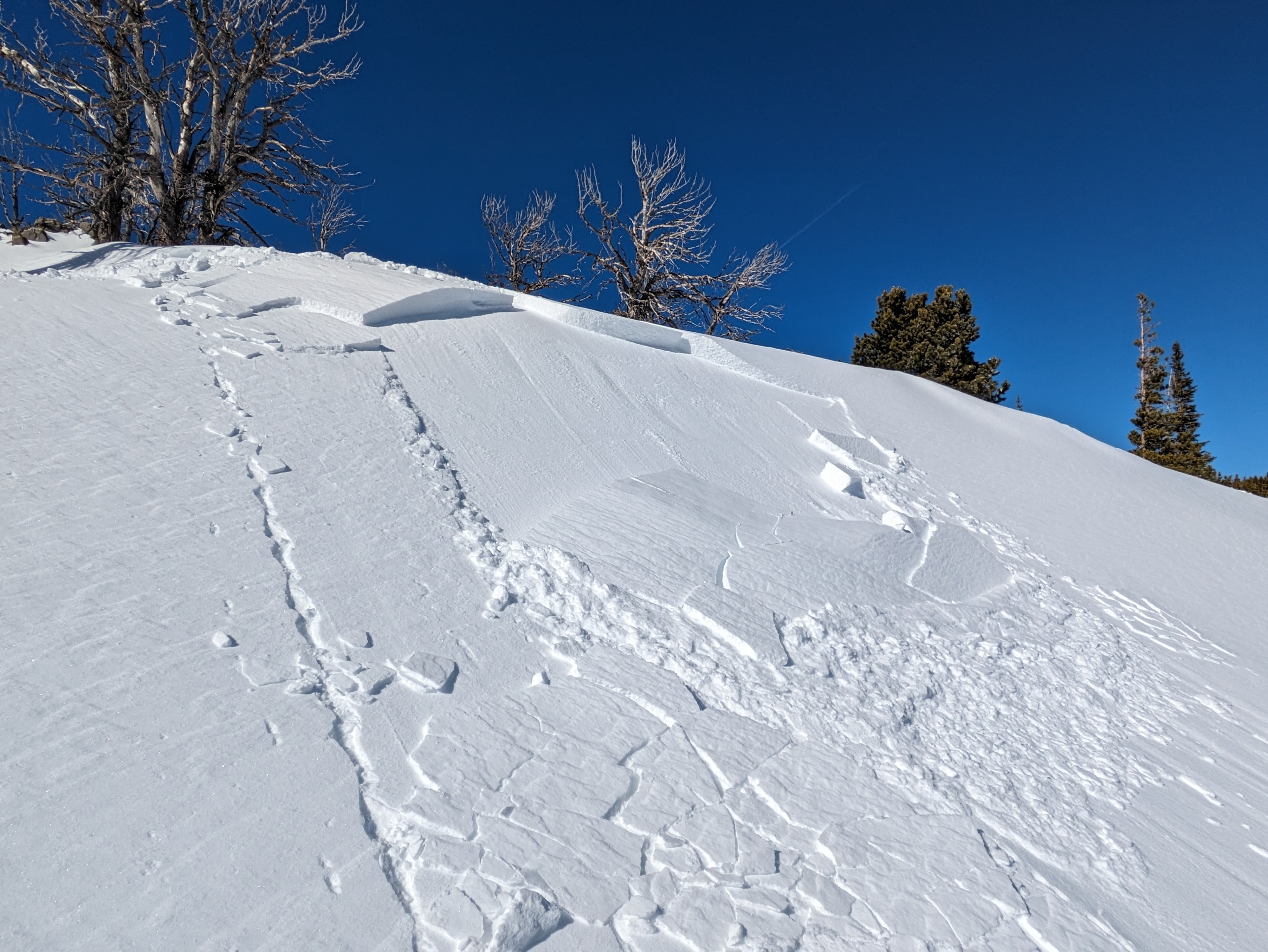
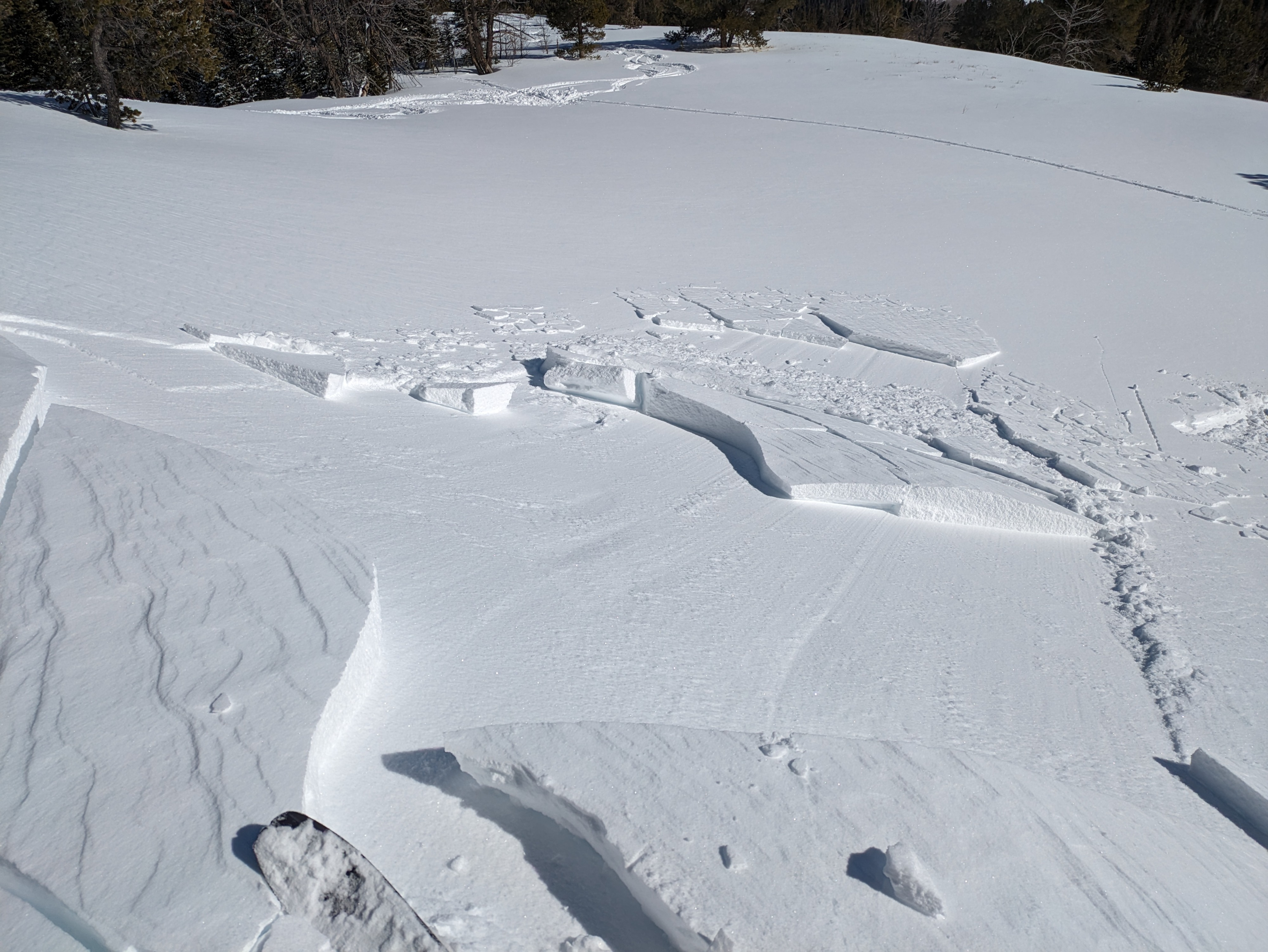
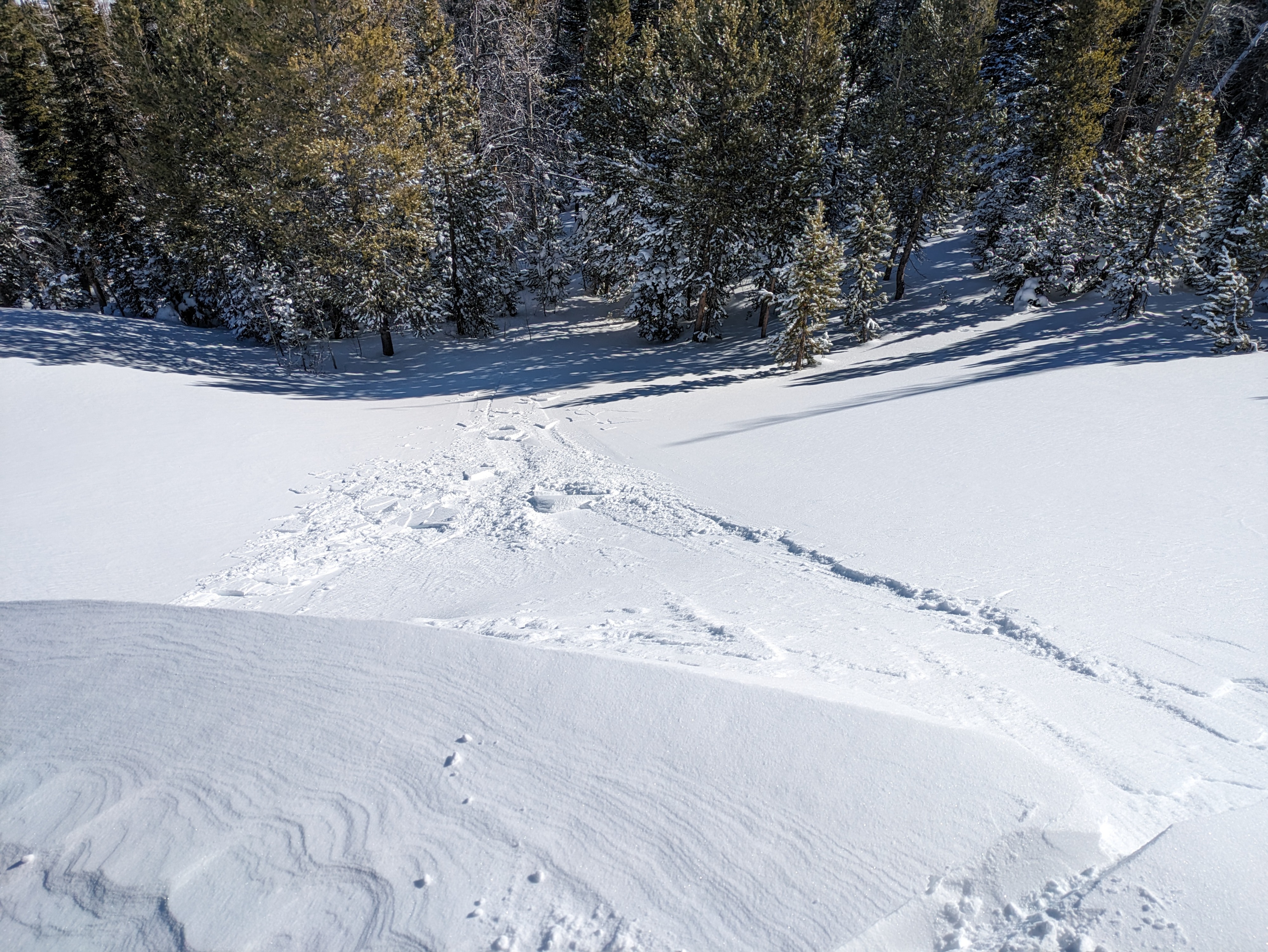
Two avalanche problems observed. 1) Wind slabs at the surface. Reactive to stomping and ski cuts, but very localized in distribution to the immediate ridge crest. Wind slabs are currently manageable and don't pose much of a threat, but could become a bigger problem with more wind loading in the future. 2) Depth hoar at the base of the snowpack overlain by a stiff, deep persistent slab. This is the more troubling avalanche problem even though not all areas show obvious signs of instability. We were unable to affect the weak layer in deeper areas of the snowpack (HS>100cm), where the depth hoar is capped by a stiff slab (ECTX). However, the PST result indicates that there is still potential for propagation at the depth hoar/1F-slab interface if a fracture does initiate--as could be caused by the weight of a skier in a shallower area where the slab is thinner. The depth hoar layer appears to be widespread at the aspect and elevations we skied: it was obvious in our pit, everywhere we probed with a ski pole we could clearly feel it beneath the stout slab, and we got collapses and minor cracking on it while skinning on shallow low-angle slopes. The extreme variability of snow depth on Centennial Ridge sets up the potential for a skier to collapse and impact the depth hoar in a shallow-snow area, and for that failure to propagate across the slope into deeper parts of the snowpack, producing a sizeable avalanche. Our concern about triggering a collapse from a shallow part of the slope, that then propagated more widely, was enough that we avoided all terrain >30 degrees. -Thin (<20 cm) wind slabs from new snow and wind loading in the past 48 hours were reactive to stomps and ski cuts near the ridge crest. -Collapsing was fairly common in shallow areas of the snowpack where a 4F-to-1F slab sits atop fist-hard depth hoar. We experienced localized collapsing with cracks radiating from our ski tips when skinning up through these shallow areas. The cracks in the surface snow generally propagated less than 10 feet. This cracking and collapsing on the underlying depth hoar was most common in places where you can still see shrubs poking out of the snow.
Weather
- Cloud Cover
- few
- Wind Loading
- none
- Recent Snowfall
- 10
- Snow Avail For Transport
- small smounts
Bluebird, but not spring warmth yet. A rare calm day in the Snowies. Doesn't get much better!
Snowpack
Snow pit observation on ENE aspect at 9630' -HS=105cm -Bottom ~20 cm = fist-hard depth hoar, upper ~10 cm = fist-hard new snow (from 2/9 and 2/10). In between was a meaty slab that started as 4F and stiffened to 1F with depth. -ECTX. It was difficult to pop the isolated block out with a shovel shear after wailing on the column and getting no failure (many extra full-force hits beyond the normal 30). But eventually with 2 shovels, we were able to remove the block, where it slid out on the depth hoar/1F-slab interface. -PST 45cm/100cm End. PST performed at the depth hoar/1F-slab interface (~20 cm above the ground). Fracture initiated at the 45cm mark and propagated the rest of the way through the 100cm-long block.