
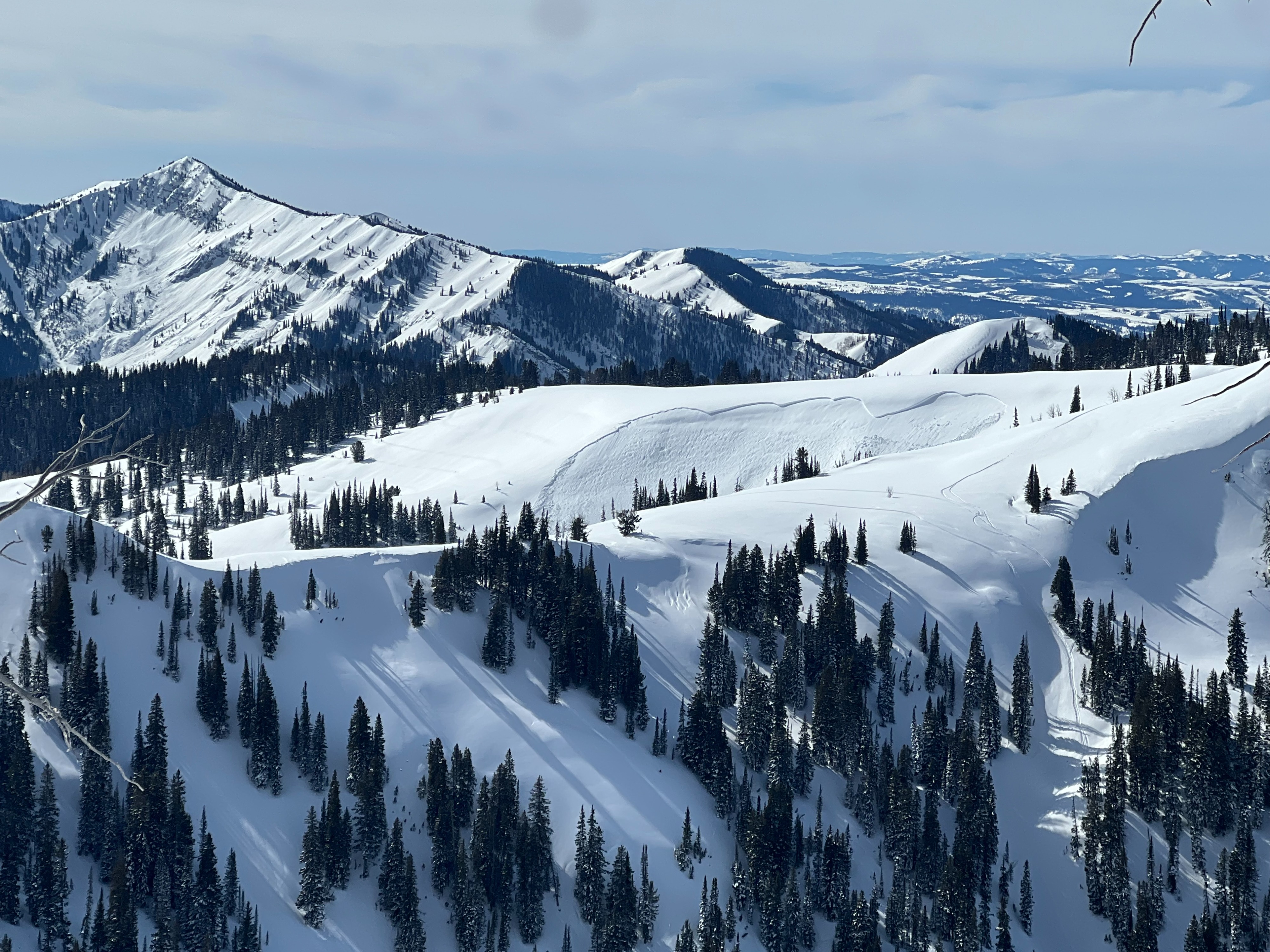
Quick report
We observed recent avalanches and no other signs of instability. Riding conditions are still good as snow surfaces have remained relatively cool during this dry spell. We verified that poor snowpack structure does exist in the lower-upper elevations on W-N-E aspects. Slab depths above these weak layers range from 1-2 feet deep and have settled into a hard slab (4F+).
The snowpack is deceiving right now. The weak snow from January is buried deep enough that it is difficult to notice and may not present any signs of instability. Watch for avalanche danger to increase dramatically the next two days with the incoming storm if snow totals pan out. The January drought layer (JDL) layer will be significantly stressed by rapid loading of snow. Terrain avoidance is reccomended.
Snowpack
Multiple hand shear tests broke easily or during isolation. Widspread distribution of dry, weak facets on W-N-E aspects. Spotty distribution of buried surface hoar. Slopes heavily exposed to the sun contained crusts and were well bonded. We found propagation and unstable results in our snowpit with easy failure. The snowpack is touchy.
9,000' WNW aspect ECTP12 down 50cm on buried surface hoar. JDL is composed of 1-2mm dry facets.
Avalanche
- Size
- D2 R2
- Type
- SS
- Aspect
- E
- Elevation
- 9400 ft
This avalanche likely occured in the last 48 hour while the snowpack was settled. Left flank debris appears fresh. Another smaller D1-2, R1 avalanche was viewed from a distance on a similiar slope.