
Quick report
- Cracking
- isolated
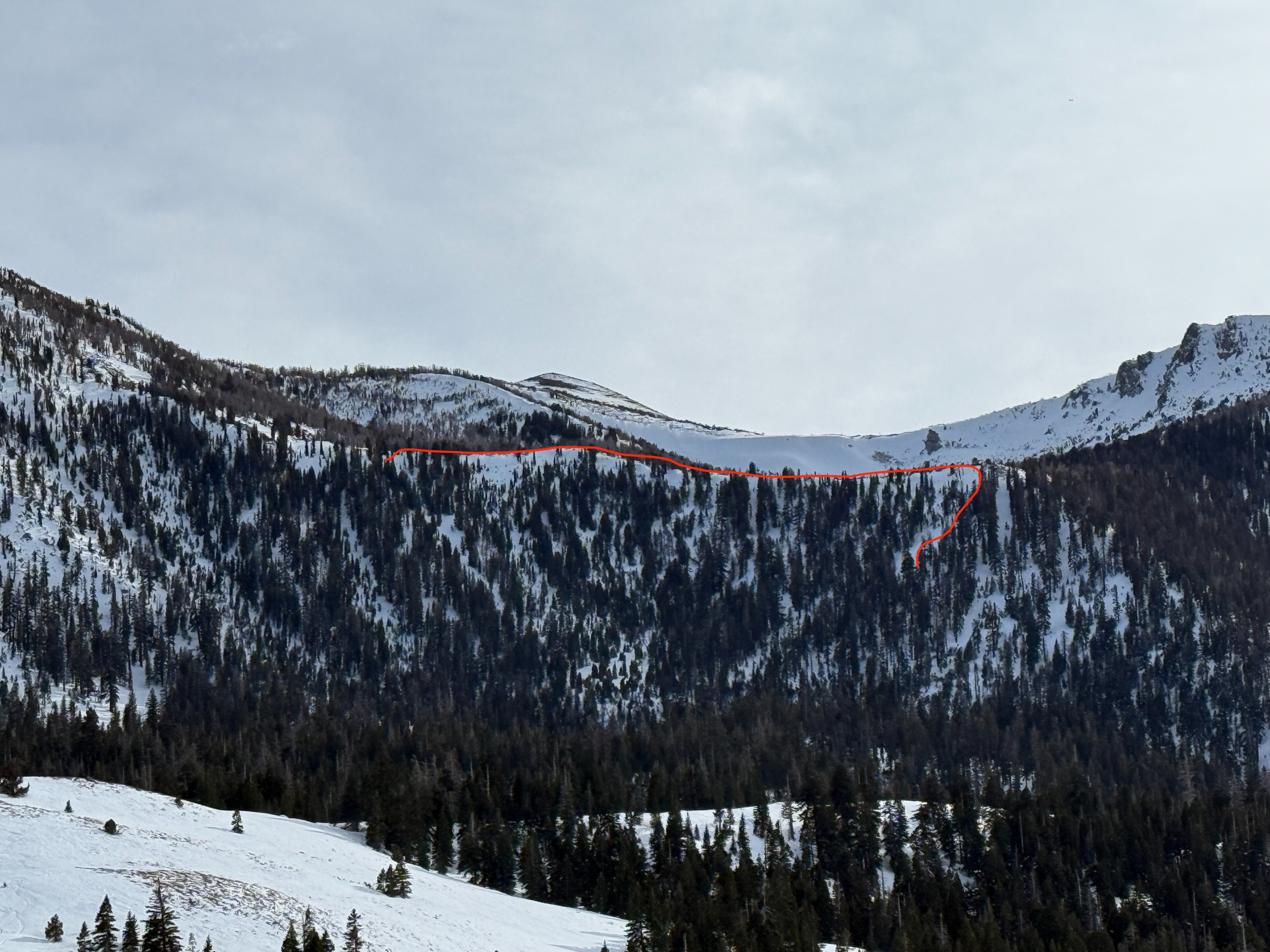
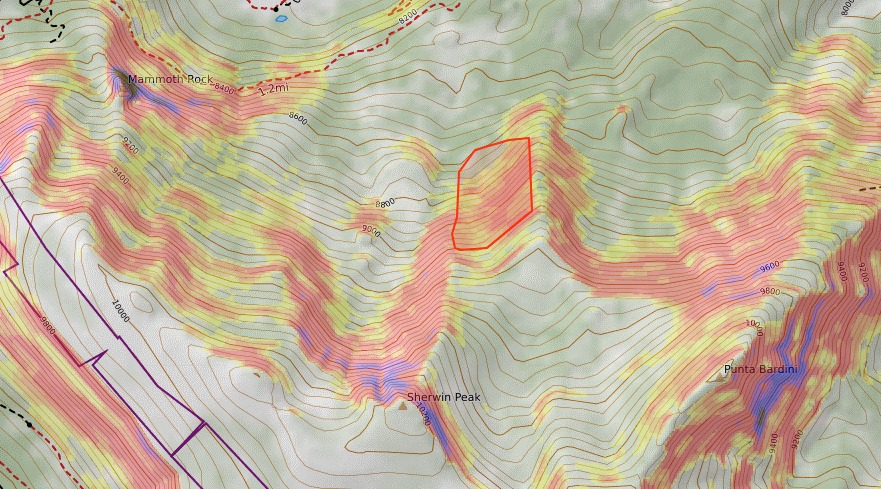
We ventured into the Sherwins today to get a closer look at an avalanche that was reported on 2/15. This avalanche initiated at 9400' off the Perch in steep treed terrain between Punta Bardini and Mirkwood. We made several observations along our tour.
Notes on wind slab
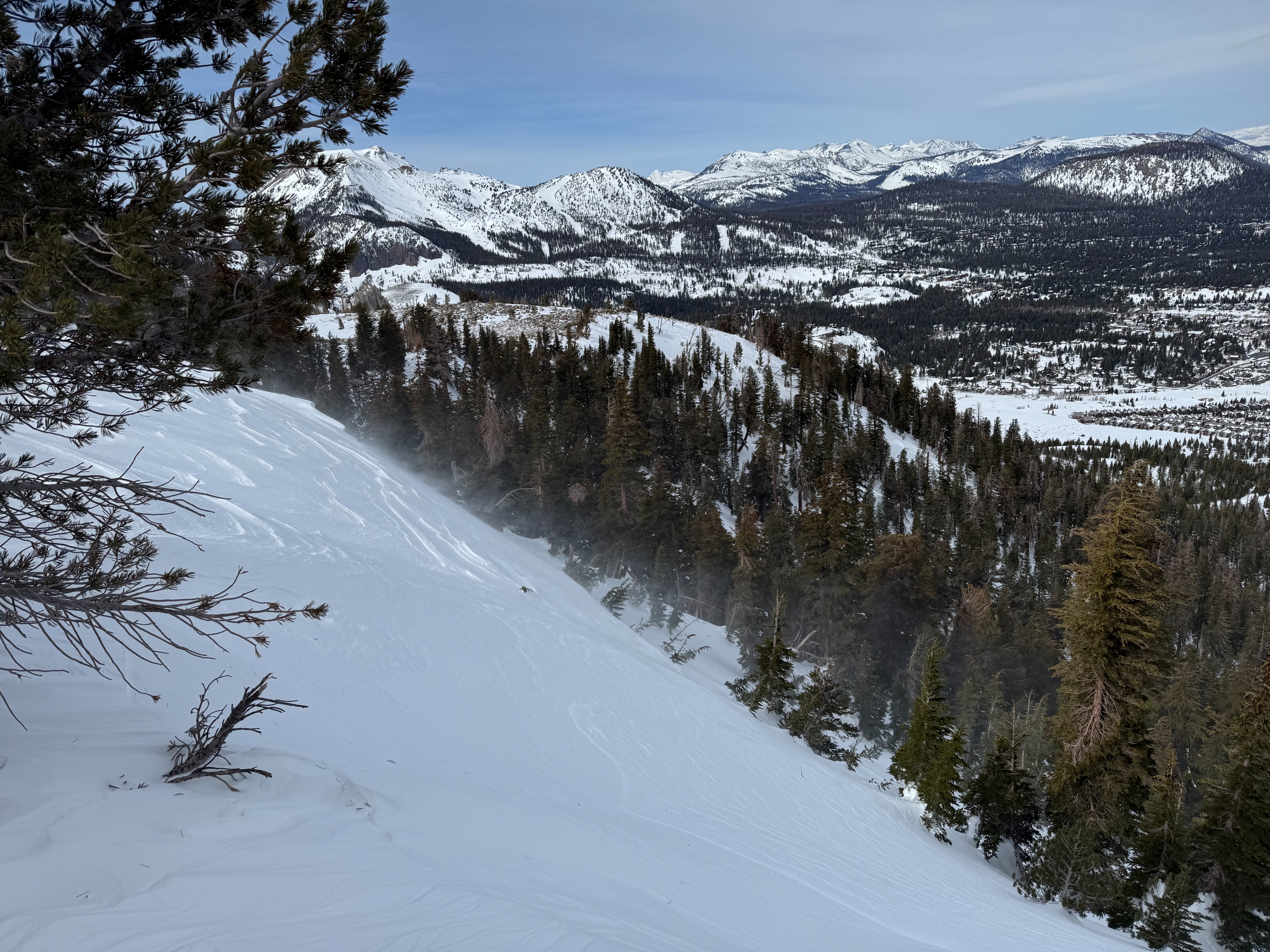
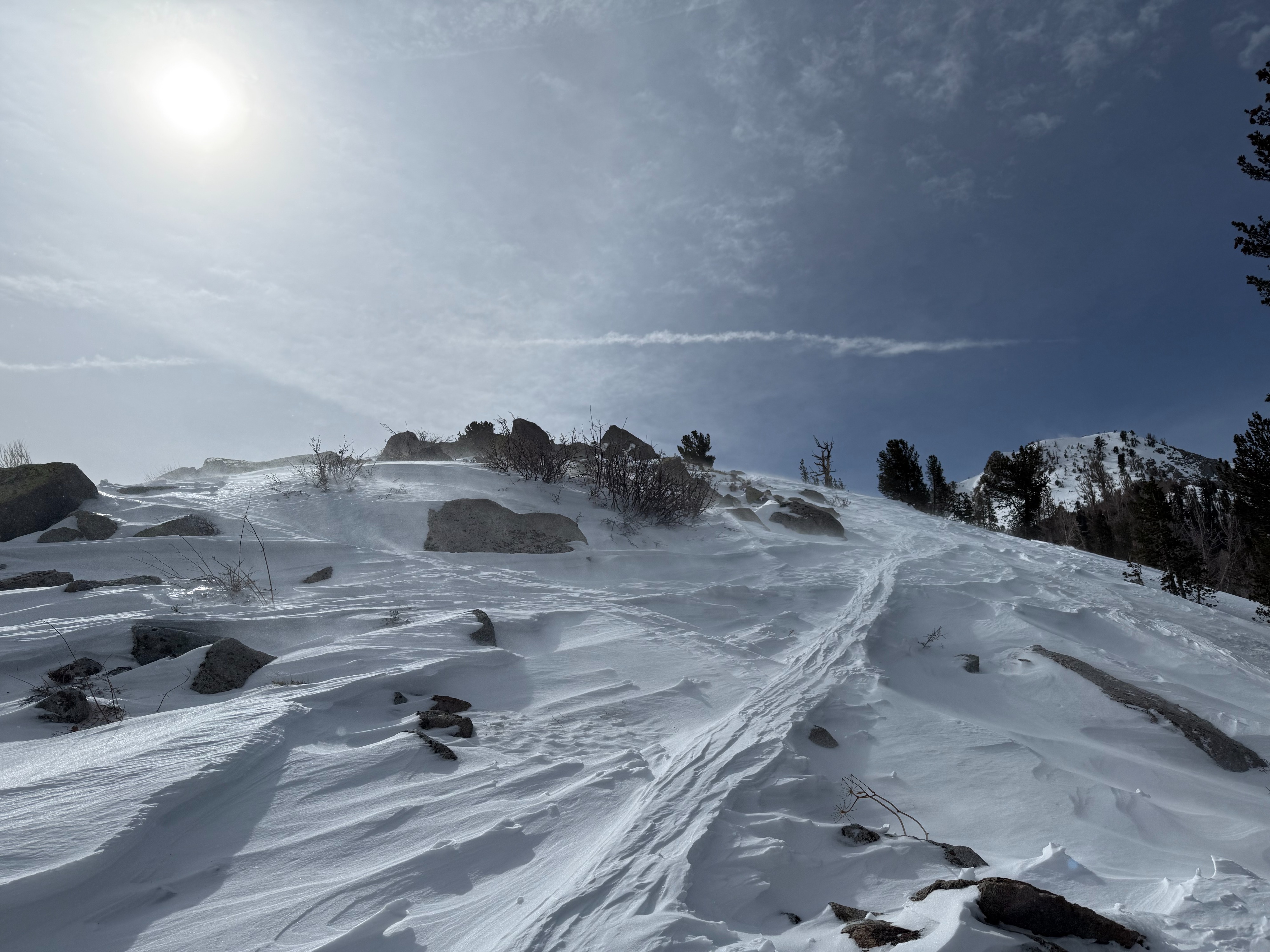
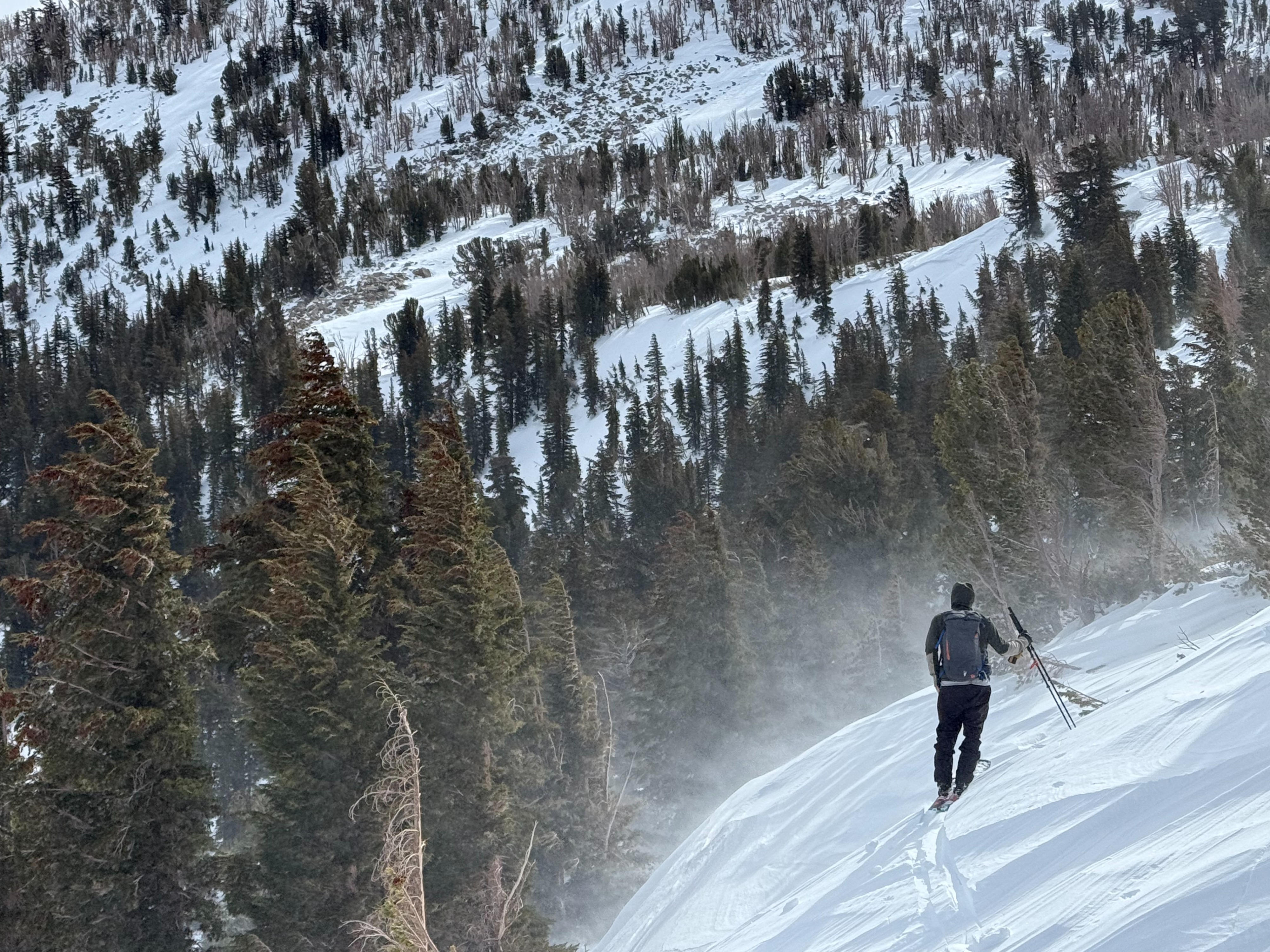
- Strong and gusty winds were present throughout the day, leading to a decent amount of wind transport near and above treeline.
- While some transport was noted below the treeline, it was more sporadic in nature, and no reactive deposits were observed.
- I did note some older deposits that I would describe as stubborn. Isolated cracking was observed on small test slopes after the slab was undercut.
More observations were made pertaining to our current Persistent slab structure.
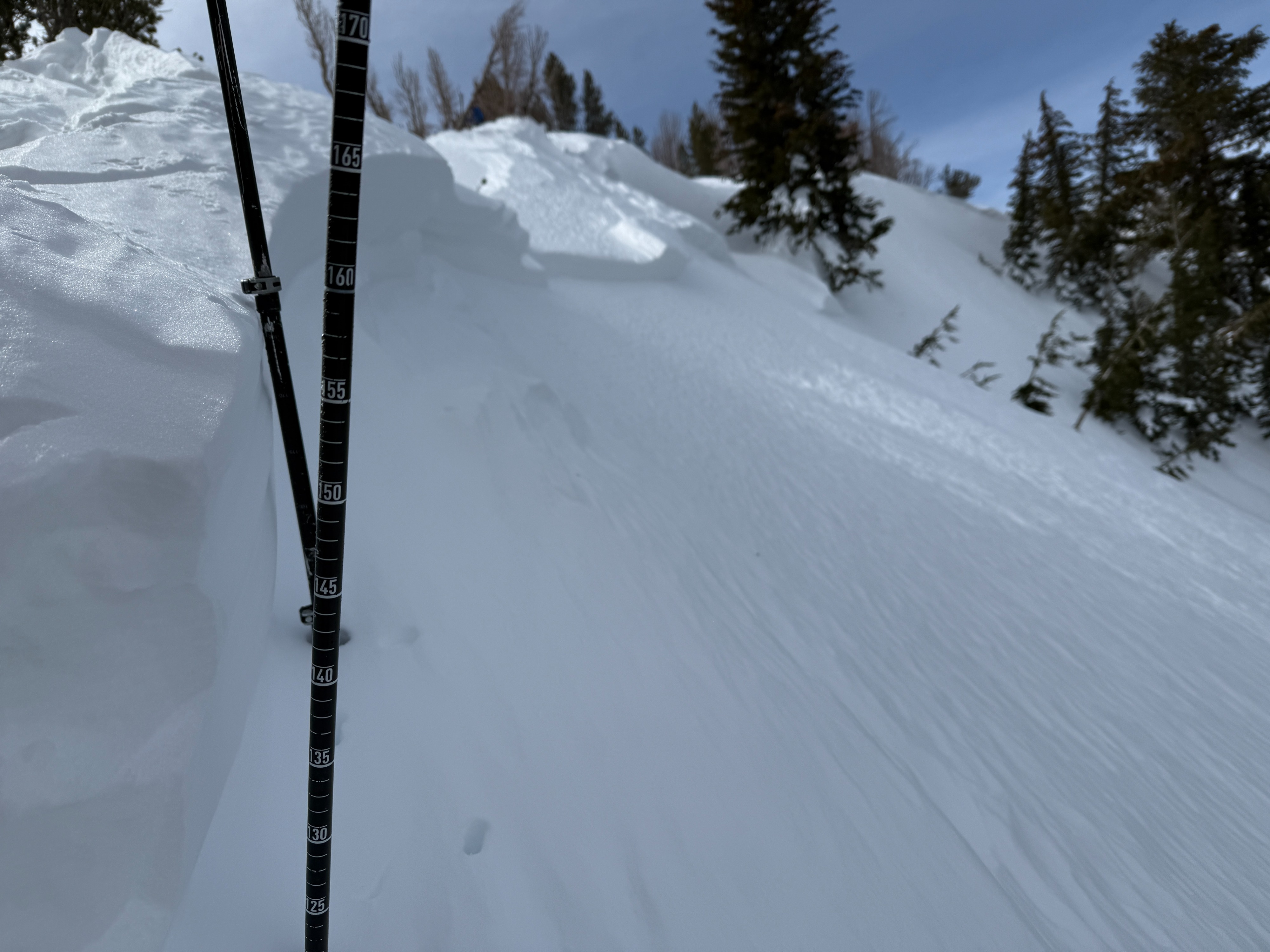
- The avalanche we came to investigate was larger than I initially expected. The width of the avalanche was about 2000' wide, and it ran an estimated 500' vertically. The crown averaged about 150cm, with some areas of the crown more prone to wind loading, measured close to 3 meters in depth. It appears this avalanche likely broke on a thin layer of buried near-surface facets above the rain crust from 2/1. I suspect that this avalanche likely stepped down to more well-established facets below the crust as it moved downhill.
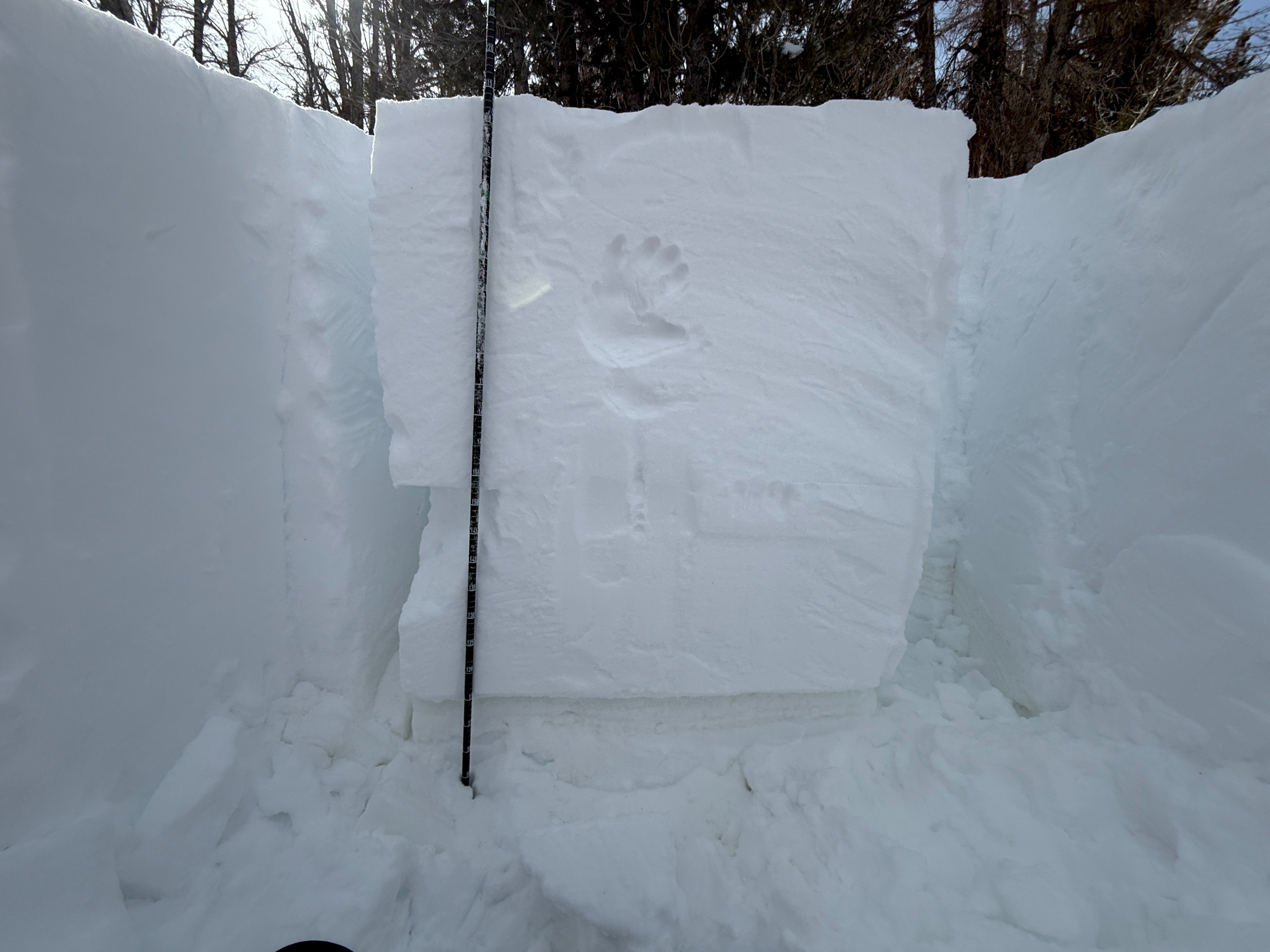
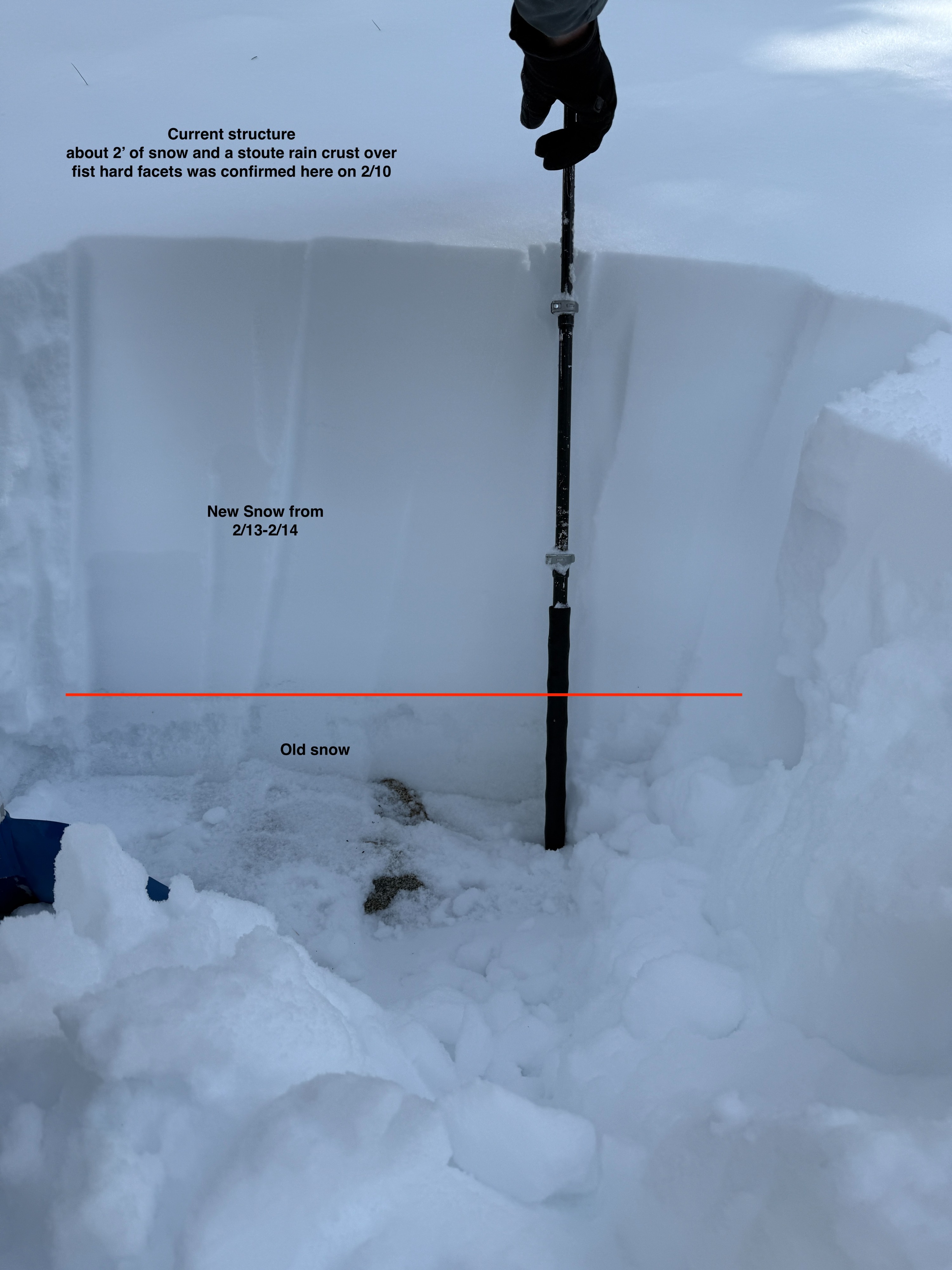
- Due to the continued loading of this path, we decided to dig a pit in a representative slope nearby. (see profile for more details)
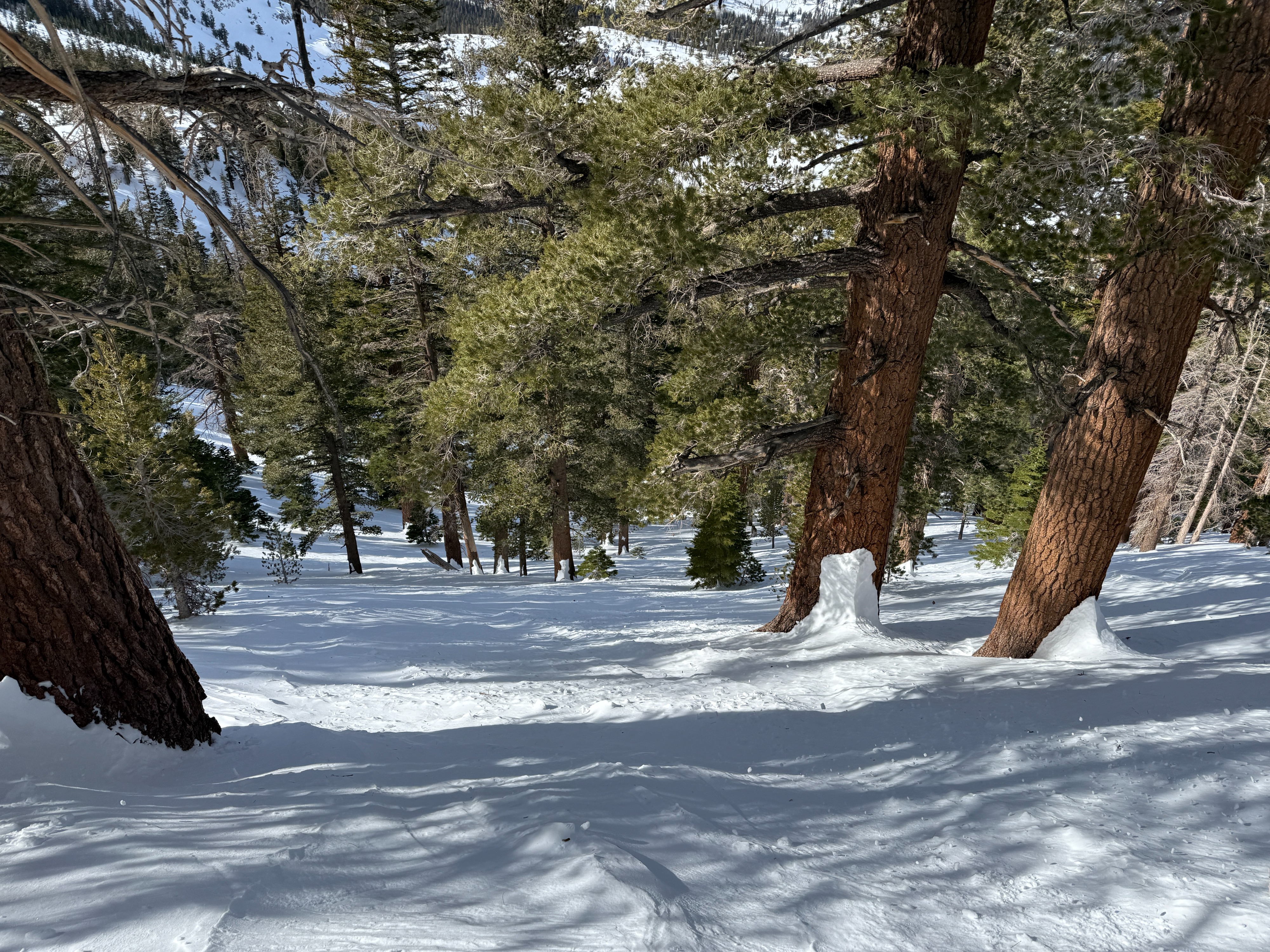
- While exiting the area through Mirkwood, we found ample evidence of another large avalanche. This avalanche was largely filled back in by new snow, suggesting that it likely ran early in our last storm cycle on 2/13. I visited this area on 2/9 and confirmed poor structure and observed audible collapsing and long shooting cracks. At the time, these failures occurred below the rain crust on 2 mm faceted grains. Our observations today support that this avalanche in Mirkwood likely failed below the rain crust.
- No collapsing or shooting cracks were observed on our tour today
Stubborn wind deposits were observed below treeline. Lots of blowing snow at all visible elevations.
Weather
- Air Temp
- 34
- Cloud Cover
- broken
- Wind Loading
- moderate
- Snow Avail For Transport
- large amounts
Mostly cloudy skies prevailed with temperatures above freezing. Winds were strong to extreme out of the west at all elevations and made for a chilly day in the hills
Snowpack
We dug in at 9400' on an NE aspect that was representative of the starting zone of the avalanche labeled Perch that was submitted on 2/15
- HS= 217
- In this location, we found about a meter of right-side-up snow (the Slab) resting on the rain crust from the 2/1 storm event. A thin layer of buried near-surface facets exists at this interface. This was the failure plane at the crown of the avalanche. Below the rain crust are more well-developed facets that are also concerning. It is likely that after this avalanche broke loose, it stepped below the crust.
- See profile for more details.
Avalanche
- Size
- D2.5 R4
- Type
- HS
- Count
- 2
- Aspect
- NE
- Trigger
- N
- Elevation
- 9400 ft
We investigated an avalanche that was reported on 2/15 between the typical Mirkwood approach and Punta Bardini. We also noted evidence of a large avalanche in Mirkwood that likely ran during the loading event on 2/13