
Quick report
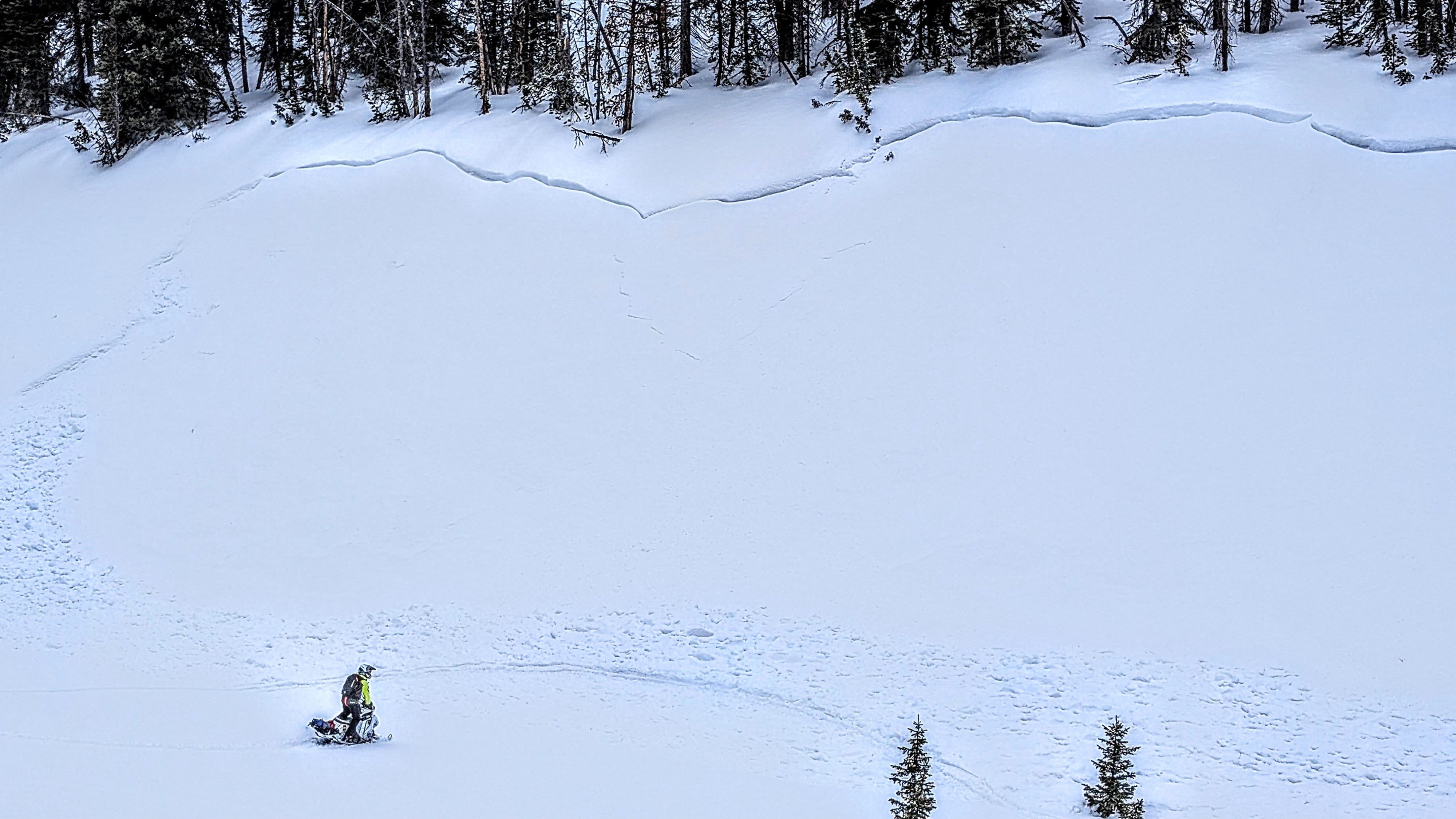
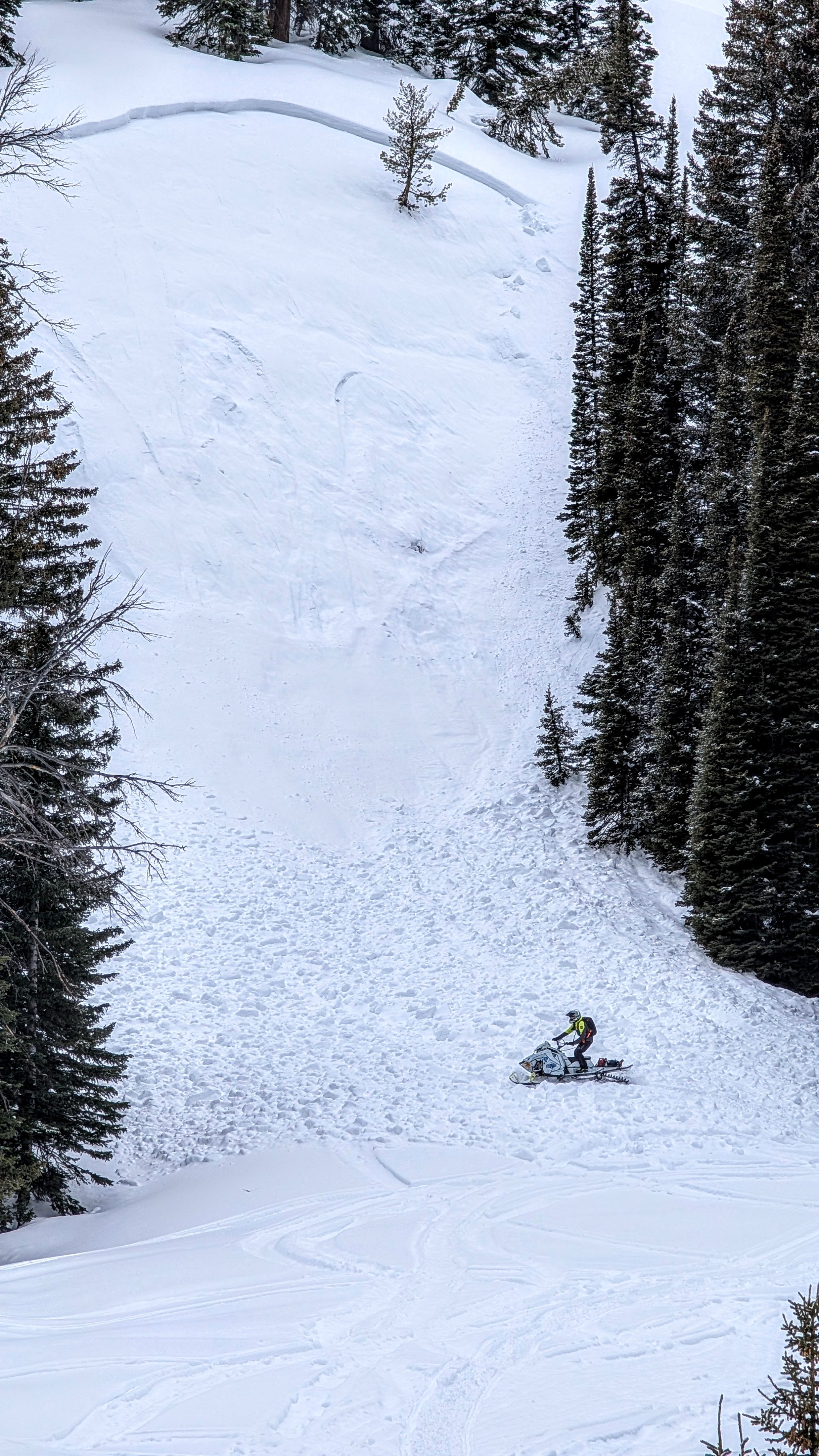
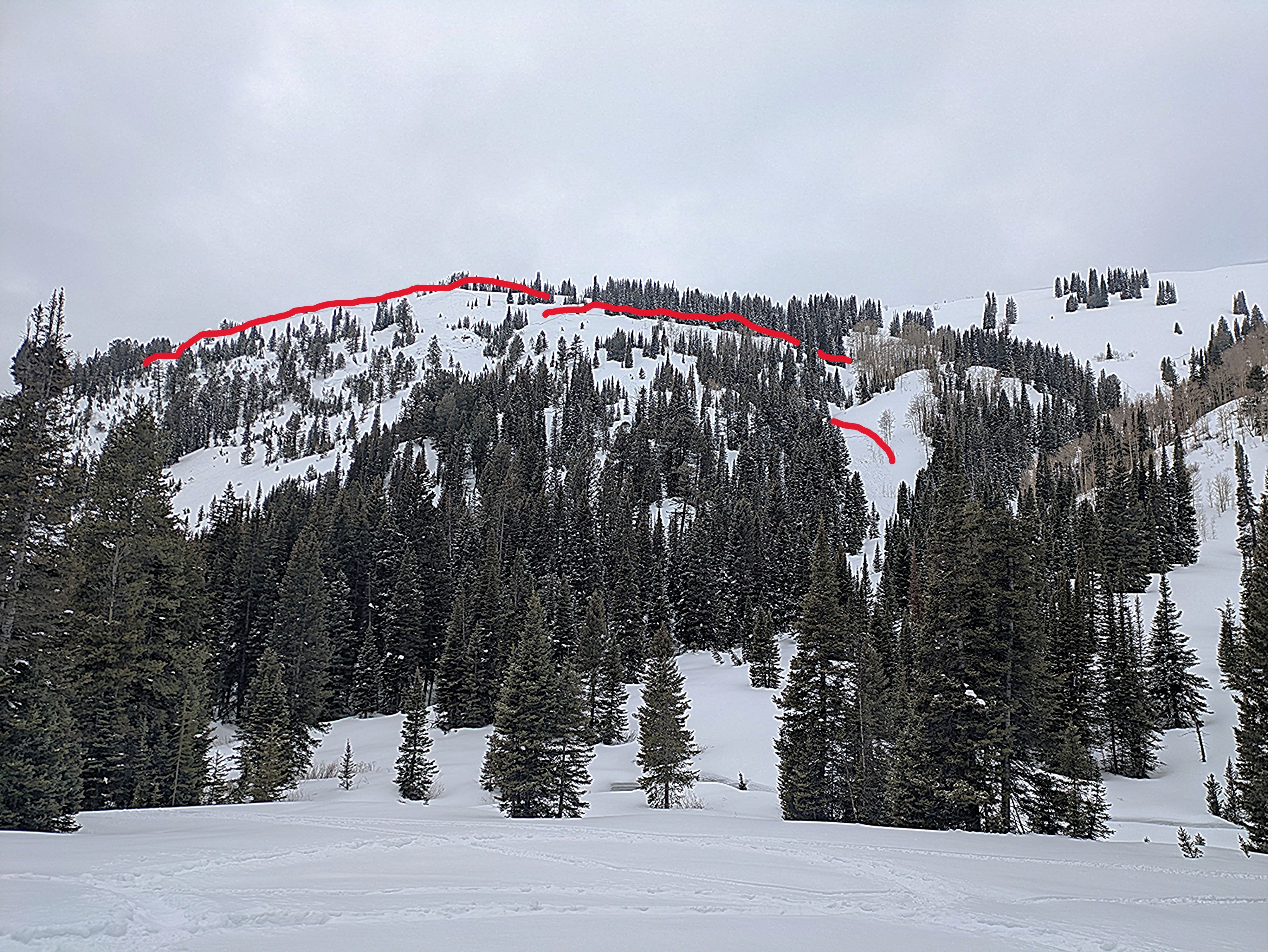
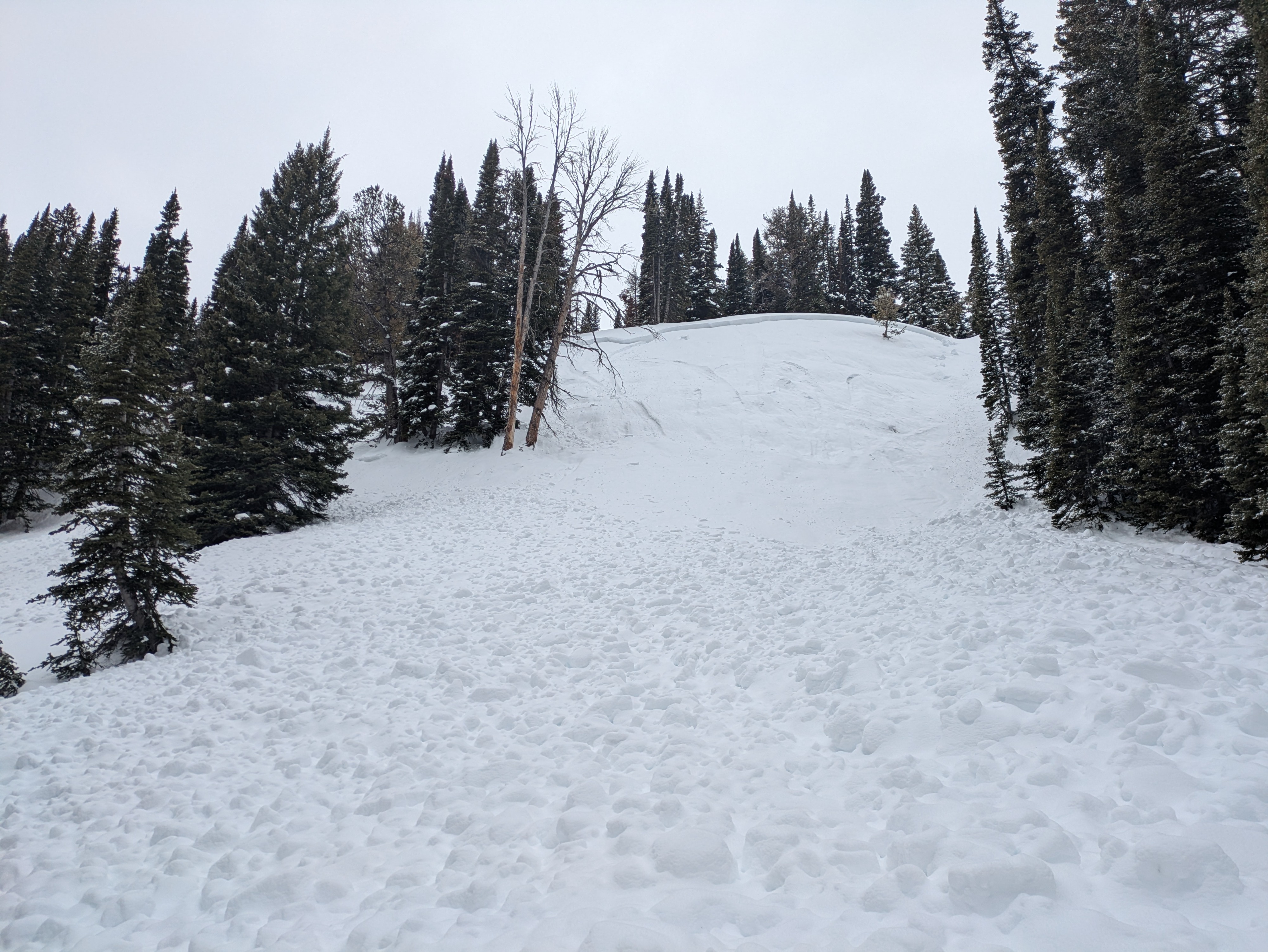
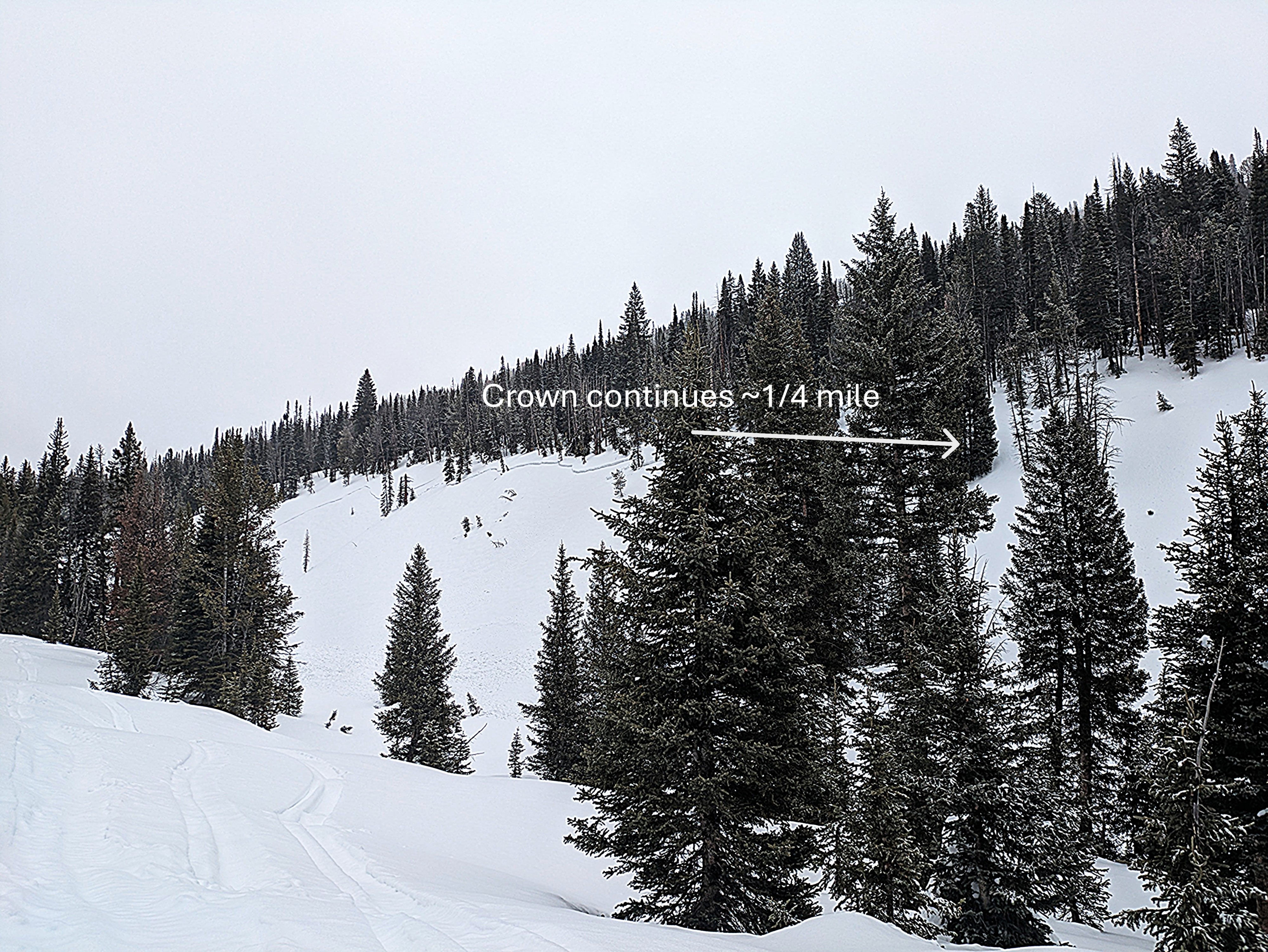
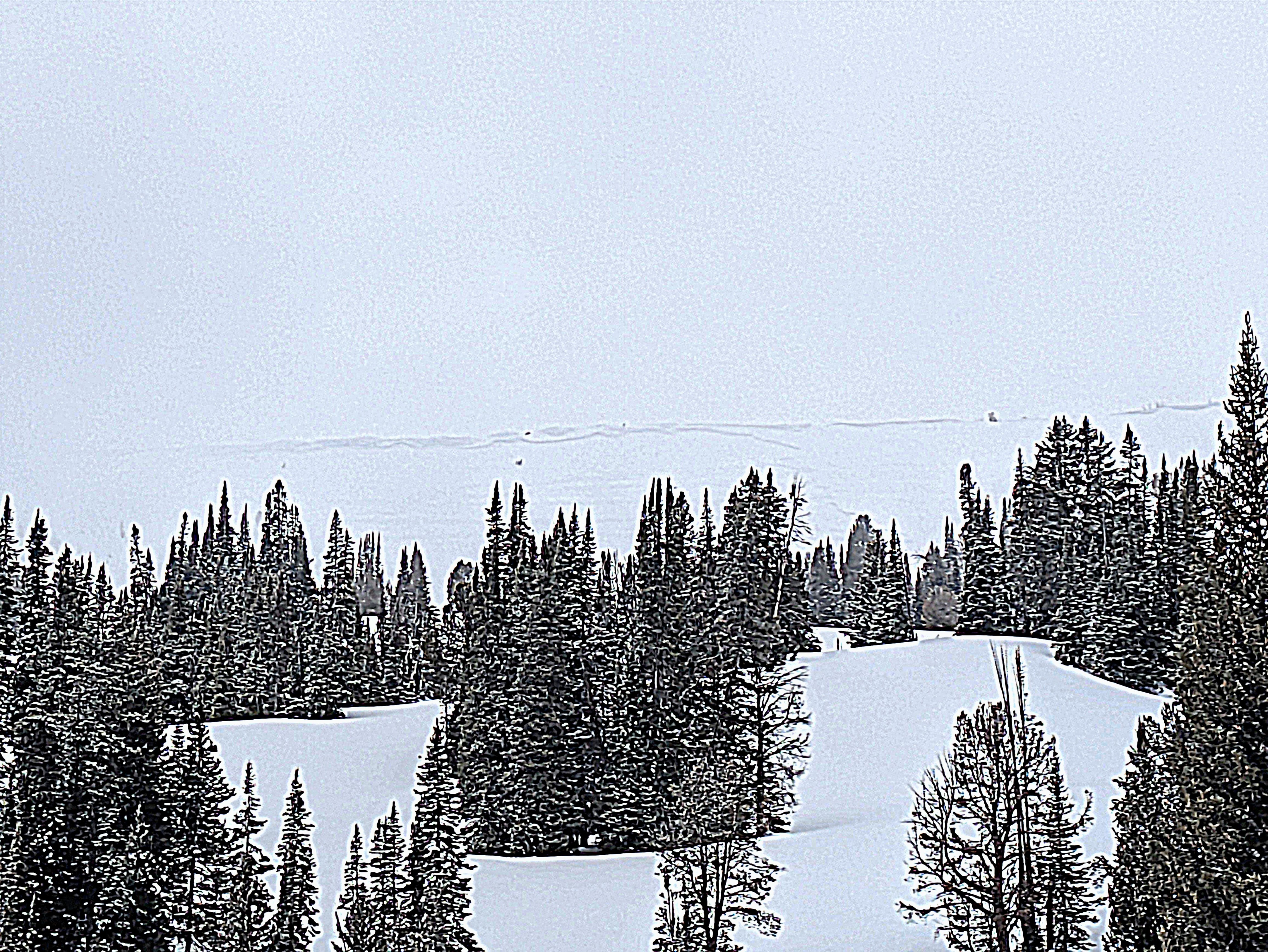
We rode to Commissary Ridge to change weather station fluid and clear the interval board. Along the way we observed the widespread avalanche activity associated with the last major storm Feb 24/25. See attached avalanches for reference. That 12-14" of new snow and/or rain easily overloaded the January drought layer and triggered numerous, widely propagating avalanches 1-3' thick on multiple aspects between 8,000' and 9,500'.
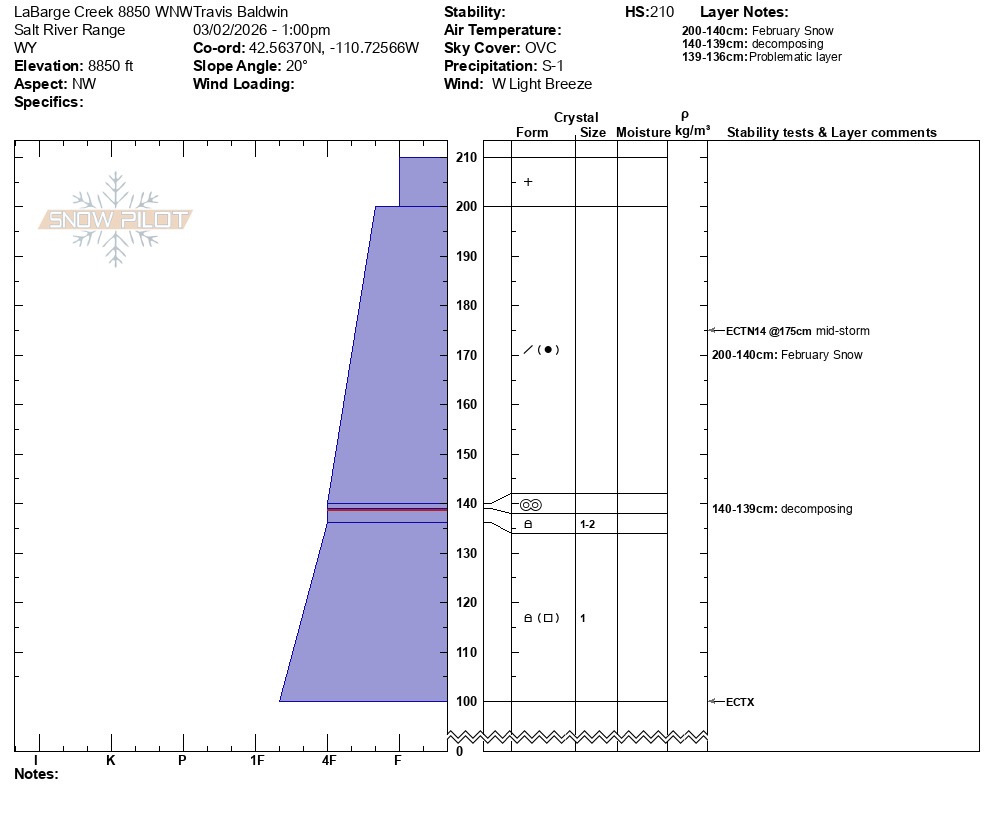
We found dramatic differences in two snowpits dug close proximity in La Barge Creek, largely due to the influence of the high Feb/March sun. Though JDL facets are small grained (1mm) and rounding, they are much drier in sheltered, shaded areas. Though there wasn't much of a slab in the spot that we dug, there very likely is a slab on this weak layer in more wind loaded areas, areas beneath steep cliffs and possibly areas in the range with localized heavier snowfall. On a west-facing slope in La Barge, near the January 11 avalanche fatality, they are moist but are much more advanced in size and form. In this case though, the recent sunshine has deadened the surface slab with moisture and formed crusts. We had no propagation in the pits, one of which was in the crown of an avalanche which propagated 1/4 mile or so on the west facing slope above La Barge Creek. These were not storm slab interfaces; they failed on the JDL bed surface, probably during the overnight rain event in lower elevation spots and during peak wind loading/peak snowfall rates in higher elevations.
Going forward, riders will need to continue to be aware of the spotty way in which the weakest layers are distributed across the terrain. Very steep (35+degrees) and shady slopes are where it is possible to trigger an avalanche on this layer. The snowpack structure is still rotten but several factors have made it less sensitive to triggering, including recent heat. Remote triggering seems very unlikely at this point.
Avalanche
- Size
- D2 R3
- Type
- SS
- Count
- 3
- Aspect
- W
- Trigger
- N
- Elevation
- 8950 ft
The north end of this avalanche was whee the fatal avalanche on January 11th occurred. The evidence of that avalanche was no longer visible.