
Quick report
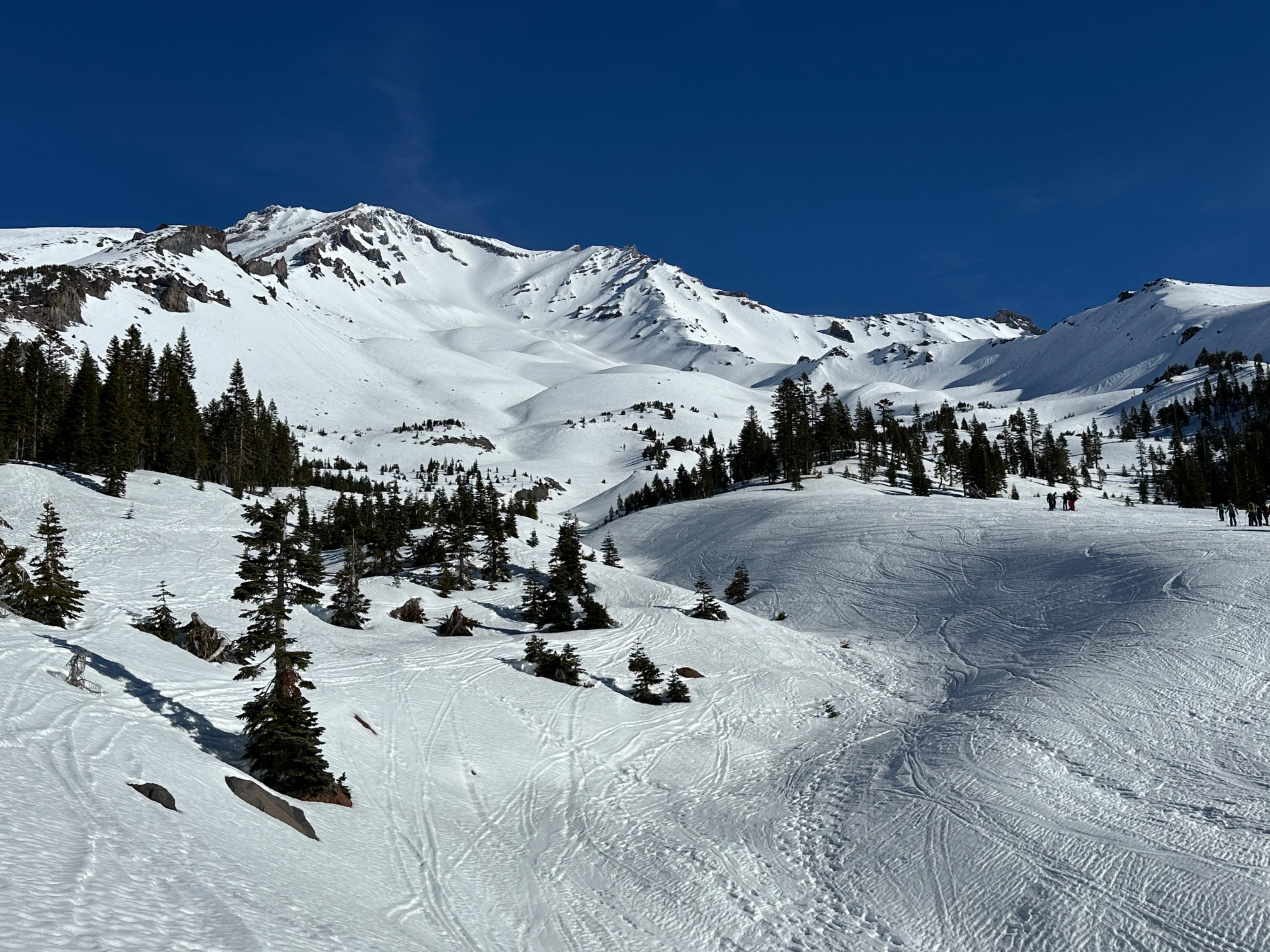
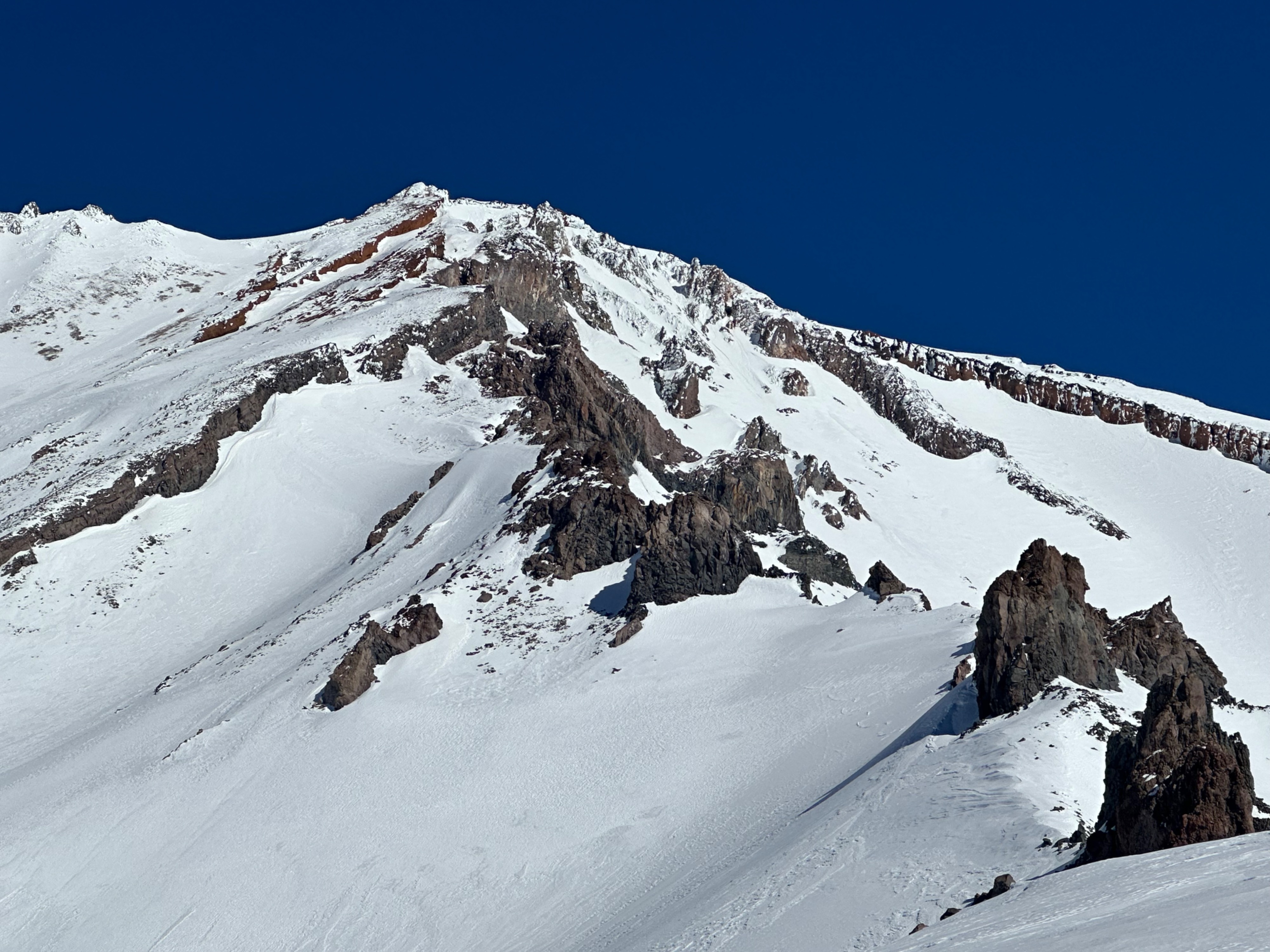
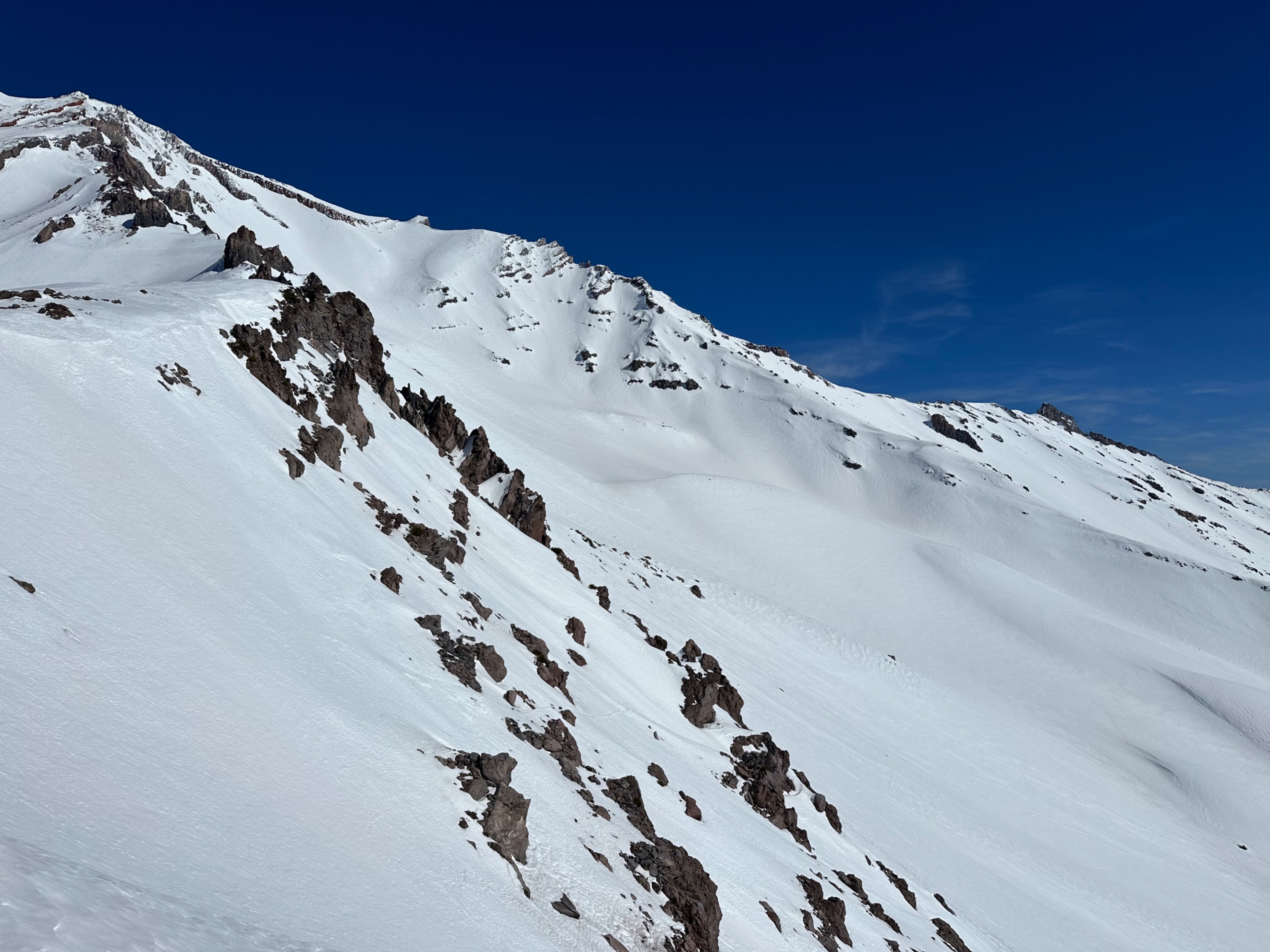
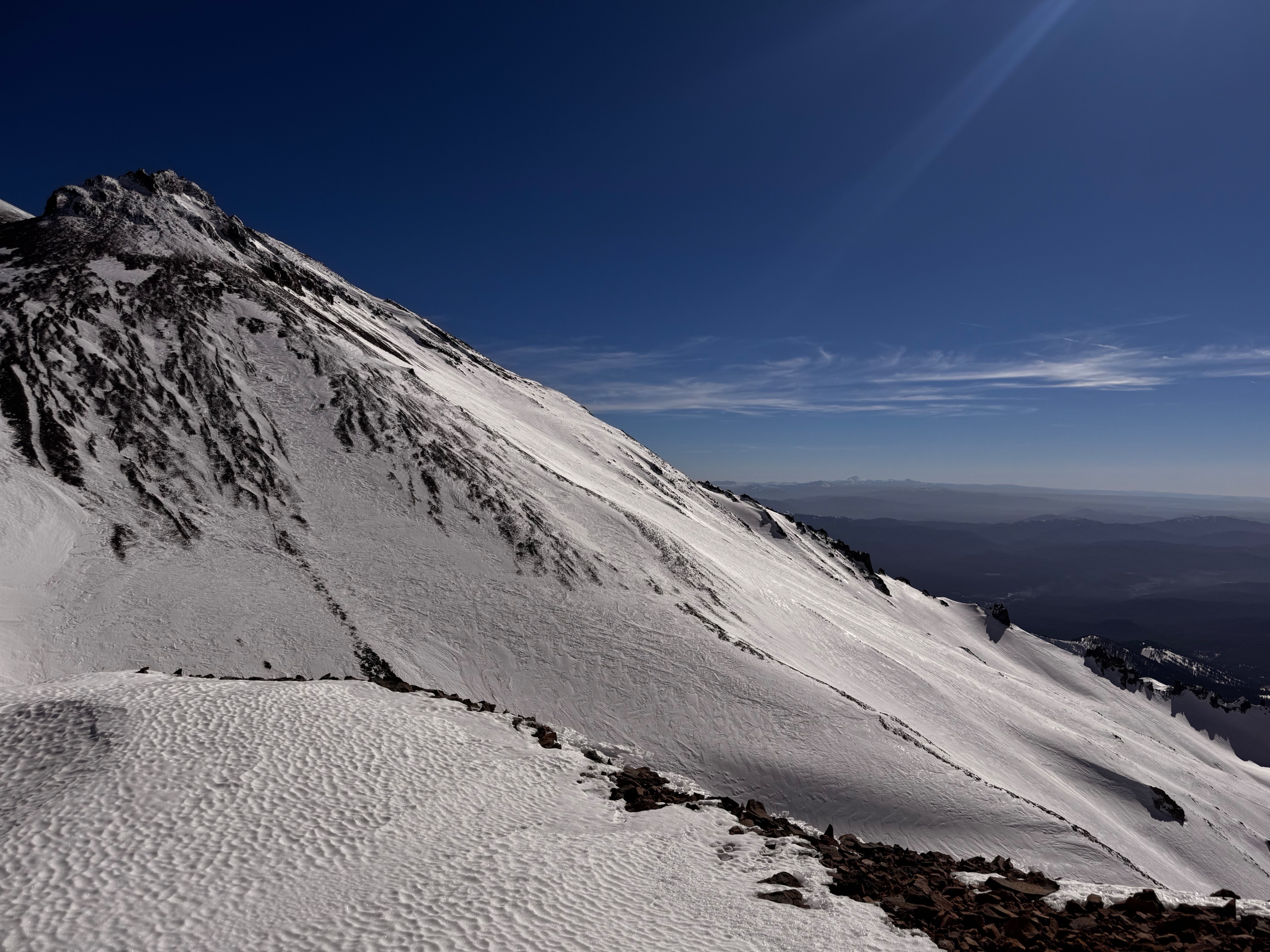
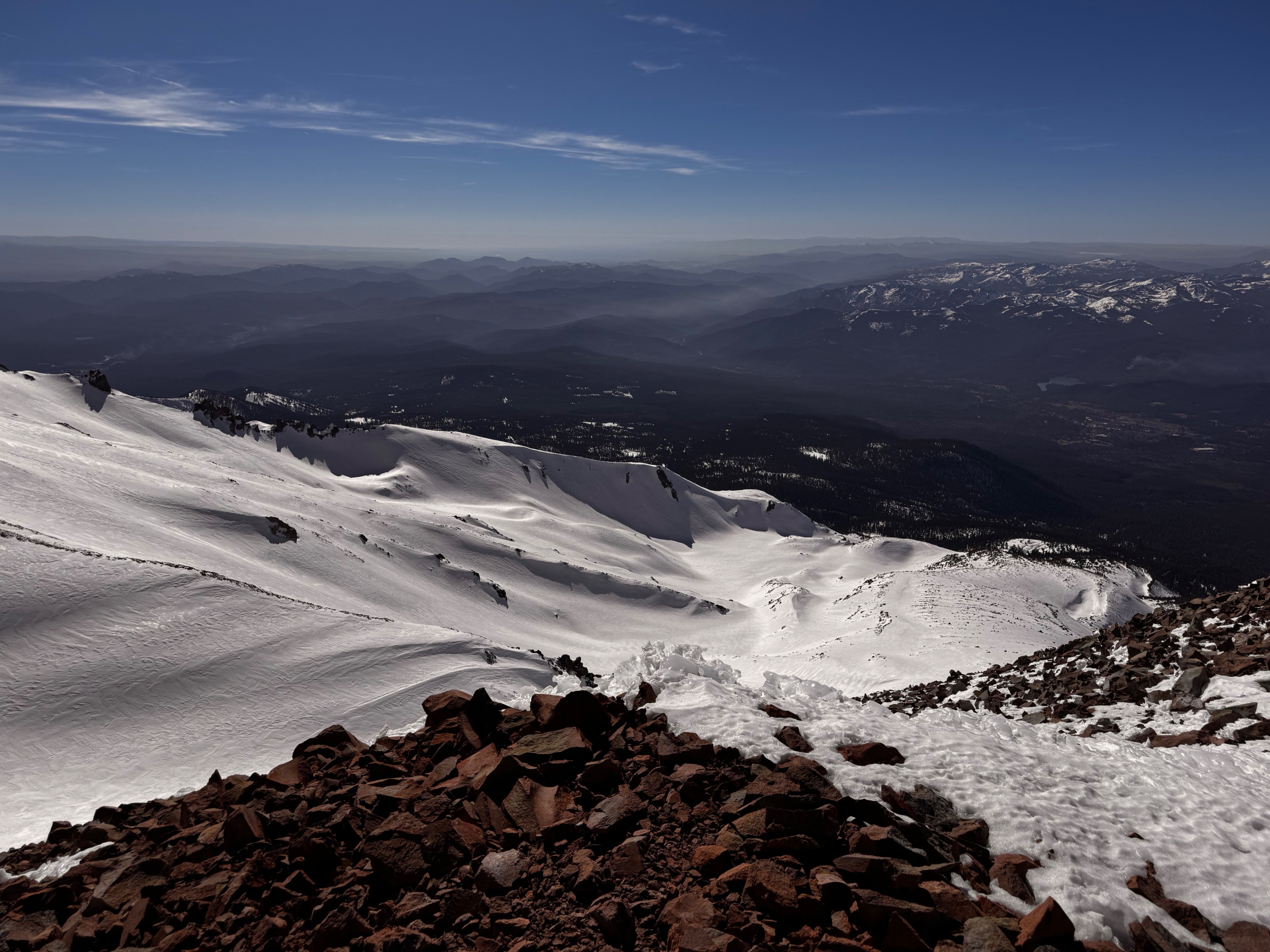
Snow surfaces are highly variable and sometimes hazardous, but some moments of Shasta corn brilliance can be found on solar aspects. Rockfall is an increasing concern as the snowpack melts to bare ground on steep, sunny slopes. The snowpack is well-consolidated with minimal avalanche concerns.
Weather
- Cloud Cover
- clear
- Snow Avail For Transport
- small smounts
Sunny skies, calm to light winds, and unseasonably warm temperatures.
Snowpack
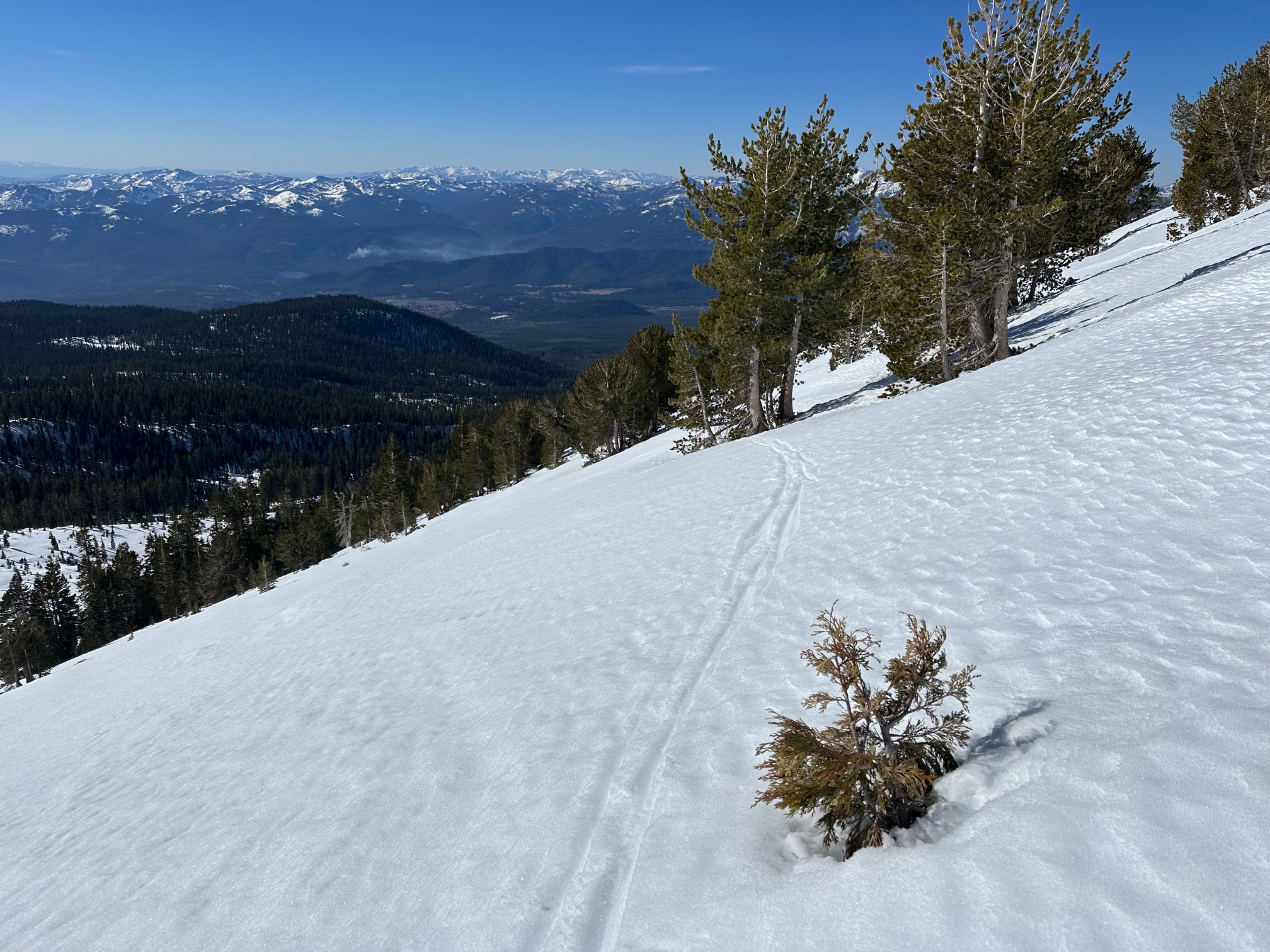
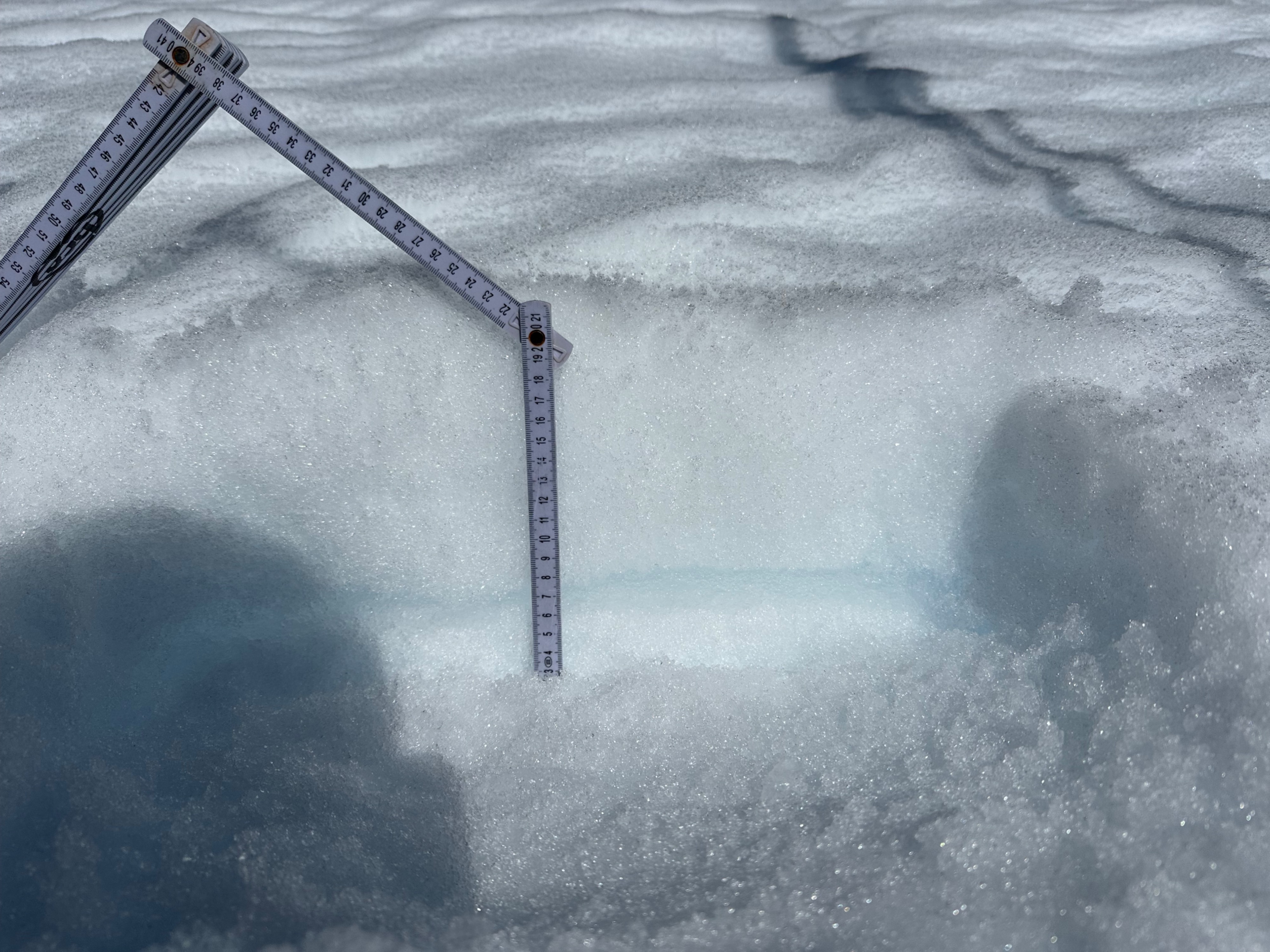
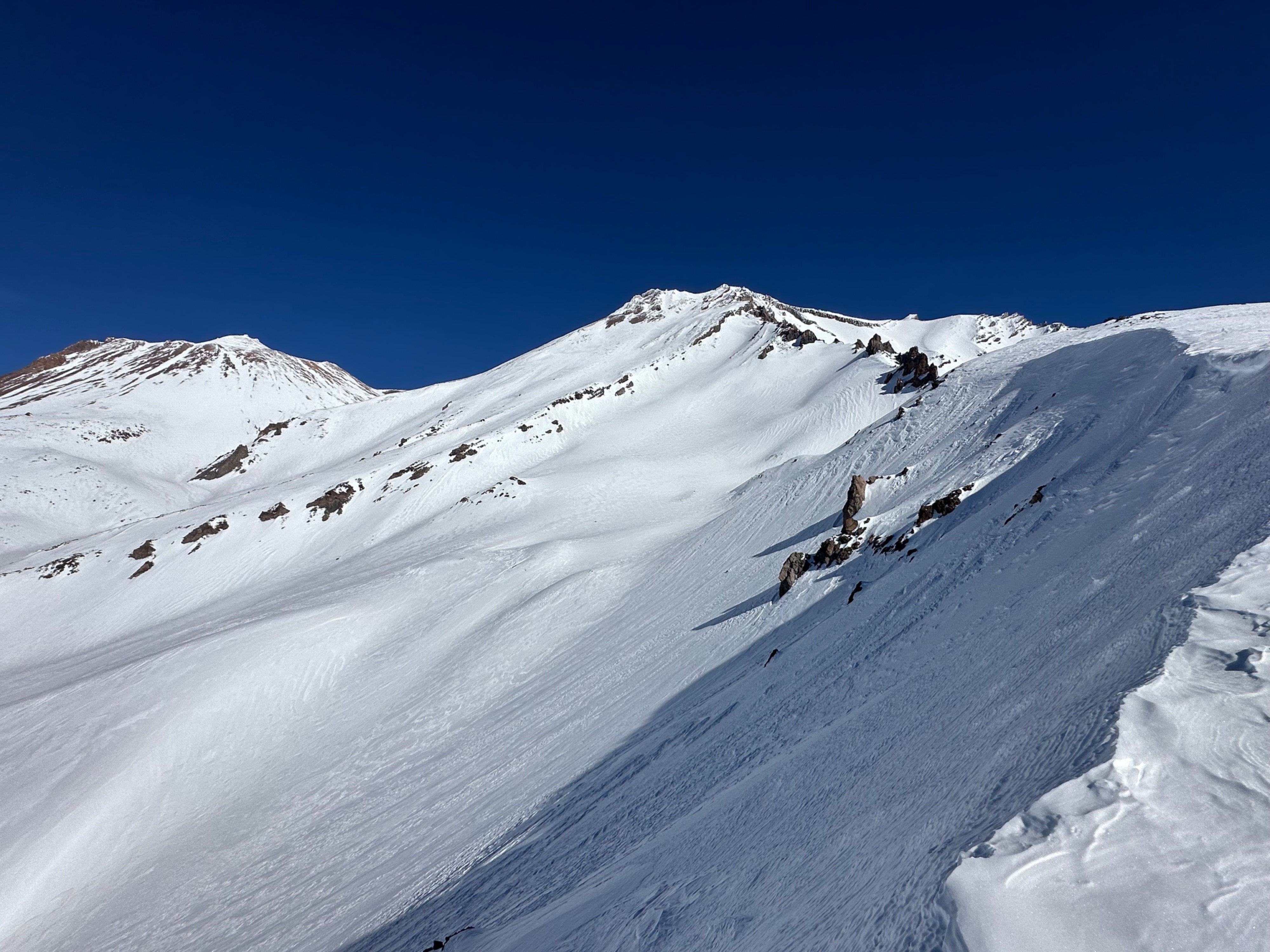
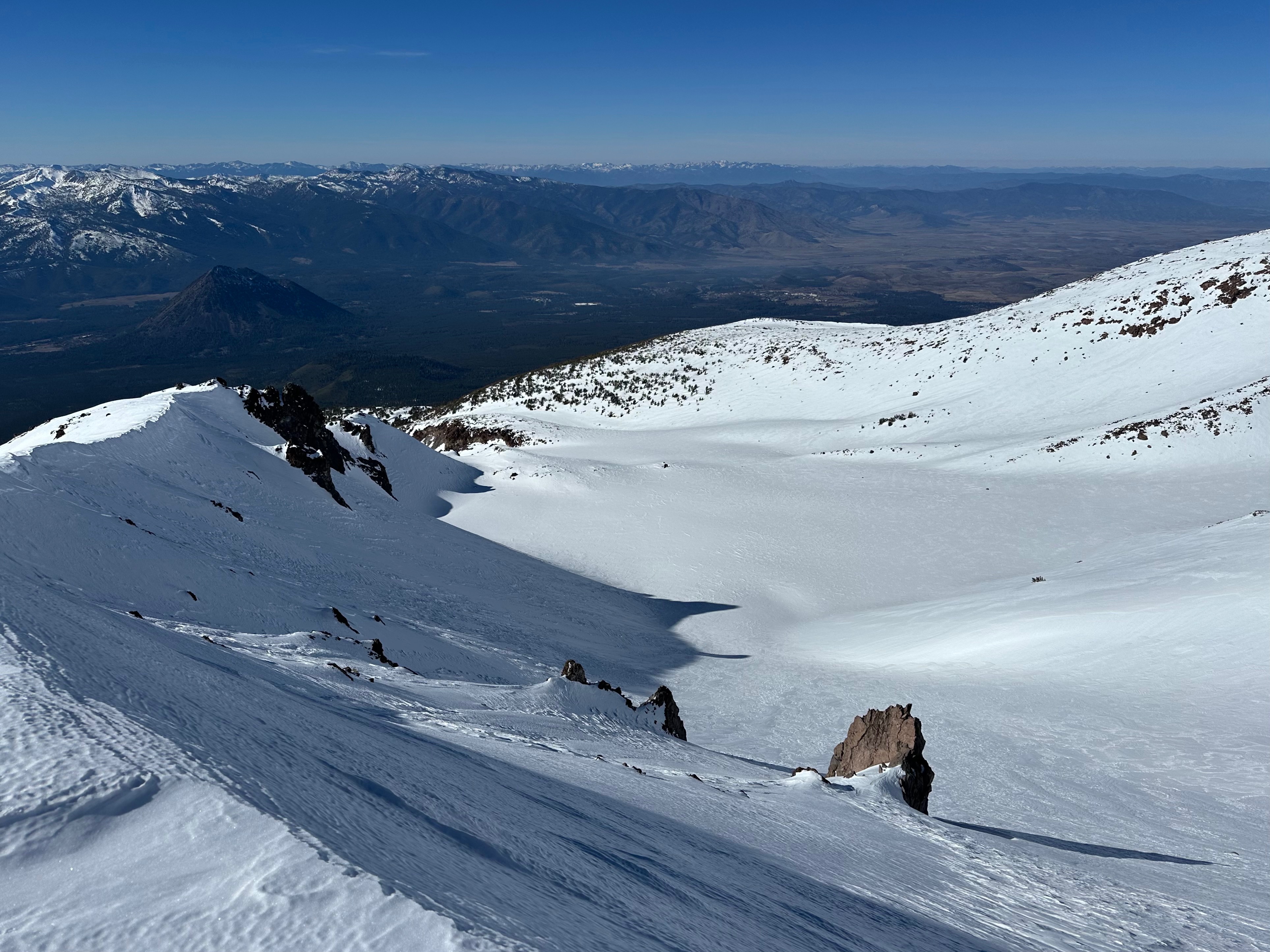
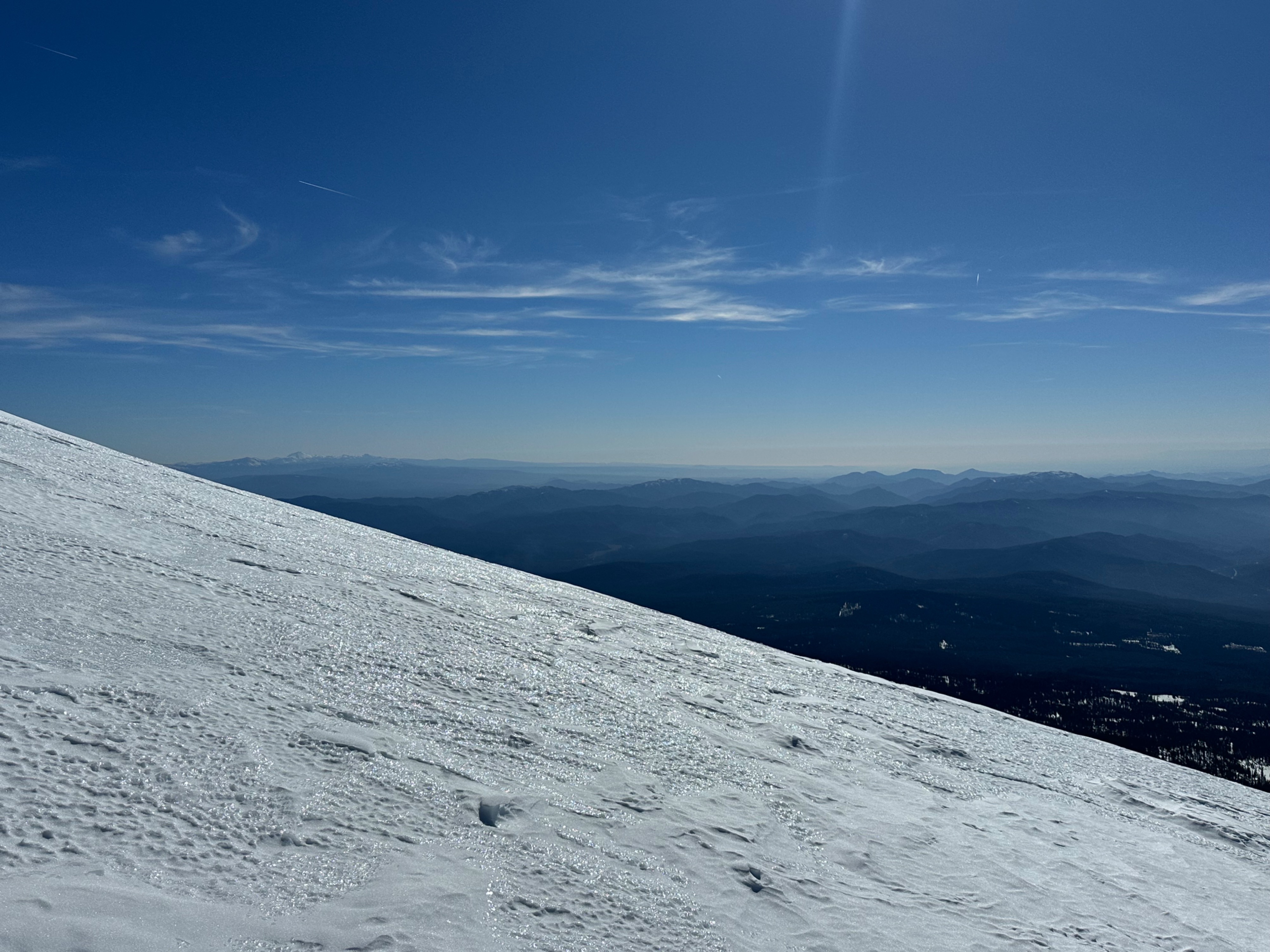
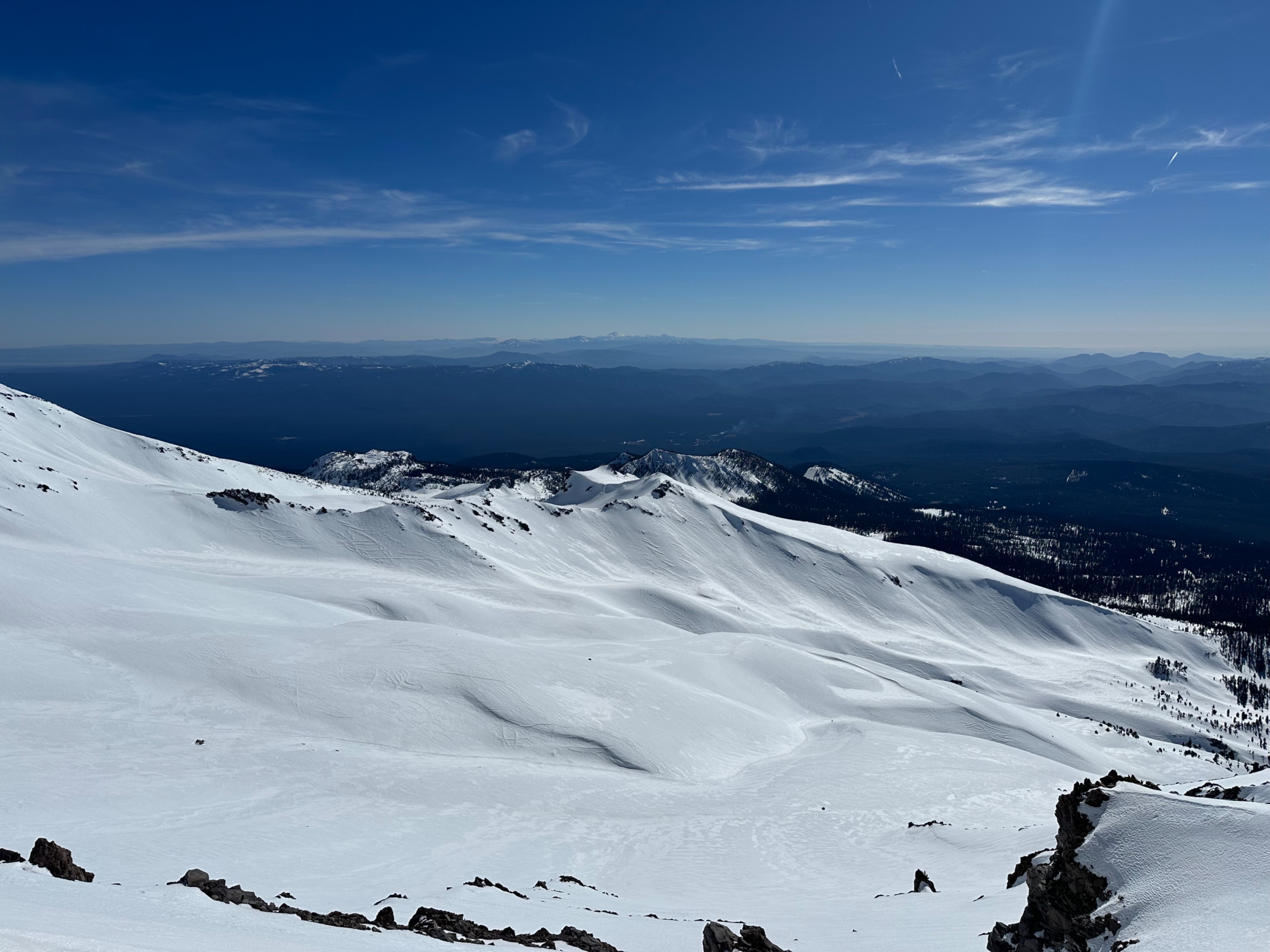
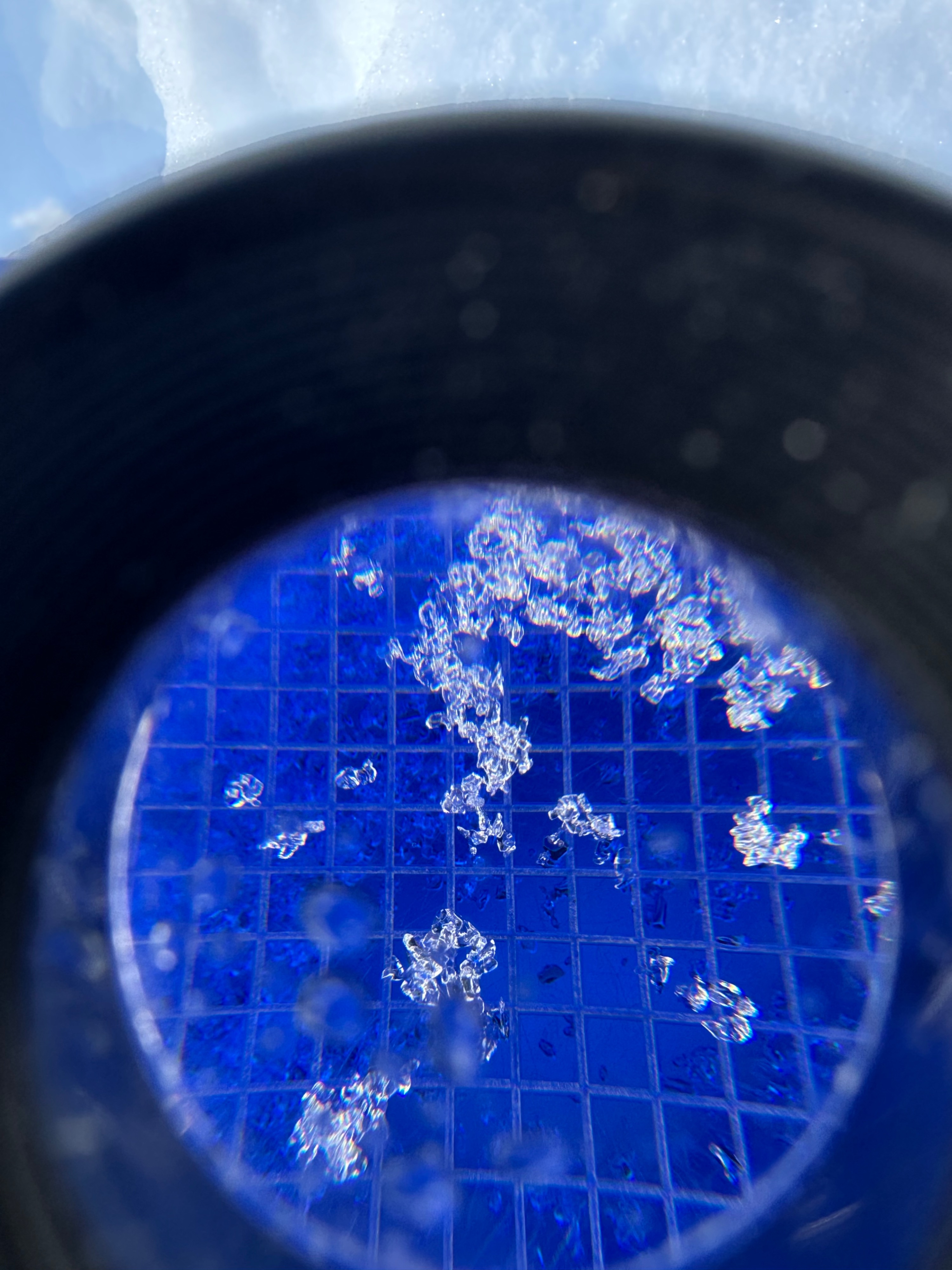
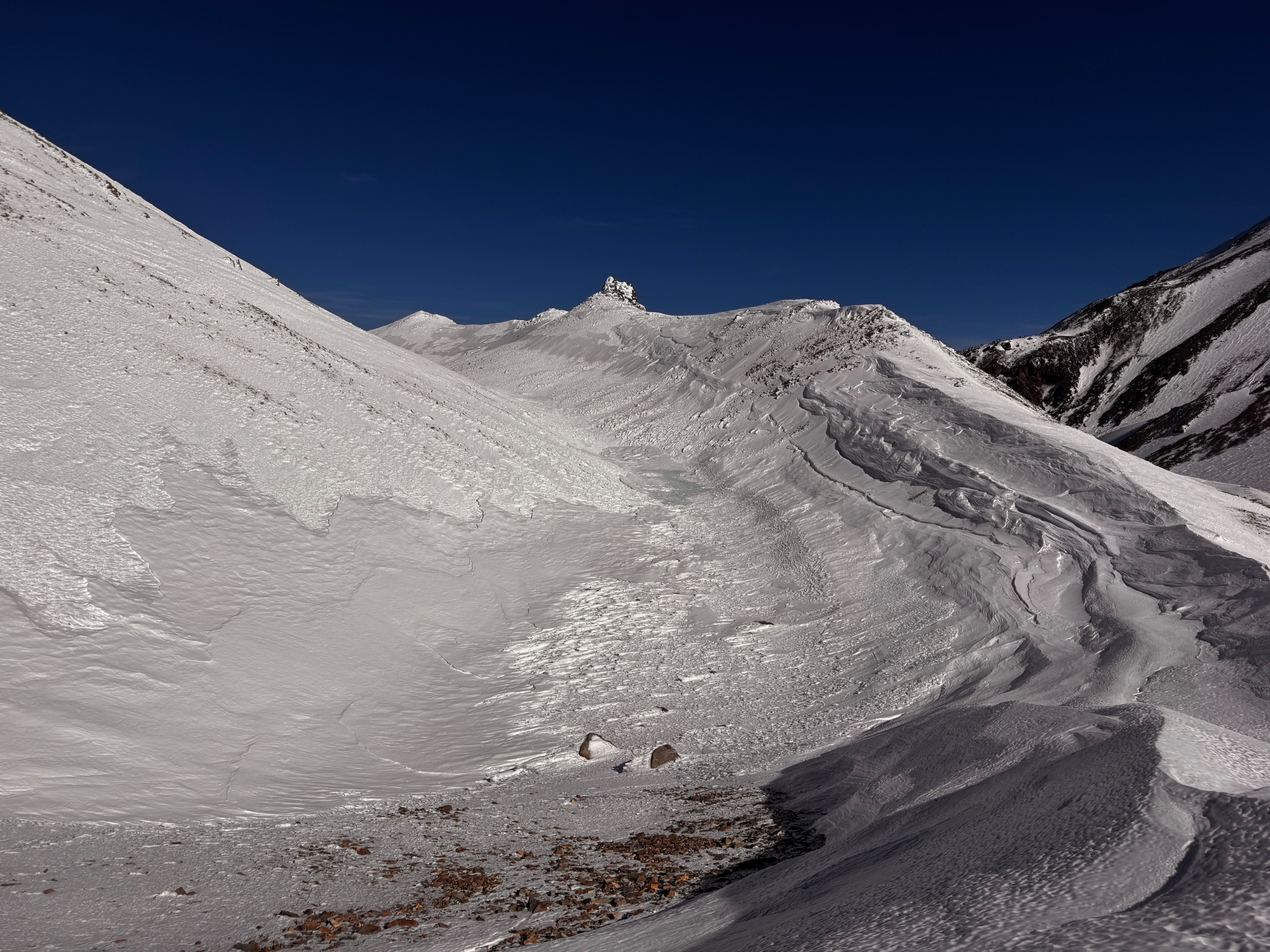
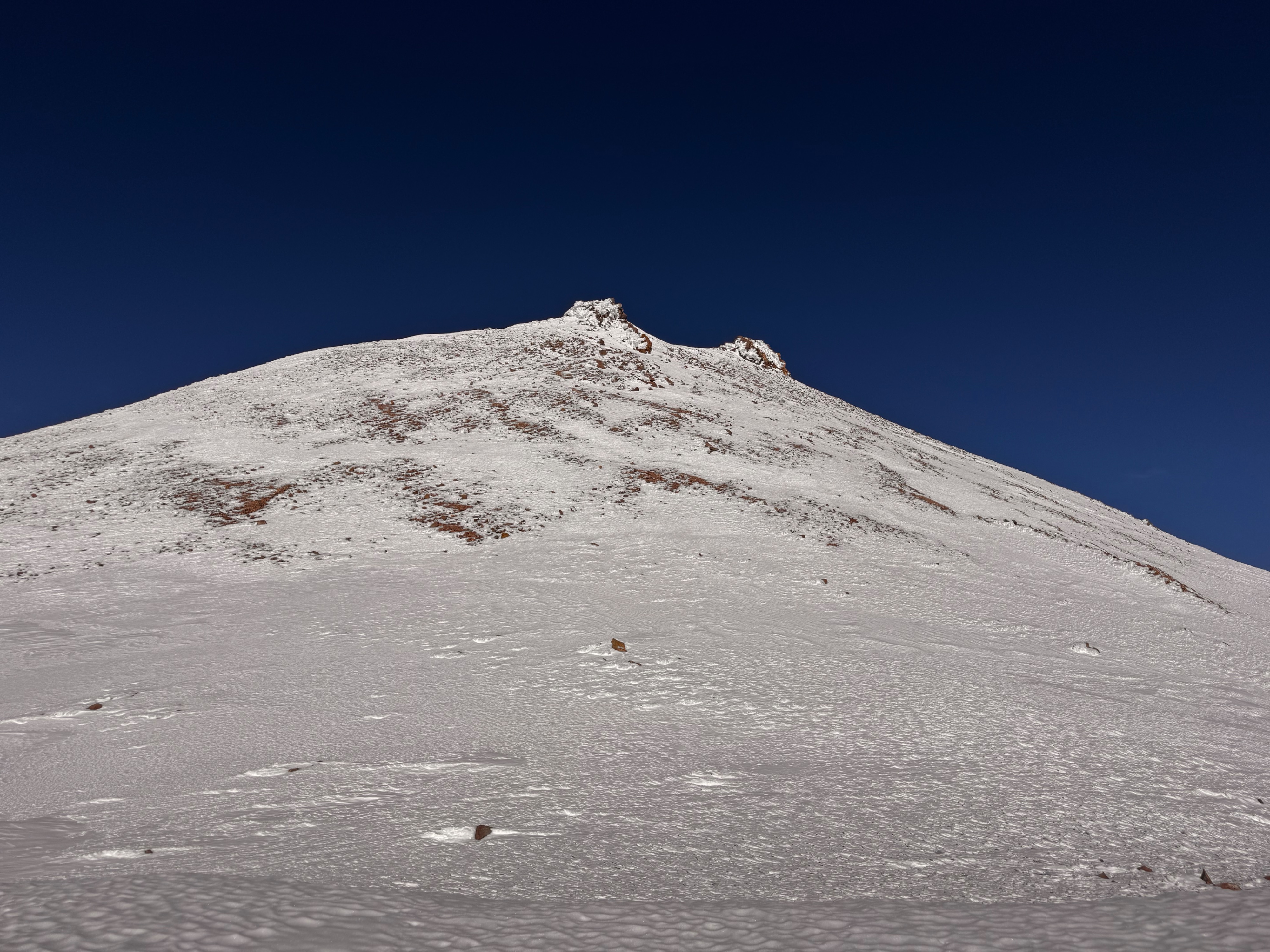
Aspect, elevation, slope angle, wind exposure, and time of day dictate snow surface conditions. Surfaces consist of a mix of crusts (sometimes breakable), wet surface snow on solar aspects, ice on exposed ridgelines, and moist-to-dry near-surface faceted snow on shadier, protected aspects. The snowpack on steep, solar aspects is diminishing due to the recent dry spell and warm temperatures.
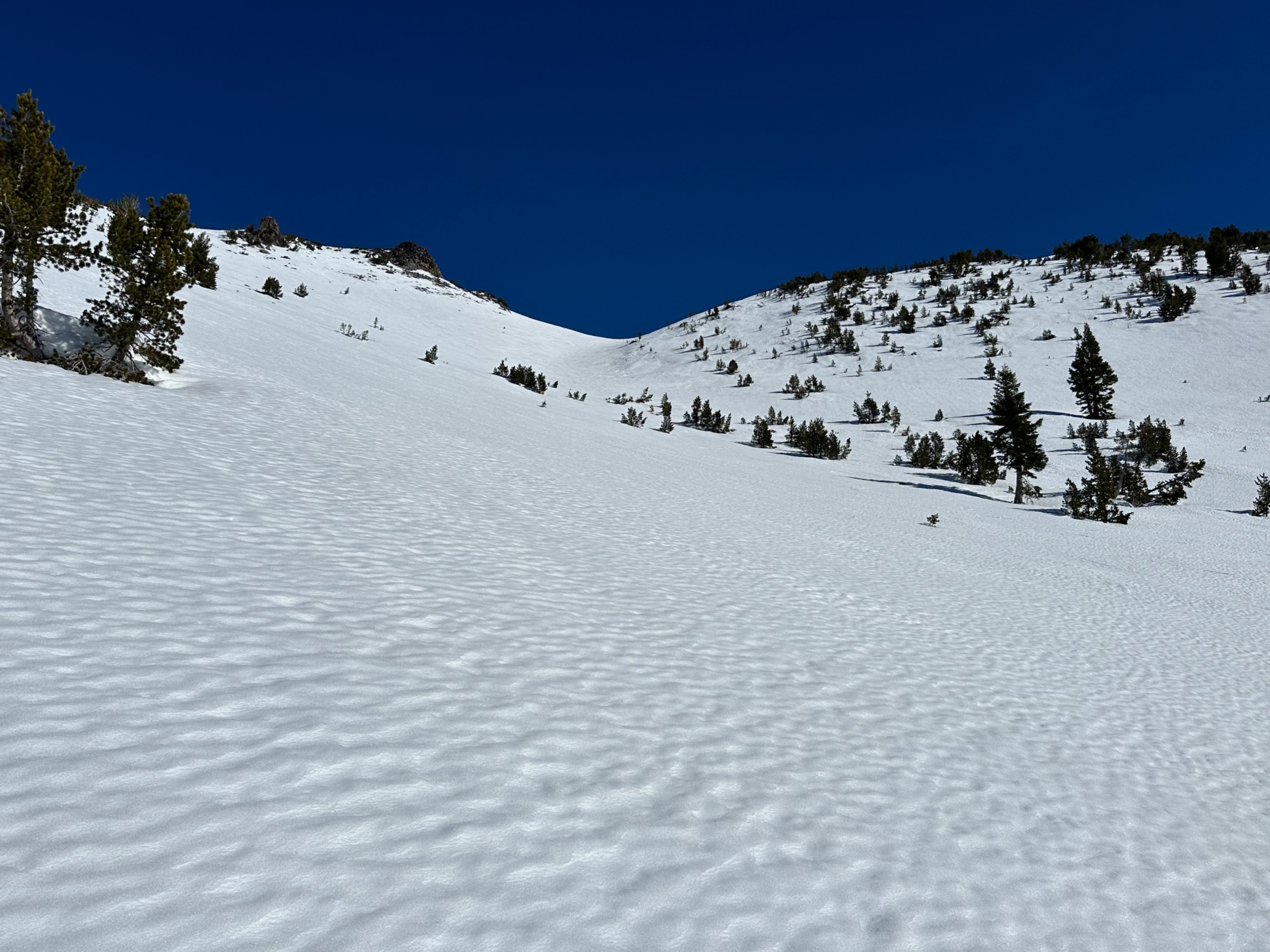
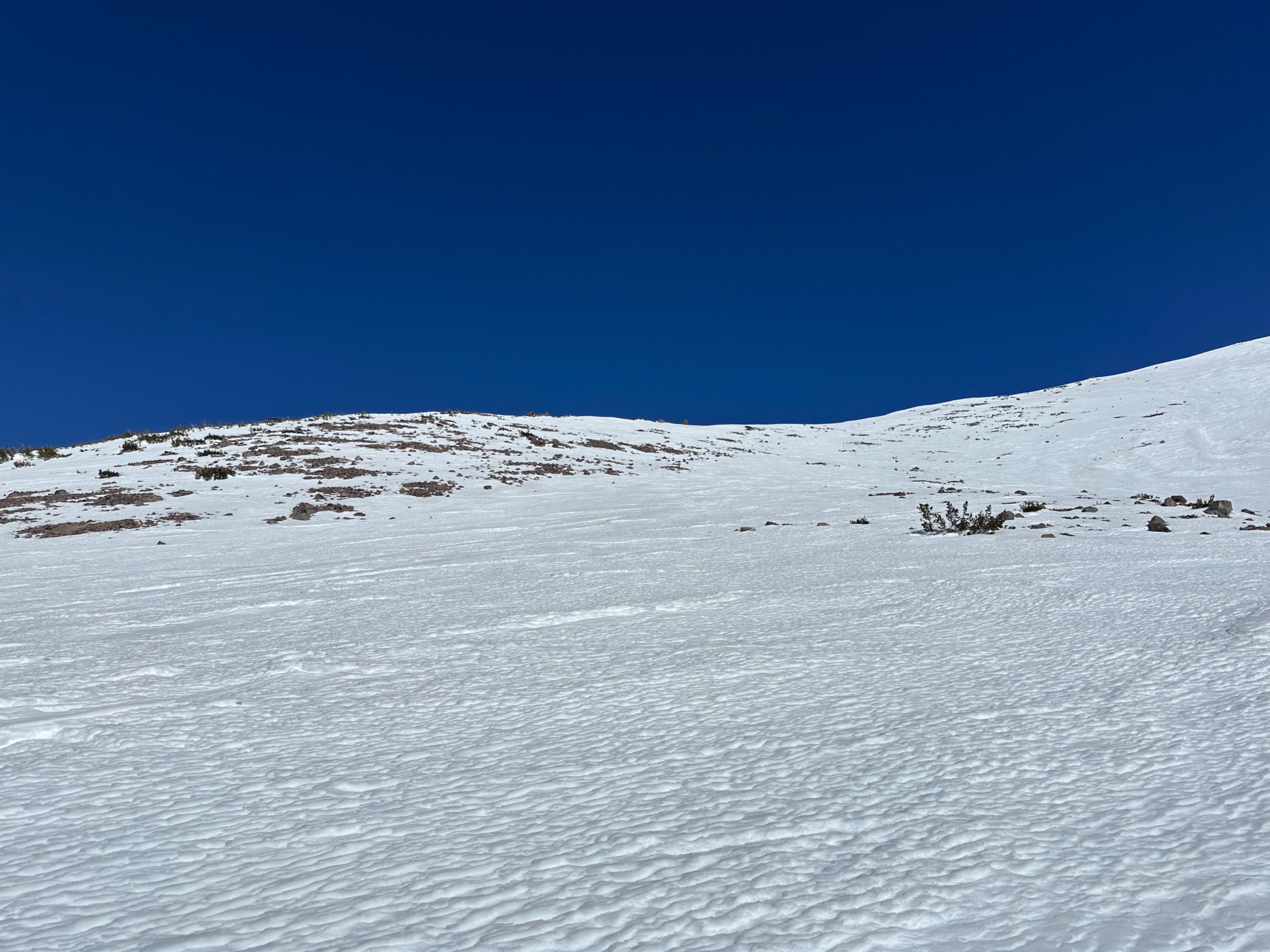
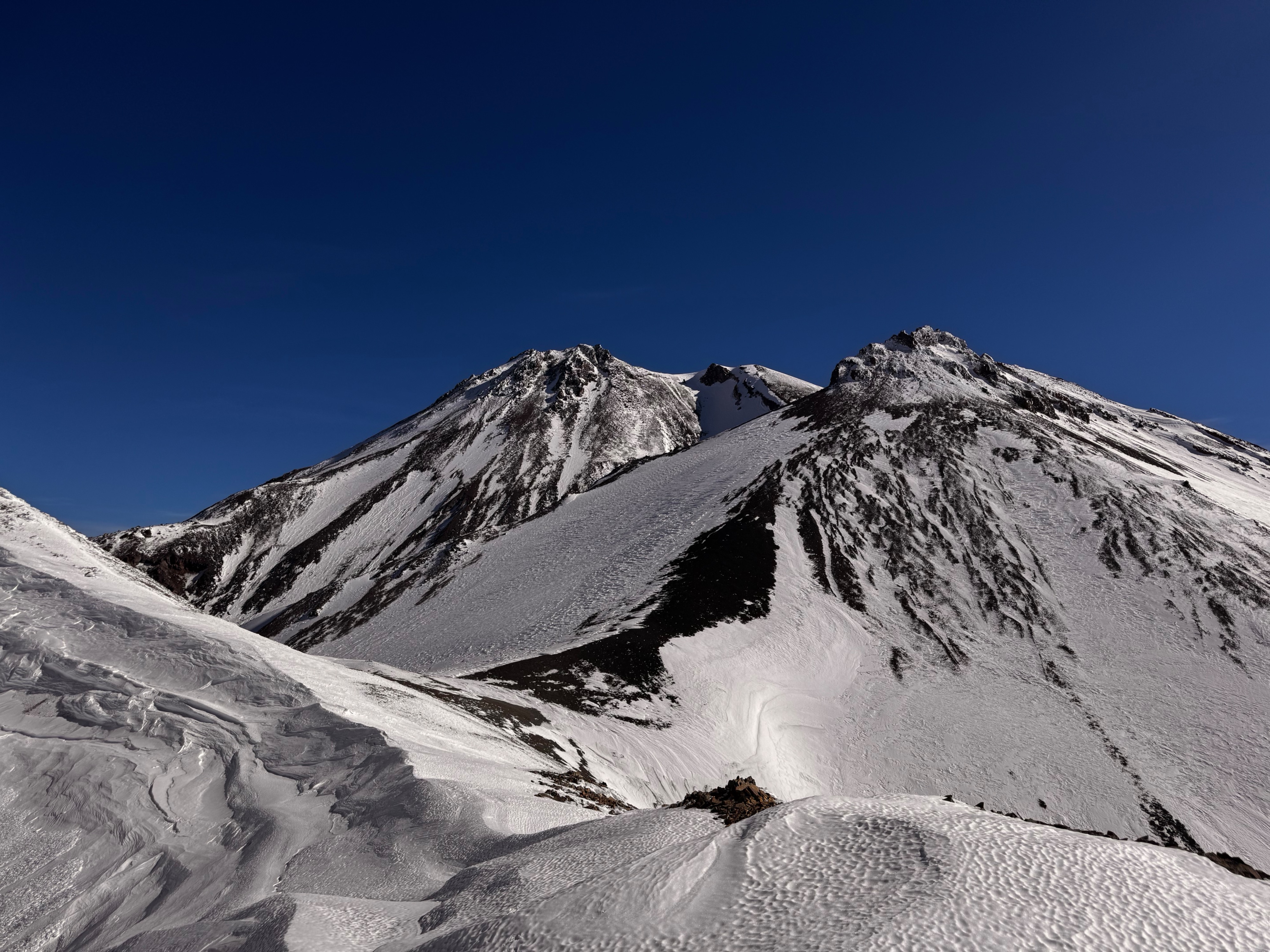
Supportable corn snow can be found on steep, sunny slopes near and above treeline as surfaces soften with solar input, but smooth textures are not easy to come by. Wind-exposed locations hold the roughest surface textures (see photos from Shastina below). The most consistent, "mature" corn snow was found between about 9,400 and 8,400 feet. The potential for wet, surface instabilities exists on steep slopes on the south half of the compass, but hard crusts only a few centimeters below the snow surface should significantly limit their size. I was able to initiate one small rollerball on a steep, southerly aspect at 10,200 feet at 1230pm, but it was an exception today.