
Quick report
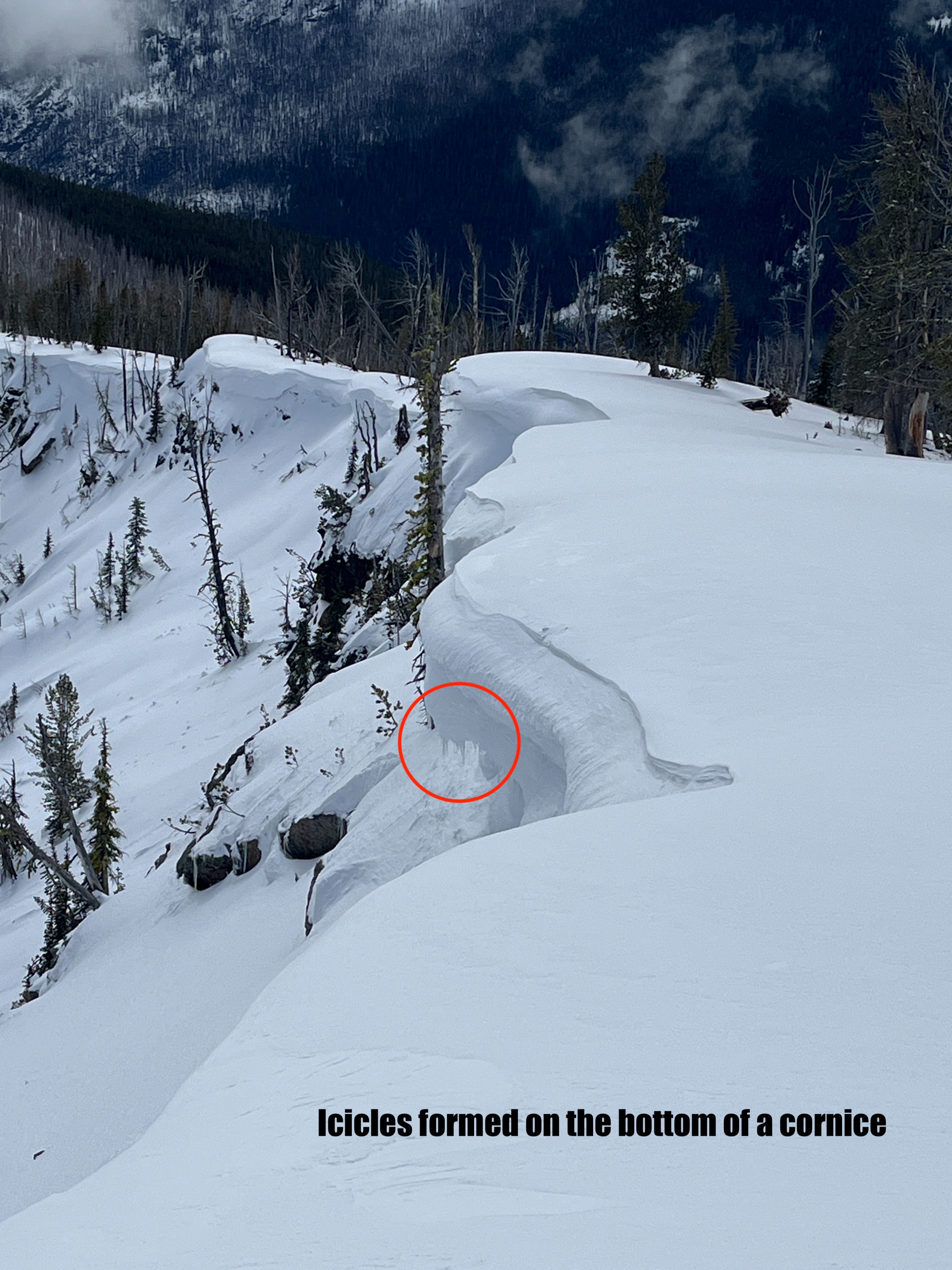
Today's observation revealed an unreactive persistent slab problem on upper elevation northerly aspects and complicated wet snow layering on south aspects at all elevations. The snow remained cool at upper and middle elevations throughout the day, but southerly aspects were still moist/wet from recent warm weather. If another period of little to no nighttime refreezes came, I would be very suspicious of wet slab avalanche problems in the snowpack.
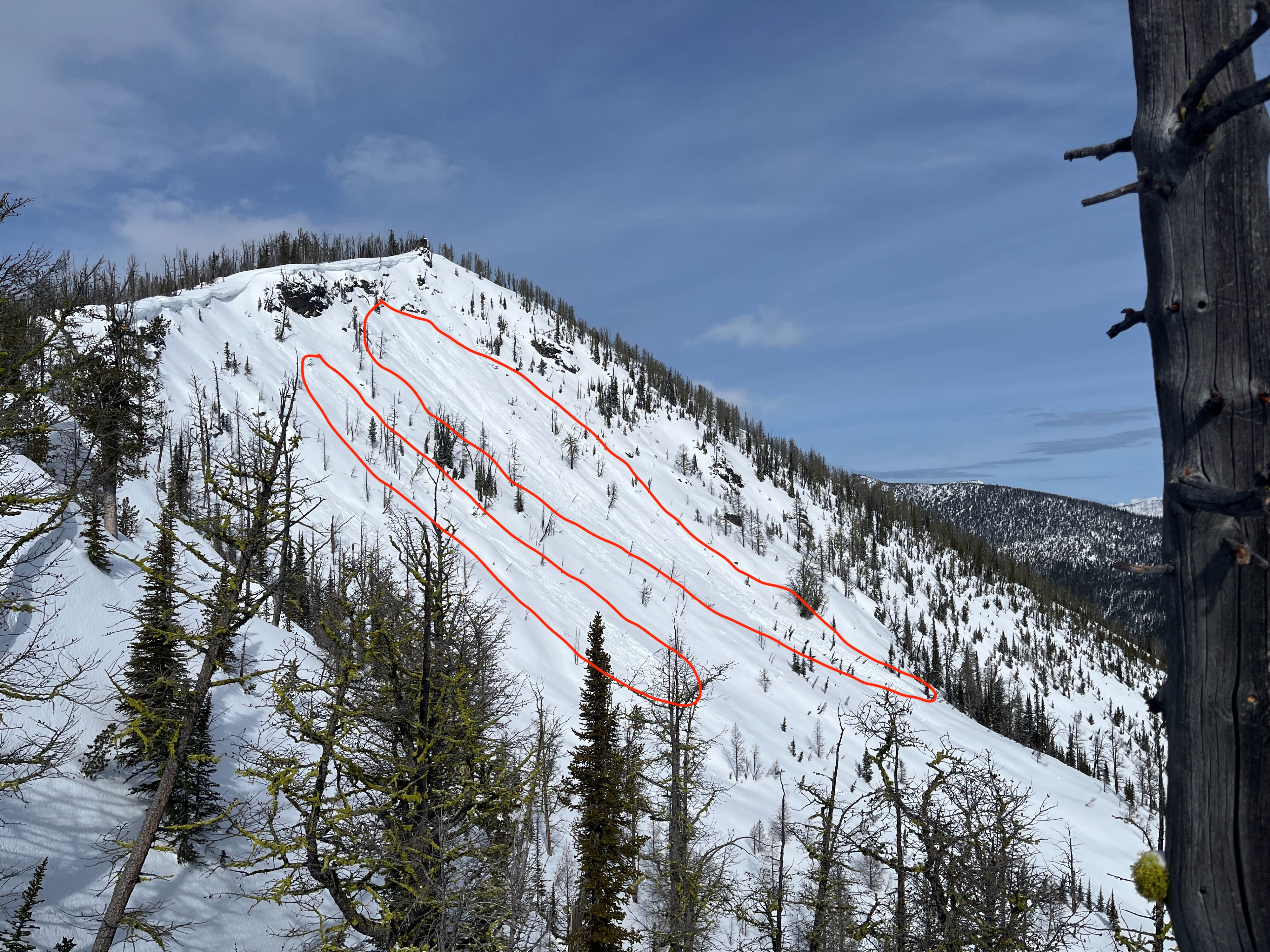
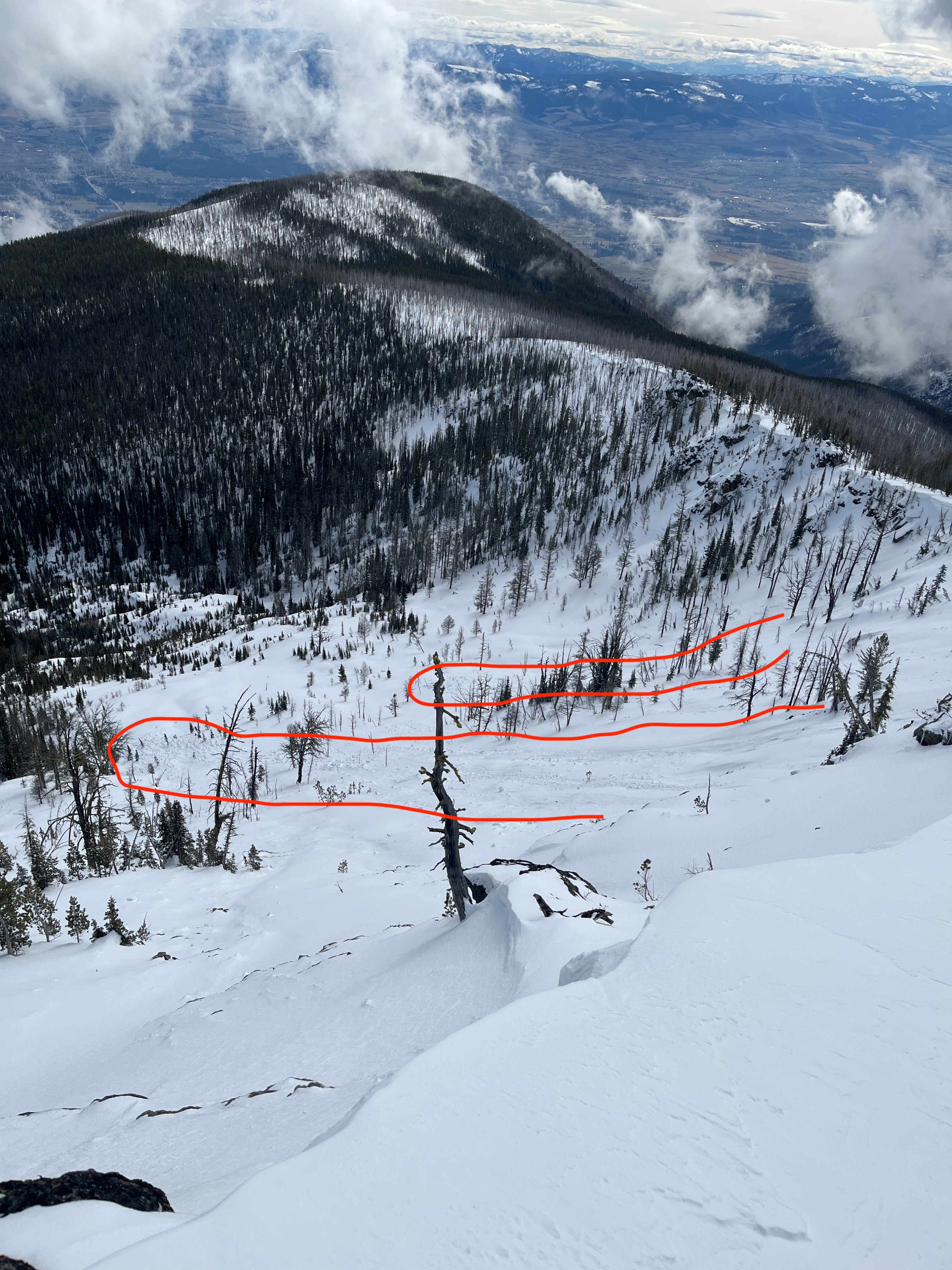
I observed two D1 wet loose avalanches. I did not observe any significant cracking or collapsing in new/recent snow. I found moist/wet snow on south aspects at all elevations.Weather
- Air Temp
- 21
- Cloud Cover
- broken
- Wind Loading
- none
- Recent Snowfall
- 2.5-6
- Snow Avail For Transport
- small smounts
The early morning was mostly sunny but clouds began to move by late morning. It remained mostly cloudy for the rest of the day. The wind was calm and lower and middle elevations. At upper elevations, it was light with some gusting at ridge line and from the southwest. Temperatures remained below freezing at upper elevations.
Snowpack
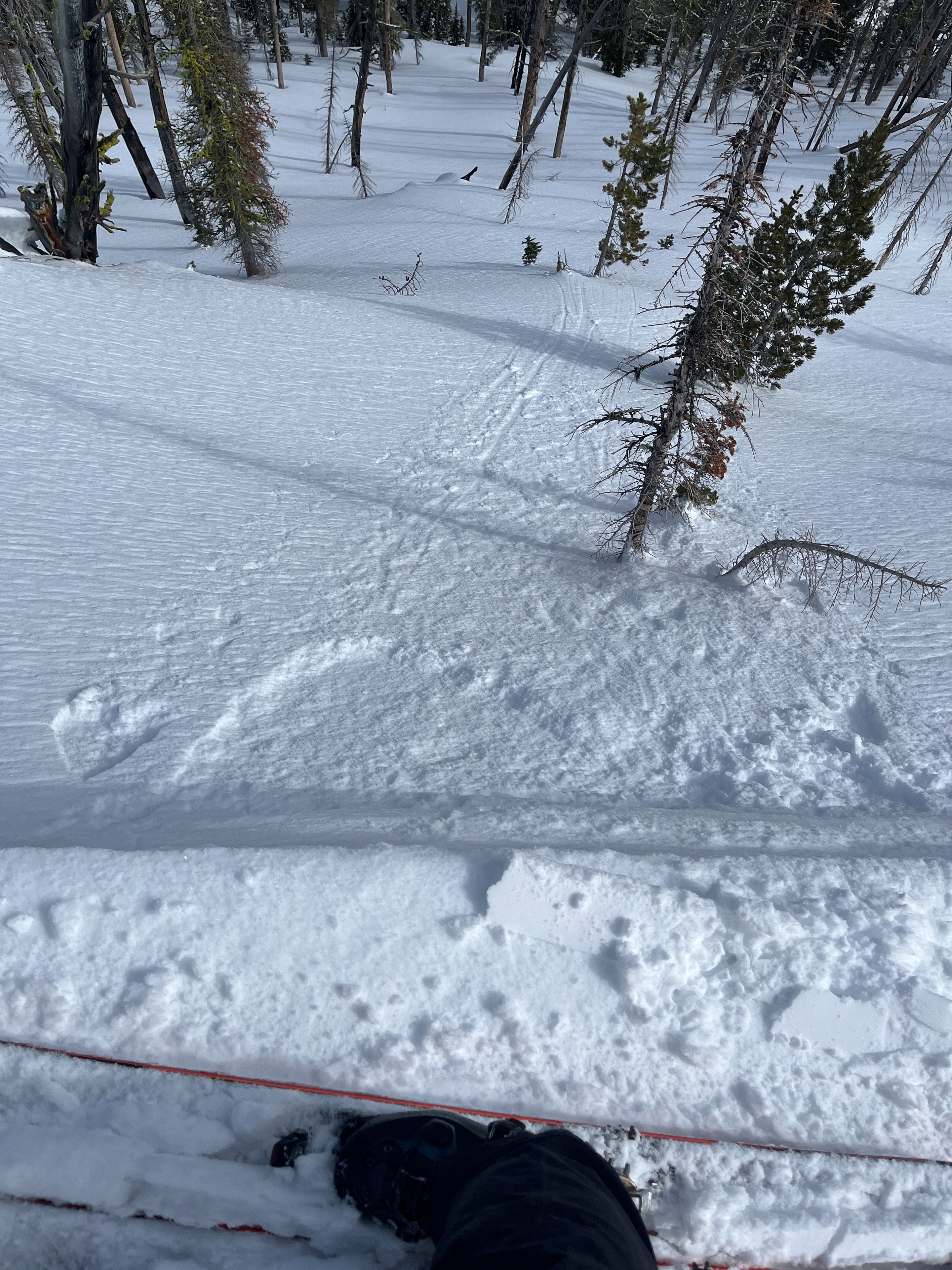
There is no snow on all aspects below 5800'. From 5800-6800', there is minimal snow coverage. In the morning, this snow was marginally refrozen with a breakable surface crust and a dusting of new snow. By the end of the day, the snow was saturated and completely unsupportable. From 6800-7300', the snow was also marginally refrozen but stayed this way throughout the day. There was .5-1" of new snow at these elevations. From 7300' to the summit of Sweeney at 9000', the surface was frozen and very supportable. There was 1-3" of new snow at these elevations.
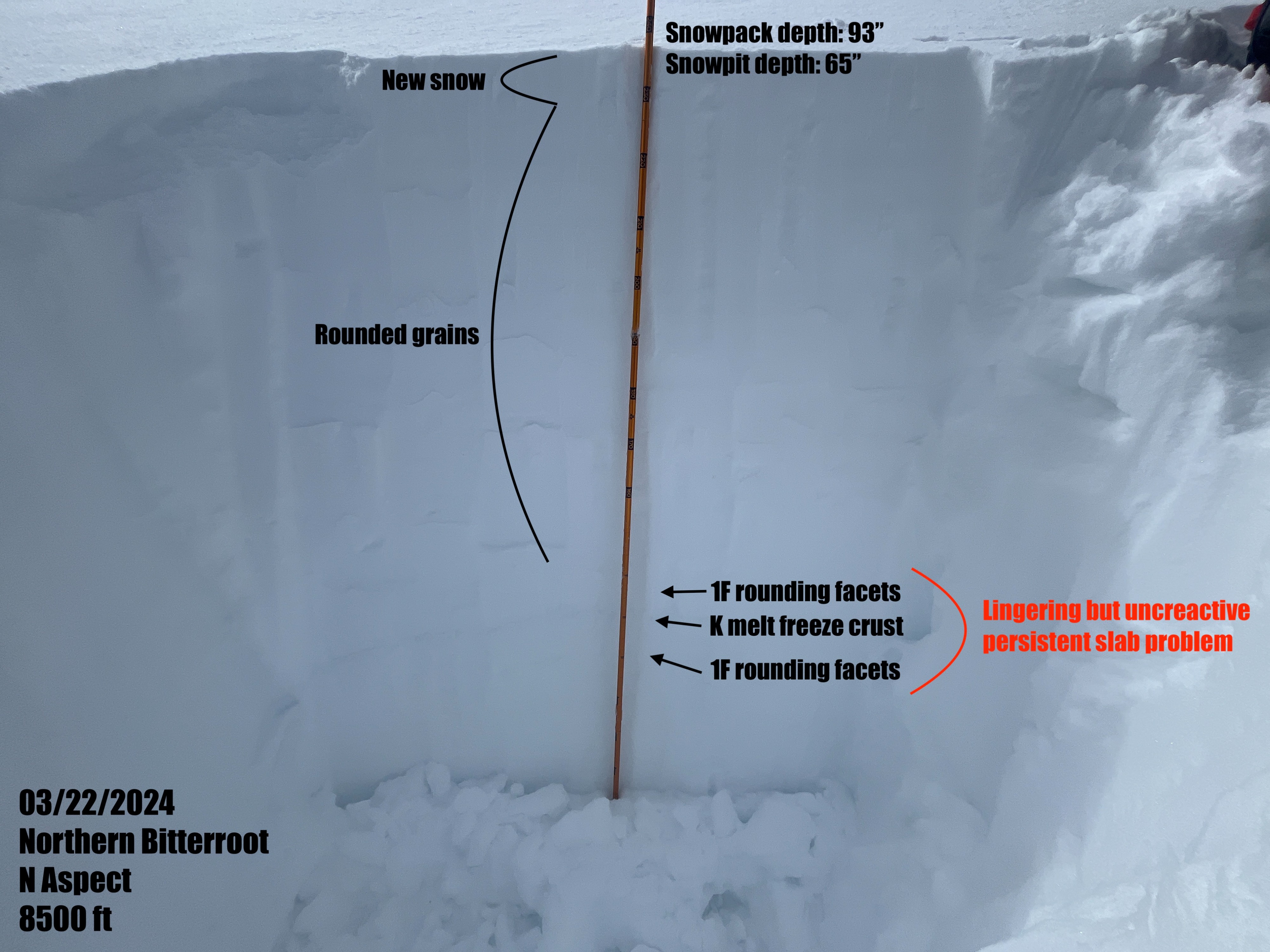
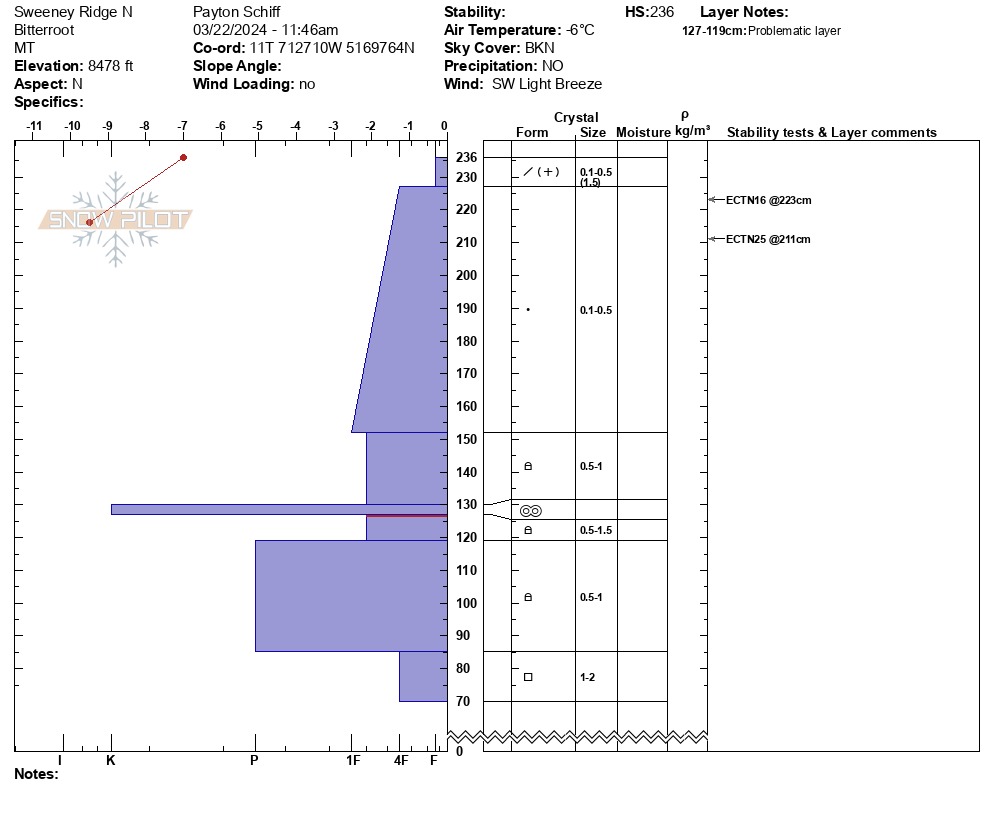
I dug a pit on a north aspect at 8478'. The depth of the snowpack here was 93" (236cm) and the depth of my pit was 65" (166cm). I found a 33" (84cm) four finger (4F) - one finger (1F) hard slab of rounded grains overlaying weak layers. These weak layers consisted of (moving down in the pit) 1F hard rounding facets, a knife (K) hard melt freeze crust, and another layer of 1F rounding facets, a pencil (P) hard layer of rounding facets, and 4F hard facets that likely continued to the ground. I performed an extended column test and got non-propagating results within the slab of rounded grains (ECTN16 13cm down and ECTN25 25cm down).
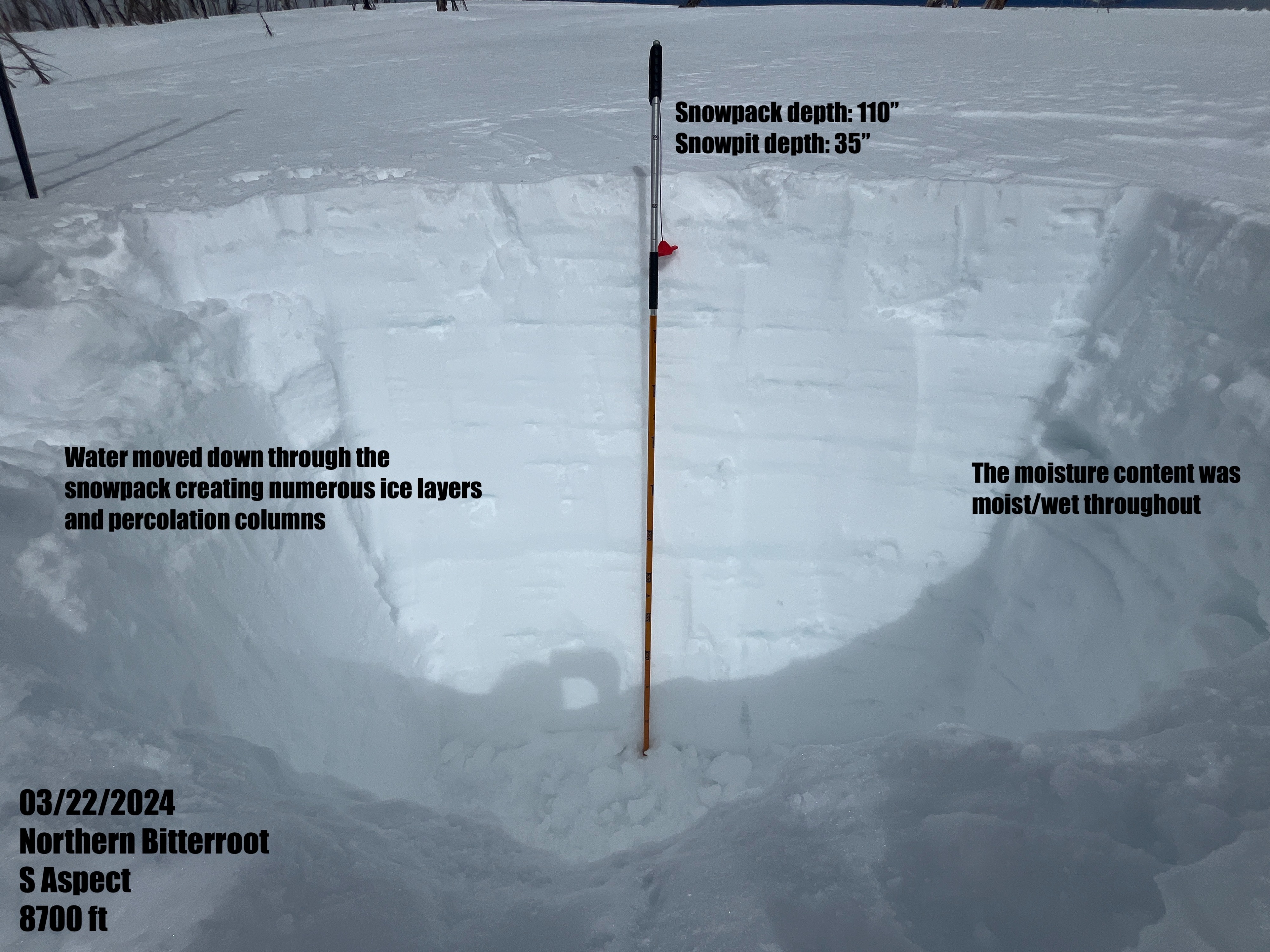
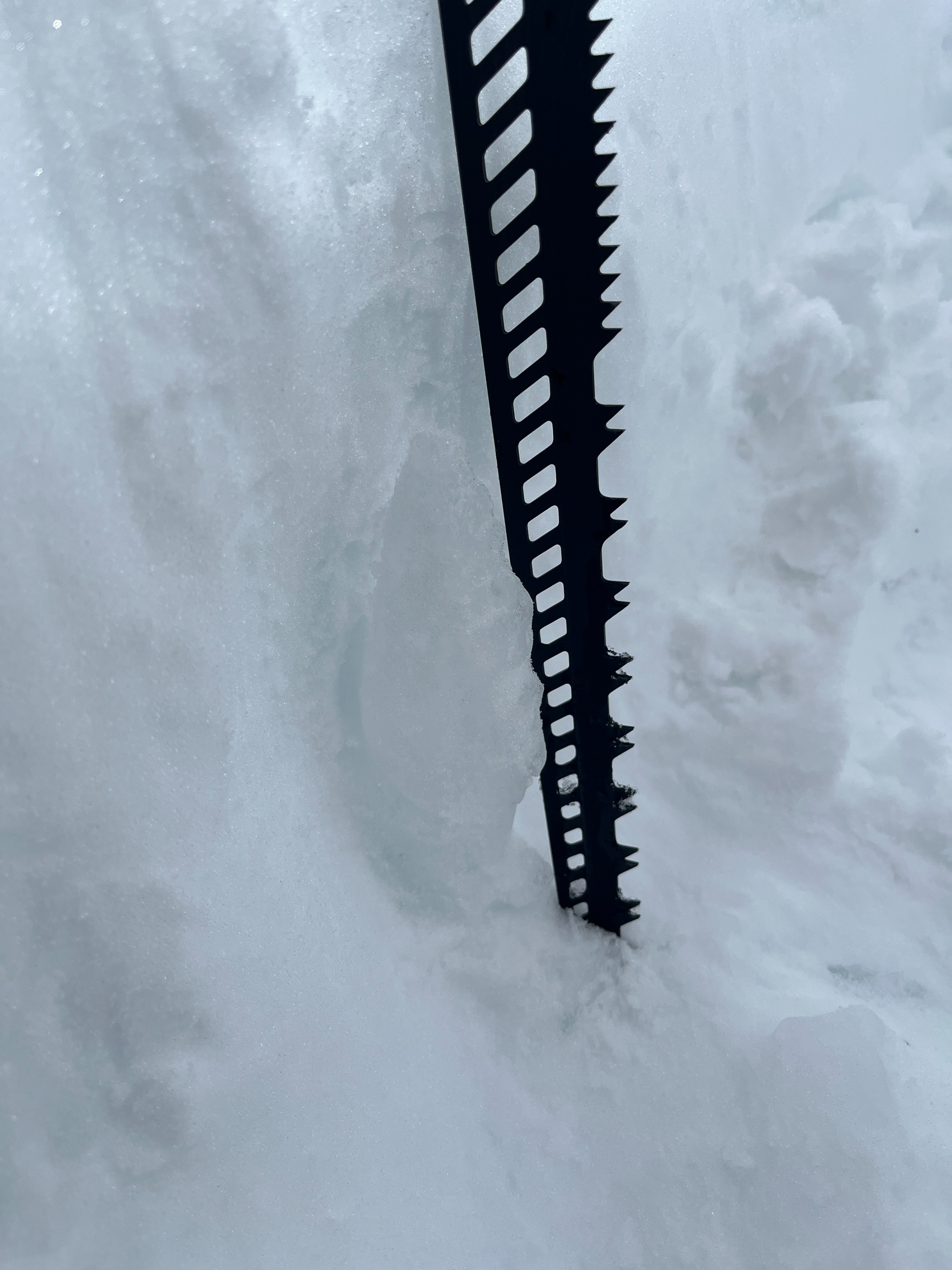
I dug another pit on a south aspect at 8688'. The depth of the snowpack here was 110"(280cm) and the depth of my pit was 35"(90cm). This particular area likely saw a lot of wind loading throughout the season which is why the depth is so deep for a south aspect. Throughout this pit, I found numerous layers of ice and percolation columns. The ice layers were very hard and difficult to dig through. The snow was still moist and wet throughout the pit and was likely still moist further down.
Avalanche
- Size
- D1
- Type
- WL
- Aspect
- NE
- Trigger
- N
- Elevation
- 8400 ft
I observed two D1 wet loose avalanches that began as small rollerballs initiating from a cliffband. I do not know when these avalanches released however it was likely in the recent days of exceptionally warm weather. They were both on N-E aspects at around 8400'.