
Quick report
- Cracking
- widespread
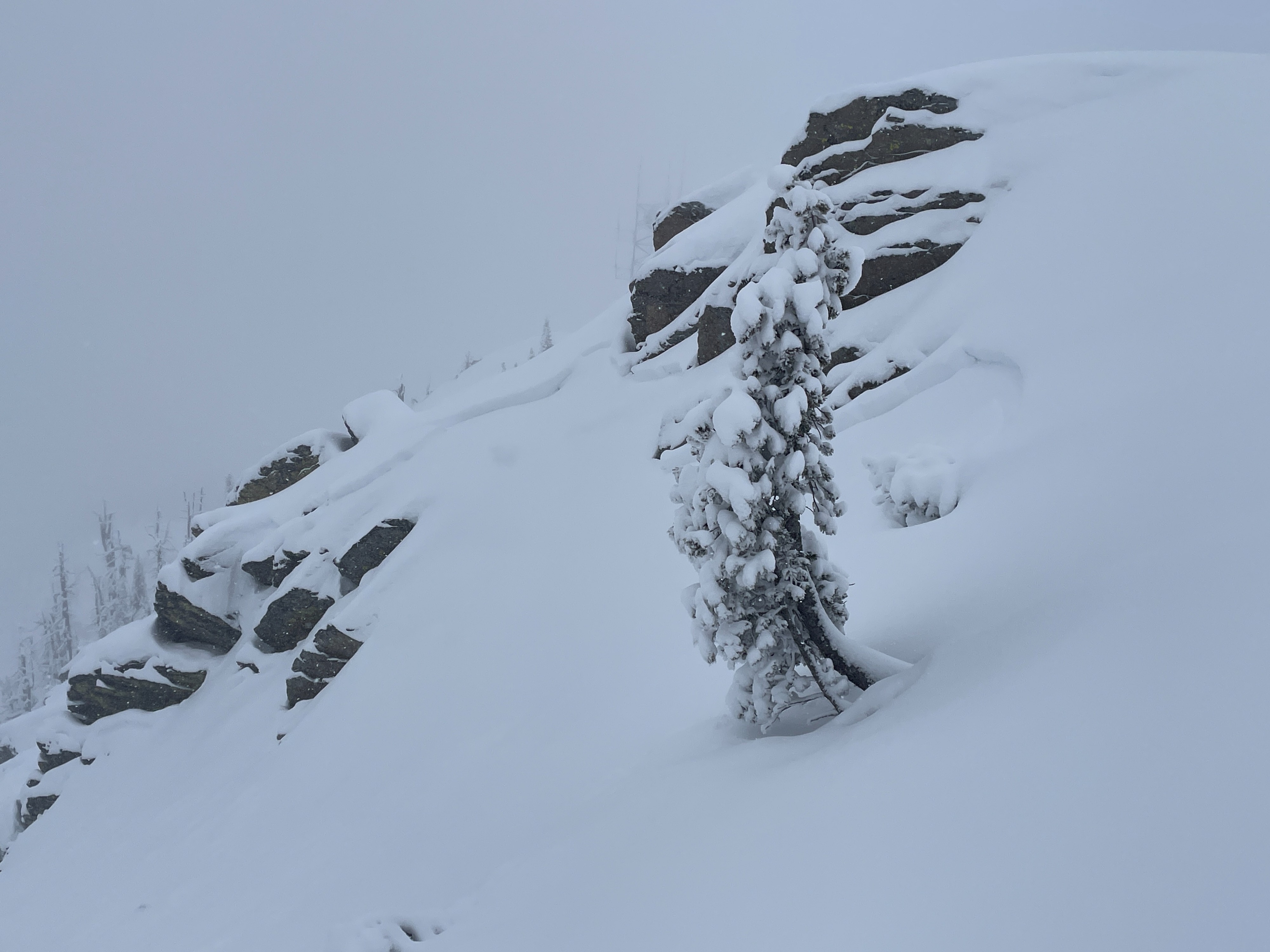
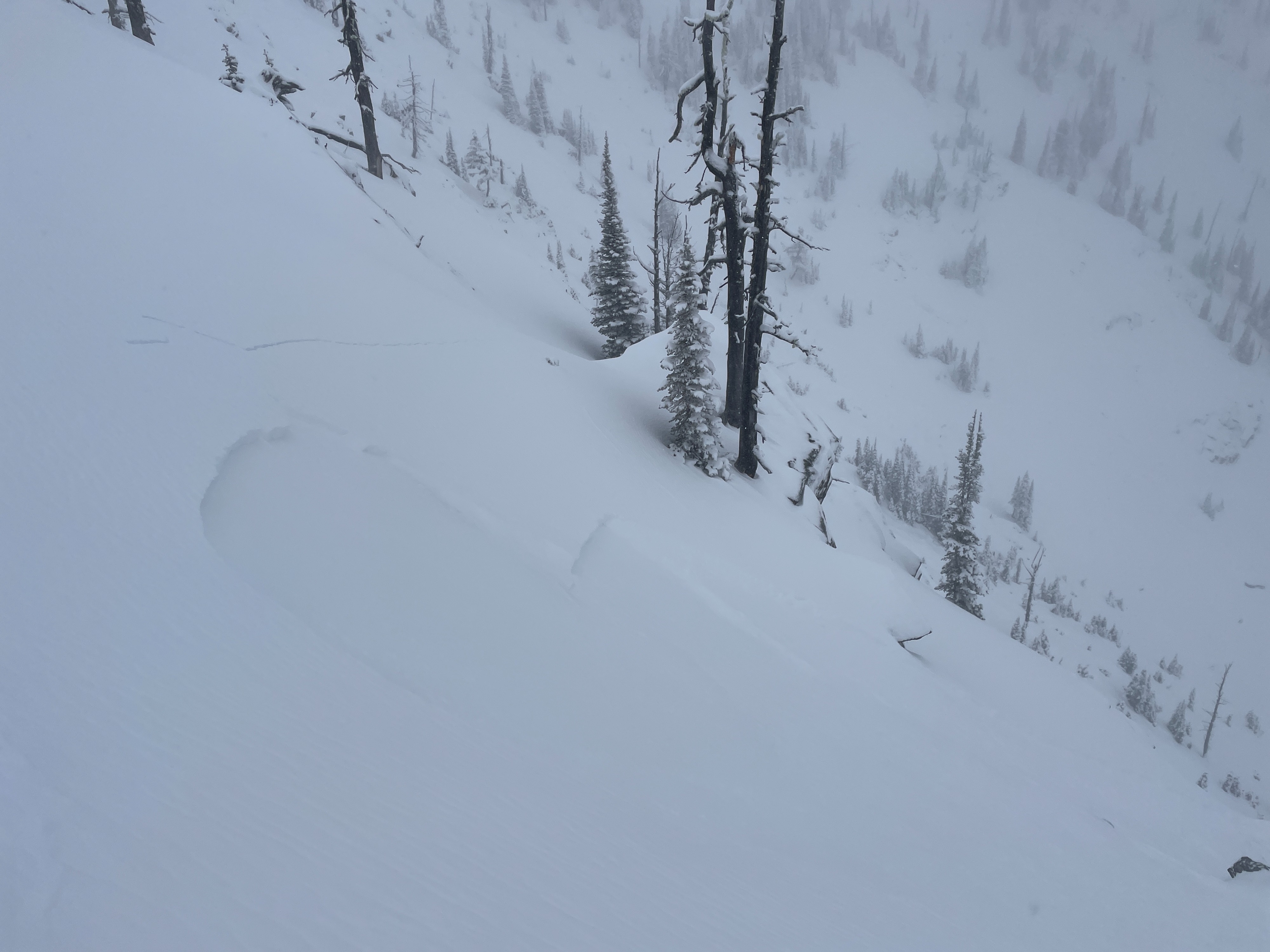
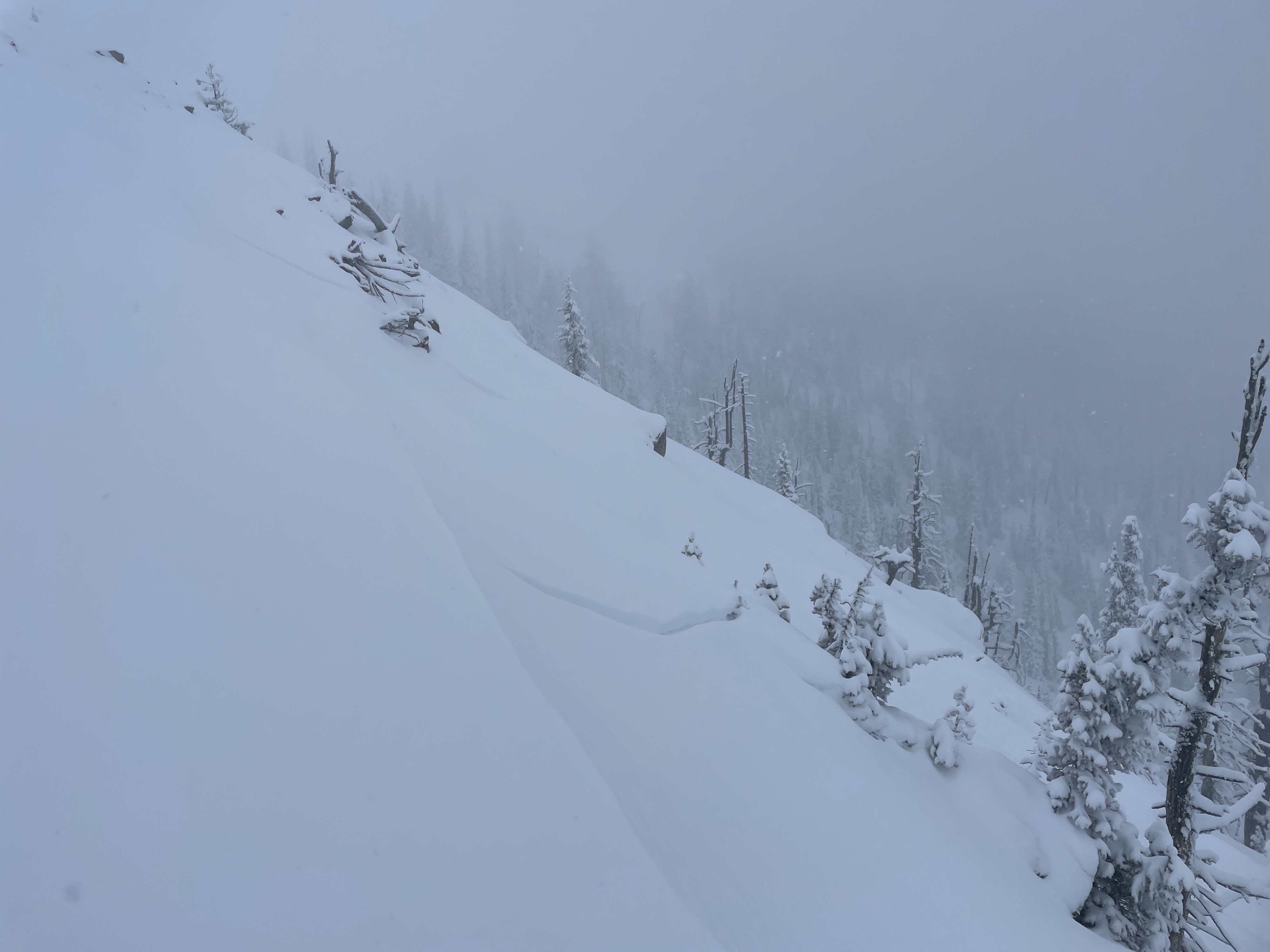
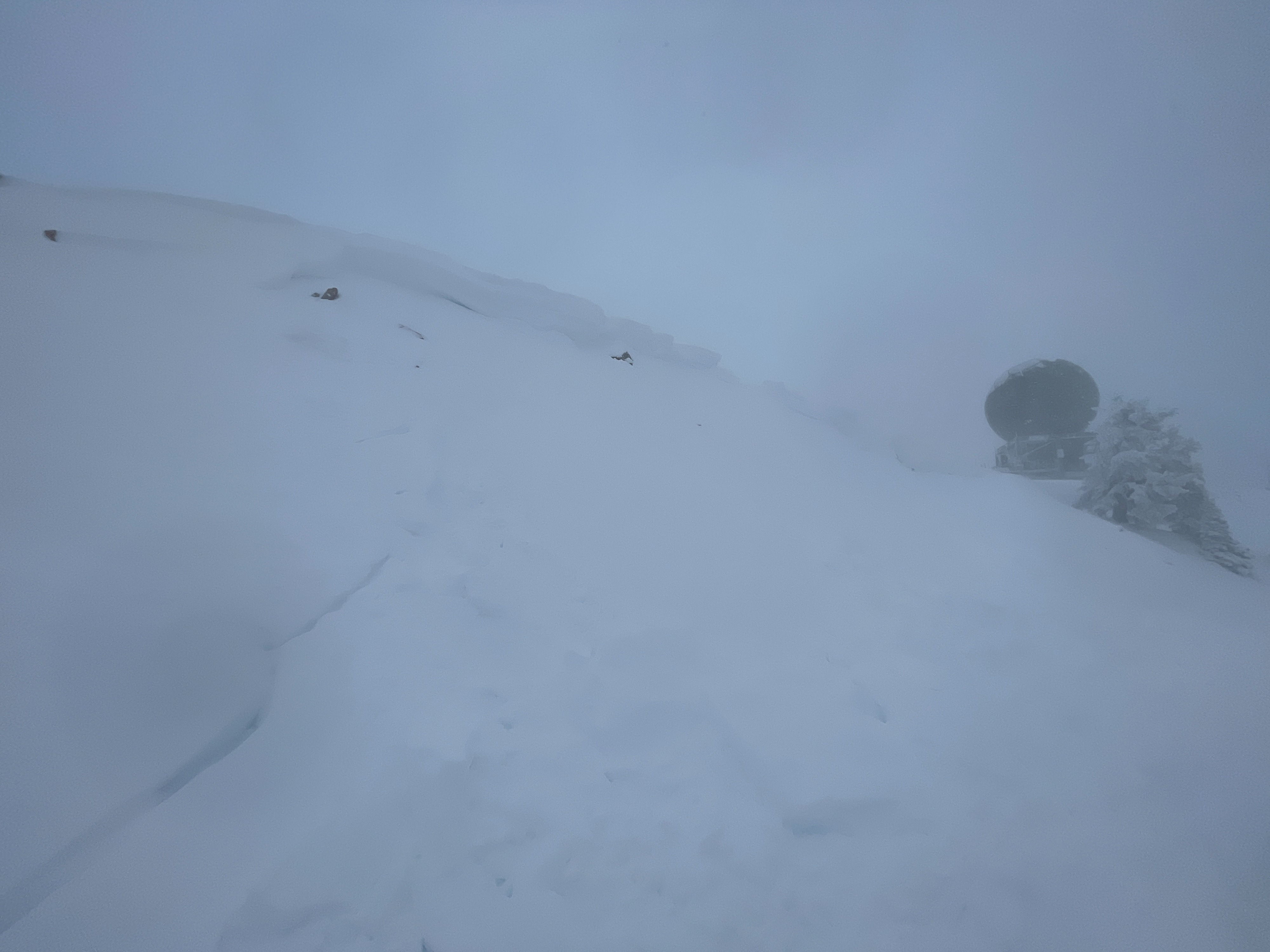
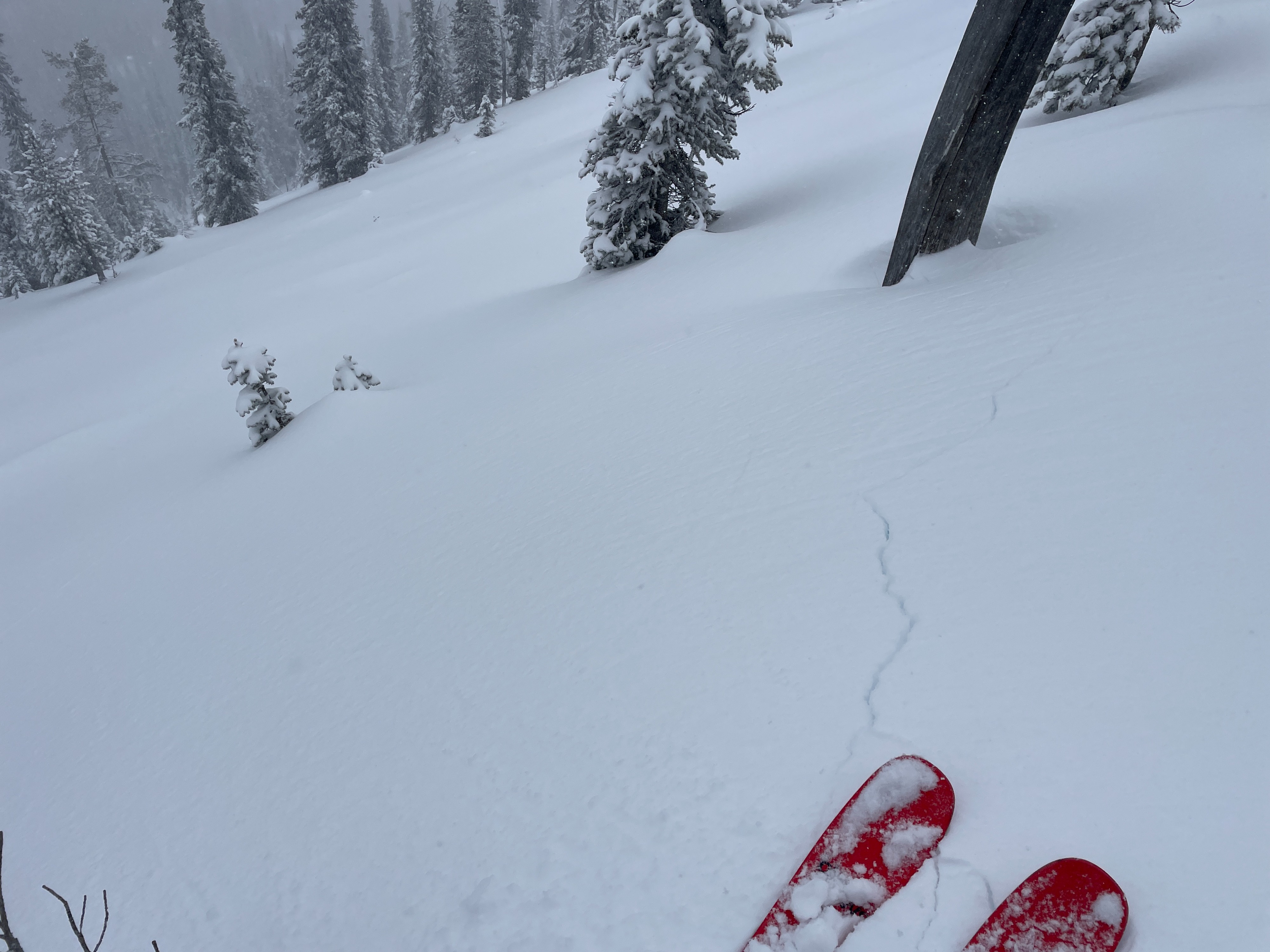
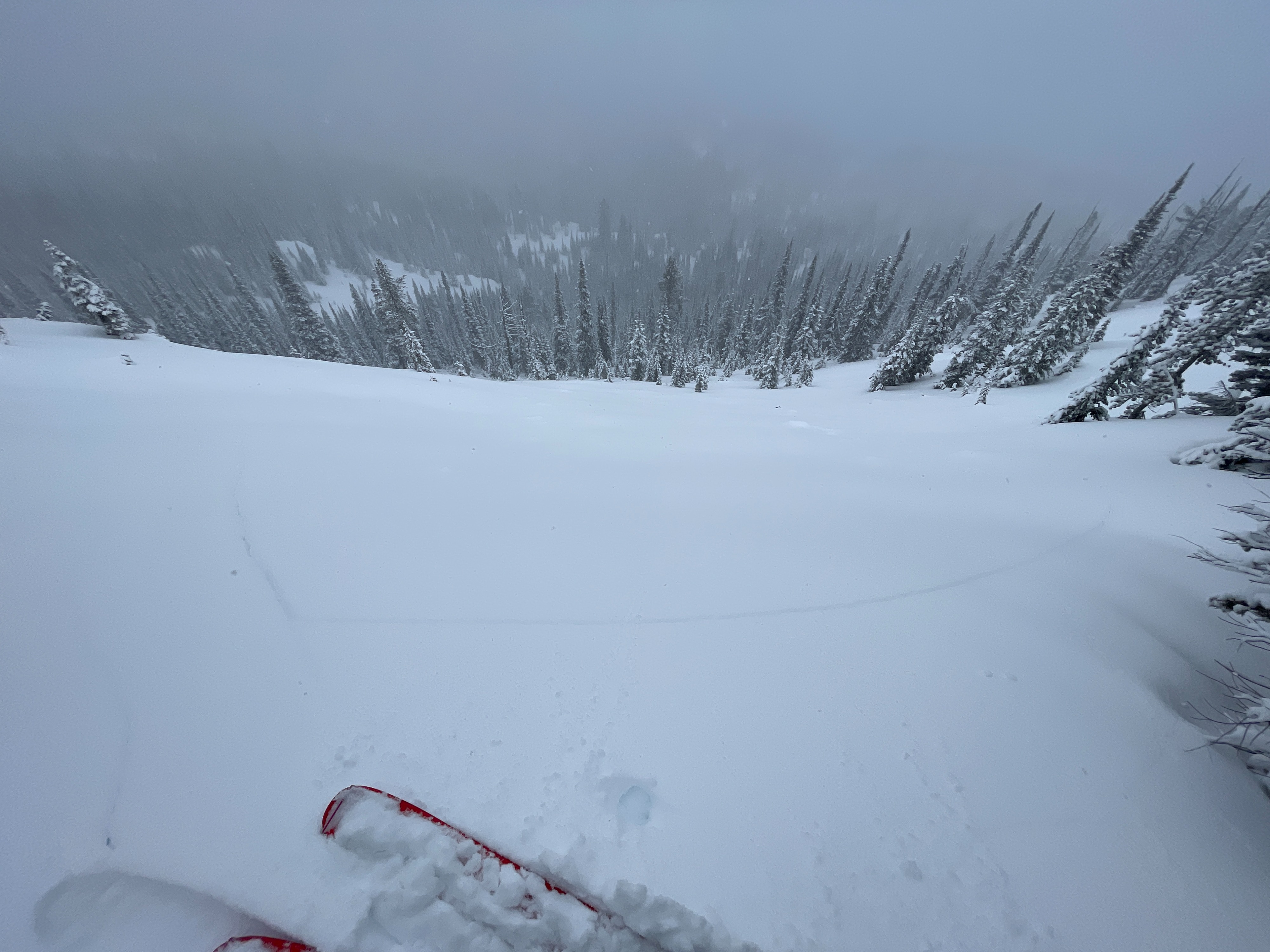
Today, we found 8-10 inches of new snow and moderate northwest winds at upper elevations that produced touchy avalanche conditions. We observed two natural wind slab avalanches and intentionally triggered two wind slabs, all failing on the crust interface at the bottom of the new snow. We also observed widespread shooting cracks in the new snow in both wind-loaded and wind-sheltered terrain. Steeper wind sheltered terrain likely would have produced storm slab avalanches. Poor snowpack structure and a low likelihood, high consequence persistent slab problem still exist on upper elevation north and east aspects.
We observed natural and human-triggered avalanches in the new snow and widespread shooting cracks in both wind-loaded and wind-sheltered terrain.Weather
- Cloud Cover
- overcast
- Wind Loading
- moderate
- Rain Elevation
- 4000 ft
- Recent Snowfall
- 15-25 cm
- Snow Avail For Transport
- moderate amounts
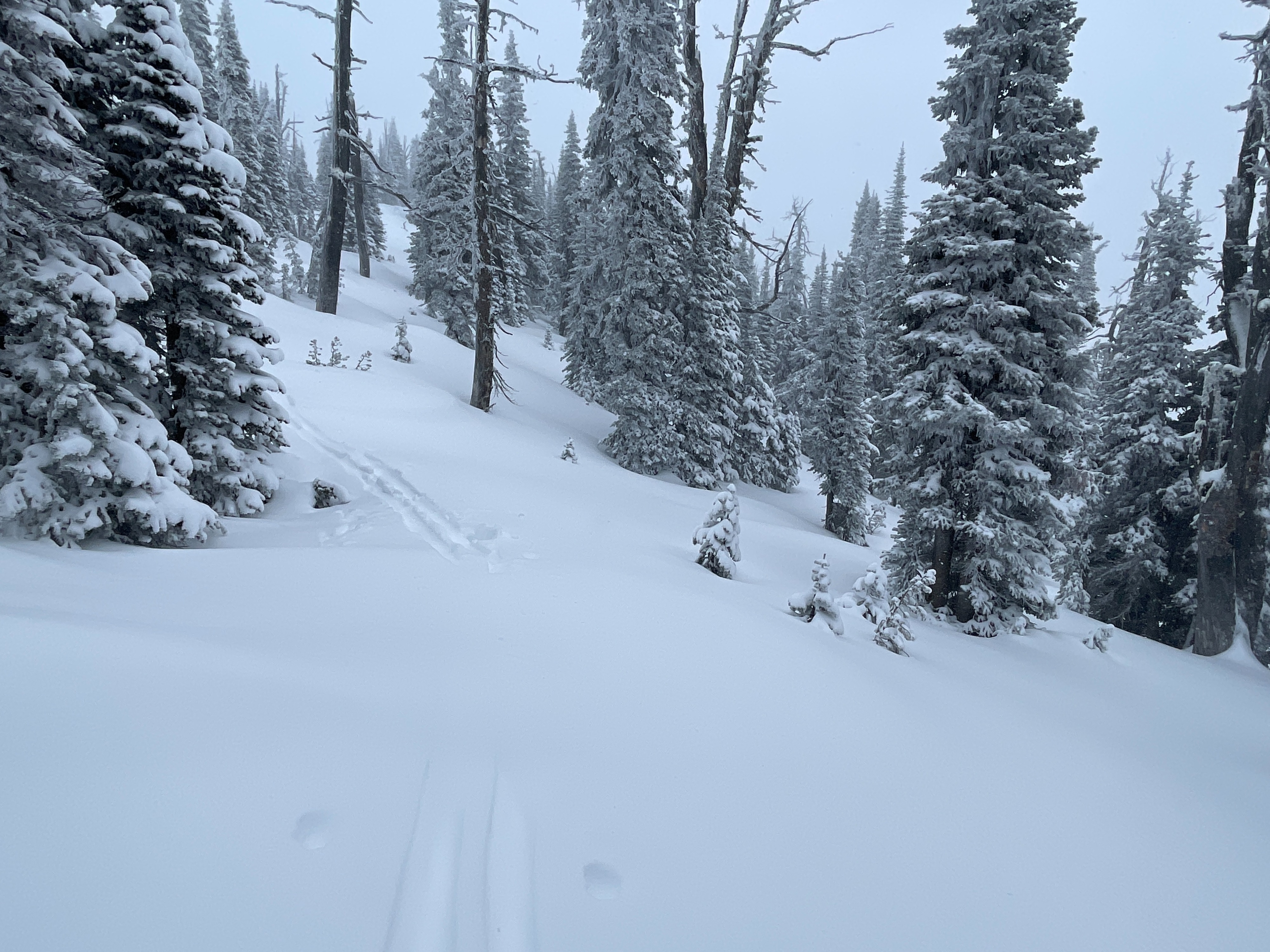
It snowed moderately all day with moderate northwest winds at ridge top. By the afternoon, 8-10 inches of dense new snow had accumulated at upper elevations. It was raining in town, below around 4000 ft.
Snowpack
By the afternoon, there was 8-10 inches of new snow at upper elevations. The new snow was resting on melt-freeze crusts everywhere we traveled today.
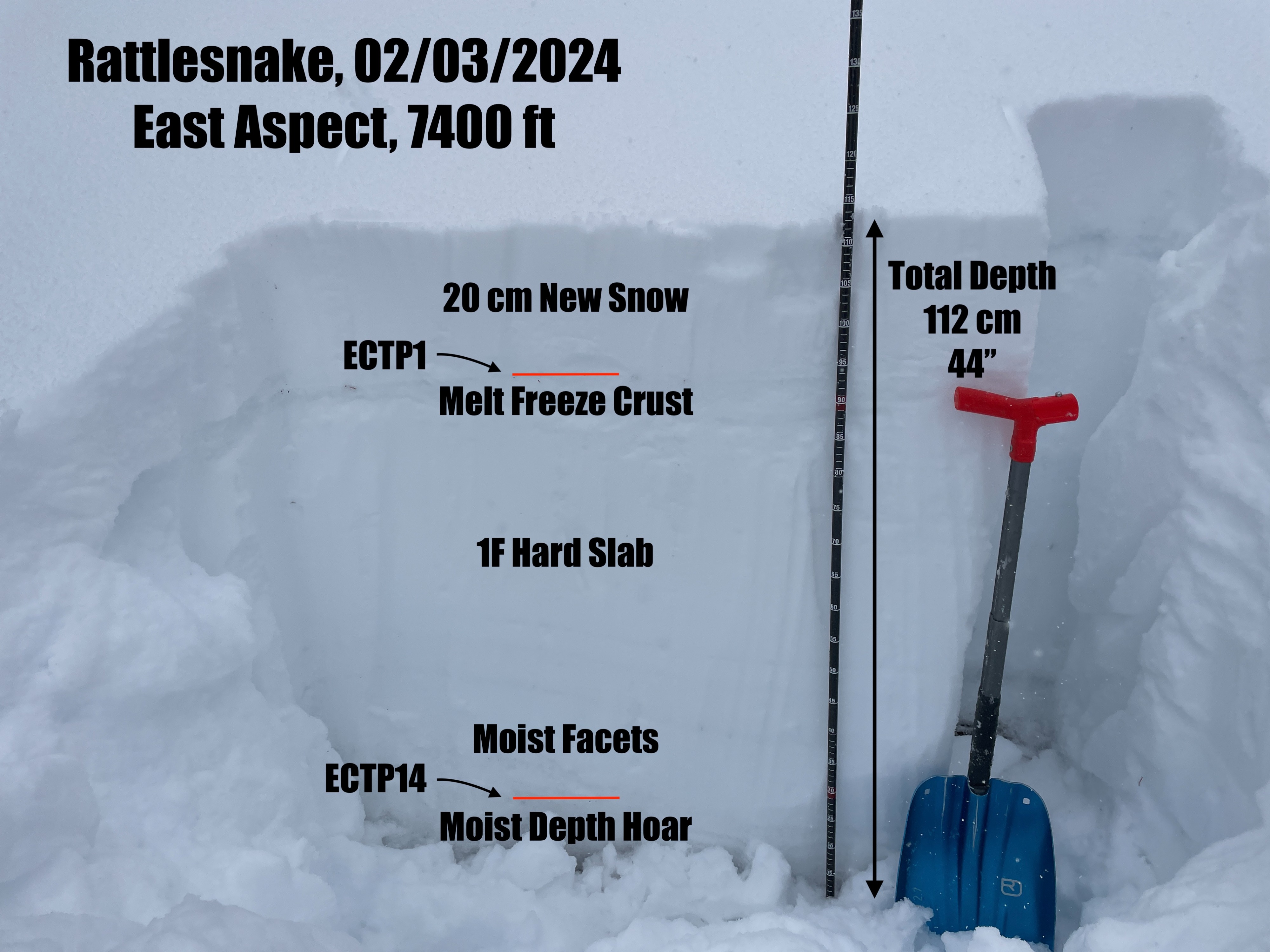
We dug a snowpit on an east aspect at 7400 ft. The 8" of new snow produced a propagating result failing on the crust interface on the first tap of an extended column test (ECTP1). We also found a poor snowpack structure with a 3 foot thick hard slab resting on weak, moist depth hoar. The depth hoar propagated in an extended column test on the 14th tap (ECTP14). The total snow depth was 112 cm (44").
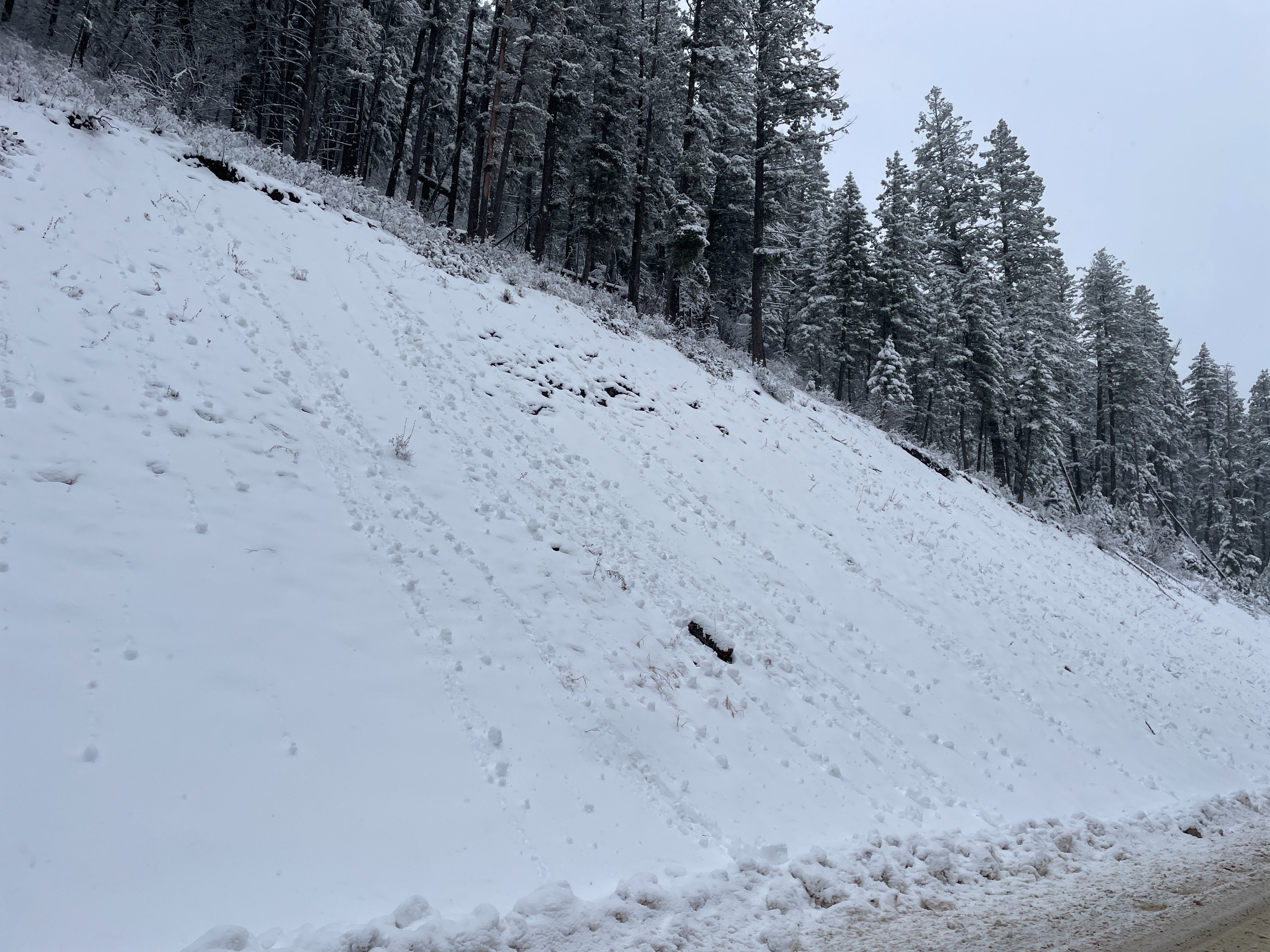
The snow at lower elevations was thin and moist, and produced small rollerballs on steep roadcuts.
Avalanche
- Size
- D1.5 R1
- Type
- SS
- Count
- 4
- Aspect
- E
- Trigger
- AS
- Elevation
- 7900 ft
We observed two natural wind slab avalanches and intentionally triggered two wind slab avalanches. All of the avalanches failed on the crust interface at the bottom of the new snow. They were all on wind loaded southeast and east aspects near the top of Point 6 (7700ft -7900 ft). We observed widespread shooting cracks in other places, but only steeper terrain, greater than around 35 degrees, produced avalanches.