
Twin Peaks
Quick report
Accident Summary:
Two snowmobilers rode into the Twin Peaks area. They were very familiar with the area and all the previous accidents, including the previous fatality. One of the riders attended an avalanche class on this ridge five years ago. Both riders carried appropriate rescue gear, including beacons, probes, shovels, and airbags.
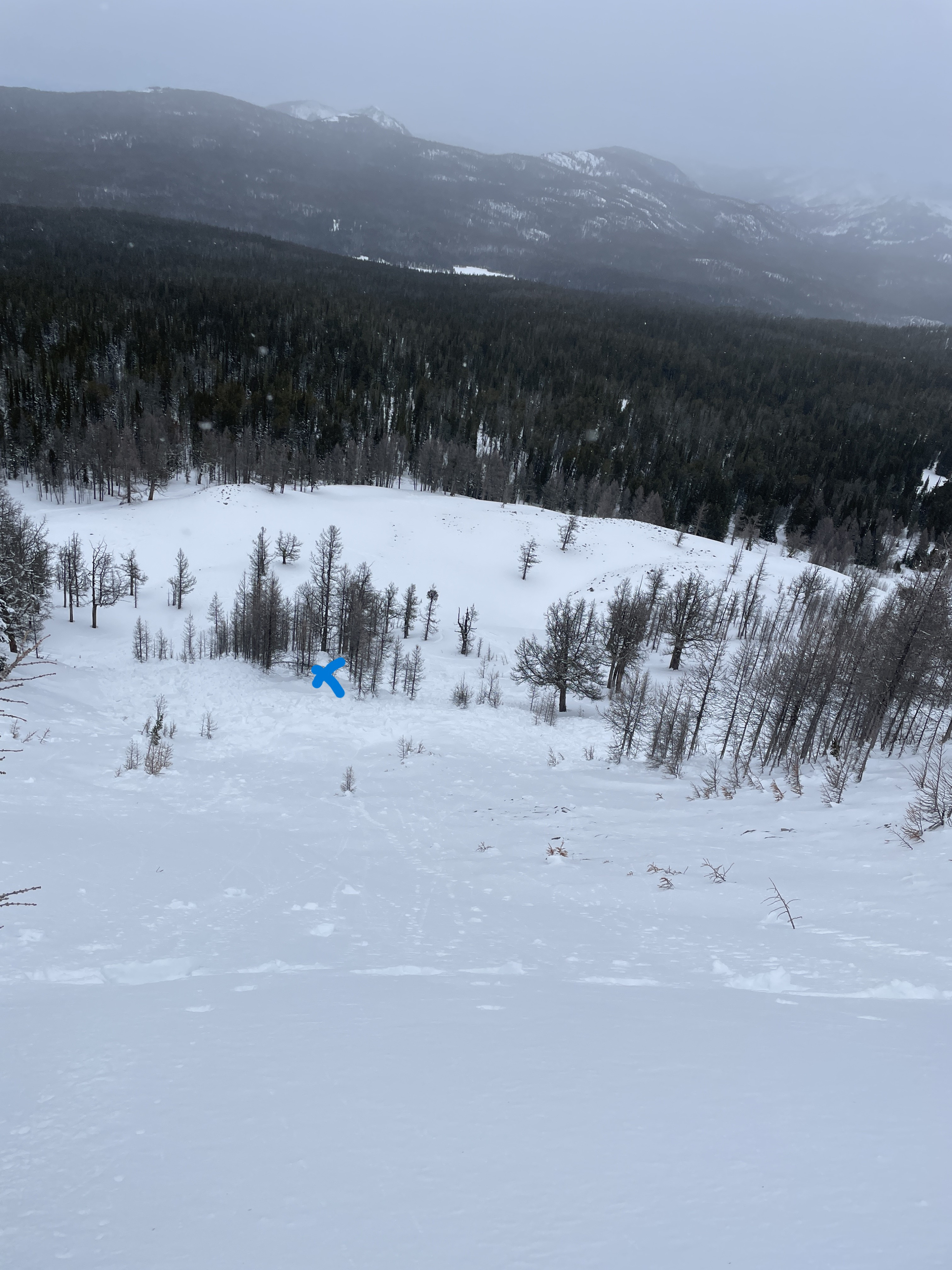
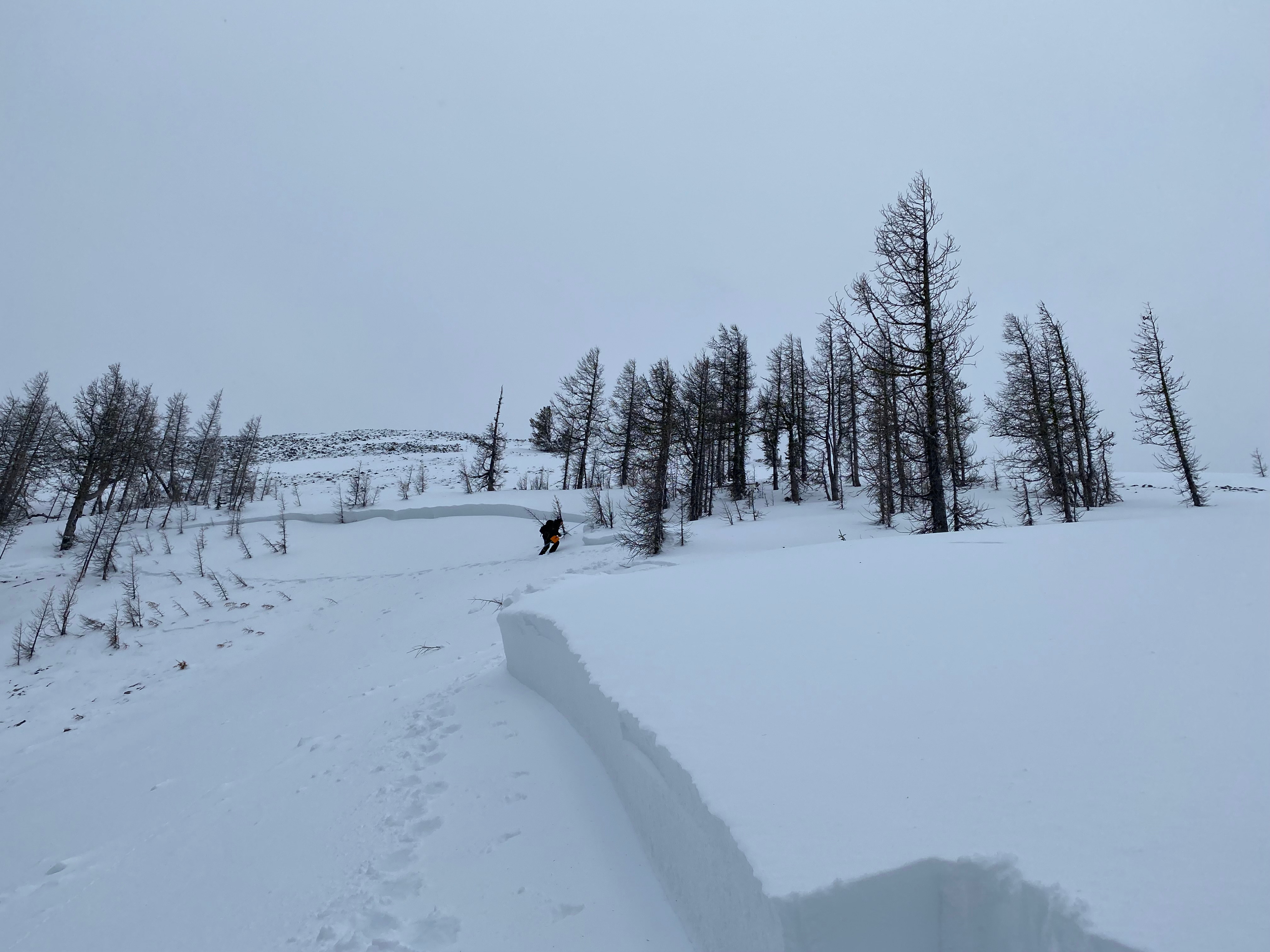
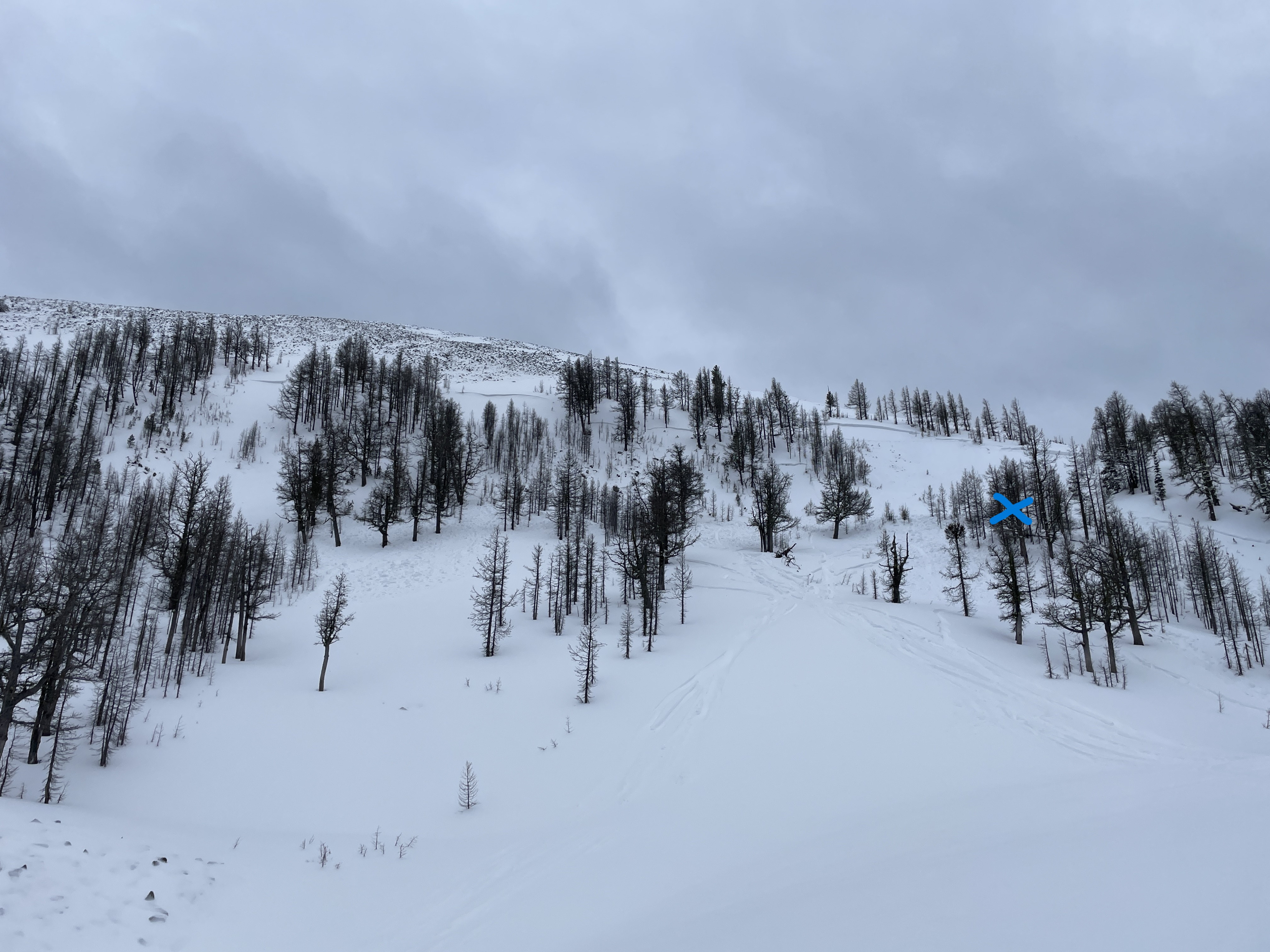
One rider decided to sidehill a slope. This slope measured 42 degrees at the top, is sparsely timbered with patchy larch trees, and is often wind-loaded. Once the rider sidehilled into the open, the avalanche fractured above him in the windslab. The fracture traveled roughly 800 feet in and around the larch trees near the top of the slope, and it deposited debris in 3 different run-outs. The avalanche took the rider and his sled approximately 300 feet downhill to a patch of small-diameter larch trees that strained the rider and his sled and piled up the debris. It was likely one of these small trees that broke the victim's leg.
During the debrief with the riders involved, they stated that they did not do a hazard evaluation or observe any signs of instability before triggering the avalanche.
While investigating the accident site two days later, my partner and I had several large collapses assessing the area. The riding partner stated that they had several collapses while moving the victim to the helicopter. During our site investigation, we found the depth at the crown to be 60 inches deep. At the toe of the slope, average snow depths were less than 20 inches. The avalanche was a hard slab with a wind slab failing atop facets. We classified the avalanche as HS-AM-R2-D2-O.
Rescue Summary:
The victim was buried vertically with a boot sticking out. He did not deploy his airbag. His partner performed a rescue and exposed his airway in 2 minutes. He extricated his whole body in 8-10. As they were digging, rescuers stated that one of the rider's legs was not in line with his body and was at an oblique angle in a non-anatomical position.
The riders had a Garmin Inreach and sent out a help signal. Lifeflight was in the area and landed at the base of the slope. It was unclear why the LZ was selected by the pilot, but we assume the pilot was trying to get as close to the patient as possible. The rider was transported to St. Pete's Hospital in Missoula, Montana, at 1230pm, where it was found the rider had a broken femur and hand.
Rescuers noticed several significant snow settlements as they descended the small pitches to the helicopter with the victim in the litter. A key takeaway from this rescue is performing a scene size up and evaluating any remaining avalanche hazard before committing rescue resources.
Note: Accident investigation performed by Beaverhead-Deerlodge employees.
See accident summary.Avalanche
- Size
- D2 R2
- Type
- HS
- Aspect
- N
- Trigger
- AM
- Elevation
- 8660 ft