
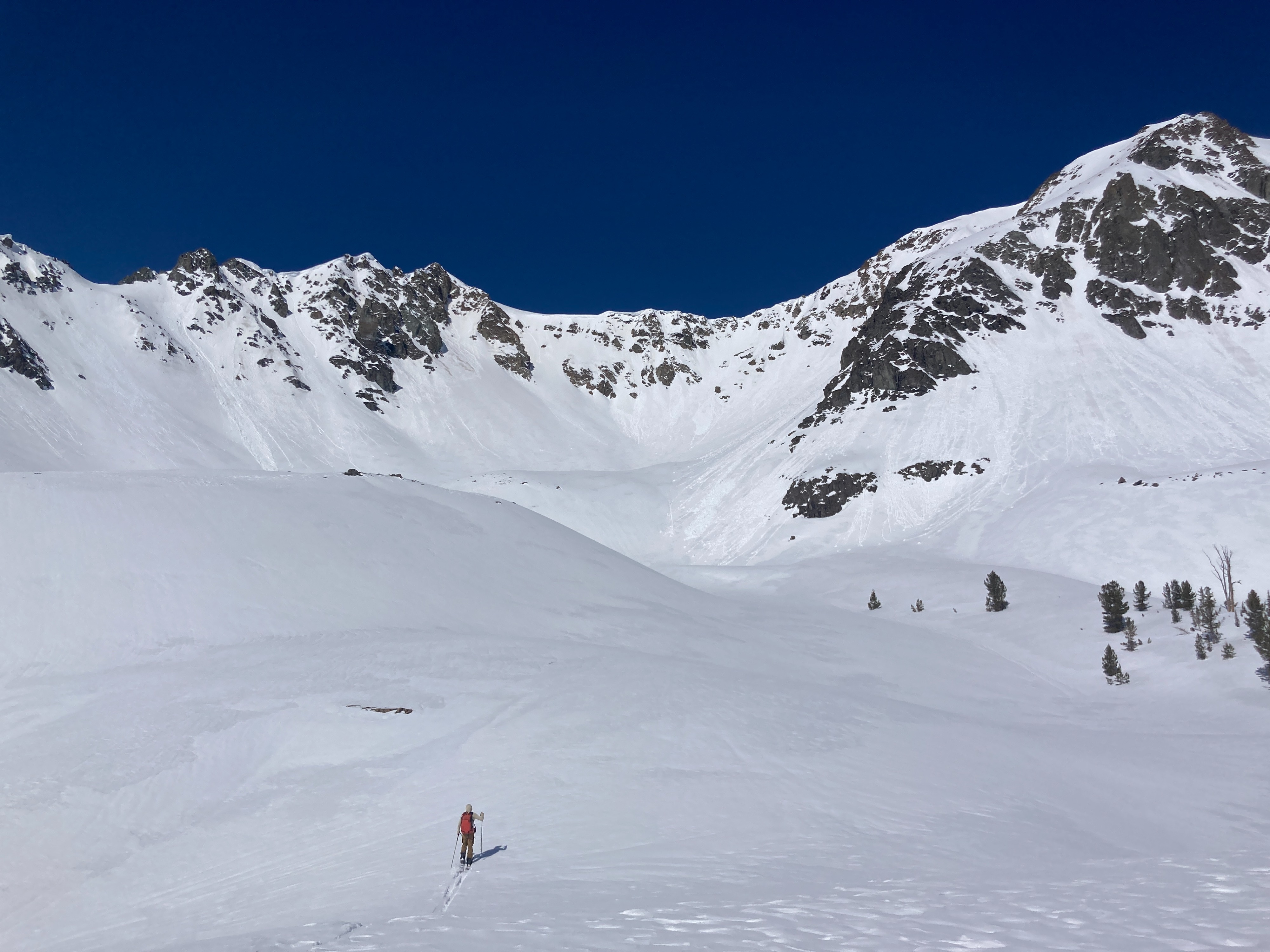
Quick report
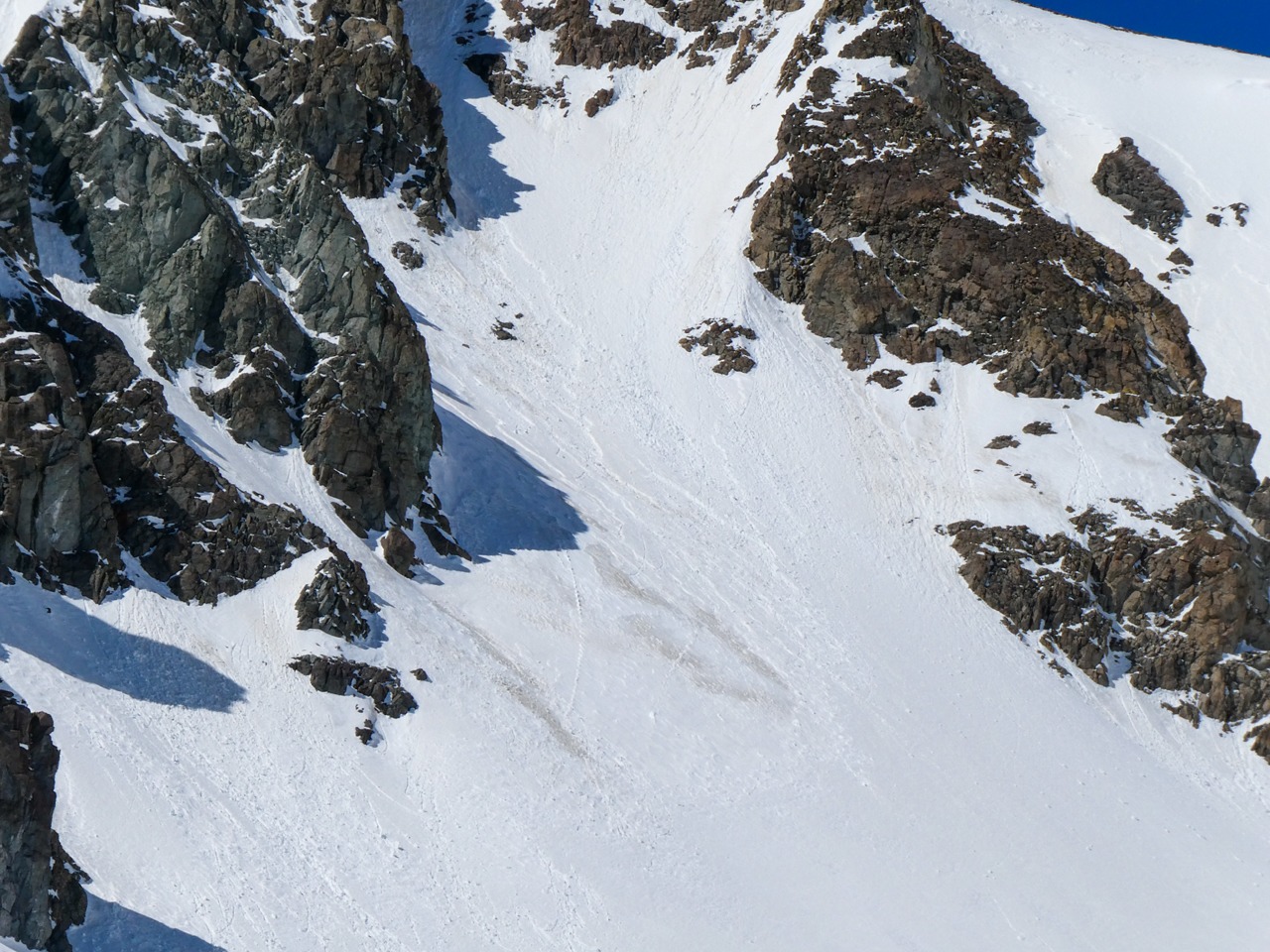
We witnessed wet loose avalanches today and observed ones that released yesterday. They were focused on the southern half of the compass and were mostly small but plenty big to push you or bury you in a terrain trap. We are concerned with the rising potential for wet slab avalanches as meltwater moves deeper, reaching weak layers of snow that have remained mostly dry this year, including upper elevation slopes and shadier slopes at middle elevations.
No cracking or collapsing. Wet loose avalanches are described below.Weather
- Cloud Cover
- few
- Wind Loading
- previous
- Snow Avail For Transport
- small smounts
Some thin mid-level clouds but otherwise blue sunny skies. Very warm in the sun but pleasant in the shade. Light breeze at times.
Snowpack
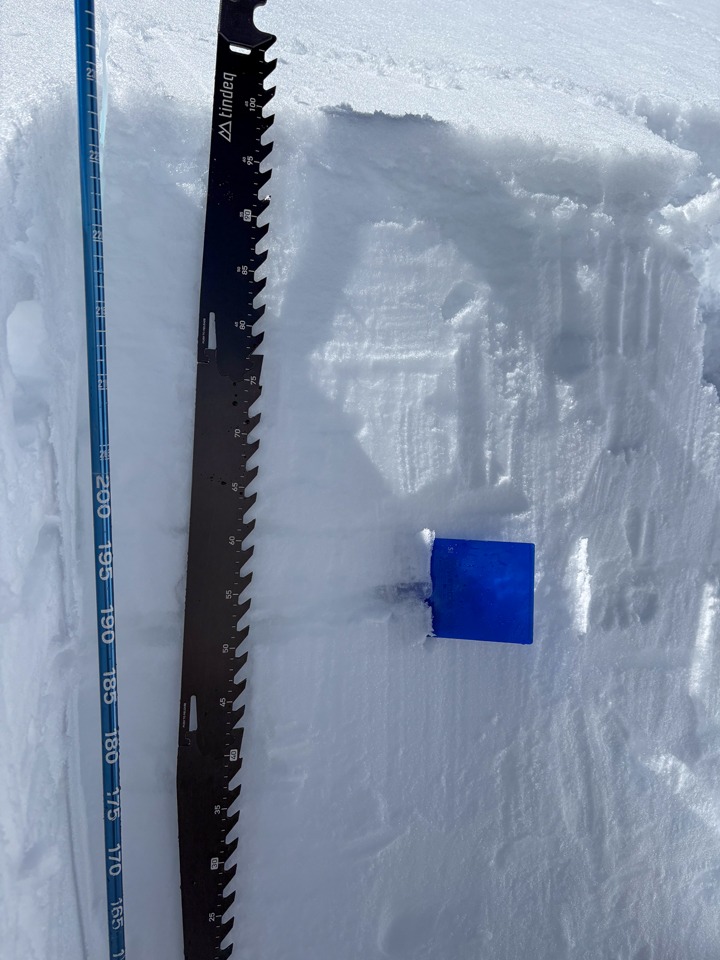
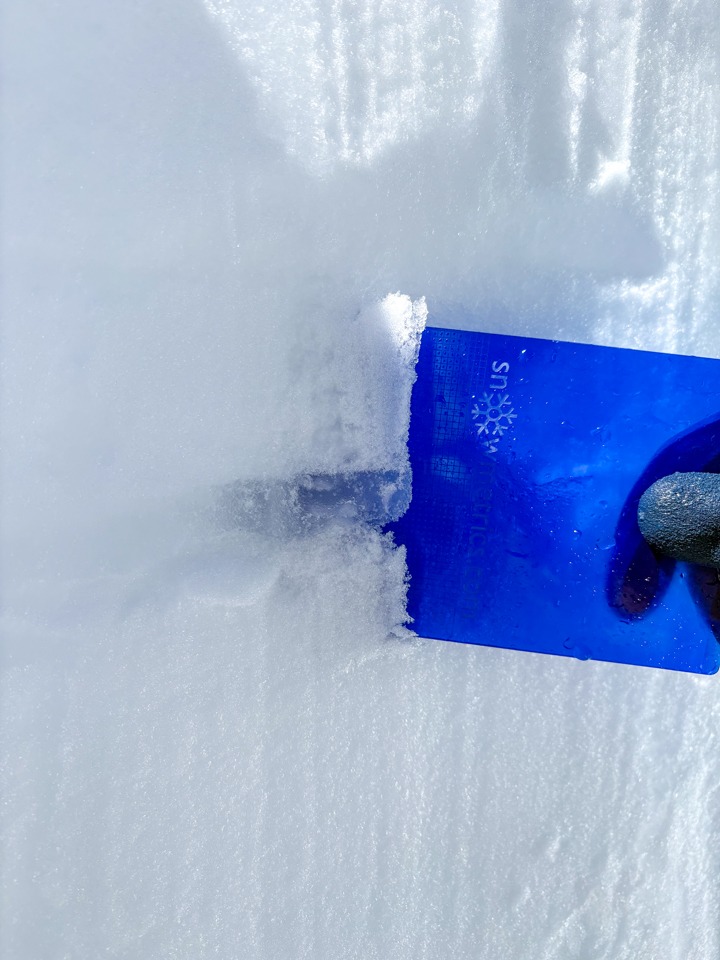
We found meltwater actively pooling ↓50 cm at the 3/12 interface on an E-facing slope at 9,800', wrapping to NE, meltwater was pooling at an intermediate crust ↓20 cm and had only formed a surface crust on NNE. This aligned with natural activity in this area, which was mostly roller balls on NW-N-NE where the upper snowpack was still mostly dry, switching to wet loose on W-SW-S-SE-E. Pits are summarized below:
NNE @ 9,800'
Surface crust but no meltwater below. Dust layer ↓60 cm. 3/12 ↓100 cm, presented as rounds above and below. No concerning layers in the upper snowpack.
NE @ 9,800'
Wet surface. Meltwater is pooling near an old windskin or crust layer ↓20 cm (ECTN11). Dust layer not obviously present. 3/12 ↓40 cm (ECTN23).
E @ 9,800'
Wet surface. Meltwater is pooling at the 3/12 interface ↓50 cm, and is starting to move below this interface (ECTX). Dust layer not obviously present.
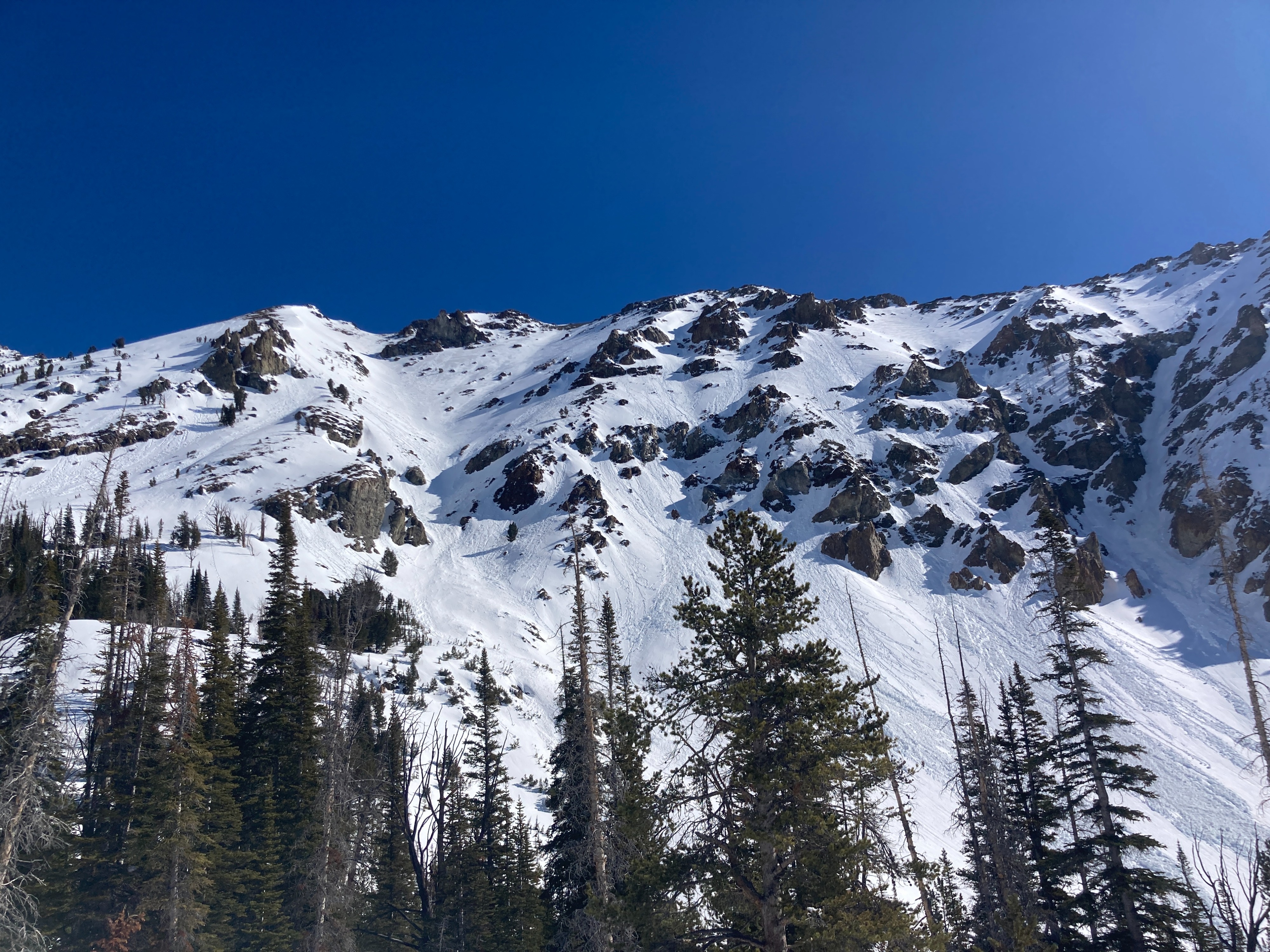
Avalanche
We had good views of the central Boulder and Smoky mountains. On the southern half of the compass, we observed numerous recent wet loose avalanches. Some had flanks that looked like they had failed, partly, as smaller slabs after being pushed from above. None of the slides we saw flanked out any significant distance. Avalanches looked like they failed on or near the dust layer or on 3/12, which was ~20-50 cm deep on sunnier slopes. Avalanches were D1-D1.5, but we could imagine some D2s in larger terrain.