
Quick report
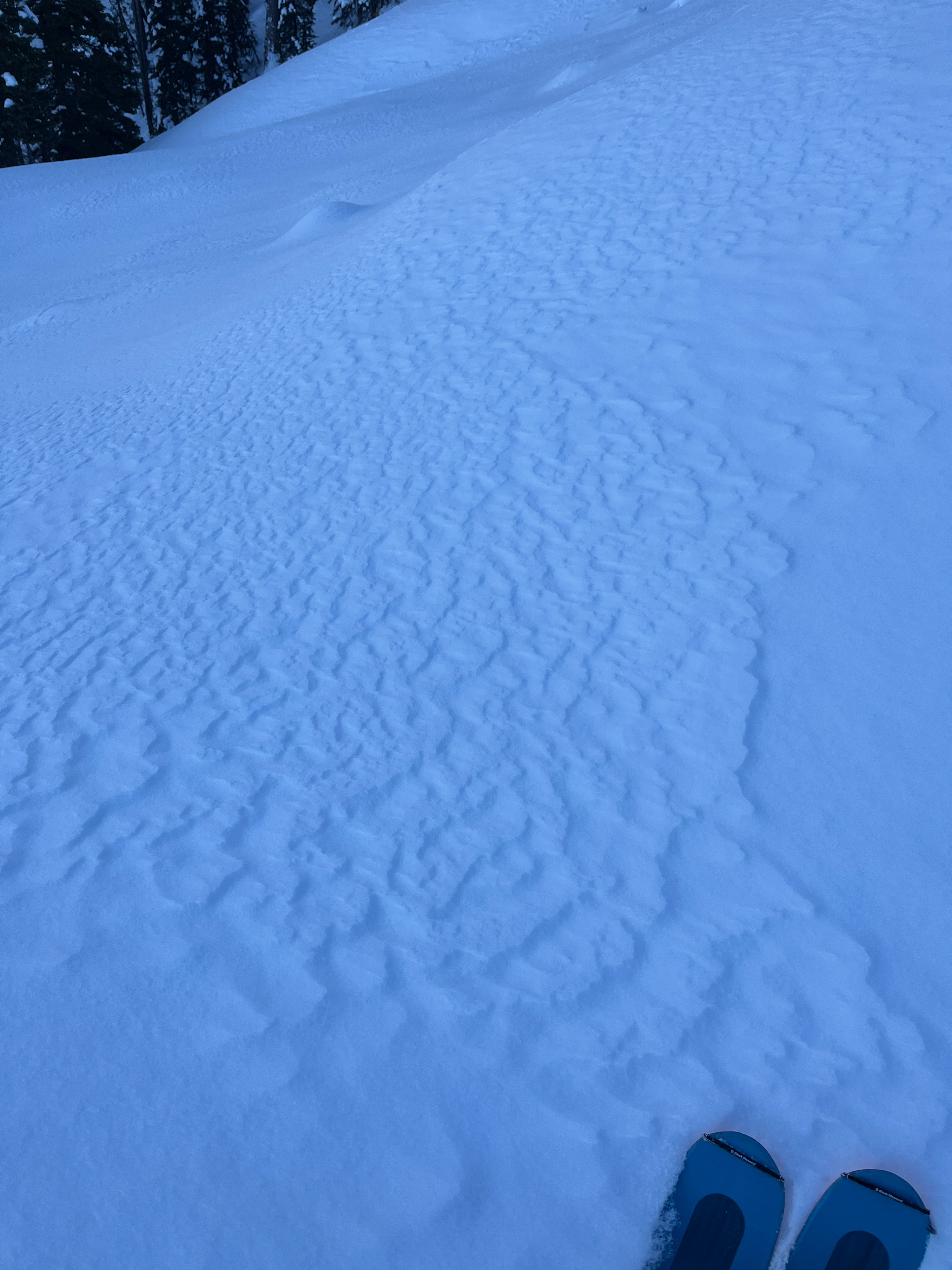
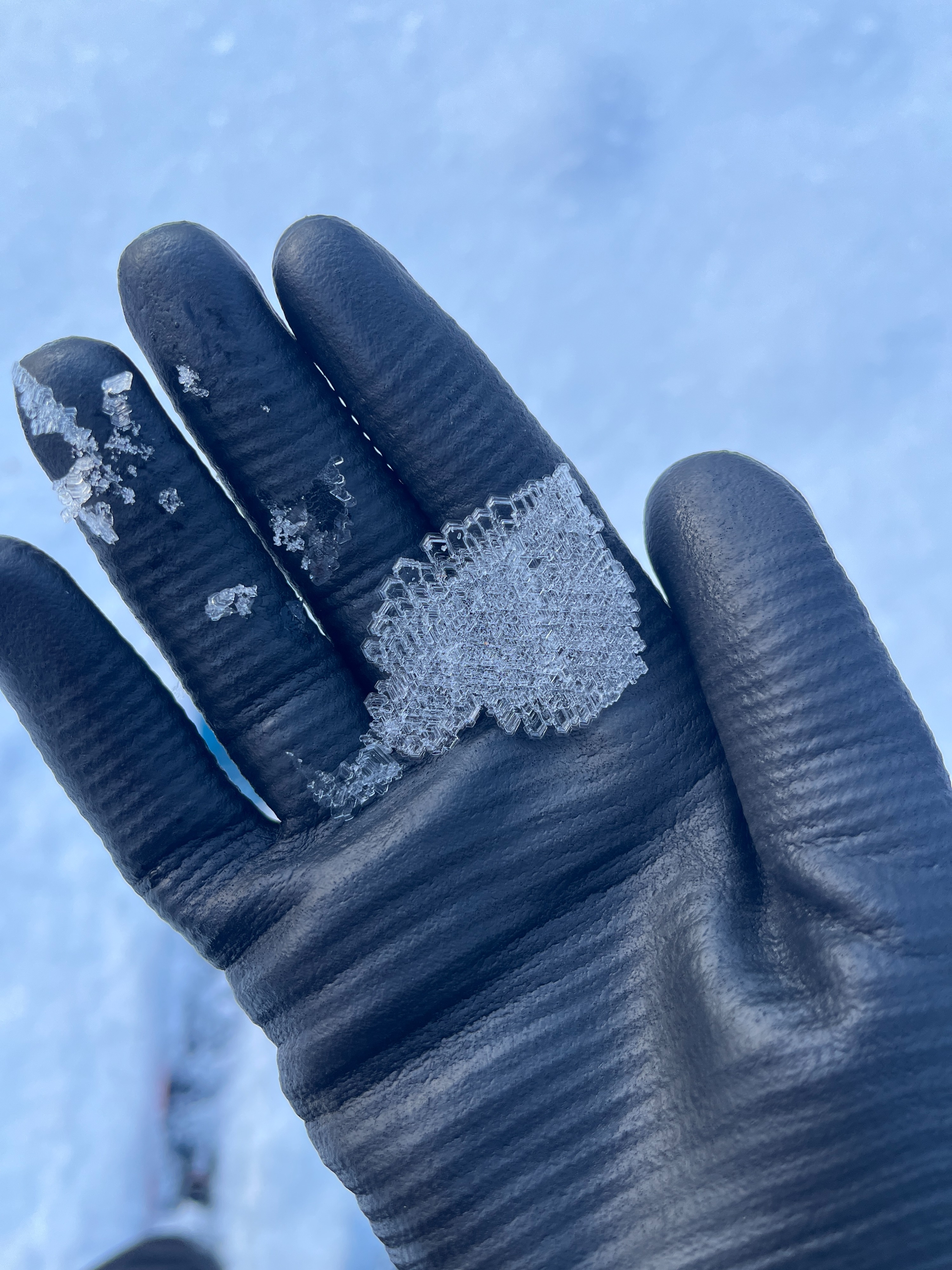
The main objectives for today were to do some terrain familiarization and gather more data on upper elevation terrain. I found good skiing and nice weather but low tide hazards still abound. Widespread surface hoar on and within the snowpack will be on the watch list for future snow falling on top. The wind slab problem was unreactive in this area.
Weather
- Air Temp
- 20
- Cloud Cover
- few
- Wind Loading
- none
- Recent Snowfall
- 0
- Snow Avail For Transport
- small smounts
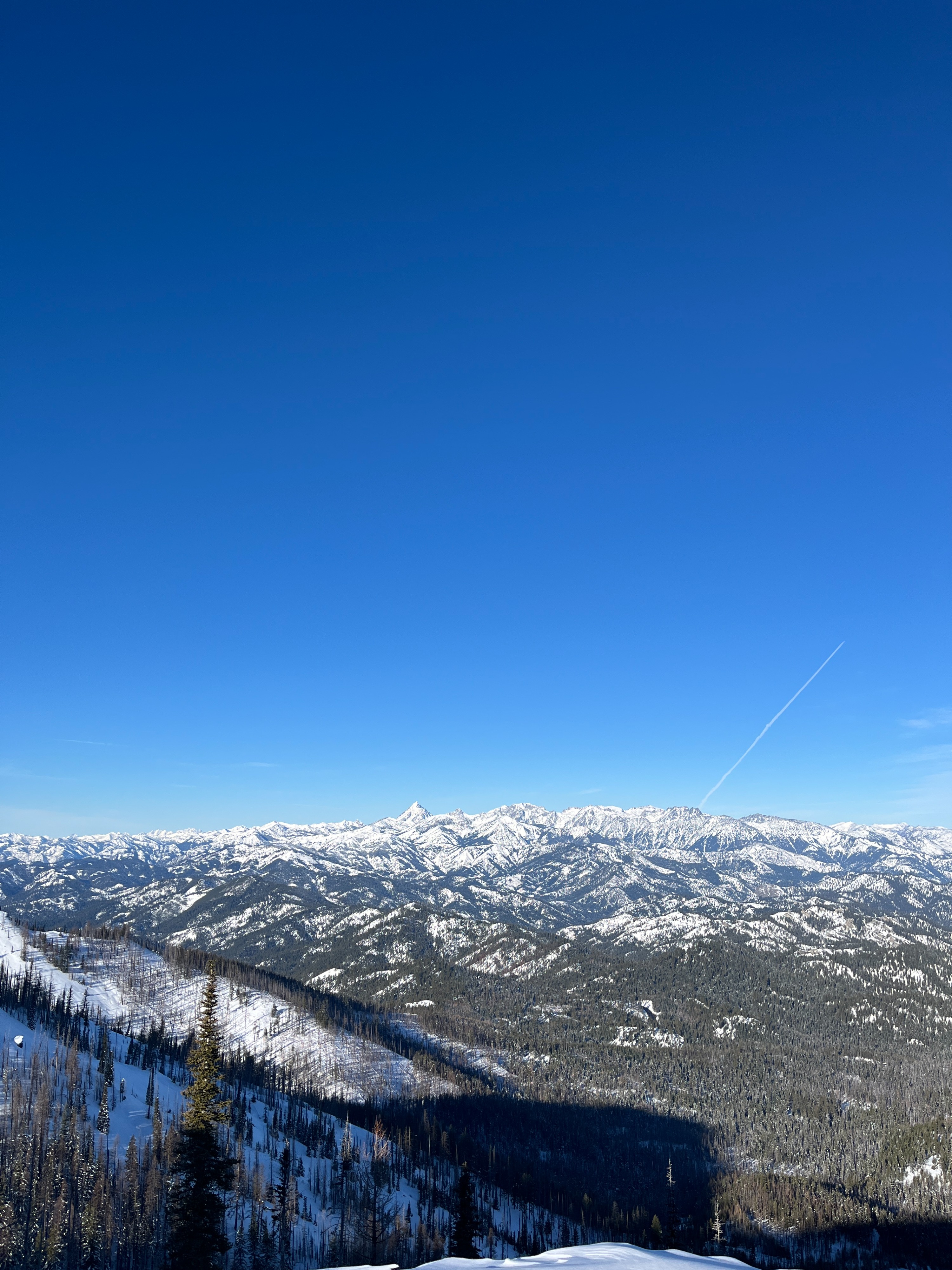
Another relatively cold and clear day. The wind was calm but shifted from the west at ridgeline to the southeast down below. There were only a few brief gusts of light wind while at ridgleline. By the time I exited the field in the afternoon, temperatures were still below freezing.
Snowpack
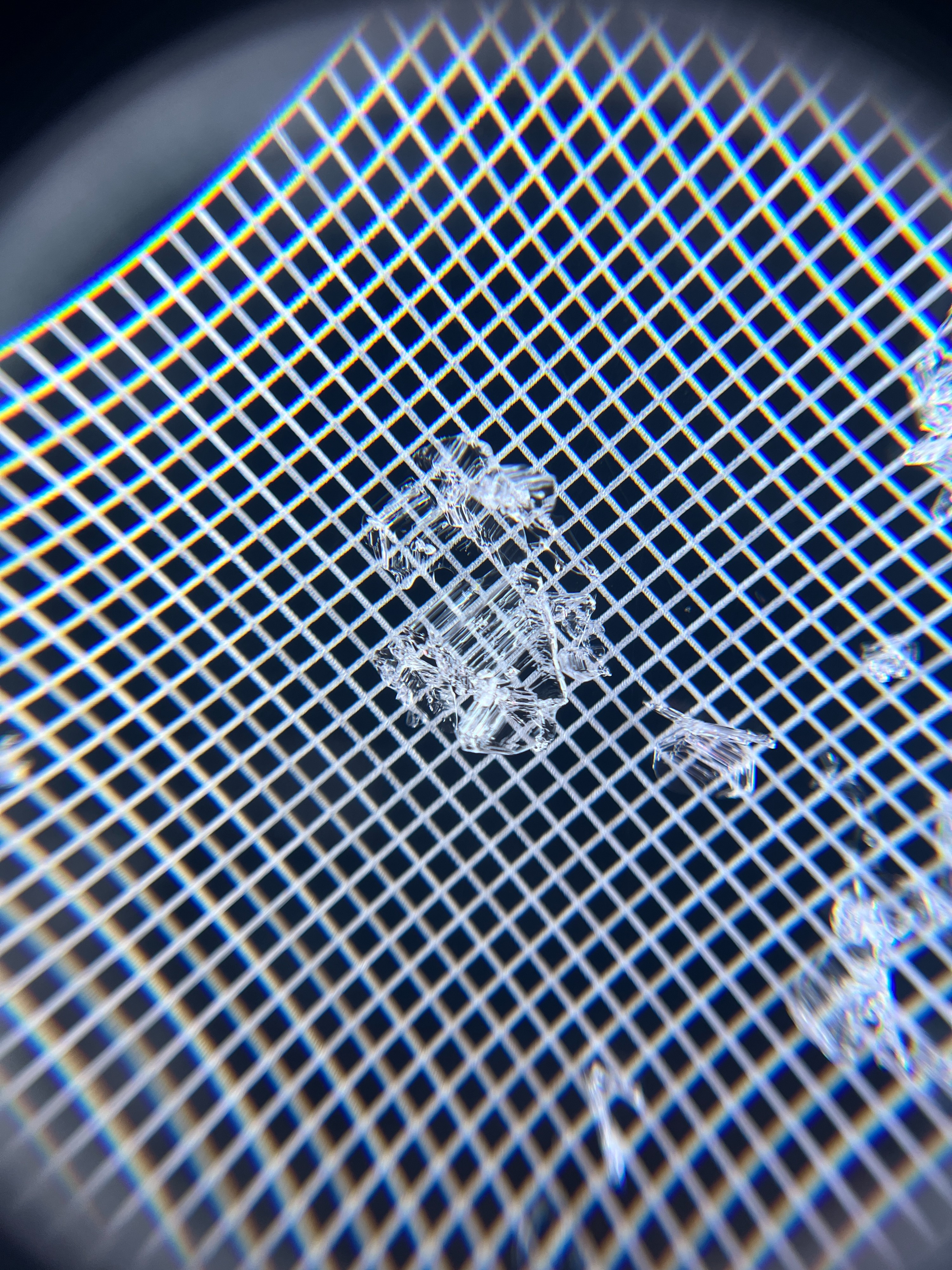
In general, Blewett Pass has lower snow coverage than other areas of the zone such as the Teanaway and Mission. That being said, I was still able to skin from the highway and ski back down without hitting too many hazards. I observed widespread and large surface hoar growth on all aspects and elevations. The overall snowpack remains cold and dry, especially on northerly aspects.
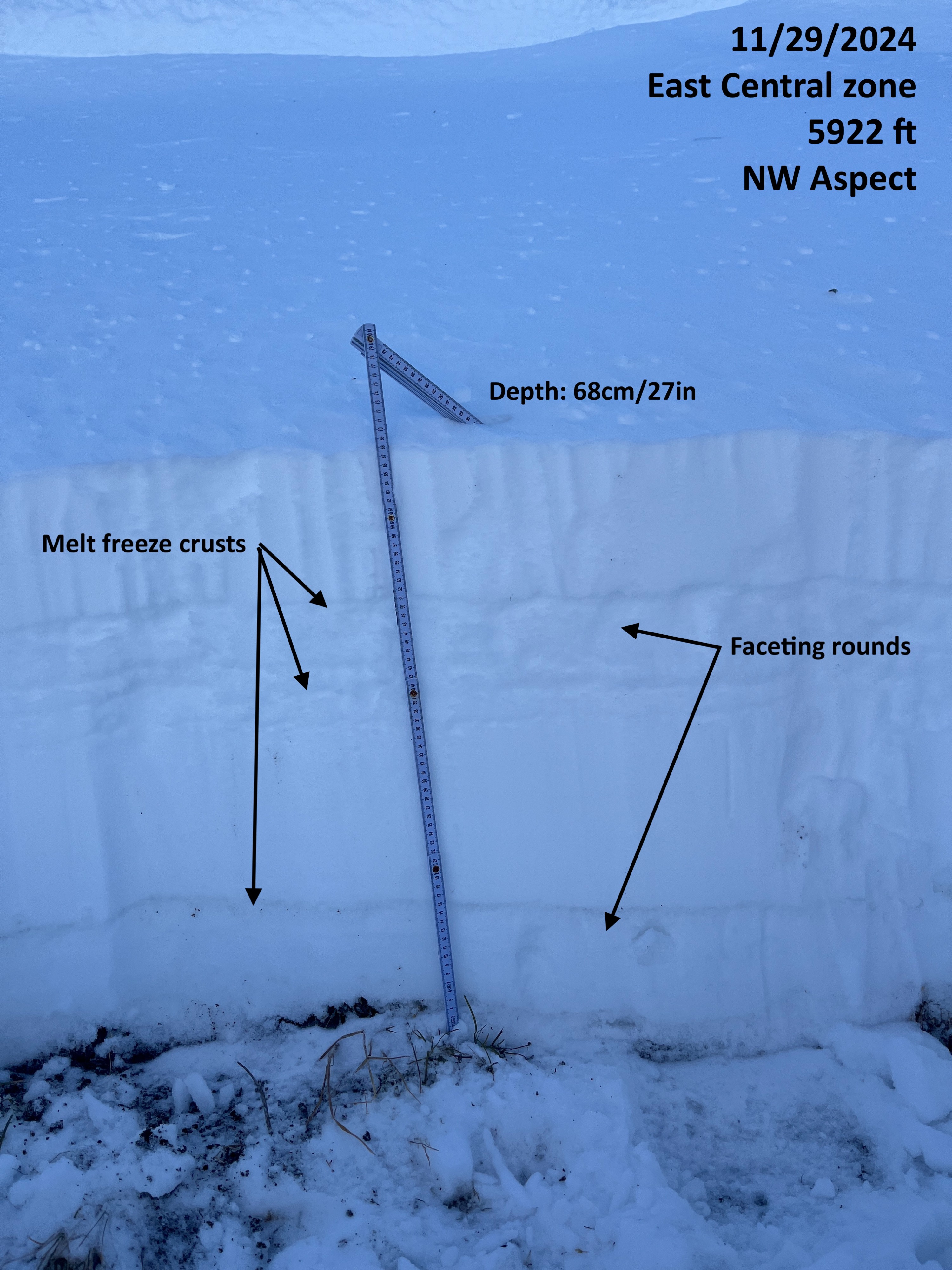
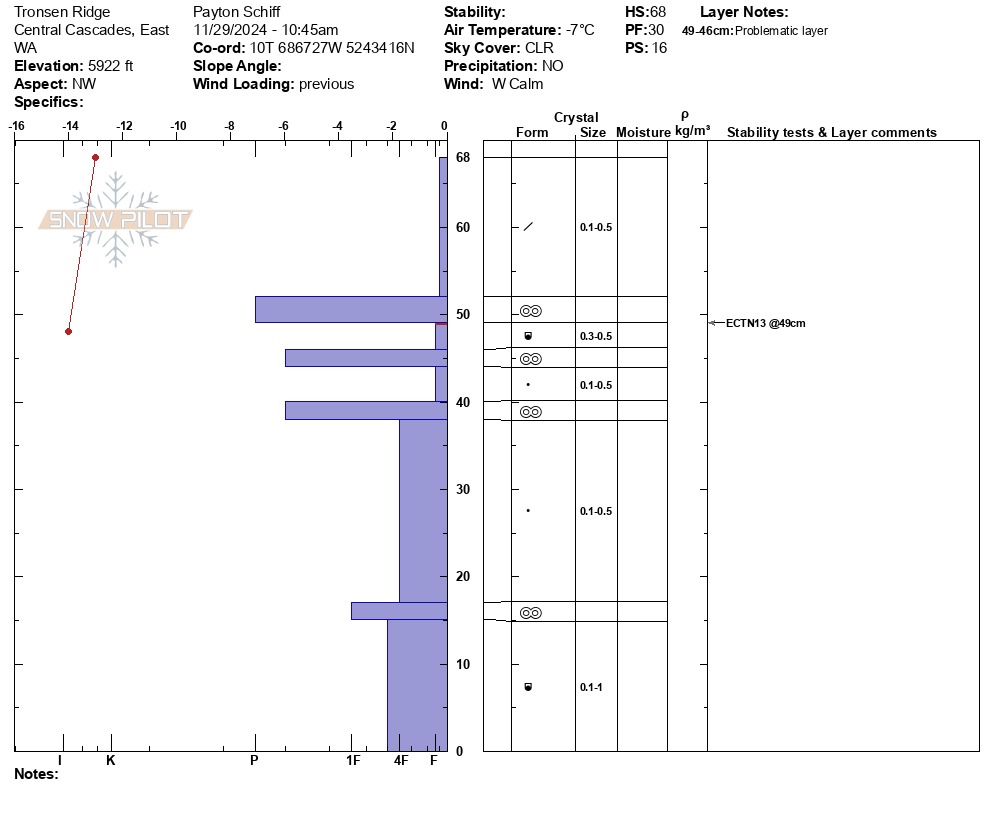
I dug a snowpit on a northwest aspect at 5900 ft. The depth of this pit was 68cm (27in). My boot penetration was 30cm (12in) and ski penetration was 16cm (6in). I found fist hard decomposing fragments near the surface. Below, I found melt freeze crusts in the upper and lower portions of the snowpack with grains just below them that I couldn't quite classify as near crust facets yet, but they were headed in that direction. These faceting rounds were fist and four finger hard, respectively. I performed an extended column test and got a moderate, non-propagating result (ECTN13) in the first layer of faceting rounds.
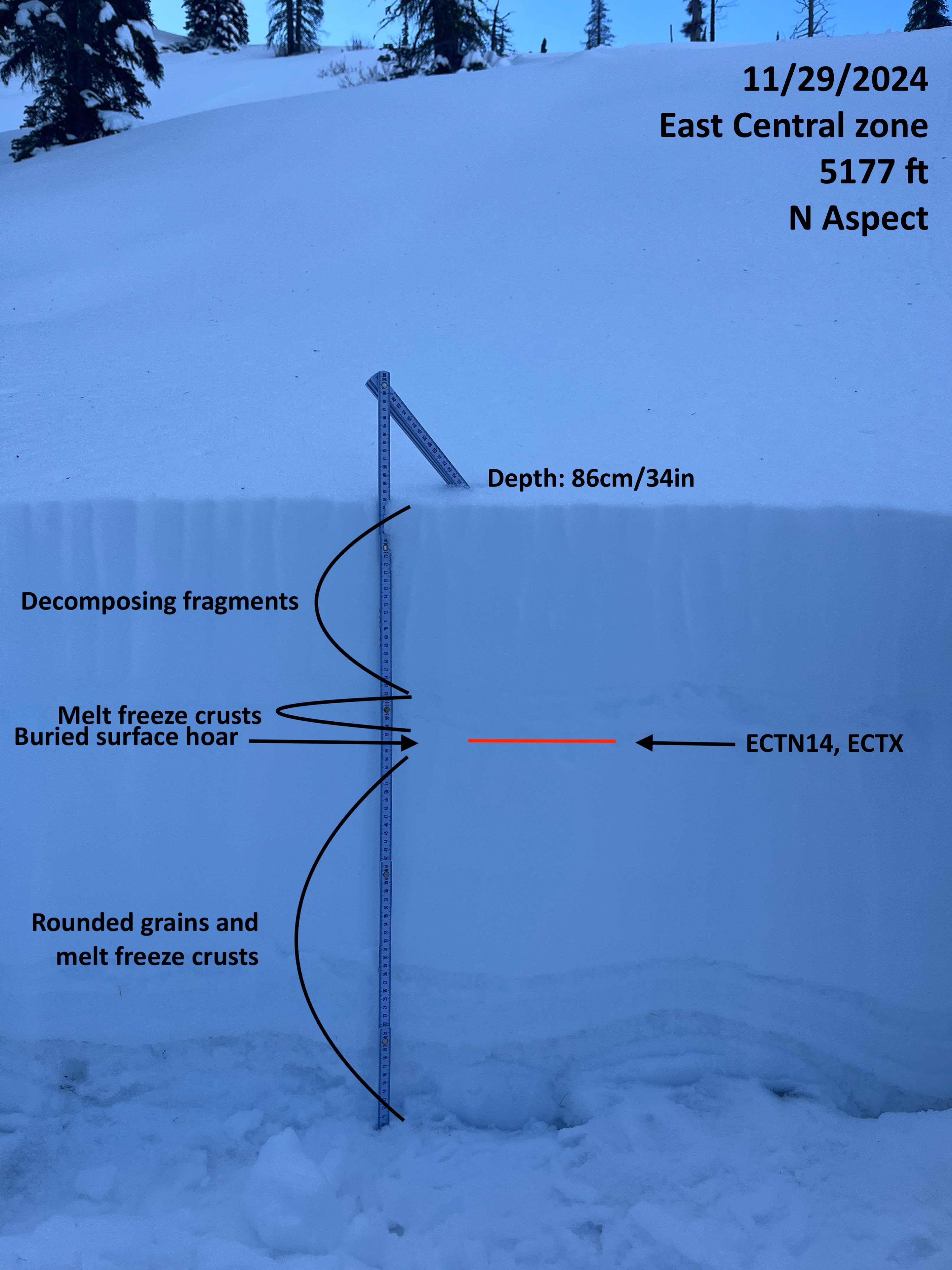
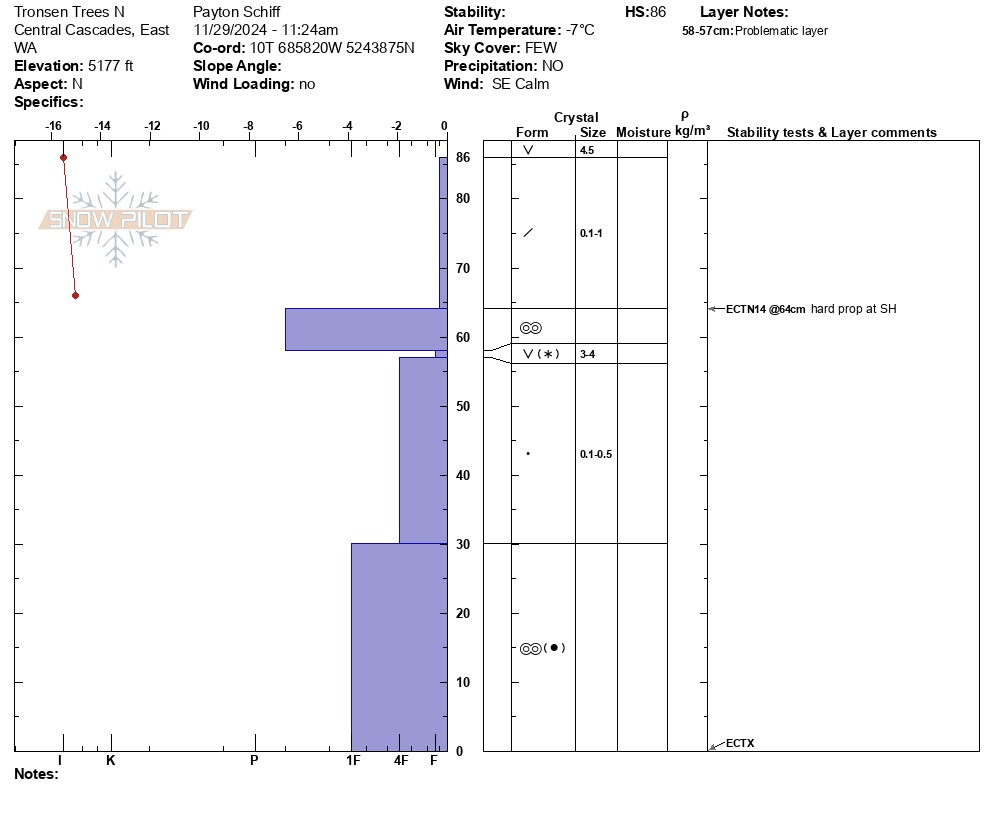
I dug another pit on a north aspect at 5200 ft. The depth of this pit was 86cm (33in). I found a similar snowpack structure, with fist hard decomposing fragments near the surface and melt freeze crusts within. The main difference with this pit was that I found a small amount of buried surface hoar just below the first melt freeze crust layer. I performed two extended column tests. In the first test, I got a moderate, non propagating result (ECTN14) above the first melt freeze crust. I kept tapping and got propagation at the layer of buried surface hoar. In the second test, I got no results (ECTX).