
Quick report
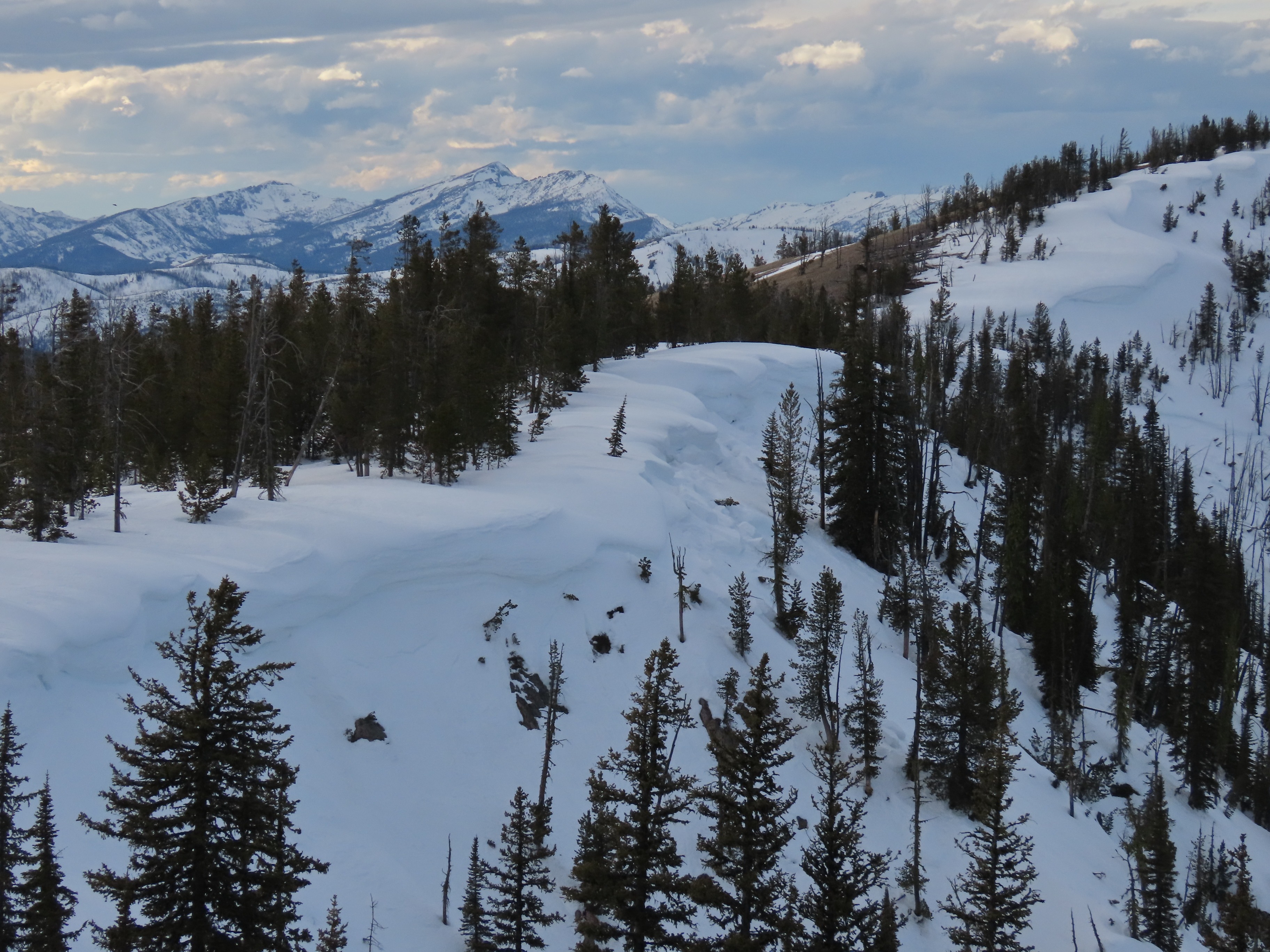
This was an afternoon tour to look at the snow in this area. I found a largely supportable snowpack, with refreezing surface crusts in the late afternoon/early evening. This was somewhat of a surprise, based on the temperature when I started my tour (74 F at the truck...). I didn't dig, so no direct observations on water below the surface, but watching the weather and snow in recent days and moving through terrain today and pole probing led me to believe that there is plenty of water hung up in the snowpack, gradually working its way down.
The difference in supportability between this area and what I encountered in the Swans the previous day was impressive. Hard to say how much of that was due to elapsed time, but I suspect a significant portion is just from difference in snow character. This area has generally had slightly warmer temperatures than further north but less cloud cover, allowing the snowpack to radiate out its heat/energy more effectively. Also, this area did not see nearly the amount of rain Lots of uncertainty with all of that, I'll feel alot better about the snowpack once we give it a few days to drain and begin to refreeze.
No direct signs of instability, aside from wet snowWeather
- Air Temp
- HOT
Variable cloud cover with lots of open skies. Temperatures were hot, 74 F when I left the ruck in the afternoon! Moderate winds blowing out of the west with occasional stronger gusts.
Avalanche
- Size
- D3 R4
- Aspect
- NE
- Trigger
- N
- Elevation
- 8200 ft
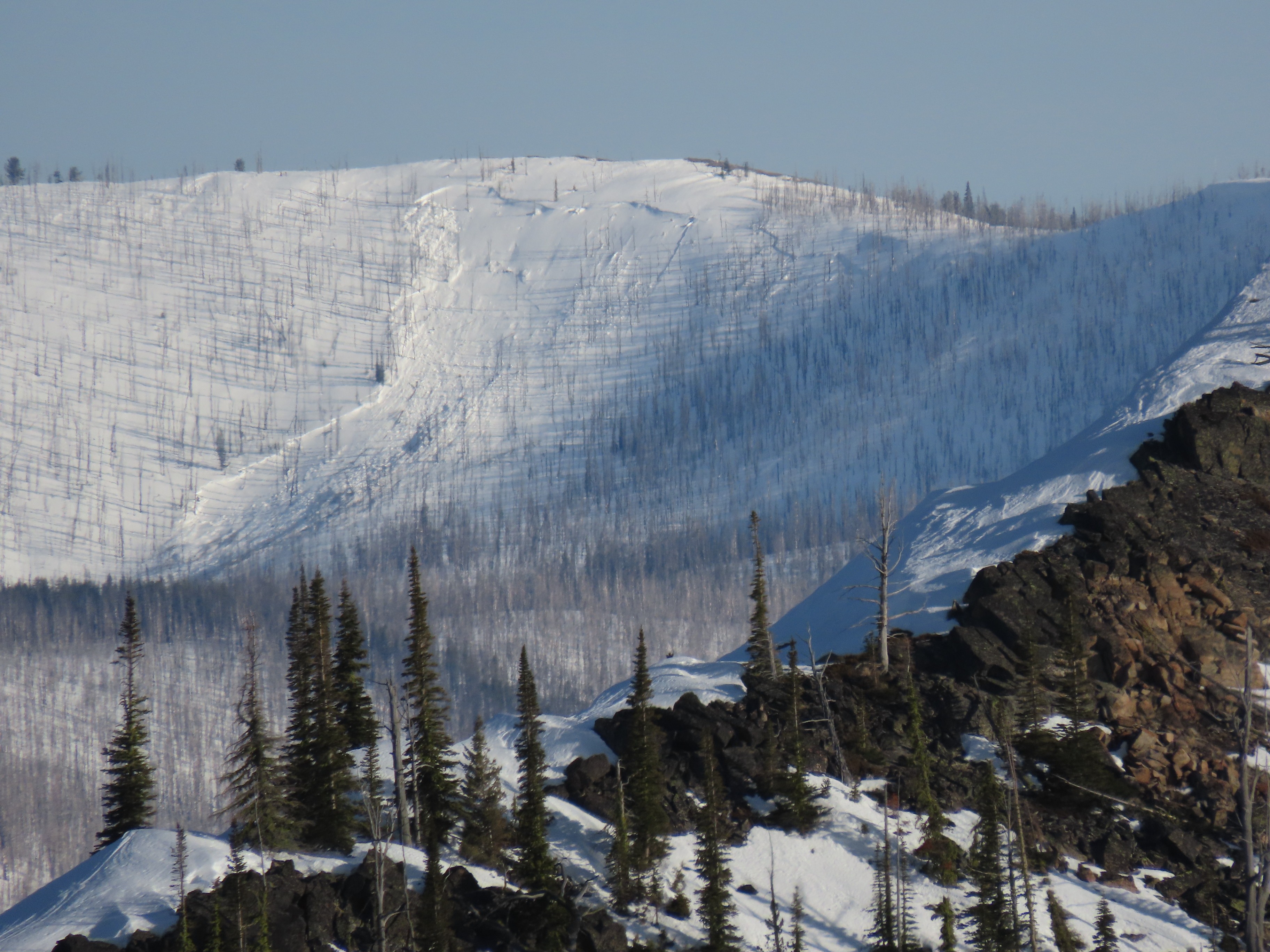
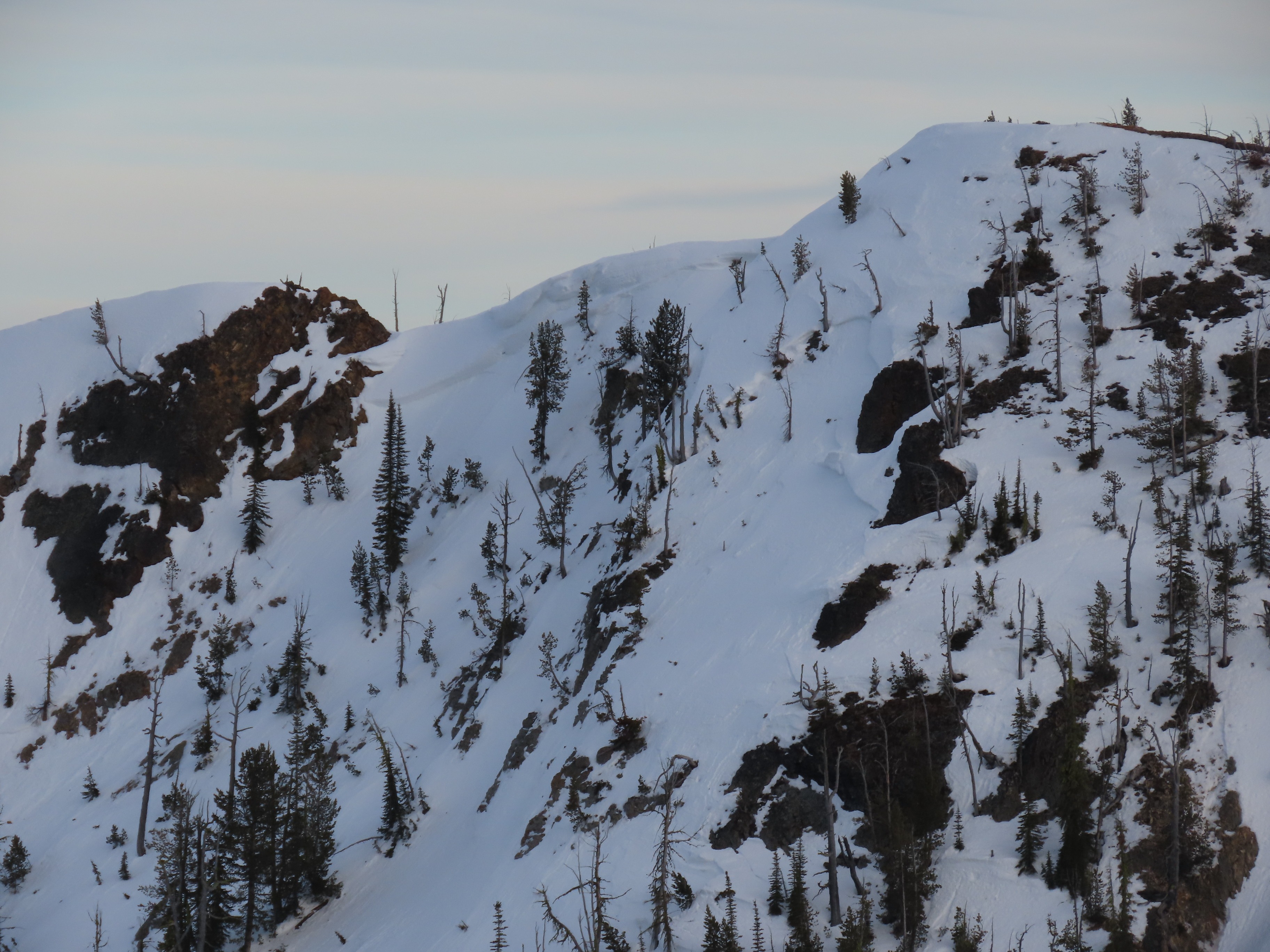
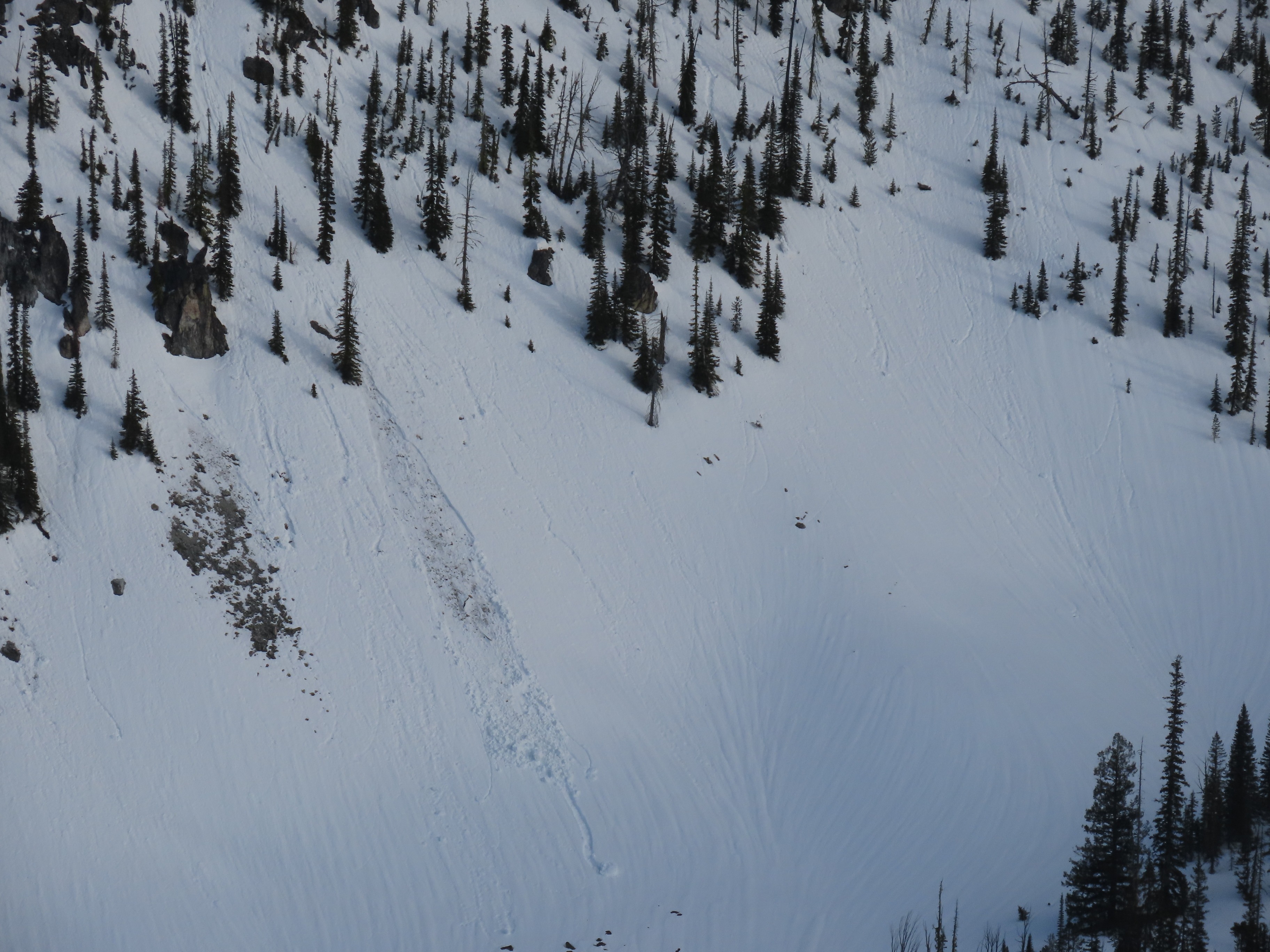
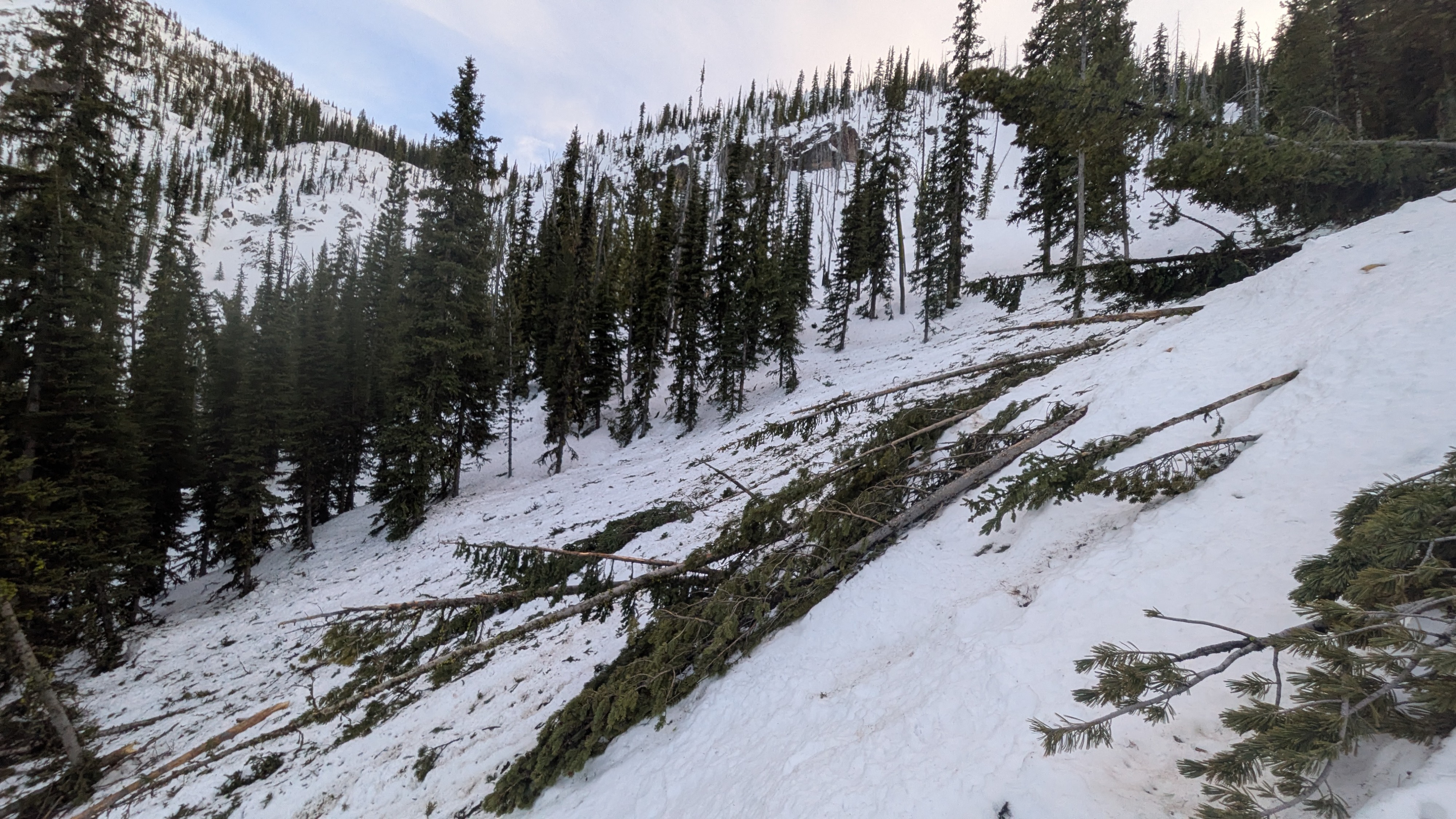
Impressive avalanches in the NE bowl of Saddle. It was hard to tell if they had all failed naturally or if it was a bit more piecemeal. Slides failed 4-6 feet down on January drought surface. Some mowed out new trim lines.