
Quick report
- Cracking
- specific
- Collapsing
- specific
You can trigger avalanches involving dense, 2-3 foot thick slabs on many slopes that can injure or kill you. Slopes with weak snow at the base of the snowpack are much more dangerous than those without. You are more likely to trigger avalanches in areas with drifts, dunes, or rippled surfaces. Triggered avalanches may break wider than you might expect, and can be triggered from a distance away from the slope that avalanches.
While travelling at middle and upper elevations, we experienced large collapses and cracks shooting out from our skis.Weather
- Air Temp
- Below 0° in the AM, Below 32° throughout day
- Cloud Cover
- scattered
- Wind Loading
- previous
- Rain Elevation
- N/A
- Recent Snowfall
- 18-23
- Snow Avail For Transport
- large amounts
Skies were clear in the morning, with high clouds slightly increasing throughout the day. Temperatures were in the negative teens F on the drainage floor in the morning in Smiley Creek, with a prominent inversion as you climbed. Temperatures stayed cold throughout the day, with winds calm excepts on the highest ridgelines in the afternoon.
Snowpack
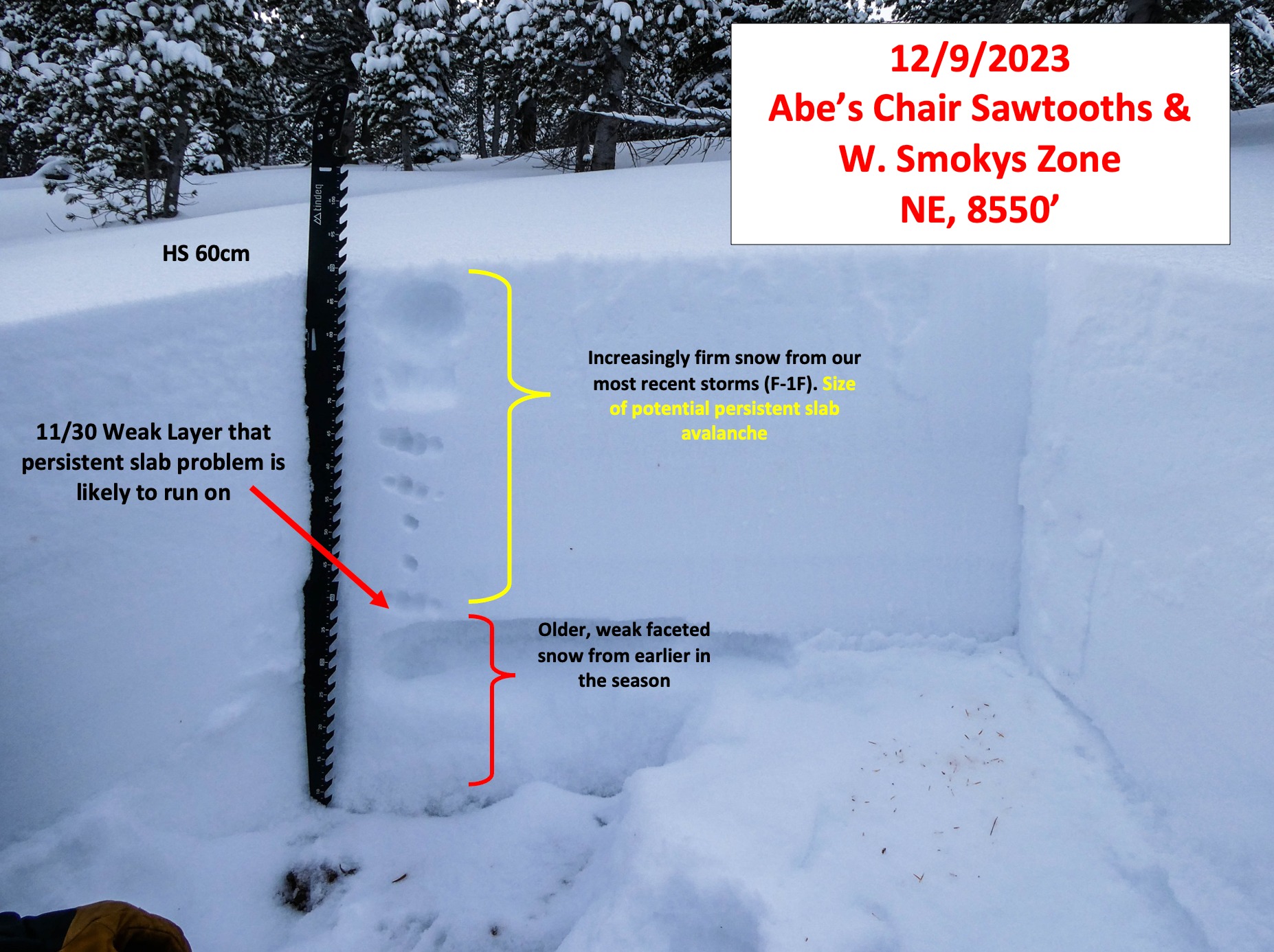
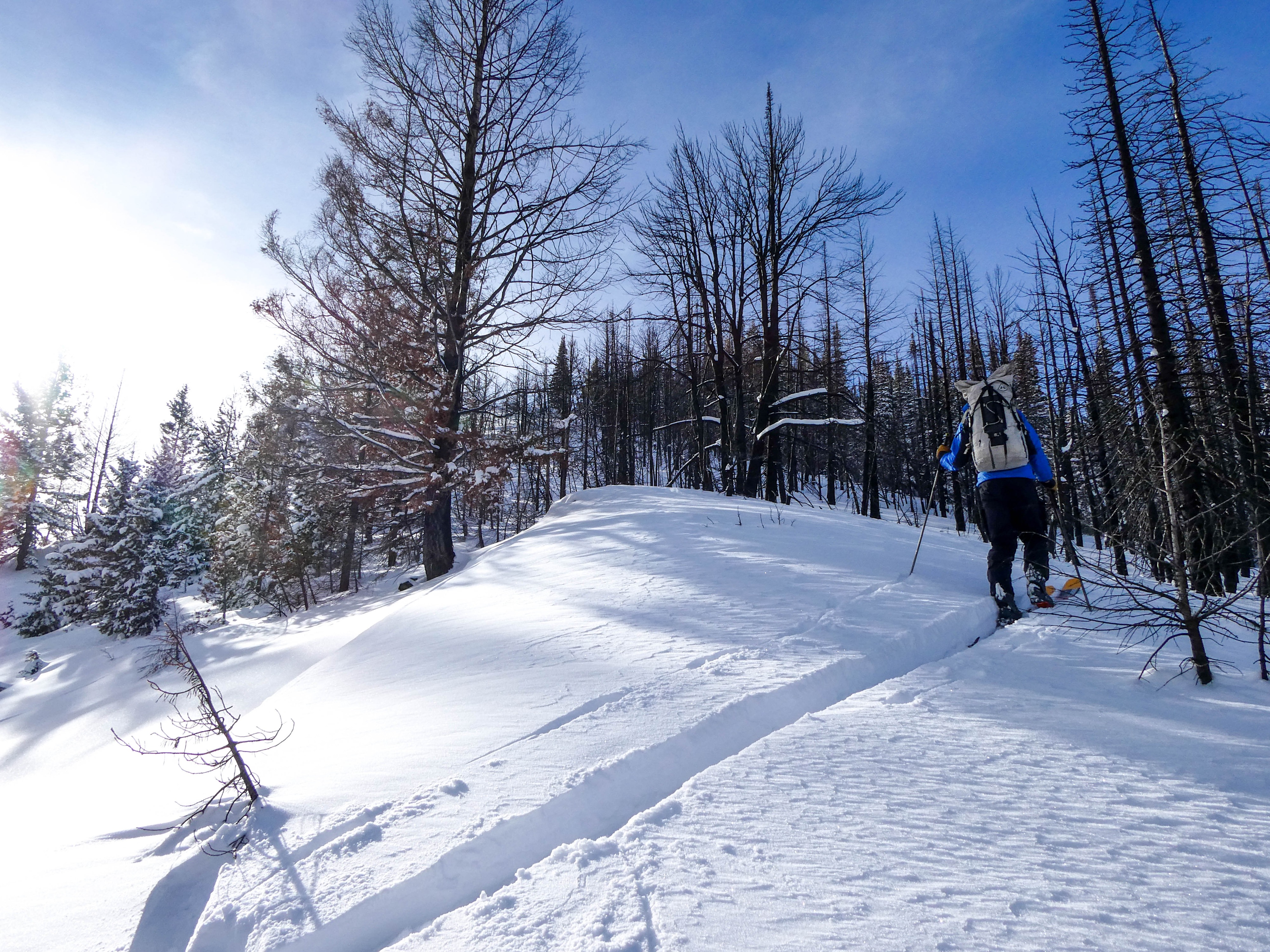
Walking up Smiley Creek from the highway, temperatures were into the negatives F, with anywhere from 6-10cm of new, light snow on the valley floor. As we climbed in elevation from valley floor to 7760' the inversion made itself apparent, with a over ten degrees F jump in temps. New snow increased as we climbed, with lightly wind textured surfaces even below treeline. On a NE aspect at 8100', we found a 40cm deep snowpack, with 13cm of dry, soft new snow (HN). There was a thin, egg-like ambient temperature crust beneath the newest snow from the past week, with an additional 14cm of well-settled snow (4F to 1F-) from this month below this before hitting the 11/30 interface. The rest of the way to the ground we found our weak, sugary early season facets on top of a basal ice layer. On this lower-angled shletered slope, we found both an ECT and CPST fracture on the 11/30 interface, but no propagation.
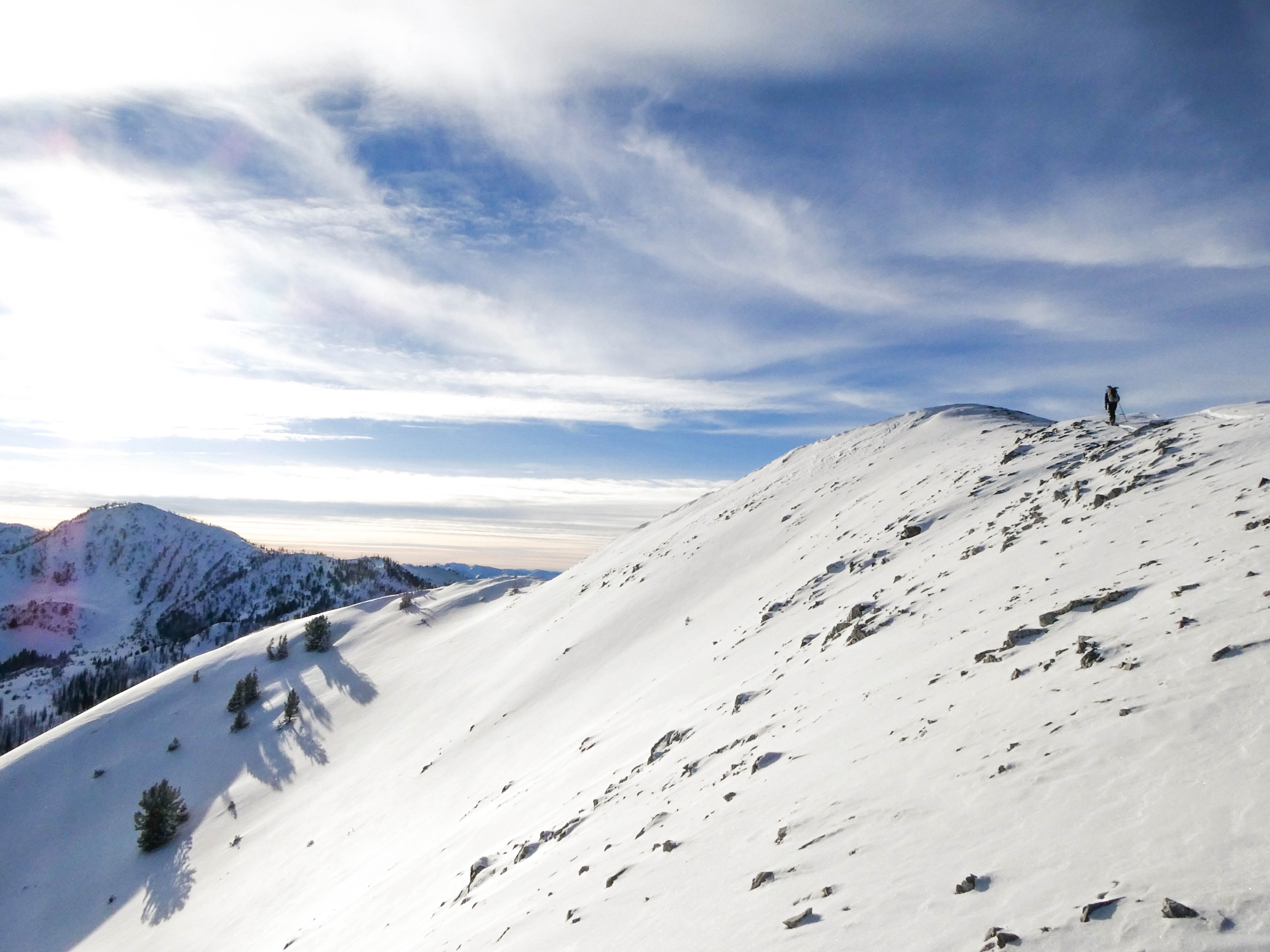
Signs of instability rose as we climbed. We increasingly started to trigger collapses with shooting cracks knocking snow off of vegetation. Having agreed to mostly not enter avalanche terrain for the day, we were pleased with our choices. After multiple ECT's on a NE aspect at 8550' with a 60cm snowpack, we found our persistent slab problem between our old November facets and newer snow here, with a likelihood to be triggered with only moderate force (ECTP12 x2 ↓ 50). The 12/6 crust was barely present here. As we climbed from upper middle, to upper elevations, we found many signs of wind effect including drifts, dunes, and rippled surfaces. Wind loading near ridgelines caused us to be mindful of where we chose to skin, being sure to be downhill from land markers like trees. This travel technique helped us to avoid stepping onto unsupported wind lips and cornices.