
Quick report
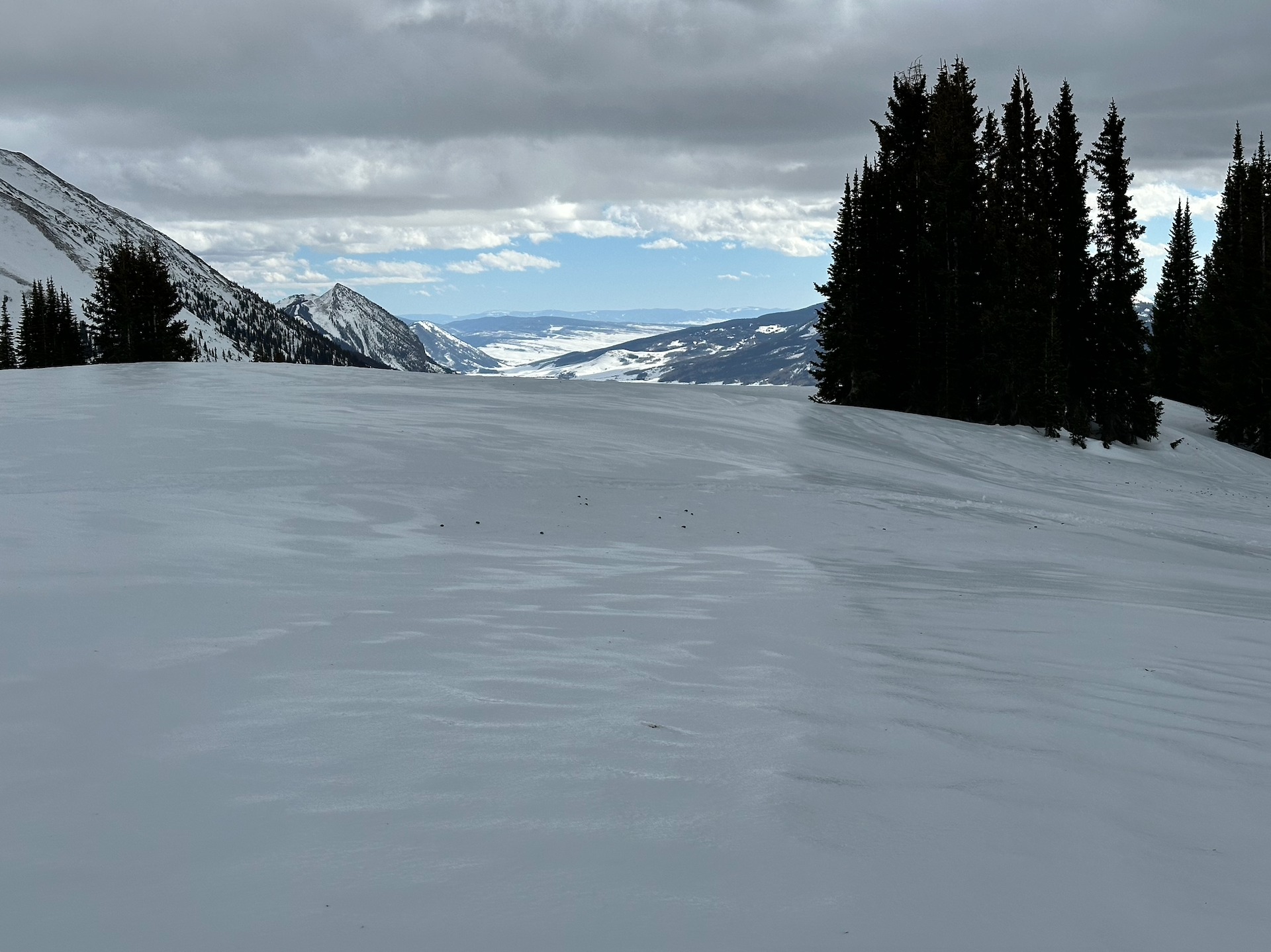
Snow surfaces are not conducive to good turns on many slopes. Sheltered areas often have melt/freeze crusts of varying thickness, and exposed areas remain stiff and variable from previous winds. Near the treeline, on the north half of the compass, we were able to find soft surface snow in protected areas. The influence of recent warm weather is most prominent below treeline on sunny terrain. As you climb to the near treeline elevation band, crusts become thin and rest above weak facets. This structure is not a problem now, but it could be if Mother Nature delivers a storm in the future and a slab forms.
Weather
- Cloud Cover
- broken
- Snow Avail For Transport
- small smounts
Mild temperatures and light winds up through 11,600 feet. Clouds overhead appeared to be ripping by. Winds appeared much stronger near mountain tops.
Snowpack
Our goal of fieldwork was to examine the influence of the recent warm weather on the snowpack at the upper end of the below treeline and near treeline elevation bands. The most suspect structures can be found on east and west aspects where thin, soft crusts cap very weak faceted snow. These places will not accept much of new slab before a new avalanche problem develops. More southerly slopes have thicker crust around 5cm and could support a larger load, but some features showed weak facets below. As you descend into the below treeline elevation band (below around 10,800 feet), sunny terrain features look less problematic and generally strong with future avalanche problems just involving new snow.
Avalanche
- Size
- D1 R1
- Type
- WL
- Aspect
- W
- Trigger
- N
- Elevation
- 10800 ft
The light was flat so seeing small wet avalanches from a few days ago was hard throughout the range. One small Wet Loose on a west-facing slope at 10,800 feet.