
Quick report
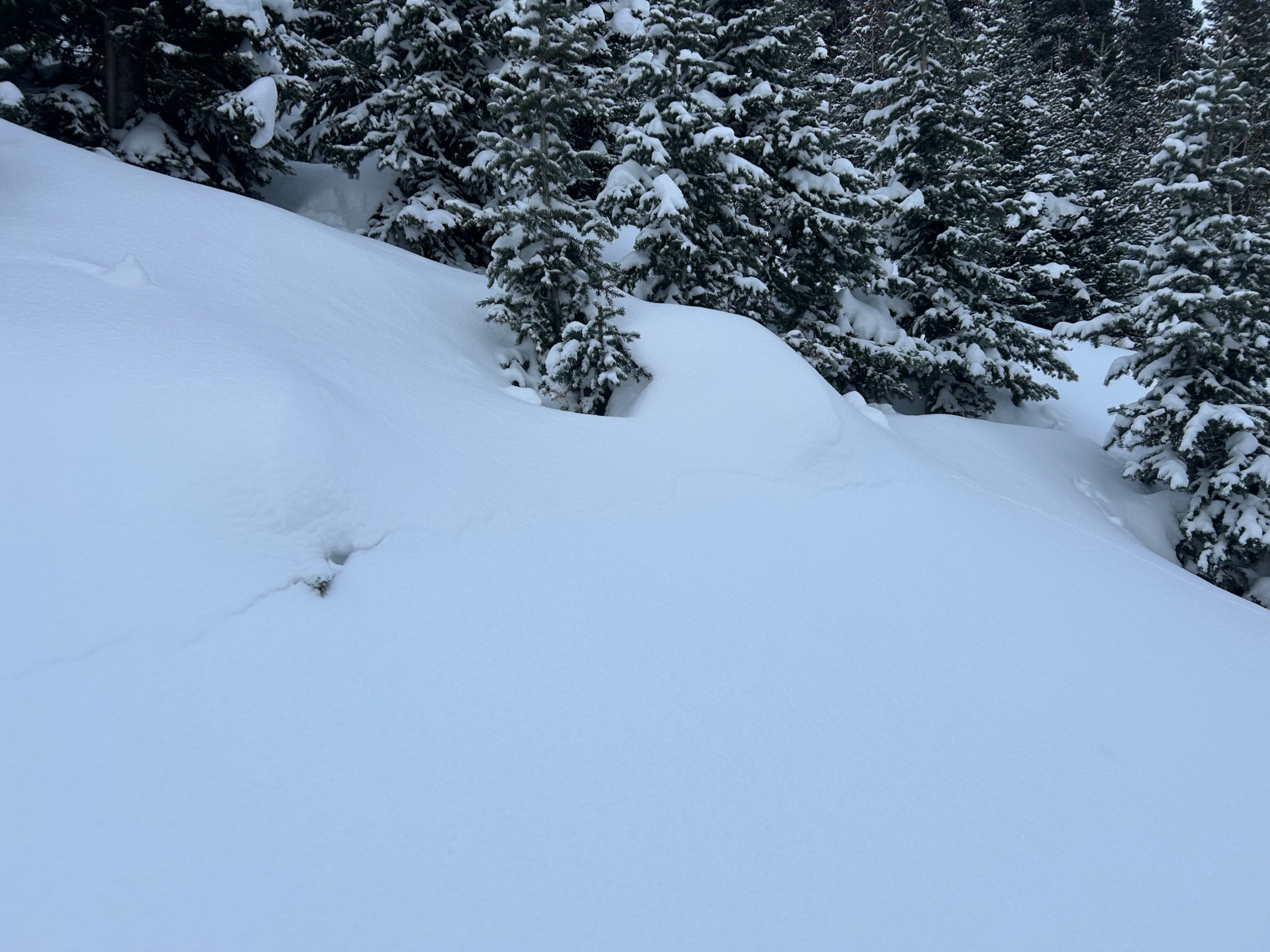
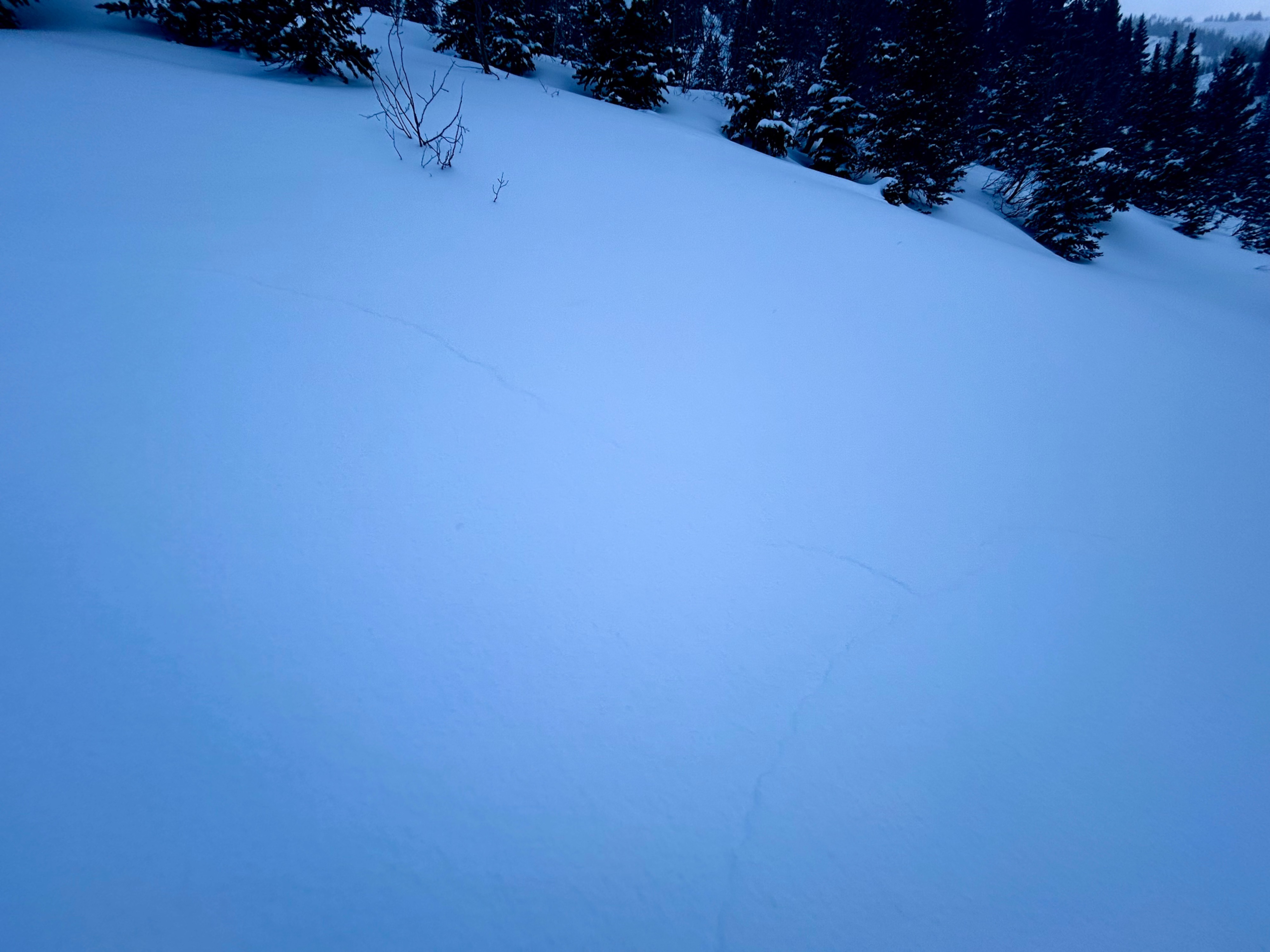
- Cracking
- specific
- Collapsing
- specific
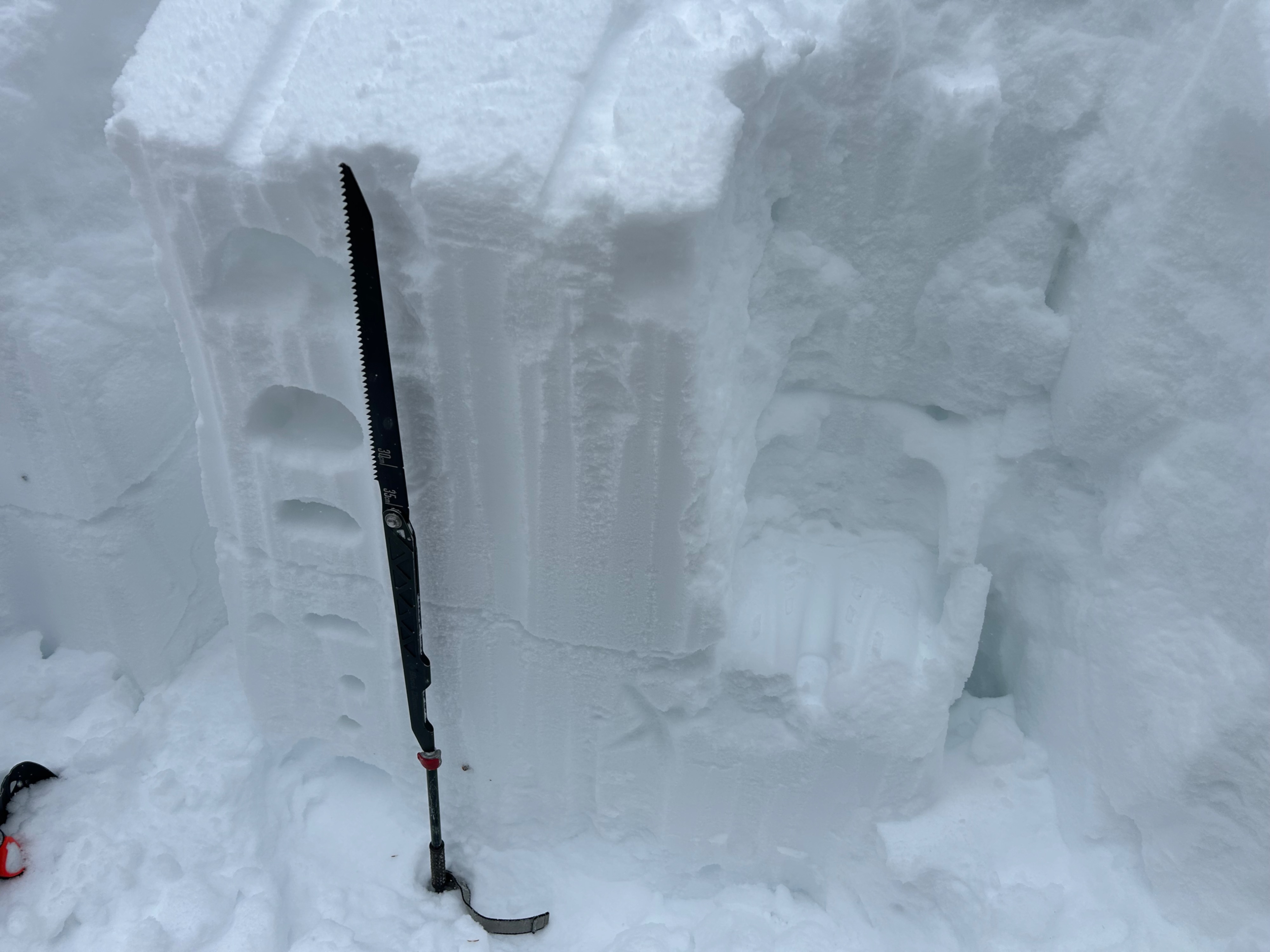
The persistent slab problems appear to be more reactive in the Lower Slate (on Schuylkill Ridge) and more stubborn in the Upper Slate (past Pittsburg). I targeted suspect slopes in both zones and only got feedback on Schuylkill Ridge: a handful of large collapses radiating across specific slopes about 30 to 70 feet. Collapses were harder to trigger and less frequent than my visit in the same area five days ago, so we are on an improving trend. The 10" or less of low density new snow didn't create any new problems below treeline, I suspect small windrifted slabs were forming at higher elevations.
No signs of instability on E/NE terrain in the Purple Ridge area or on W/SW terrain of Elkton Knob. We produced several large collapses below treeline in Schuylkill Ridge, and sledders in the area reported the same.Weather
- Cloud Cover
- overcast
- Wind Loading
- light
- Rain Elevation
- N/A
- Recent Snowfall
- 25
- Snow Avail For Transport
- moderate amounts
10" of new low density snow at 11,000' on Purple Ridge, with smaller totals down valley. Light transport where we traveled below treeline. We could hear stronger winds at higher elevations; visibility was limited to observe wind transport.
Snowpack
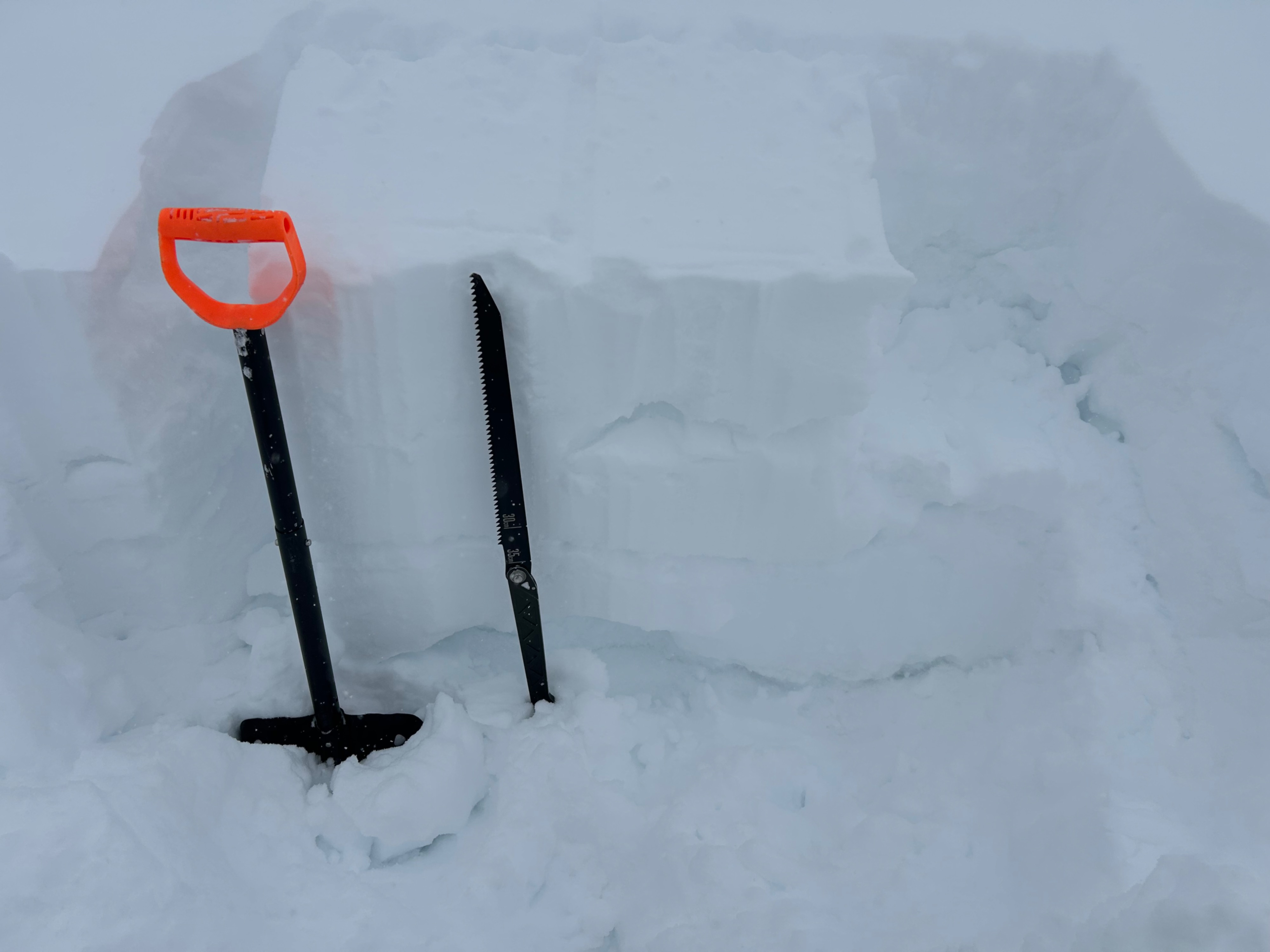
The big northerly wind event on Thursday and Friday reduced the distribution of the persistent slab problem; the holiday slab was eroded on a number of the northerly slopes that we targeted; however cross loading added to slabs on easterly aspects and also made those slabs denser/harder. Stability tests and targeted stomping on suspect slopes, thin areas, and slopes that avalanched in Thanksgiving didn't produce any notable results in the Upper Slate. In the Lower Slate, hard stomps would produce slope scale collapses on some slopes; other more exposed slopes lost their slab to wind erosion and wouldn't collapse.
Avalanche
- Size
- D1.5
- Aspect
- E
- Trigger
- N
- Elevation
- 10400 ft
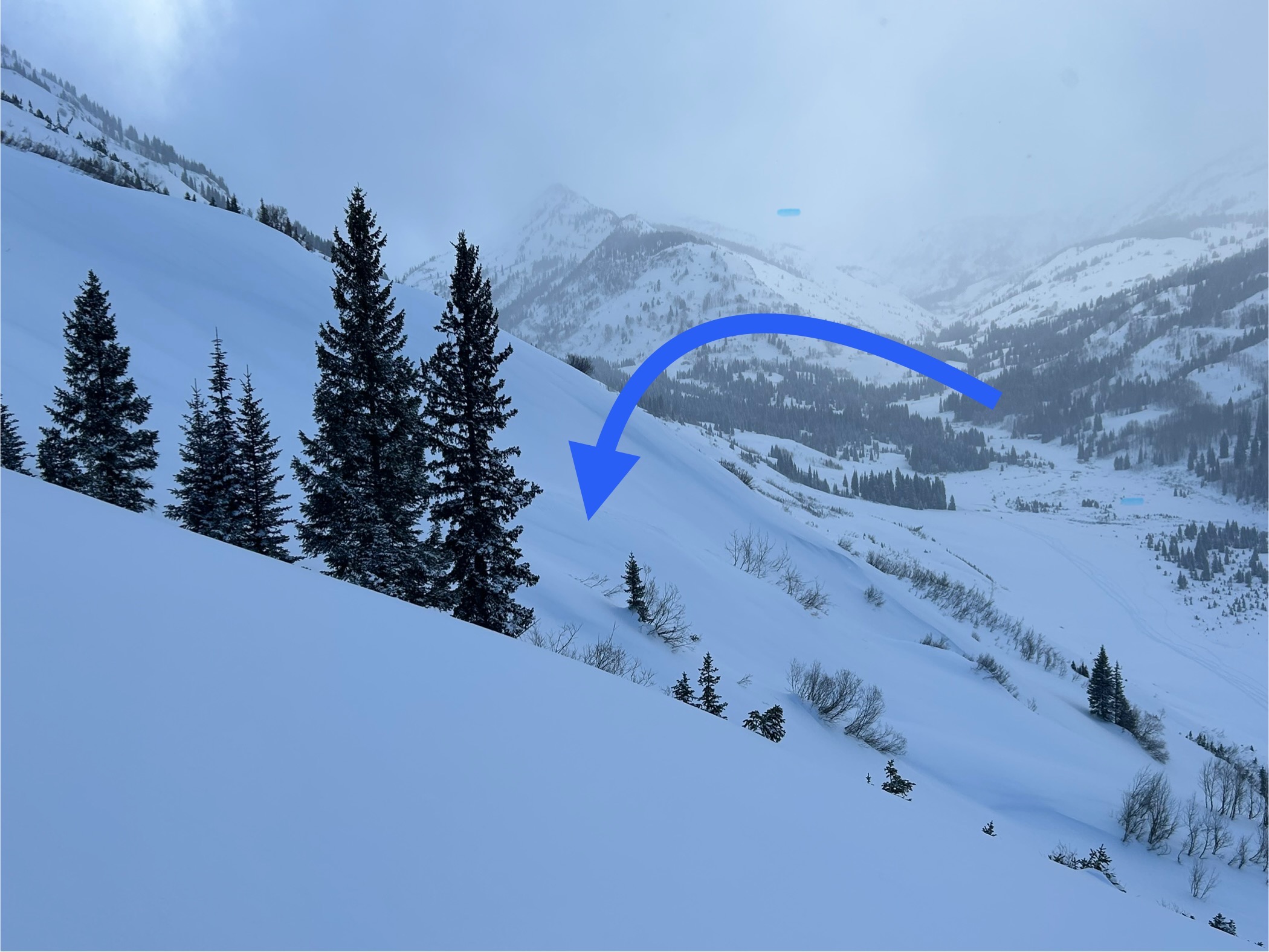
Brief afternoon views of Schuylkill Ridge revealed a recent D1.5 persistent slab on a crossloaded east aspect that likely ran during the big wind event on 1/9 or 1/10.