
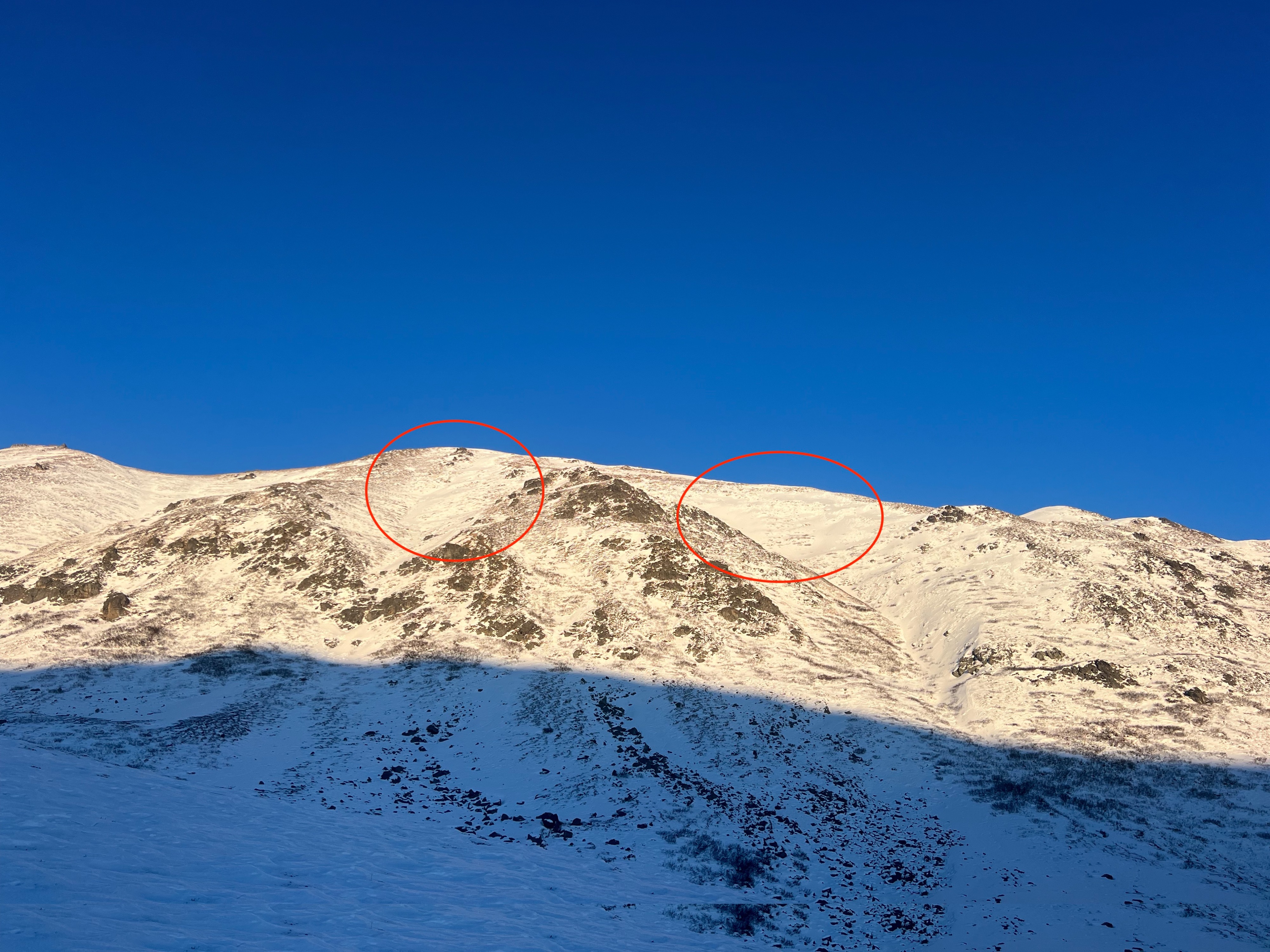
Quick report
If you have not been following, our snowpack theme to start 2026 is that we have had challenging travel to find rideable snow, where there is snow there exists poor structure and plenty of potential for instabilities. This theme has been "low likelihood, high consequence" as this setup has mostly been in isolated, previously wind-drifted gully features. We continue to get propagation in snowpit tests where slabs from the 12/29-12/30 wind event sit over weak, sugary snow. At Bennet's Ridge, 3,900' N, we got ECTP12 on the facets sitting on top of old buried, mid-pack slabs. While not an official result, the propagation we got in the mid-snowpack caused failure without propagation (ECTN) in the facets just below the ground. This showed that we have the potential for avalanches to step down into these weak grains with adequate load introduced. As we observed last week in Eldorado Bowl, in steeper terrain this could also look like the upper snowpack slab entraining loose facets below.
Weather
- Air Temp
- -5
- Cloud Cover
- clear
- Wind Loading
- previous
- Snow Avail For Transport
- small smounts
Calm to light WSW breeze coming over the Pass. Hatch Peak temps read in the low single digits and Hatcher Pass proper hovered at around -5F. With a relative humidity in the teens and a breeze, it felt much colder. Skies were clear all day.
Snowpack
Today, we observed a few things worth noting as we go into the next week's storm cycle:
-Areas where previously wind-transported snow built firm, stiff slabs that are connected and larger have the highest potential to produce larger avalanches. Today and the last week since winds diminished we observed this to be on multiple aspects on Hatch, Eldorado Bowl, the sunnyside of Skyscraper, Marmot Mid Rib and Death Gully and in a few other gully and bowl shape features.
-Our snowpack structure above 3,500' is comprised of mostly persistent weak grains. We did observe scouring on some prominent Easterly/Northeasterly features (4068 ', Powder Pimple) but overall, our setup is either slabs over weak grains on previously wind-affected slopes or large, developed facets on protected slopes.