
Quick report
- Cracking
- specific
- Collapsing
- isolated
With a decent load of snow water equivalent since 1/24, along with reports of buried surface hoar, we headed to Noisy Basin to assess current conditions. It turned out to be an exciting day.
Here's our takeaways:
- The upper 1–2 inches of snow, which fell during a warming trend last night and today, caps much lower-density snow from the past few days. This thin upper layer was punchy, poorly bonded to the snow below, and sensitive to our weight during the descent.
- Beneath that, the rest of the recent snow remained generally fluffy and unconsolidated in most locations, though it appears to be just starting to slab up.
- This recent snow sits on a mix of weak grains—near-surface facets and surface hoar—that formed during the recent dry spell.
- In some locations, a stout crust exists at this interface, with weak snow above and below. In other areas—especially at upper elevations on shaded aspects—there was no crust at all, or only a paper-thin, brittle crust surrounded by weak snow.
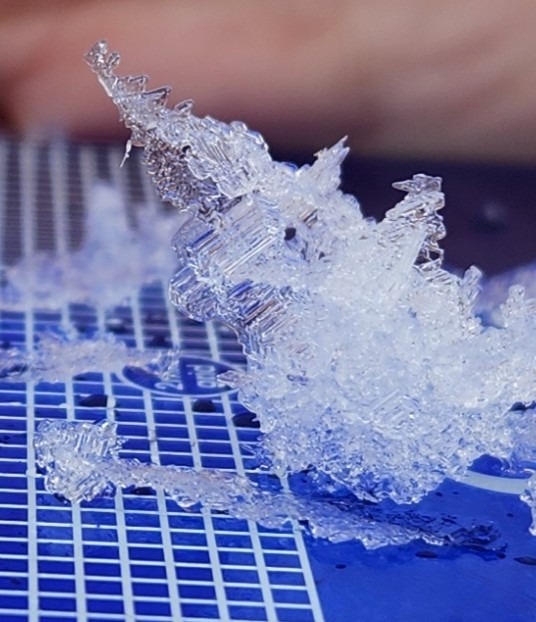
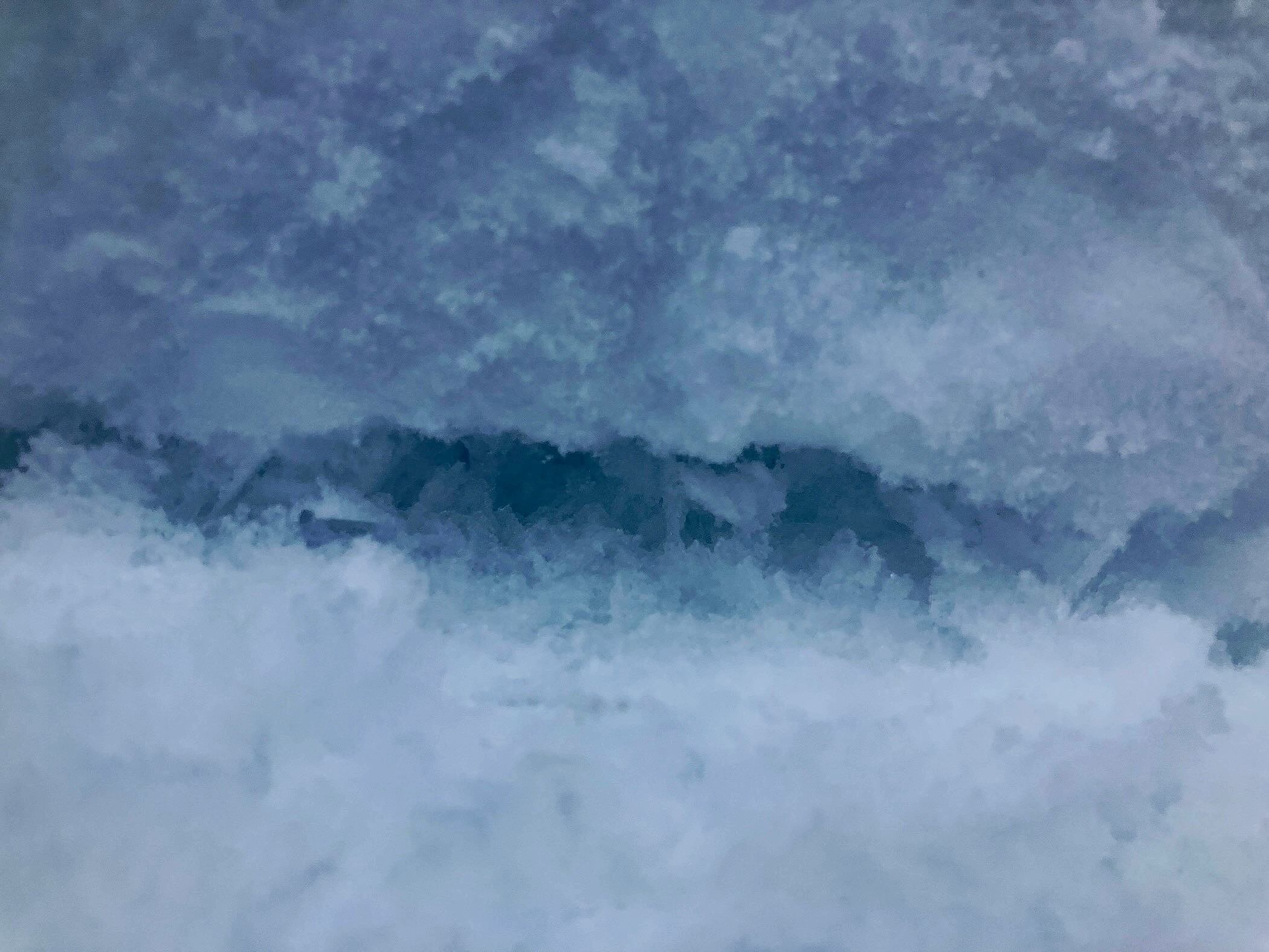
- The big story in this zone is the buried surface hoar. I don’t recall ever seeing surface hoar this large, intact, and so widespread, preserved even at and immediately below exposed ridgelines. We found it on shaded slopes from 6200' all the way to the ridge near 7200'. We didn't dig any lower so we can't confirm or deny its existence lower down the mountain.
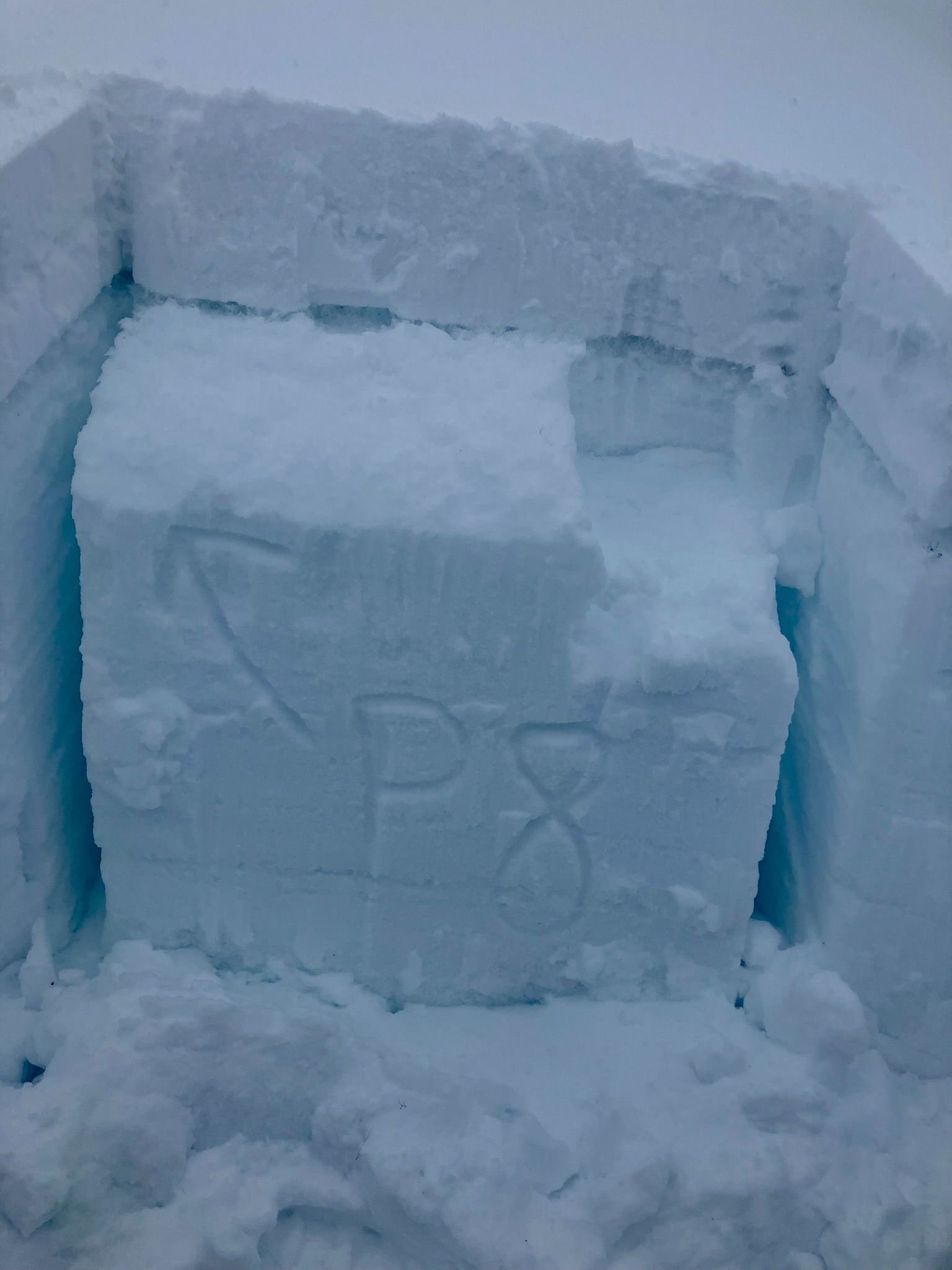
- Despite the very soft, almost non-existent nature of the slab above, large column tests propagated on the surface hoar with easy force.
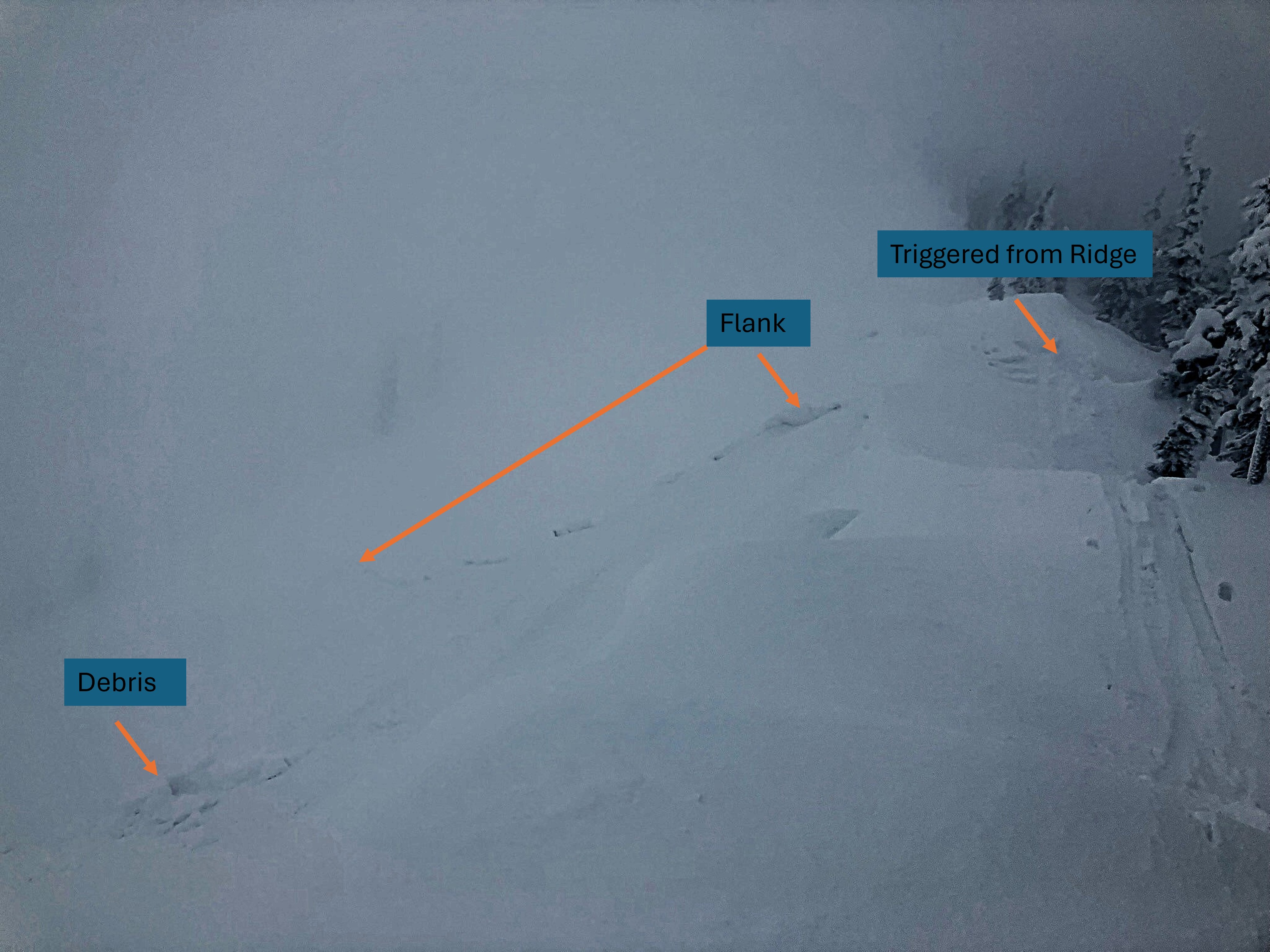
- We then remotely triggered an avalanche on a steep leeward slope from the flat ridgeline above. Even there, the slab was very soft, yet the avalanche was roughly 75 feet wide (the crack visibly propagated even further beyond the flanks) and ran out of view into the fog. It failed on the surface hoar layer.
- Wind-loading, both previous and current was little to none. Now that the snow surface is pretty dense, it would take stronger winds that what we experienced today to transport the snow. If it were able to erode the surface, much lower density snow would be available for transport below.
Between the pit location and the ridgeline, we also experienced an audible collapse. In this spot, the failure layer was small-grained near-surface facets over a stout crust.
All of this was more than enough to change our ski plans for the day. We avoided start zones near the ridgeline and descended a low-angle, treed slope back to the sleds.
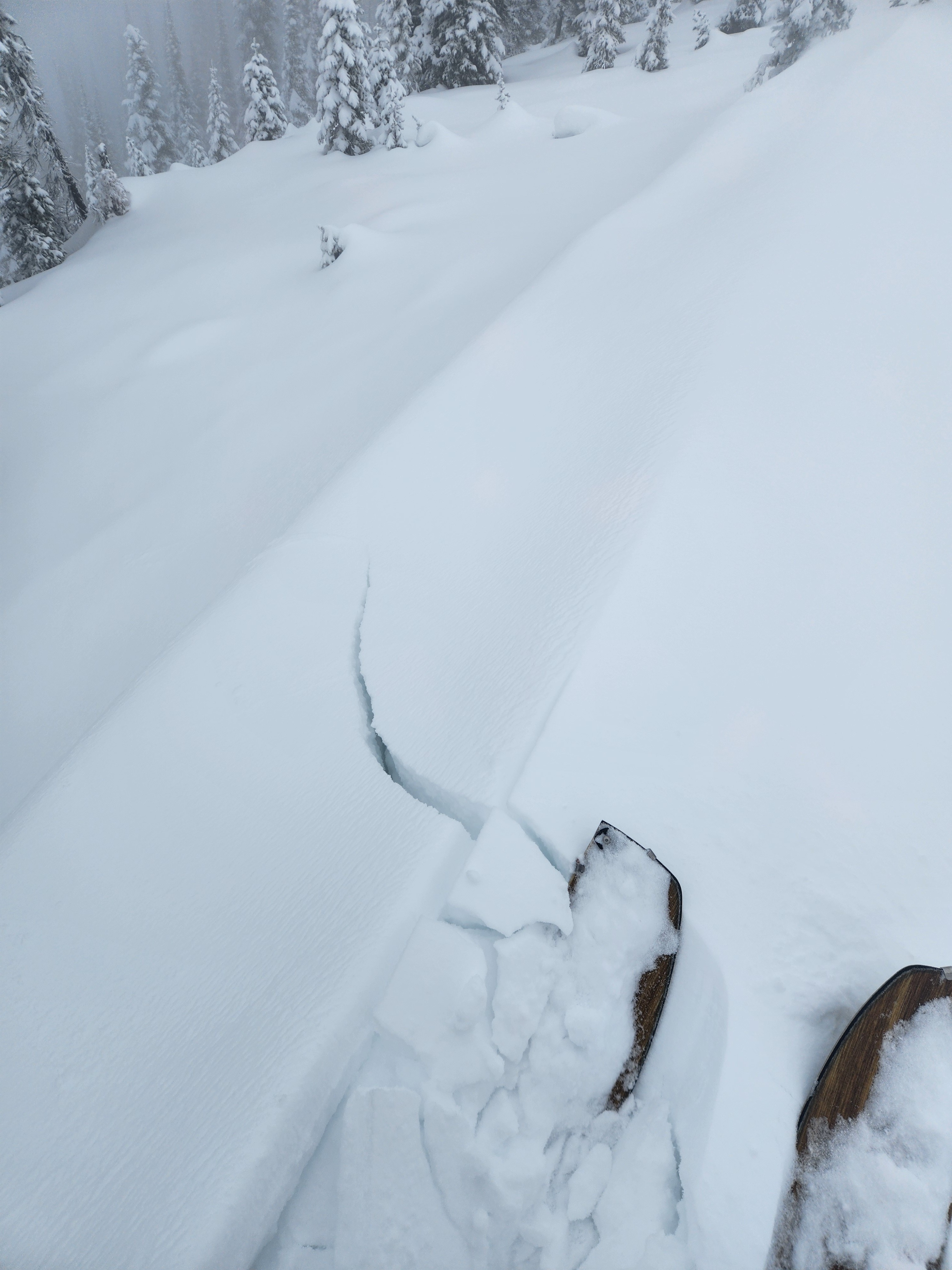
Cracking was generally only a few feet out from skis, with the exception of a few isolated pockets, 2-10" deep. Whumpf near ridgeline.
Weather
- Air Temp
- subfeezing, barely
- Cloud Cover
- overcast
- Wind Loading
- light
- Rain Elevation
- 4500'
- Recent Snowfall
- 20-30 since 1/24
- Snow Avail For Transport
- small smounts
Light rain at the trailhead turned to light snow (S-1-) as we ascended on sleds, tapering off by 11 am or so. New snow from today was dense and heavy (borderline snain until about 5500'). Moderate ridge top winds, with light wind just off the ridge. Upper elevations were obscured in the fog.
Snowpack
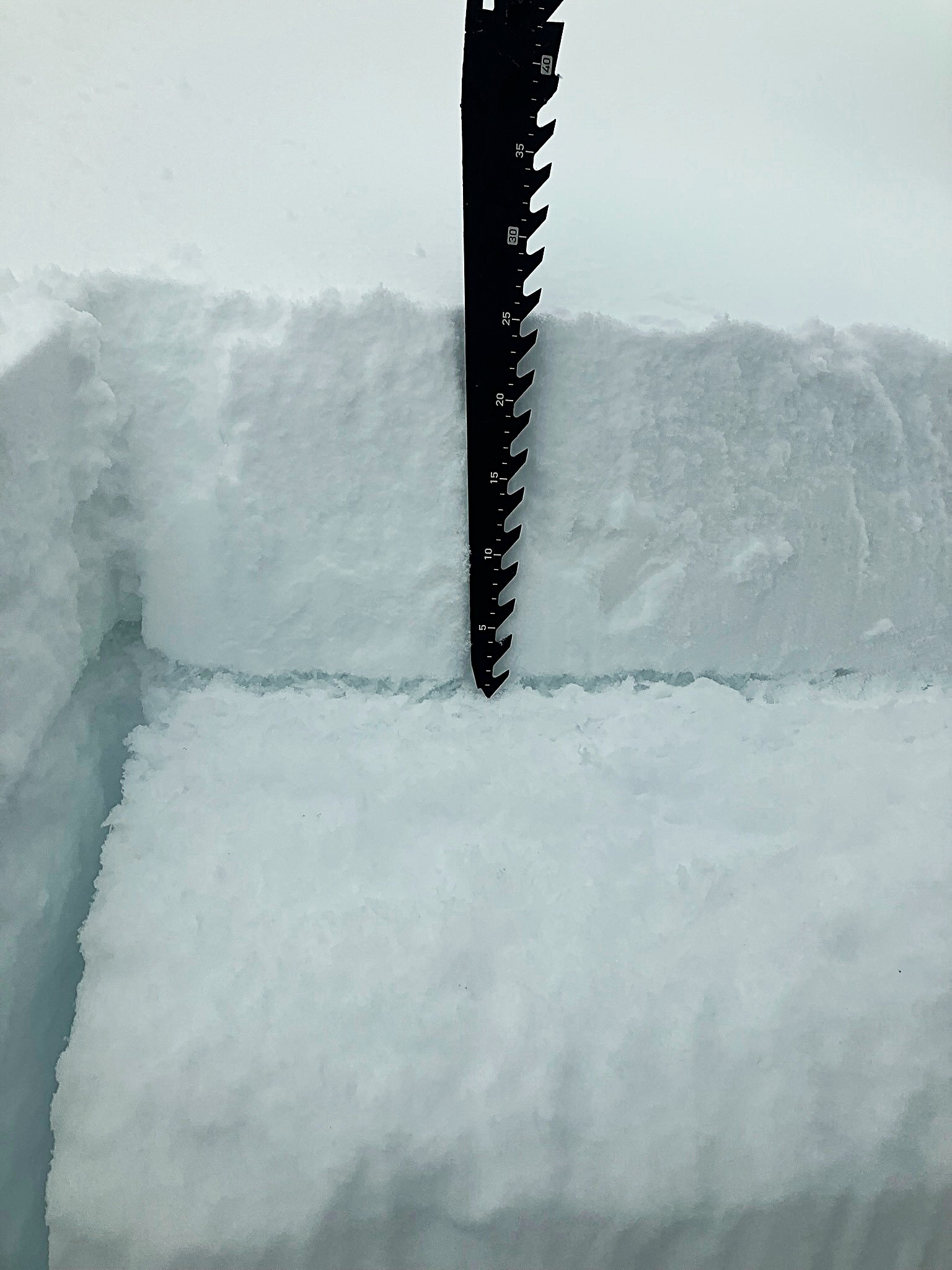
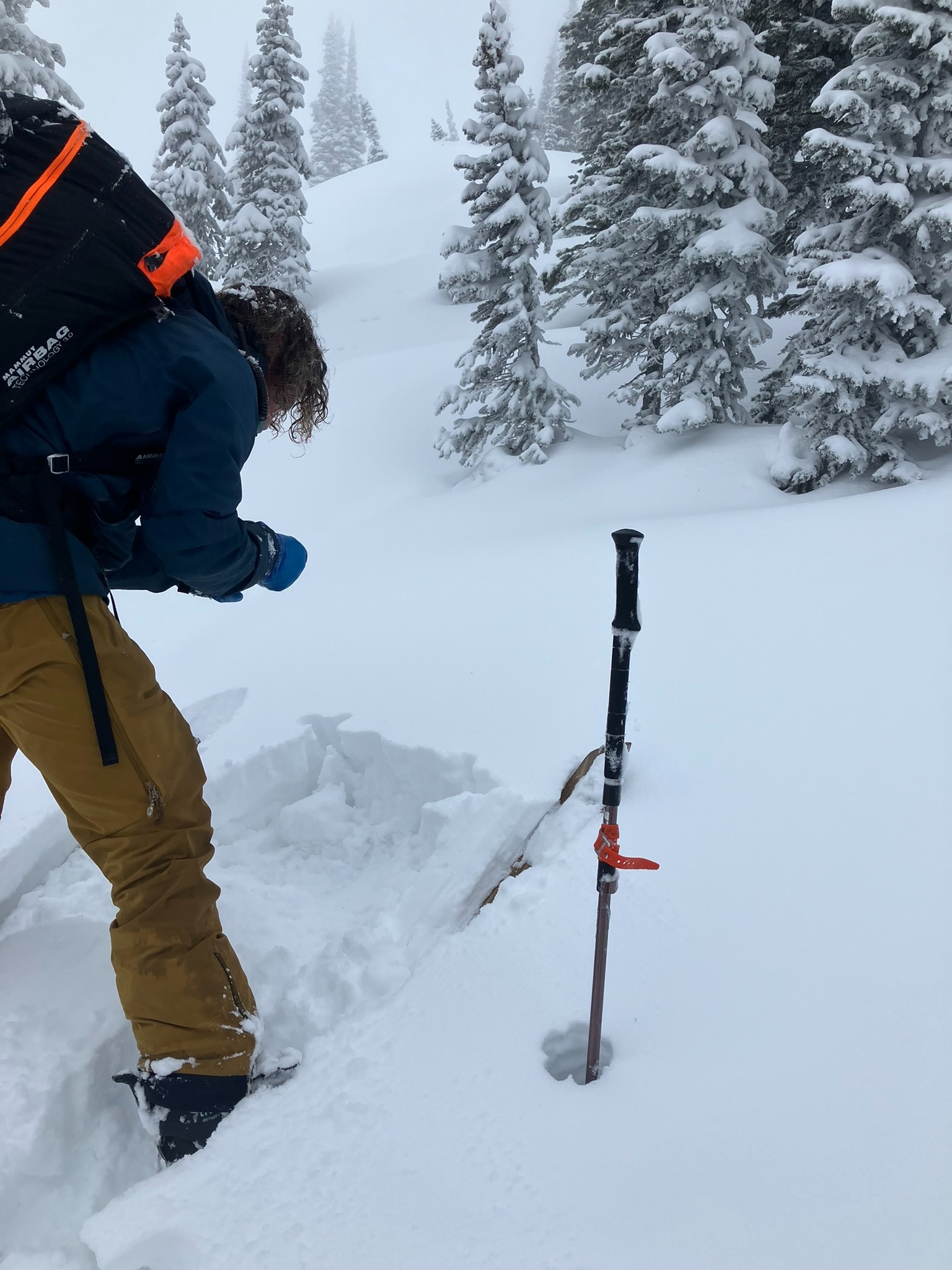
We dug a pit on a NNW aspect at 6800'. HS 210 cm
ECTP8, ECTP7 down 26 cm on 20-40 mm upright surface hoar (layer is 3-4 cm thick). PST 30/100 SF on the surface hoar.
25-30 cm of junky 4F+ facets below the surface hoar layer, with stout 1F snow below that down to the Christmas Crust. No discernible weak snow around the Christmas Crust.
Avalanche
- Size
- D1.5
- Type
- SS
- Aspect
- NE
- Trigger
- AS
- Elevation
- 7000 ft
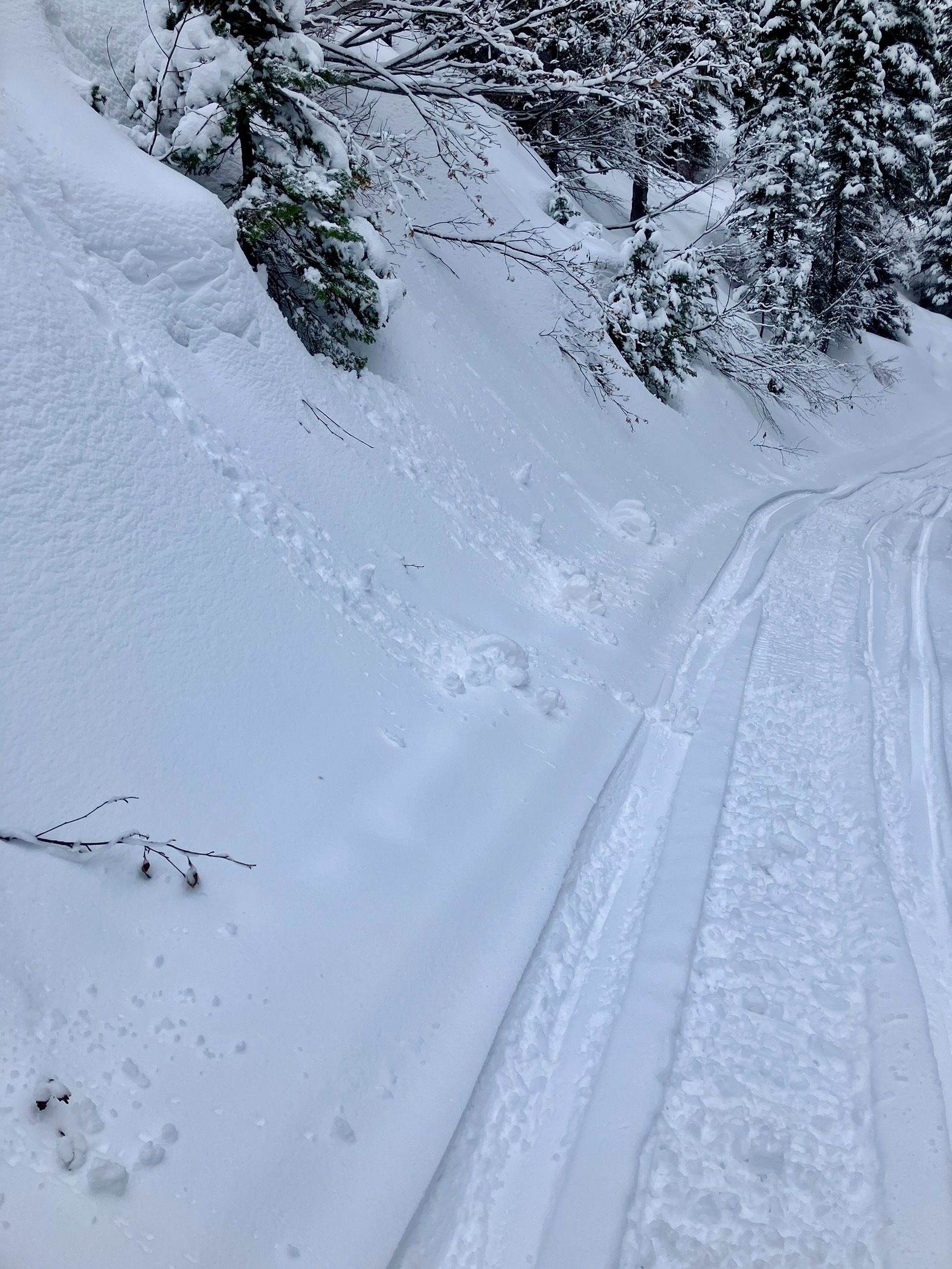
In addition to the soft slab I remotely triggered from the flat ridgeline above, I also triggered two very small storm slabs while descending back towards the sleds that released at the interface of the upper 1-2" of dense new snow from today and lower density snow that fell since 1/28.