

Quick report
- Collapsing
- widespread
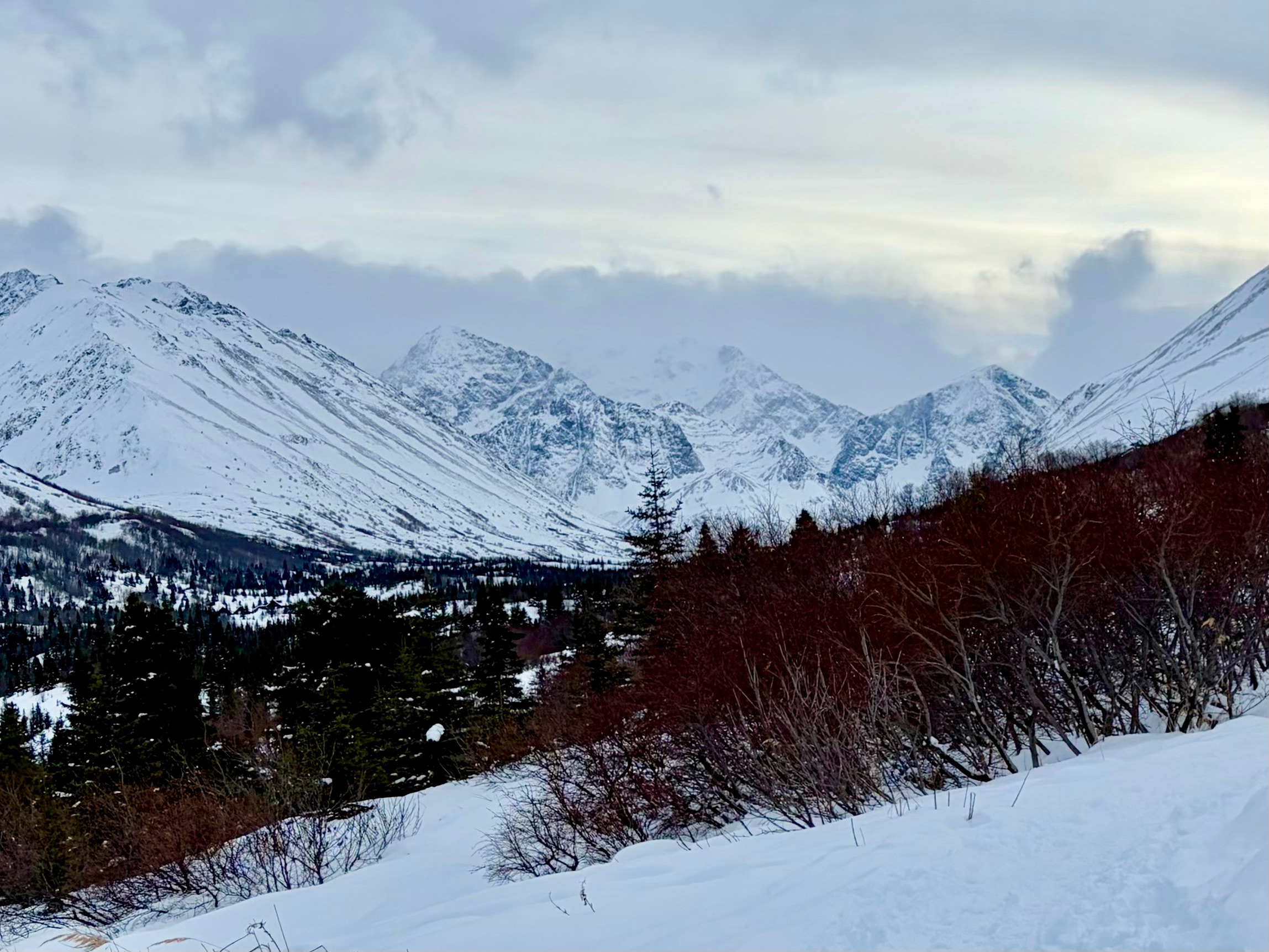
The landscape showed signs of the large wind event that occurred last night. Snow had been stripped to bare ground or transported into high alpine bowls, gullies, and convexities.
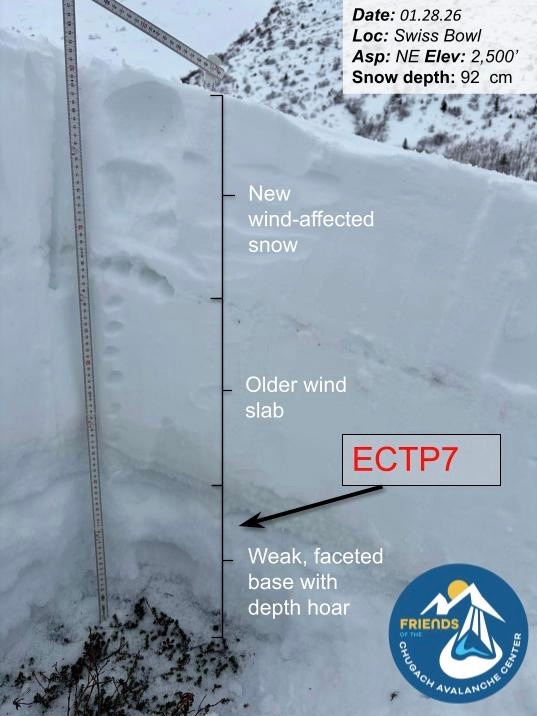
Below 2,300’, snow surfaces were wet in the top inch of the snowpack, and we experienced glopping on skis. Above 2,300’, snow surfaces transitioned to mostly dry but remained highly variable, consisting of punchy wind skin, hard icy wind board, or thin ice over bare ground. Because of the recent above-freezing temperatures- the snowpack showed some signs of weak-layer “healing”; however, the depth hoar at the base of the snowpack remains highly advanced (striated, chained, with large ~4 mm facets) and continues to act as a persistent weak layer. The overall snowpack structure consisted of fresh wind-drifted snow over an older, firm wind layer, underlain by slightly rounding depth hoar and advanced basal facets. These basal facets were collapsing and falling out when we dug our snowpits, making it difficult to conduct stability tests due to extremely poor bonding at the base. Two ECTs produced results of ECTP7 and ECTP23.
Given the sustained elevated ridgetop winds, poor snowpack structure, concerning test results, large whumpfing, widespread large natural avalanche activity likely failing at the base of the snowpack, and ongoing precipitation loading, travel in or below avalanche terrain is not recommended.
Observed multiple large natural avalanches likely released during last night’s wind-loading event, and experienced large whumpfs whenever we stepped off the skin track.Weather
- Air Temp
- 35
- Cloud Cover
- broken
- Wind Loading
- previous
- Rain Elevation
- 2300
- Recent Snowfall
- 10
- Snow Avail For Transport
- small smounts
Broken skies with active snow transport and flagging along ridgetops from the SE, while valley bottoms remained calm. Temperatures were above freezing in the valley. Light snow and mist were observed at the start of the tour, tapering off after about an hour.
Avalanche
- Size
- D2 R3
- Type
- HS
- Count
- 3
- Aspect
- SW
- Trigger
- N
- Elevation
- 4500 ft
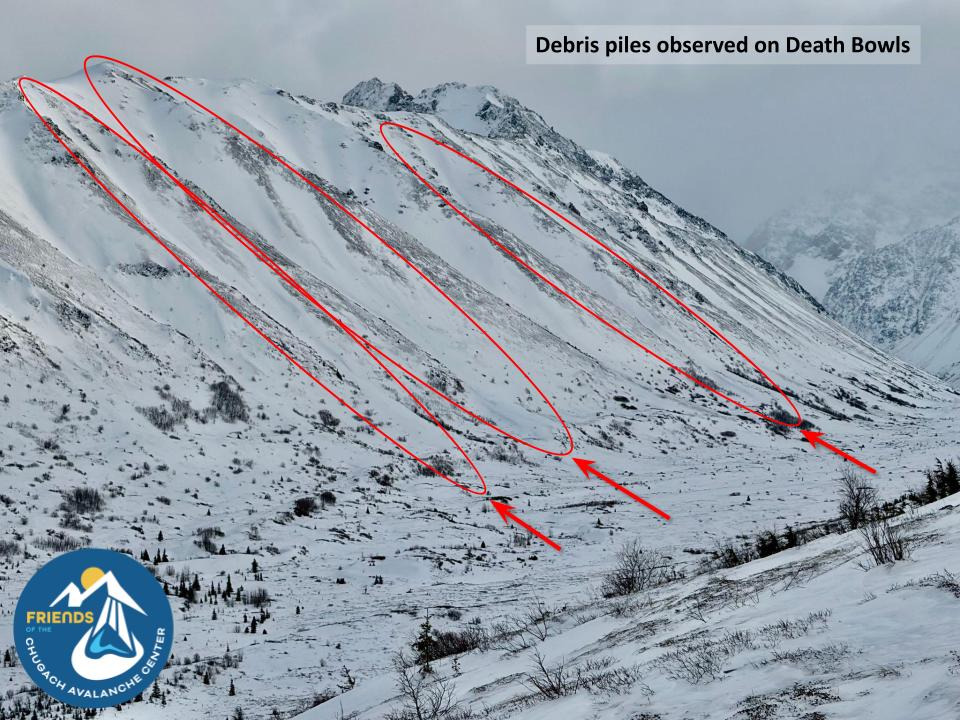
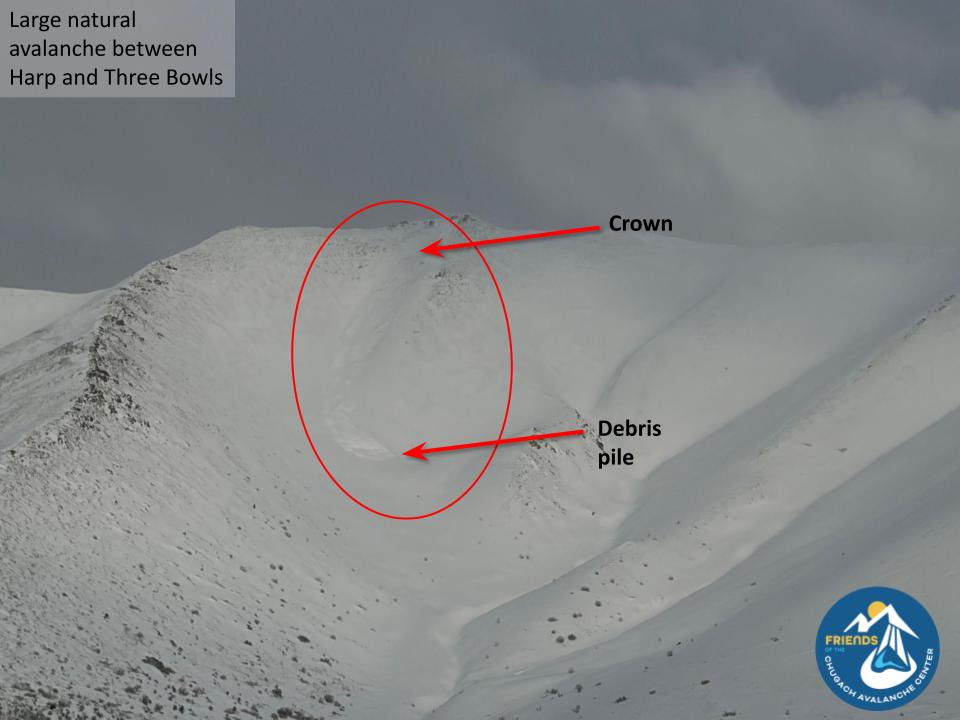
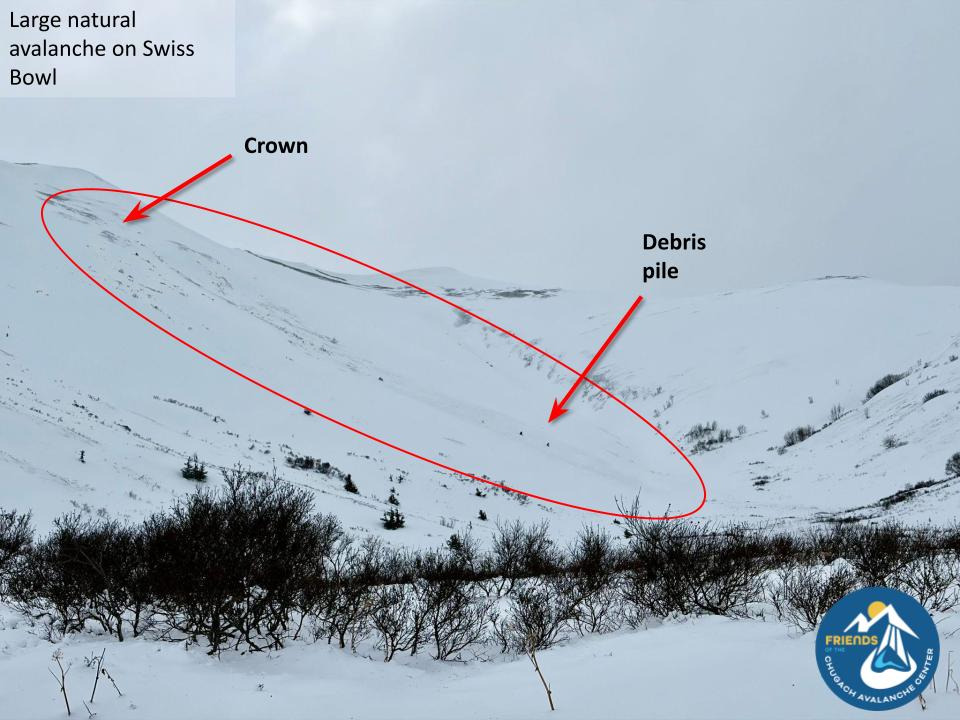
Multiple large natural avalanches were observed, including one in Swiss Bowl and another between Two Bowls and Three Bowls. The Death Bowls (gullies directly SE of the hanging valley on the Symphony Lakes side) showed evidence of three very large natural avalanches, and the Leighow Moon path above milepost 7.2 on Hiland Road ran roughly two-thirds of its track. Additional natural avalanche activity likely occurred but was difficult to identify due to flat light, as wind and snowfall refilled many crowns. All observed natural avalanches are suspected to have failed on depth hoar at the base of the snowpack.