
Quick report
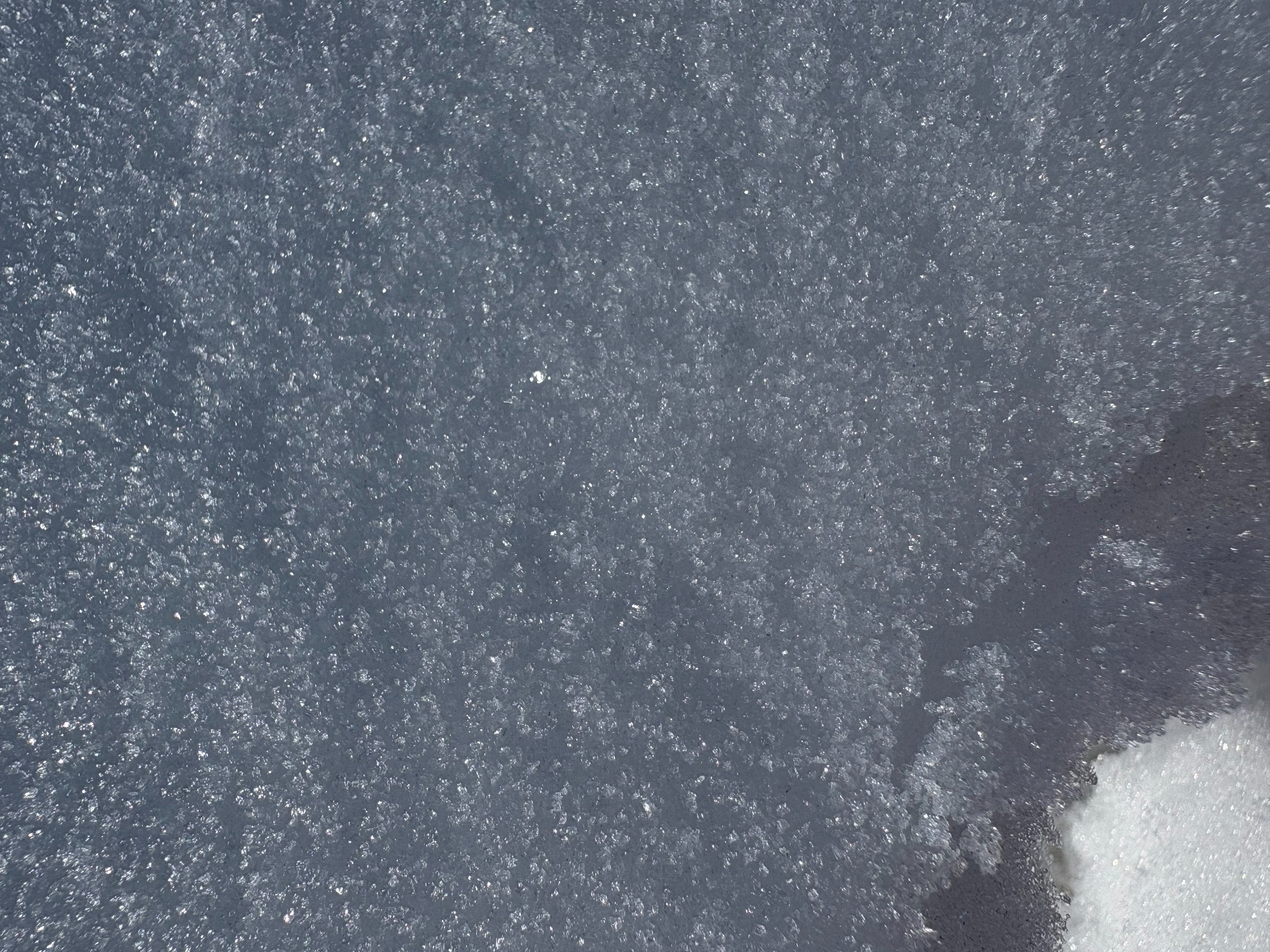
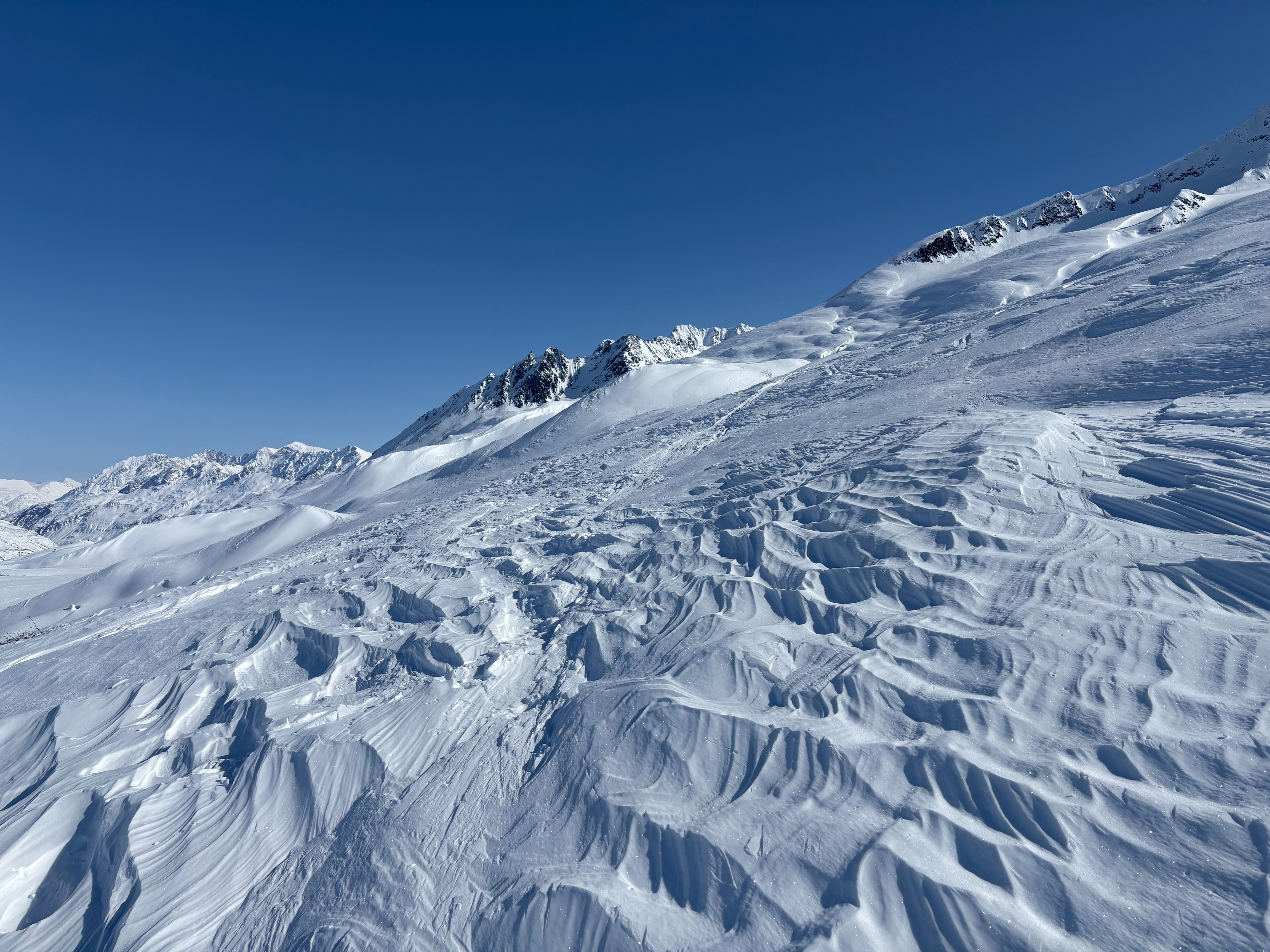
Highly variable surface conditions exist. The lower buttresses and mid elevations have been hit hard with wind. Sastrugi and knife hard wind board are the dominant surface type in exposed terrain. In the valleys and in protected gullies, faceted soft powder exists. After a few calm days, near surface facets are forming on the snow surfaces.
Unfortunately, stability is in a bit of a holding pattern, with the likelihood of triggering a large avalanche being low, but the consequences being very high due to its potentially larger size and hard slab characteristics.
Weather
- Air Temp
- 20
- Cloud Cover
- clear
- Wind Loading
- none
- Rain Elevation
- n/a
- Recent Snowfall
- none
- Snow Avail For Transport
- small smounts
Clear Skies, light katabitc winds, temperatures in the teens/low 20s.
Snowpack
A pit dug at 3700 ft revealed a faceted snowpack top to bottom with the most concerning layer being 90 cm of depth hoar at the base. The snowpack is currently not under stress, which is why it is not showing any signs of instability despite it having very poor structure. When the snowpack receives a meaningful load of either new snow or stress through warming, stay heads up as the snowpack is weak and is not likely to accept much of a load.