
Quick report
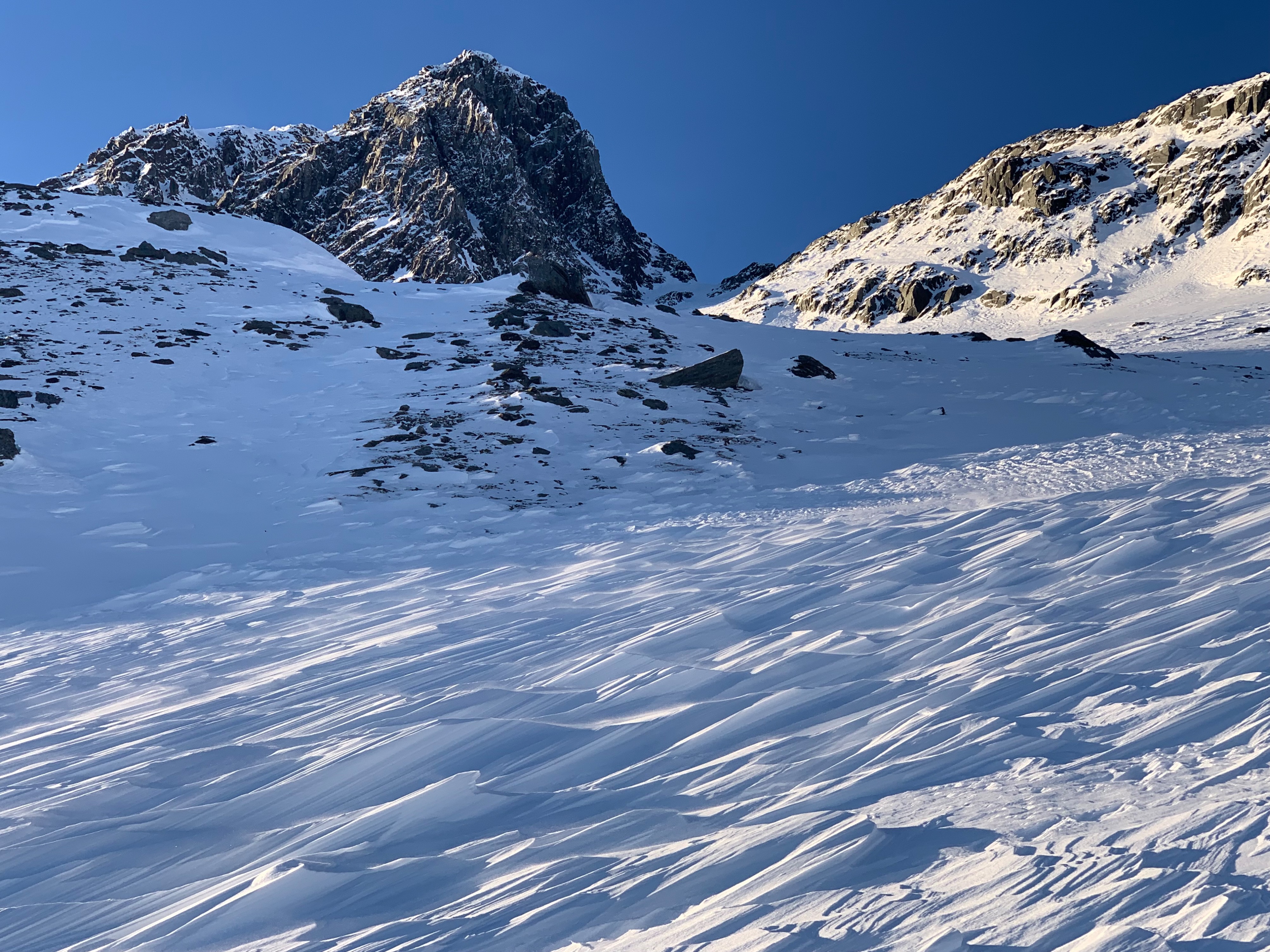
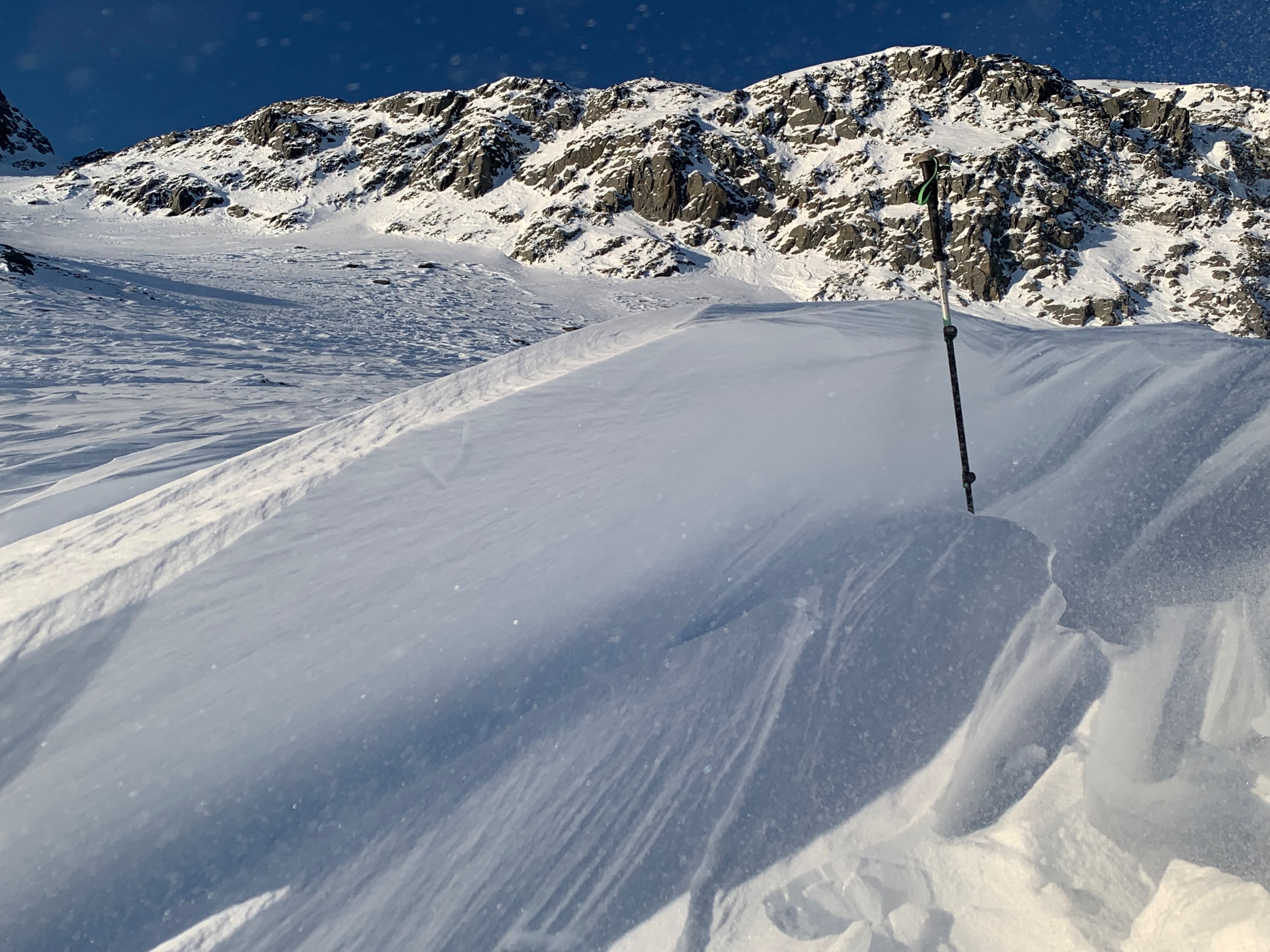
Wind-damaged snow is widespread in the Catchers Mitt zone. The majority of areas were stripped of all loose snow with old wind layers, rain crusts, and sastrugi left behind. Very hard wind deposits exist on the lee side of terrain features and gully walls. These wind deposits have gained significant strength since they formed, and were unreactive to jumping on them and produced ECTX in stability tests. These wind slabs will continue to gain strength in the short term, with it currently being unlikely for a person to be able to affect and initiate an avalanche on one of these wind slabs. The Caveat to this would be that instability may still exist in isolated locations, and if one of these wind slabs were initiated, it would likely propagate a significant distance and produce a dangerous hard slab avalanche due to its current slab character.
No signs of instability were presentWeather
- Air Temp
- low 30's
- Cloud Cover
- clear
- Wind Loading
- previous
- Recent Snowfall
- 0
- Snow Avail For Transport
- none
Clear, calm and warm
Snowpack
The snowpack in the alpine region of Thompson Pass has been heavily damaged by recent outflow winds with peak gusts of 75 mph recorded. The strength of recent wind had stripped most areas down to the ground, old rain layers, or old wind-affected snow. Large irregular sastrugi exist in places. Knife + hard wind deposits existed on the lee side of terrain features that were unreactive on test slopes and in stability tests. These range in depth depending upon terrain shape from a few inches to over a meter in depth.
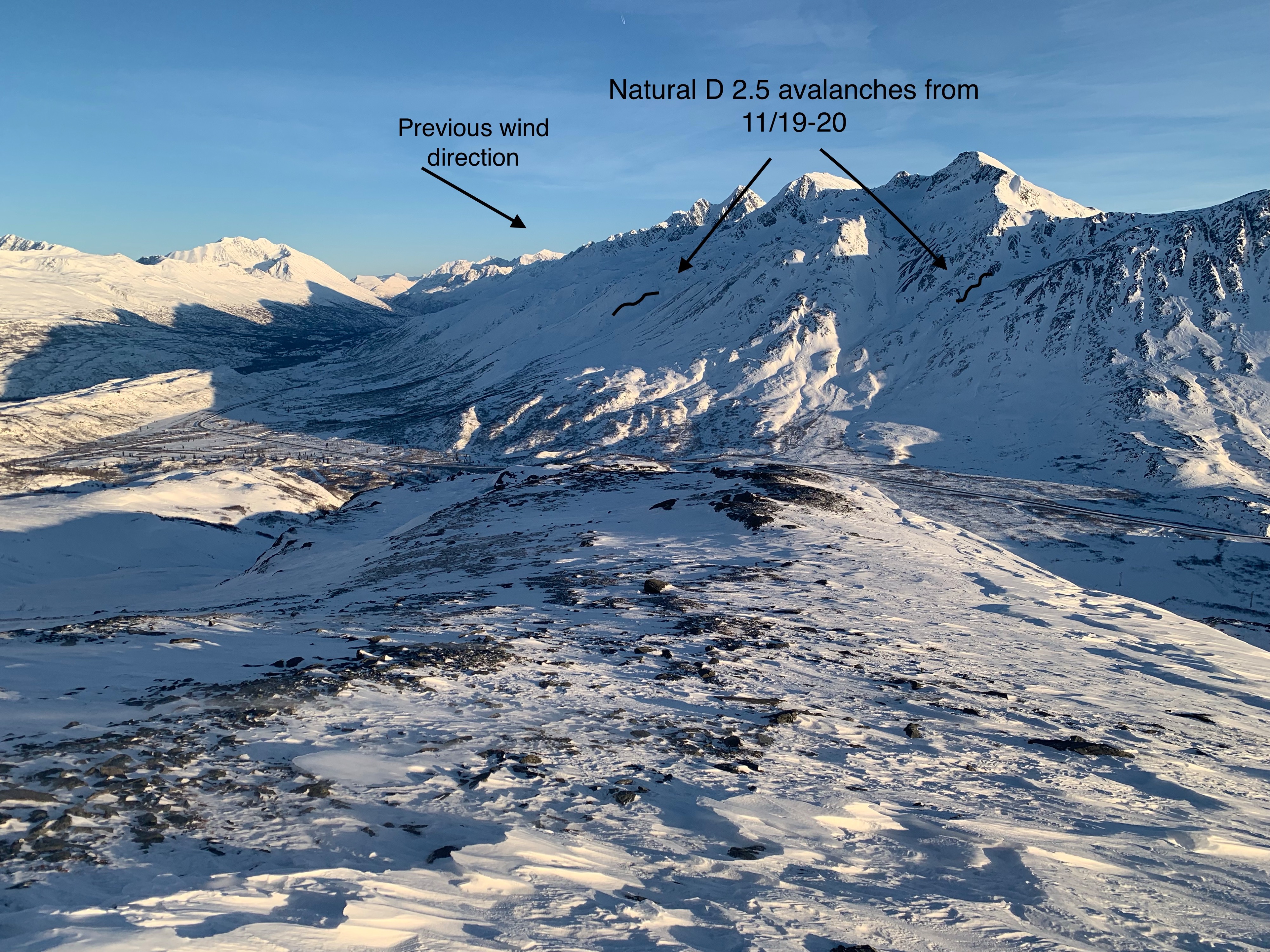
Avalanche
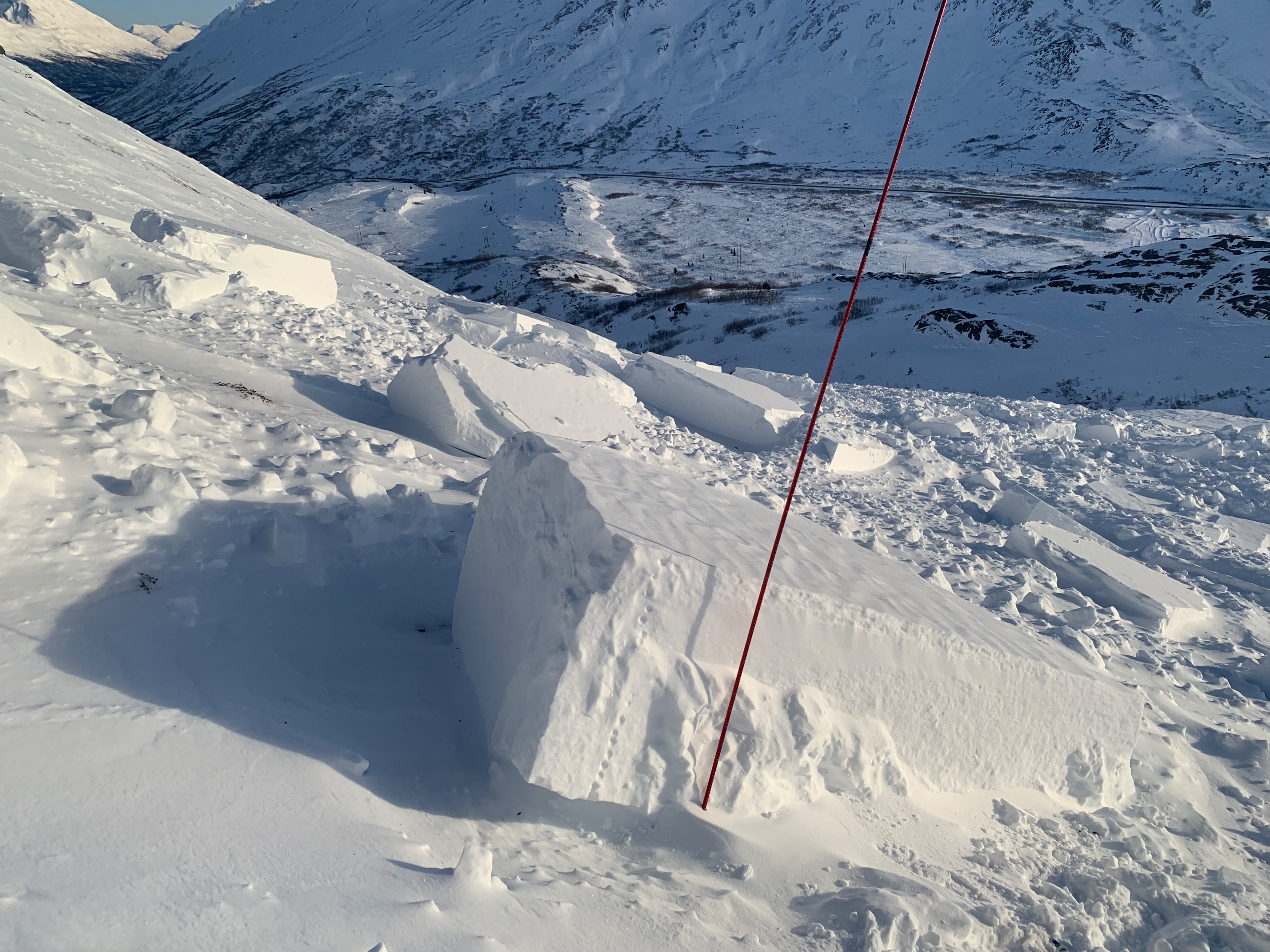
Numerous size D1-D2.5 natural avalanches were observed as a direct result of the outflow wind event that kicked up on the evening of 11/18. Most avalanches likely failed on the 19-20th time period. A D2 natural hard slab avalanche deposited debris close to the common uptrack with debris chunks up 80cms in depth (32").