
Quick report
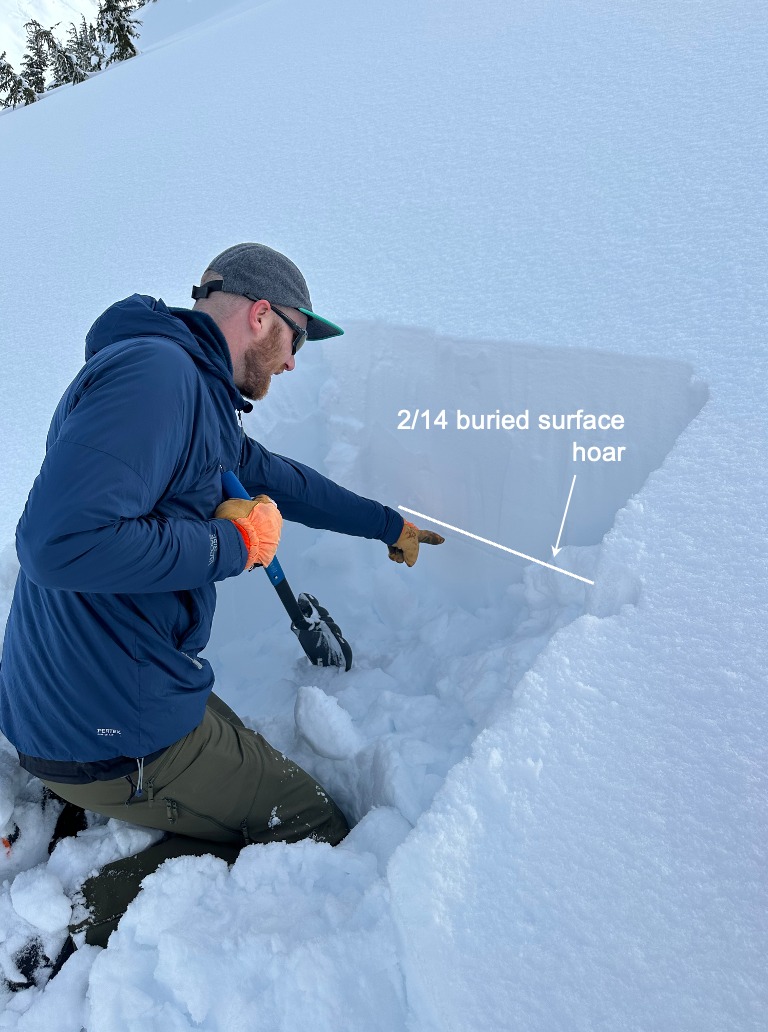
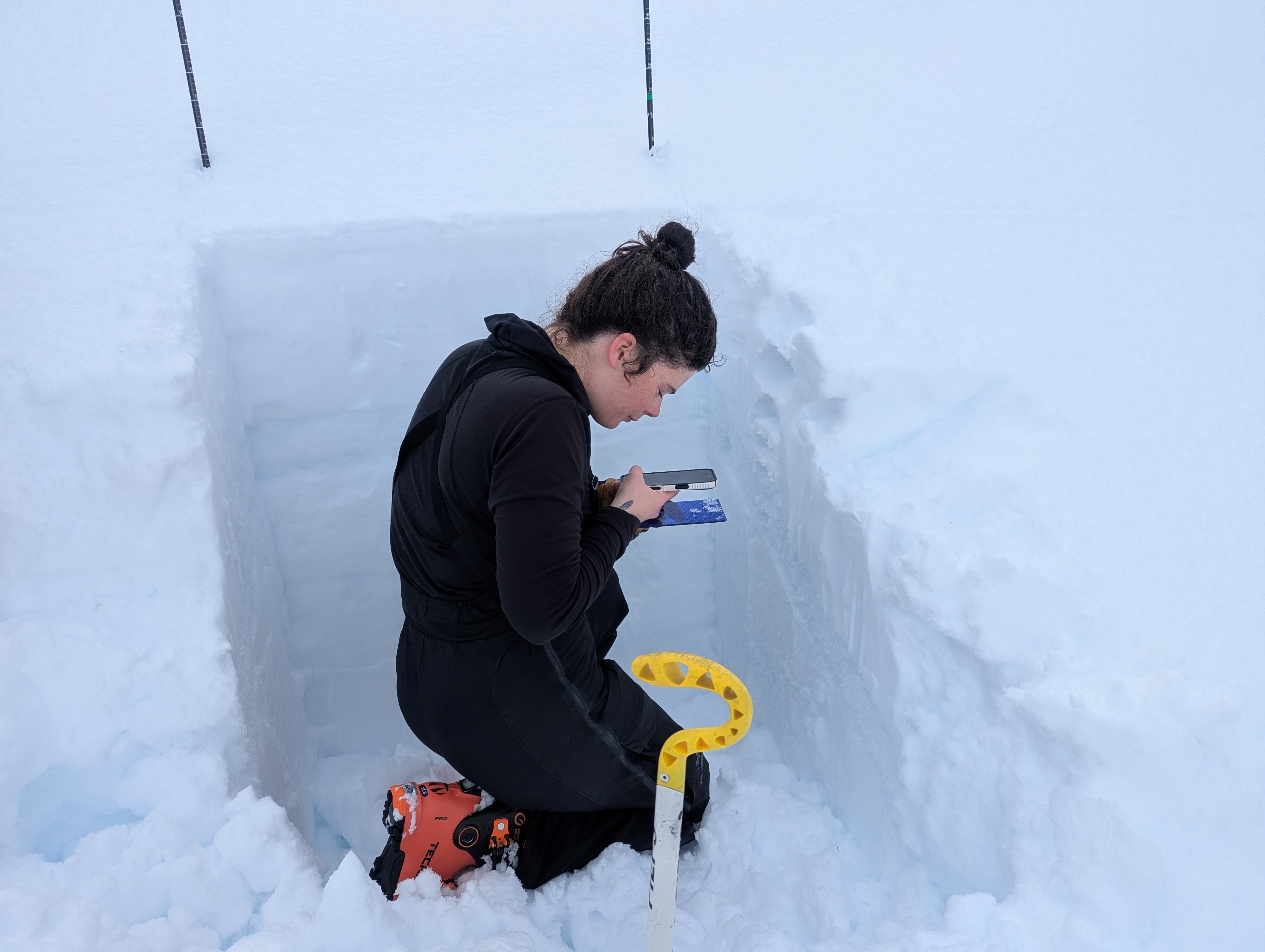
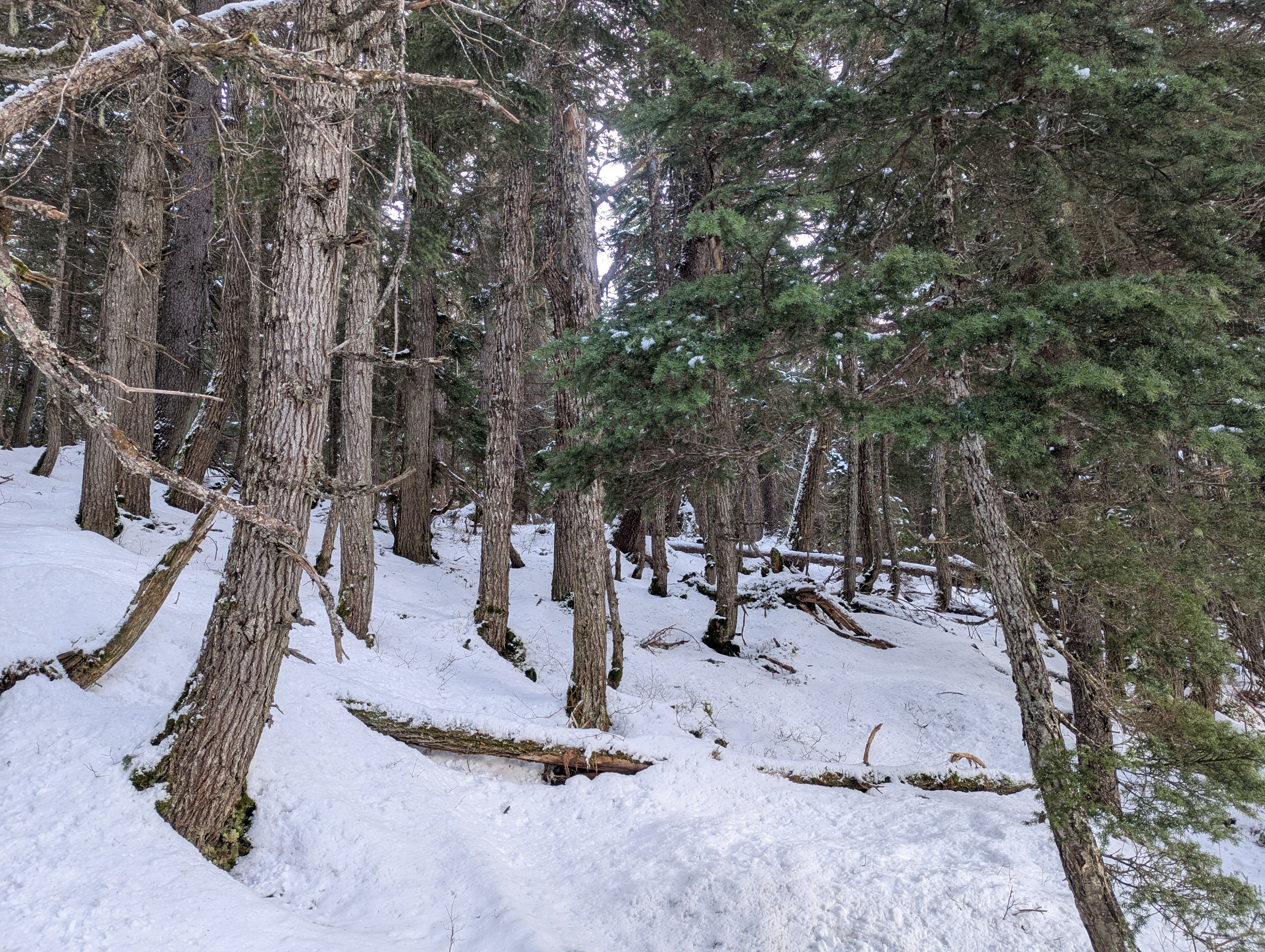
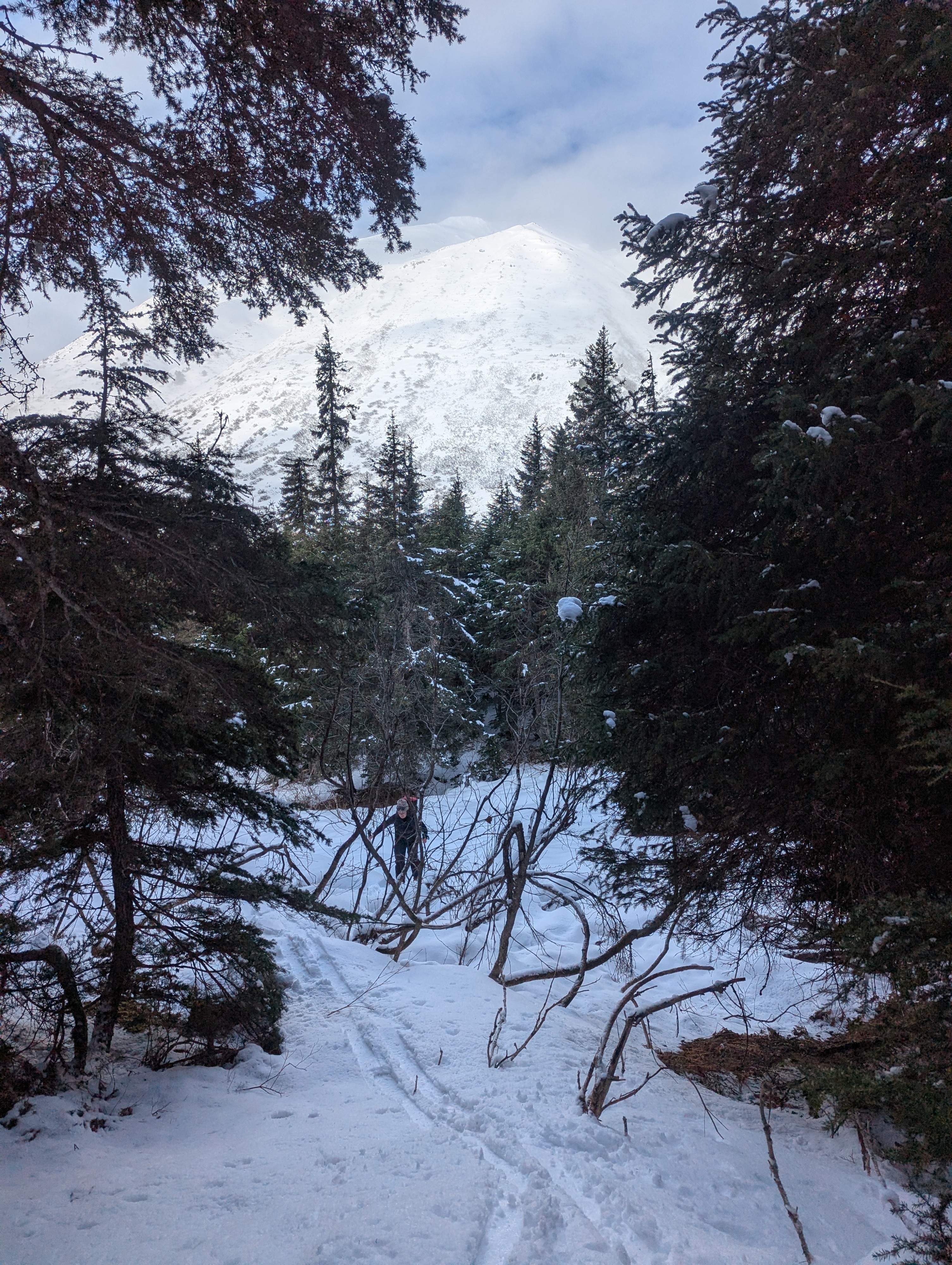
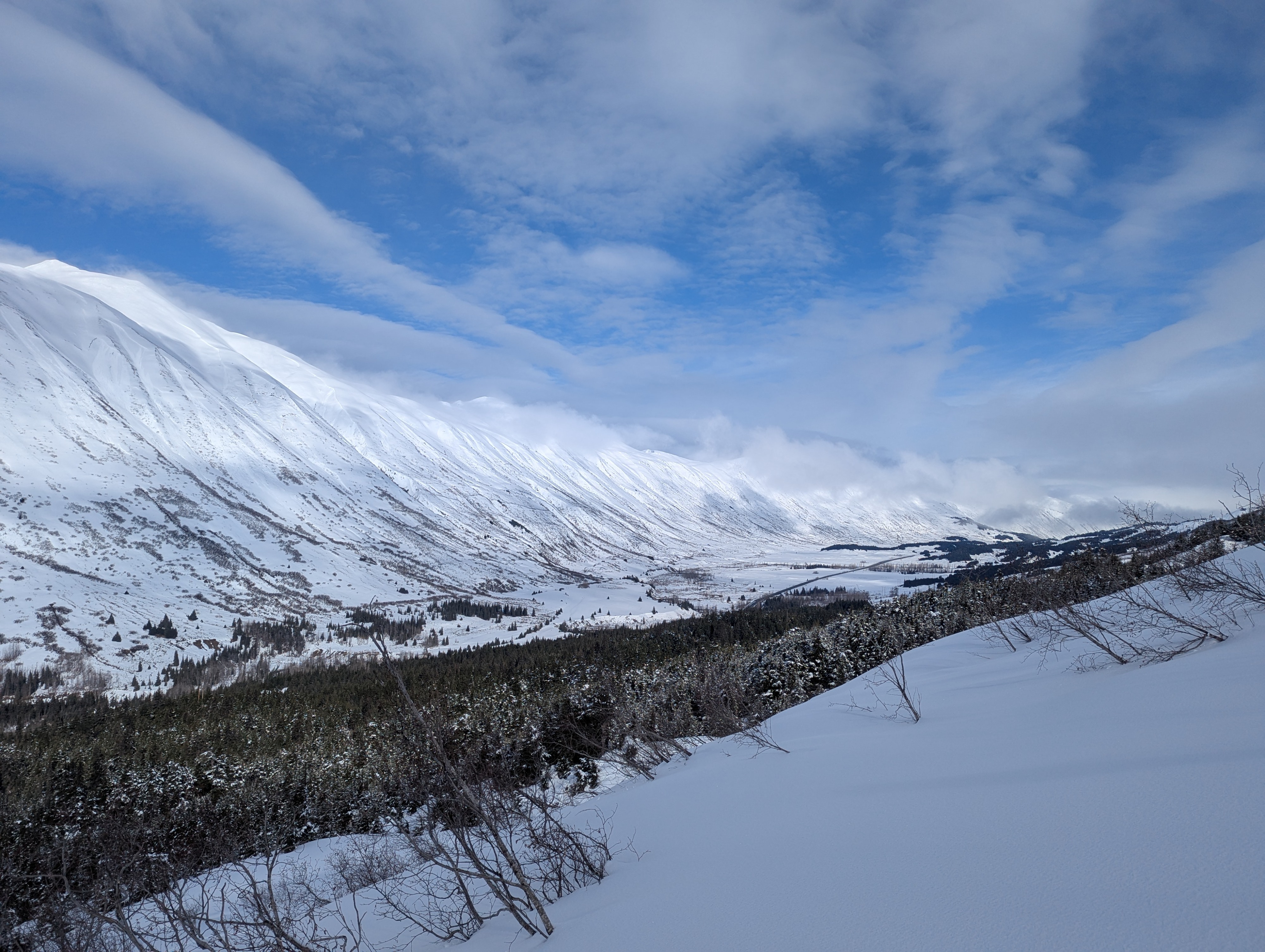
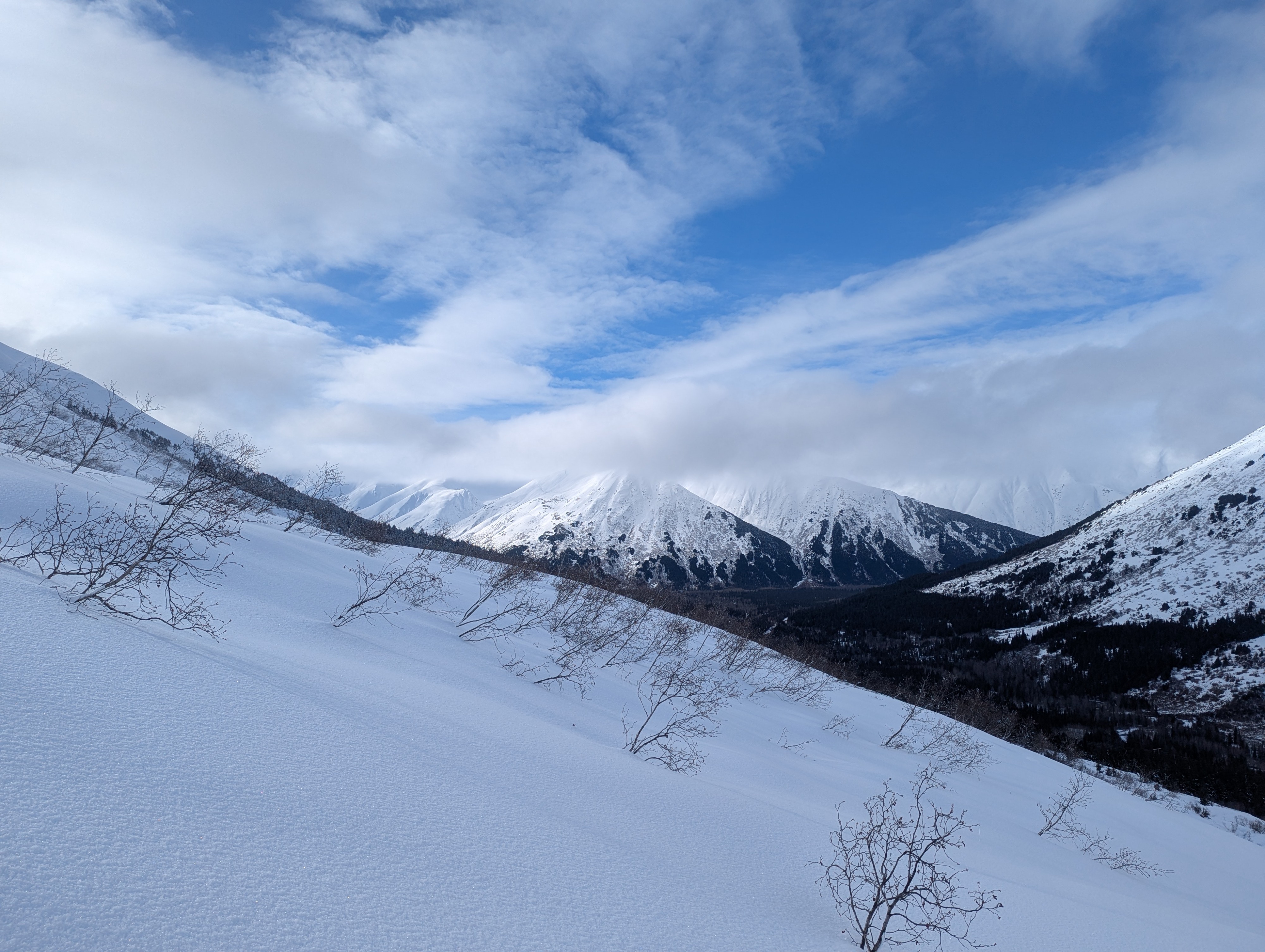
We toured near the southern end of Turnigan Pass, on Lipps, to assess the state of the snowpack after the recent snowfall. A trace of new snow on the road melted quickly as temperatures were already above freezing. From the road to ~1200' the snow transitioned to dry with ~6in of new snow at our high point of 2000'. In two snowpits we found the Valentine's buried surface hoar layer. In our higher elevation snowpit, this layer was ~60 cm deep. We had concerning test results at this snowpit, with a failure propagating across the entire column. These findings were enough to give us a 'bad vibe' so we avoided traveling on any steep terrain, or terrain that was connected to larger slopes and runouts above. We enjoyed high-quality skiing and decent visibility in the bumps & rolls.
We did not observe any red flags or warning signs, however, when we dug into the snow we found the Valentine's Day buried surface hoar layer was reactive in several snowpit tests.Weather
- Air Temp
- 35
- Cloud Cover
- broken
- Rain Elevation
- 1000
- Recent Snowfall
- 2-15
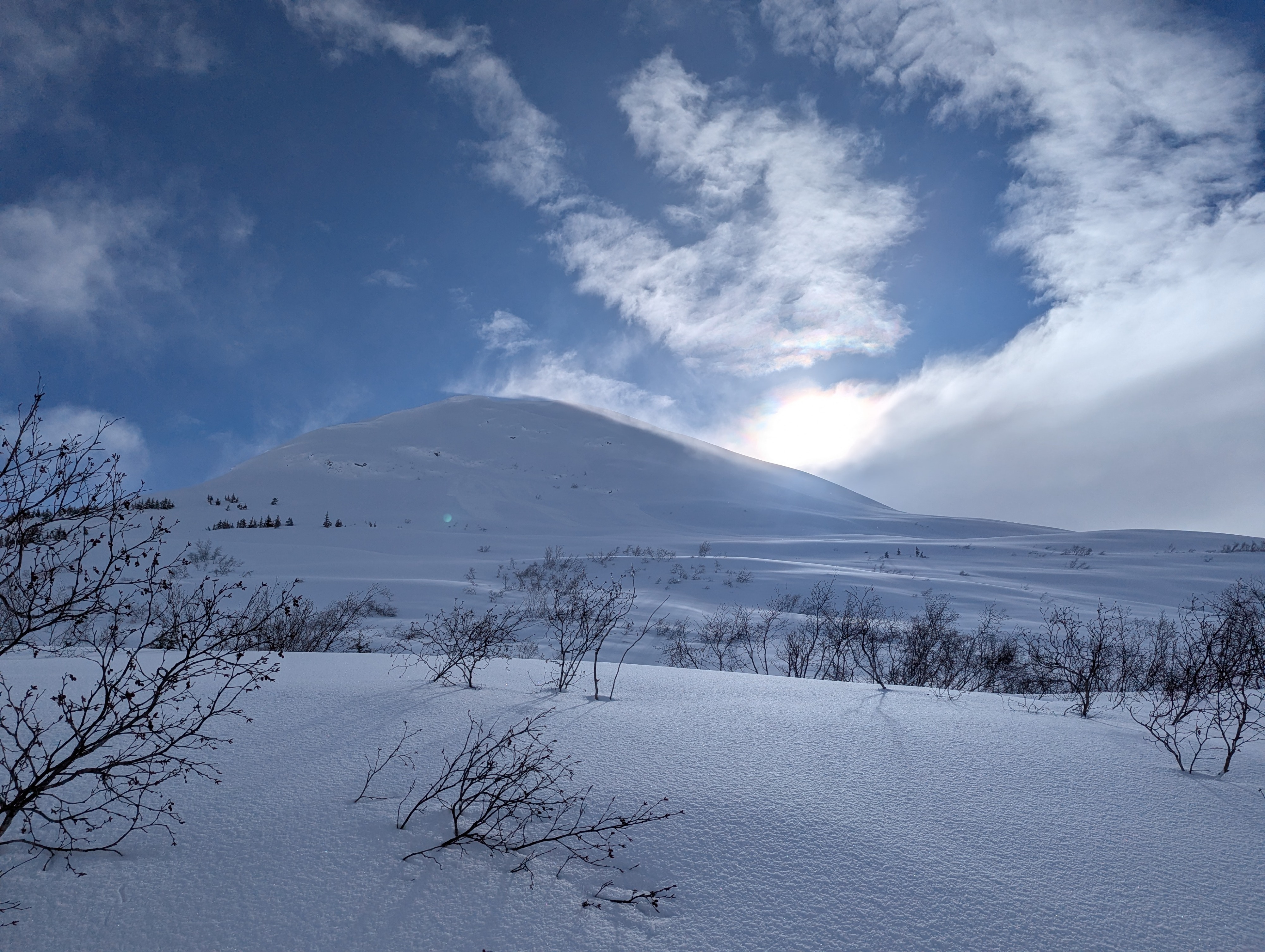
Skies were mostly cloudy and became obscured in the afternoon, winds were calm, and temperatures warmed to high 30's during the day.
Snowpack
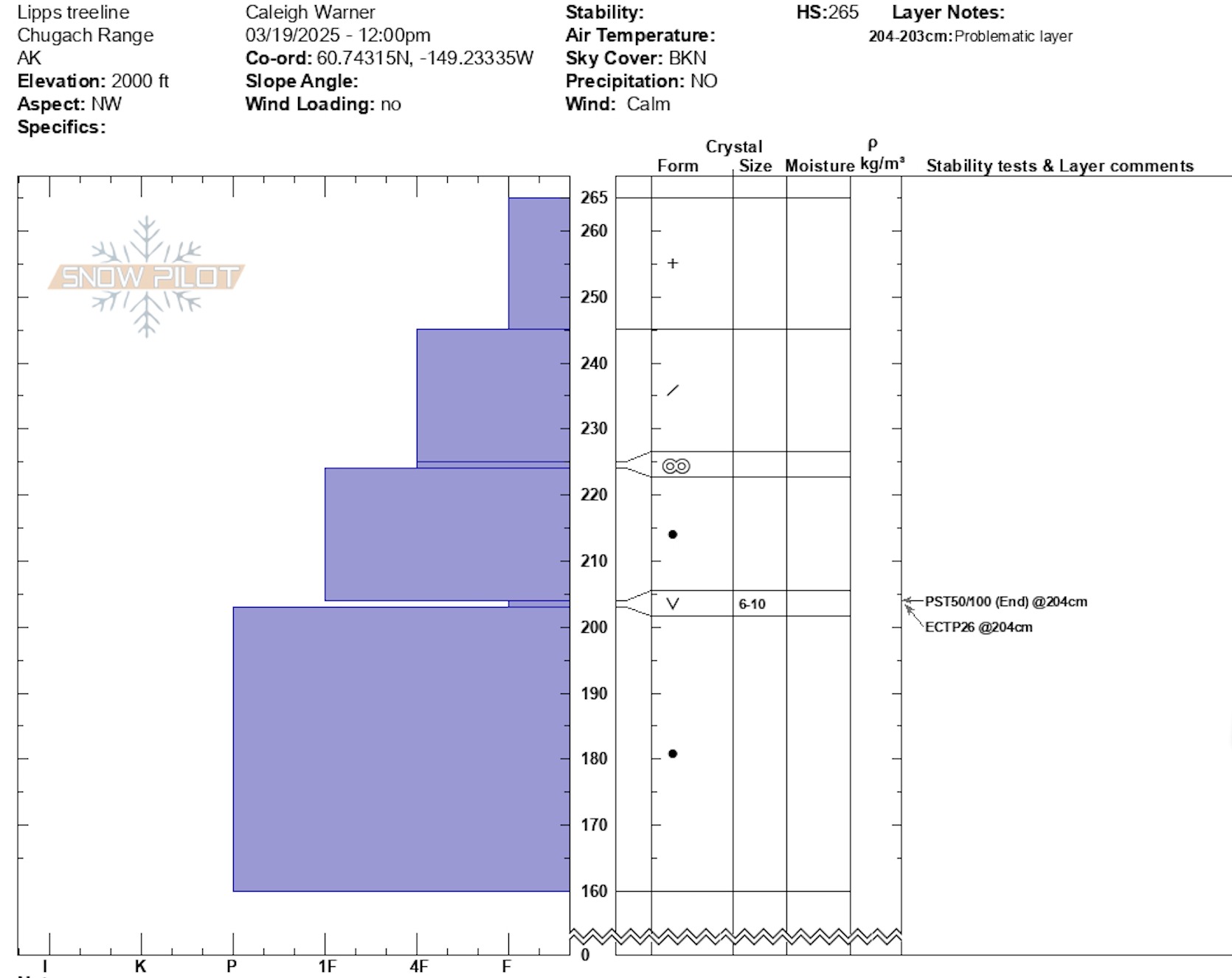
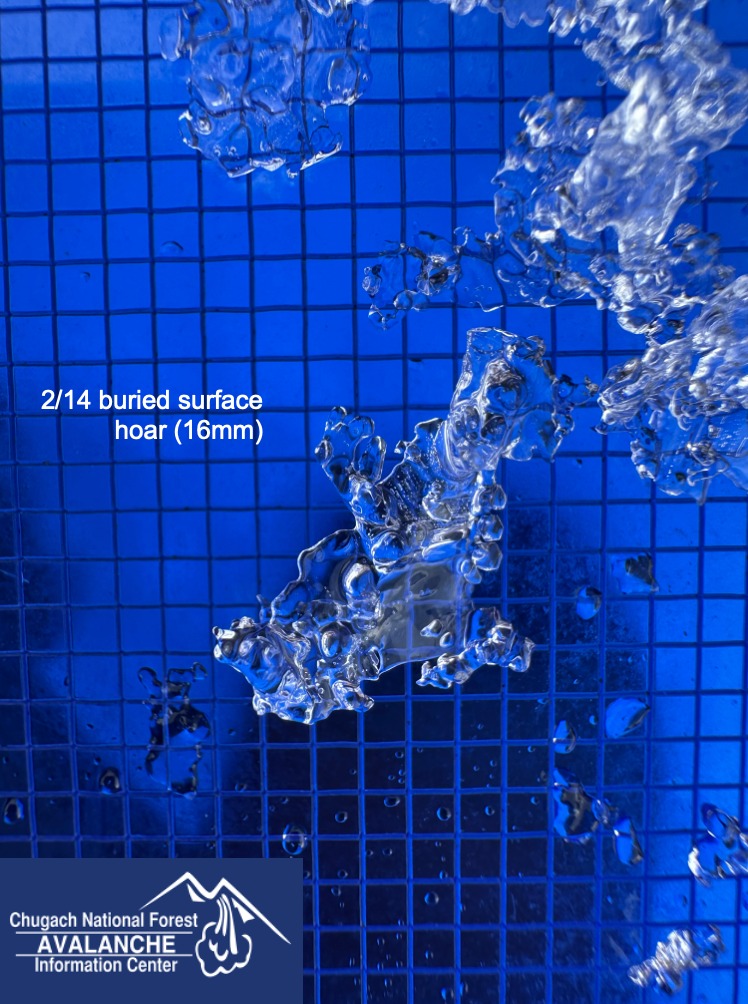
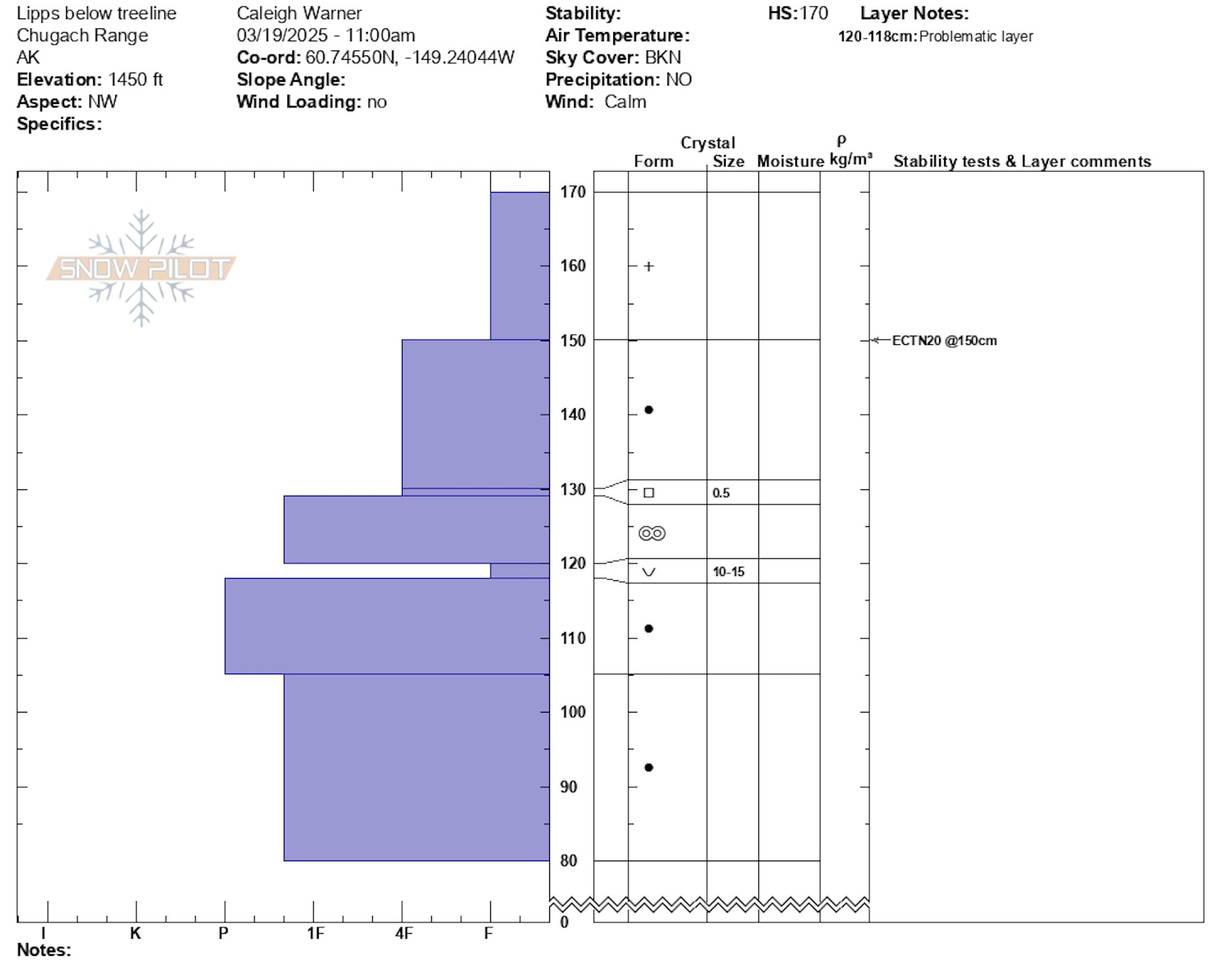
In two snowpits at 1450' and 2000' on the NW aspect of Lipps, we observed the Valentine's Day surface hoar layer was intact and upright. At our lower snowpit (1450') this layer was unreactive in our snowpit tests and appears to be healing. At our higher snowpit (2000') the Valentine's layer was 60cm deep, upright, and well preserved. In our snowpit tests at this location, we observed propagation across this layer. Our snowpit test results were ECTP26, ECTP30+, PST 50/100 end.
Avalanche
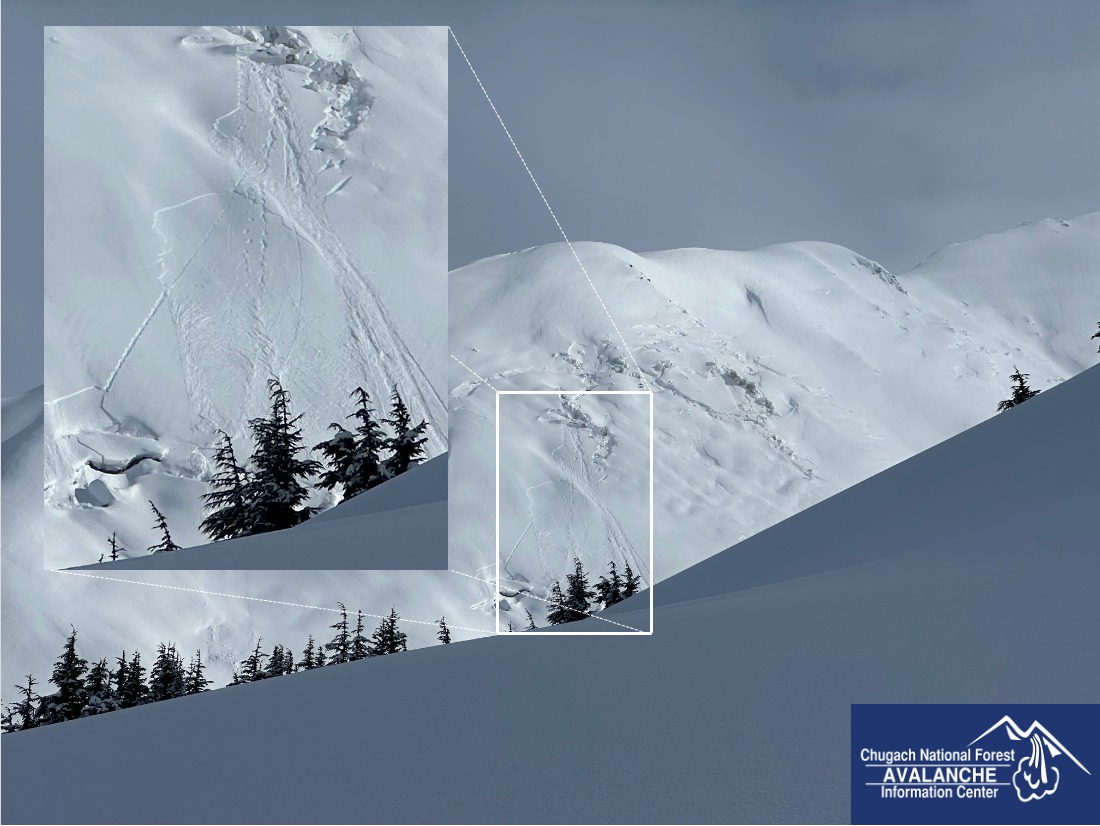
On the south-facing aspect of Cornbiscuit, we observed recent Glide activity from the large glide crack that has been looming on this slope all season. A piece of debris from the crack triggered several storm slabs to release (see photos).