
Quick report
- Cracking
- isolated
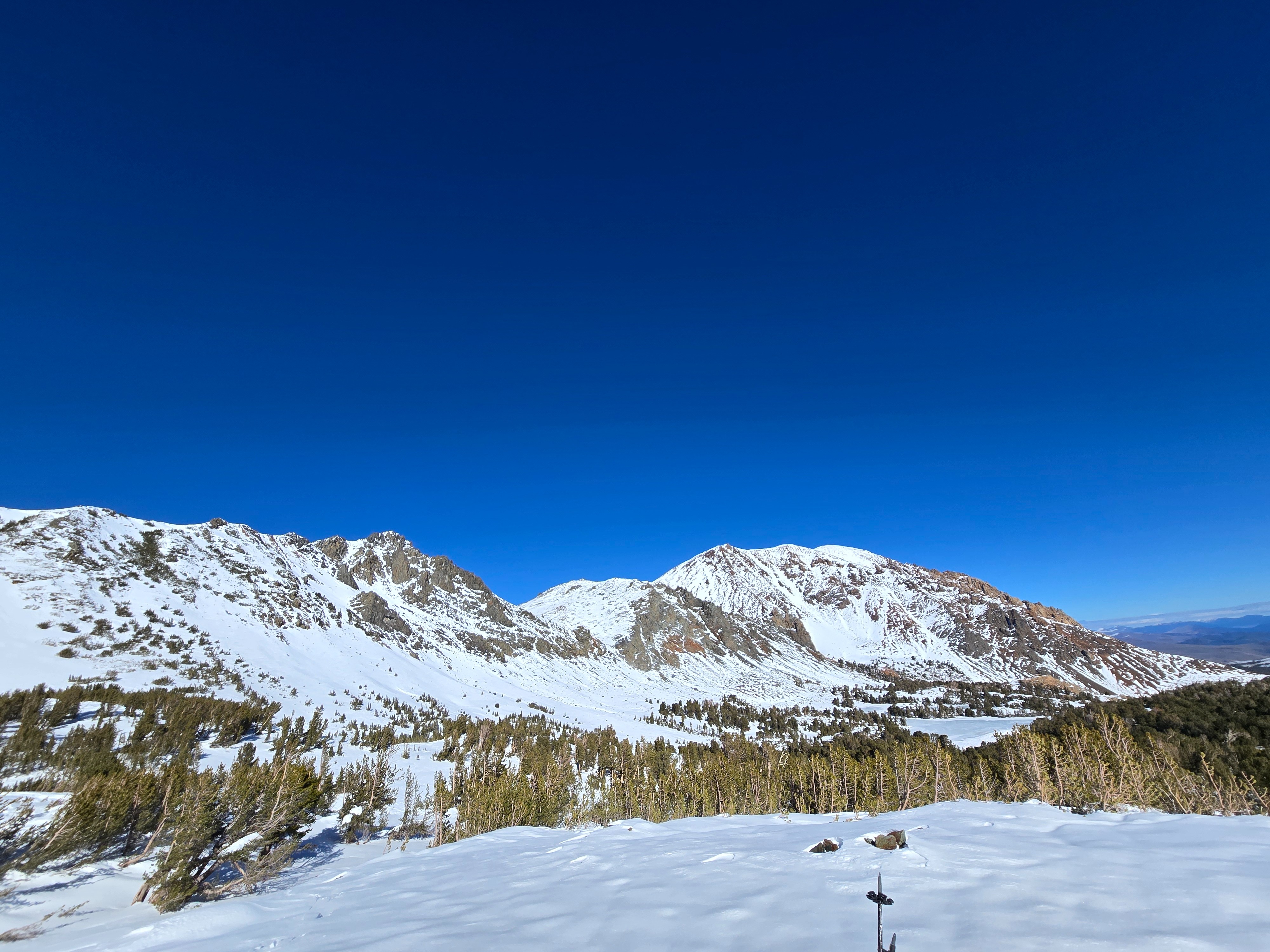
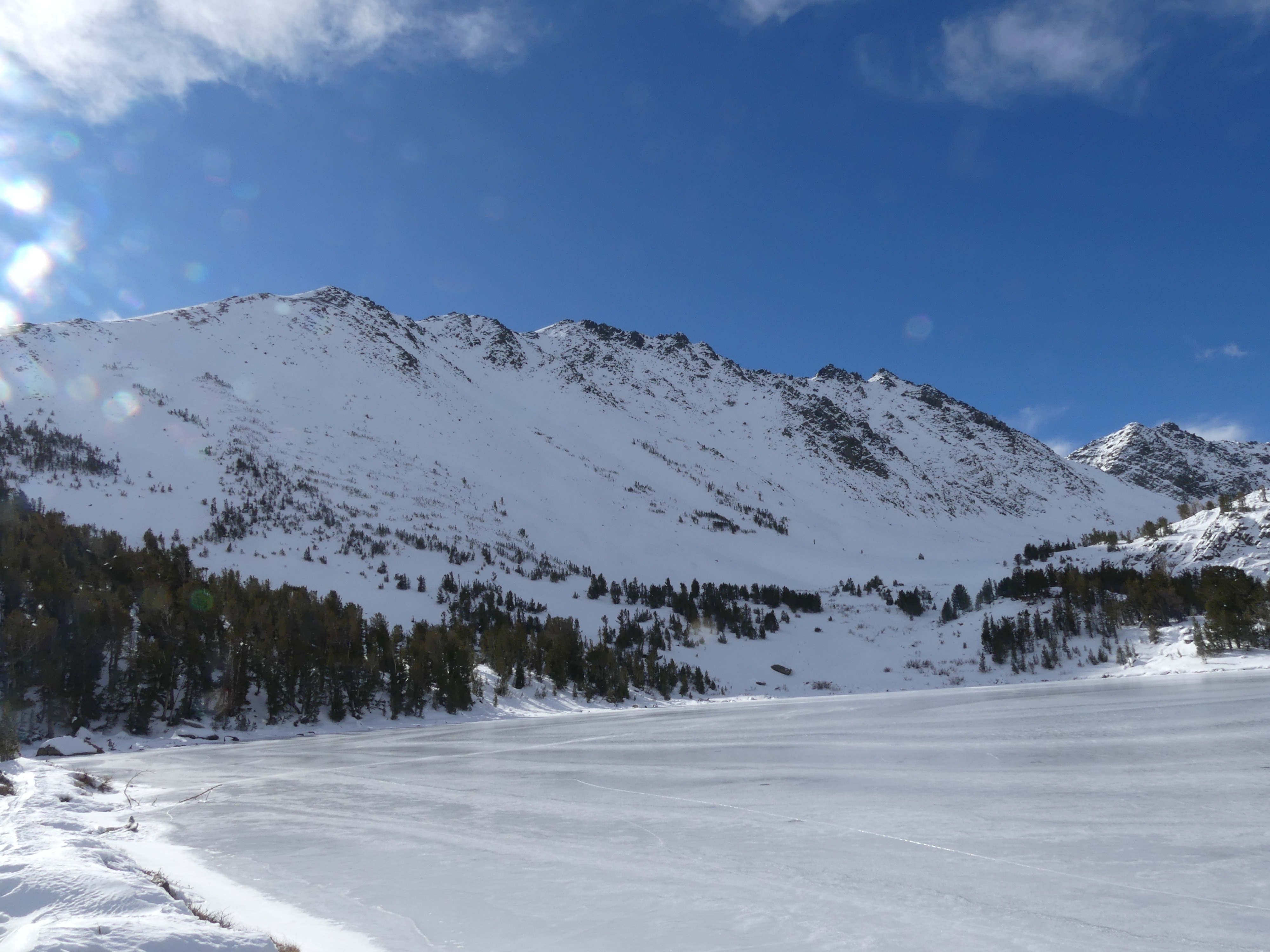
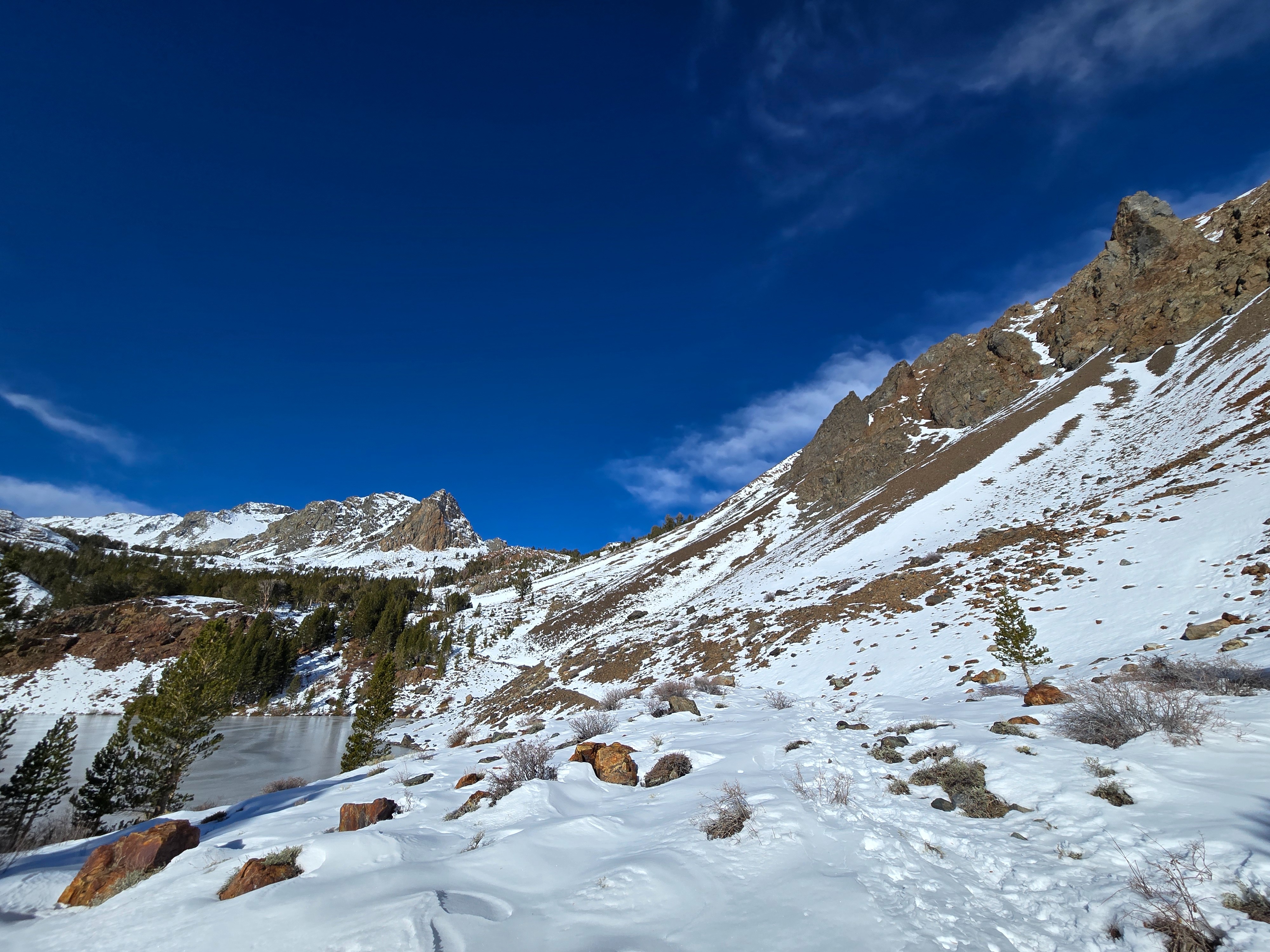
I traveled on both southeast and northerly terrain to near Virginia Lakes Pass to assess recently deposited wind slabs and weak layers buried in the snowpack.
The buried weak layers should be tracked. They could become a problem if new snow or wind loading comes into the weather forecast.
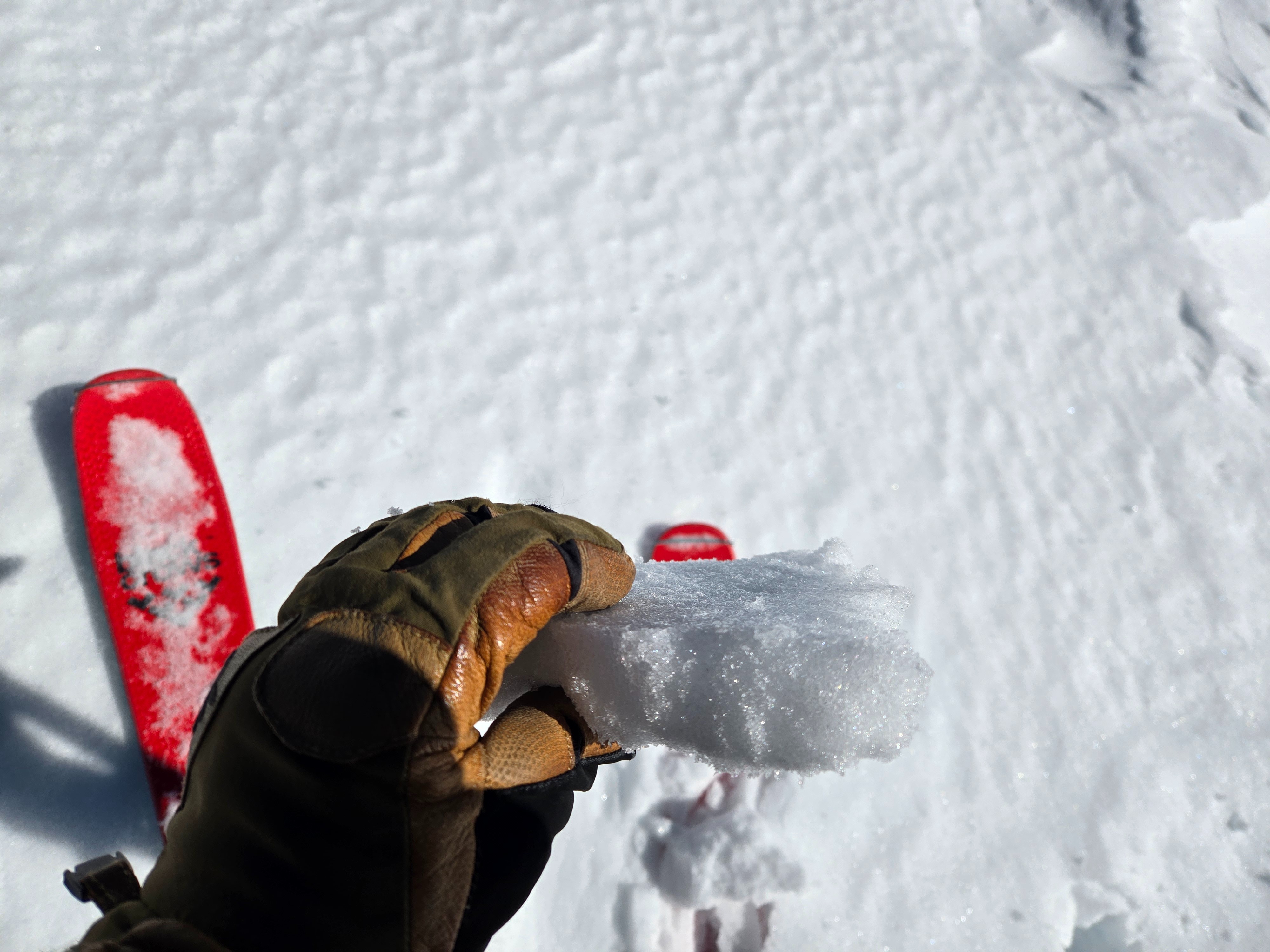
The bigger concern at the moment is areas where hard wind slabs have been scattered across steep terrain features atop weak, sugary snow.
After undercutting the slope, I was able to get hard wind slabs to propagate from my ski tips on the downwind side of mid-slope rollovers. These were breaking on weak, faceted snow. This set-up: wind slabs over facets, is probably the biggest avalanche concern at the moment.Weather
- Air Temp
- Near Freezing
- Cloud Cover
- scattered
- Wind Loading
- moderate
- Rain Elevation
- NA
- Recent Snowfall
- 0
- Snow Avail For Transport
- small smounts
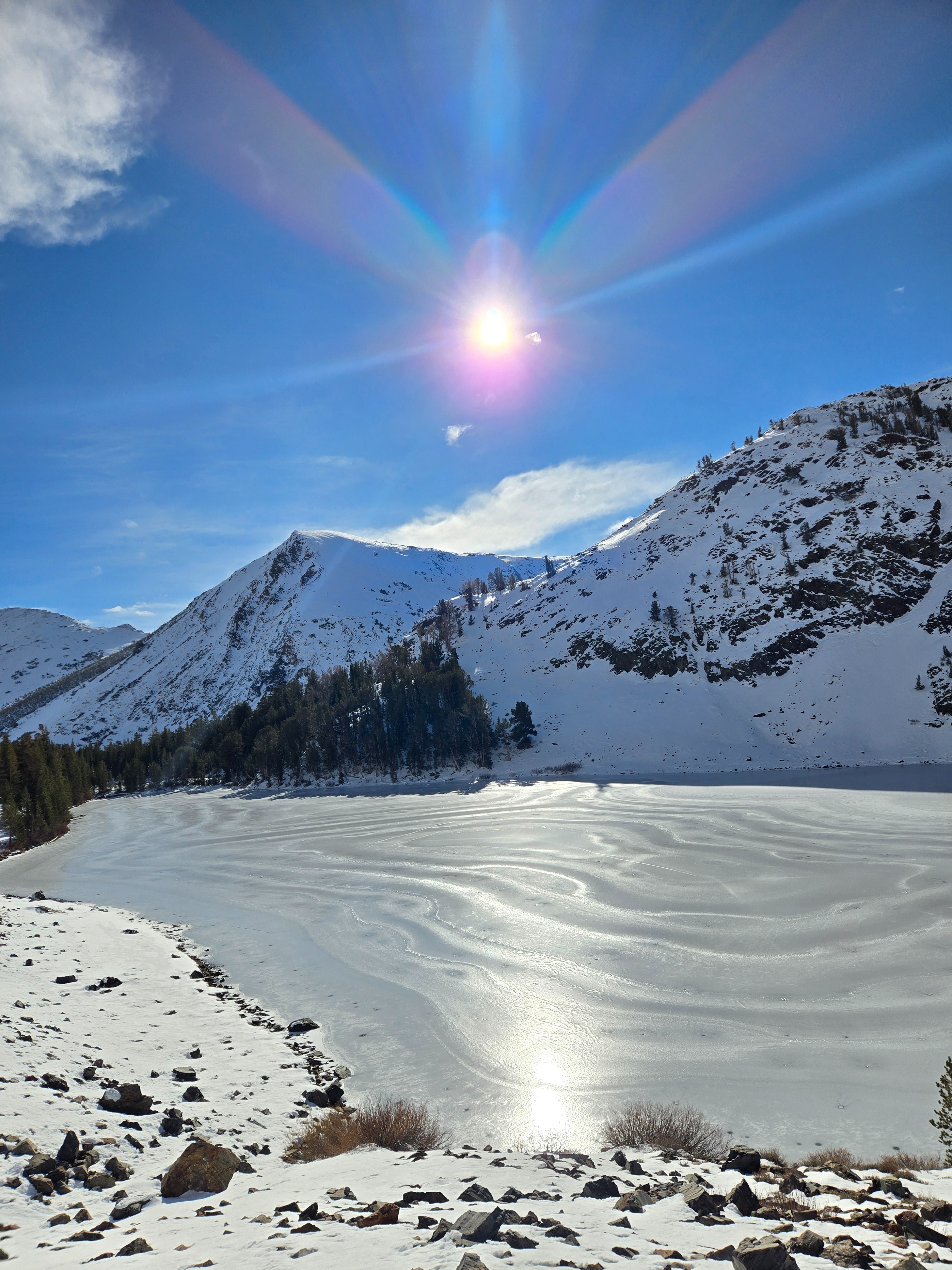
Strong winds resulted in blowing snow into the early afternoon when they subsided. Clearing skies and temperatures near and above freezing. However, the wind chill made it seem colder than it was.
Snowpack
Surfaces are variable.
Northerly and Easterly Slopes:
- Mostly wind-affected with windward slopes scoured down to an old melt-freeze crust, leeward terrain features having hard wind deposits, and open slopes having sculpted sastrugi. Sheltered slopes had sugary facets at the surface.
- I could not find the surface hoar that previous observations from this area mentioned. It was probably eaten up by wind and sun.
Solar Slopes:
- Discontinuous coverage east of the Sierra Crest. With strips and patchs of snow.
- Better coverage closer to the Crest.
- All solar slopes with snow had hard melt-freeze crusts that thawed to moist snow in the afternoon at lower elevations.
Structure:
- Areas with hard wind deposits over weak near-surface facets are my biggest concern.
- There is a crust/facet sandwich mid-pack and depth hoar near the ground that are worth monitoring. I got propagation with hard force in my snowpack tests on both layers. I found this general snowpack structure on leeward and sheltered terrain facing northwest, north, and northeast from 10,000 feet to my high point of 10,700 feet.
Avalanche
- Size
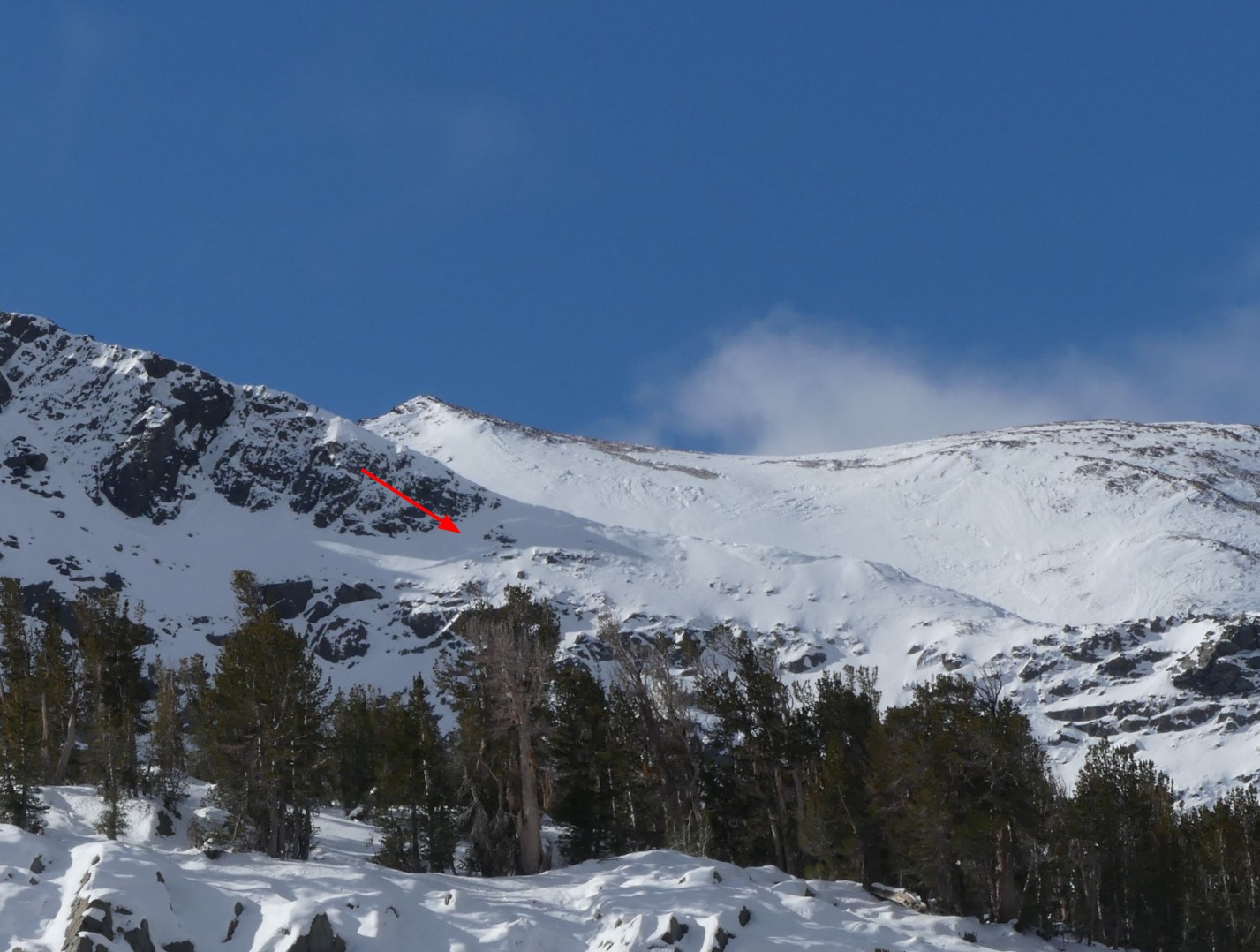
- D1.5
- Type
- HS
- Aspect
- NE
- Trigger
- N
- Elevation
- 11200 ft
This natural wind slab avalanche likely ran in the past 72 hours during a period of strong southwest winds. The jagged crown propagating between rocky outcrops suggests it broke on weak, faceted snow.