
Quick report
- Cracking
- specific
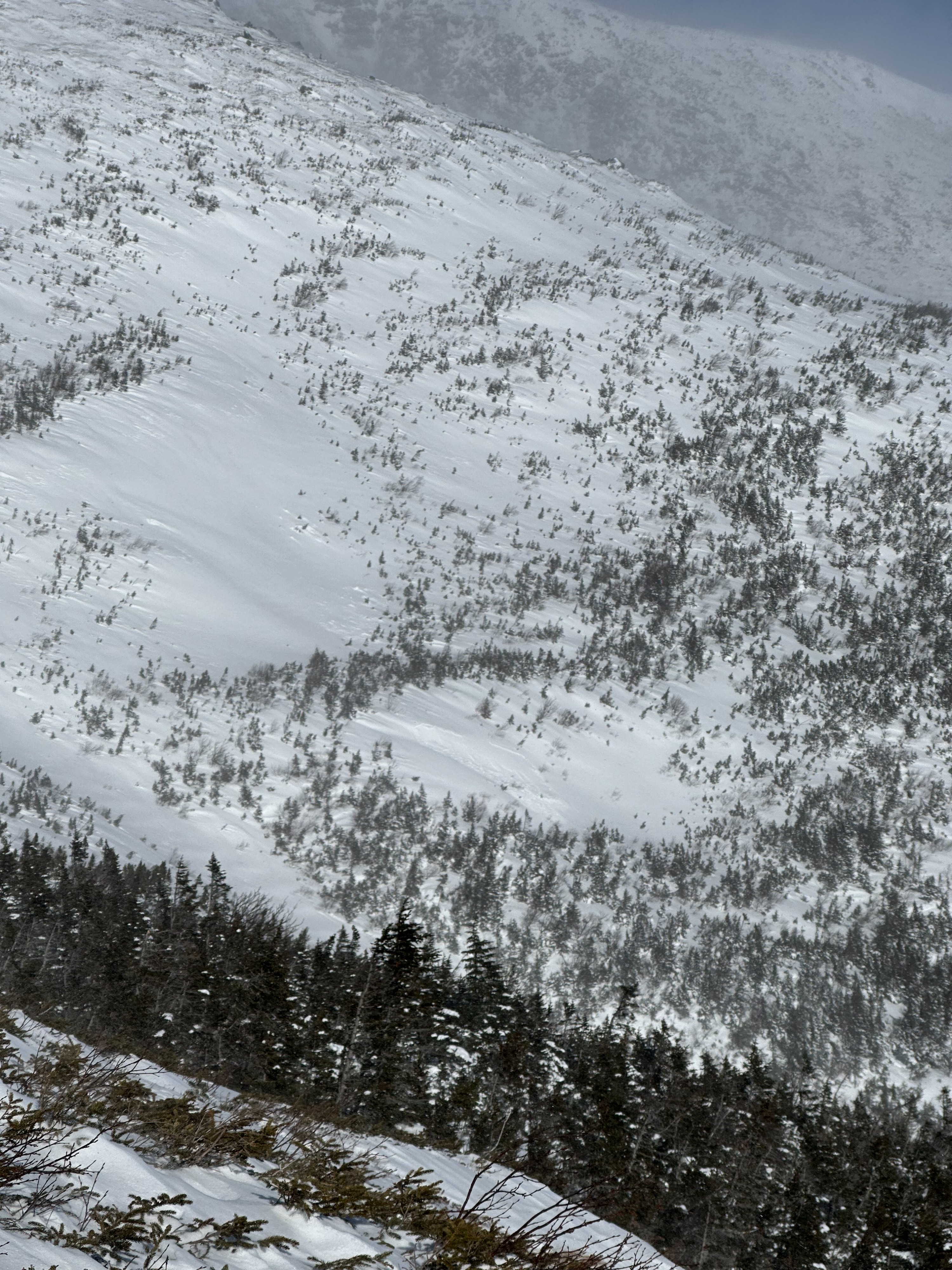
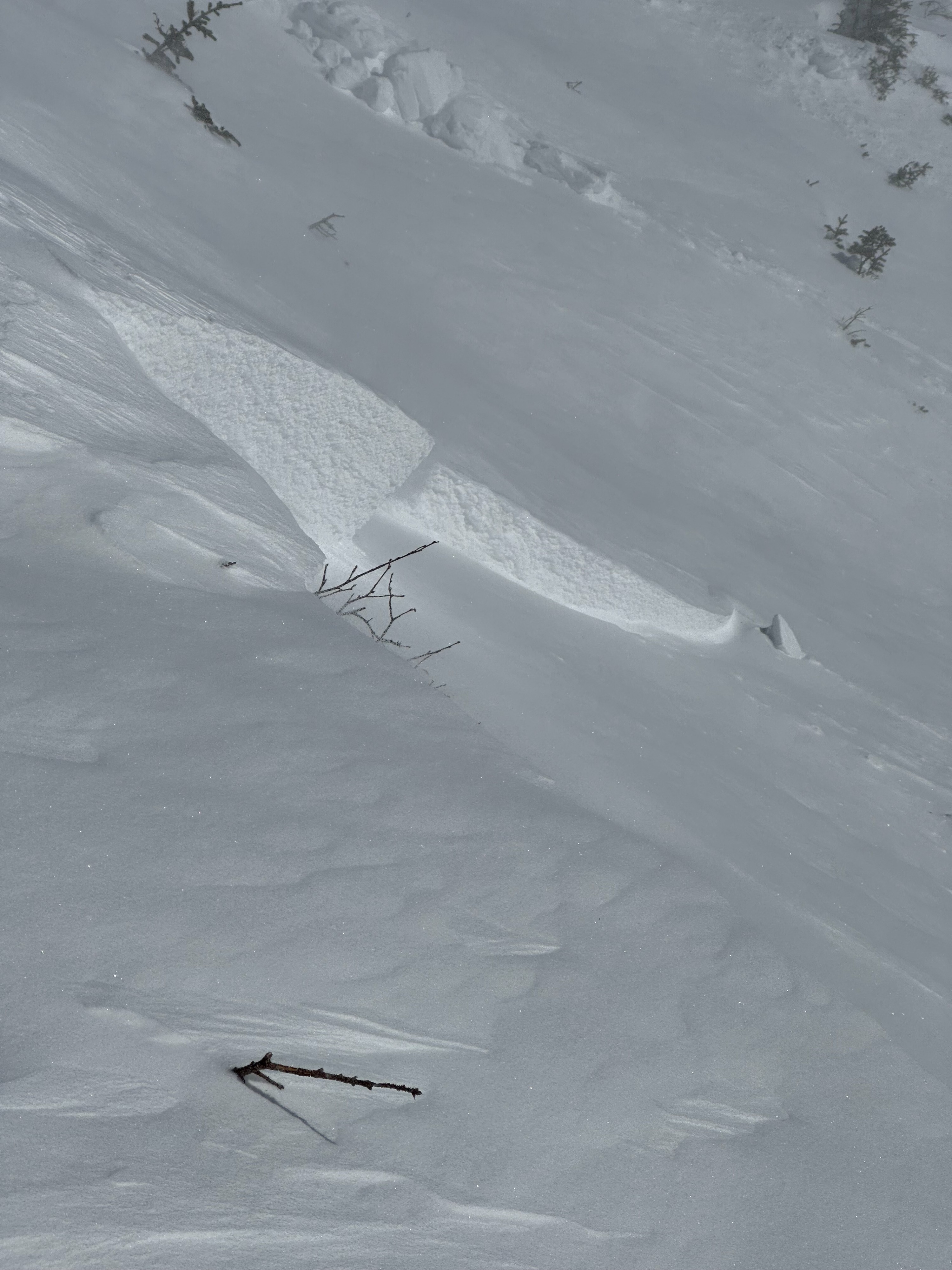
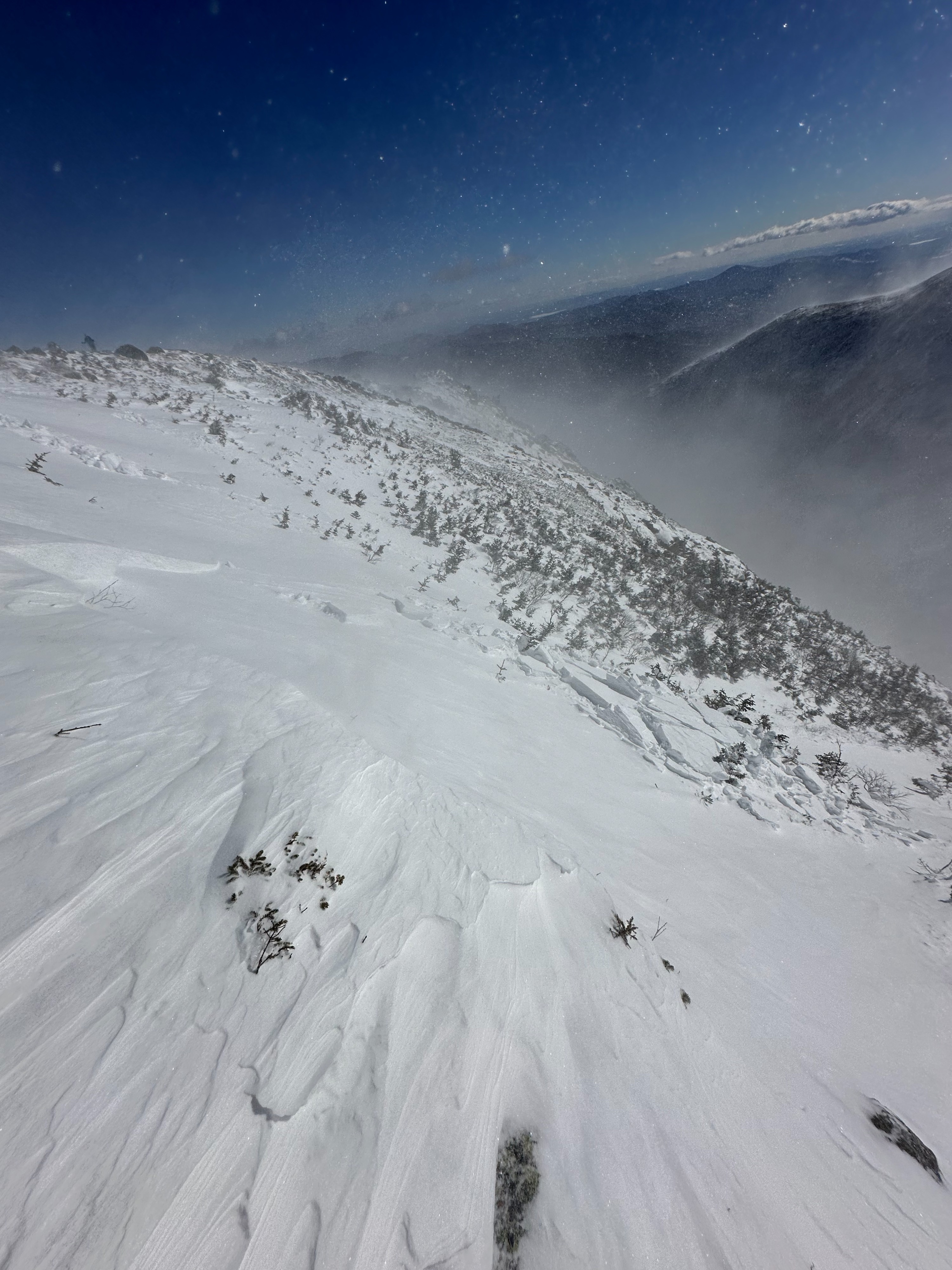
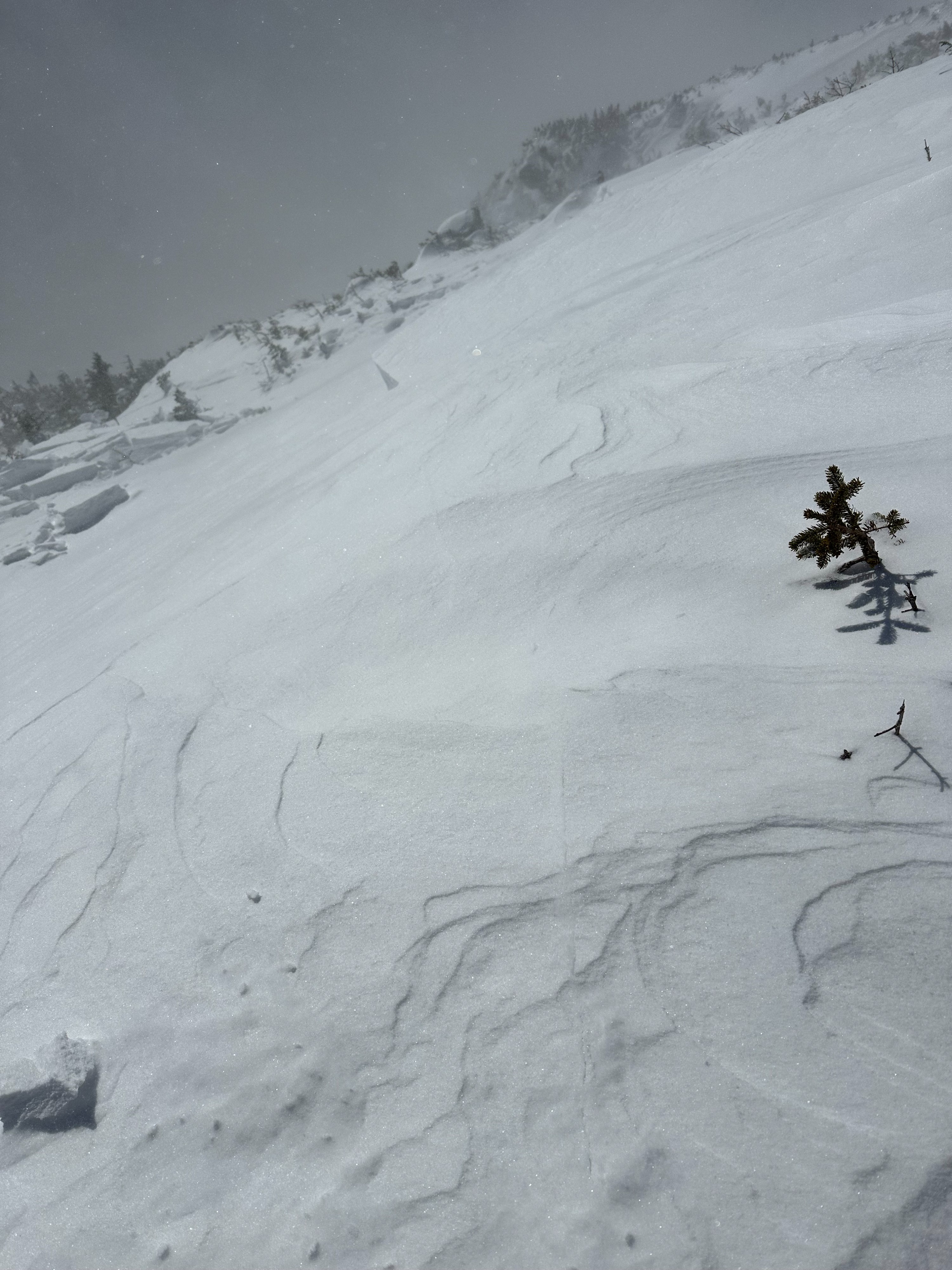
Avalanche conditions were variable today based on aspect, elevation, and the terrain characteristics. In wind-sheltered locations where wind-transported snow was accumulating, new wind slabs could be found and triggered from the weight of a person. While many upper elevation zones with a windward tilt were getting scoured, wind transported snow was effectively being transported onto lee aspects and forming wind slabs that were 5 - 15 inches thick. These new slabs were reactive today to the weight of a person (see the avalanches and snowpack sections below).
A persistent weak layer of facets on top of an old, hard crust that is buried by new and wind-drifted snow exists primarily above 4000'. While we were not able to trigger this layer in any of our test locations by walking around, we observed reactive results when performing a deep tap test below the new wind drifted snow (ECTP12). This test was performed after the initial ECT failed upon isolation at the new/old snow interface. Based on our observations it would take either a thin spot in the snowpack and/or a higher energy load or force in order to trigger an avalanche on this persistent layer.
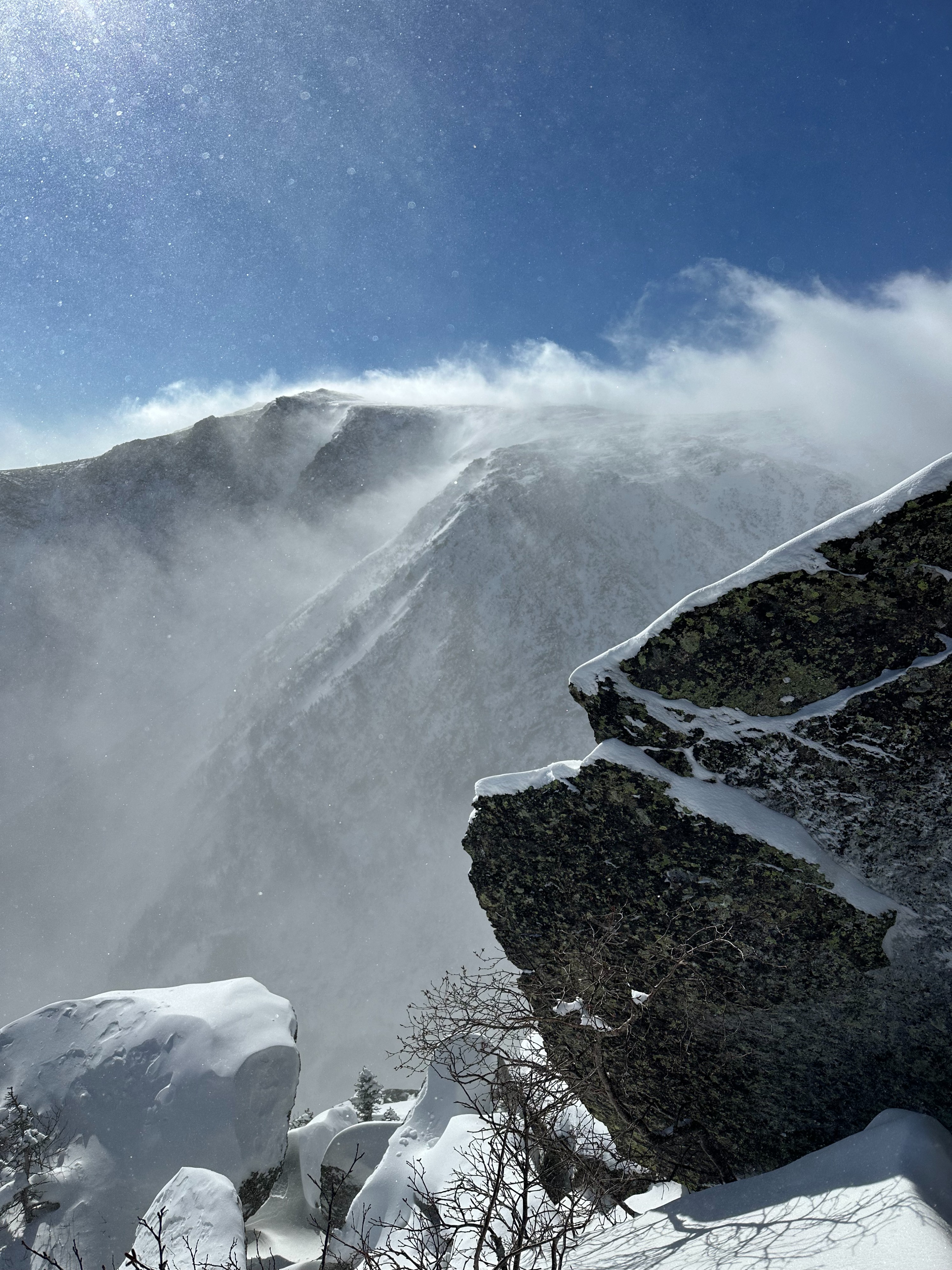
We observed continuous wind loading throughout the day with no signs of giving up when we left the field.
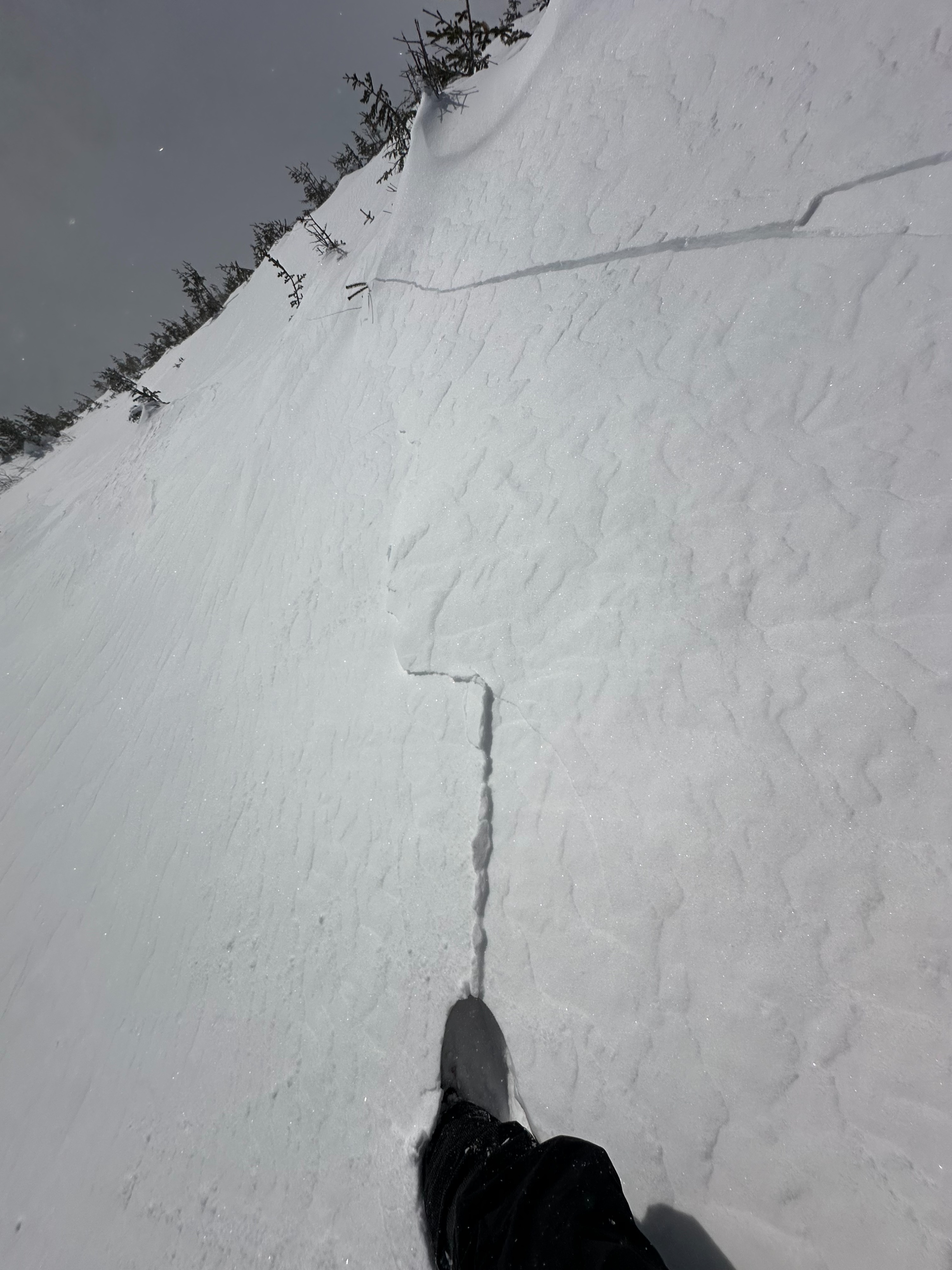
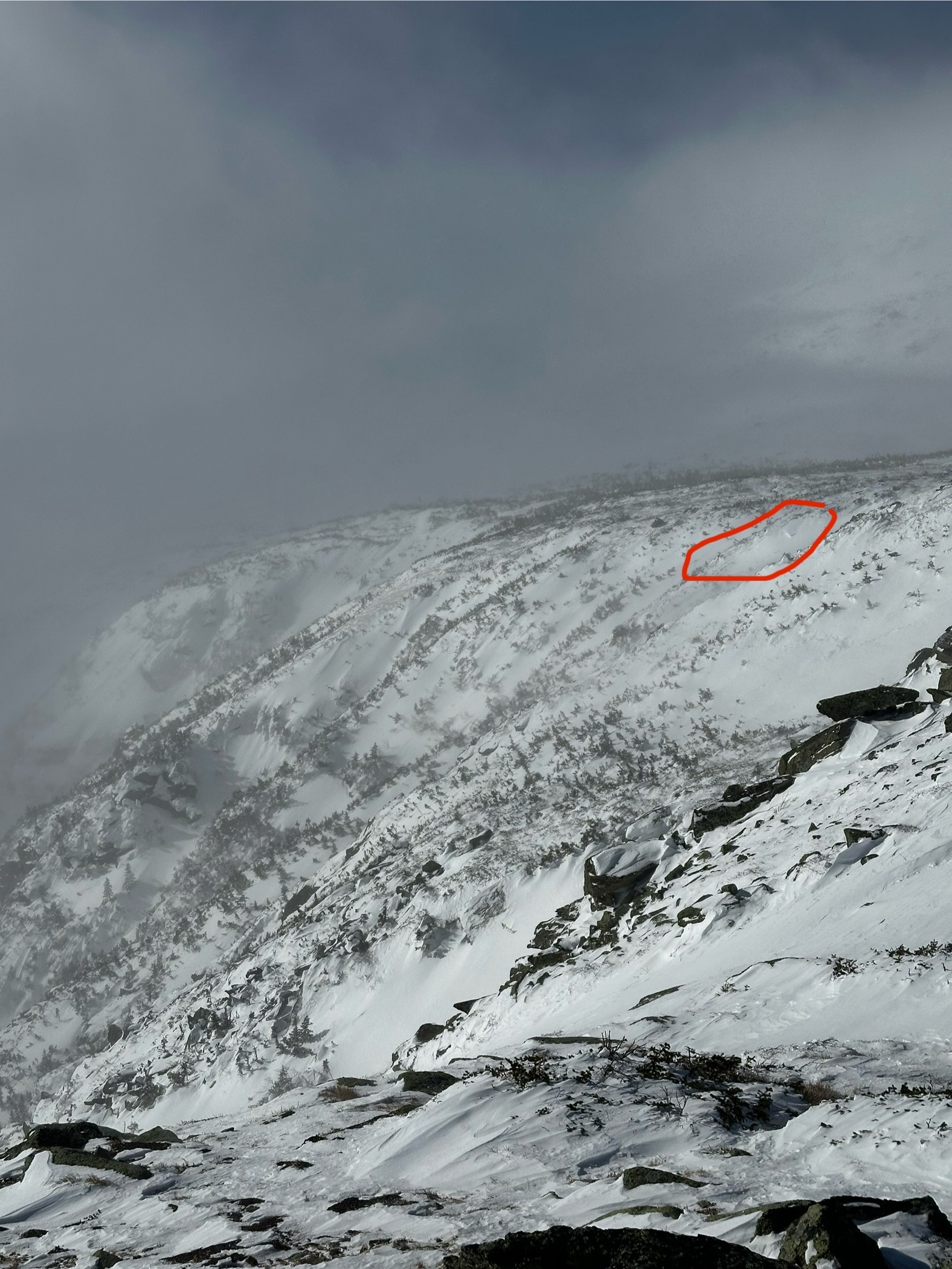
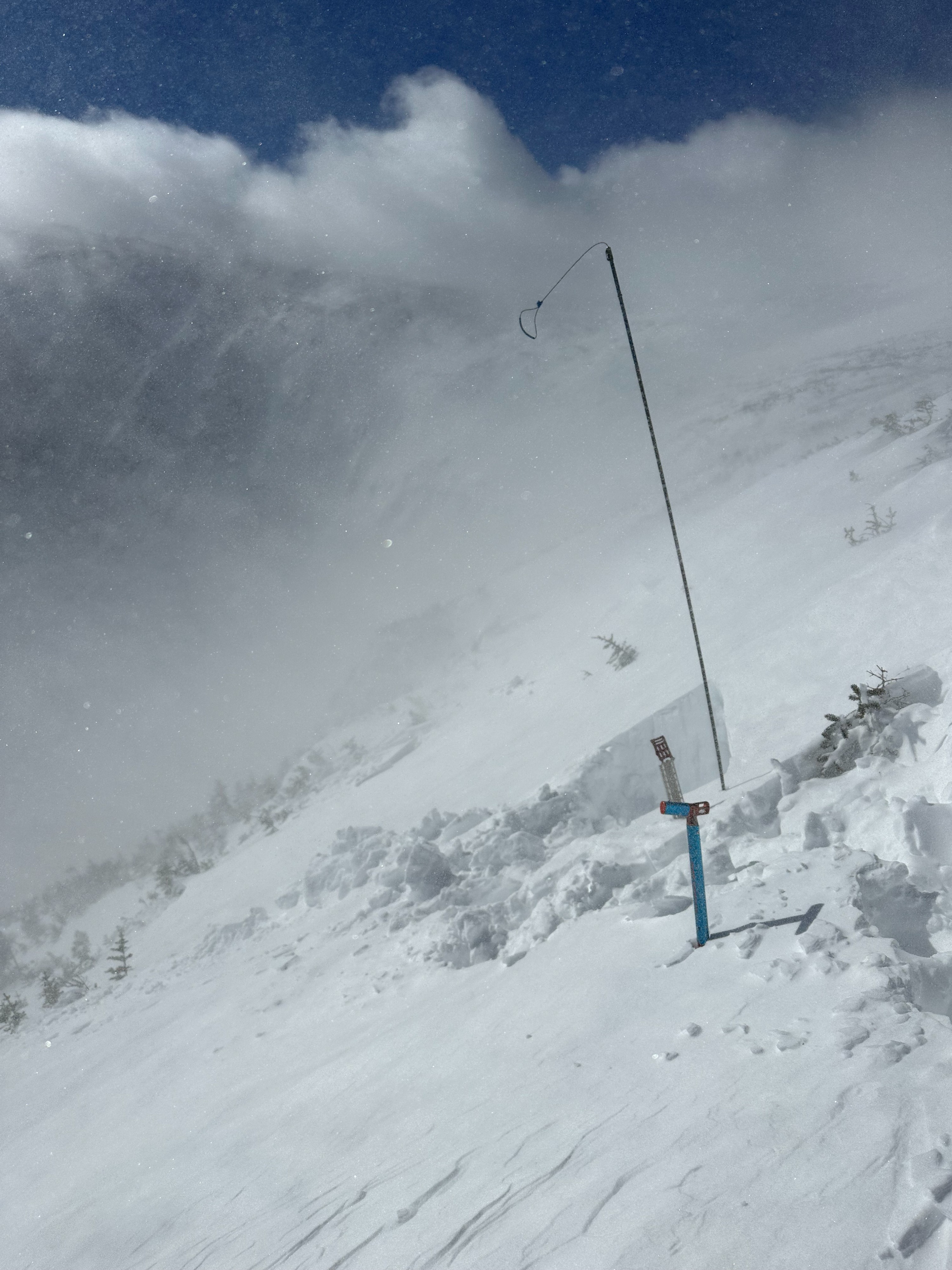
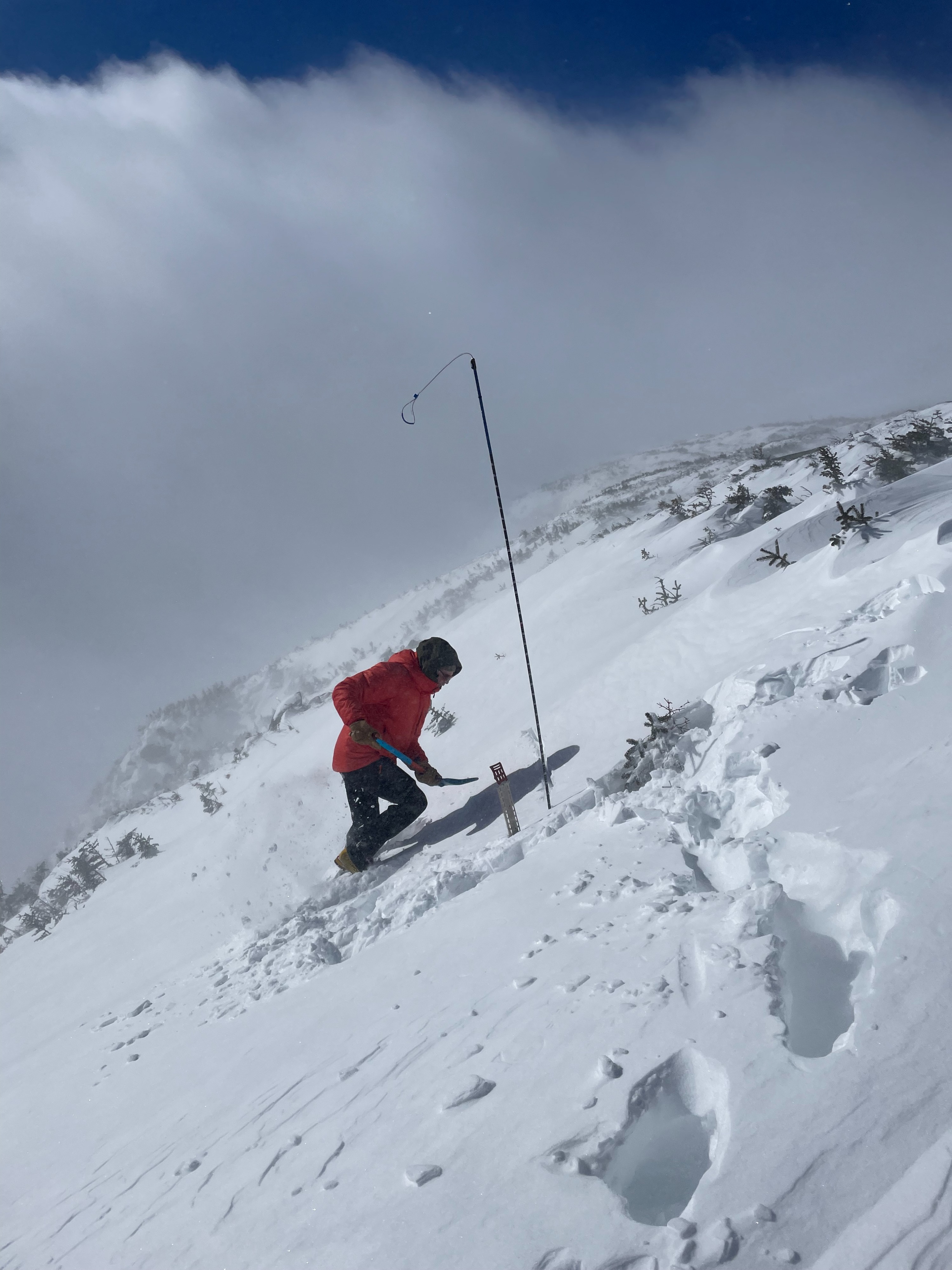
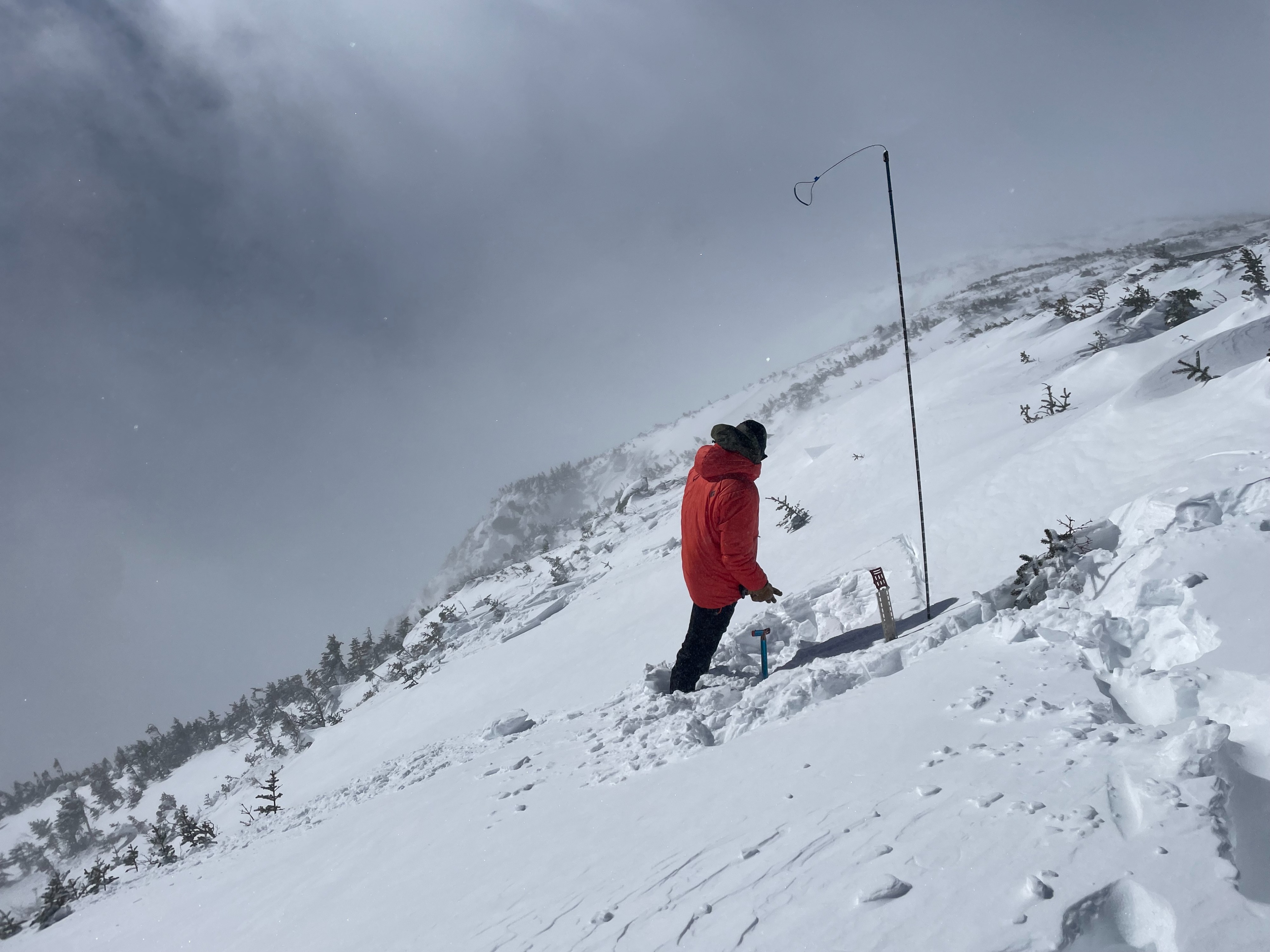
At 5000' on south and southeast aspects, new wind slabs were sensitive to triggers in column tests (ECTPV) and while moving in terrain. We removely triggered a small D1 avalanche when shoveling out our test pit. We observed a small naturally triggered wind slab in Raymond Cataract. We also observed shooting cracks from our boot pack that spanned entire test slopes (30-50'). Curious about the deep persistant grains we found, we did an ECT test with the top 34cm removed from the original ECT test, and observed moderate, sudden planar results (ECTP12).Weather
- Cloud Cover
- few
- Wind Loading
- intense
- Snow Avail For Transport
- moderate amounts
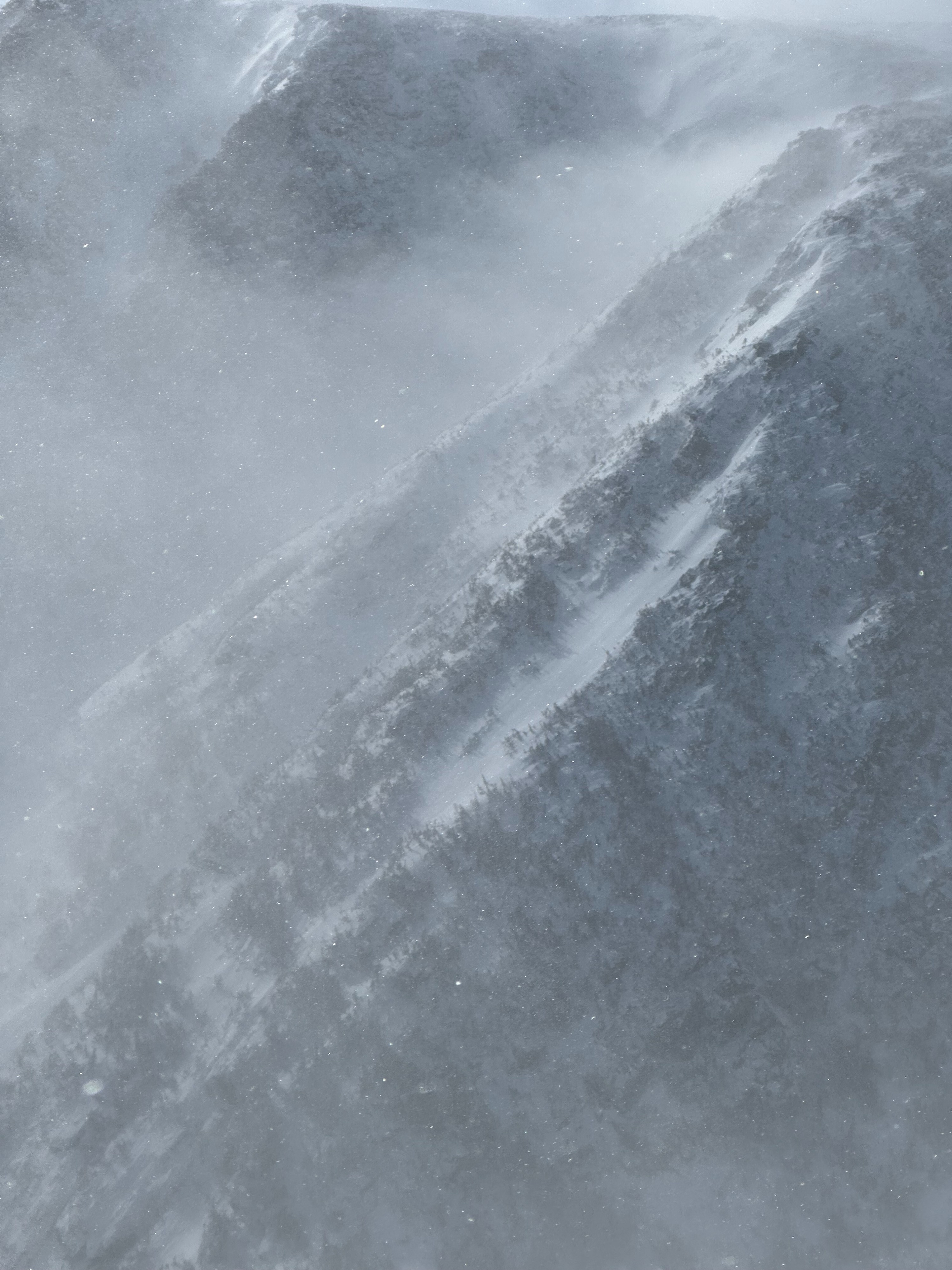
Cold, strong northwest winds but somewhat clear skies. Blowing snow and some summit fog made visibility variable.
Snowpack
Snowpack depth in the start zones of the south face of Tuckerman ranged between 1 - 2 meters, with notable instabilities within the top 1 meter of the snowpack. Overall snowpack depth and layer thickness was dependent on the aspect, and terrain characteristics (shelter from the wind).
Overall, a poor snowpack structure was observed (see profile photo for details). Reactive snowpack instability tests were observed. Notably, the new windslab failed on isolation of the ECT column. A deep tap test was performed to better understand the propogation potential of the deeper persistent layer. This test was also reactive and scored at ECTP12.
It wasn't only the instability tests that snowed a reactive snowpack. Just walking across our test slopes, we were able to fracture significant sections of the slope from a single step within the new wind slab. While the reactive result on the persistent weak layer was alarming, we were not able to produce any collapses, shooting cracks or slope failures down to this layer just by walking on it.
Avalanche
Triggered a small (D1) avalanche in R-Cubed in adjacent and slightly steeper terrain to our test pit. The new wind slab showed good propagation potential here in the location, and on other test slopes where we fractured significant sections of the slope (50ft at once) that were not quite steep enough to avalanche.