
Quick report
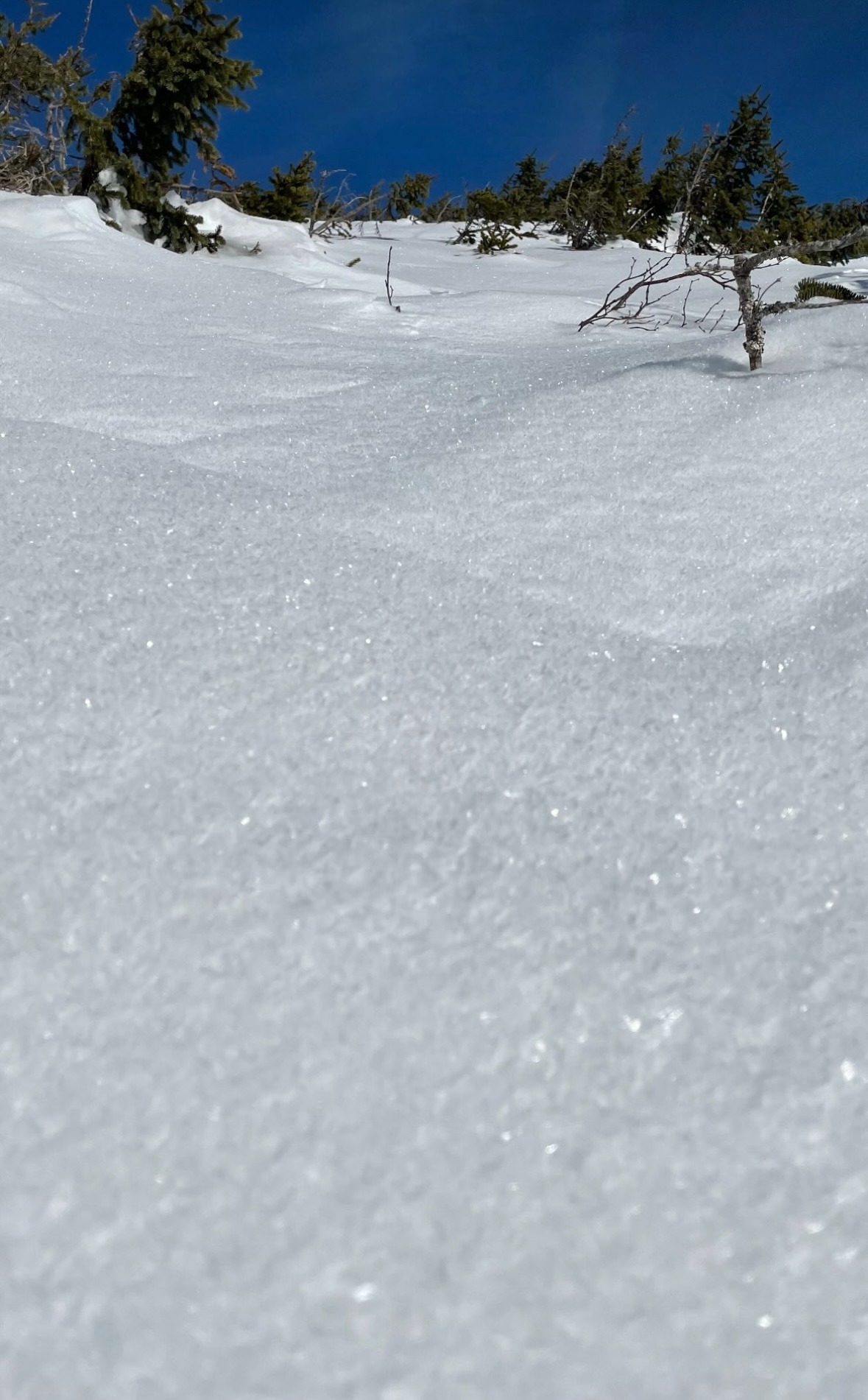
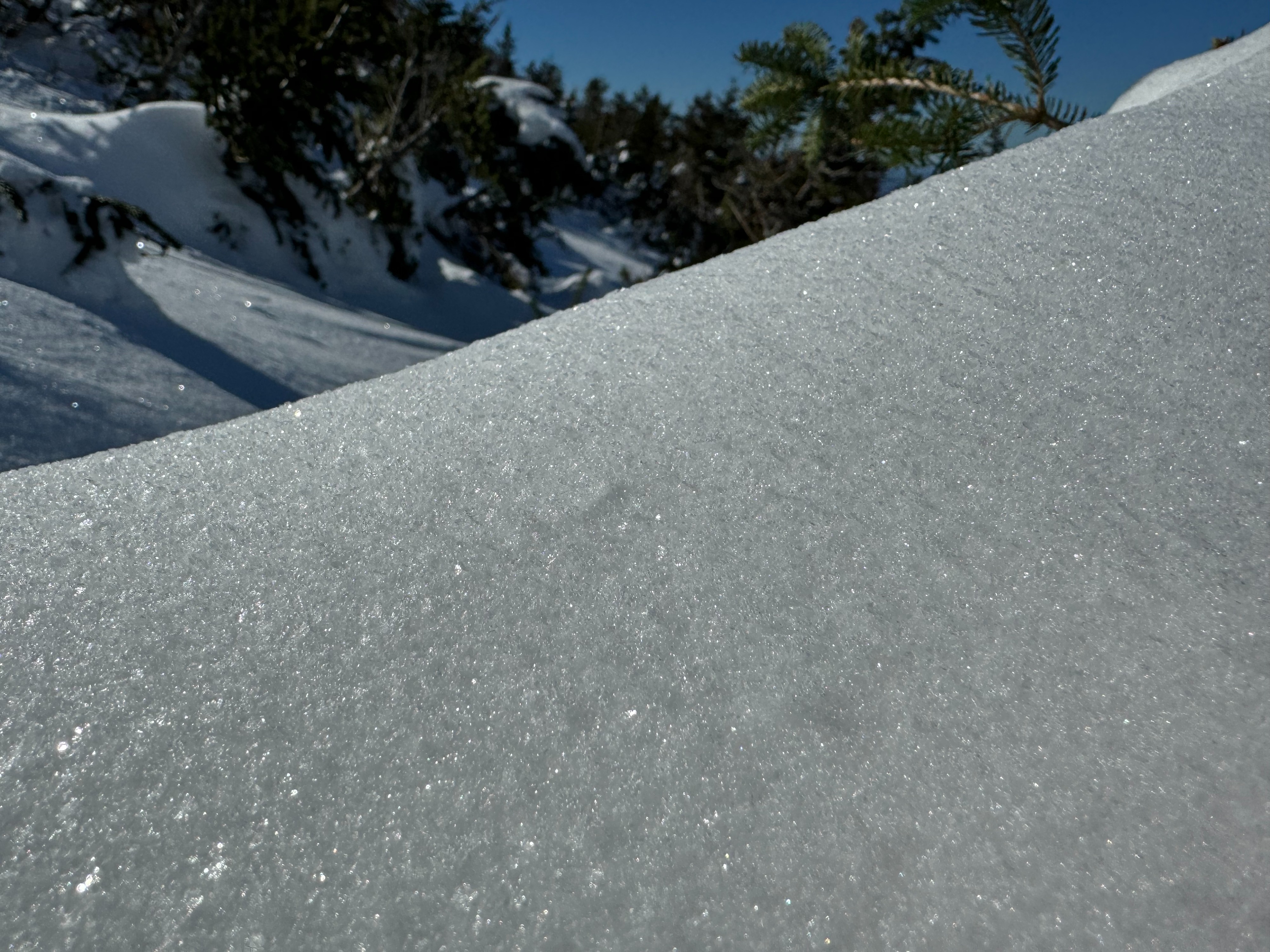
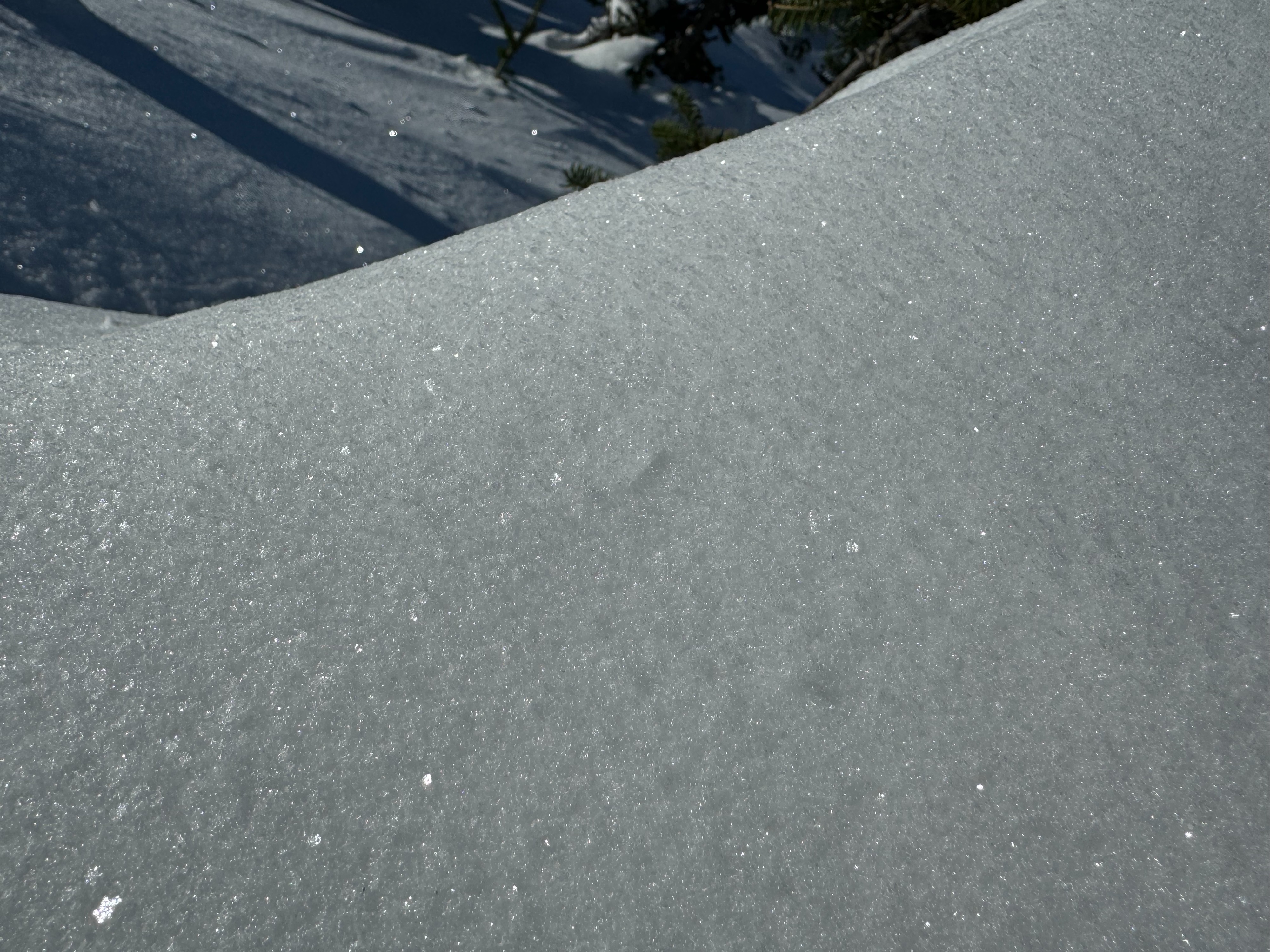
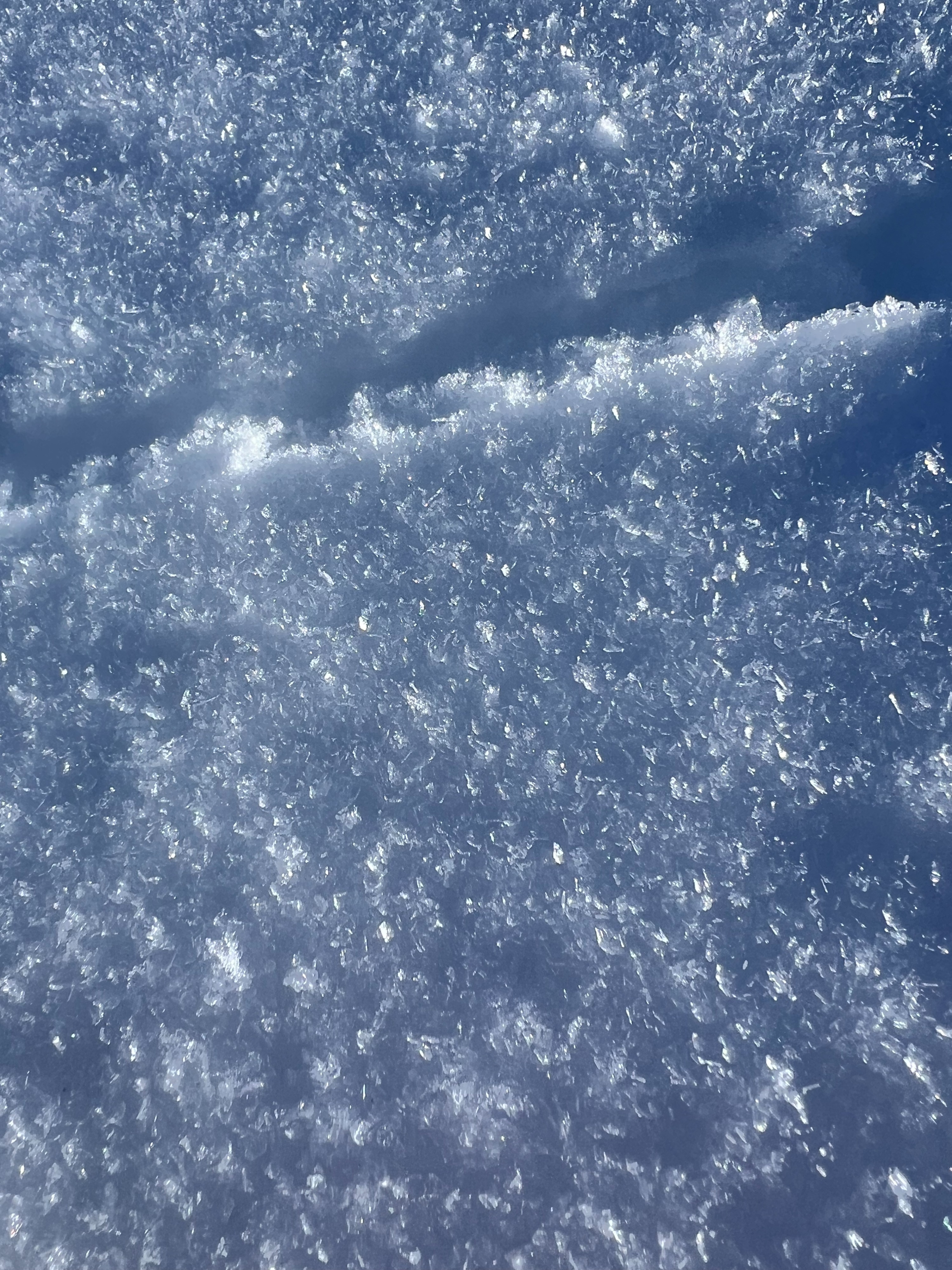
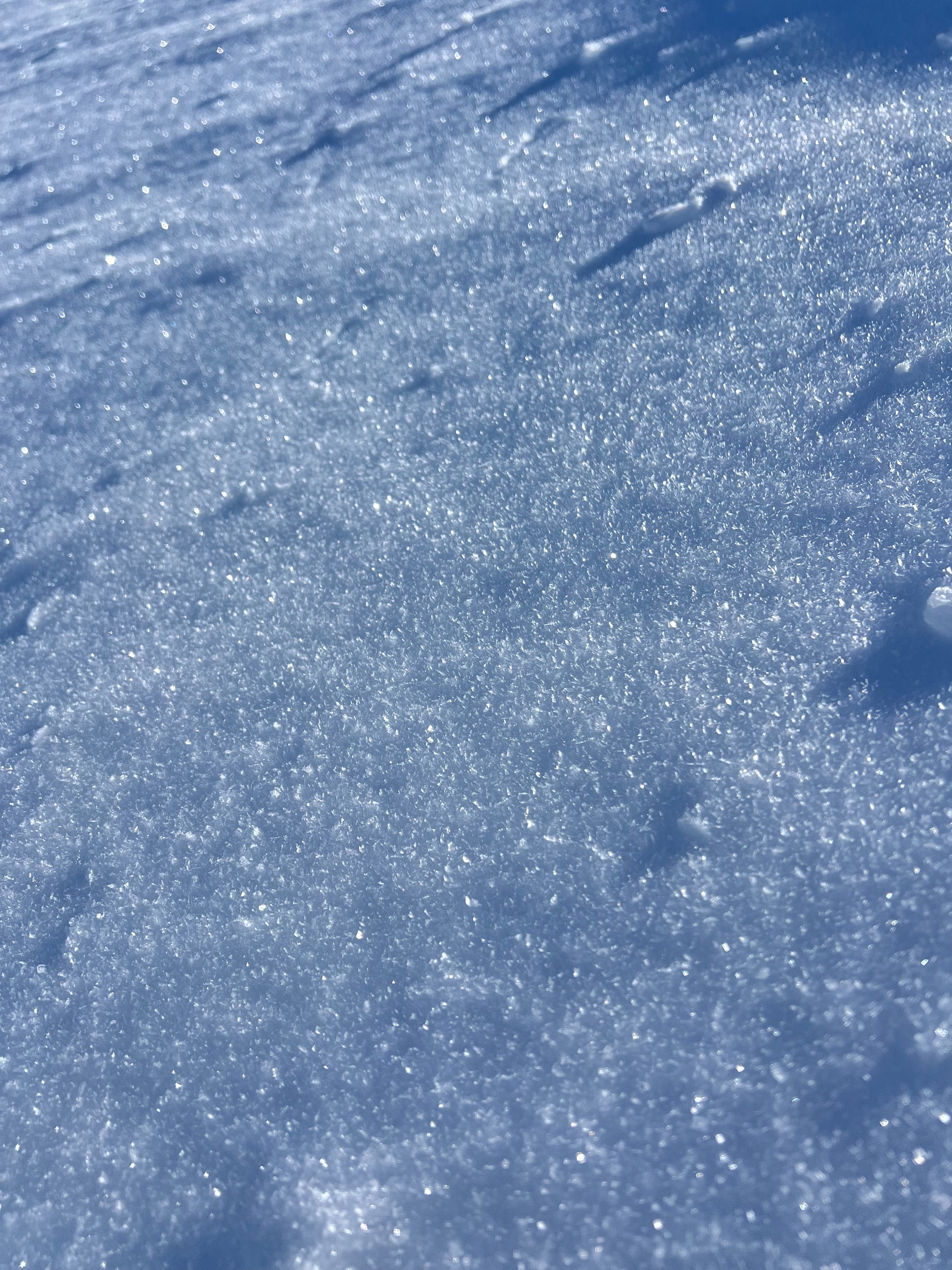
We are looking at a radiation recrystallization layer forming on the upper level of our snowpack. Below I will site research and photos of surface grains that emphasize the structure, and I will outline the weather factors that have contributed to this problem. Over the last few days, I have seen many photos shared with me (some shown below) of surface grains representing angular shape but lacking the vertical structure and complete striation of surface hoar grain types. I have observed similar grain structures as noted in FINE STRUCTURE LAYERING IN RADIATION RECRYSTALLIZED SNOW. These structures I have seen match the following description: a “top surface layer consist(ing) of long slender needle crystals connected in a cross-hatch pattern.” (Adams & Walters 2014). My observations lead me to believe that we are experiencing a period of radiation recrystallization (RR). RR layers are created due to external weather factors such as "sunny, relatively warm, subfreezing (around -10c) days, followed by clear, cold (around -15c) nights" which we have been experiencing on Mt. Washington as of late (Birkeland 1996). Although days have not consistently reached the written temperatures above, I have consistently observed temperatures of -9c to -5c during the day at ravine level, MWOBS has recorded summit temperatures at night reaching -18c to -16c, which is well within in Birkeland’s points outlined in his research. The layer of interest was most likely formed between February 2nd and February 5th, with most photo observations coming in/being posted on social media on the day’s of February 5thand 6th. This weather pattern that I have observed aligns with what Adams and Walters highlight in their paper FINE STRUCTURE LAYERING IN RADIATION RECRYSTALLIZED SNOW. They discuss that “under clear sky conditions, solar energy induces subsurface heating, while long-wave energy is emitted to the cold sky, cooling the surface. This produces near surface temperature gradients, which can cause near surface metamorphism termed radiation recrystallization.” (Adams & Walters 2014). This aligns with what MWOBS and I have seen in the recent days. Skiers and avalanche professionals have often referred to this layer with buzz words such as loud pow, saltated snow, and recycled powder. While these descriptions are not necessarily wrong, they do not describe the complexity of the issue. Due to some of the observations being found high in the alpine on solar aspects, I do not believe that that the prolonging issue is surface hoar. Surface hoar by nature is highly fragile to wind and solar, causing the layer to decompose quickly in light to moderate winds, as well as minimal solar input. However, we have been experiencing low wind and substantial solar, which would contribute to the decomposition of surface hoar. I believe this would nullify the surface hoar issue. If this is true, it leads me to believe that radiation recrystallization could become the predominant concern in our snowpack if preserved and buried in its current state. As explained above, observations and sighted research point me to a surface layer of radiation recrystallization crystals which when buried, will act as near surface facets. This layer demands a keen eye and should be watched carefully if buried and fully preserved in its current state. Just because it has not been blowing or snowing, does not mean the snowpack has not been growing… https://arc.lib.montana.edu/snow-science/objects/ISSW2023_O11.03.pdf https://arc.lib.montana.edu/snow-science/objects/issw-1996-075-080.pdf https://arc.lib.montana.edu/snow-science/objects/issw-2004-124-132.pdf https://arc.lib.montana.edu/snow-science/objects/ISSW14_paper_O2.01.pdf