
Quick report
- Cracking
- specific
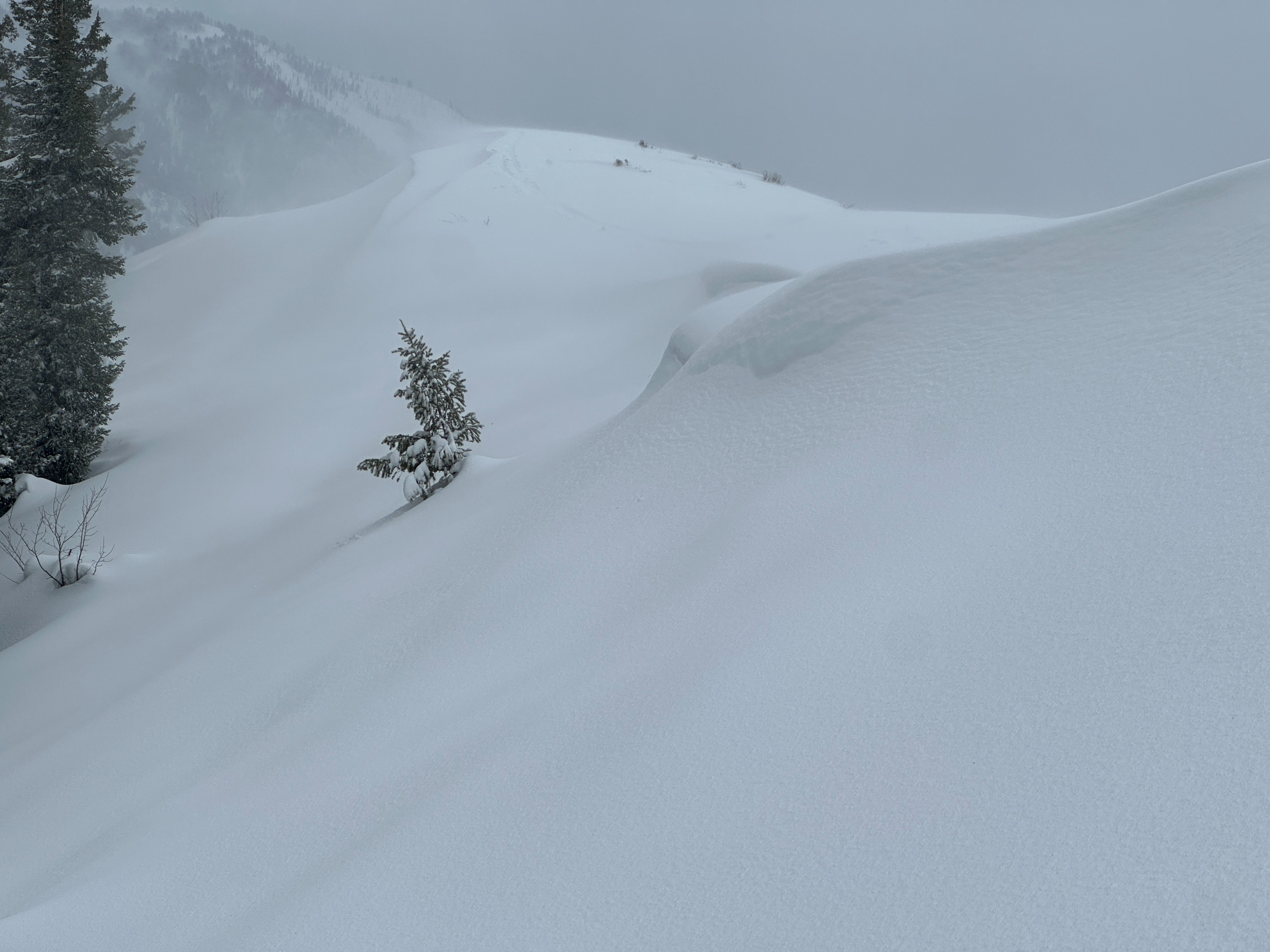
Increasing instability as the day progressed. This instability increased noticeably on leeward slopes (N - E - SE) as SW winds increased in the afternoon and began blowing large quantities of snow and building obvious pillows. Hand sheers and pit tests were failing on leeward aspects on NSF buried anywhere between 6 and 12 inches deep. New slabs were not cohesive - and quickly broke apart during our tests. As wind consolidates slabs and additional precipitation arrives I expect the avalanches will grow larger and propagate further on sensitive interfaces. Below 6500' - new snow was moist and formed cohesive slabs 4-6" deep. These slabs were failing naturally on east-facing terrain. I'd imagine that middle and upper elevations will follow a similar trend as larger slabs develop in the next few days.
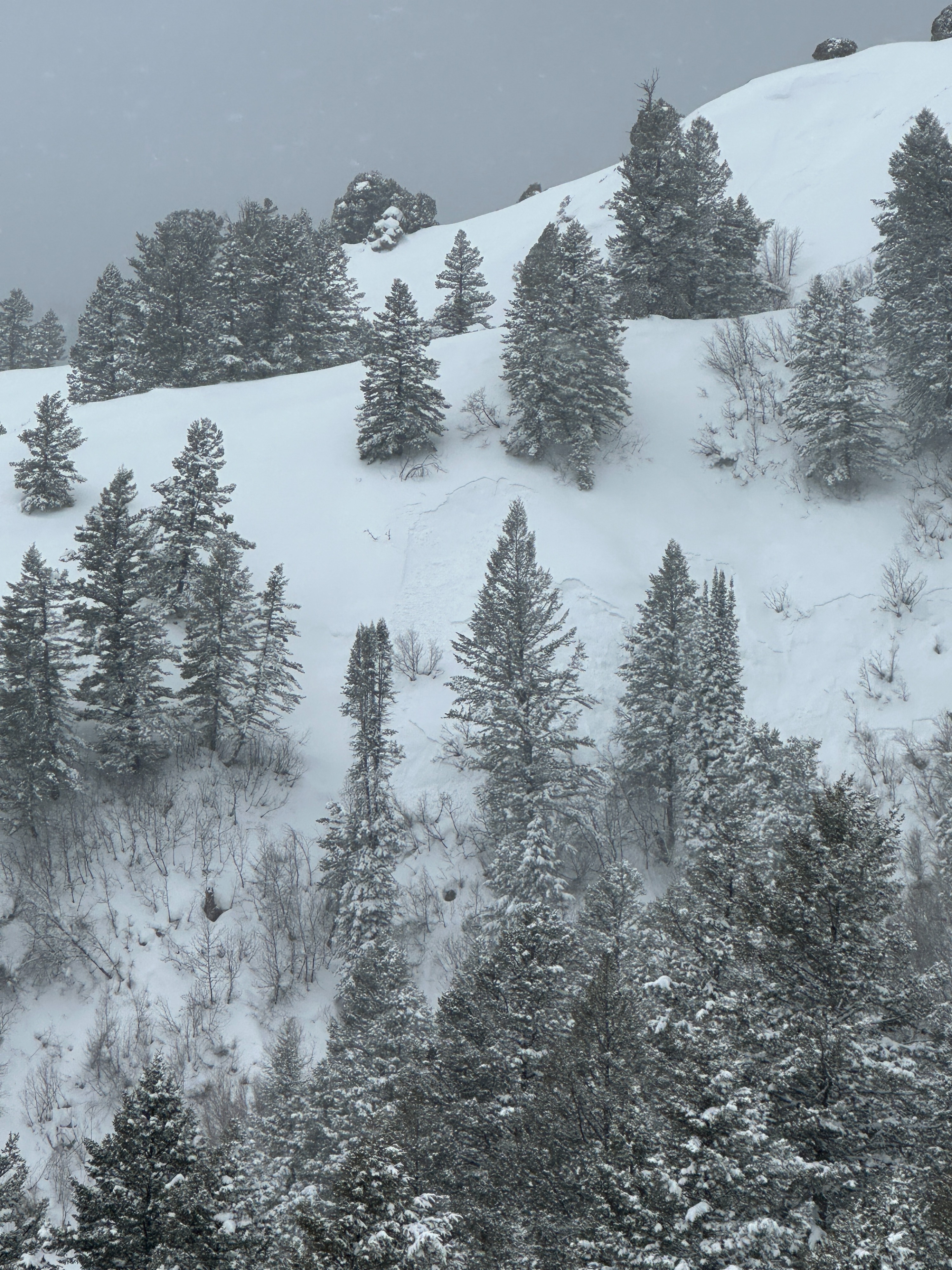
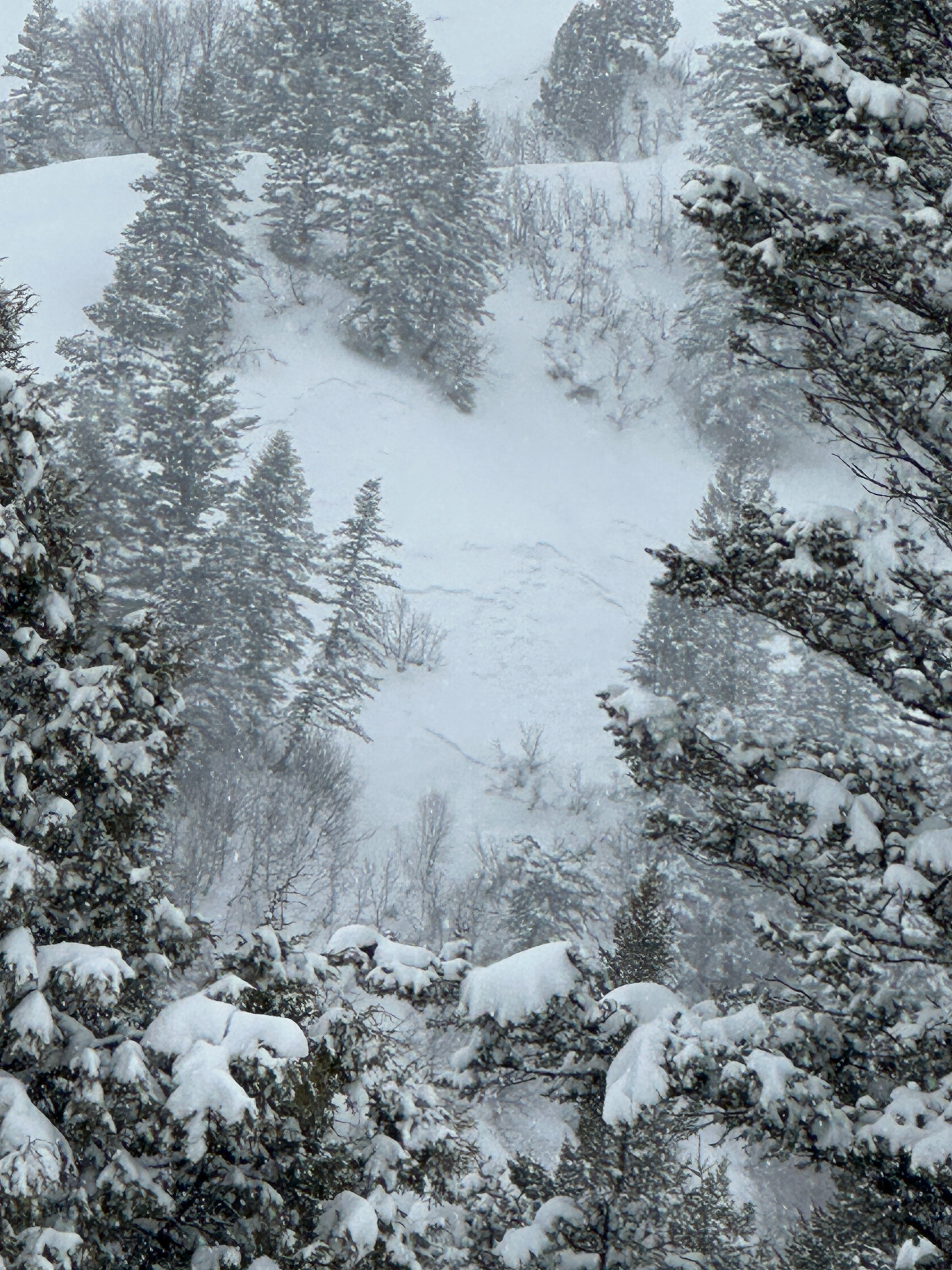
Recent very small (D 0.5) avalanches on low-elevation east-facing terrain in the Snake River Canyon. Cracking was observed in middle elevations on wind-loaded terrain (NE - E - SE). Cracks were isolated to ridgetops and were ~8 - 12" deep.Weather
- Air Temp
- High 20's F above 6500'
- Cloud Cover
- overcast
- Wind Loading
- moderate
- Recent Snowfall
- 15
- Snow Avail For Transport
- moderate amounts
Temperatures were just above freezing at highway elevation - by 6500' temperatures were in the high 20s F. Moderate winds from the W picked up in the middle elevations around 1:00 PM with strong gusts. Occasional pulses of precipitation (graupel) passed over during our time in the field, but we did not notice any significant accumulation.
Snowpack
Dug into the slope on a NE aspect in the middle elevation band (7600') to determine the sensitivity of the new snow/ old snow interface. As expected, the new snow is not bonding well at the interface. We chose a location that had experienced wind-loading and had ~12 inches of new snow on the interface. Our first test was an extended column test that scored an ECTPV (collapse on isolation) at the interface. We followed that up with a propagation saw test which yielded a PSTend 10/100 on the same layer of near-surface facets. I will note that while the entire weak layer propagated, the slab above was not very cohesive (fist hardness) and fractured vertically in multiple locations. I don't think the slab would have been cohesive enough to perform a full ECT without smashing the shovel through the new snow. Nevertheless - these tests demonstrate a sensitive interface. As snow totals increase and fresh slabs become thicker and more cohesive, I would expect touchy, large avalanches in this zone.
Avalanche
Many very small natural avalanches on low-elevation east-facing terrain in the Snake River Canyon. Average crown depth of 3 - 6 inches failing on the new/old interface. All observed avalanches were below 6500' where new snow was moist.