
Quick report
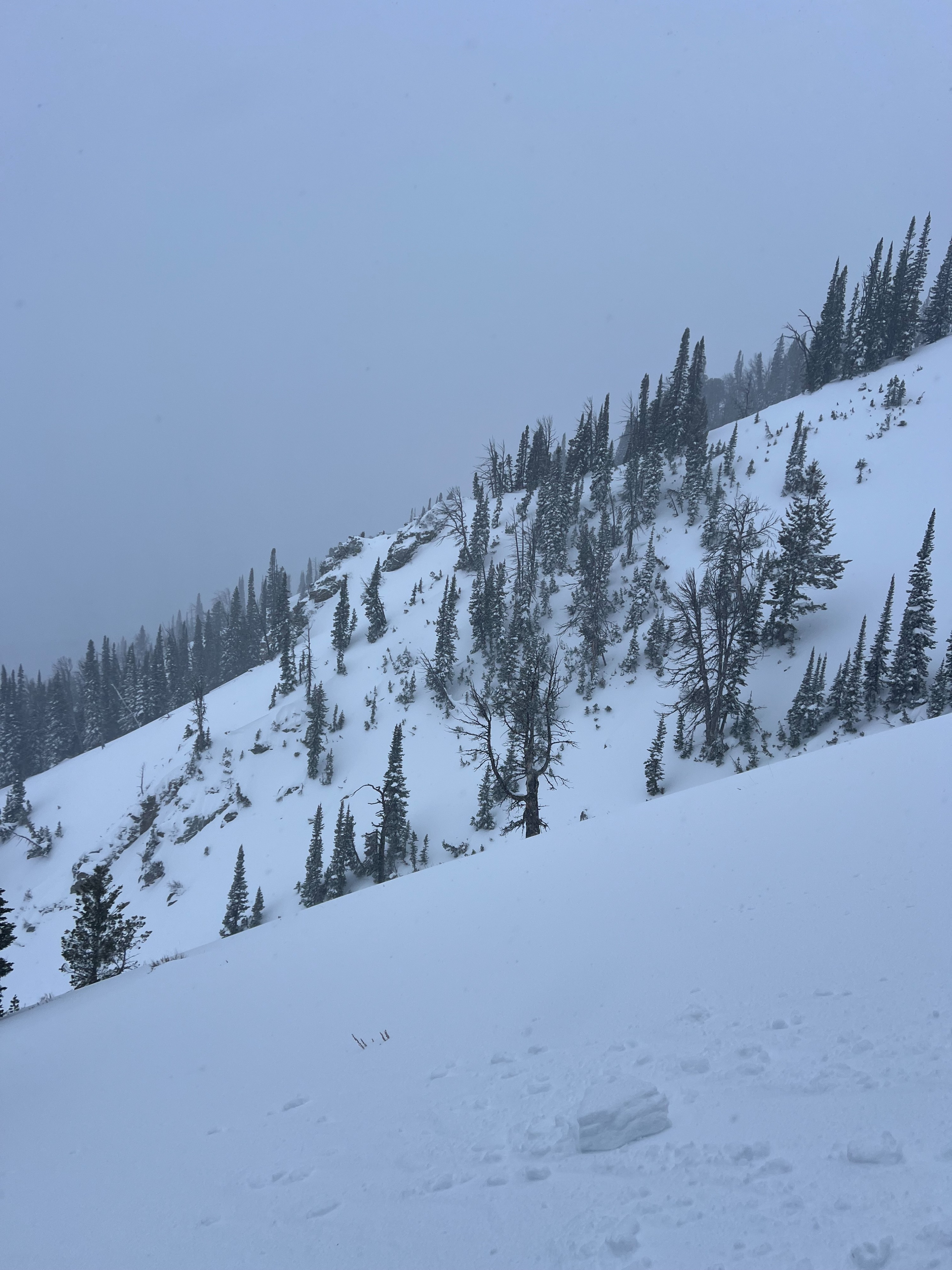
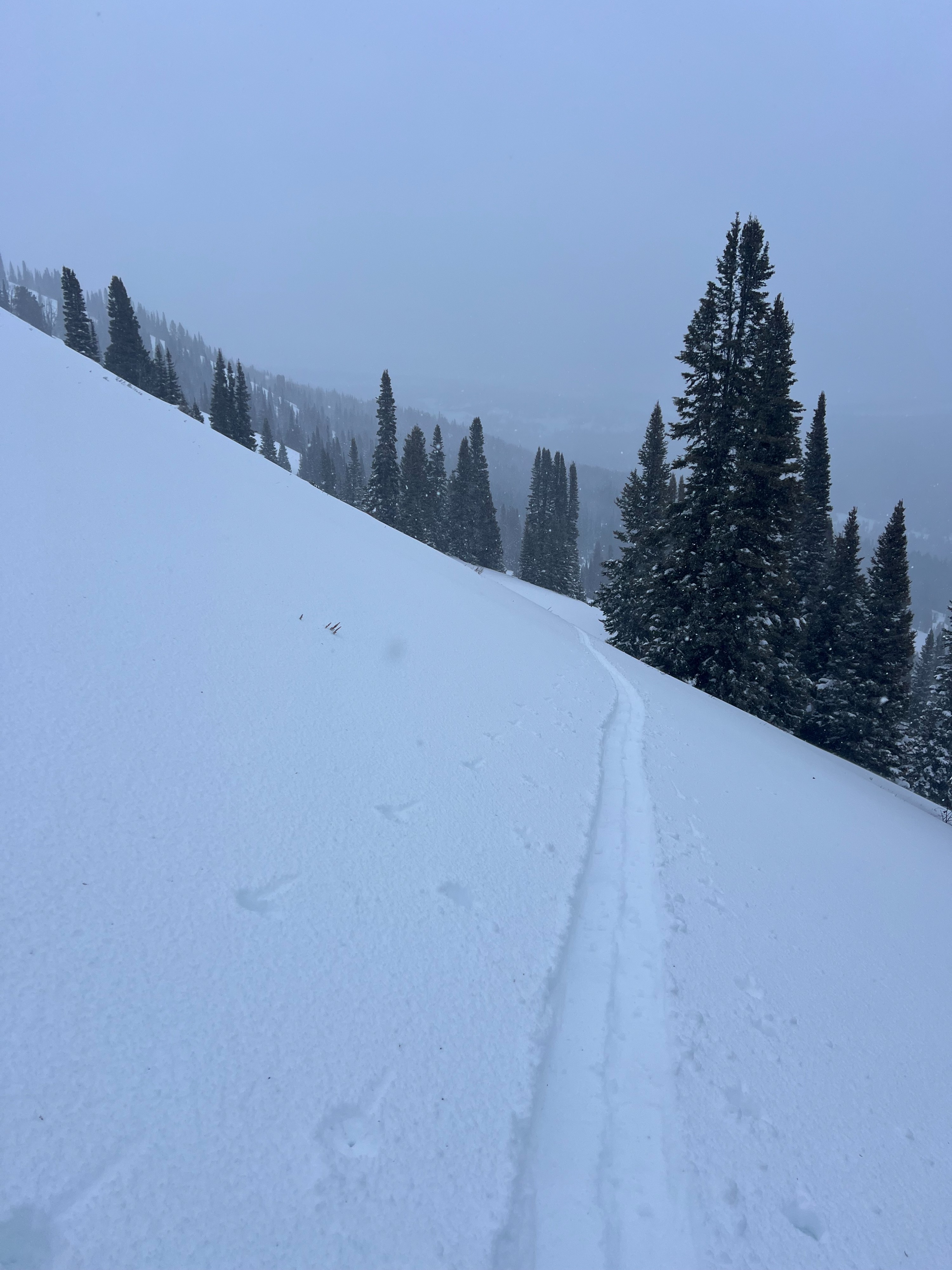
Wet and windy out there, good day for the lighthearted. The rain in the valleys transitioned to snow at the fault (~7000'). Snowfall was moderate (S1) at times. Gusty wind all day that was terrain driven out of the south loading northerly aspects with visible transport. Above the snow level, the snow was supportable and easy to travel. Still low tide however. Warm temperatures over the last 24 hours has allowed the snow to settle and shrink wrap. Despite the strong wind, there was not a ton of snow available for transport due to settlement.
No cracking, collapsing, or recent avalanches.
The warm temperatures will create short term instability, but will likely help our snowpack over the long term. Dense snow and warm temps will improve our persistent slab problem, but time and weather will determine how quickly.
Snowpack
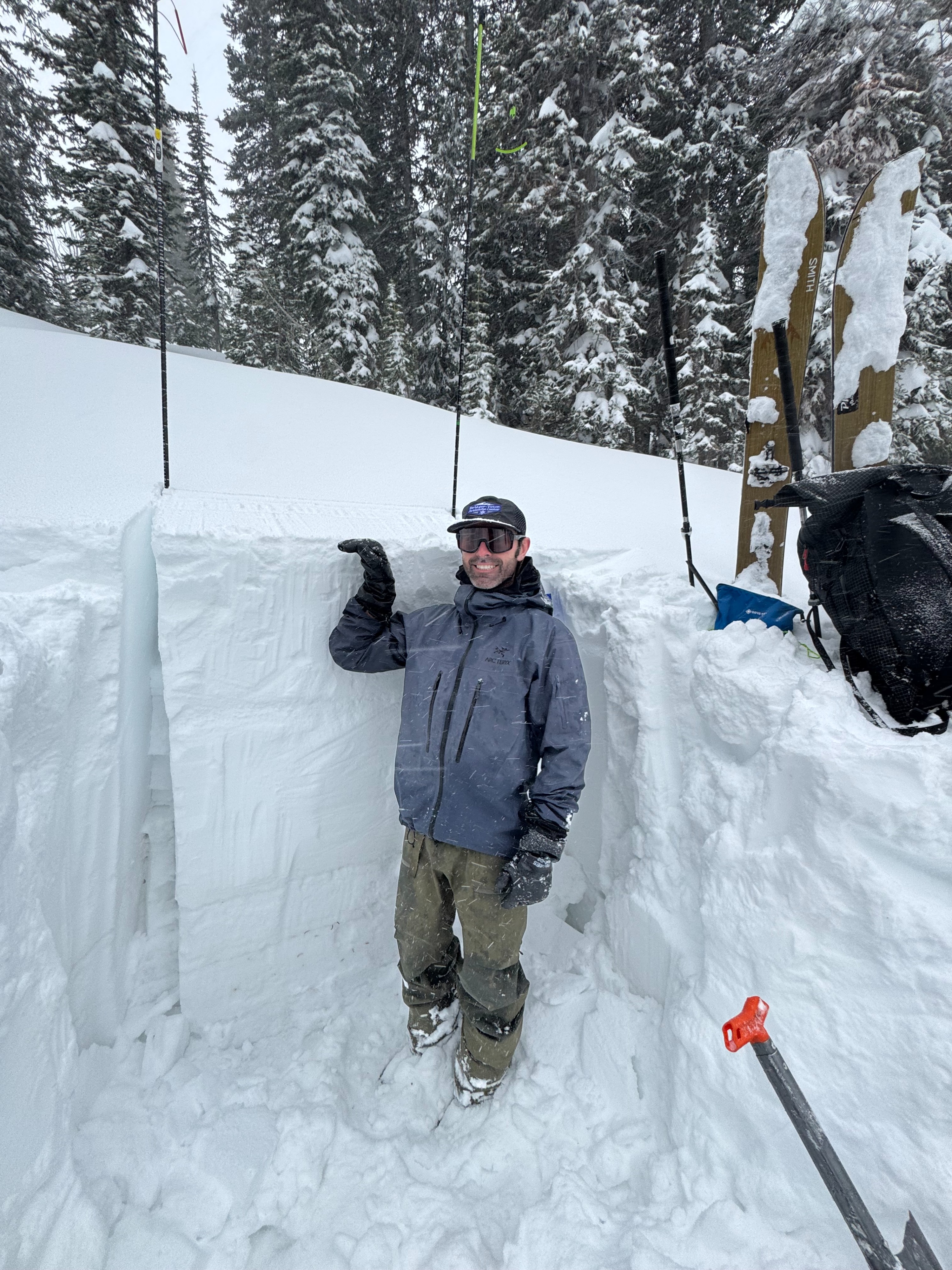
Snow depths changed significantly while gaining elevation. The valleys held around 10" of snow, while upper elevation northerly aspects contained up to 70". We dugs two pits to compare the middle and upper elevations (8,700' ENE aspect and 9,600' N aspect). Both snowpits contained a weak interface buried ~40cm containing near surface facets and graupel. Neither of our pits produced unstable results on this layer.... yet. The slab above lacks cohesion. The November weak layers were present in both pits, and as expected the shallower snowpit produced unstable results (ECTP15 at the very base of the snowpack). The November snow in the deeper pit was buried over a meter (3 feet) making it more difficult to impact.
Snow depths (SE-E-NE aspects):
7,000'-9,000': 40-90cm
9,000'-9,8,00': 90-180cm