
Quick report
- Cracking
- isolated
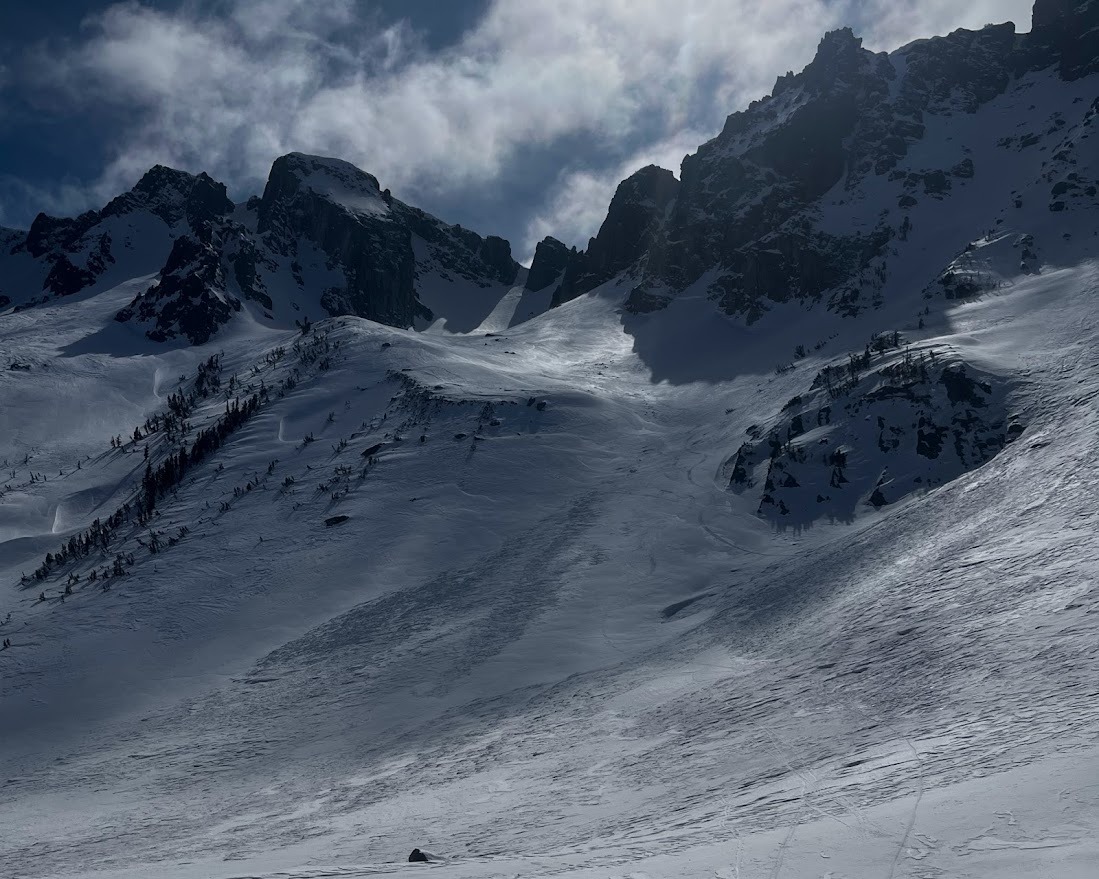
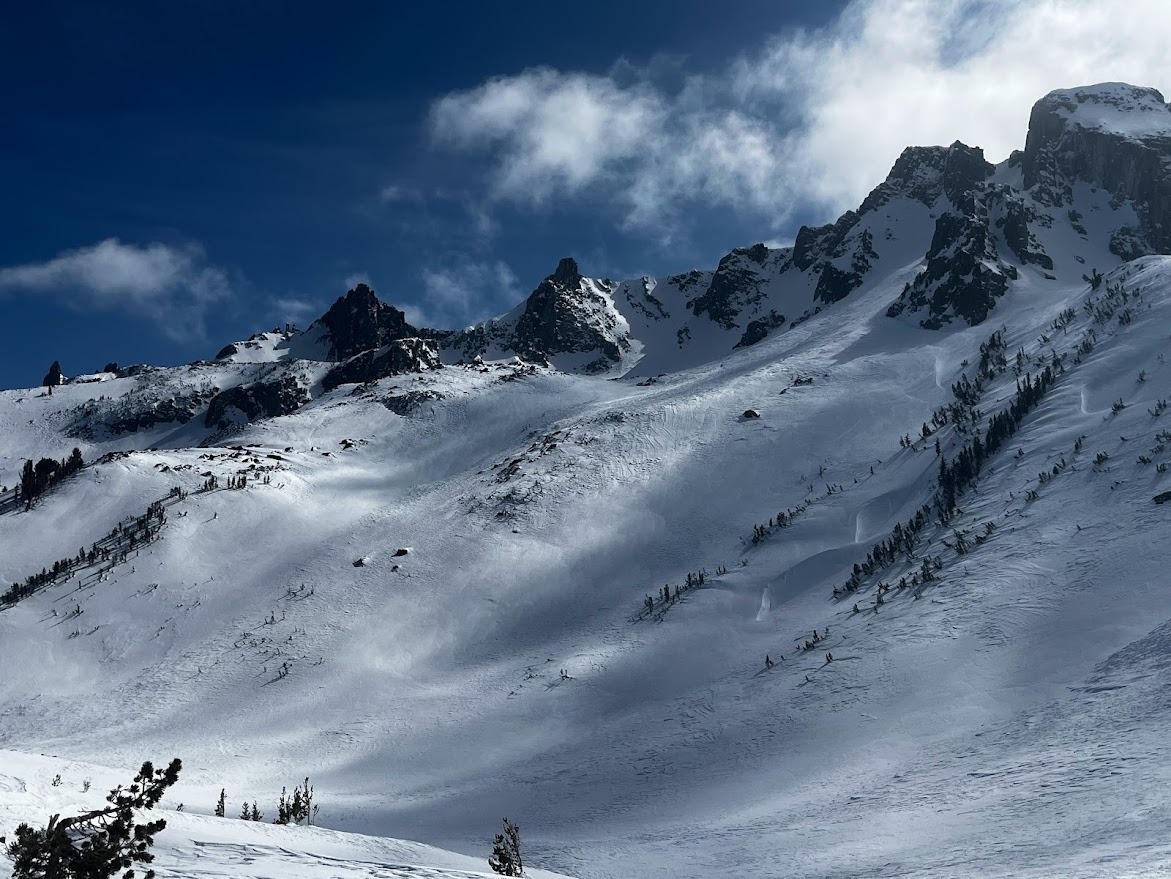
Today's field visit confirmed the main points from today's forecast. The morning assessment of wind slabs lined up with the conditions we experienced in the field in the Mammoth Lakes Basin. In this area, recently formed wind slabs are likely to be small (<D2). Despite ongoing blowing snow natural avalanches are unlikely. Human-triggered avalanches are most likely in areas where hard slabs are layered over soft unconsolidated snow that fell four days ago (3/7/24). By paying attention to variations in the surface snow it is possible to recognize wind slabs in surrounding terrain and choose features without the problem.
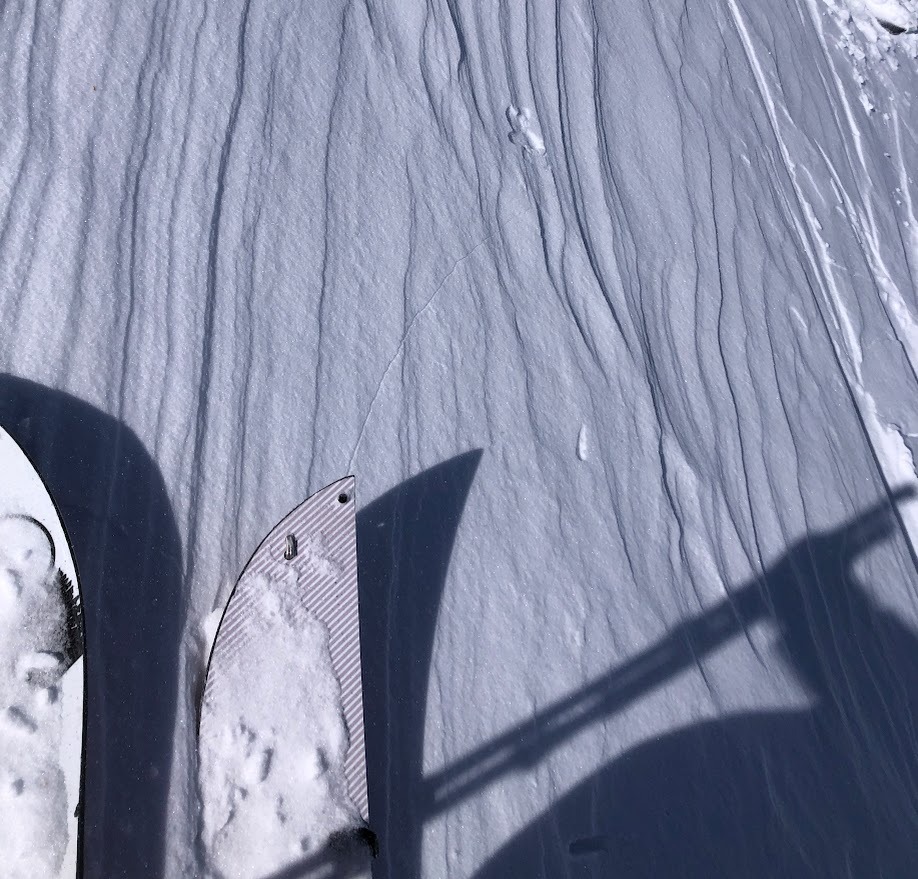
One vey short (3 ft.) shooting crack at 10,500' on a NNW aspect.Weather
- Air Temp
- 28
- Cloud Cover
- few
- Wind Loading
- light
- Recent Snowfall
- 0
- Snow Avail For Transport
- small smounts
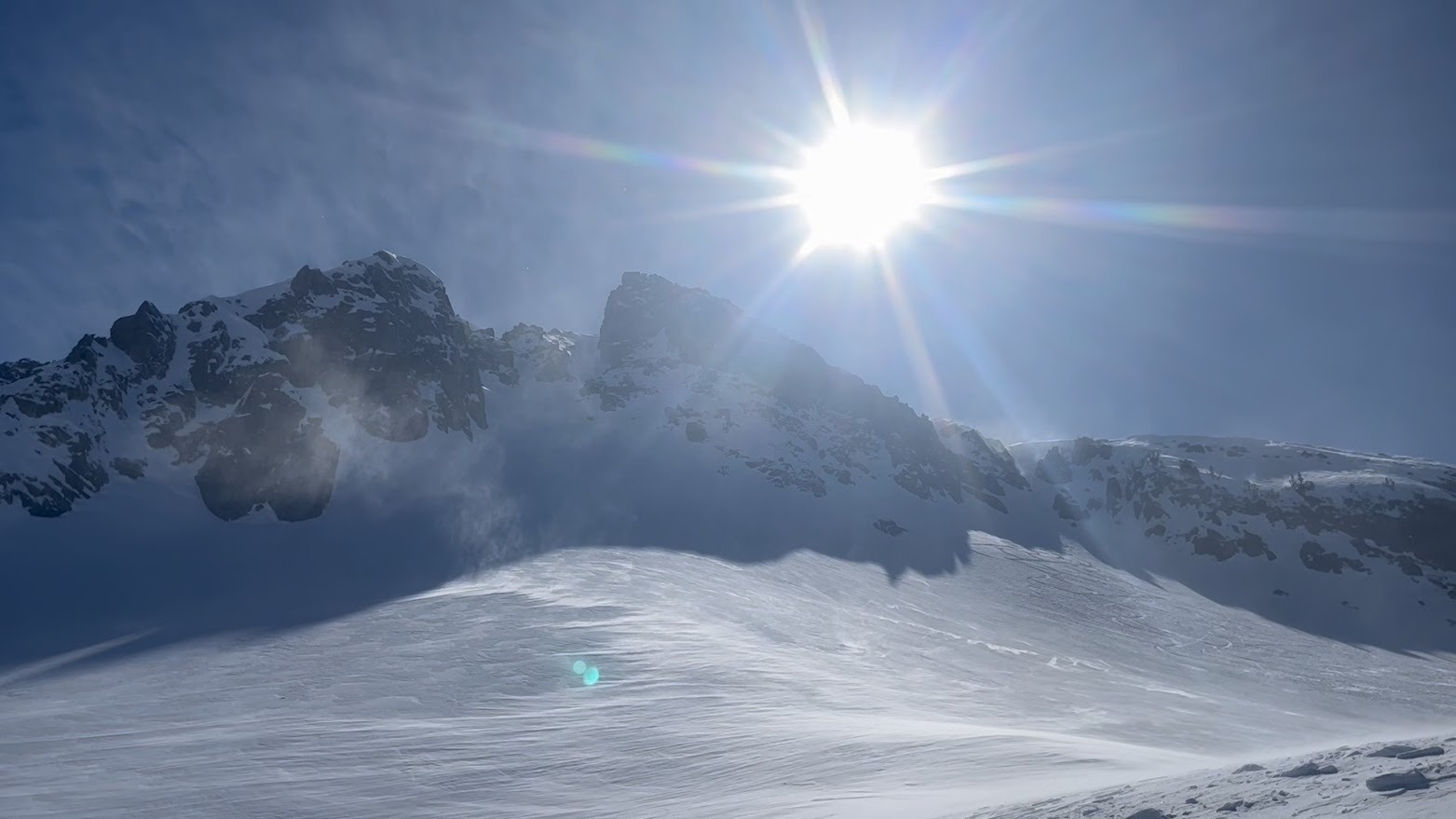
Near and above treeline gusty SW winds were blowing and swirling surface snow downhill within northerly-facing terrain. Winds increased in the late afternoon. Clouds formed over peaks and ridges at 11,000' including one resting on the summit of Mammoth Mountain all day.
Snowpack
BTL: Skis and boots sank in 5 to 20cm depending on aspect and slope angle. On steeper north aspects or in north-facing trees cold dry snow has been preserved. On E and NE and W and NW aspects the snow was becoming sticky and heavy by mid day. By late afternoon melt freeze crusts were re-forming on all except true north.
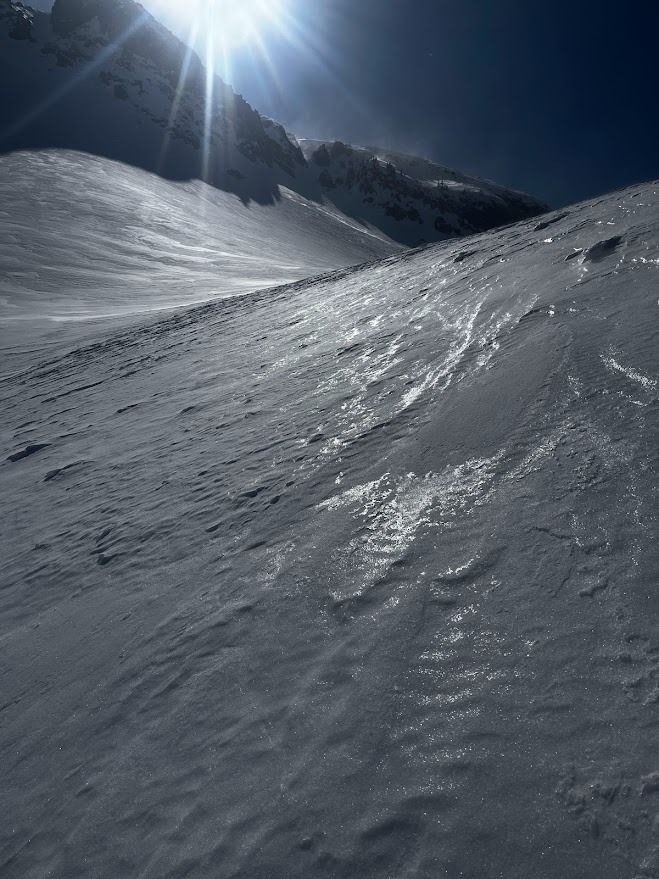
NTL: Skis sank in 5 to 10cm. Pencil-to-knife hard wind crusts and thin wind slabs can be found on wind-exposed features. In isolated areas, these cracked underfoot where they were resting on F hard 1-2mm decomposing and fragmented precip particles (soft snow) from the dusting of snow on 3/7/24. The snow surface shows signs of wind erosion or deposition on all aspects. No results from multiple ski tests on a variety of test slopes. There is no clear pattern of wind loading. Slabs exist frequently behind terrain features that block or redirect winds, but exist on multiple aspects and slope angles. On steep SE slopes a thin sun crust was reforming over wet-sticky surface snow.
ATL: Skis sank in 5-10cm. Boots sank in 25cm. "Sand dune" like wind slabs alternate in patches and elongated drifts with wind-eroded patches of soft small grained near-surface facets and pencil-to-knife hard wind board. A hasty compression test at 10,800' on an N aspect (column isolated down 1m) yielded only broken results.