
Quick report
Our persistent slab is continuing to trend towards stubborn, especially on more solar/windward aspects where warm temperatures are healing (rounding) shallow snow. However, do not be surprised to find strong snow over weak snow capable of producing avalanches, especially on more polar aspects. You are most likely to still encounter this problem in steep terrain on aspects that have been previously wind-loaded and have shallow spots (around rocks, cliff bands) and still harbor weak, angular snow grains (depth hoar) below.
Keep an eye out for wet snow instabilities as we continue with above-freezing temperatures getting towards the weekend. It is worth sharing that a moose broke through the ice on the Little Su earlier in the week--indicating that ice bridges are sagging and weakening with consistent, above-freezing temperatures: cross to east side of the forecast area at your own risk.
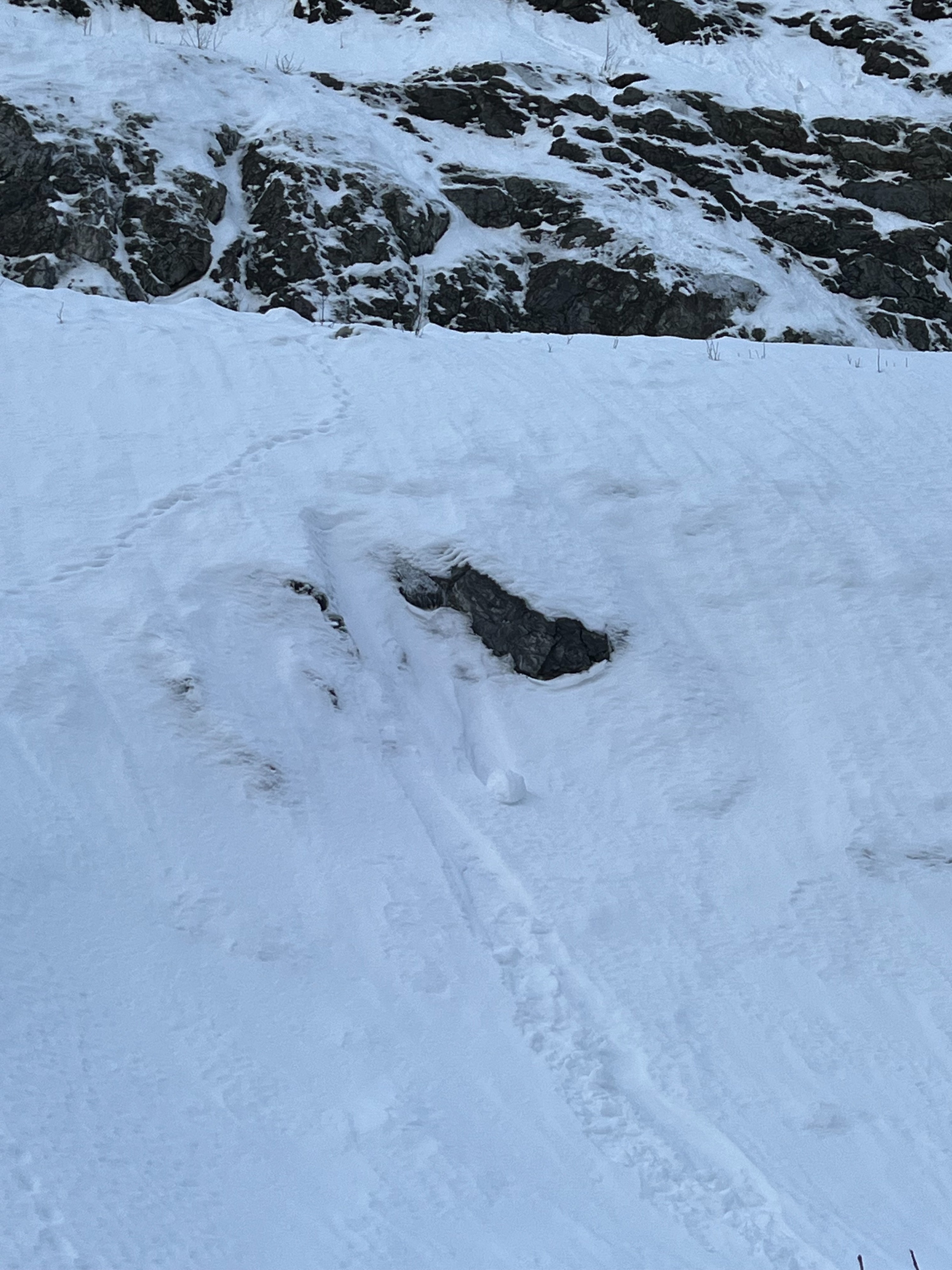
No new avalanches observed today. There were clear views of a few avalanches from Sunday or Monday in the back of the Valley of Sin, Skyscraper's S. face and the Saturday skier triggered slide on 4068. Snow surfaces were showing signs of warming, but I did not see or experience any sluffing, roller balls or pinwheels (tell tale signs of upper snowpack warming).Weather
- Air Temp
- 40
- Cloud Cover
- scattered
- Wind Loading
- none
- Rain Elevation
- N/O
- Recent Snowfall
- 0
- Snow Avail For Transport
- small smounts
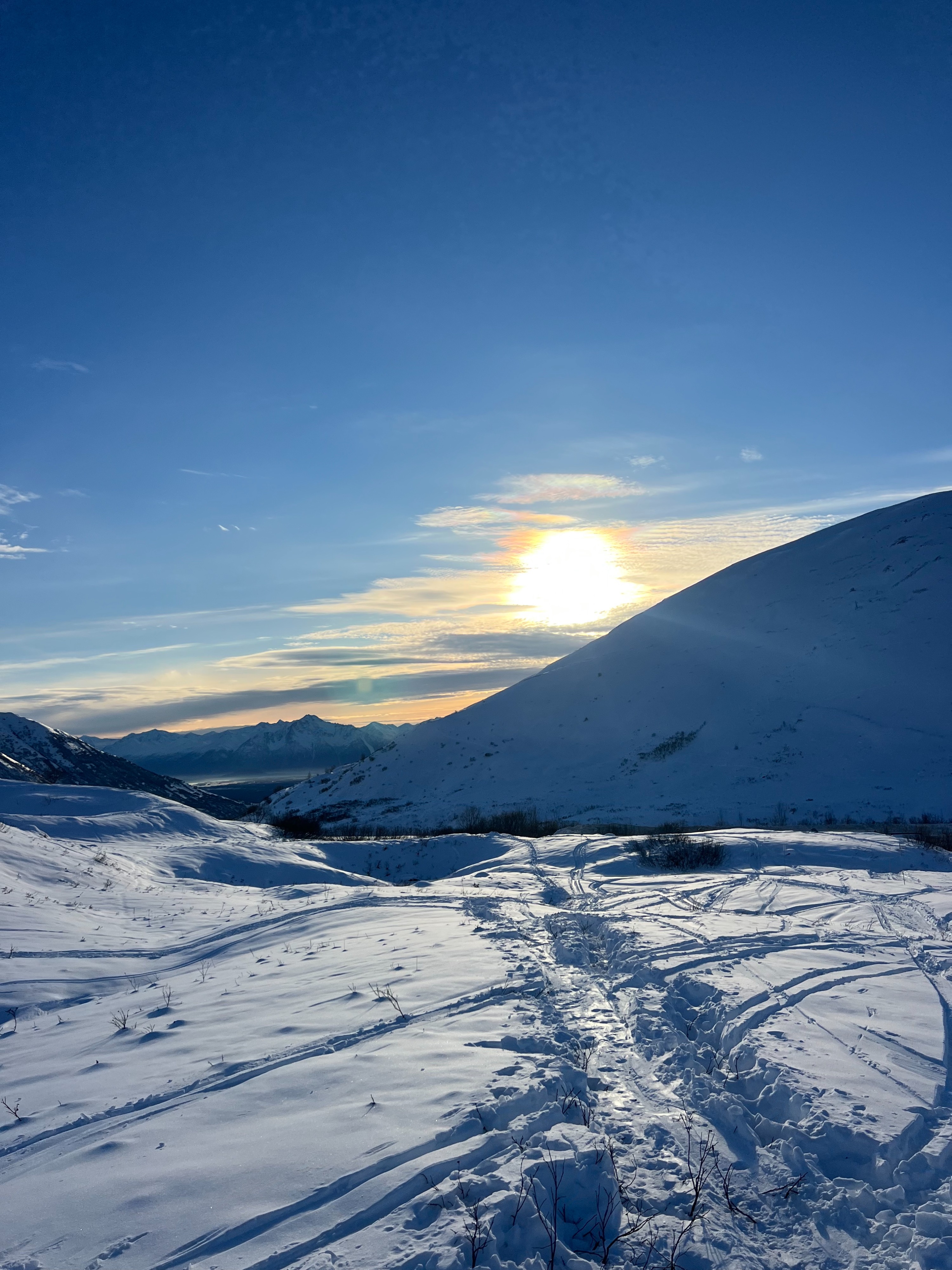
Today was the fourth day after three consecutive above-freezing days at mid and upper elevations in Hatcher Pass. Calm to light easterly breeze today. Few clouds broke to scattered skies with the predominant cloud bank to the south, which blocked the sun.
Snowpack
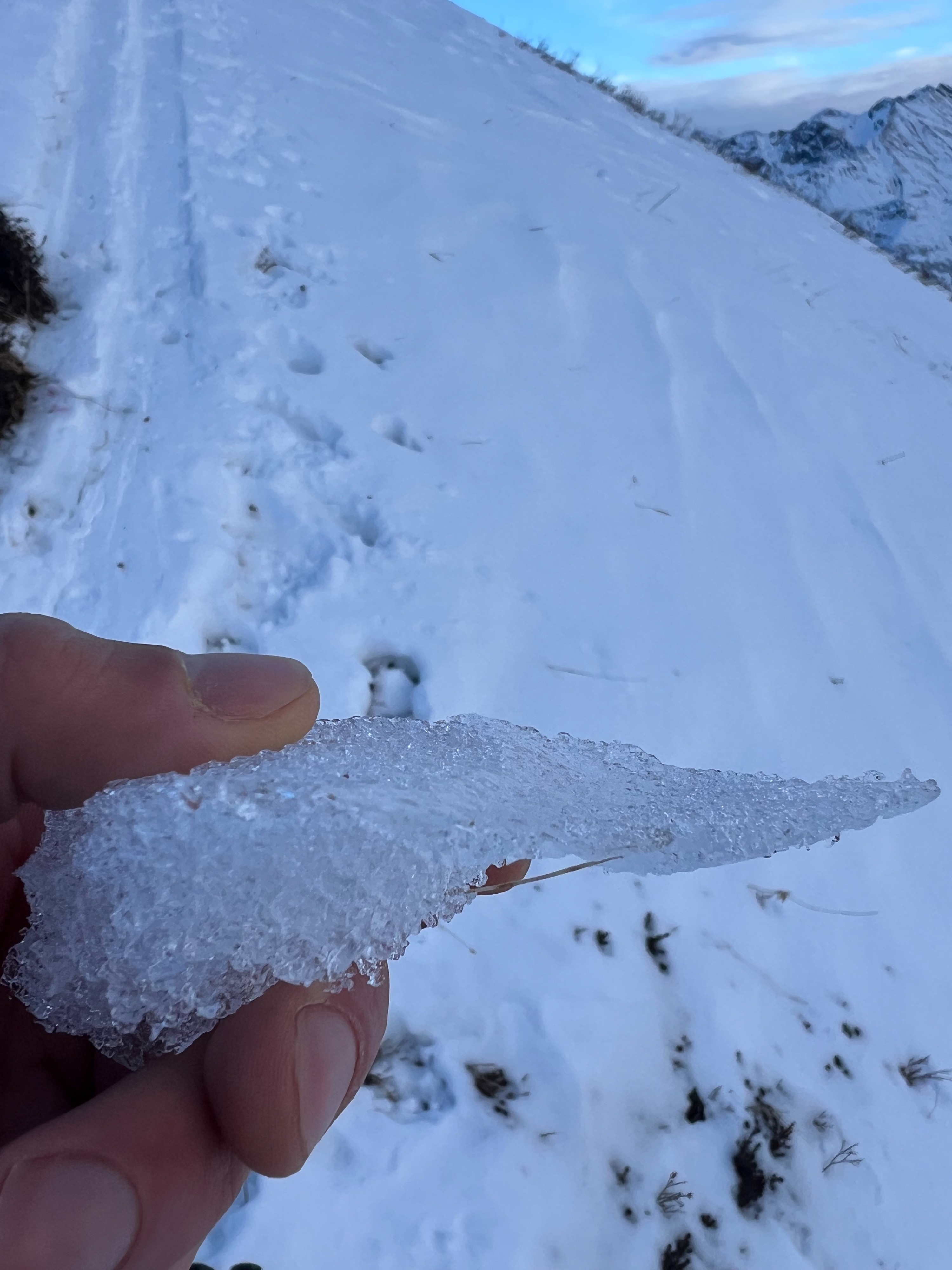
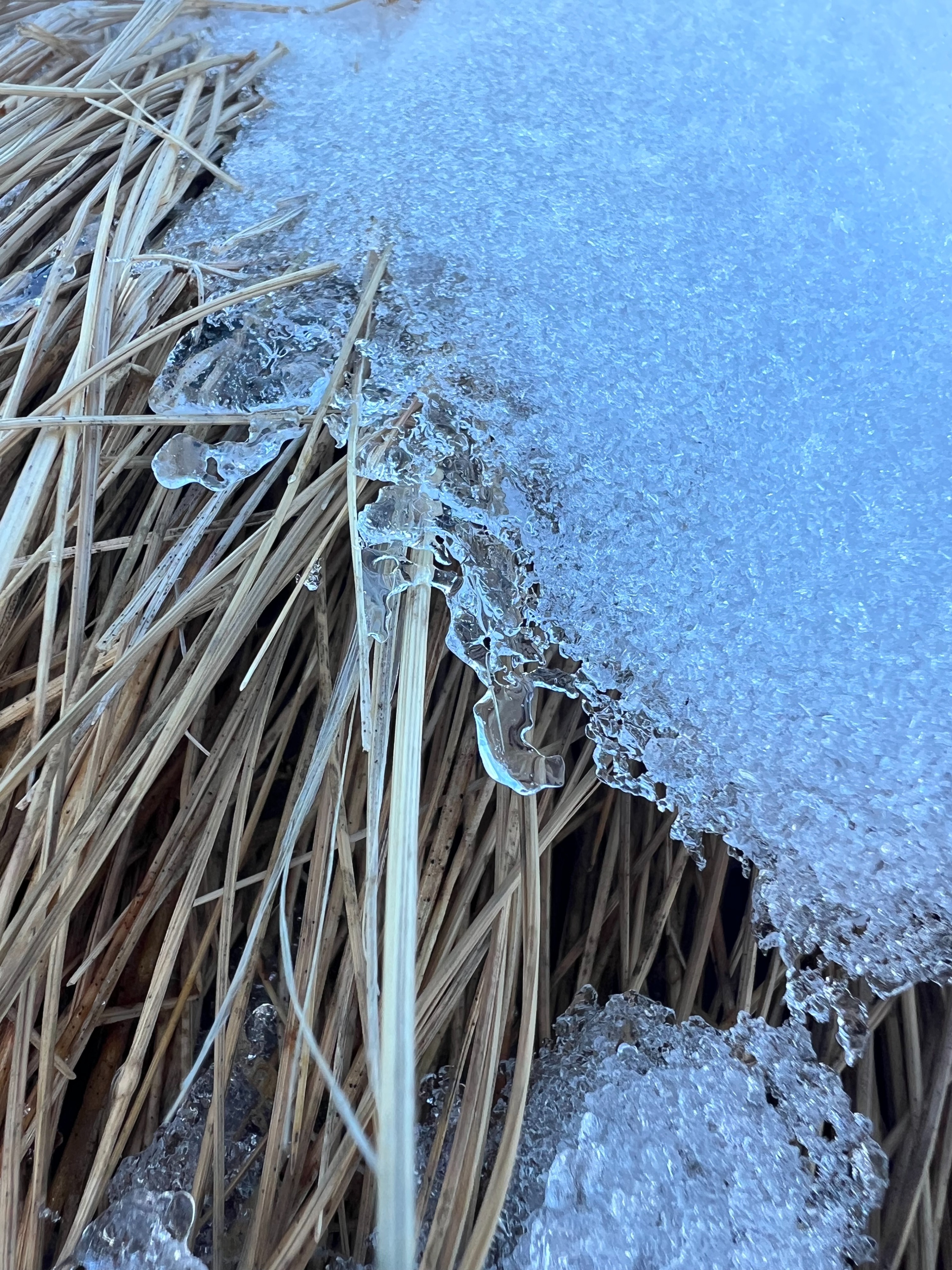
Hasty hand pits on the more shallow southerly aspect of Marmot showed a largely healing snowpack gaining strength and cohesion. The depth hoar at the bottom was showing signs of rounding. The midpack is strong and cohesive and the upper snowpack is beginning to show signs of moisture, although was neither gloppy nor wet (see photos)--I could not make a snowball and squeeze water out of it. Due to consistent, above-freezing temperatures, the moistening snow surface has yet to form a cohesive melt-freeze crust, and it skied thick and heavy.