
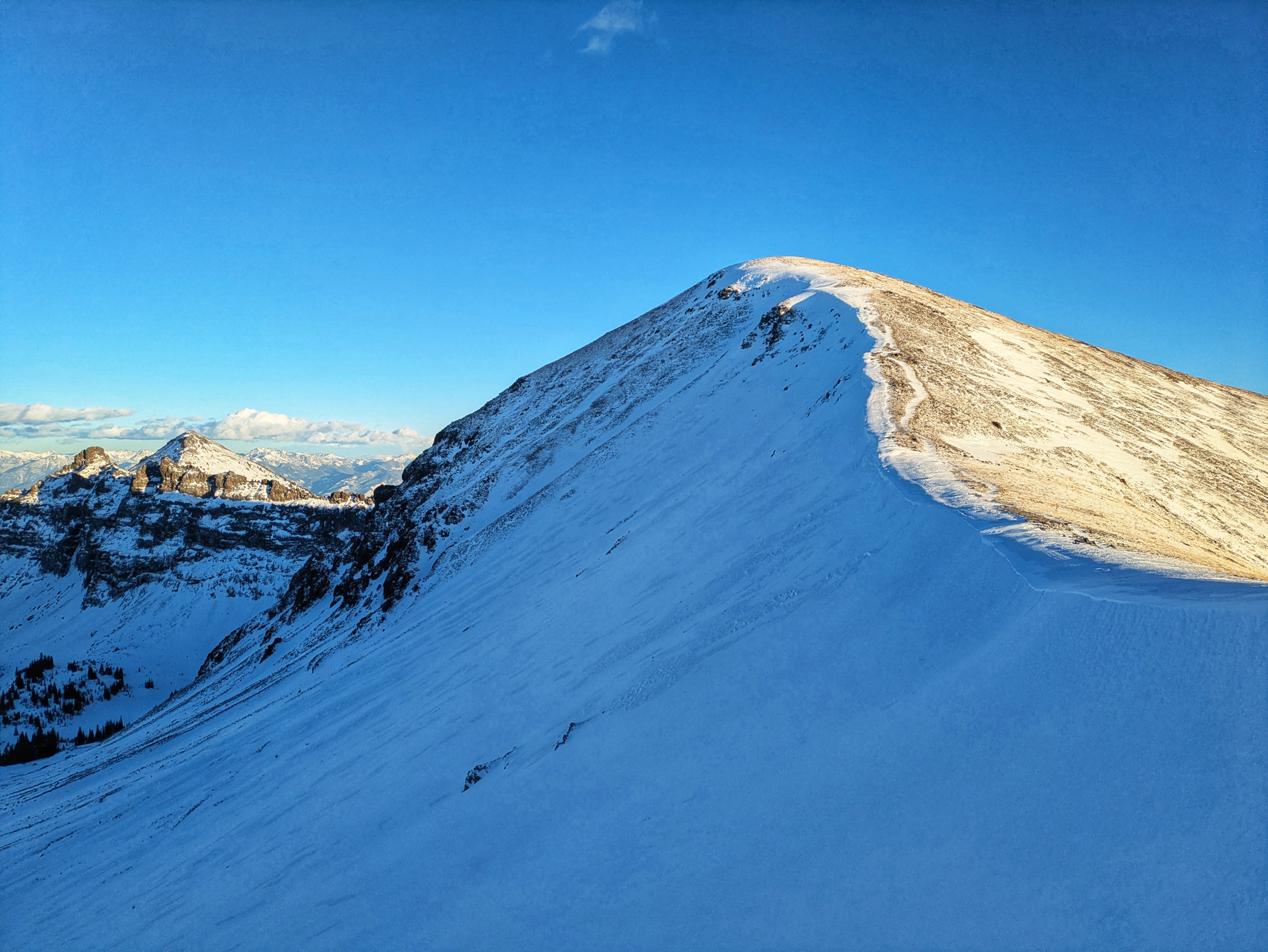
Quick report
- Cracking
- isolated
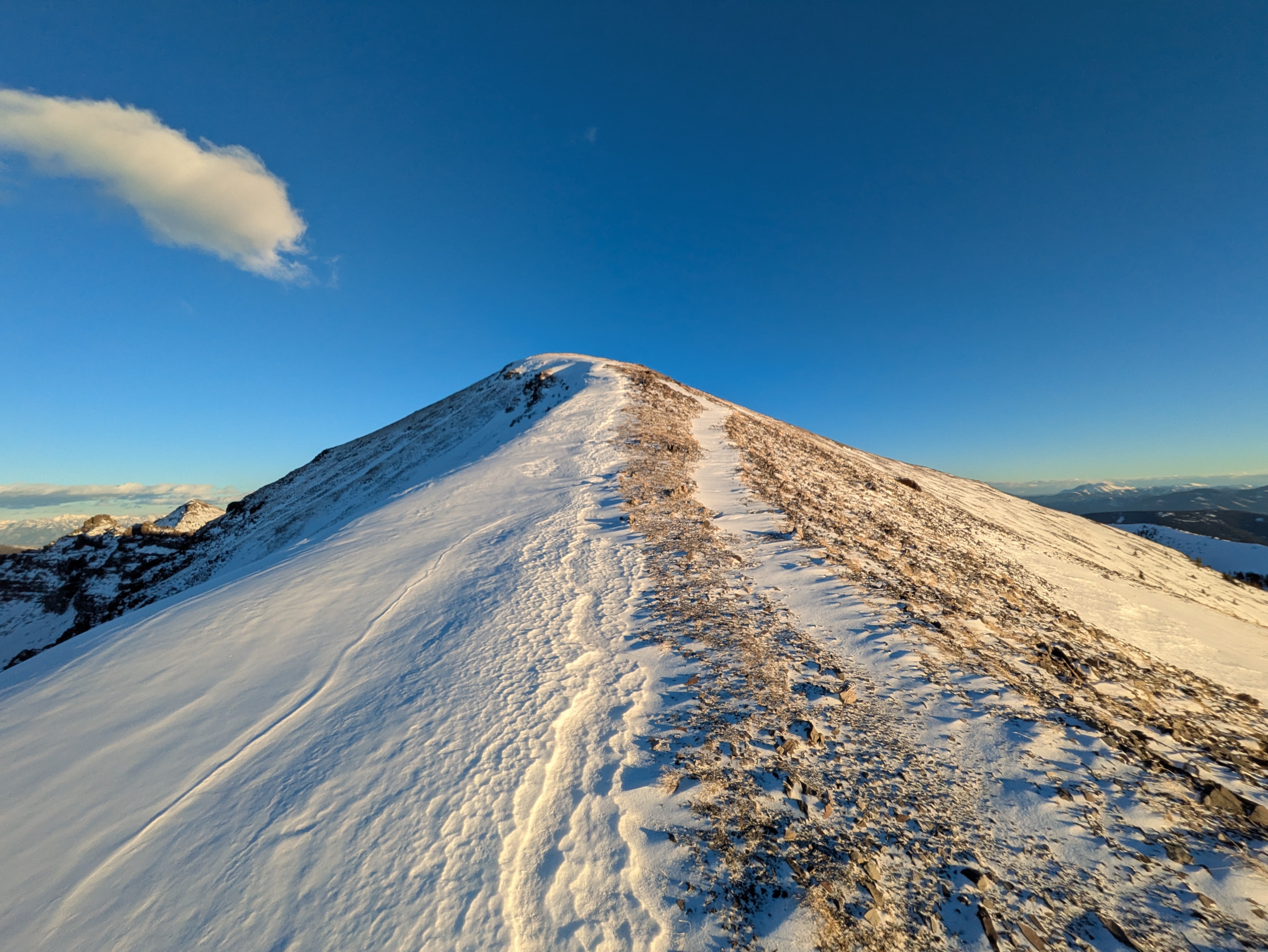
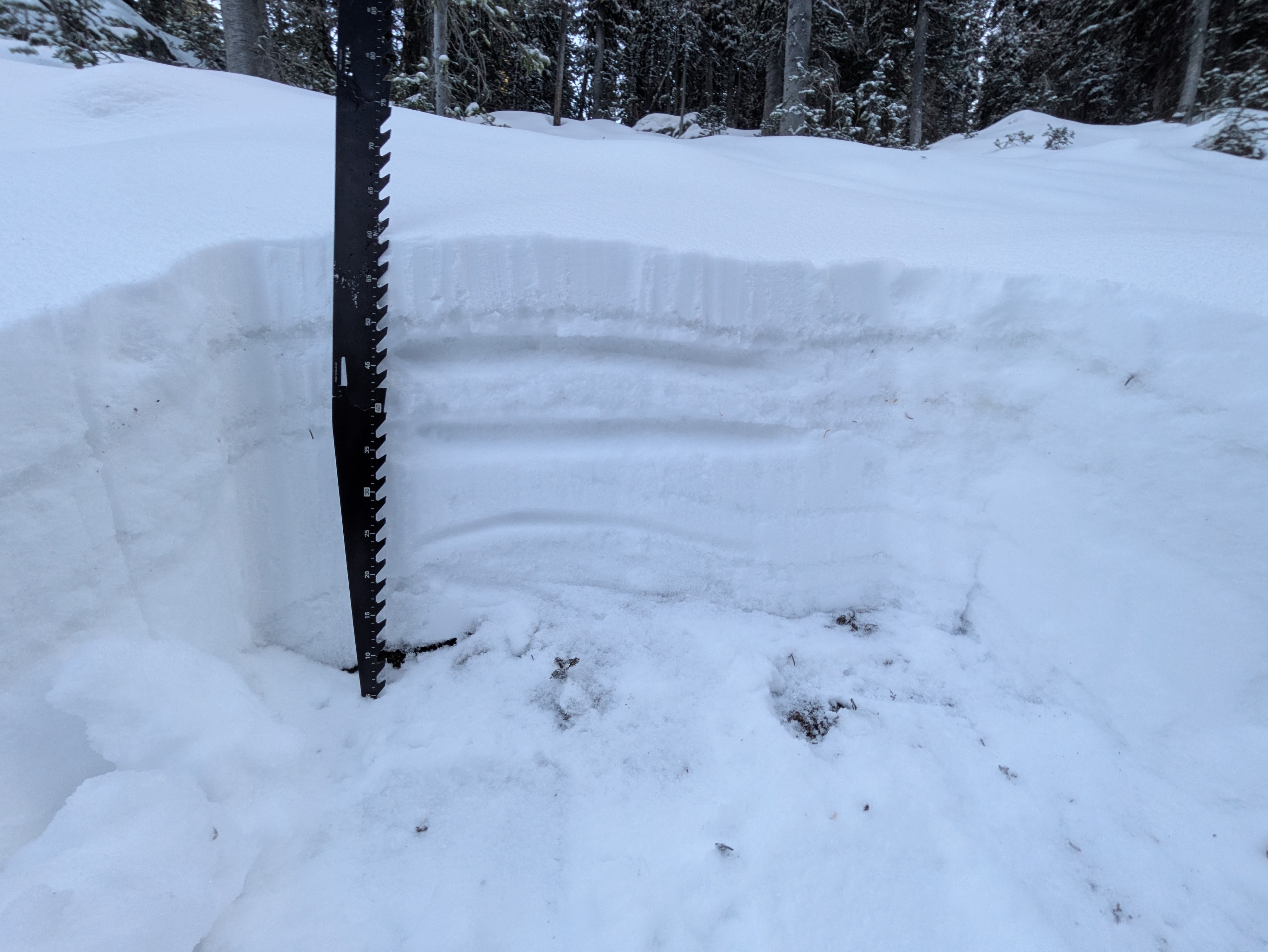
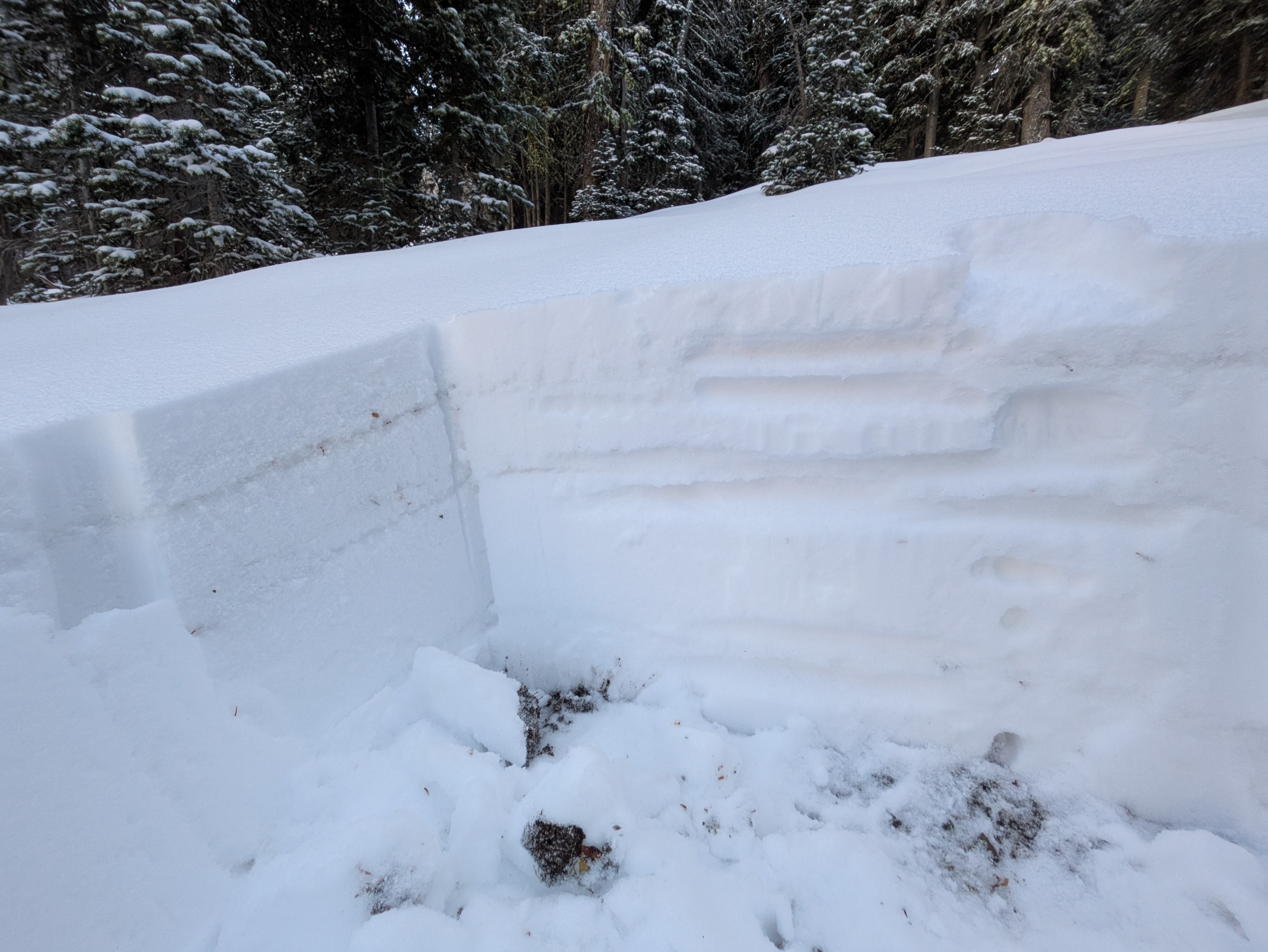
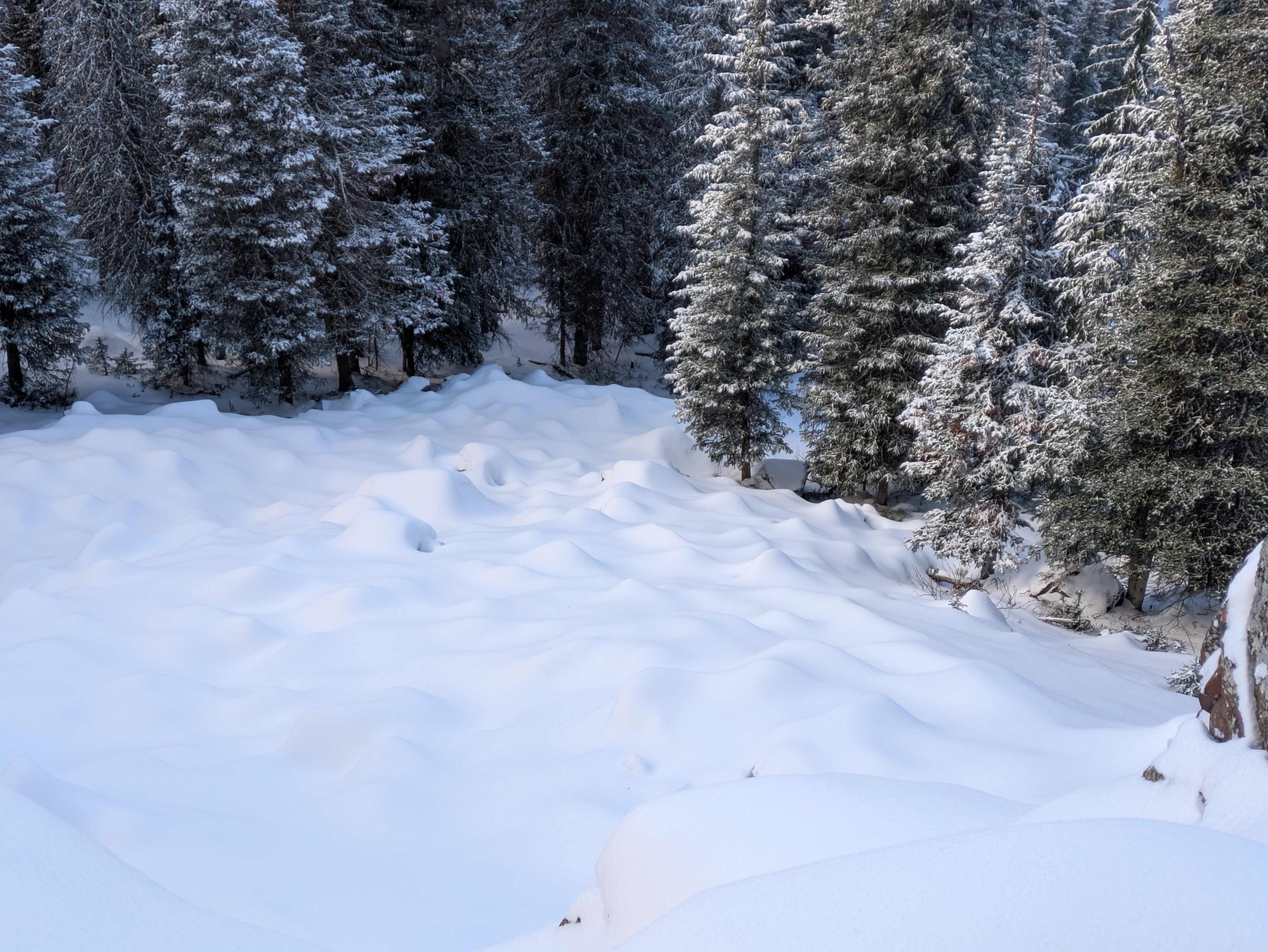
This was a late afternoon bop to take a break from hunting. Storm had finished up by the time I started. ~1" of wet glop at reservoir level, increasing to 3-4" of dry snow by 8,500'. Prominent layer of graupel at base of new snow on top of stiff crust. Pre-existing snow coverage was dramatically elevation-dependent. Between roughly 7,800' and 8,400', snow depth increased from just a few spotty, crusty inches, to a fairly even 2-2+ feet. This snow was well-draped over the landscape and had a few prominent crusts derived from warm temps and rain. The crusts greatly increased the travelability and were doing a very nice job keeping skis above rocks and stumps buried below (photo 4). I dug quick-ish pits at 8,400' (N aspect), 8,700' (N aspect) and 9,200' (NE aspect). In all pits, the snow depth was around 2-2+ feet. -In the lowest pit (8,400', photo 2 below) there was a 2-inch thick melt-freeze crust below the new snow, and another similar crust 8-10 inches below the surface. Some faceting was occurring between these crusts, particularly immediately under the upper crust. This snow was all dry. There was minor faceting underneath the second crust and the snow was dry here as well, but moisture content increased as you moved toward the ground (moist at ground). ECTs produced ECTX scores -By the middle pit (8,700', photo 3 below), just 300' higher, these crusts had thinned to less than an inch thick, and the faceting was more pronounced. It was quite impressive how quickly the snow changed with just a little elevation gain. I hypothesized that this was due to high, fluctuating rain lines during the fall storms. Again, the worst faceting was occurring between the two crusts, particularly under the upper crust. Snow at ground was moist and attached to ground. ECTs produced ECTN scores with moderate to hard force, breaking under the crusts. -At the upper pit (9,200'), the crusts were still there, but barely perceptible. The crusts themselves seemed to be faceting away, and the majority of the snow on the ground here appeared to be gradually faceting. A third crust+facet combo was evident deeper in the snowpack. There was still a bit of moisture in the snow at the ground, but everything else was bone dry. ECTs produced very subtle ECTNs with light to moderate force on the upper crusts, and ECTNs with hard force at the lower crust. New snow + wind had built small, thin, isolated wind drifts that generally appeared to be well-bonded. The wind was really honking, not great for building slabs, just doing a lot of transport here and there and providing a free dermabrasion. It was hard to imagine triggering a slide of any size involving the new snow, but there were a few pockets around that might have briefly knocked you off your feet if they released on a steep slope. I kicked on these along the ridgeline and found them to be stubborn to unreactive (just a little very minor cracking), and up to 8-10" thick at most. I observed a single small pocket of older wind slab that had released naturally (presumably) at ~10,000' on a NE aspect. Hard to time this activity with confidence, but it didn't involve the new snow. In my travels today, I was most concerned about finding a hard slab sitting on some of the faceted snow deeper in the snowpack in windy, upper elevation terrain. I would not have felt great encountering this combo on a steep slope. If the snowpack I encountered today had a slab with another inch or two of SWE on top of it, I would have traveled much more conservatively. I'm not a fan of buried crusts in early-season snowpacks...they can be great gradient concentrators. The recent heat may have helped the middle elevation snowpacks a bit, but I'm unconvinced it is helping much up high. Hard to say where we go from here, will be interesting to watch. Sorry for the book, and thank you for all of your work!
Avalanche
Small pocket of older wind slab released near/at ridgeline (NE aspect at ~10,000', photo 5 below).