

Quick report
No collapsing or signs of instability observed for the first time since the Jan 31 storm, but we stayed to low angle terrain. While this slab of two week old snow is quite stout and stability is increasing, the interface with the buried surface hoar and facets below it (around half a meter down) is still weak and failing in compression tests. If this slab were triggered it would likely be of high consequence, so conservative route choices that avoid steeper or exposed terrain are still advised.
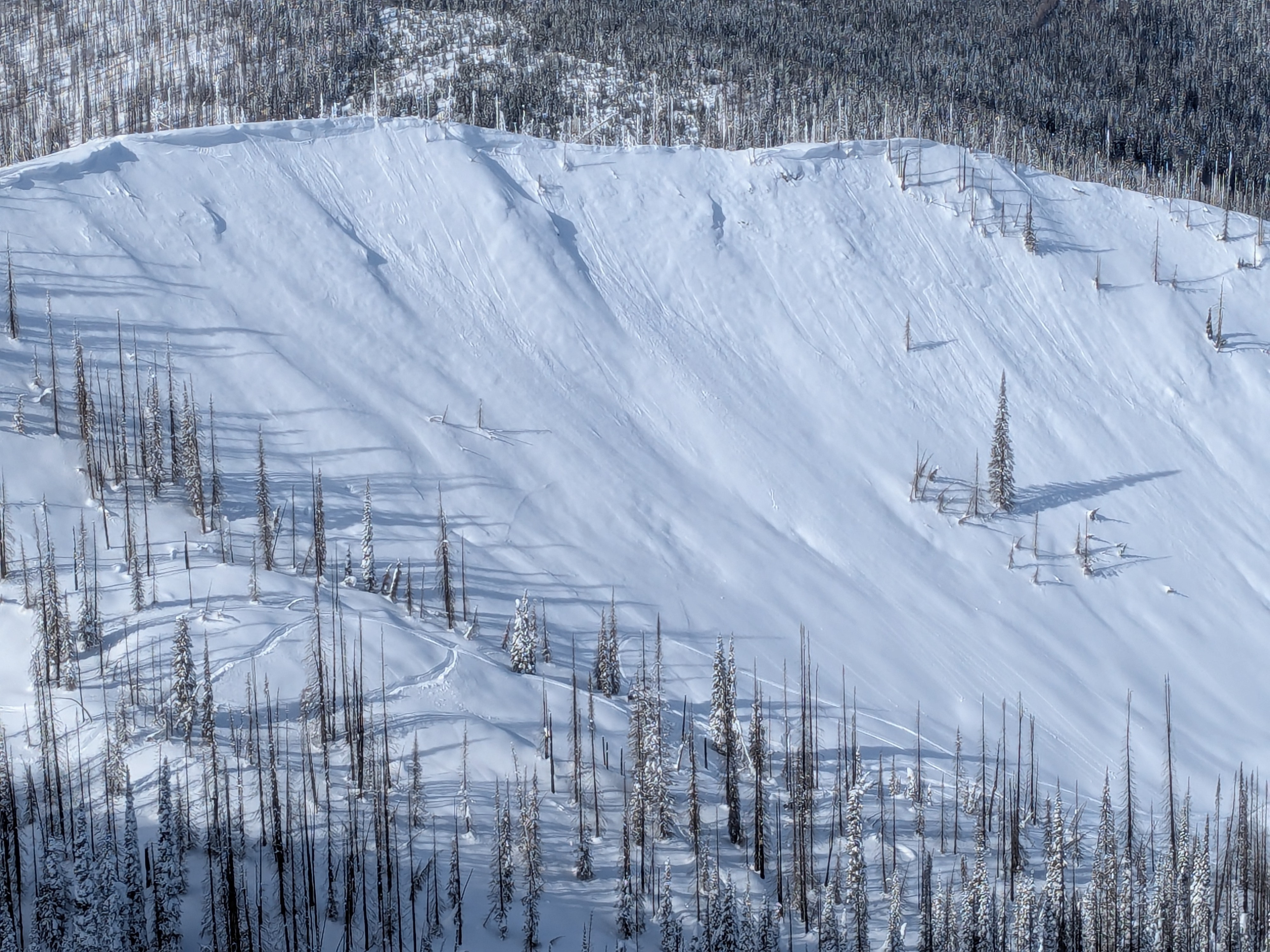
Conditions are stabilizing - the first day since the Jan 31 storm cycle began that there has not been audible collapsing. No signs of recent natural avalanches.Weather
- Air Temp
- 25
- Cloud Cover
- few
- Wind Loading
- previous
- Recent Snowfall
- 0
- Snow Avail For Transport
- small smounts
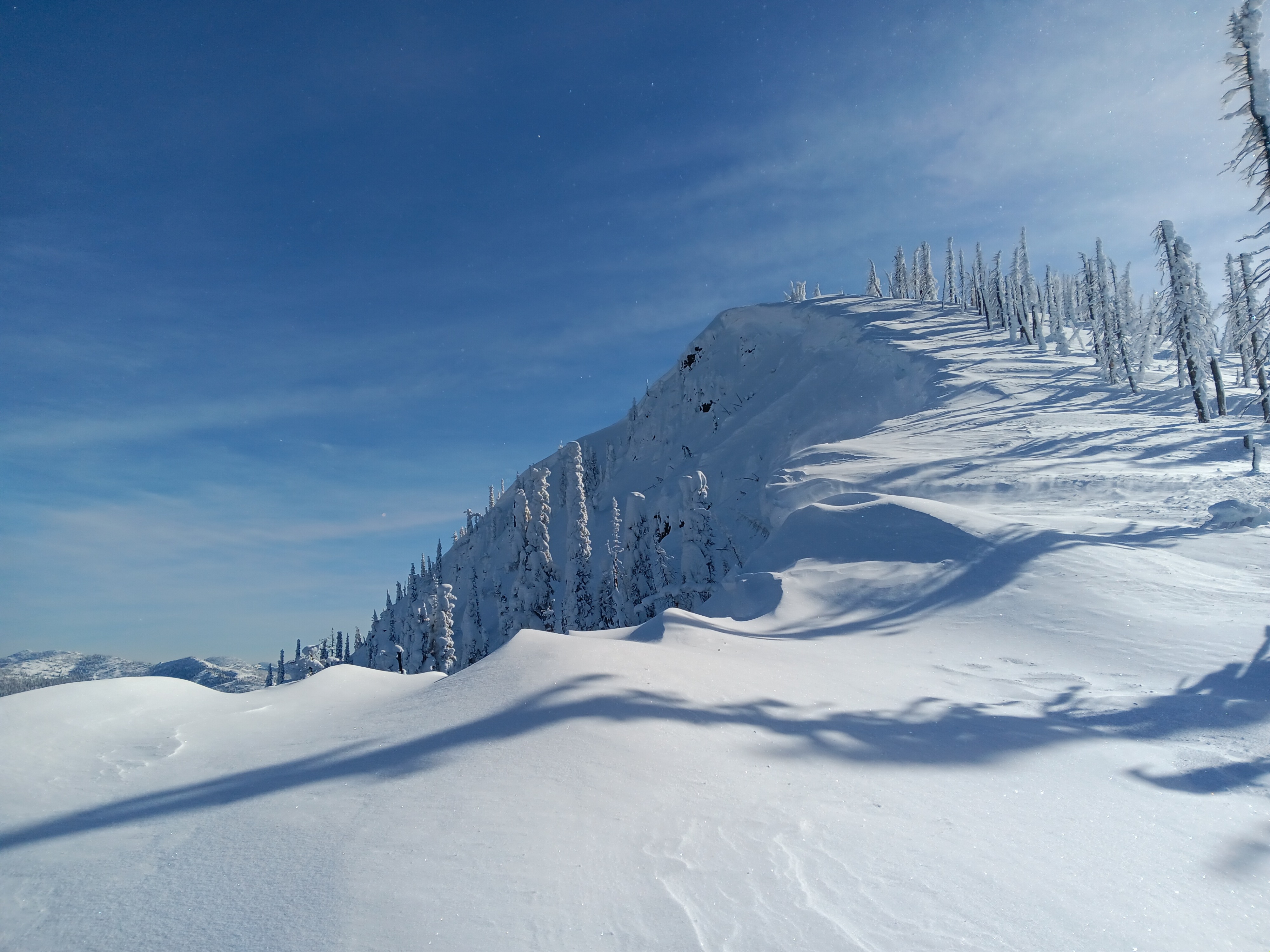
Sunny and clear, with good visibility. Southwesterly winds, especially noticeable at higher elevations.
Snowpack
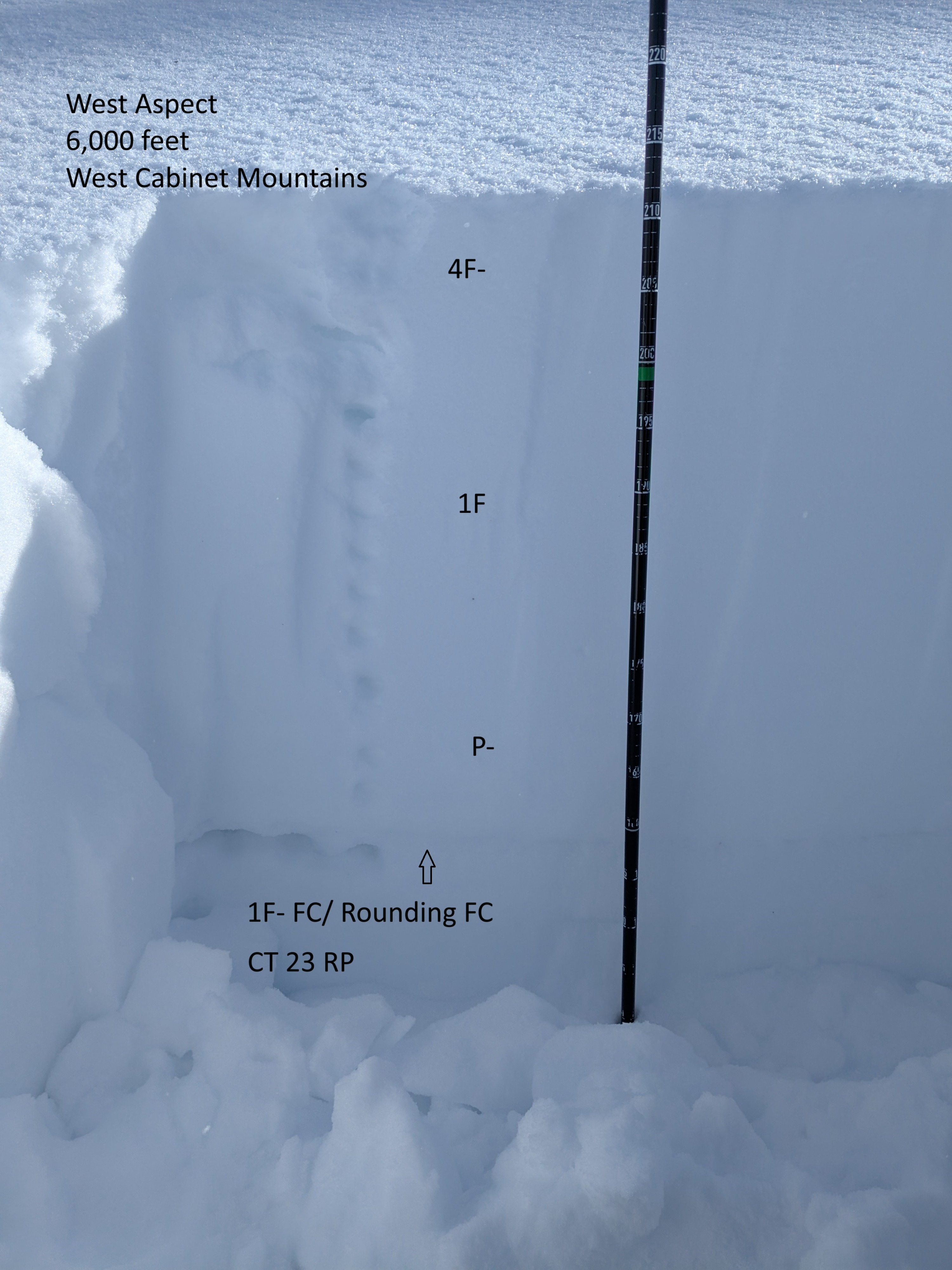
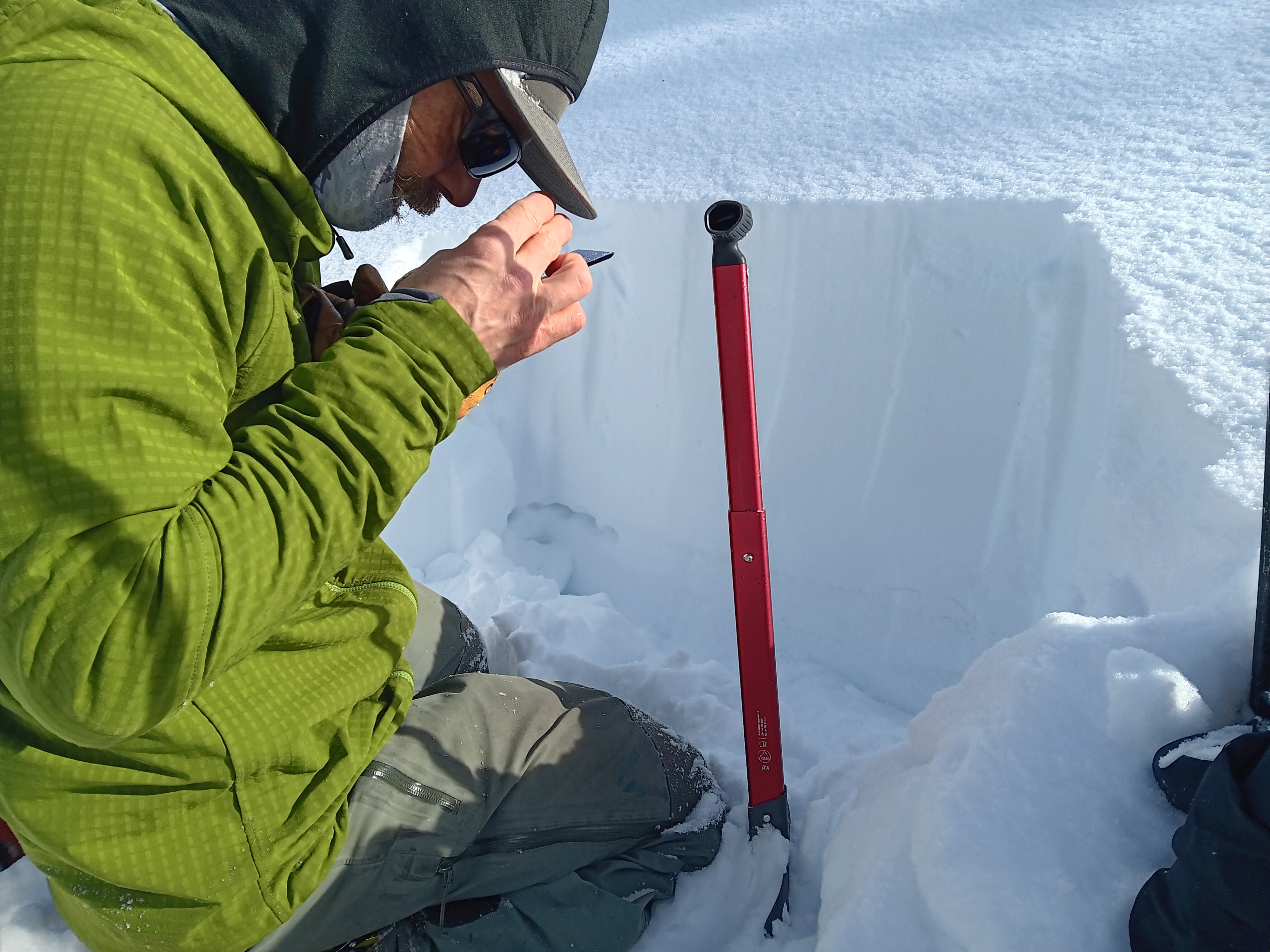
West-facing pit @6000': 212cm depth, of which 56 cm is from the most recent (starting Jan 31) storm cycle. Surface hoar 4-5mm in size, with the top 10cm below that consisting of rounding facets and decomposing precip. This slab of snow increases rapidly in density (4F at the top to P- at the bottom of its 56 cm) forming a stout slab that would be hard to trigger with new loading. It overlays the surface hoar and low-density (1F-) rounding facets from the pre-storm surface, and failed in a CT (CT23 @56cm down, RP) on the subtle crust just beneath the slab interface.
East-facing pit @5700': 221cm depth. CT 21@ 57cm down, SC, on the same Jan 31 surface hoar interface. Surface hoar crystals are still 8-10cm but beginning to decompose and facet. Also ECTN 28 a little below the surface hoar layer in the faceted snow beneath it; these facets are now beginning to round.
Avalanche
- Size
- D1.5
- Count
- 2
- Aspect
- NW
- Trigger
- N
- Elevation
- 6200 ft