
Quick report
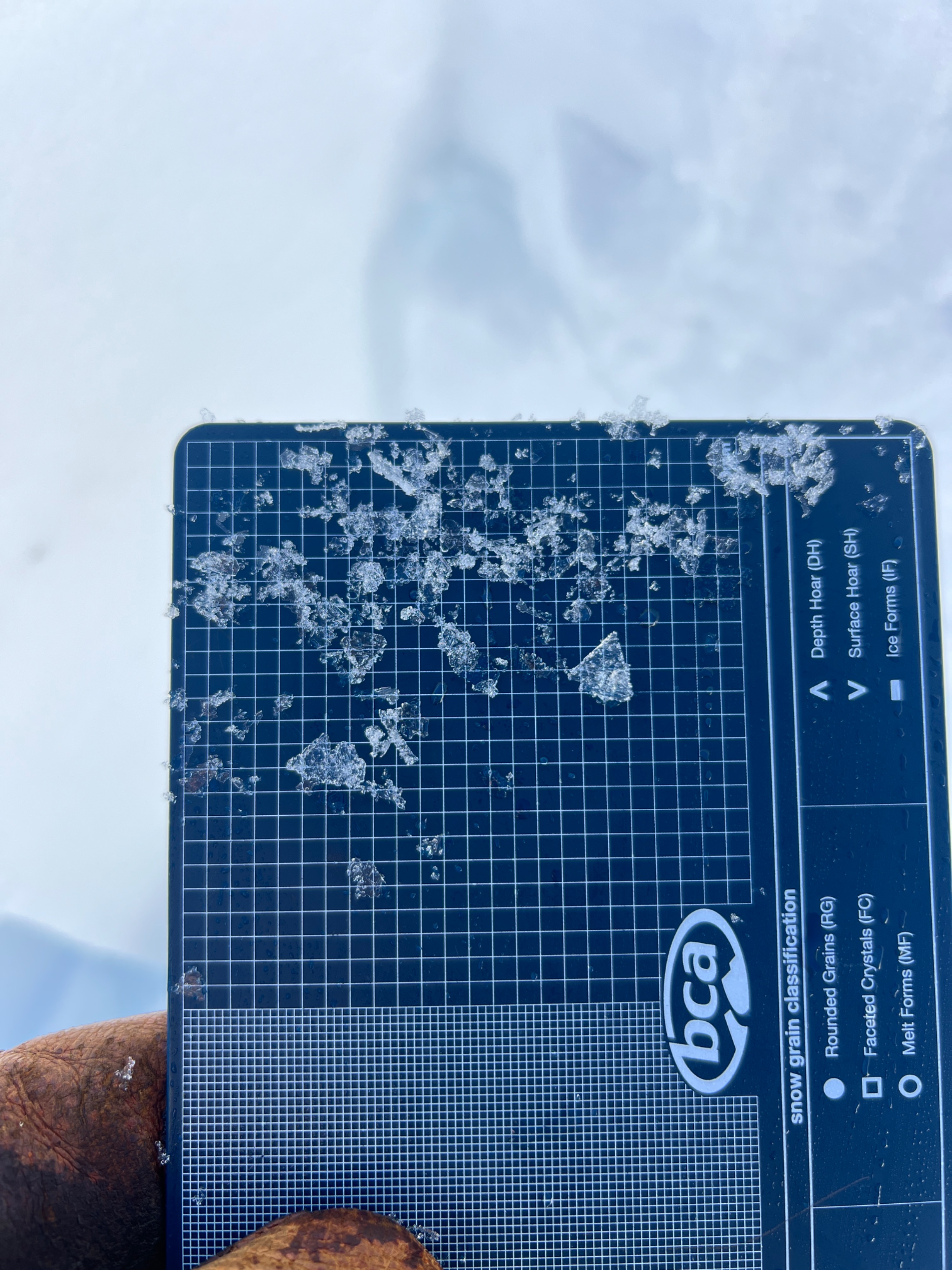
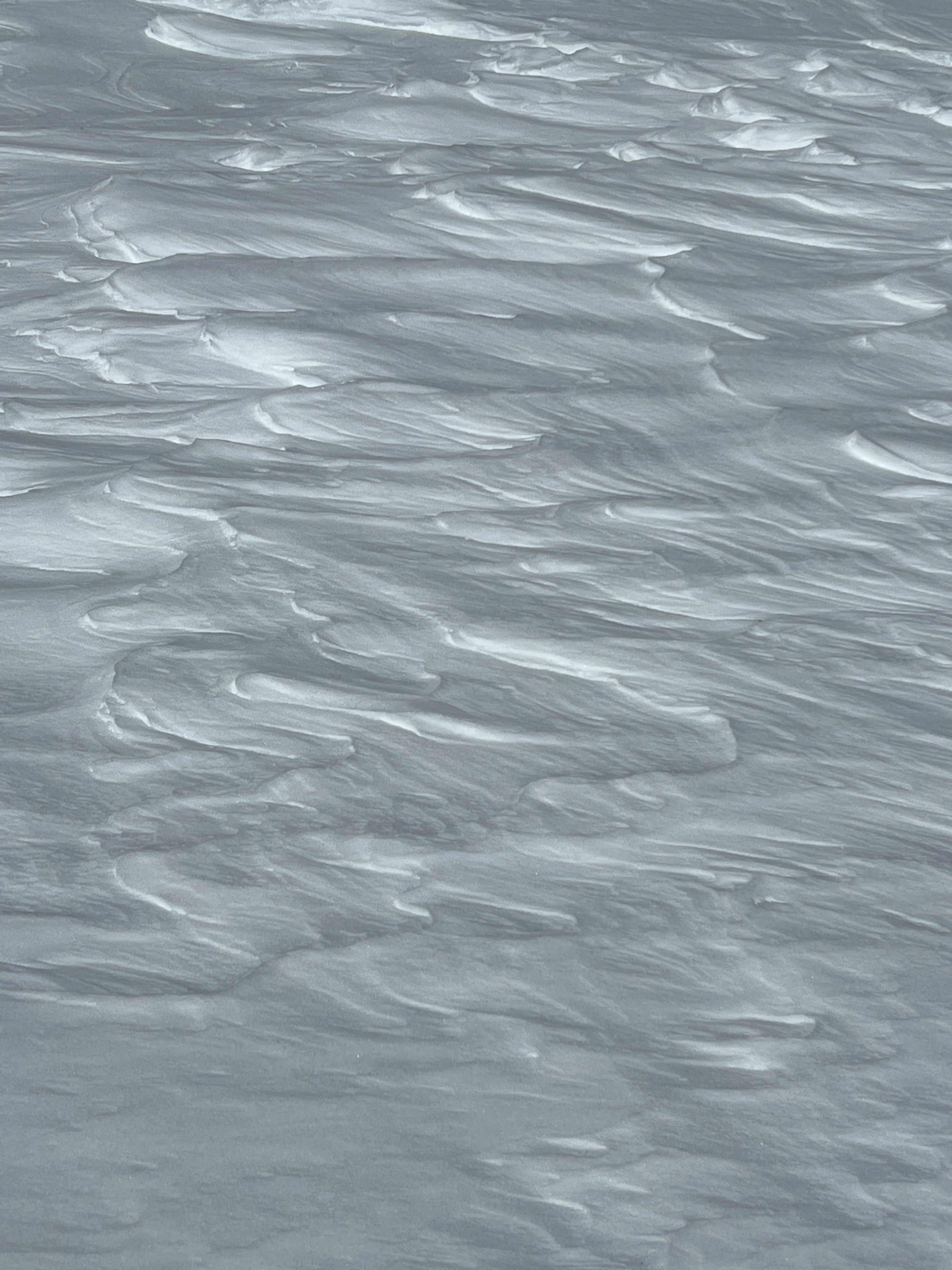
Evidence of the previous streak of strong winds could be seen across virtually all aspects, extending well into the tree line. Surface etching and firm, punchy slabs littered open and exposed pieces of terrain. The 2/14 buried surface hoar continues to lurk in the snowpack, and despite the weight from the 2 to 4 foot stiffening slab above, still has some impressive sized feathers. Snowpack tests confirm that this layer is trending towards being more stubborn and difficult to trigger, but a resulting avalanche would carry heavy consequences. The Persistent Slab problem has migrated to a place where surface instability clues are very little, if any. This means that the snowpack will likely not give any feedback until an avalanche fails.
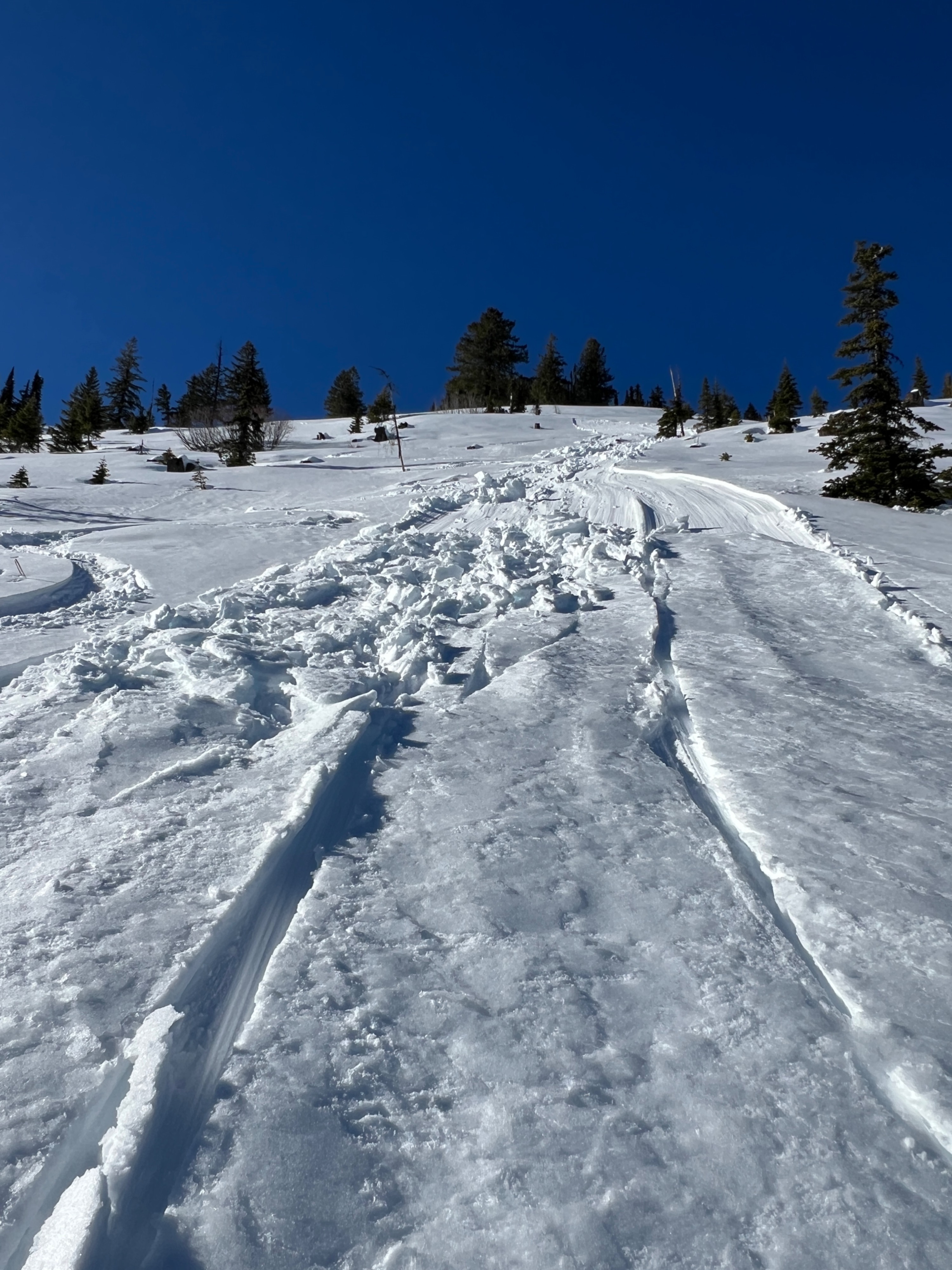
As the most recent slab continues to settle, signs of instability like cracking and collapsing are becoming less and less frequent. Surface snow would easily sheet below my skis and gain in size from the afternoon sun.Weather
- Air Temp
- 38
- Cloud Cover
- few
- Wind Loading
- previous
- Rain Elevation
- Not observed
- Recent Snowfall
- Not observed
- Snow Avail For Transport
- small smounts
A bluebird day, with a higher sun angle delivering a healthy dose of sunshine. Clam winds, with an occasional light breeze.
Snowpack
Several days of strong winds followed by warm temperatures have contributed to the most recent snow stiffening and consolidating significantly. Surface conditions varied between a very thin breakable crust at higher elevations and ample sunshine softened lower elevations and solar aspects by the afternoon. With the amount of wind effect and solar input, there is very little snow available for transport.
At 6,600' on an east facing aspect, the 2/14 surface hoar was buried 67cm down below the surface. A mostly 1F to P hard slab above made it difficult to influence this layer in snowpack tests, resulting in an ECTX. The surface hoar feathers were still quite large, averaging 9mm-12mm.
In the afternoon, starting at around 5,700', snow would easily sheet off below my skis while cutting across slopes 35 degrees and steeper. The sheet of snow would slowly work its way downhill, entraining more snow with it and run over 100 feet. There were no observed signs of natural Wet Loose activity.