
Quick report
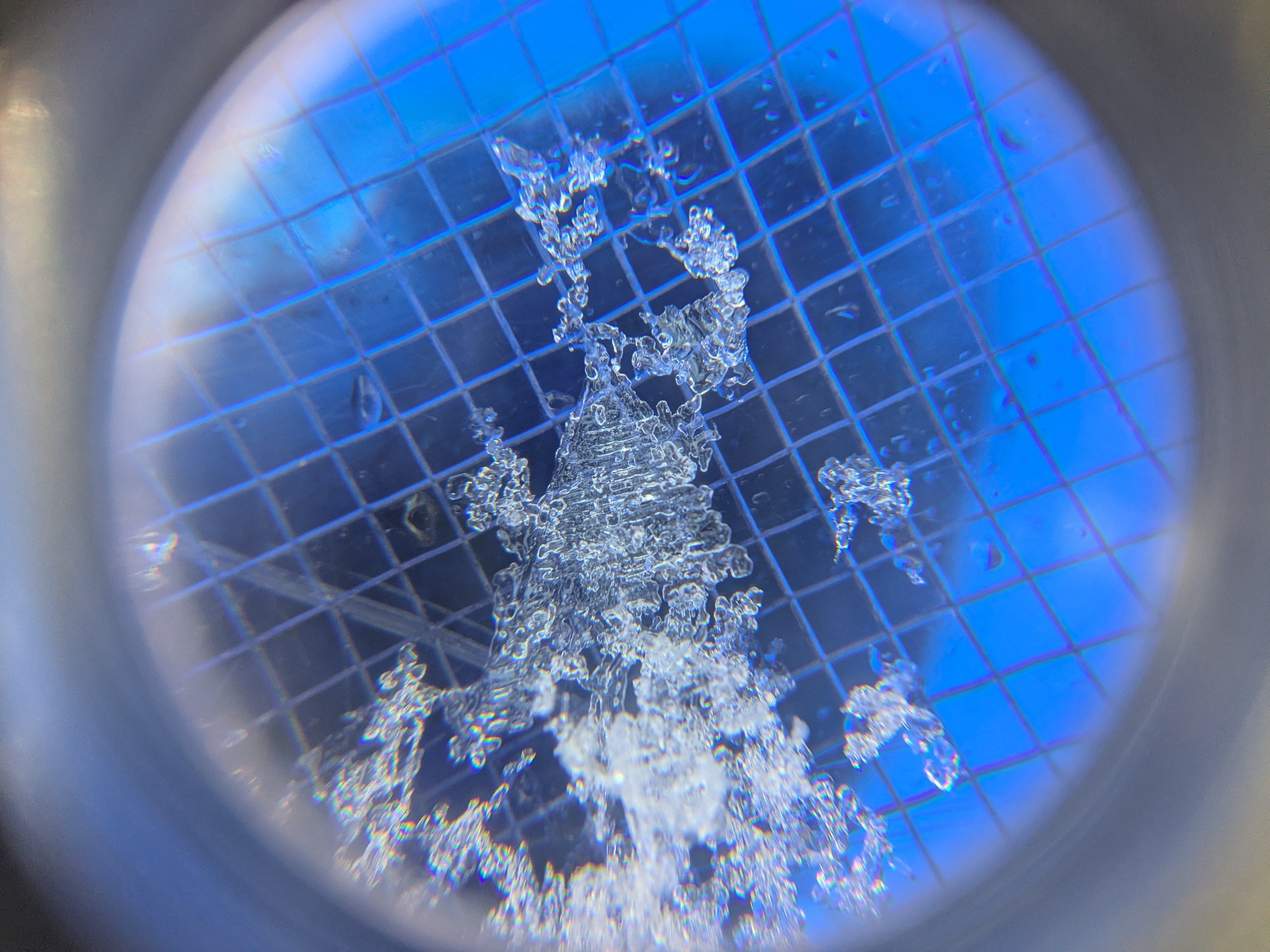
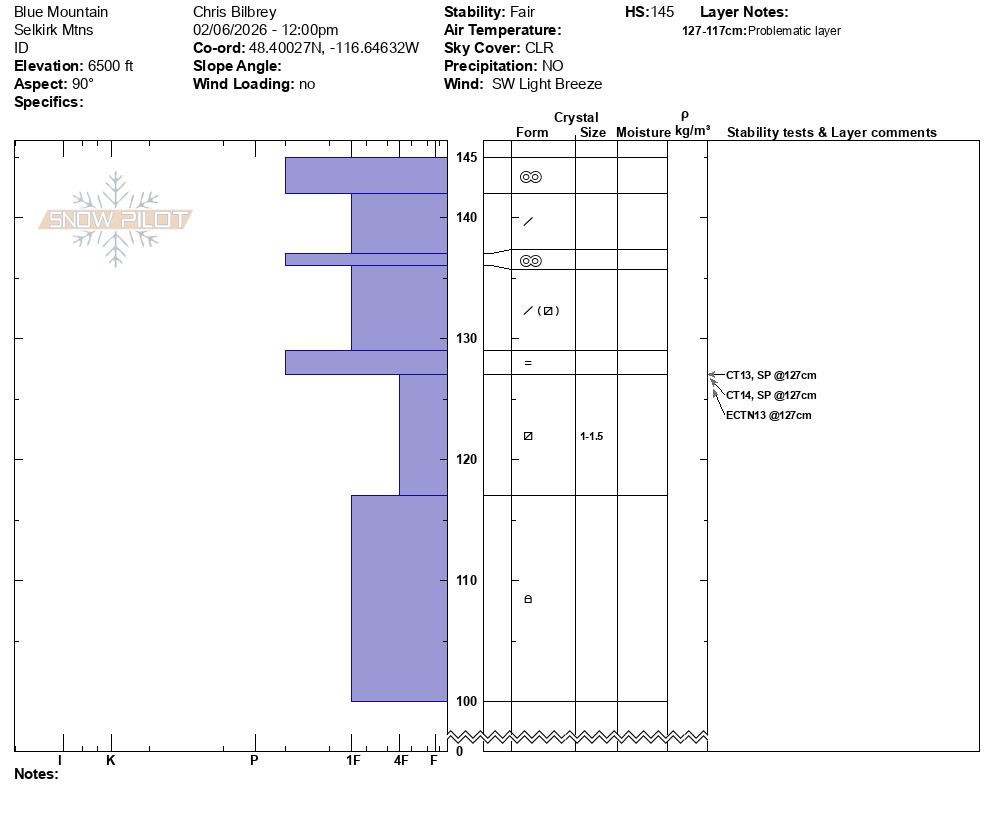
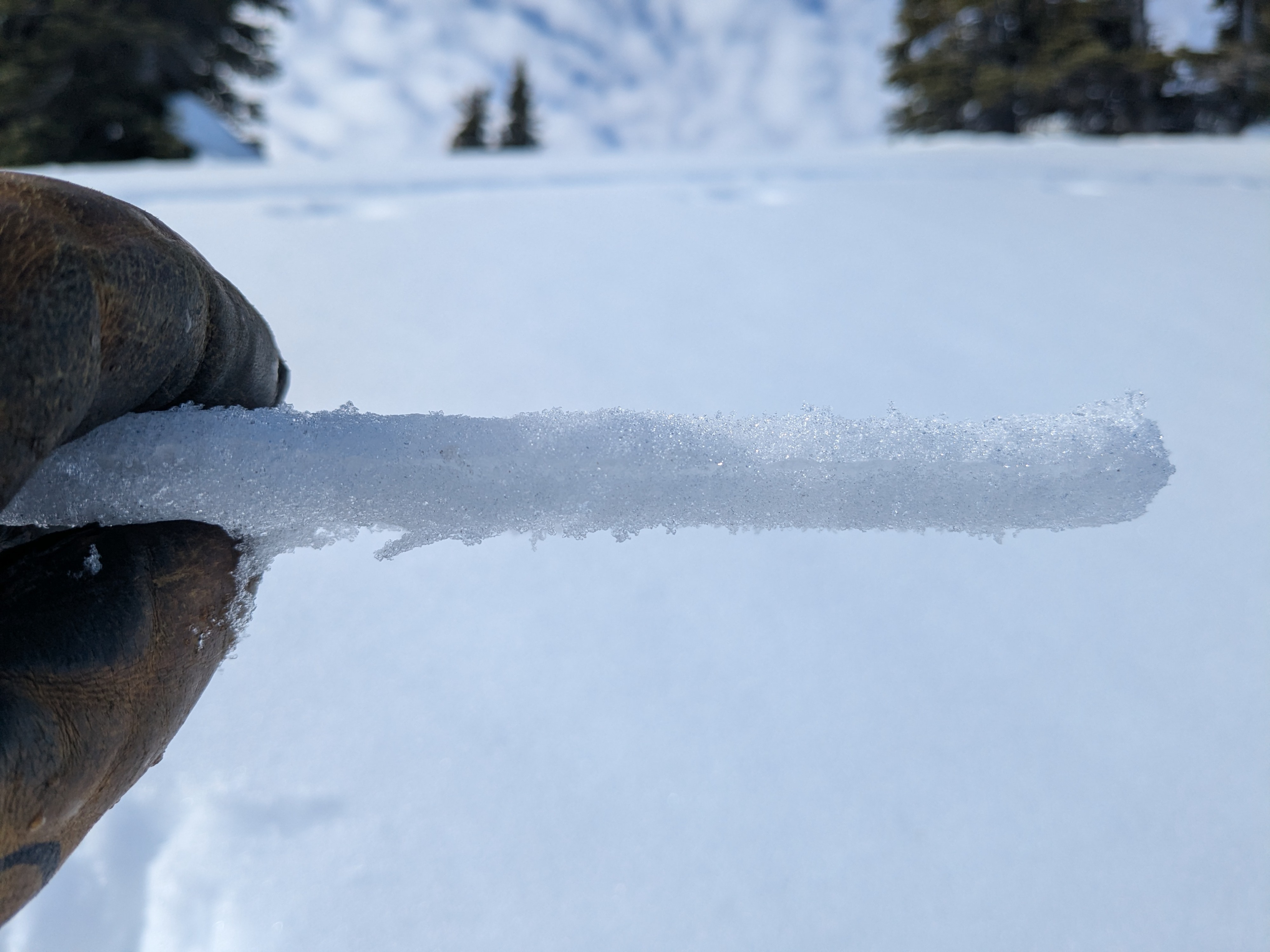
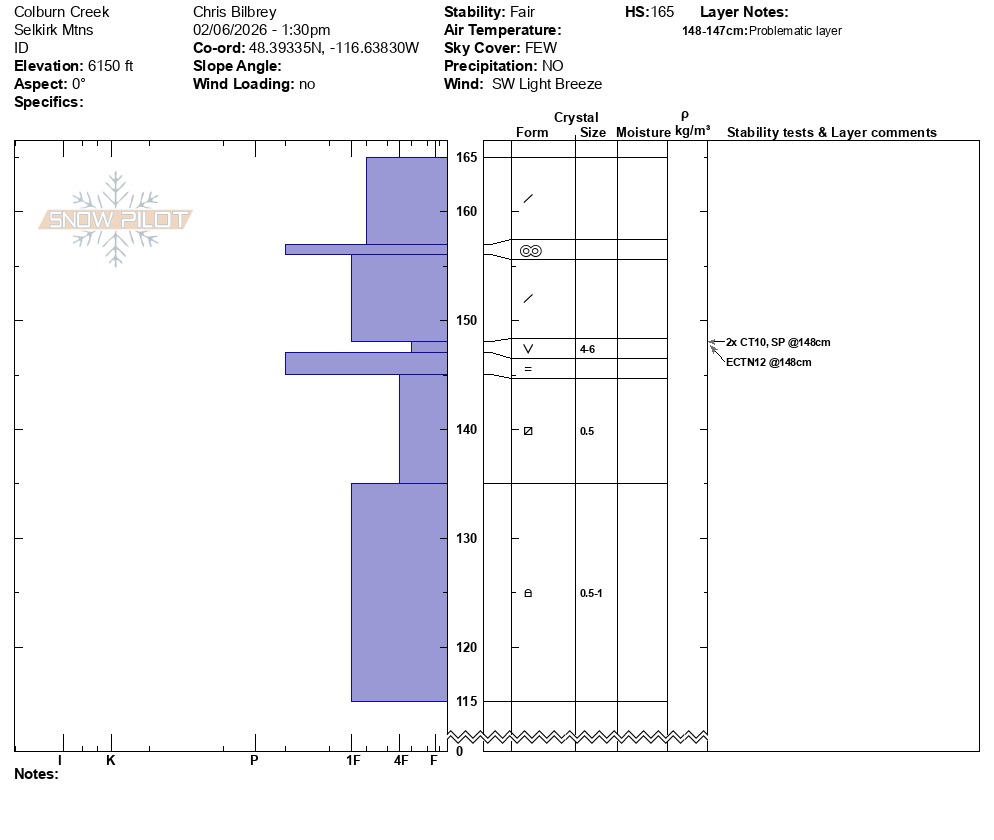
On the surface, obvious signs of unstable snow have become less obvious. However, a worrisome slab-weak layer combination lingers in the upper snowpack. Despite the recent warm-up, fragile surface hoar and faceted grains below a crust persisted and remain relatively untouched or disturbed across many aspcects and elevations. With more precipitation and/ or snow load in the coming days, these grains are likely to show their hand. Till then, mindful terrain choices are key to avoid triggering a larger avalanche.
Weather
- Cloud Cover
- few
- Wind Loading
- none
- Recent Snowfall
- 0
- Snow Avail For Transport
- moderate amounts
Clear and sunny to start. High clouds moved in around 1 pm along with light winds along ridgelines.
Snowpack
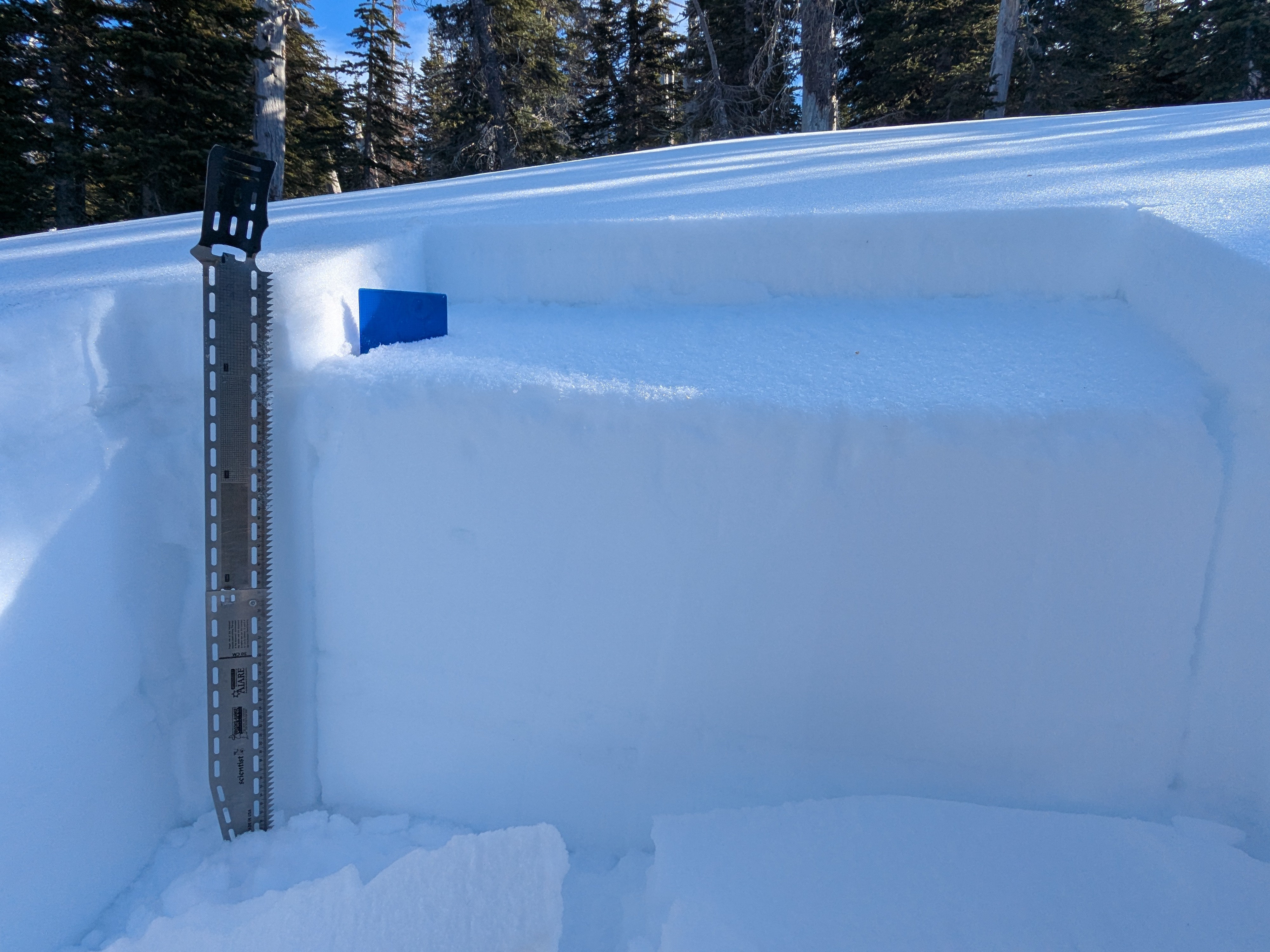
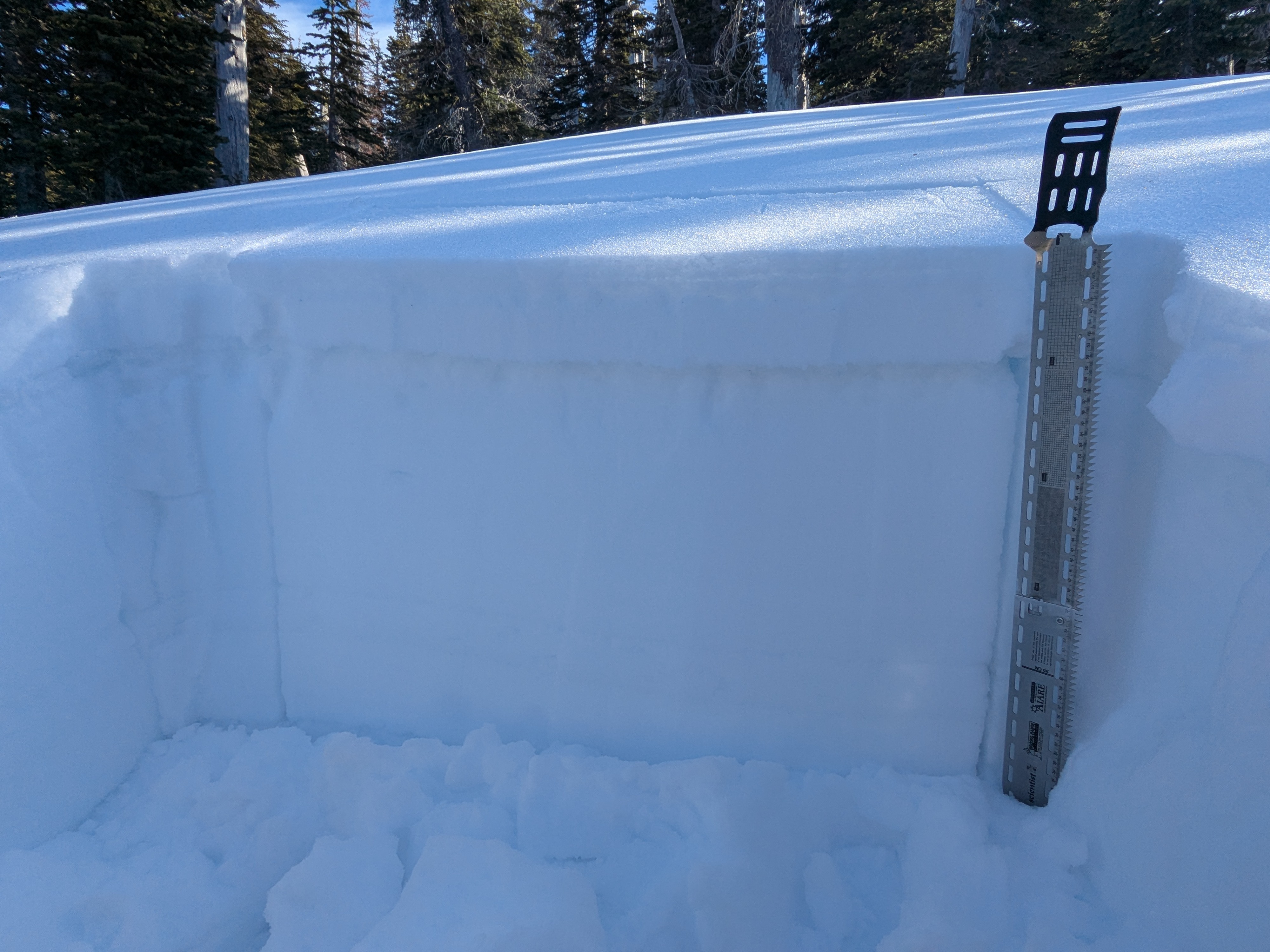
We dug multiple snow pits across various elevations and aspects. The theme we found was slab depth or slab stiffness is the main driver of propigation versus non-propagation results. This seems regardless of whether the persistent grain below is surface hoar or faceted grains under a rain crust. Despite that, all Compression Tests performed failed sudden planar with easy force in either weak layer type. This confirms our weak structure survived the recent warm-up and slab settling, but still needs the "right" slab properties to align to trigger a slide. Drifted areas on the north-side of the compass carry better odss of having both a deep enough and stiff enough slab. On the south-side, sun and warm air temperatures helped wet near-surface snow layers, but a shallow crust has likely prevented the wetting front from driving deeper into our weak layers of concern. This changes once you descend toward 5,500 feet. At lower elevations, sunny slopes were wet and punchy with lots of rollerball initiation, but did not entrain much snow volume. Most shady slopes on our travels from about 5,500 to 6,700 feet had a thin egg-shell crust from the onset of rapid warming following the last storm.
Avalanche
None observed