
Quick report
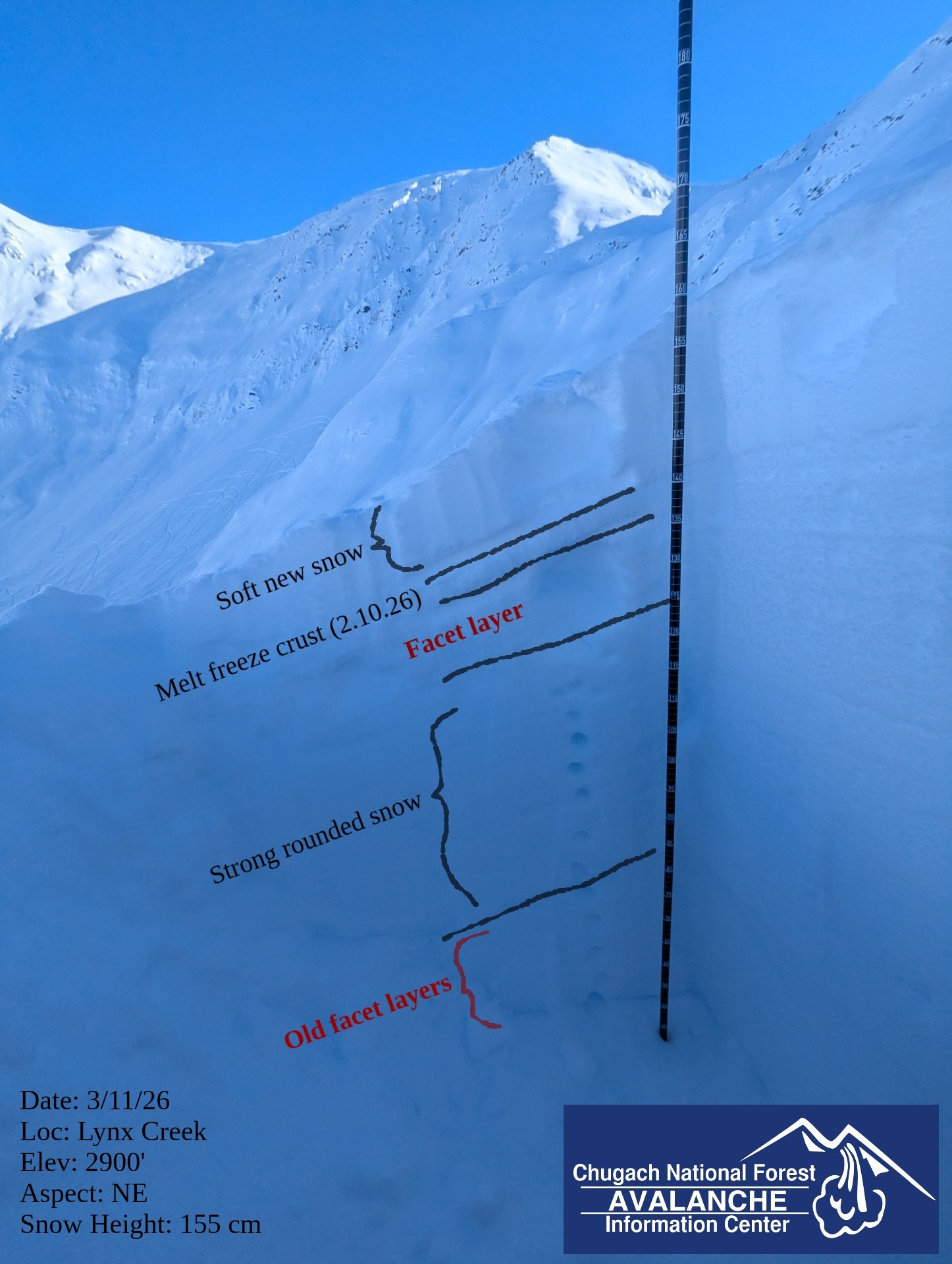
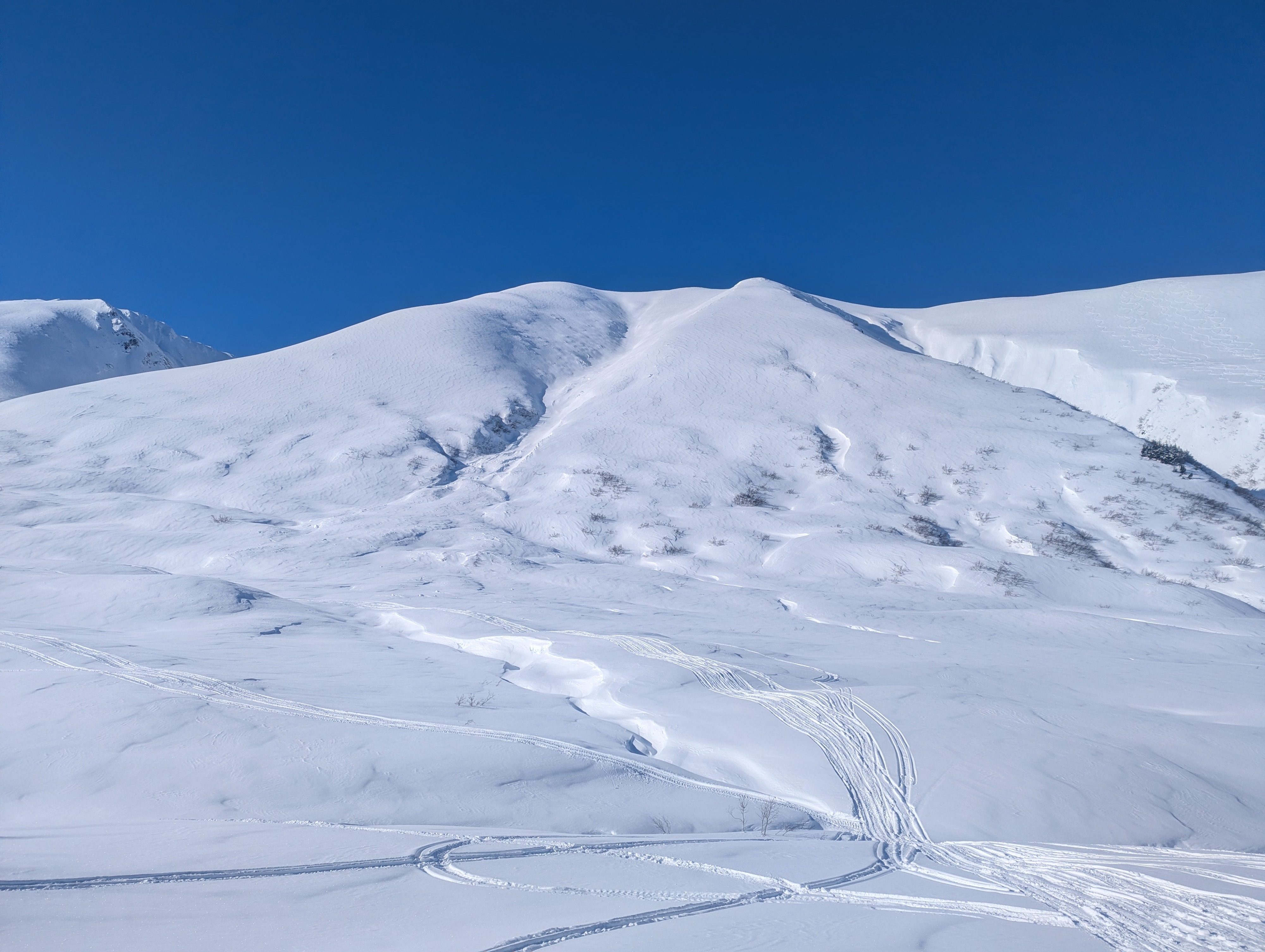
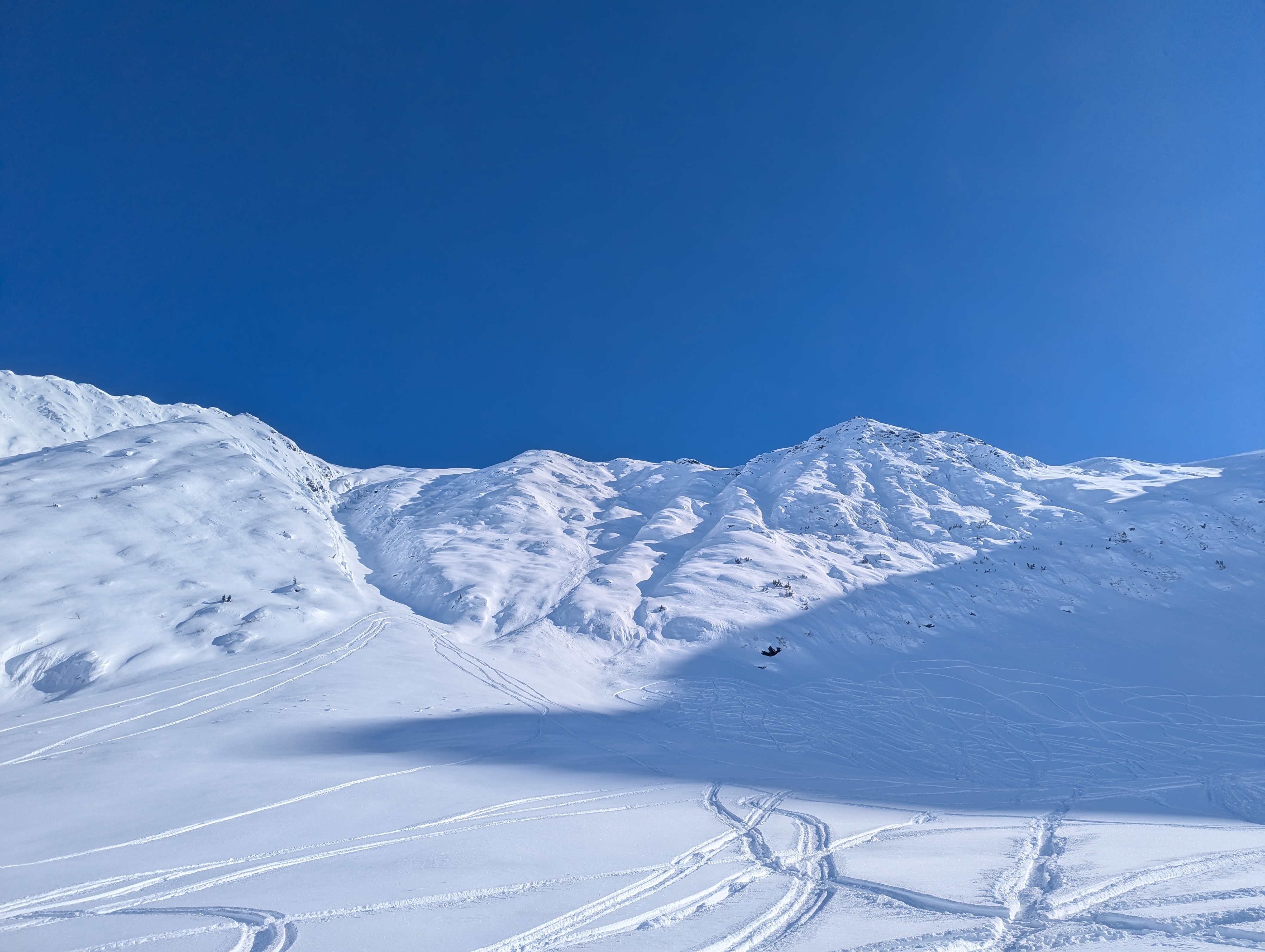
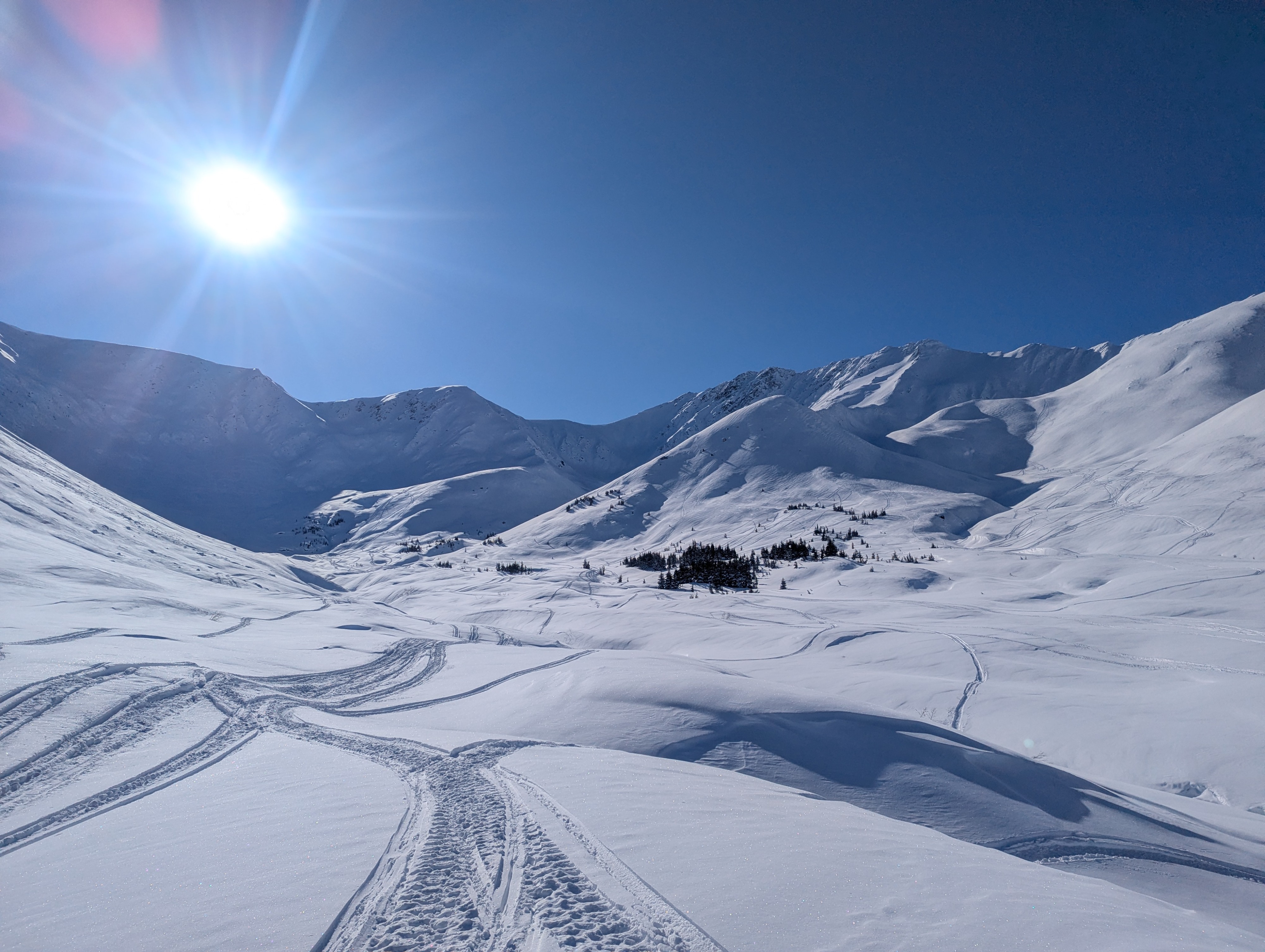
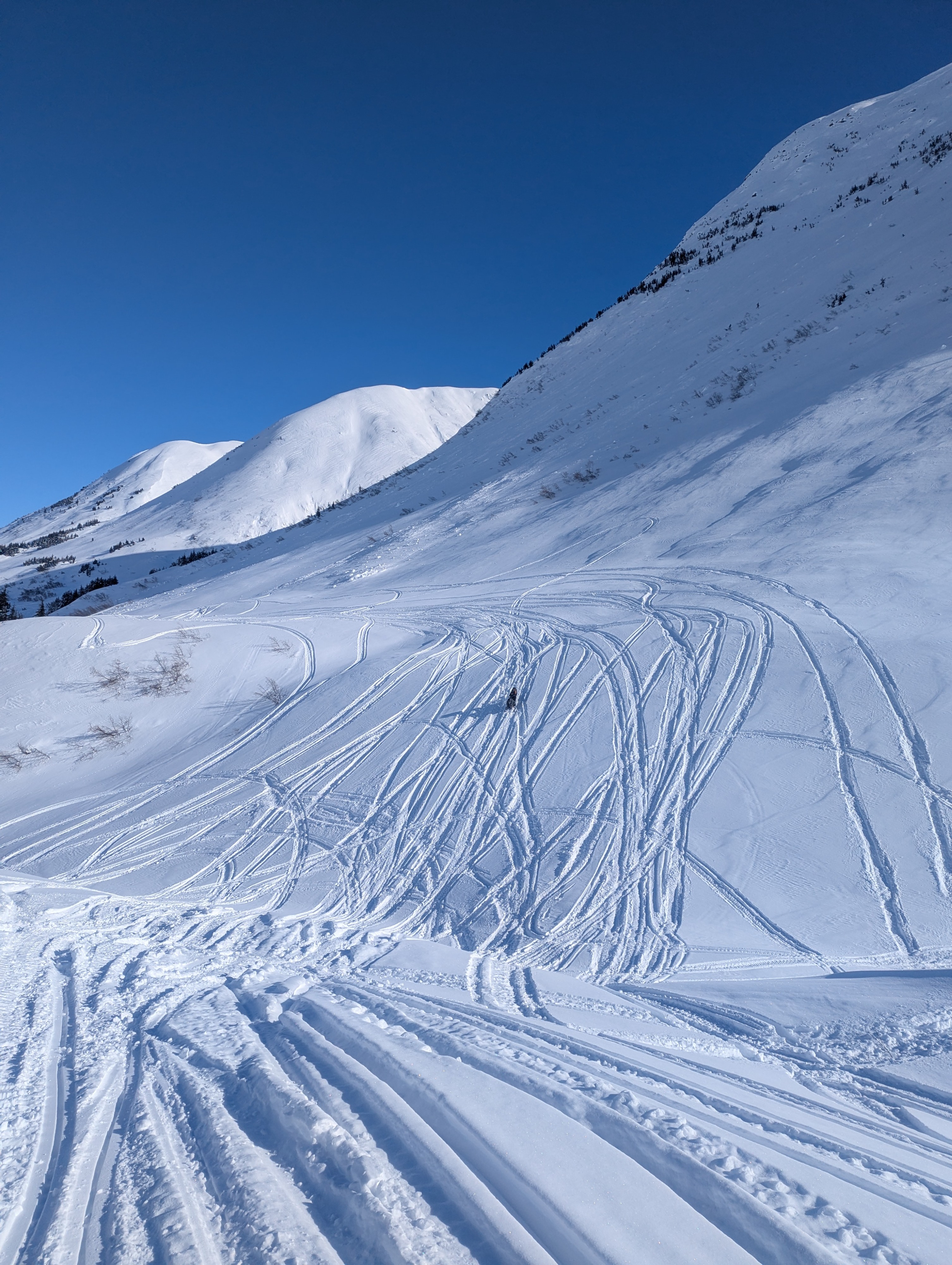
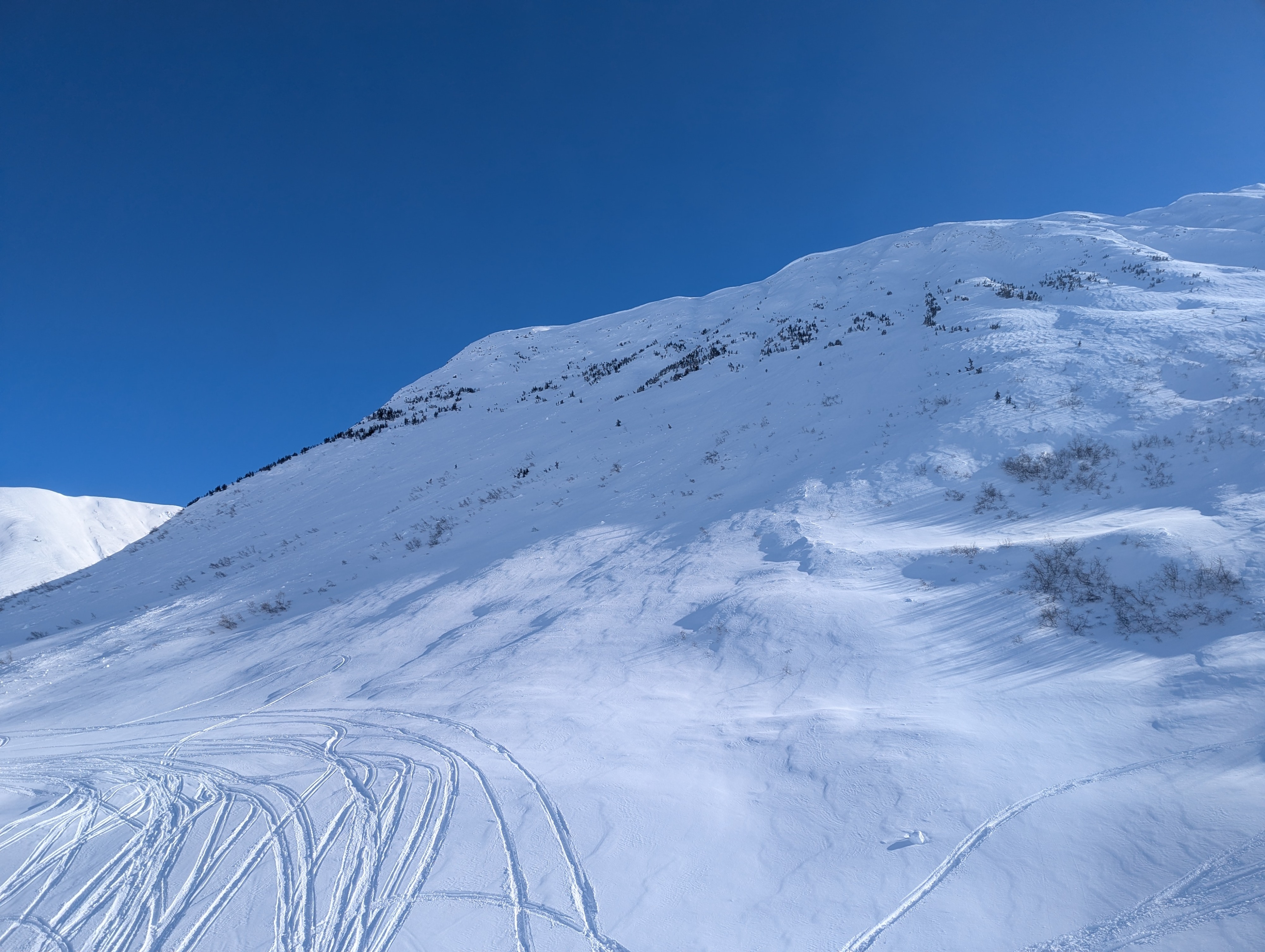
We rode up to the head of Lynx Creek and found 8 to 12" of low-density new snow on top of a supportable layer underneath. Above 2500', the crust was less supportable, and it was a little easier to bury the track in the facets under the crust and get stuck. We did not observe any recent avalanches, other than the human-triggered one from Captains Chair, which was reported in another observation. There had been some wind transport on the higher ridgelines and exposed terrain features, but in most of the lower-angle terrain, the new snow had not been affected by the wind. We dug a pit at 3000' and found a layer of facets underneath a crust about 1' deep, which gave mixed results in our stability tests. Overall, the snowpack had some weak layers, but did not seem very reactive based on our tests.
Weather
- Air Temp
- 0 to 10 F
- Cloud Cover
- clear
- Wind Loading
- light
- Snow Avail For Transport
- large amounts
It was a clear and cold day with no wind. We started riding around noon and luckily the temps had come up a bit since the -20 F low in the morning. It felt like single digits to teens during the day.
Snowpack
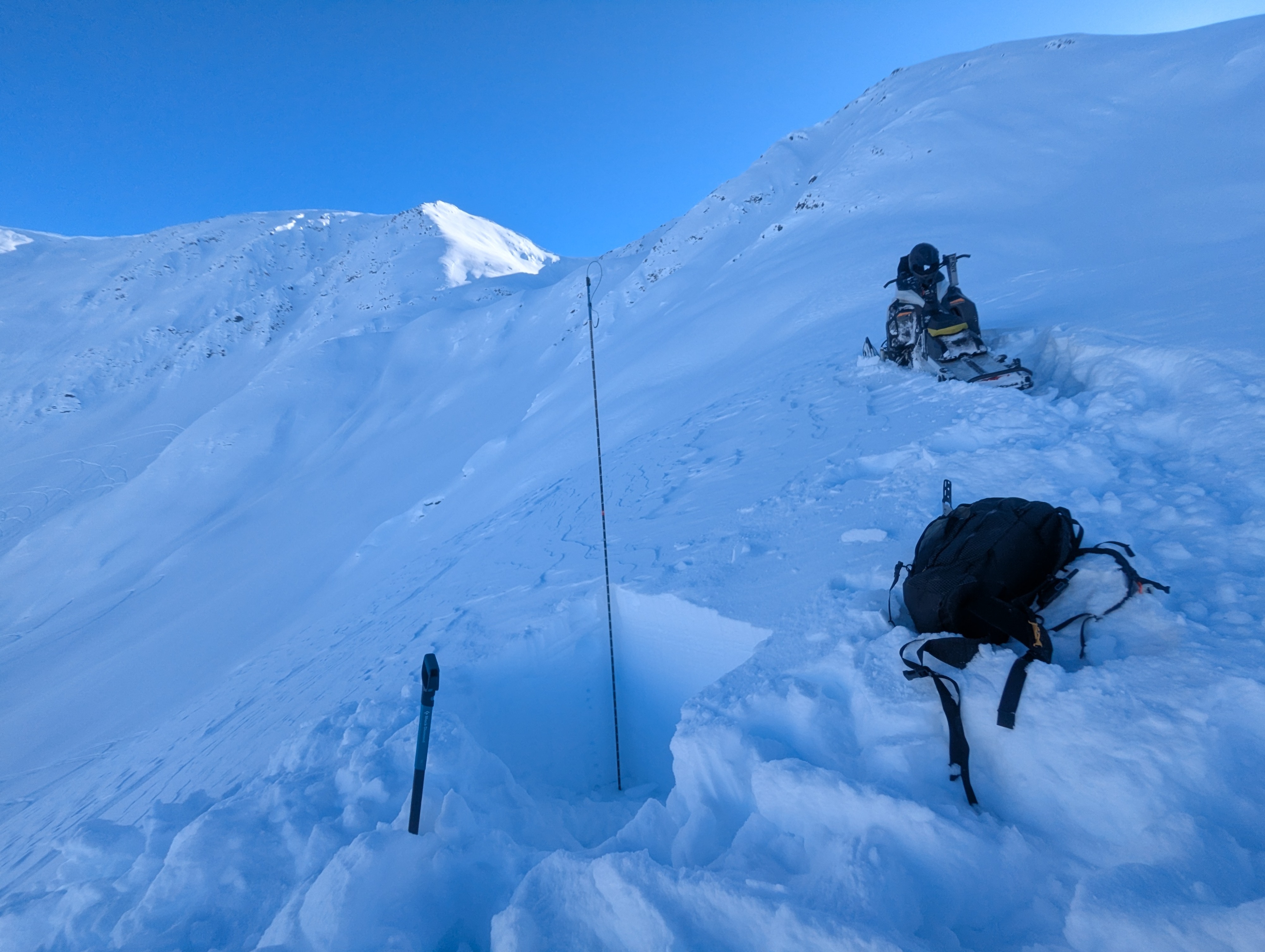
We did several hand pits to test how the new snow was bonding to the old snow surface and found that in most locations, it was well bonded to the old snow surface. Above 2500', the supportable crust that had been underneath the most recent 8 to 12" of storm snow became breakable under the weight of the sled. We dug a pit at 3000' on a NE aspect and found a layer of facets underneath a 2" thick crust. A layer of facets about 1' deep underneath this crust layer failed in our compression test (CT 12 SC) but did not propagate in our extended column test (ECT N 22). Overall, the structure was not great, but the weak layers we tested in our pit location did not seem very reactive. Perhaps with more of a stout wind slab or a thinner crust above the facets, the weak layer would be more sensitive to the weight of a skier or rider.