
Quick report
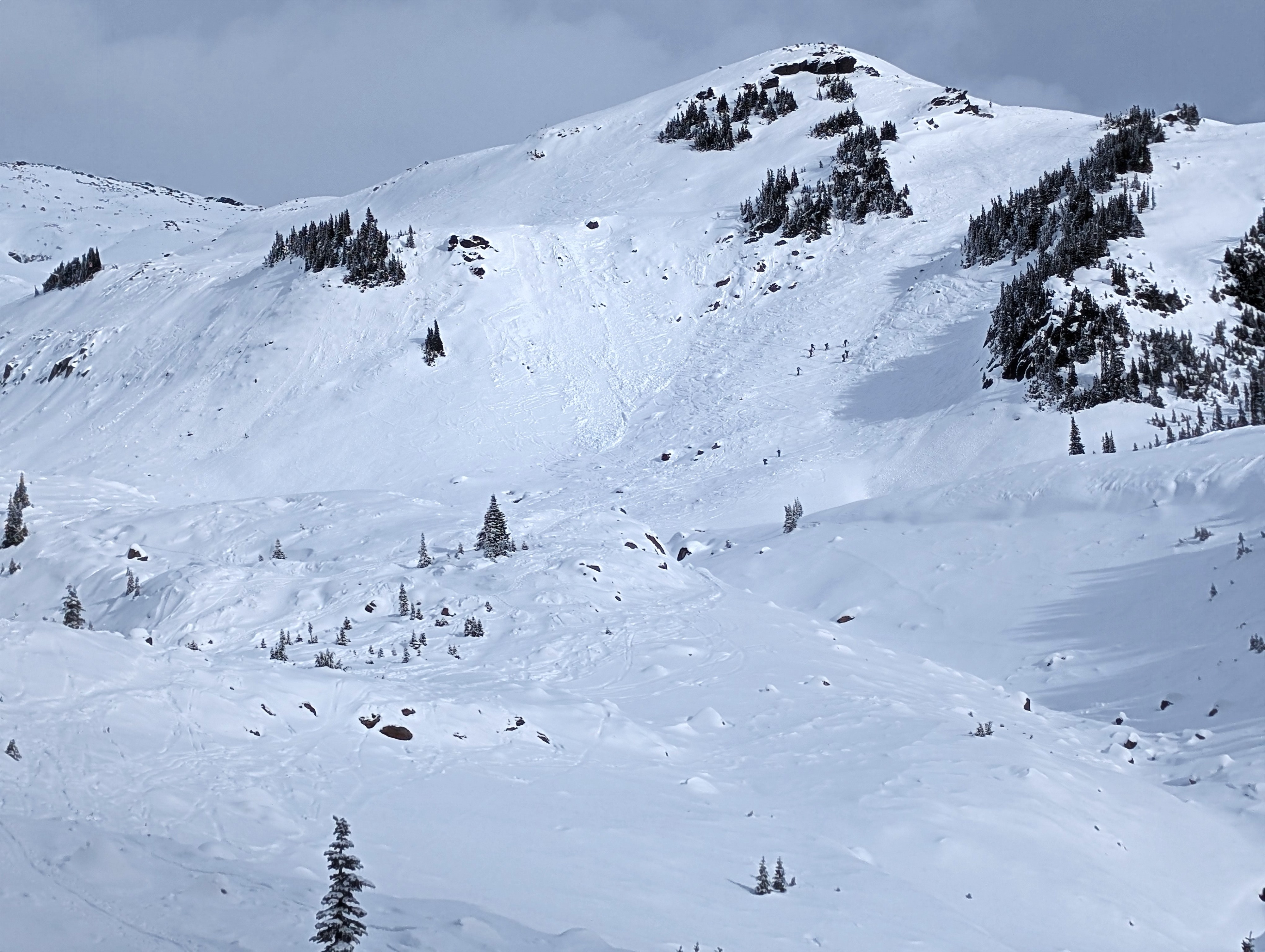
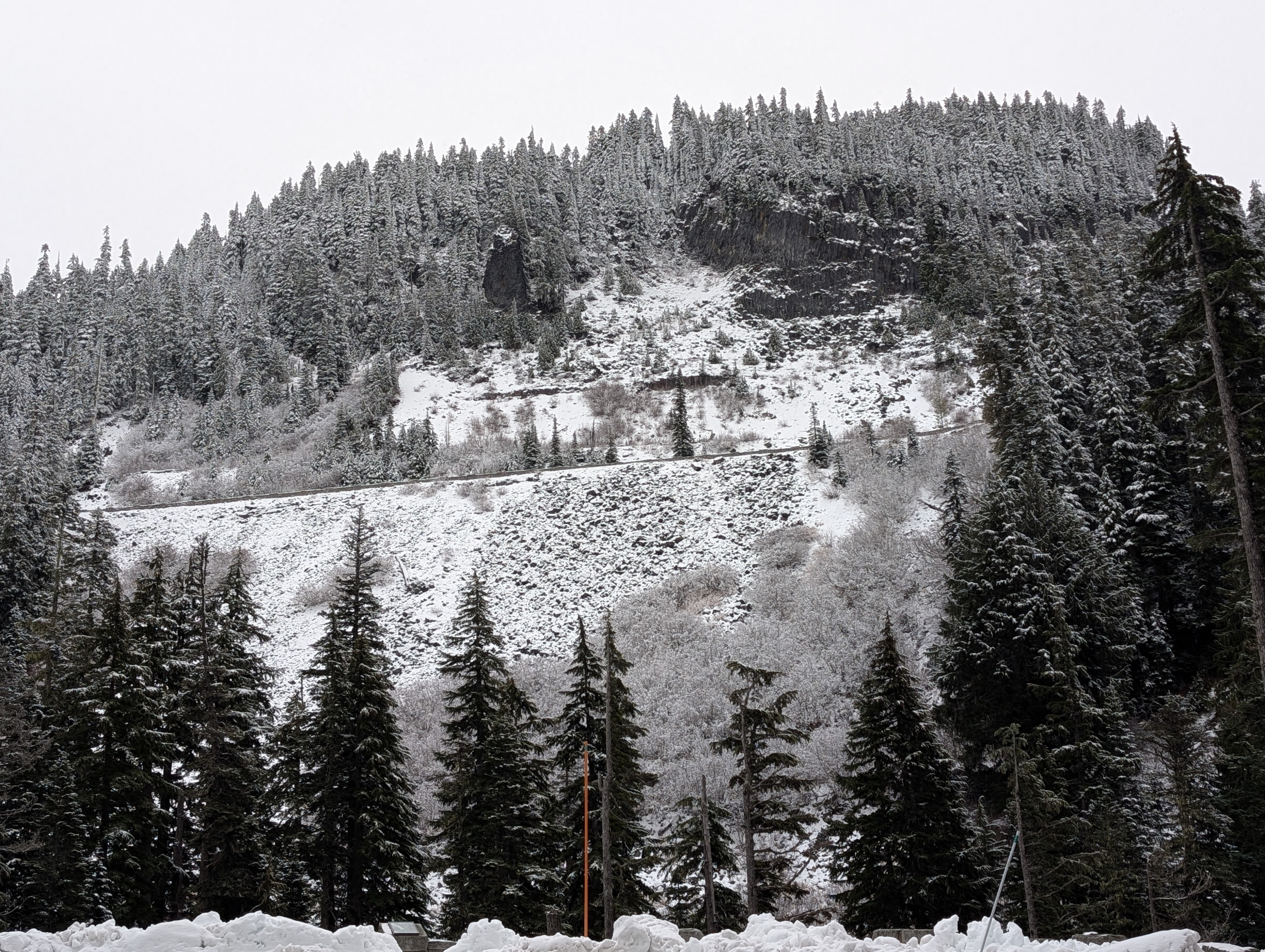
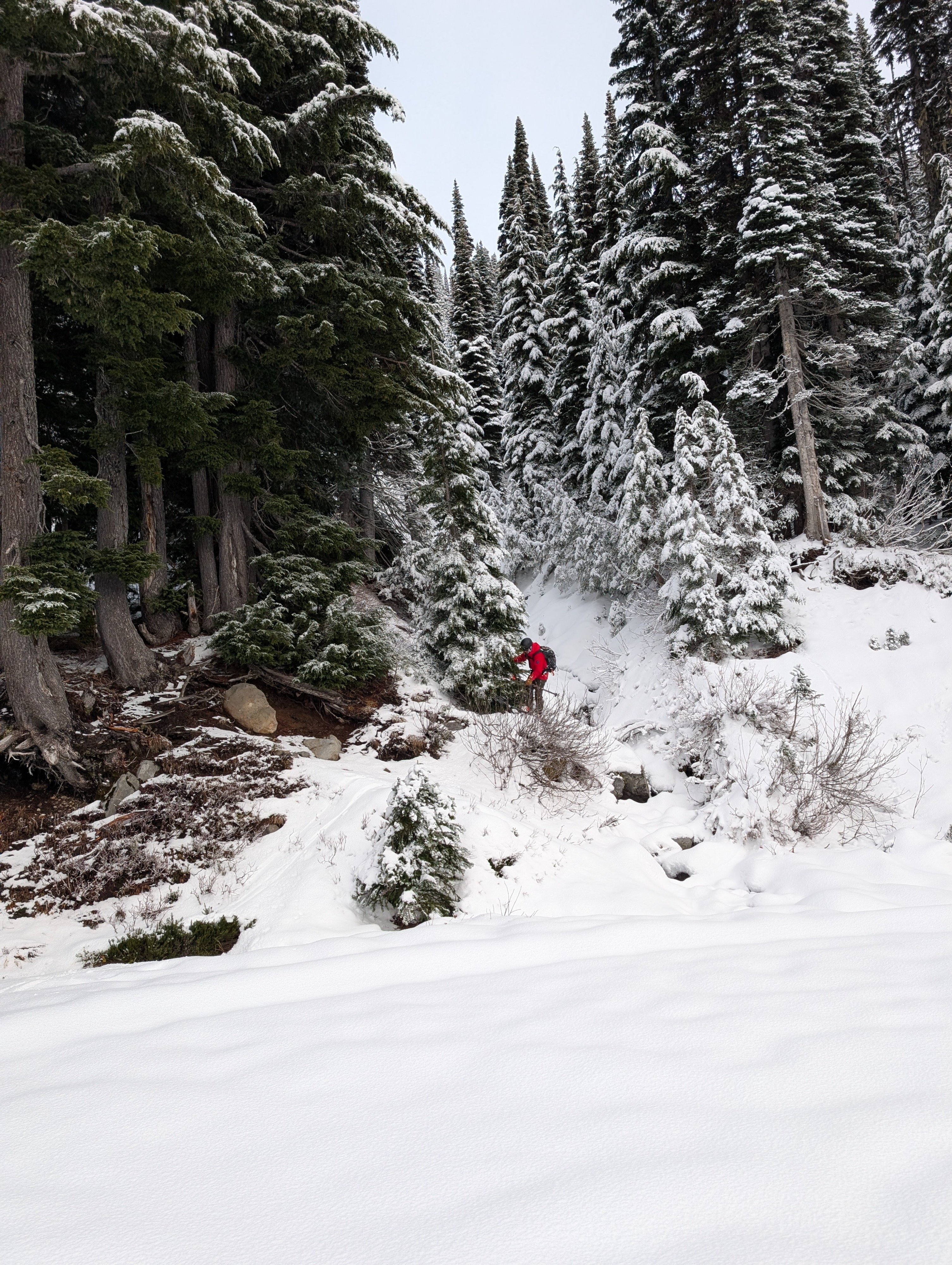
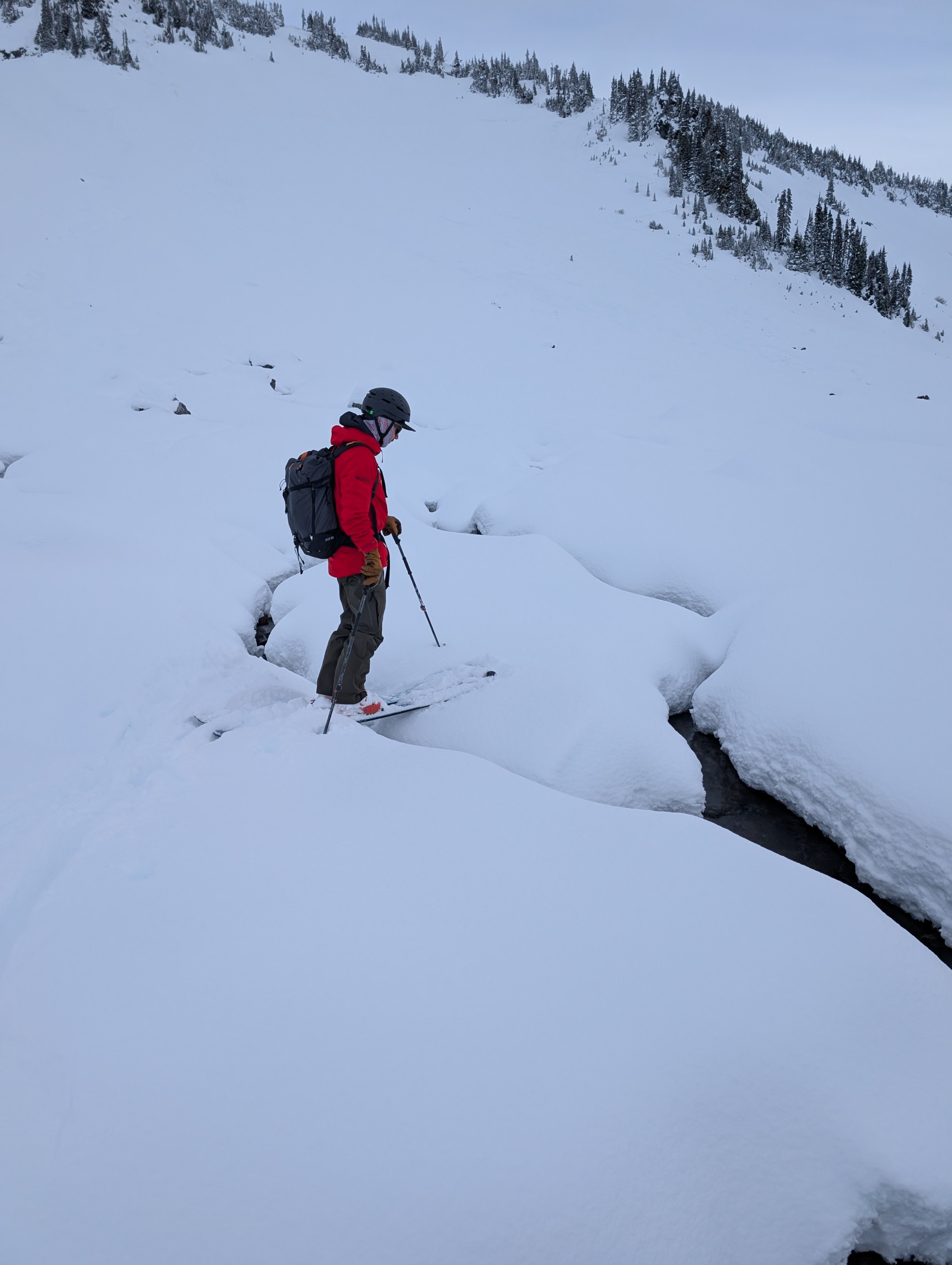
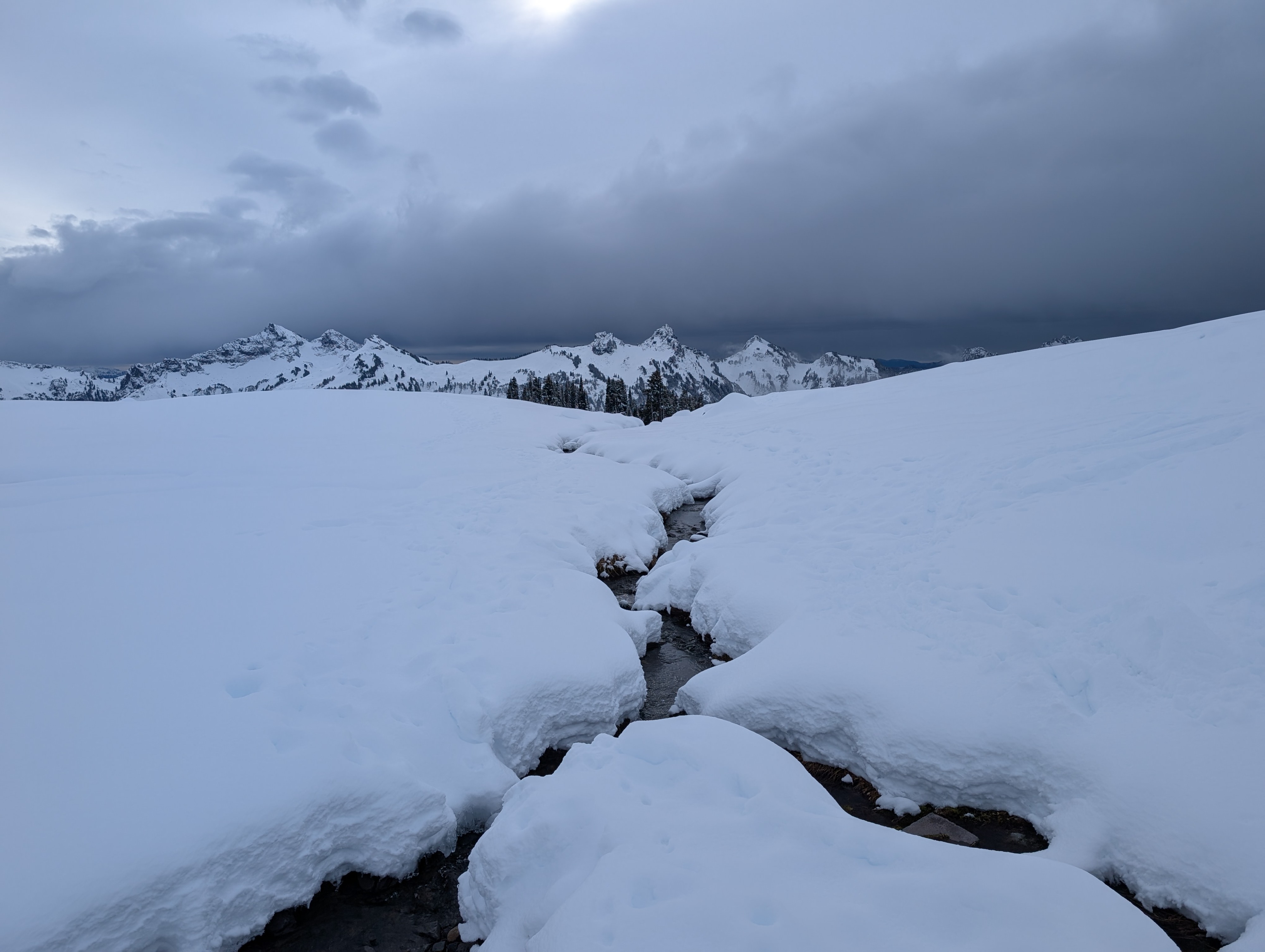
We set out to travel terrain in the Paradise area with hopes of getting a good feel for conditions ahead of the start of forecasting later this week. Coverage is adequate for travel in most locations, but there are many early-season hazards, such as small trees, rocks, open creeks, and slopes that "aren't in" yet. This made for arduous travel in places that slowed our progress. Crusts of various supportability were the main surface we traveled on until we found soft snow on the northerly side of the Back Bowls.
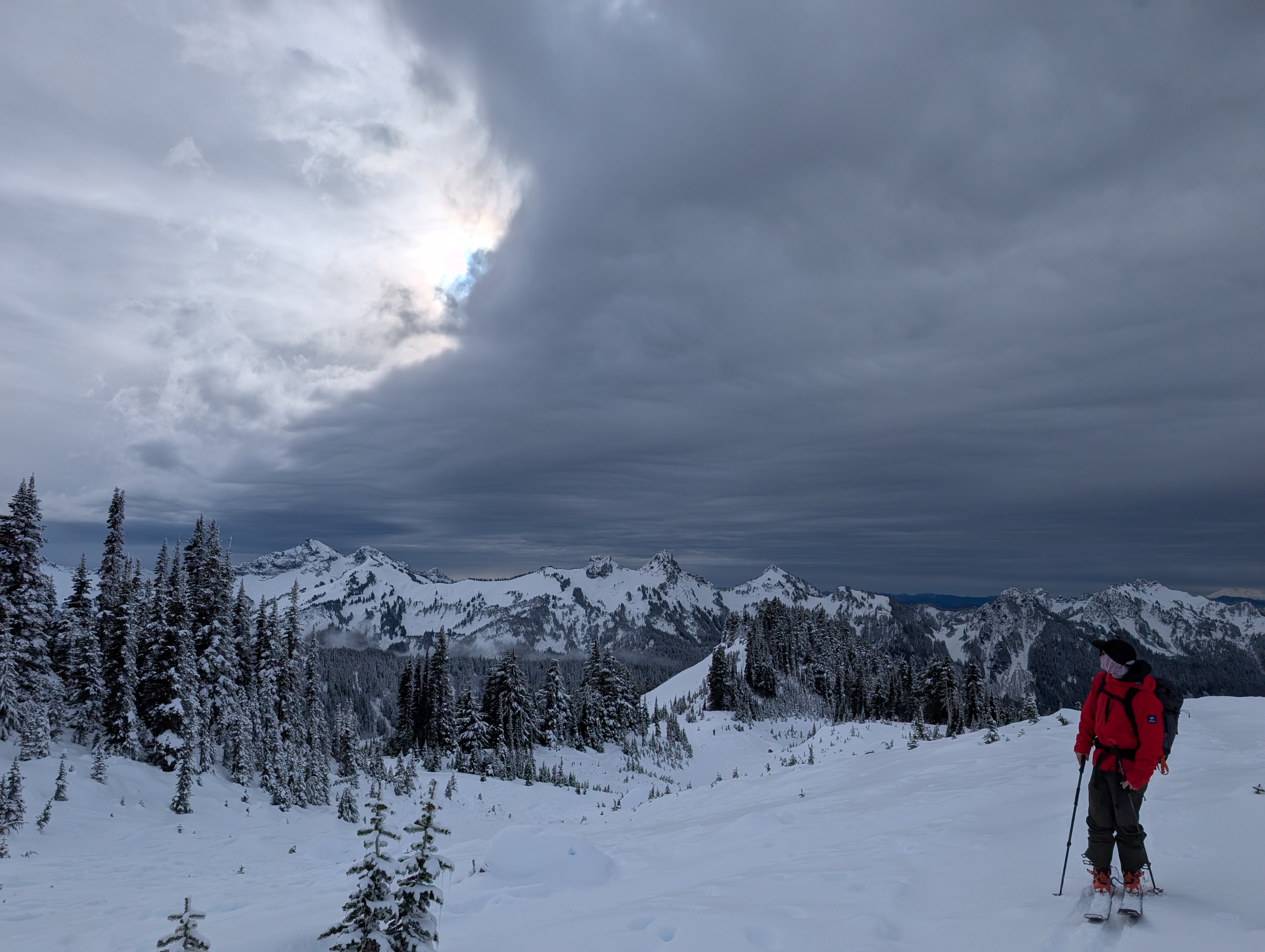
We scoped out access to the Tatoosh via Narada Falls, but there is insufficient coverage for the standard approach. However, looking across the valley from Paradise, the range appears pretty snowy up high.
Overall, it was nice to be out walking in the snow again, despite the lack of good skiing.
Weather
Mostly cloudy with little to no wind today. Generally warm, with only a few flakes as we exited the field around 3:30pm.
Snowpack
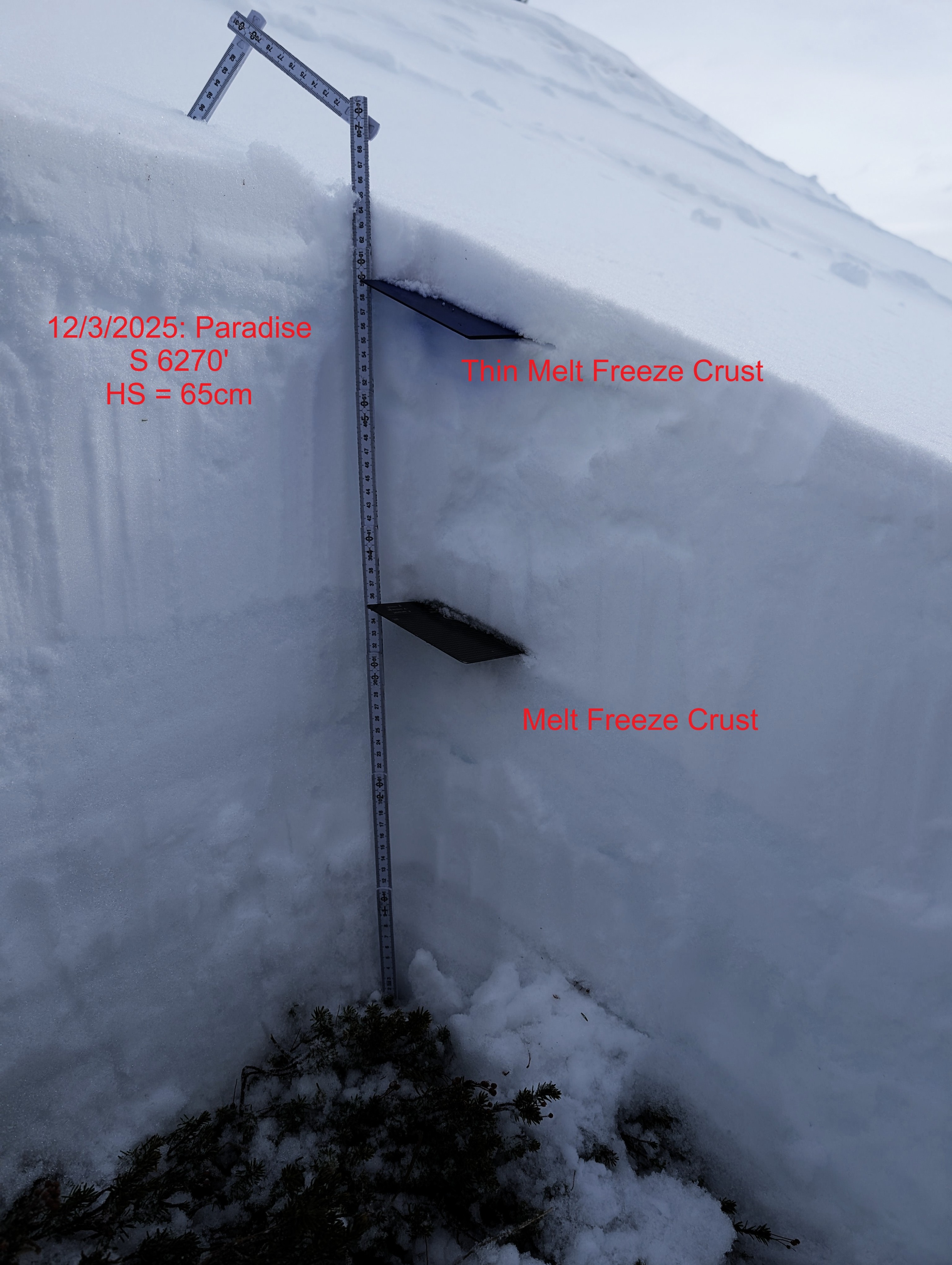
Generally speaking, we found close to 2 feet (65cm) of snow on the ground during our travels, hovering between roughly 5800 and 6400 feet. On slopes that typically receive direct sunshine, a breakable crust was found an inch or two below the surface. This upper crust was absent on shaded northerly slopes. Otherwise, the snowpack was largely the same, with old soft snow sitting above a stout melt-freeze crust about 10 inches above the ground. Snowpack tests were unremarkable, although some failures did occur on the crusts in small column tests.
As we descended toward Valley Road from Mazama Ridge, the snow was progressively heavier and wetter.
Avalanche
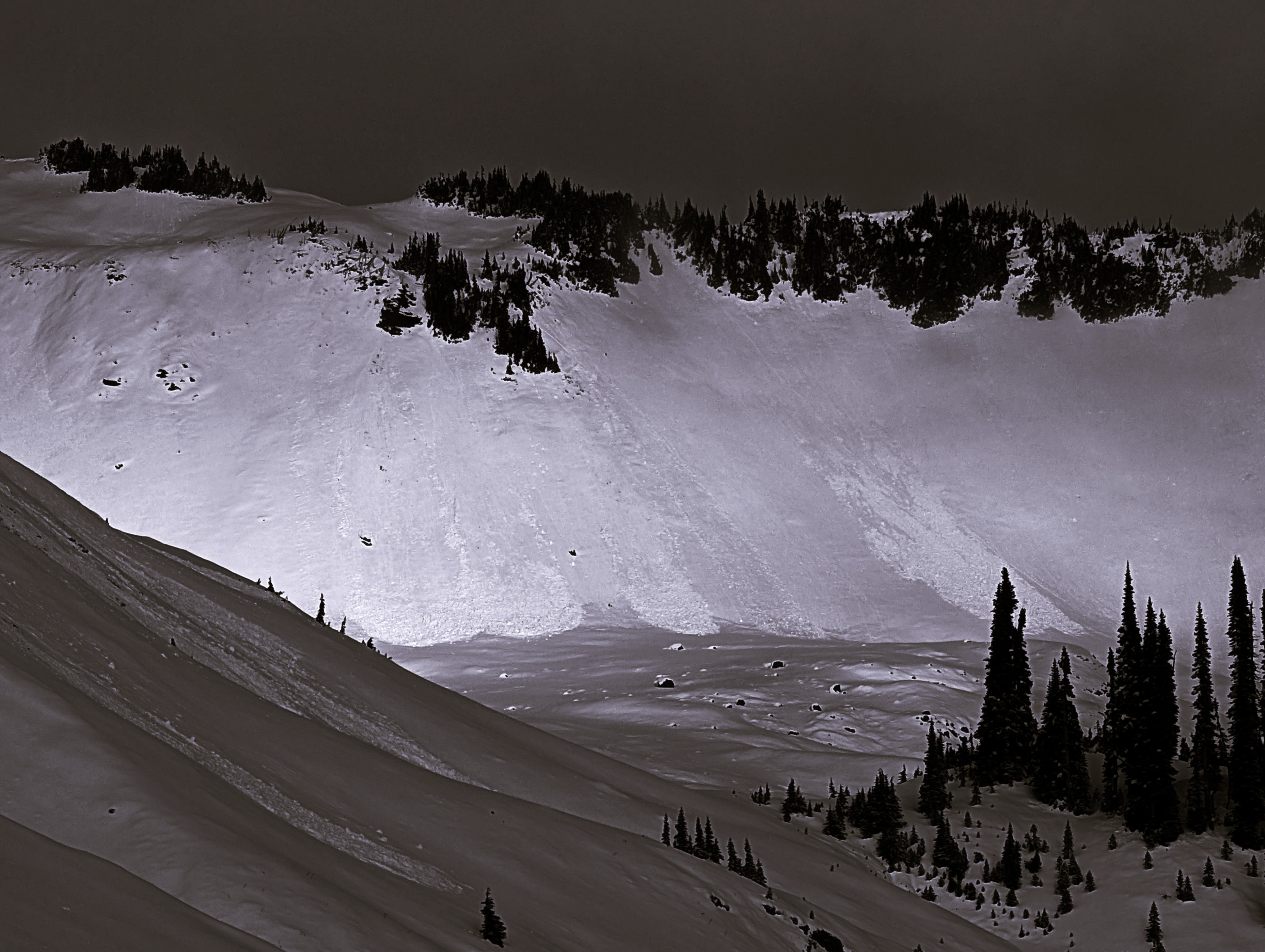
Recent loose avalanches were observed throughout the tour, mostly on slopes that typically receive direct sunshine. All spotted avalanches were at least a few days old.