
Quick report
We went out today to a location where other avalanche professionals documented the persistent weak layers (PWL) last week. This gave us the opportunity to see how it was changing over time. In short, it's still there and still failing in snowpack tests. These results certainly didn't instill any confidence in the snowpack structure.
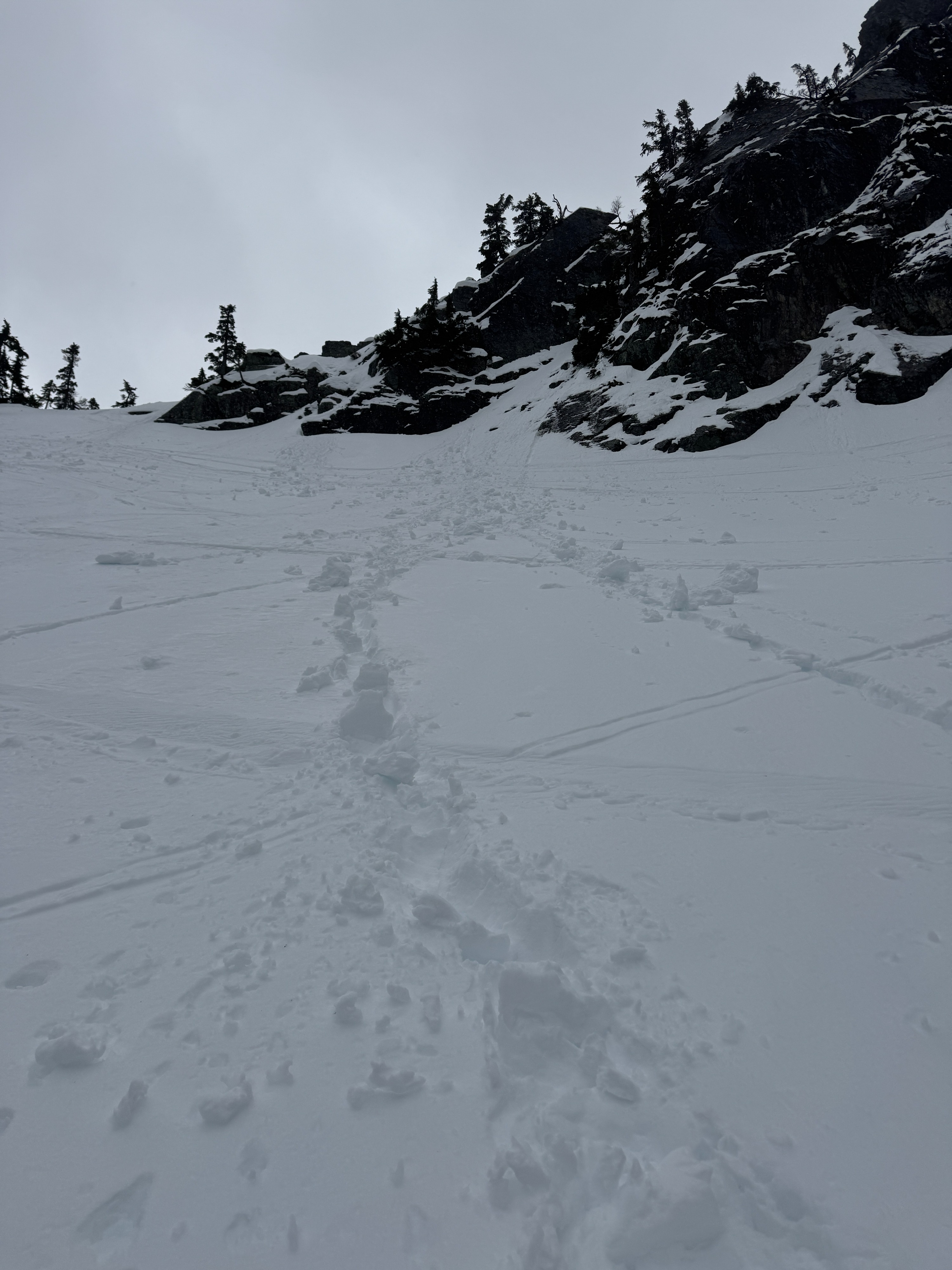
Wet, manky snow was a bit of a surprise. We were expecting more of a crust, but... instead we saw rollerballs releasing from rocks and cliffs. While we didn't encoutner any wet loose slides, the snowpack certainly seemed capable in very steep terrain.
No cracking or collapsing observed.Weather
- Air Temp
- 36
- Cloud Cover
- overcast
- Wind Loading
- none
- Rain Elevation
- 6000ft
- Recent Snowfall
- 0
- Snow Avail For Transport
- none
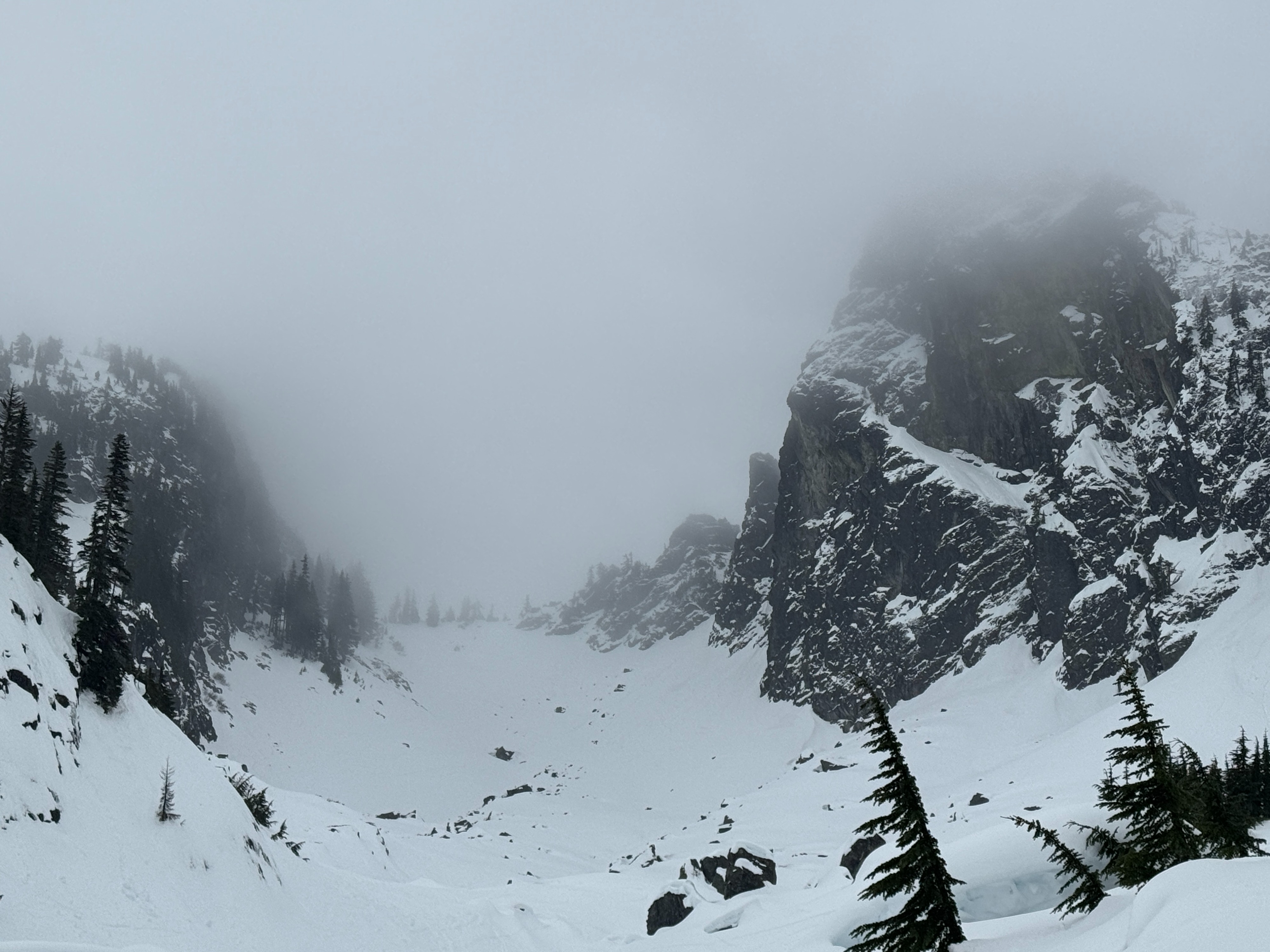
A wet, mild day at the Pass. Generally light rain through most of the morning with a few breaks. The cloud deck stayed around 5500-6000ft, allowing for some visibility of the middle and lower elevations. Winds were gusty out of the WSW.
Snowpack
Wet Snow: The snow surface was wet, punchy, and unstable right out of the gate today. There hadn't been any overnight freeze. The addition of rain to the already wet snow surface didn't help matters. Rollerballs began to release off the surrounding cliffs, in some cases crossing our skin track. While we didn't see or trigger any wet loose slides, they may have occurred later in the day or if we'd pushed into steeper terrain.
Persistent Weak Layers: We were actively targeting known slopes in the upper Denny Creek area where these layers have been observed in the past to see how they've changed this past week. Two snow profiles found very similar results. 1-2mm facets routinely failed just above the 2/7 crust, just over a foot deep (35cm). In small column tests, the layer collapsed suddenly. In extended column tests, the failure propagated across the block (ECTP 2 of 3 blocks). These results suggest avalanches on this layer are still possible. While the results are slightly better than those reported last week, they're still concerning.
We didn't have time to dig on a more shaded aspect; however, we did measure the layer at about 1.5 feet (50cm) below the surface.
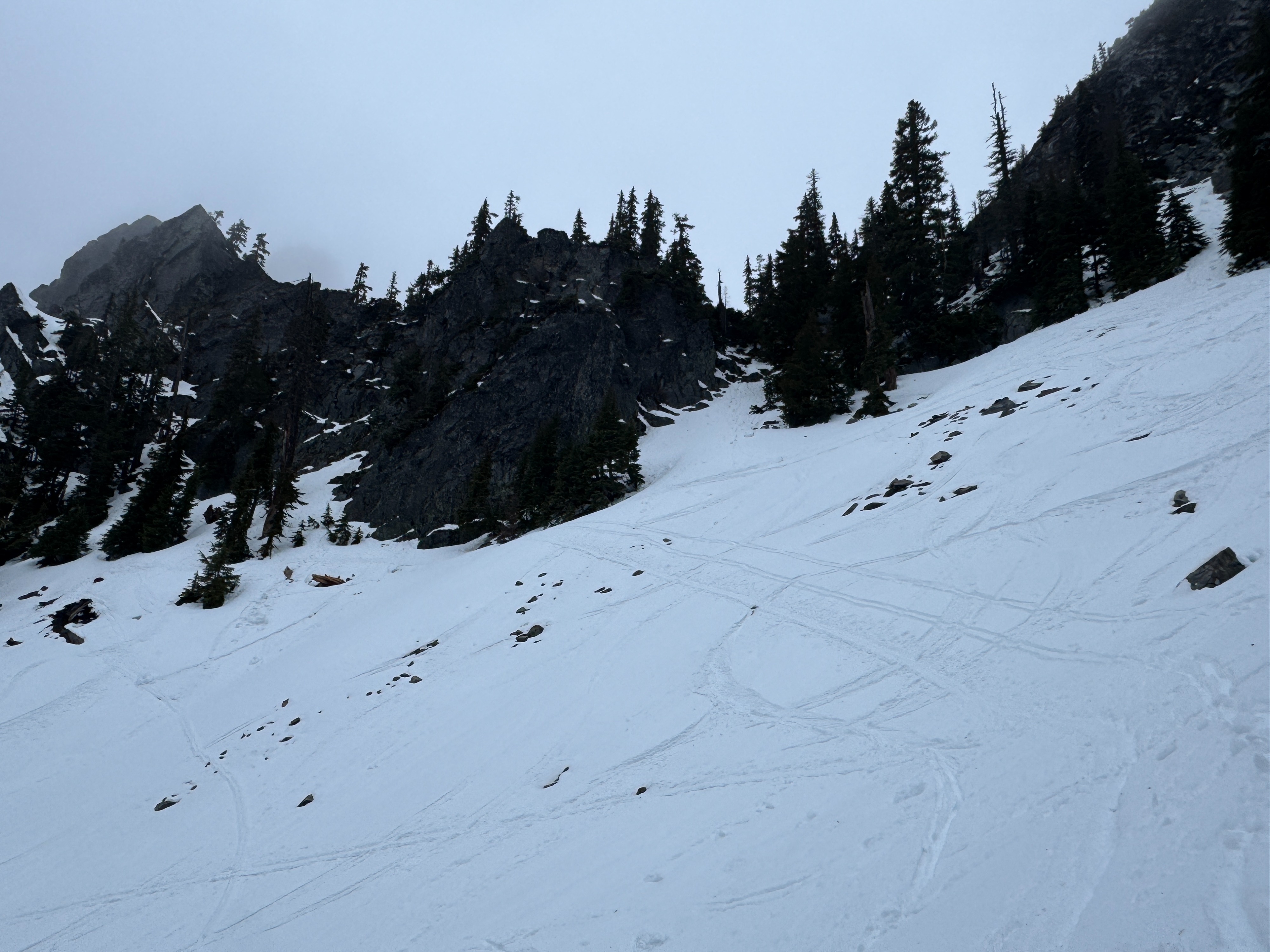
Coverage: The snowpack remains very thin, especially lower in the terrain and on sunny slopes. In some places the recent snow sits on bare ground or rocks. Open creeks, random holes, downed logs, small trees, and abundant bushes made travel longer than normal.
Avalanche
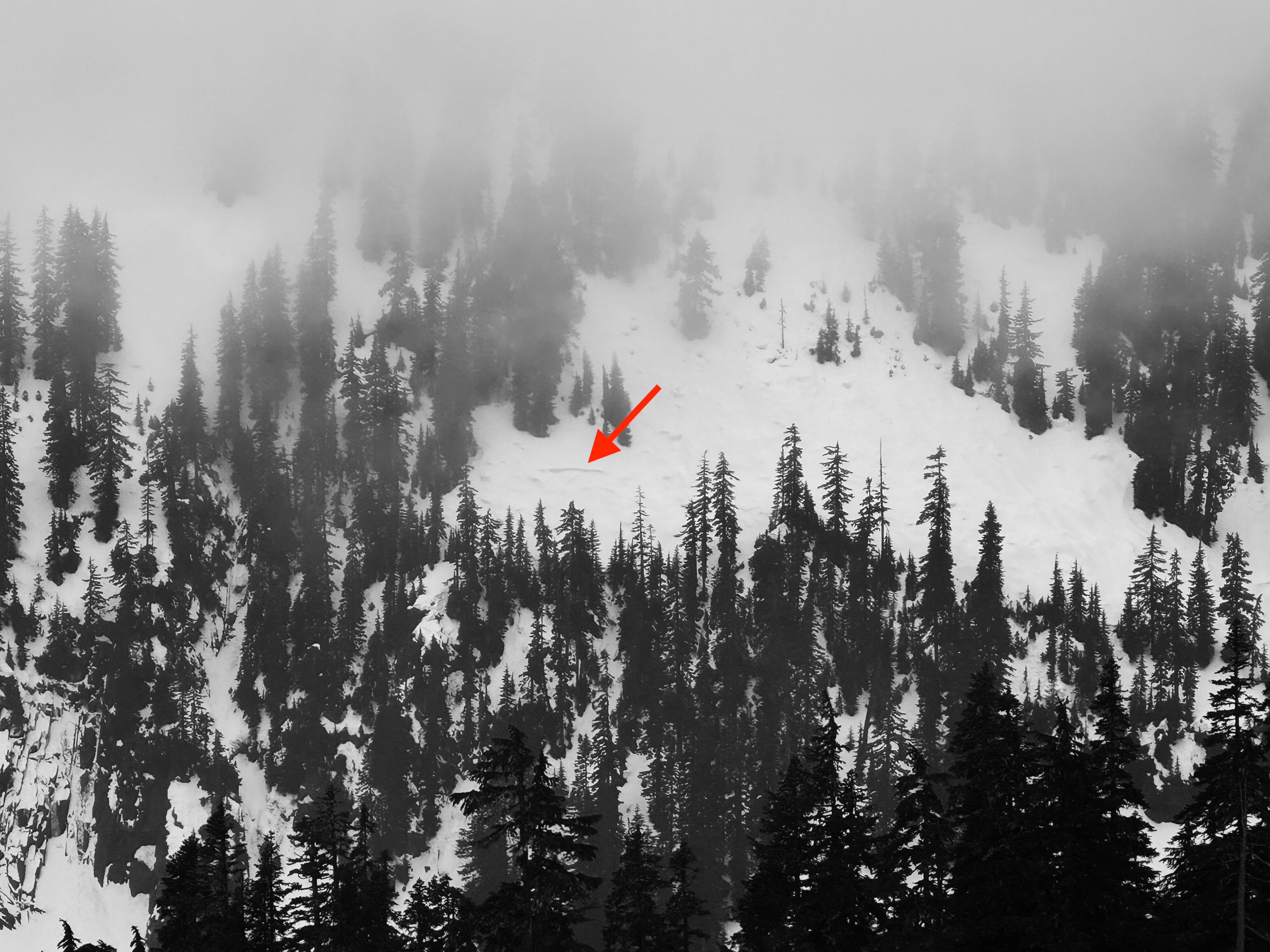
-Wet Loose: No real wet loose slides were observed, but plenty of active rollerballs were seen. -Slabs: We noted one small crown on Low Mt. However, given the distance and visibility, it was hard to say much about this layer.