
Quick report
- Cracking
- specific
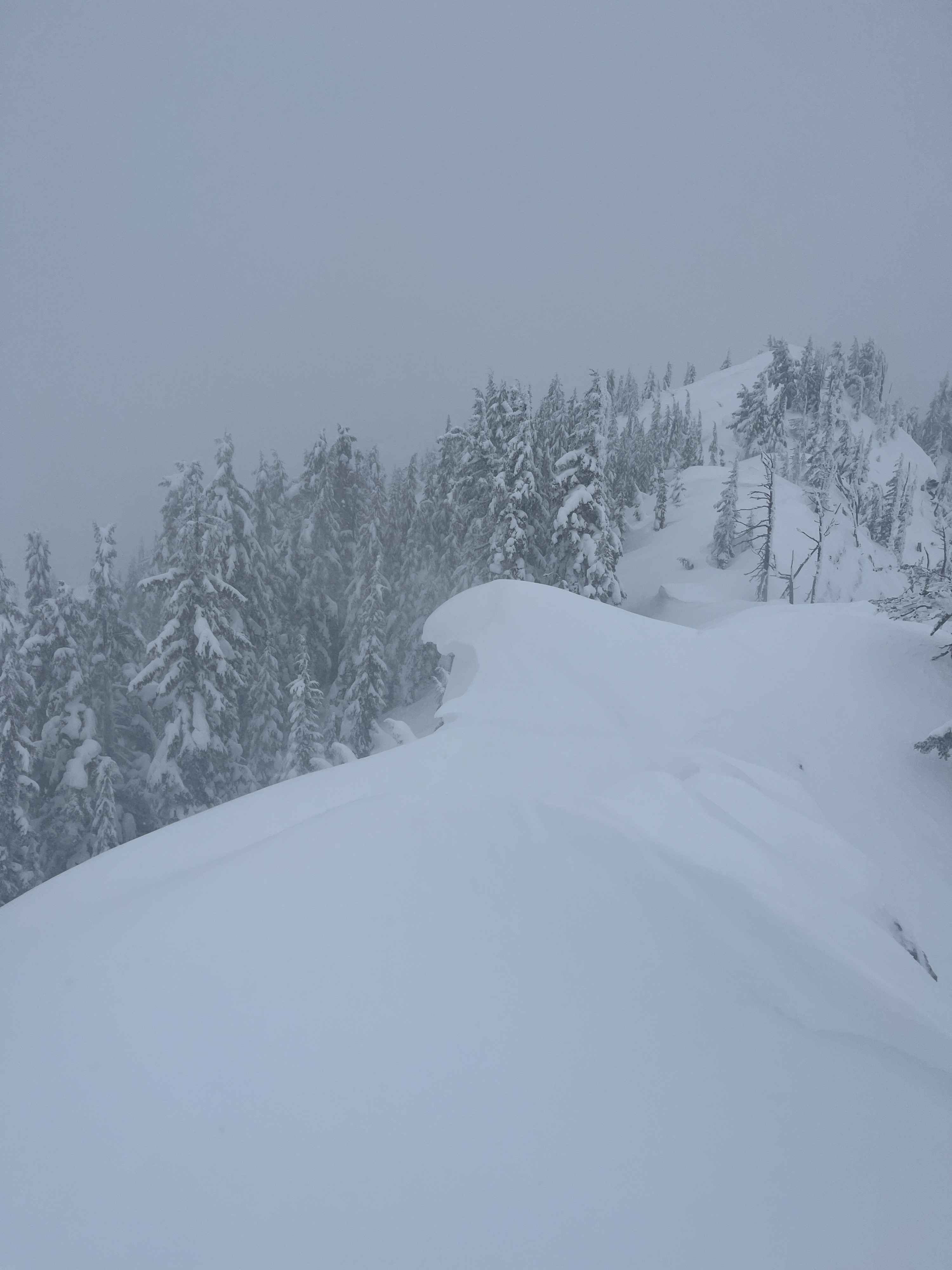
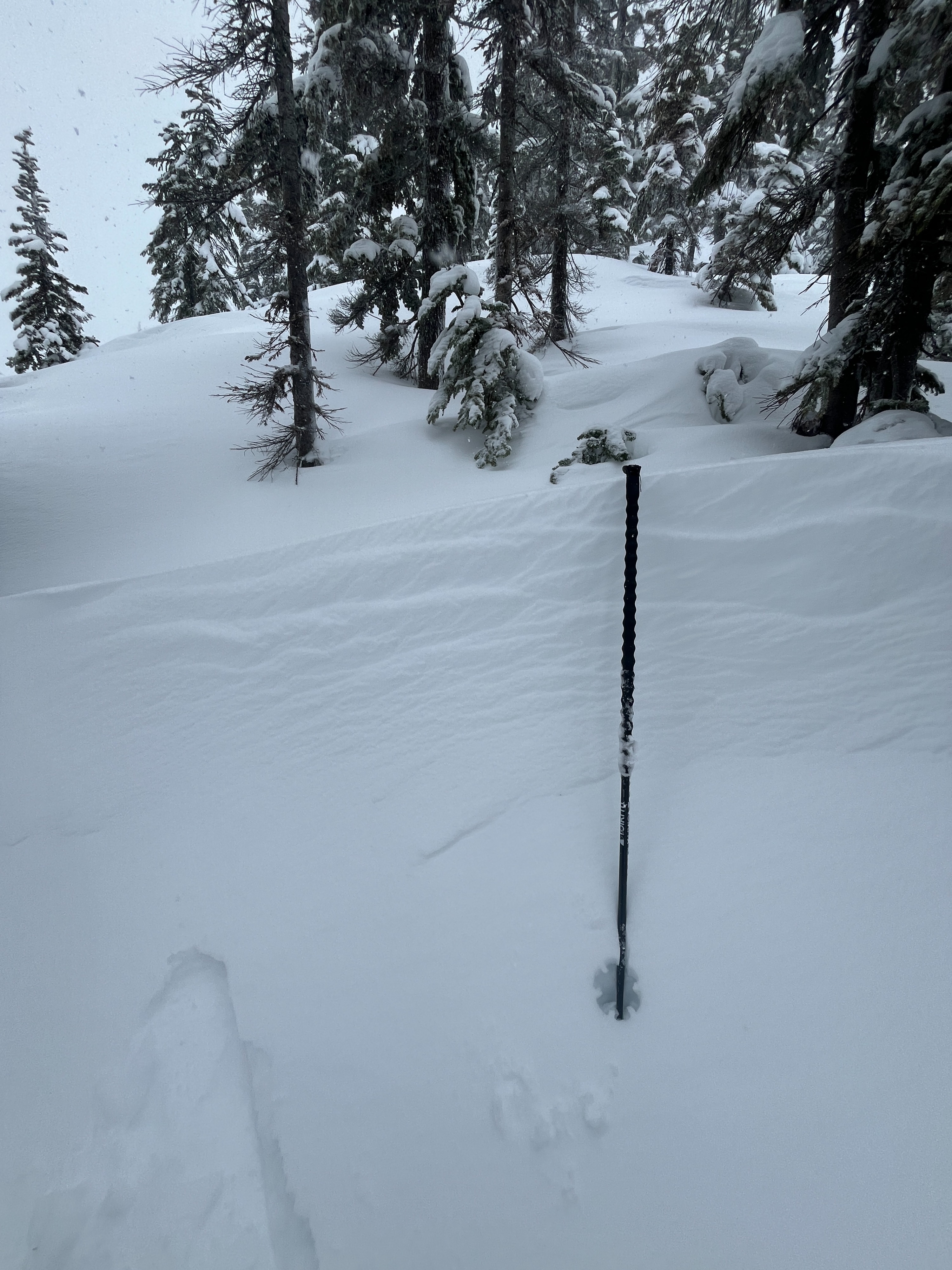
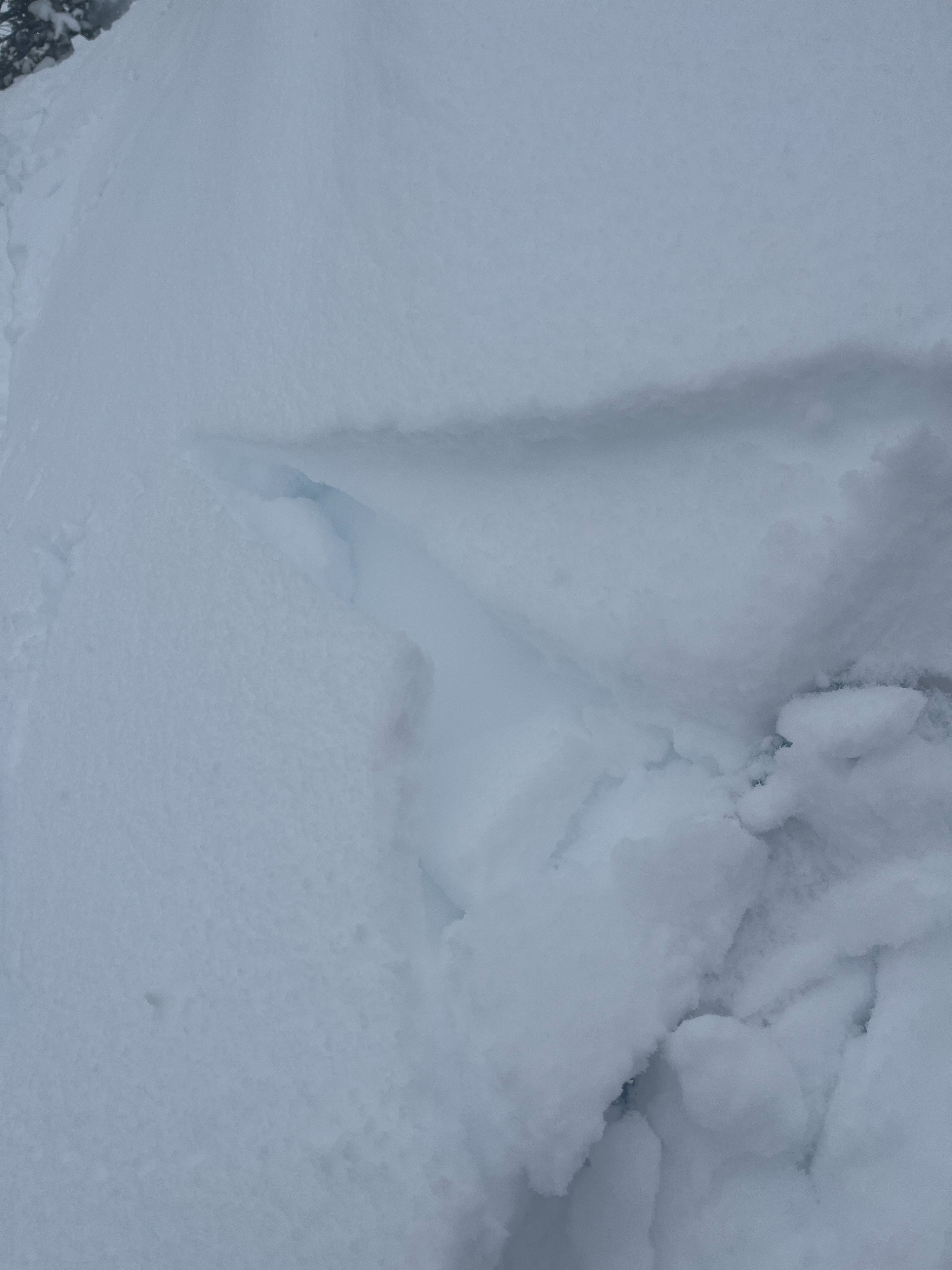
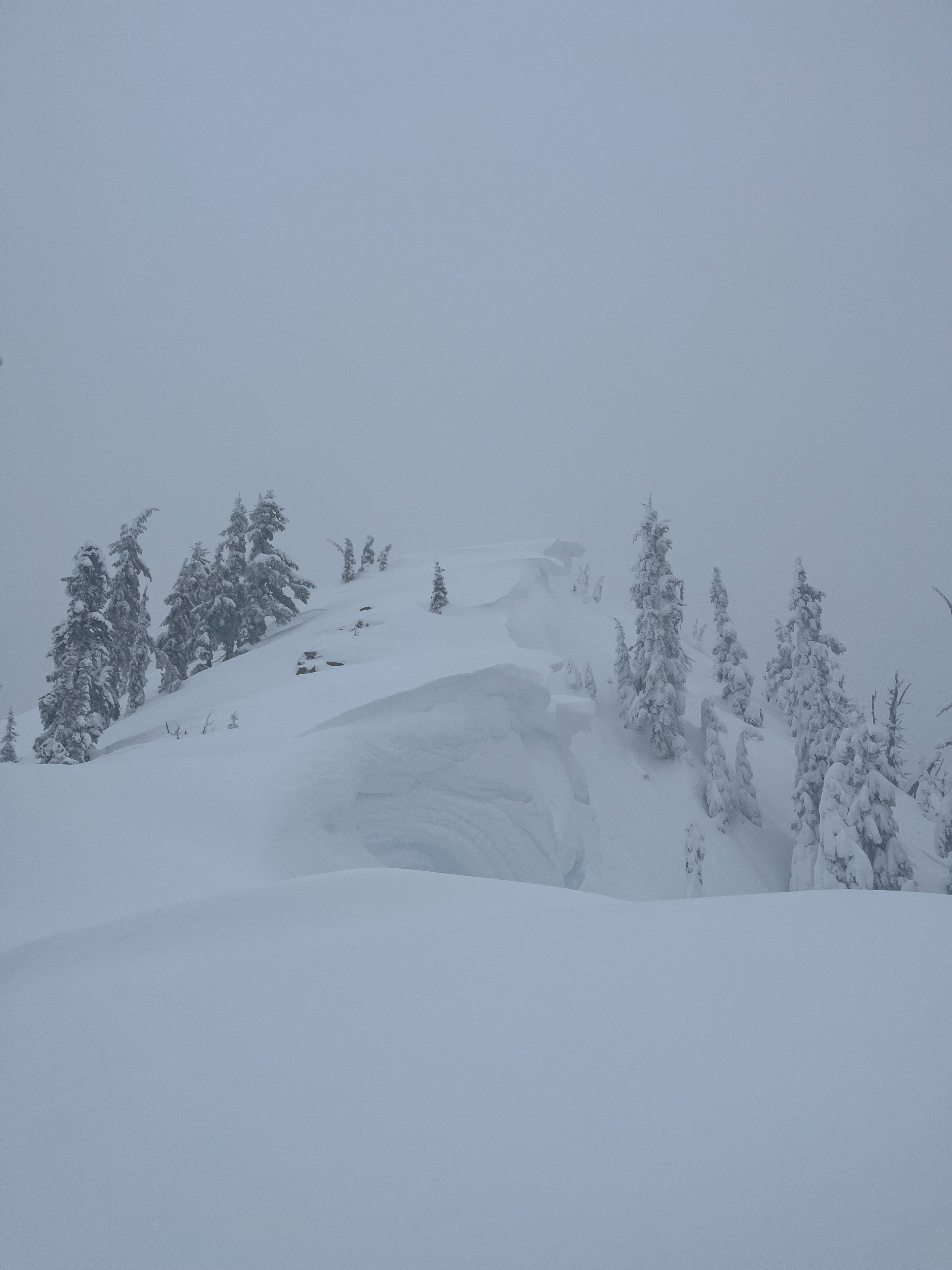
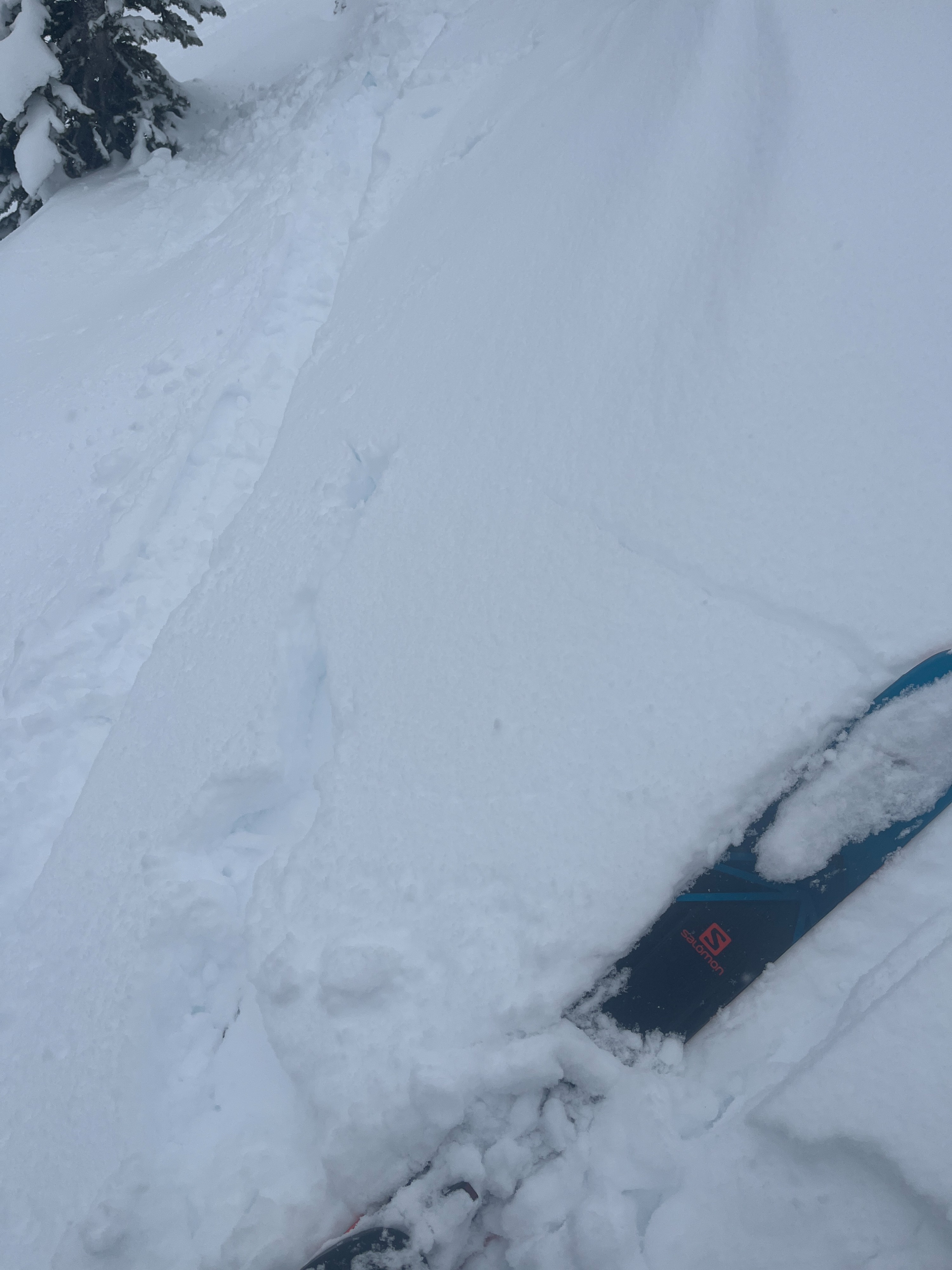
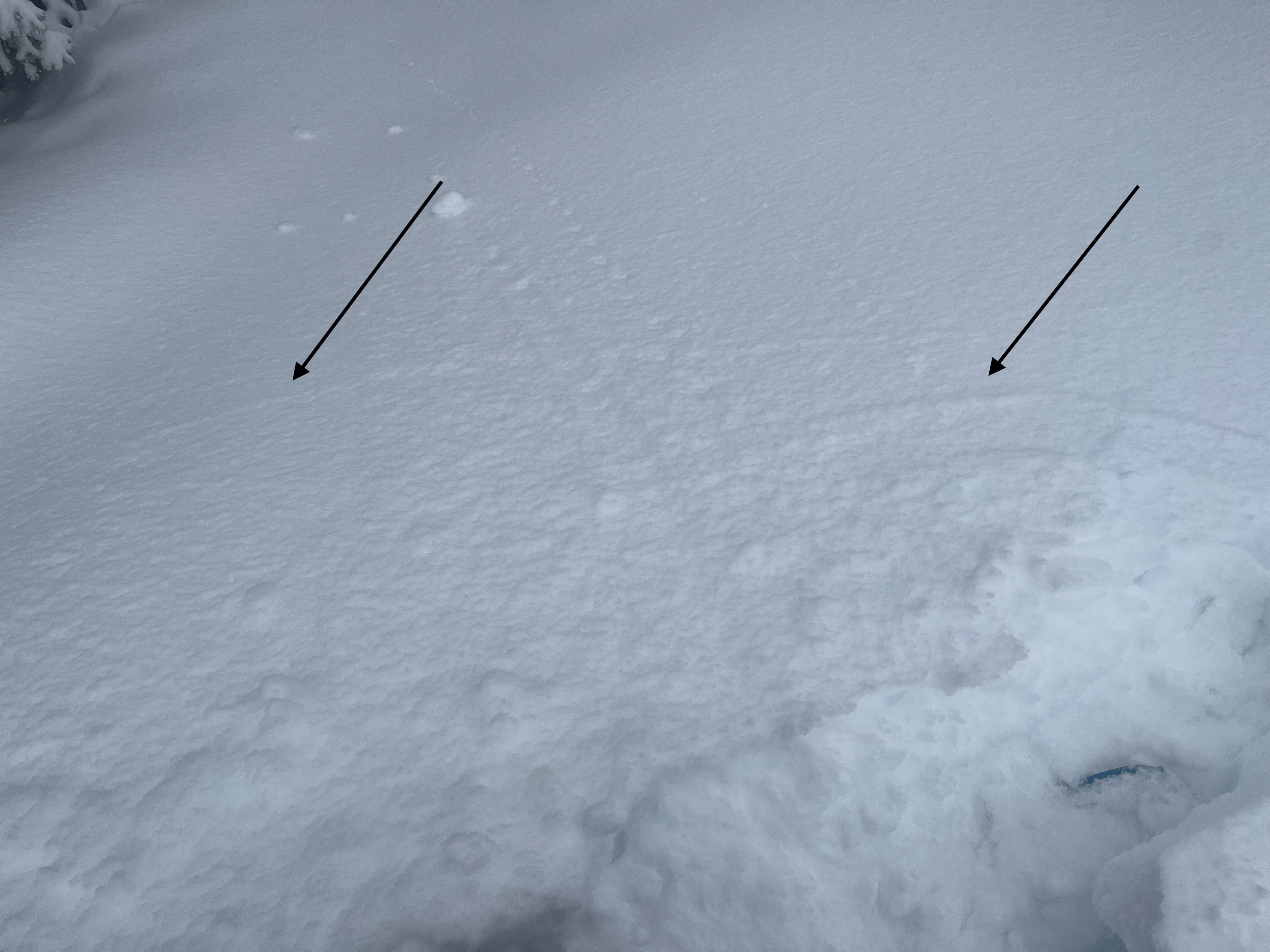
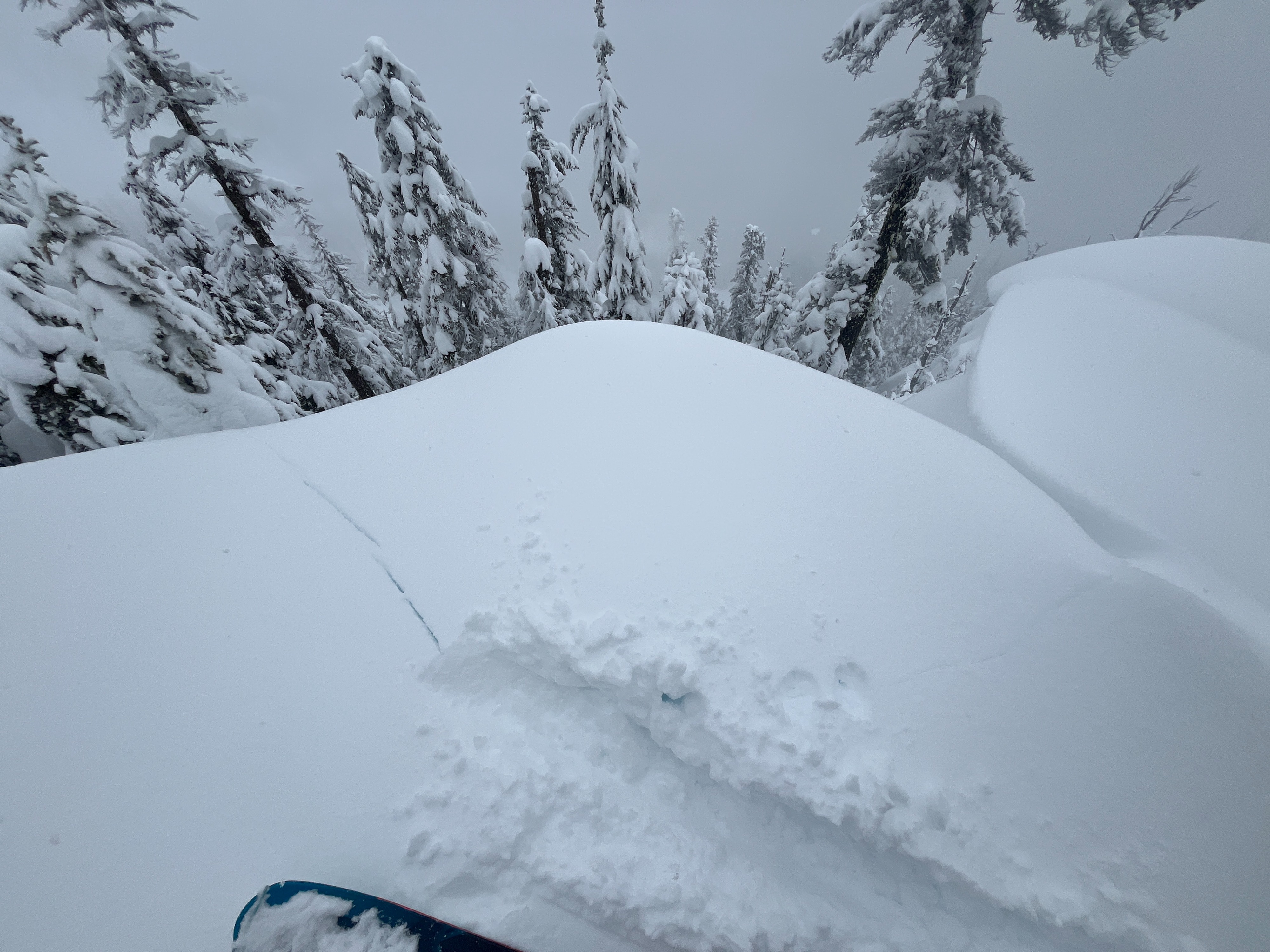
New and recent snowfall is definitely back to PWN-like densities and tendencies. I found plenty of new snow instabilities throughout the day, thanks to the slab-like qualities. Although it was an exceptionally un-windy day despite snow falling throughout, it was apparent that the wind did its work previously. Despite it all, great skiing was to be had in sheltered terrain!
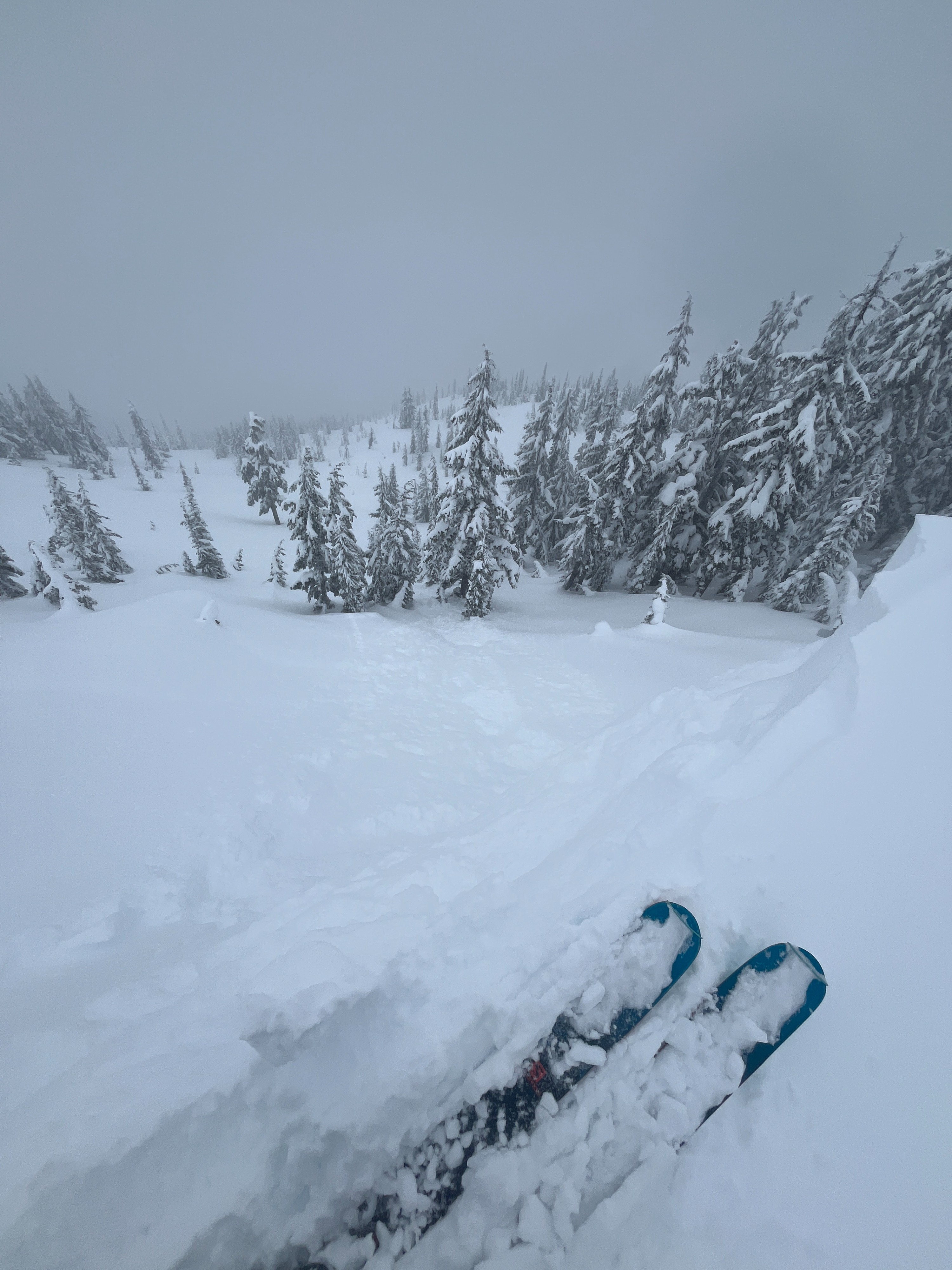
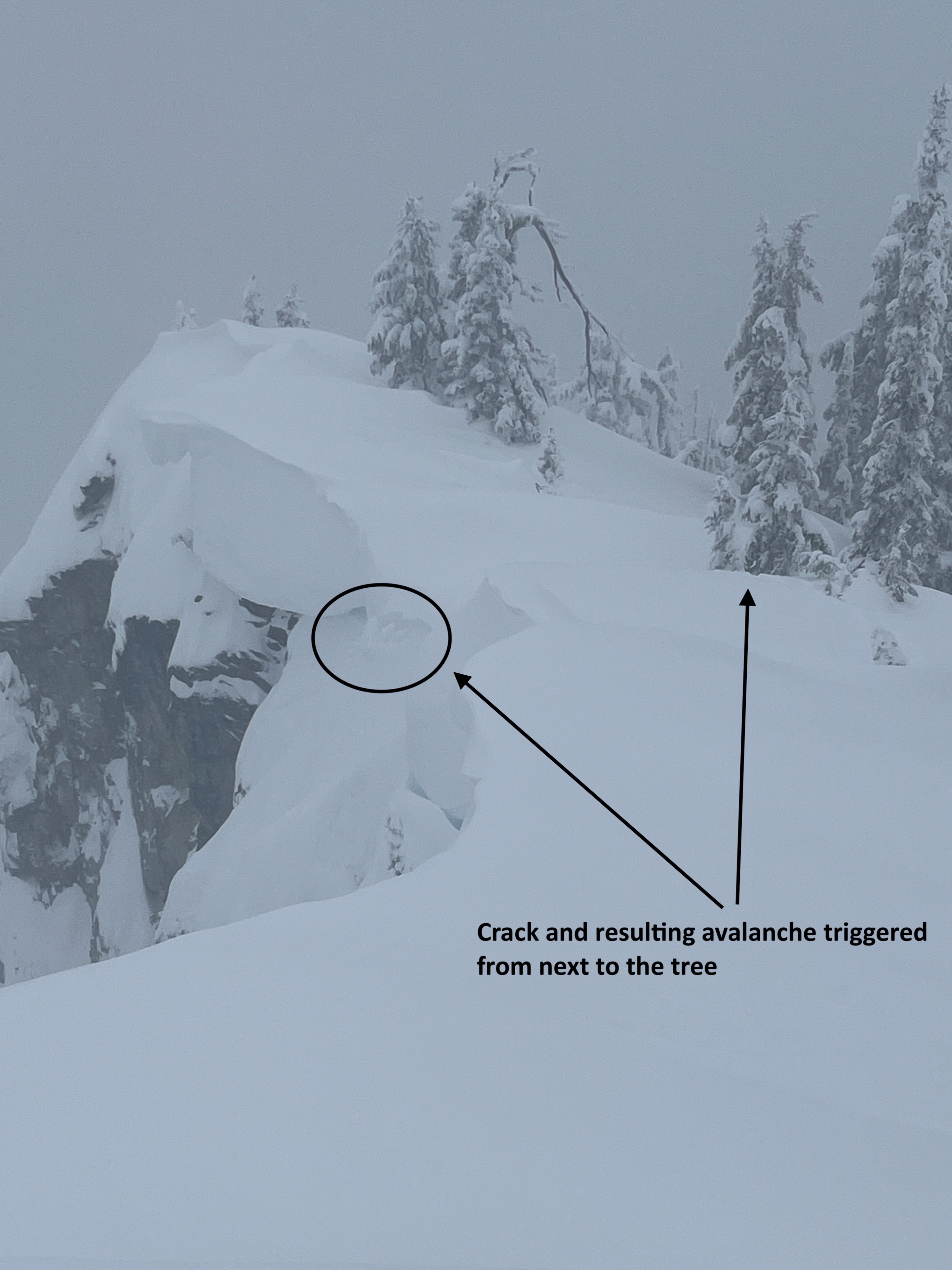
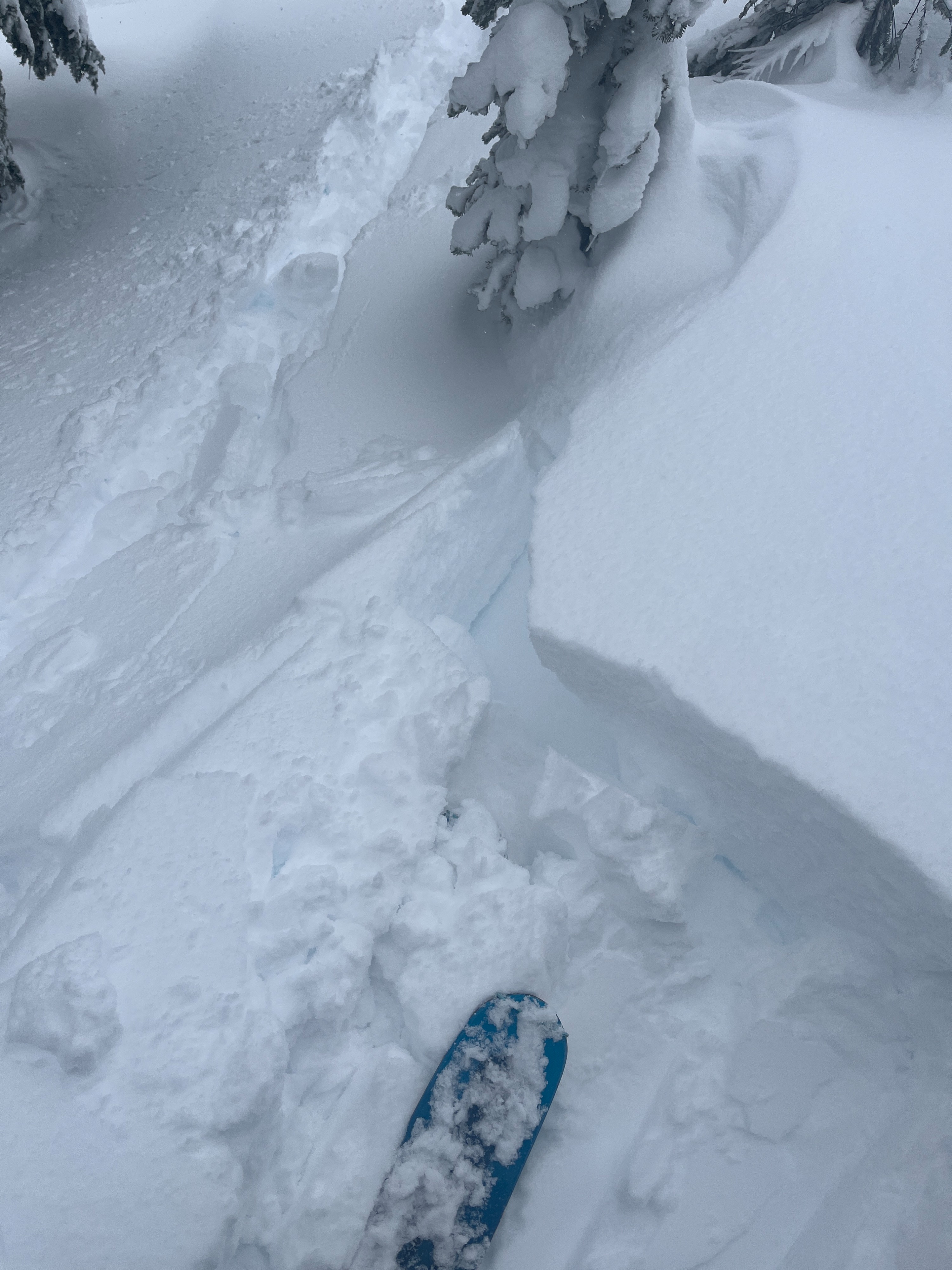
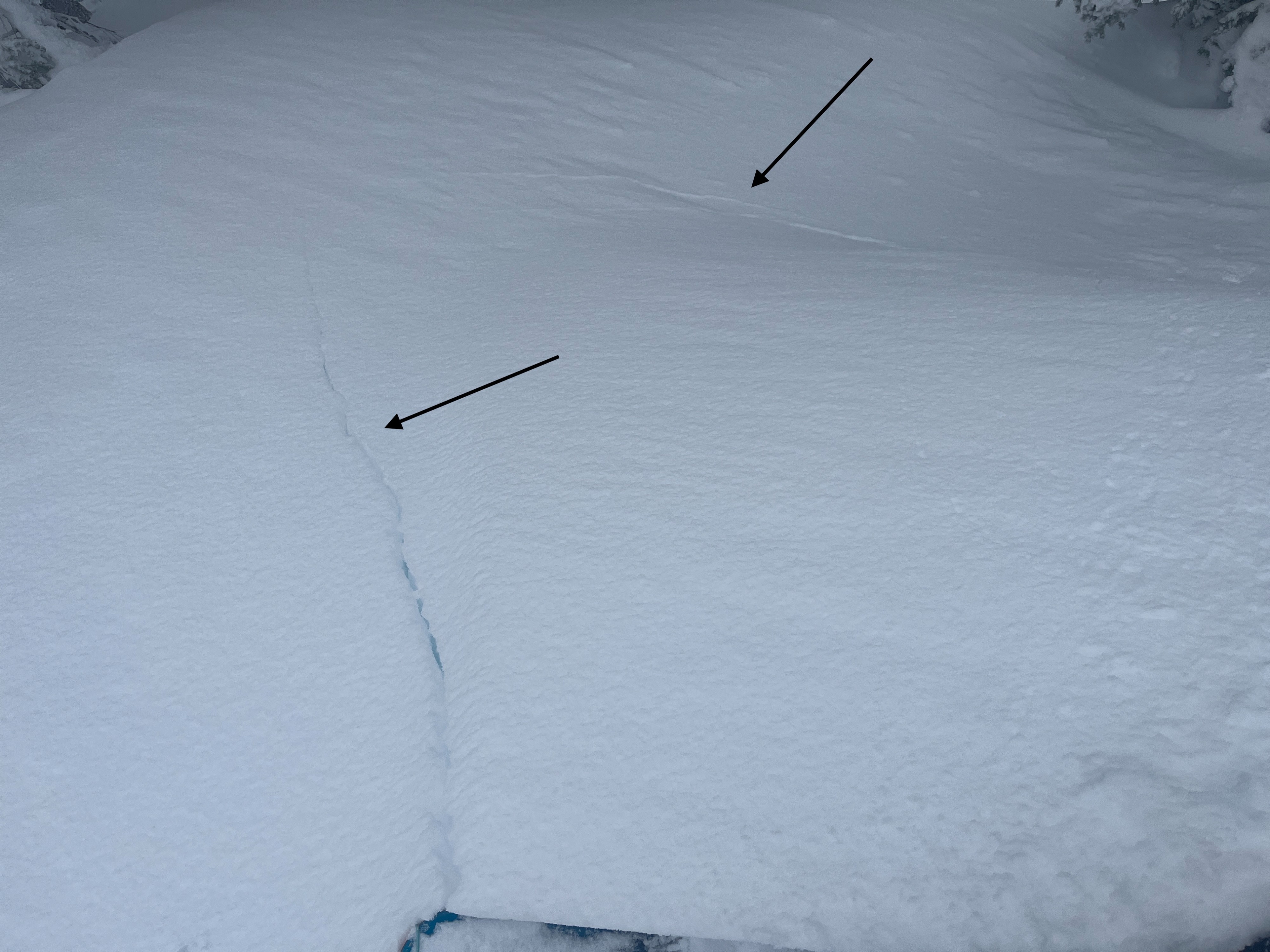
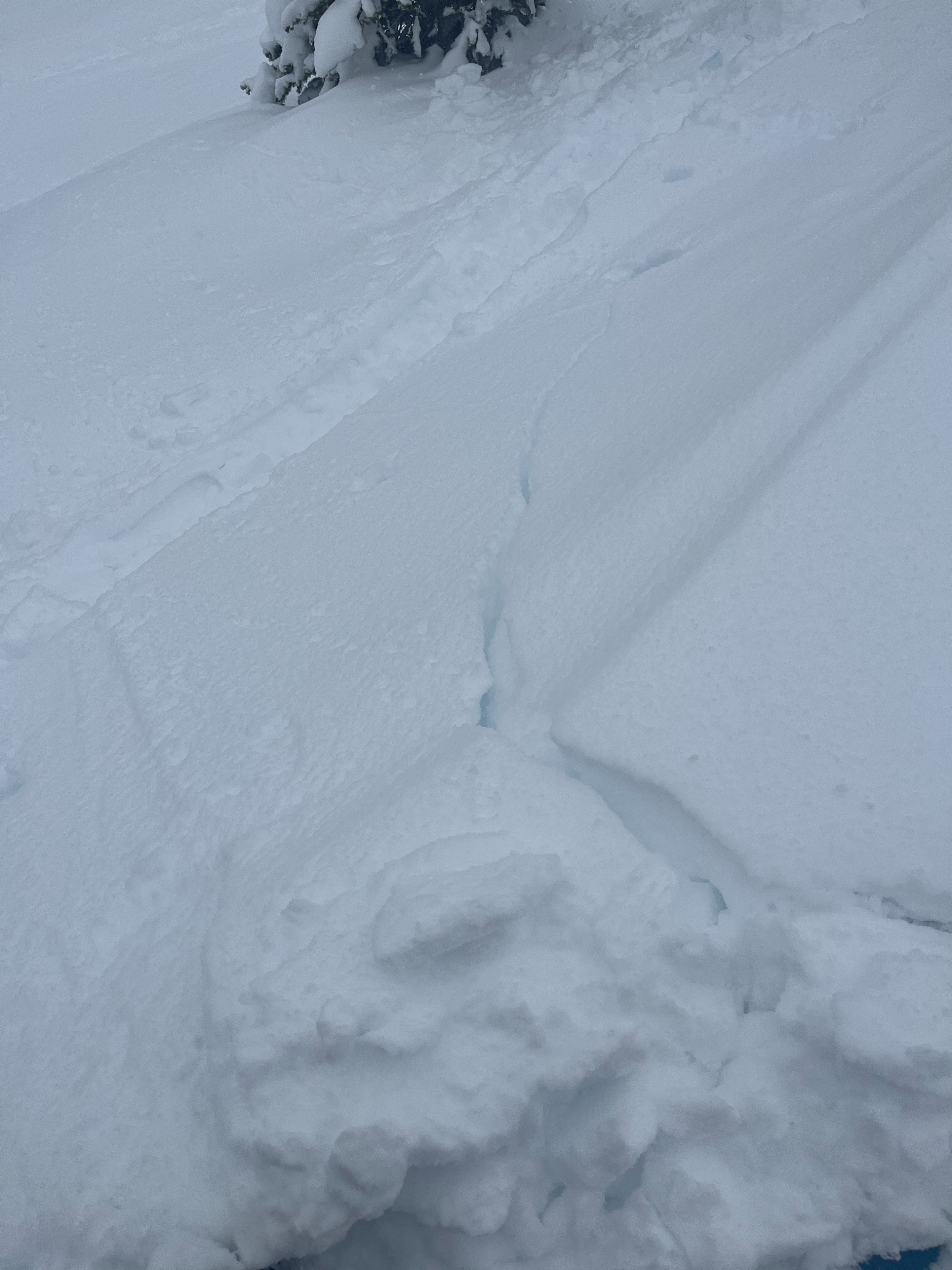
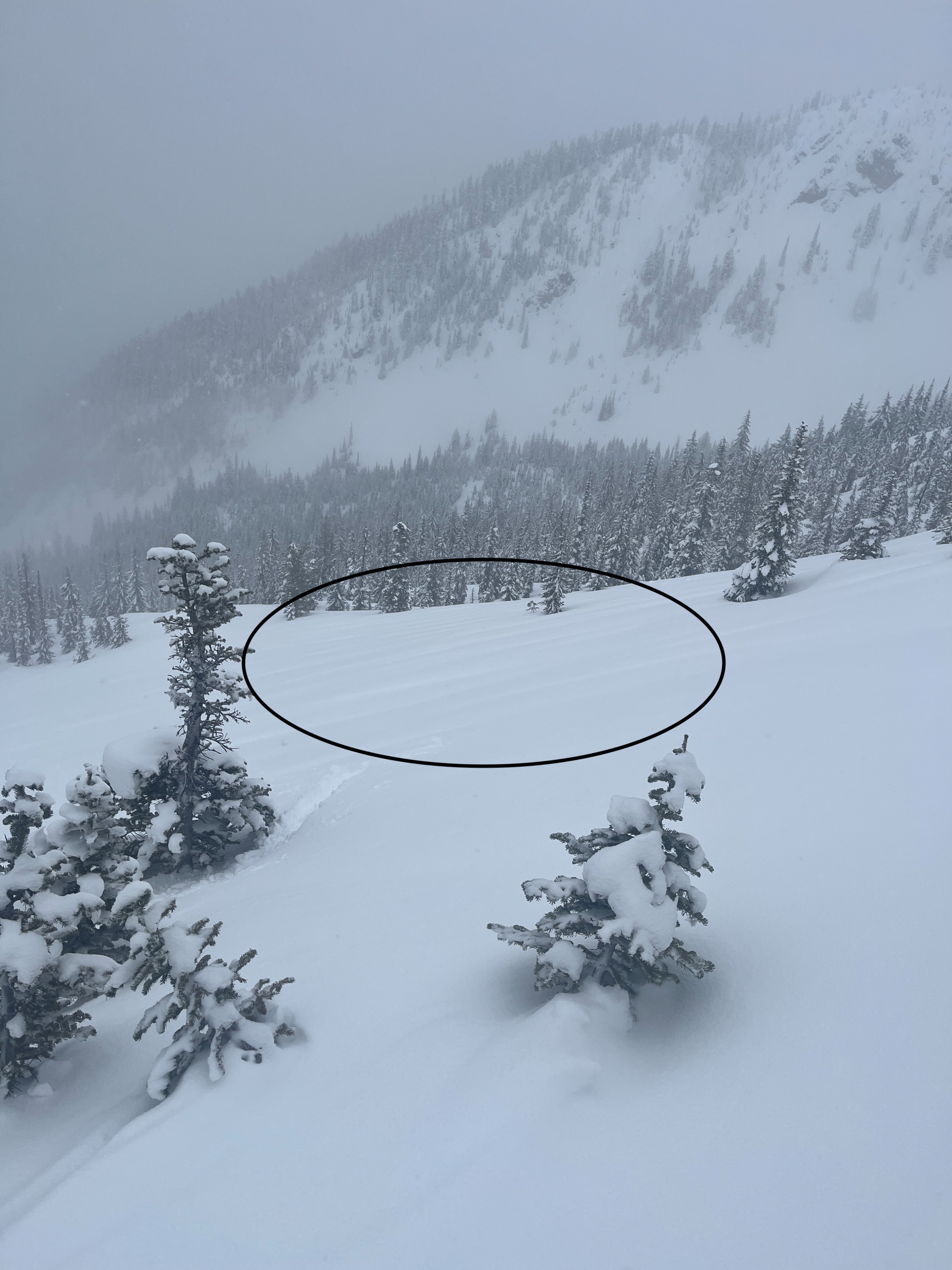
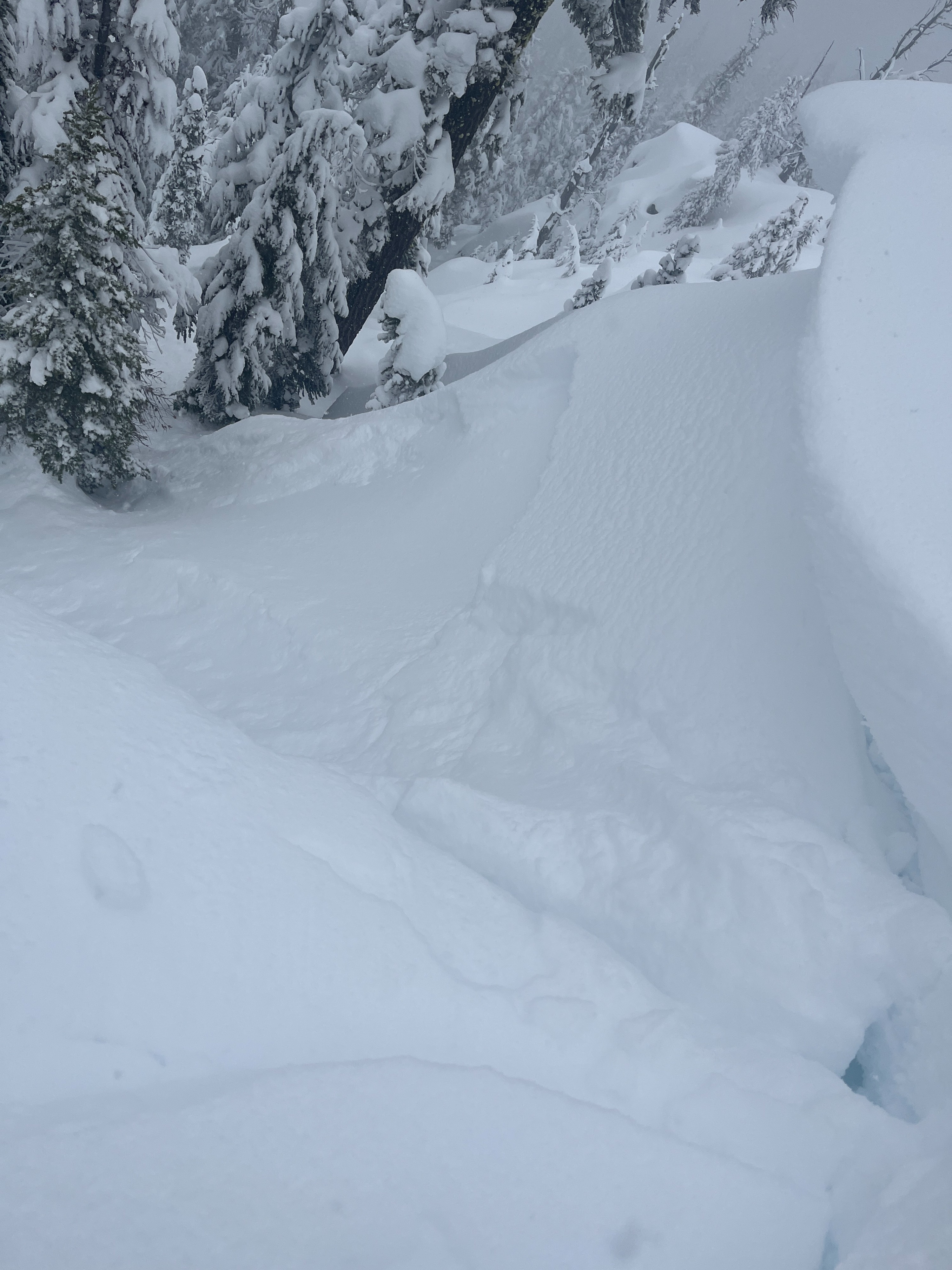
I got one small crack in a storm slab at lower elevations on an east aspect. As I ascended to middle elevations and began finding evidence of wind transport, I could easily trigger shooting cracks in unsupported, steep terrain features. If I pushed hard, I could get the slab to move. Slab thickness was anywhere from 3-11in. I triggered three very small wind slab avalanches with cornice fall on both east and west aspects.Weather
- Air Temp
- 21
- Cloud Cover
- overcast
- Wind Loading
- light
- Rain Elevation
- 2500
- Recent Snowfall
- 42
- Snow Avail For Transport
- small smounts
Snow fell throughout the day and increased from light to moderate snowfall around 2pm. The snow was wet and heavy. The wind was so calm that I couldn't get a read on what direction it was coming from unless I was at ridgeline. Light gusts blew from the west. Temperatures felt like they decreased near the end of the afternoon but I'm unsure if that was actually the case.
Snowpack
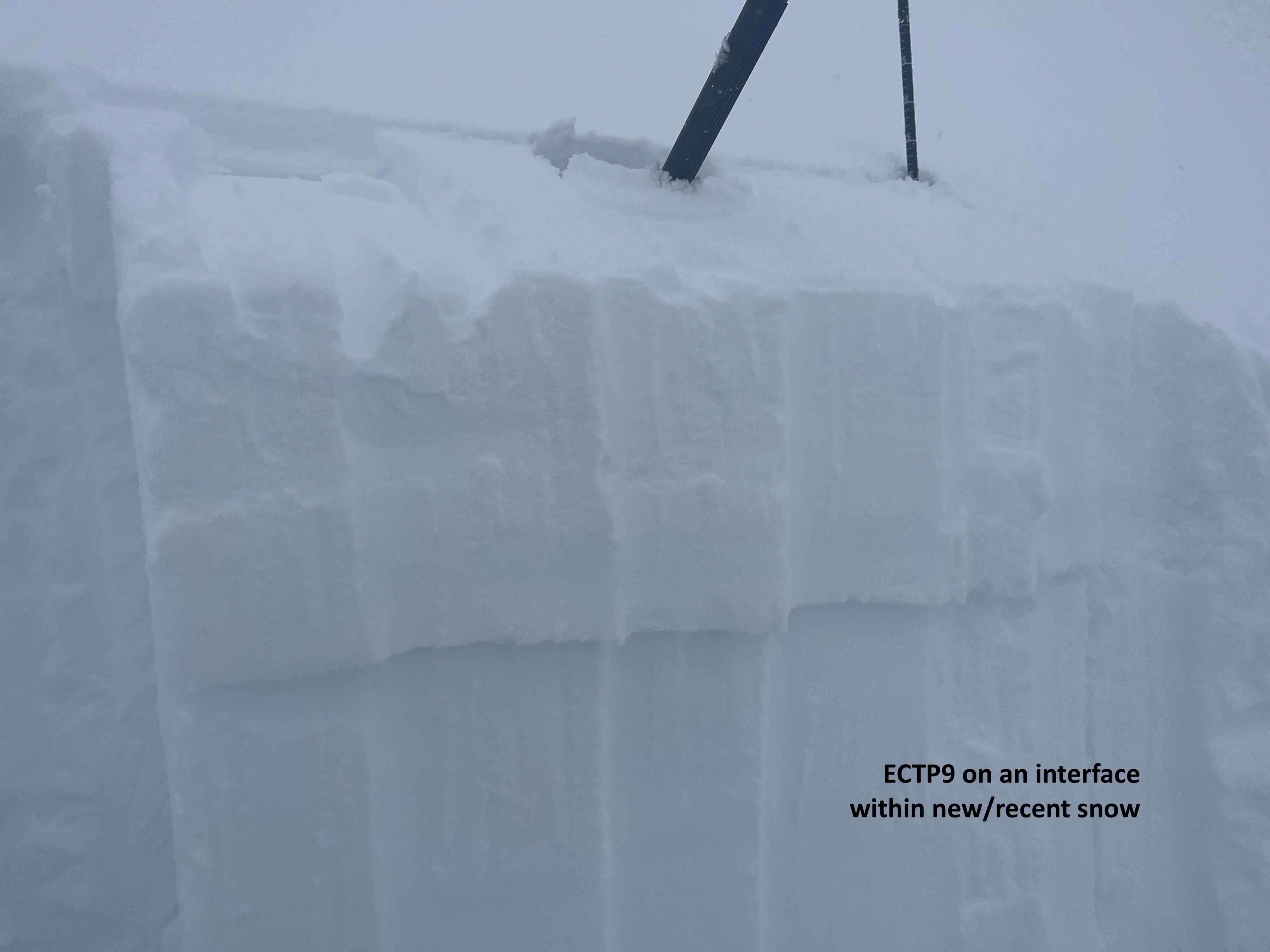
I dug a pit in a fairly sheltered area on an east aspect at 5683 ft. The depth of the snowpack at this location was 129in/327cm and the depth of my pit was 54in/137cm. I found 16in/42cm total of new and recent snow. In the middle of this slab was a very soft crust that might've formed during a brief period of sun when that was the surface. As far as only new snow only goes, there was about 7in/17cm of new snow. Within this slab of new/recent snow I got unstable pit results but I could not identify the interface any other way. Below this slab I found a large slab of rounded grains. This overlays buried surface hoar which in turn overlays the large January Drought Layer of facets. In this location, the facets seemed to be rounding. The unstable pit results previously mentioned at an interface within recent snow 10in/26cm down were an easy sudden collapse in a compression test (CT9, SC), and an easy then moderate propagating extended column test result (ECTP9, ECTP11).