
Quick report
- Cracking
- specific
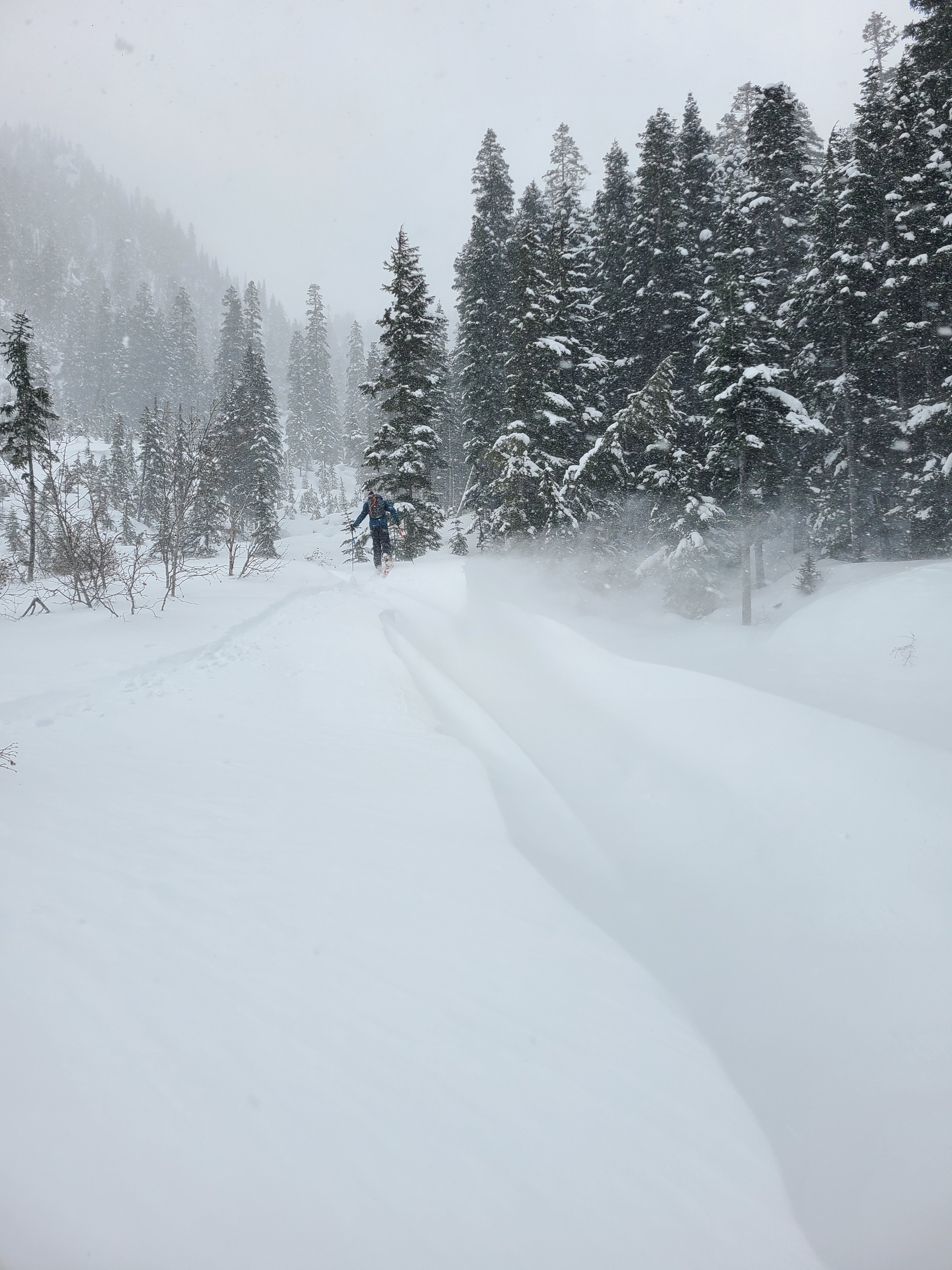
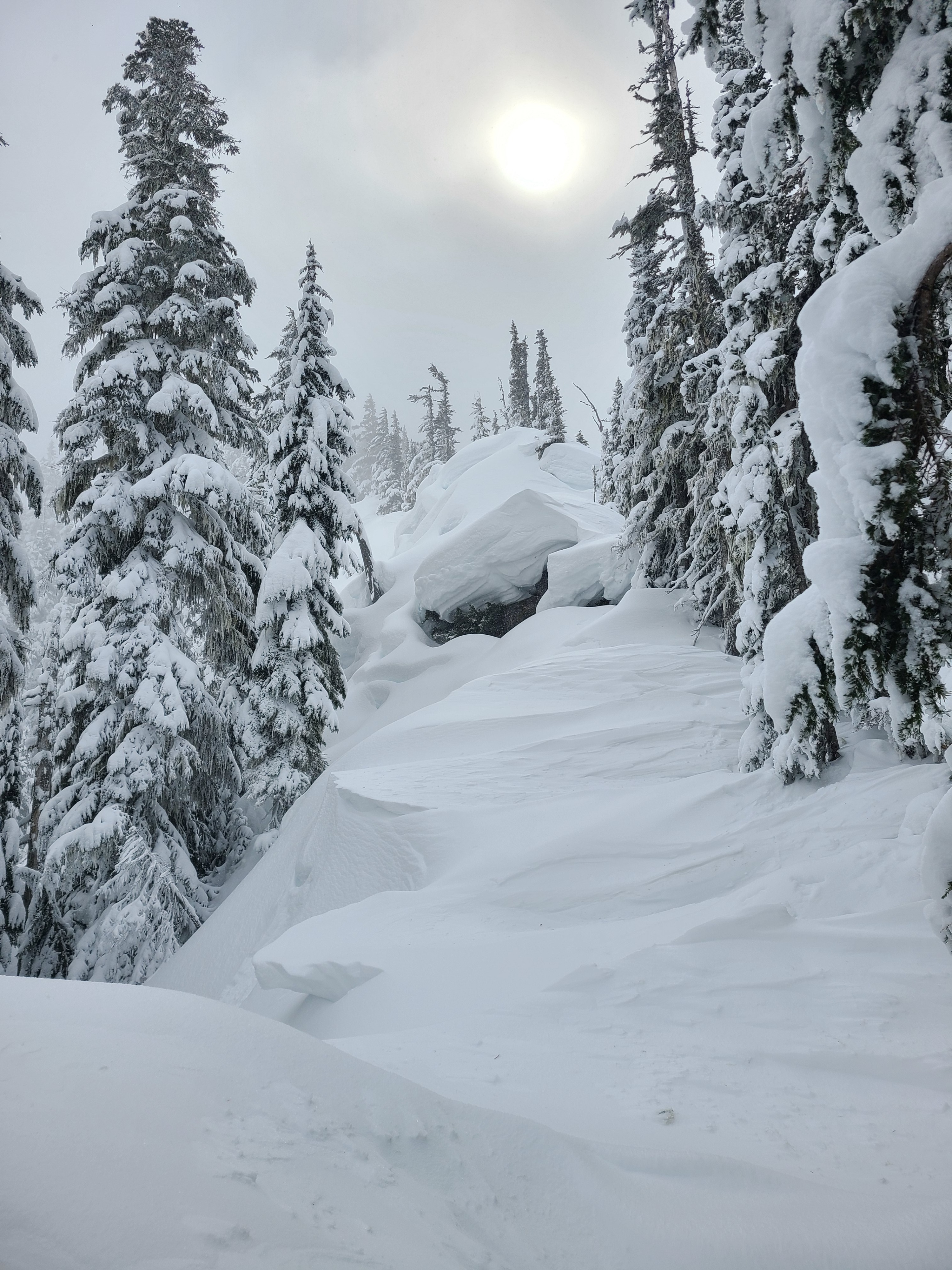
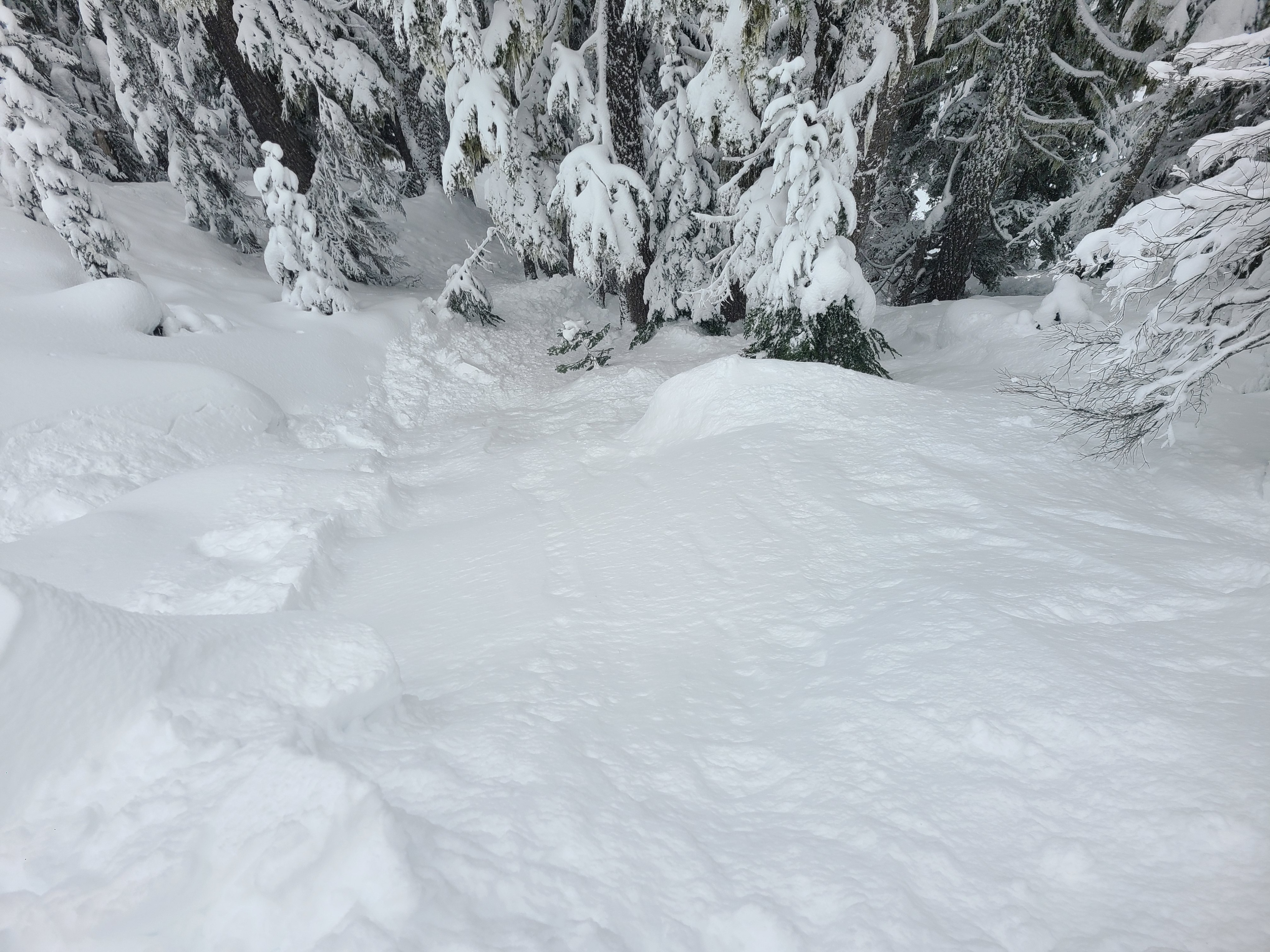
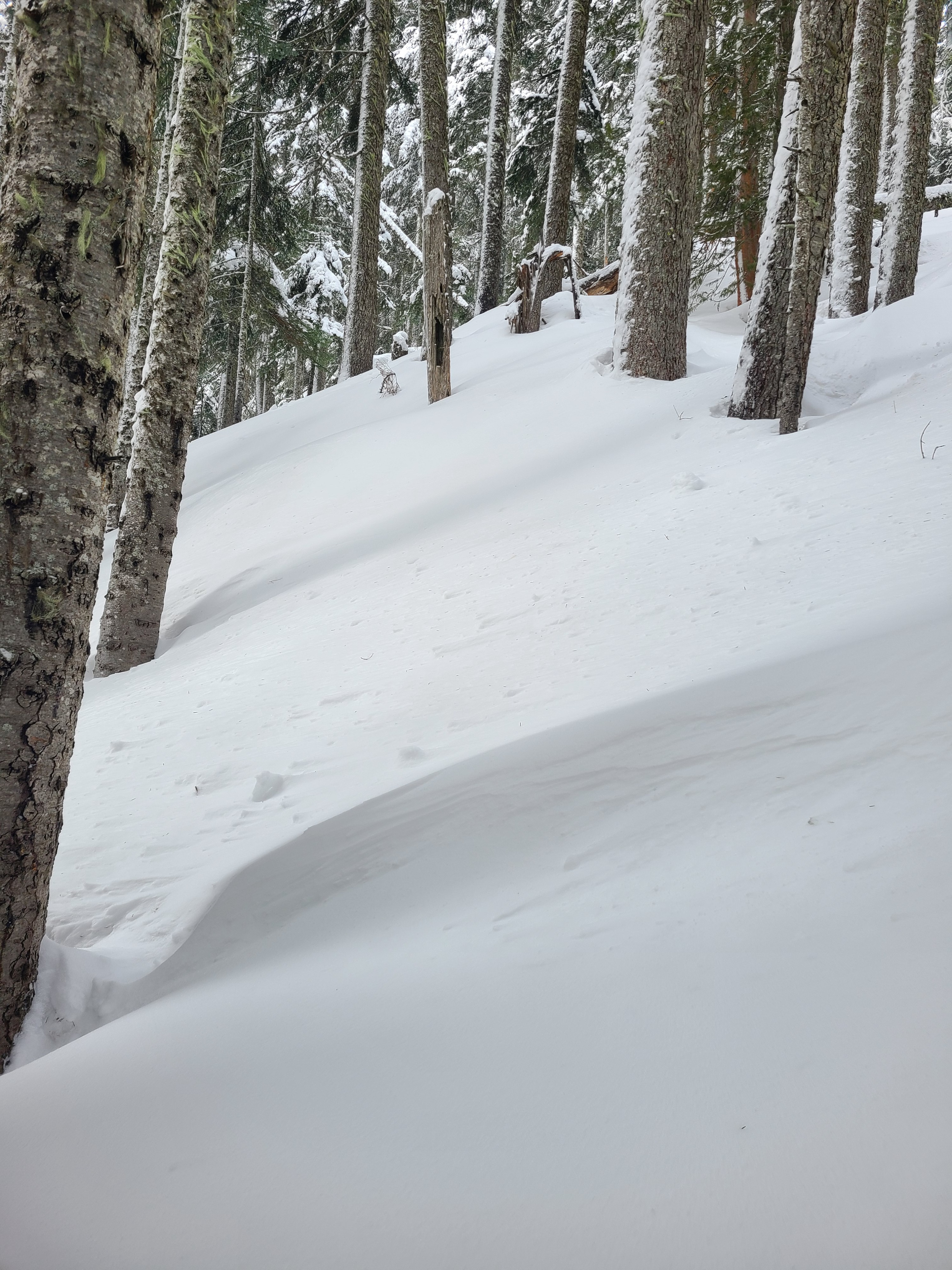
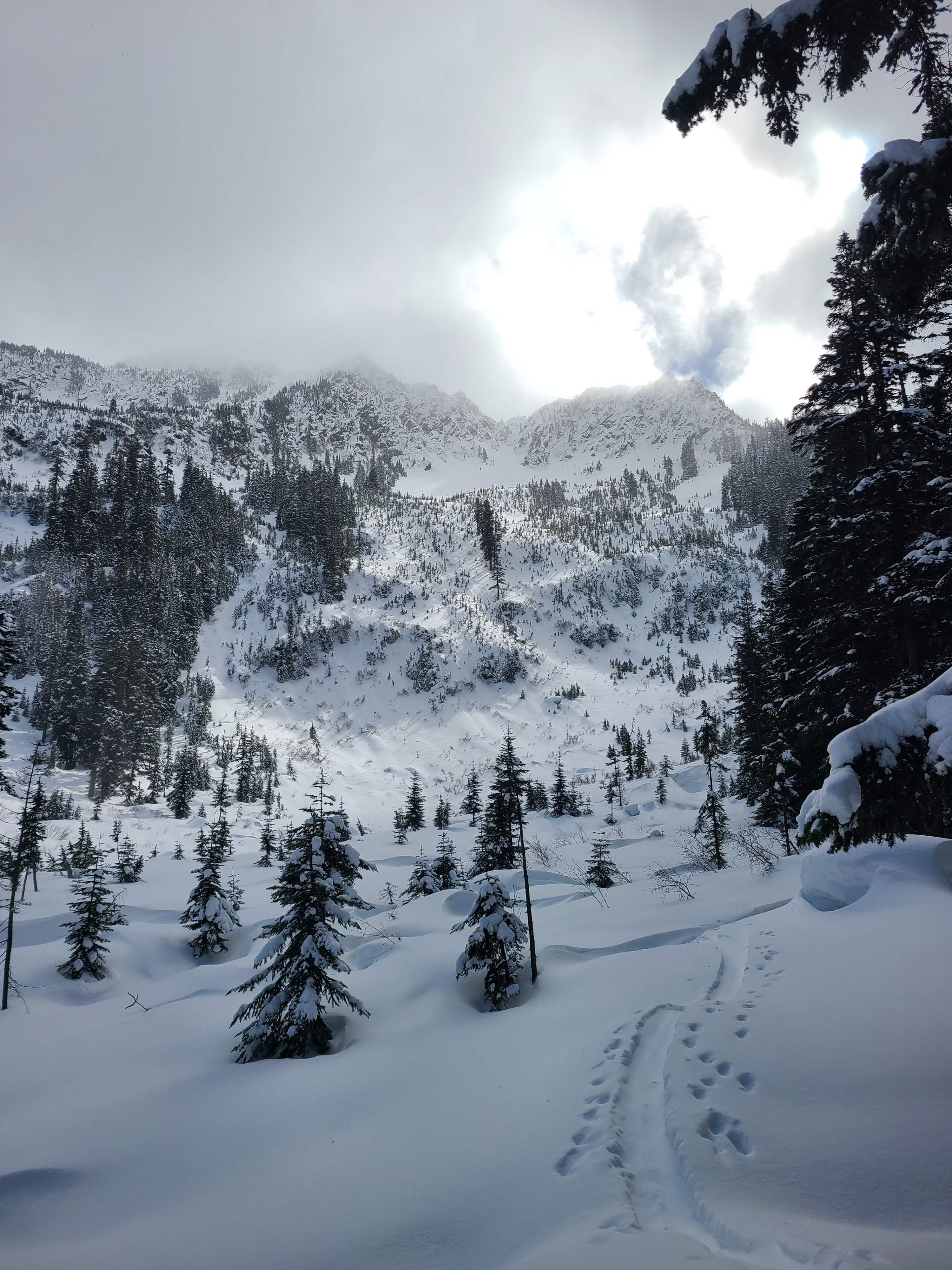
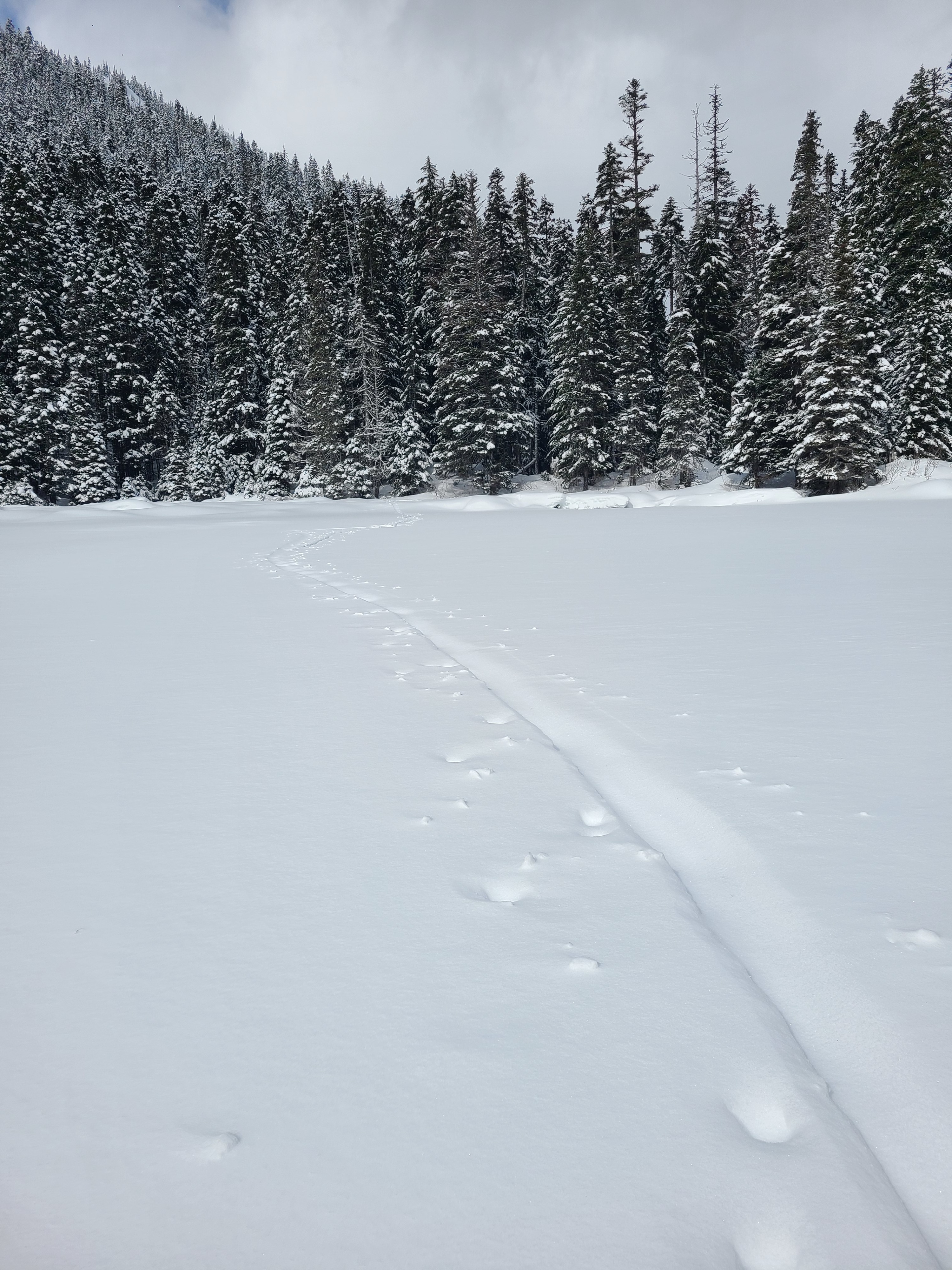
The relatively warm day with convective snow showers, gusty winds, and sun breaks sure felt like spring. There was minimal snow at lower elevations, but storm snow totals increased significantly with elevation. You could still feel the crust in areas beneath the forest canopy, but the skiing was still enjoyable on lower angle slopes. In open areas above 4500ft, the new snow was deep and low density. While the new snow seemed to have a favorable bond with the underlying crust, we found reactive wind slabs in most open terrain, and so we stuck to sheltered glades and forested areas for skiing.
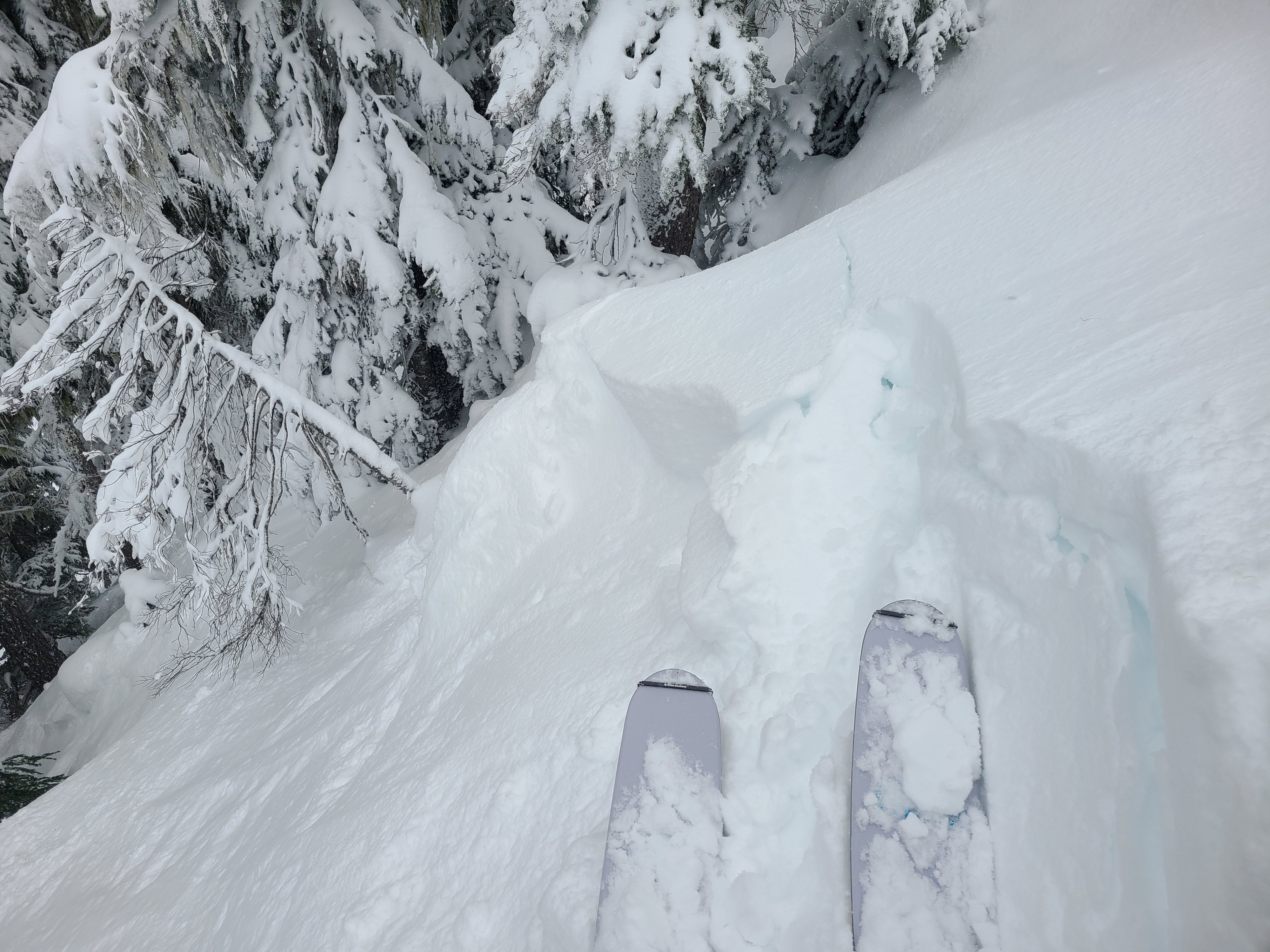
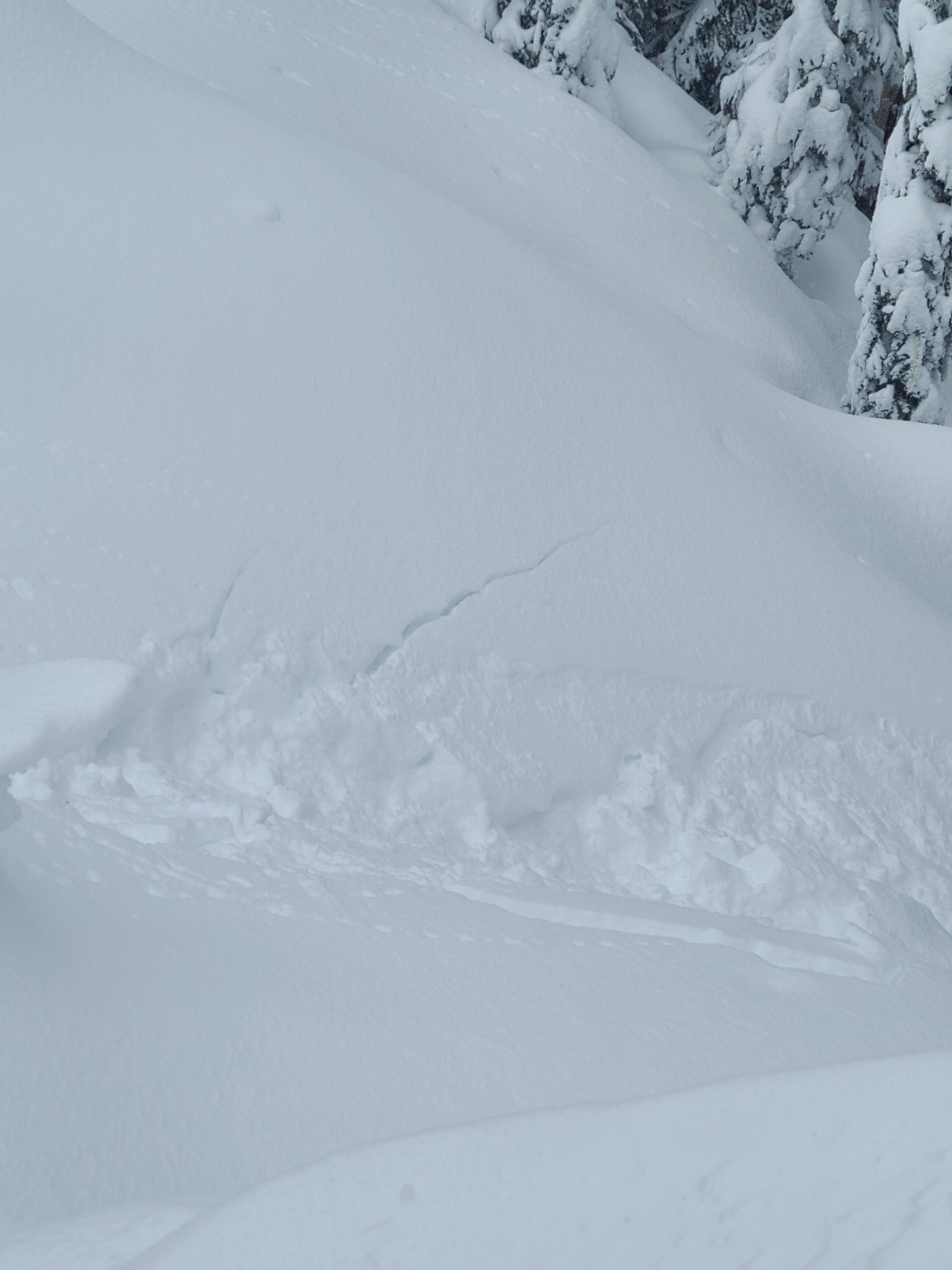
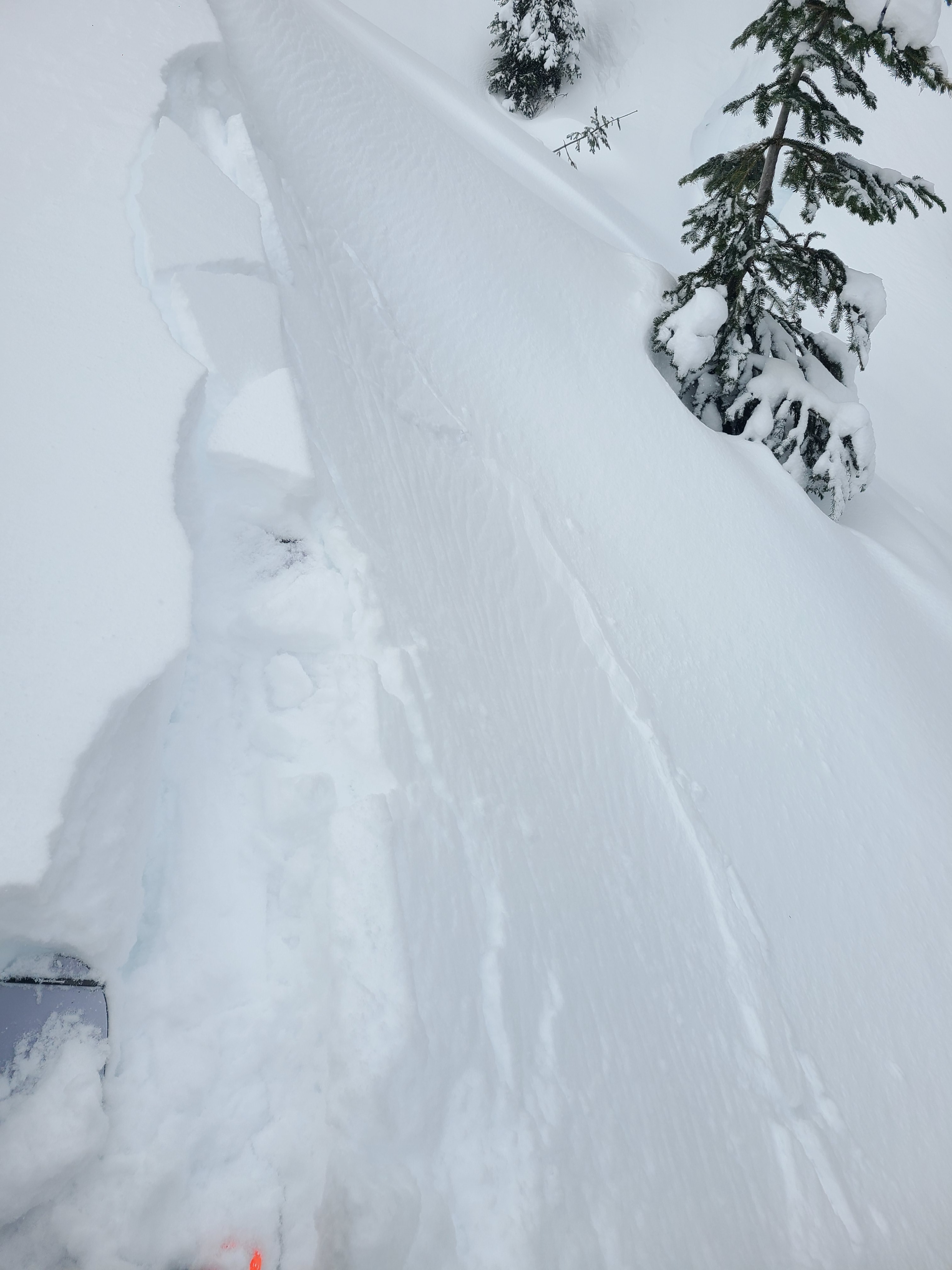
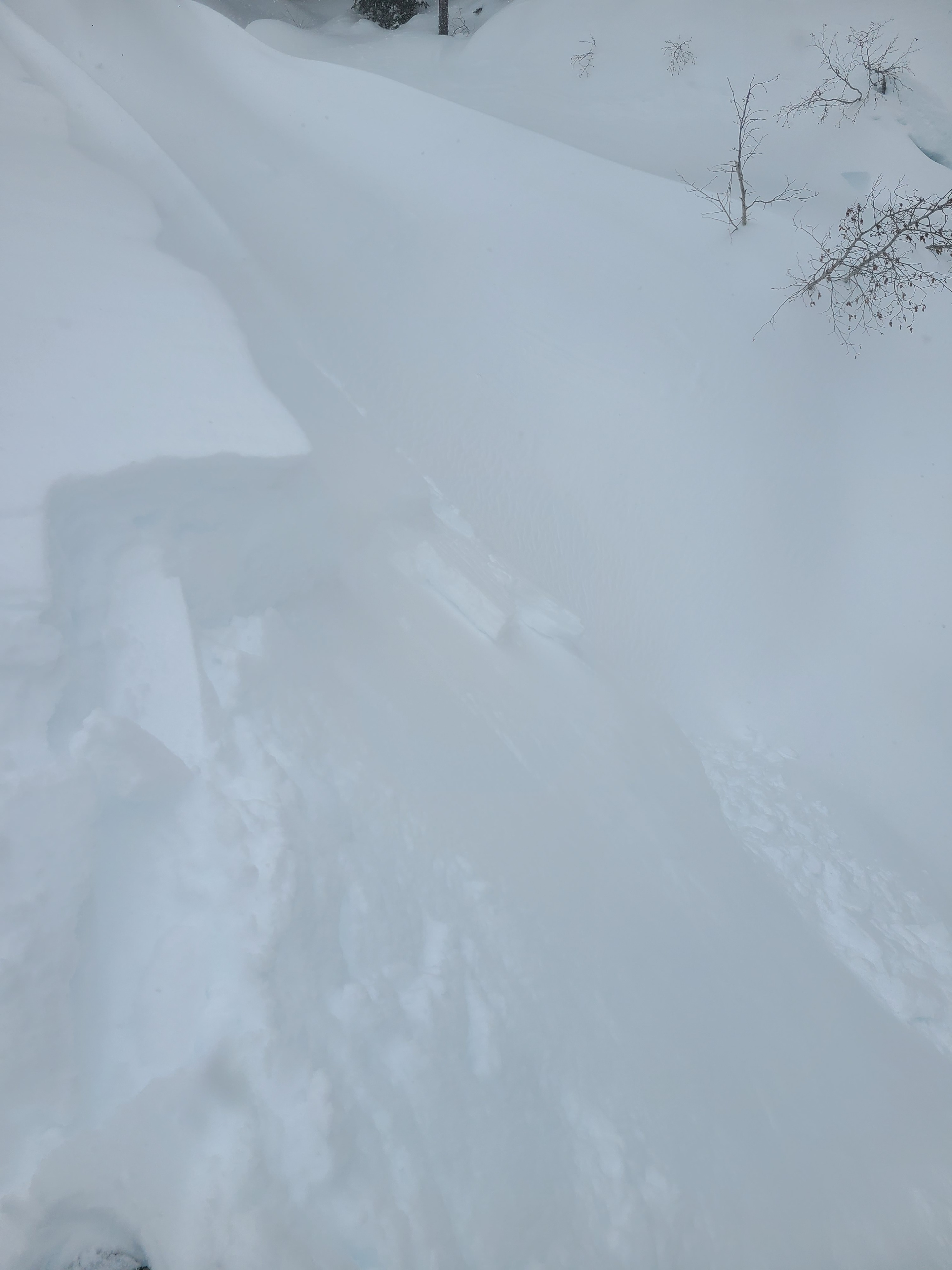
Wind loaded test slopes at all elevations produced cracking and small avalanches. Along the ridgeline at 5400ft, we were able to intentionally trigger reactive wind slabs (D1, east aspect).Weather
- Wind Loading
- intense
- Recent Snowfall
- 40cm
- Snow Avail For Transport
- large amounts
It was a stormy spring day with unsettled weather shifting between moderate snowfall and sun breaks. Winds were moderate with stronger gusts and actively drifting snow.
Snowpack
Snow Surface Observations: At 3000ft there was only a 3-4cm of fresh snow over a moist, but supportable crust. Travel underneath the thick forest canopy, there was little fresh snow until elevations over 4000ft, while open glades held 10-15cm of storm snow over the crust. Between 4500 and 5400ft in forested areas, there was around 20cm of snow, and you were still traveling on the crust as you climbed and skied. In open areas at these mid-elevations we found approximately 35-40cm of storm snow. In areas exposed to the winds, surfaces were heavily wind affected. As we left in the afternoon, fresh snow below 3800ft had become moist with daytime warming.
Snowpack Observations: We dug a snow profile at 5000ft on a north aspect to observe the new snow. The 40cm of recent storm snow rests over a complex of melt-freeze crust with weaker snow in between. There were a few mid-storm interfaces that produced easy shovel tilt test and compression test results, although these interfaces were stubborn on most test slopes. The bond with the underlying crusts was favorable and produced no stability test results. Below this crust complex was 30cm of stronger, consolidated snow over the recent Atmospheric River melt-freeze crust, buried 71cm deep. We probed to the ground and found the Solstice Crust buried approximately 200cm.
Total Height of Snow: 265cm
Stability Test Results: CT4 ↓ 16cm SP, CT13 ↓ 28cm PC, STE ↓ 28cm