
Quick report
- Collapsing
- isolated
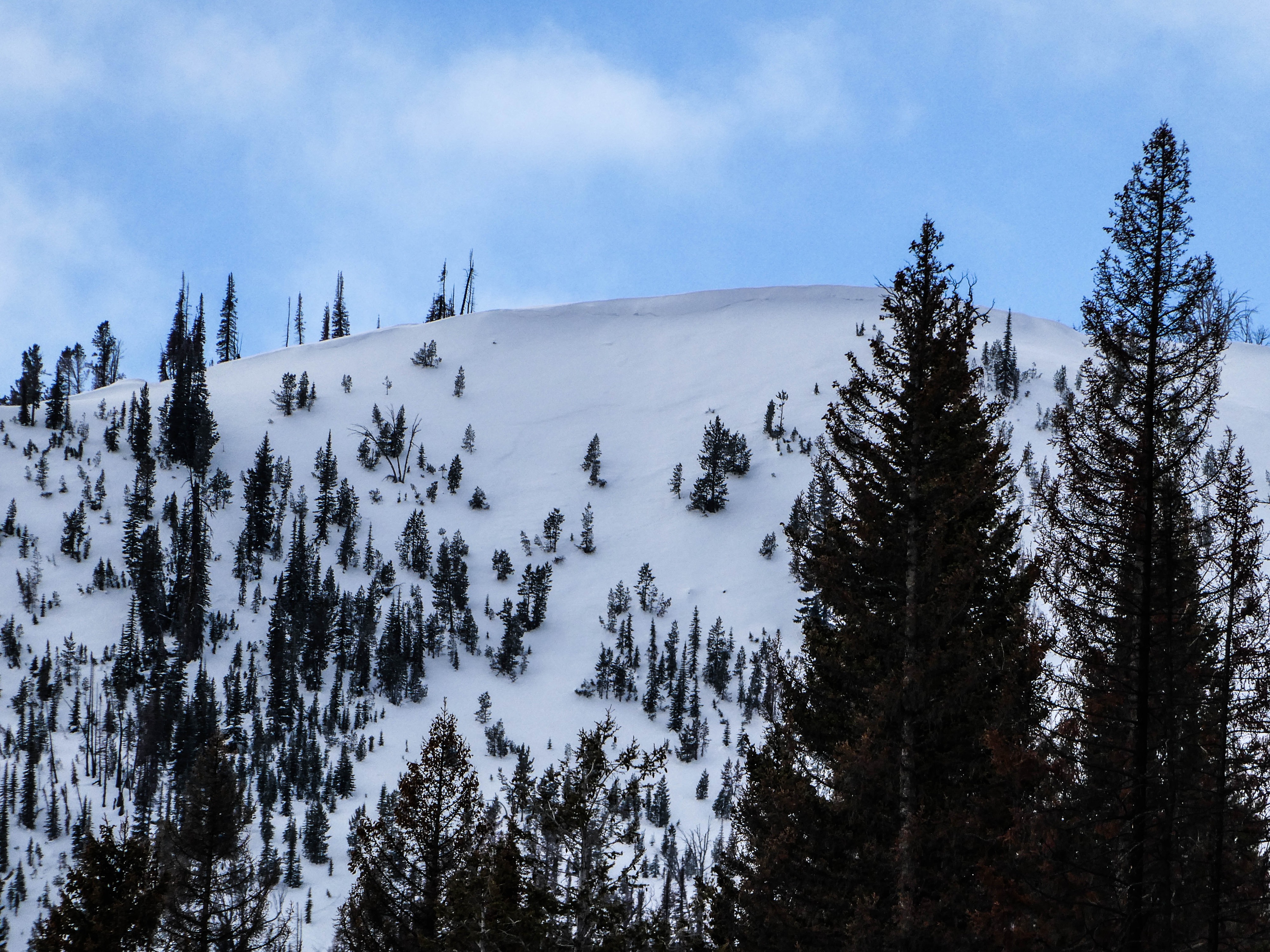
While obvious signs of instability are slowly decreasing, poor structure is ubiquitous in most terrain where folks will be drawn to ski and ride (upper elevations and W-N-E facing slopes at middle elevations). Entering avalanche terrain here, with this snowpack setup, remains a roll of the dice.
We experienced one 15' diameter collapse in the valley bottom at 7,800'.Weather
- Air Temp
- Warm, felt like mid-30s F
- Cloud Cover
- broken
- Wind Loading
- none
- Recent Snowfall
- 2-6 cm since (12/18)
- Snow Avail For Transport
- small smounts
Overcast skies this morning gave way to broken and partly cloudy skies by the afternoon. It was unseasonably warm. We did not observe active wind-loading, nor previous wind-loading on our tour. Our route did not utilize the highest ridges in this area.
Snowpack
Surfaces:
2-6 cm of snow since (12/18). Shaded, or lower angle slopes held soft, dry, faceted snow without a noticeable crust. We didn't observe any obvious surface hoar. Lower Titus and Vienna Mine hit 38 F. A weakly refrozen melt-freeze crust was softened again today. Moist/wet surface snow was up to 20 cm deep. Roller balls grew to 1' diameter cinnamon rolls on E-facing slopes.
S and SE:
Steep, sunnier slopes were moist to the ground up to at least 9,200'. (11/30) was present but thin and discontinuous on a lower-angle slope at 8,700' (ECTX, HS = 50 cm). (12/6) produced ECTNs with moderate force down 22 cm.
E, NE, N:
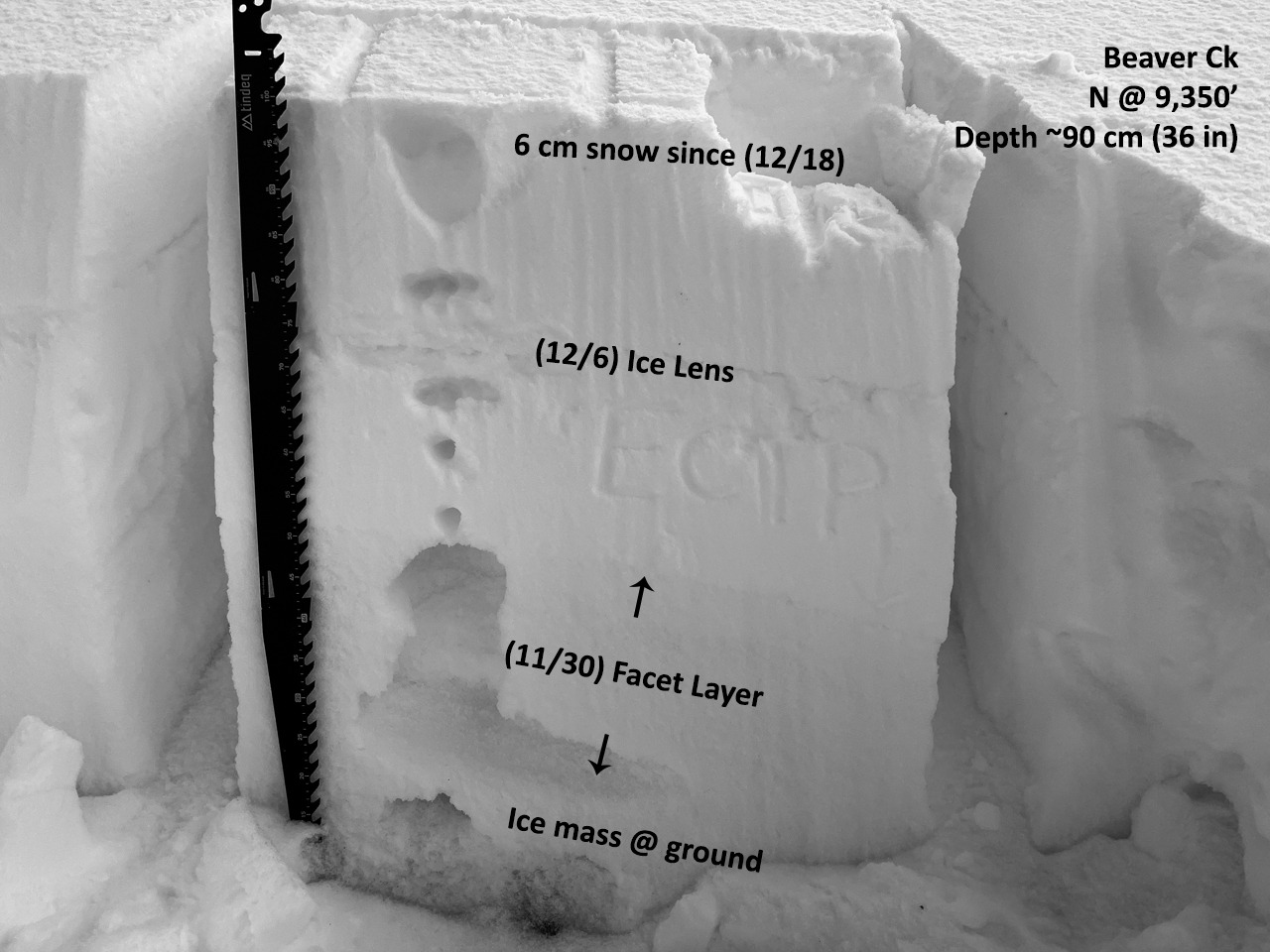
HS increased from 60-95 cm at middle and upper elevations. Poor structure. Obvious 30-50 cm slab grades from F to 1F at the base. (11/30) F/F- facets still look really bad. Snowpack tests produced ECTP (mod force) and ECTNs. (12/6) is noticeable but so far unremarkable. (see picture)
Avalanche
- Size
- D2
- Count
- 2
- Aspect
- NE
- Elevation
- 9450 ft
We observed a handful of slides likely dating to the (12/6) storm and one newer but predating the (12/18) snows. A few decent-sized D1 wet loose avalanches released in the Boulders.