
Quick report
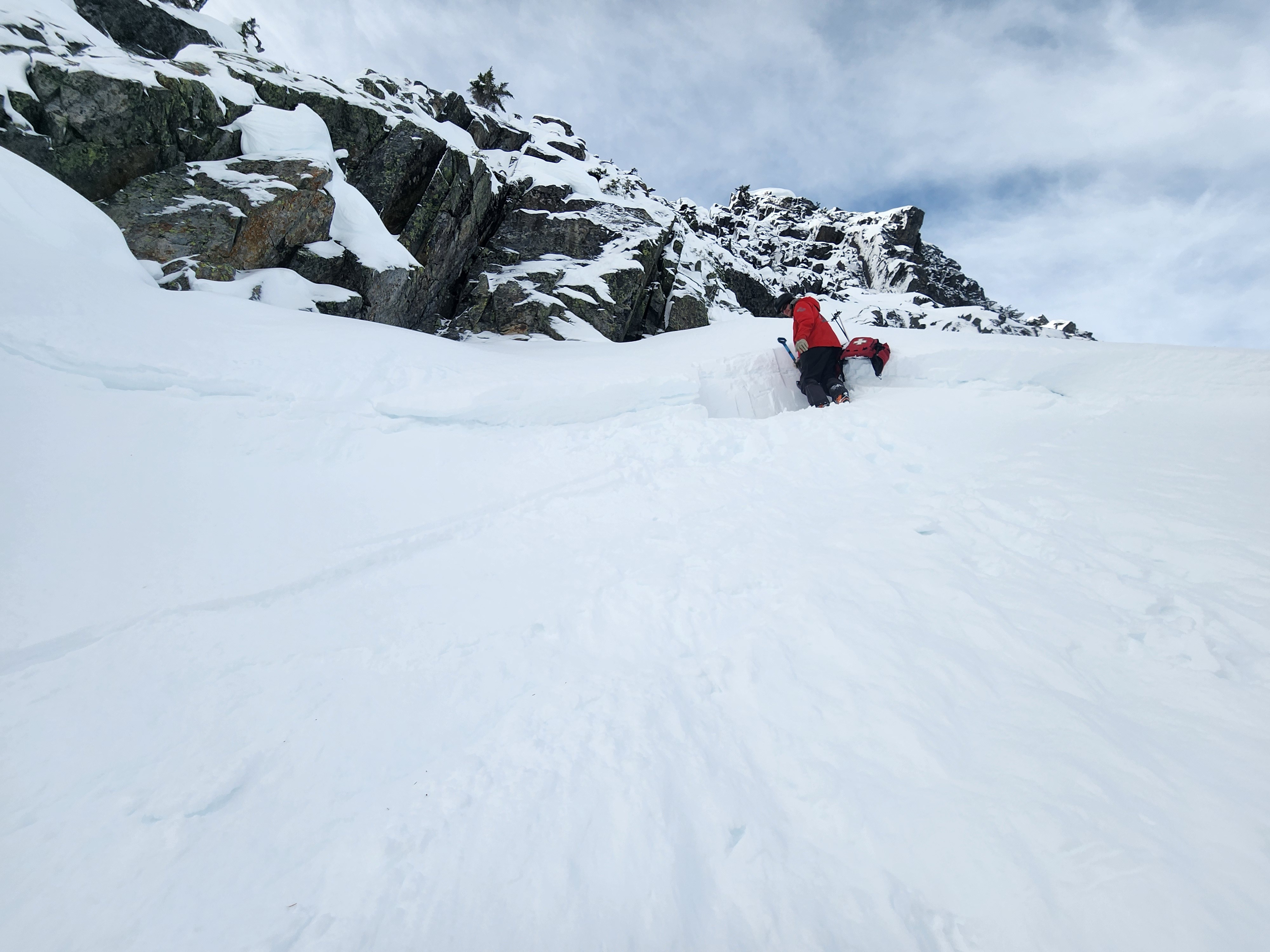
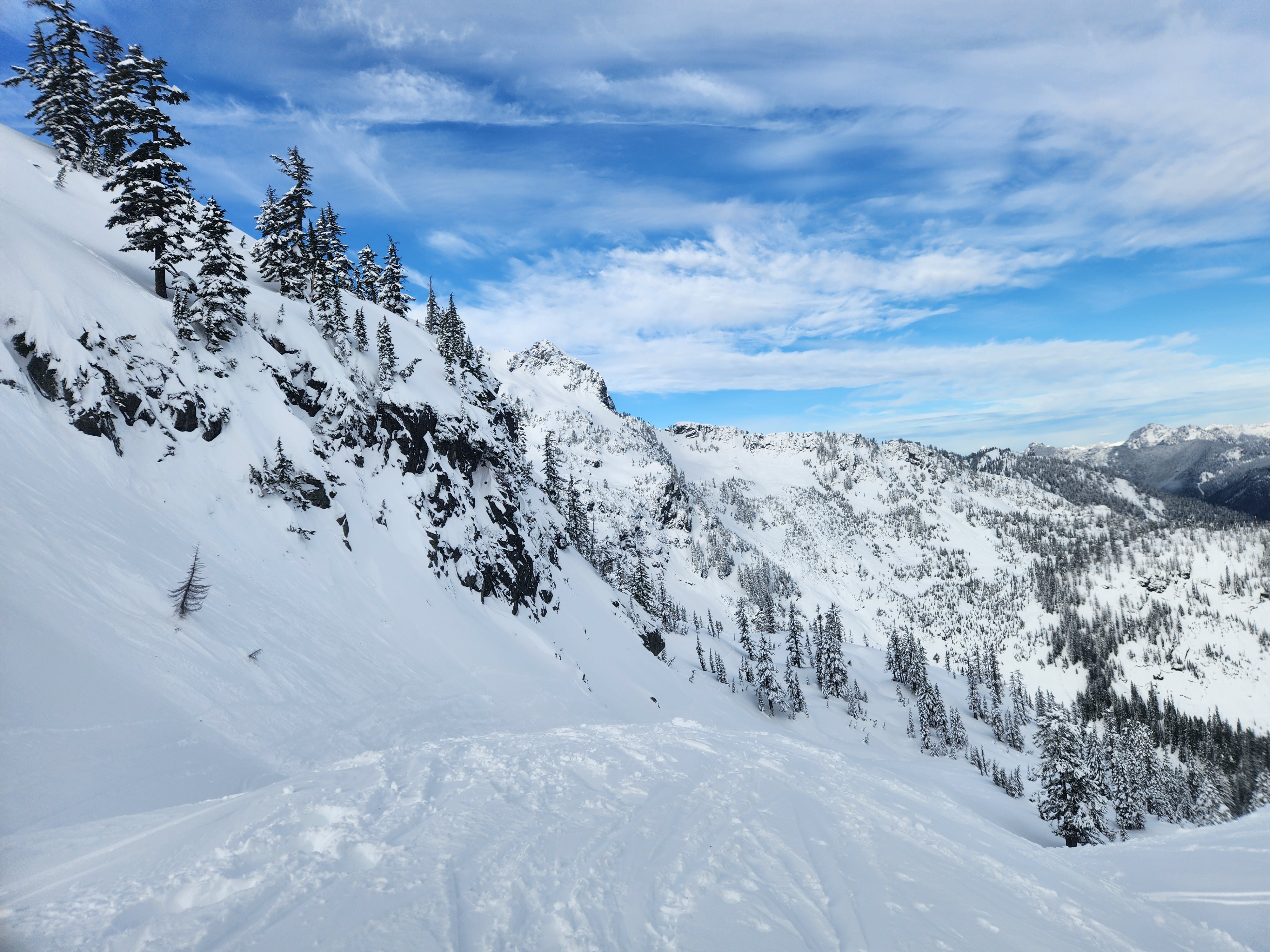
We went hunting for more information on the 1/10 interface. We were pleased to find very similar structure to what we found the day prior near Kendall. This increased our confidence in the nature of the problem; we haven't found any evidence of a persistent slab issue and we believe the slides over the weekend were wind slab avalanches. Large-grained stellars and decomposing fragments above the 1/10 crust seem to be the likely culprit. The layer seems to be gaining strength and slabs are stubborn to trigger. To temper that confidence, we did have a propagating result in an extended column test at the crown of a human-triggered avalanche from Saturday. The slab at that location was dense and the slope was very steep. Elsewhere, where the slab was softer and/or thinner, large column tests did not propagate. We crossed steep slopes, including adjacent to the prior avalanche, and observed no cracking or collapsing. Small test slopes were not reactive.
Overall, we were happy with the increasing stability, though still wary of steep and unsupported wind-loaded slopes.
We thought warming might be an issue today, but high clouds rolled in and stopped that problem in its tracks. There is still lots of soft and thus far non-solar affected snow on the southern half of the compass.
Weather
- Cloud Cover
- broken
- Wind Loading
- previous
- Snow Avail For Transport
- moderate amounts
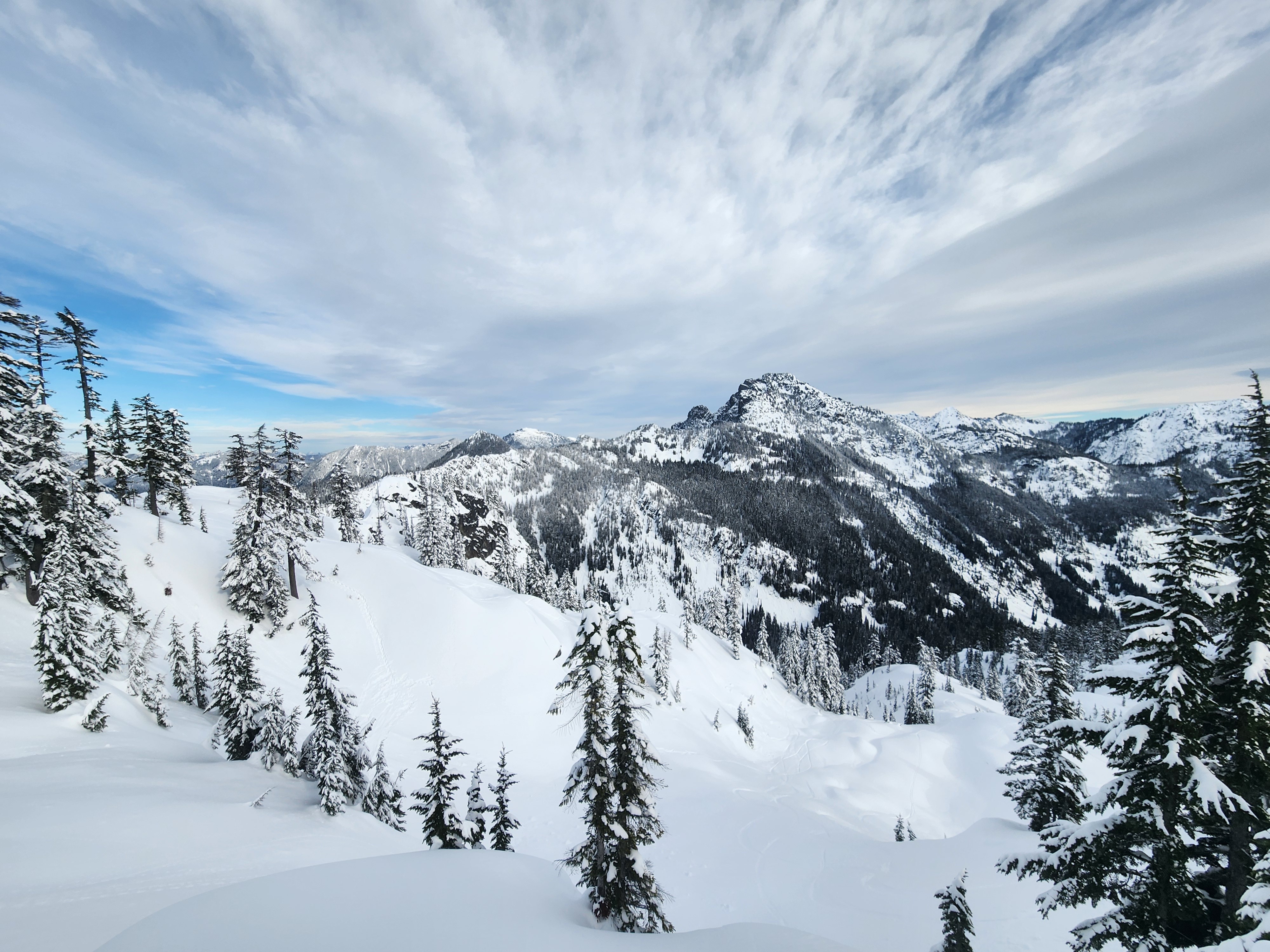
Excellent visibility and moderate temperatures made for a very comfortable day in the mountains. Winds were gusty out of the north northeast at exposed ridge lines and saddles.
Snowpack
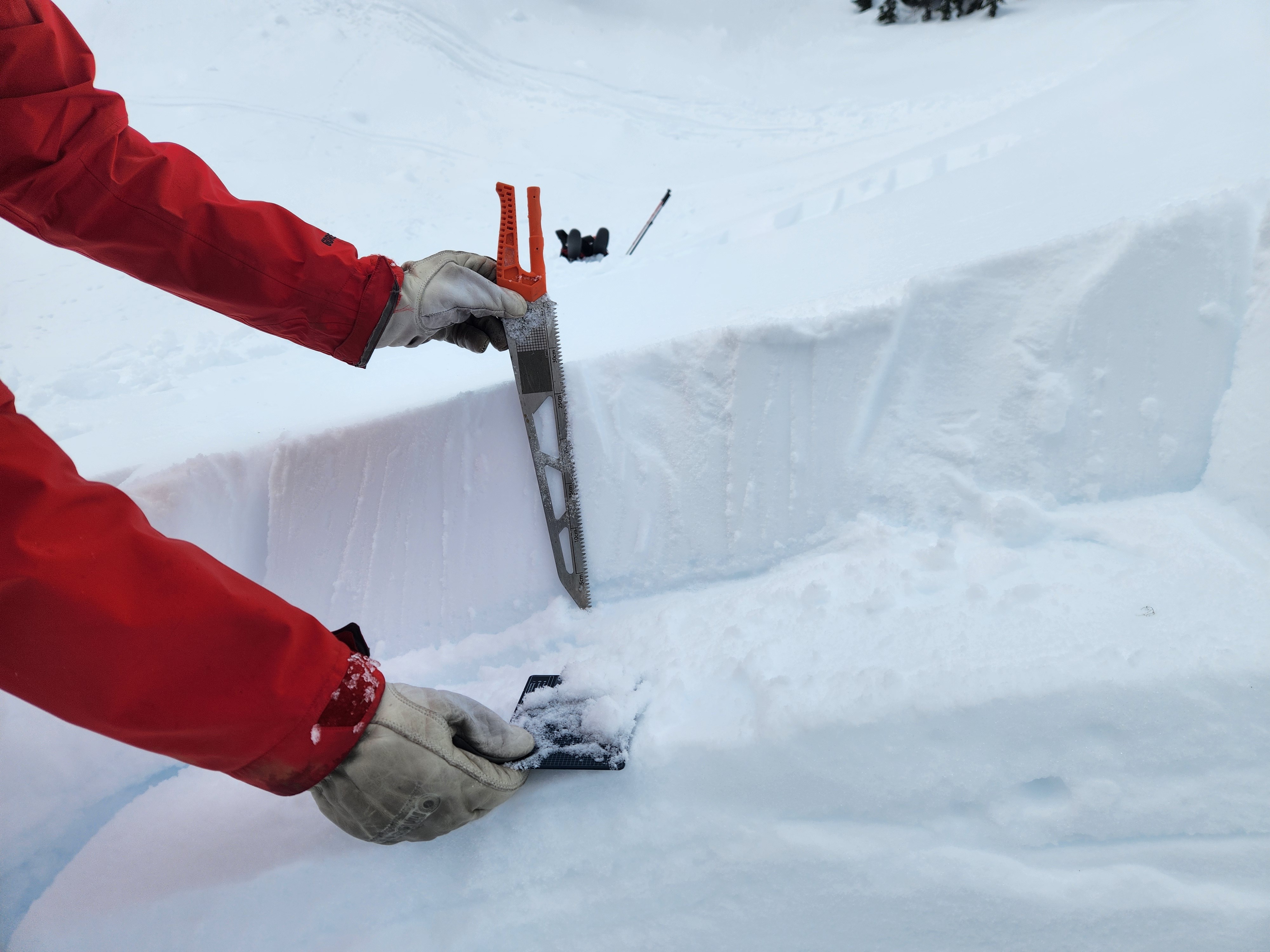
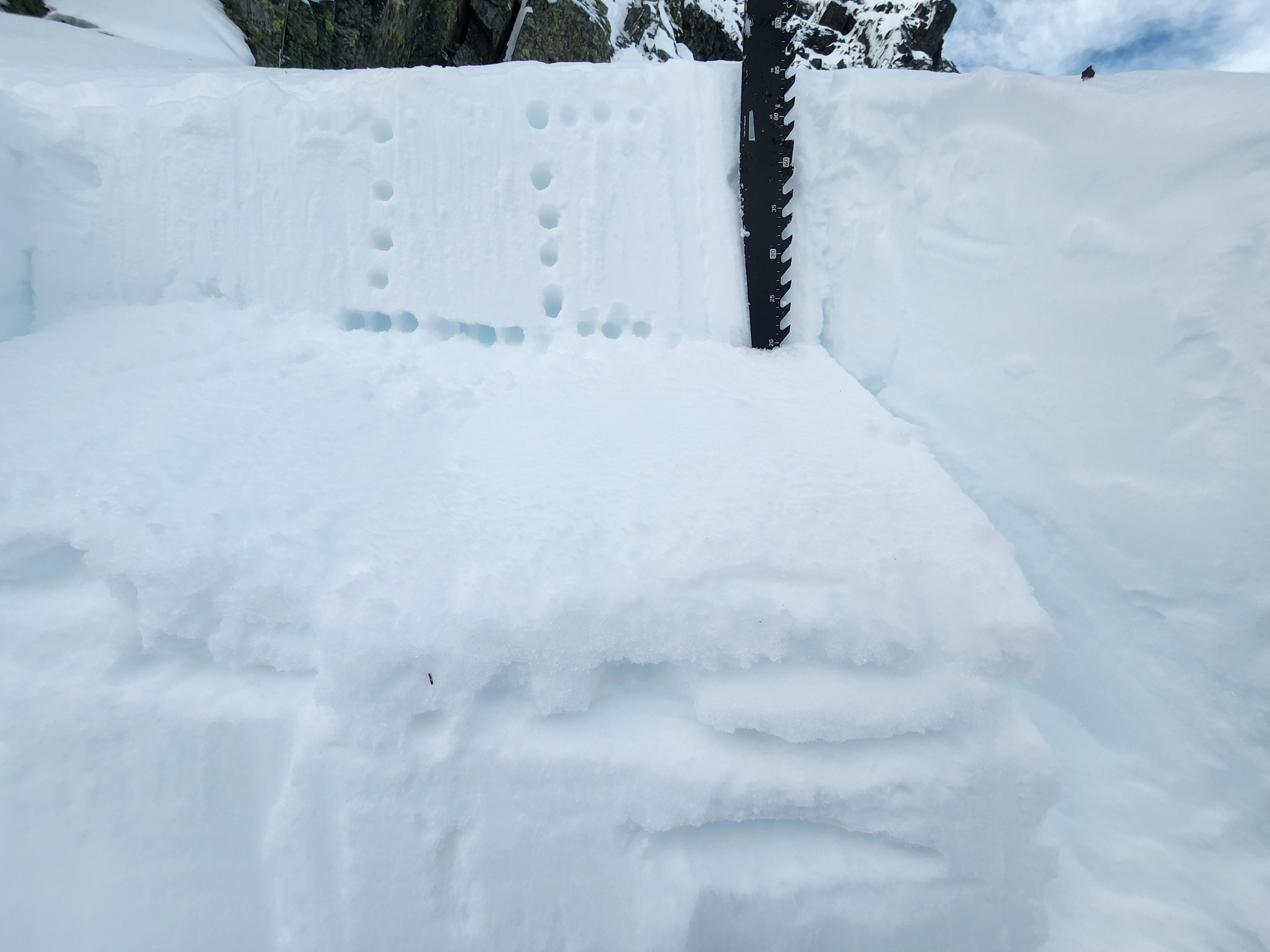
In wind-loaded terrain, we found dense wind slab over the soft and coarse grains sitting the 1/10 crust complex. The 1/10 is stout in this location and many inches thick. In less wind effected terrain, the surface slab was more right side up, but still sitting on the same structure of large-grained stellars over the 1/10. On aspects facing the sun, the nature of the crust complex is a bit different, as noted in the picture, where there is a smaller crust over a few centimeters of soft snow above the rest of the 1/10. Regardless, all failures in hand pits, uptrack tests, test slopes, and column tests occurred in soft snow just above the 1/10.
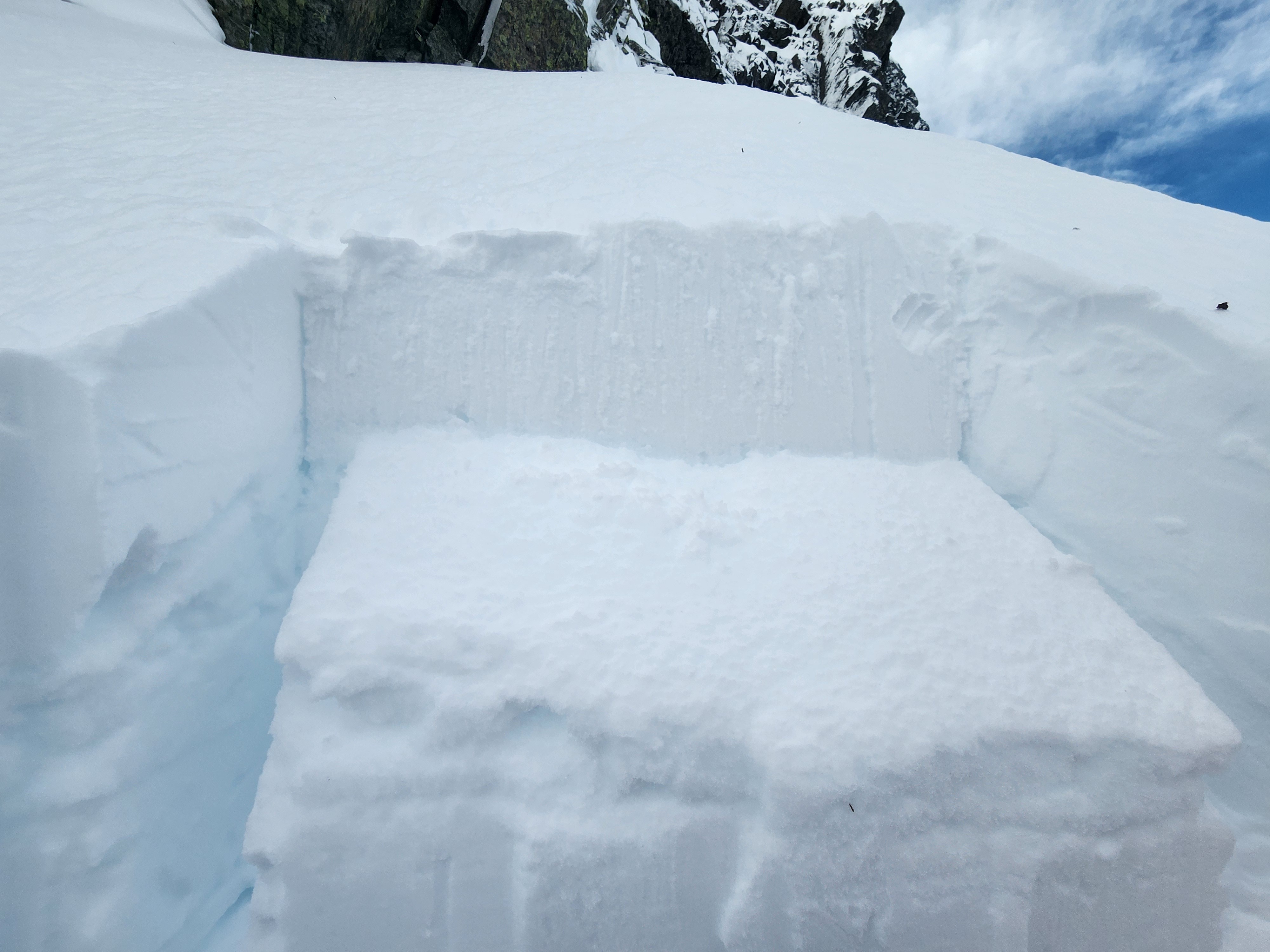
At the crown of a human-triggered avalanche, we got propagating results in an extended column test (ECTP11) down about 14" on the soft snow above the crust. Elsewhere where the slab was less dense and a bit thinner, a multitude of large column tests did not propagate. See images below and snow profiles for more details.
Below the 1/10, the snowpack is dense, strong, right side up, and very homogenous.