
Quick report
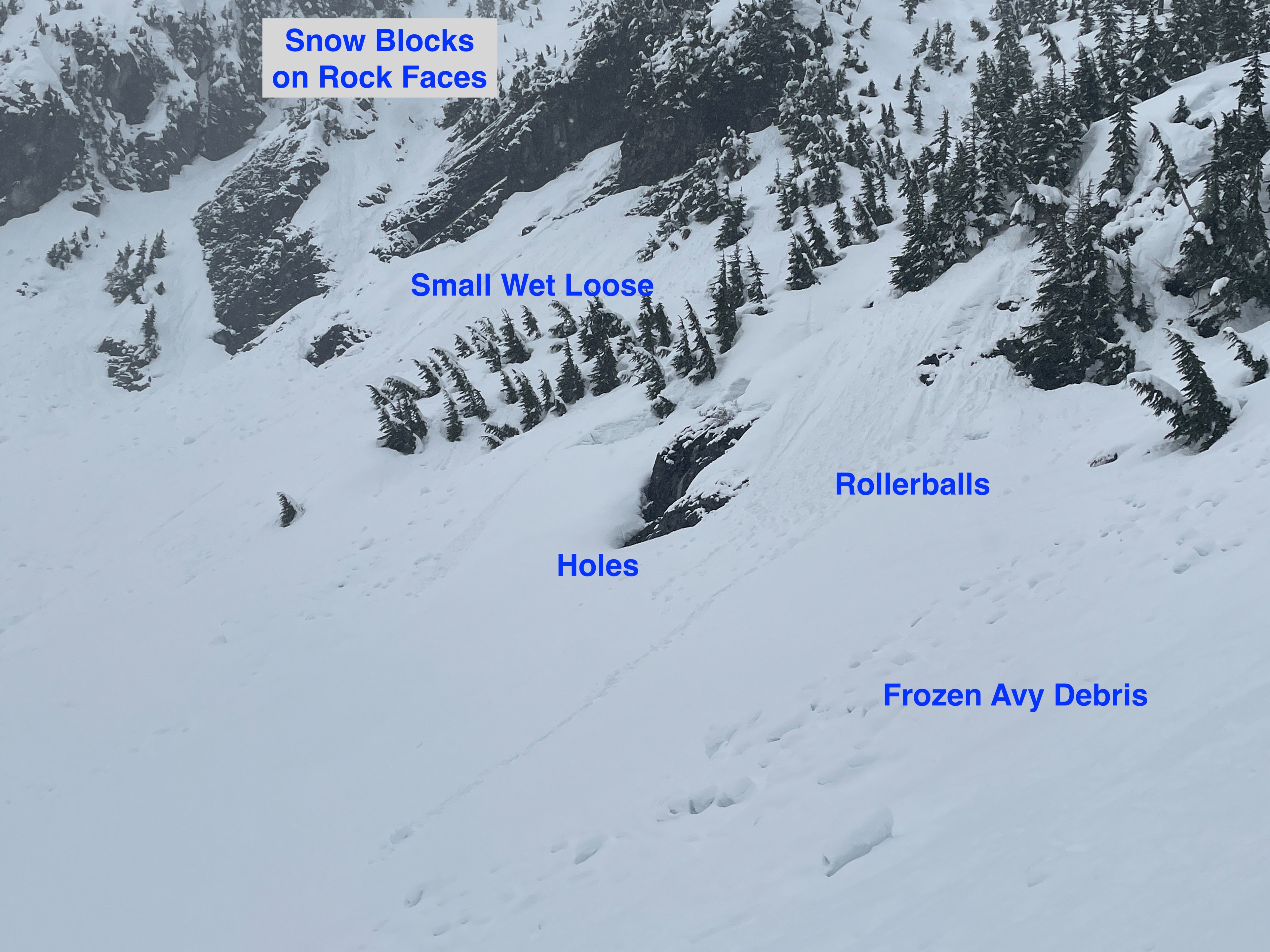
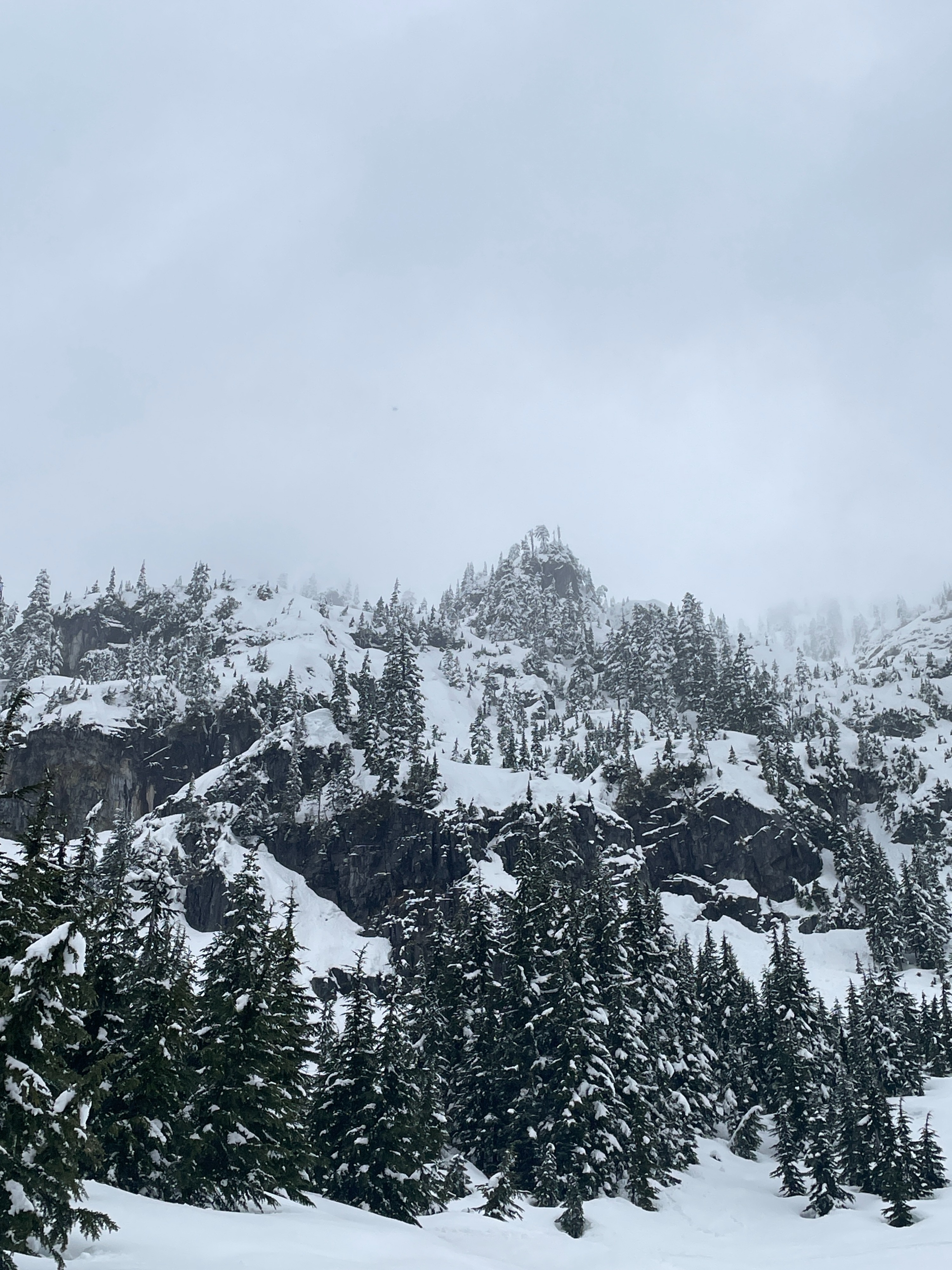
Thinning clouds, filtered sunshine, and mild temperatures made it feel like a greenhouse today. Not surprisingly, the snow responded to the heat by falling downhill. Small wet loose slides were common near craggy faces. We did see one larger avalanche and plenty of snow still clinging to the rocks waiting to shed. The mountains aren't very wintery, but they also haven't fully transitioned to spring.
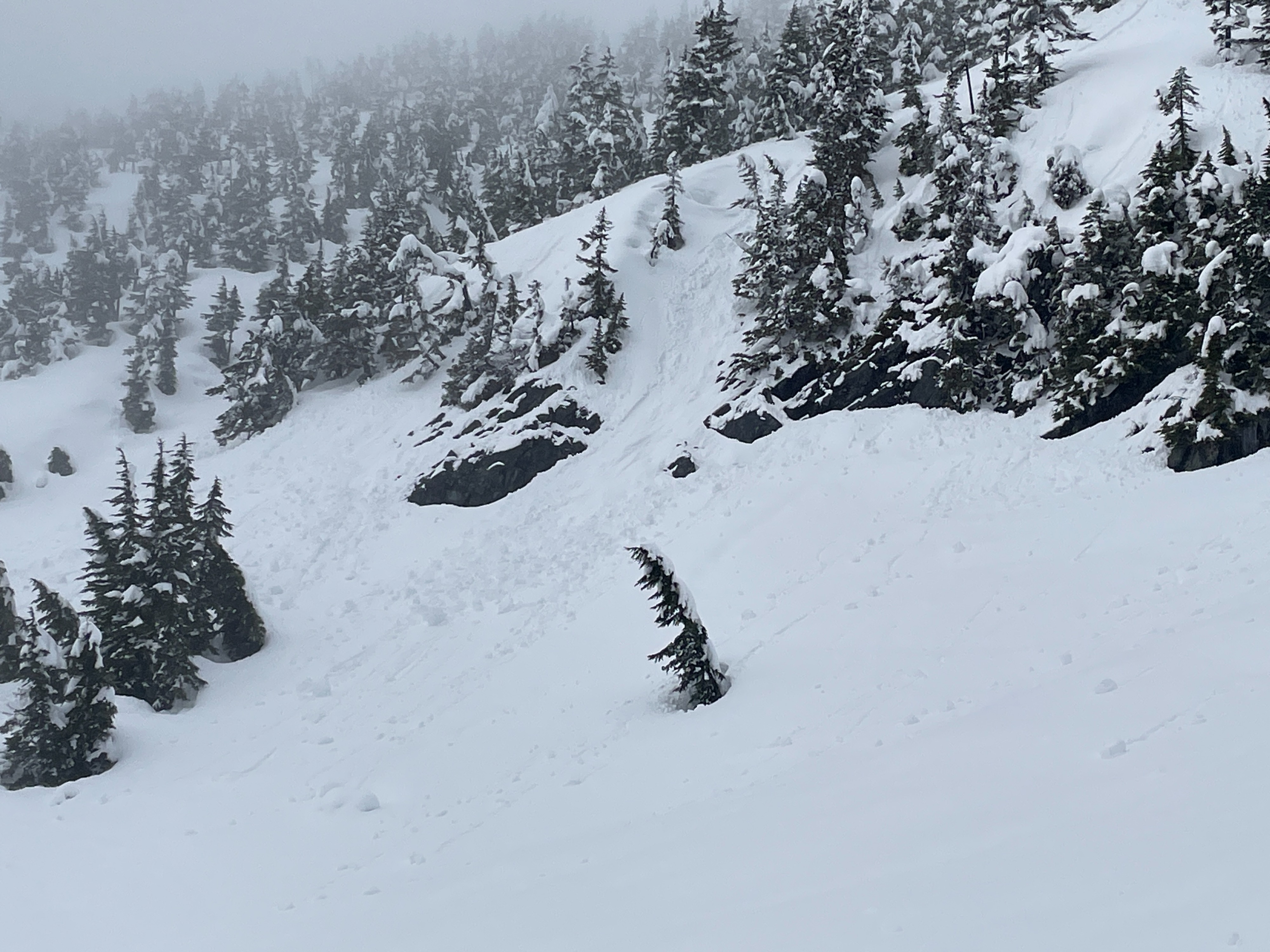
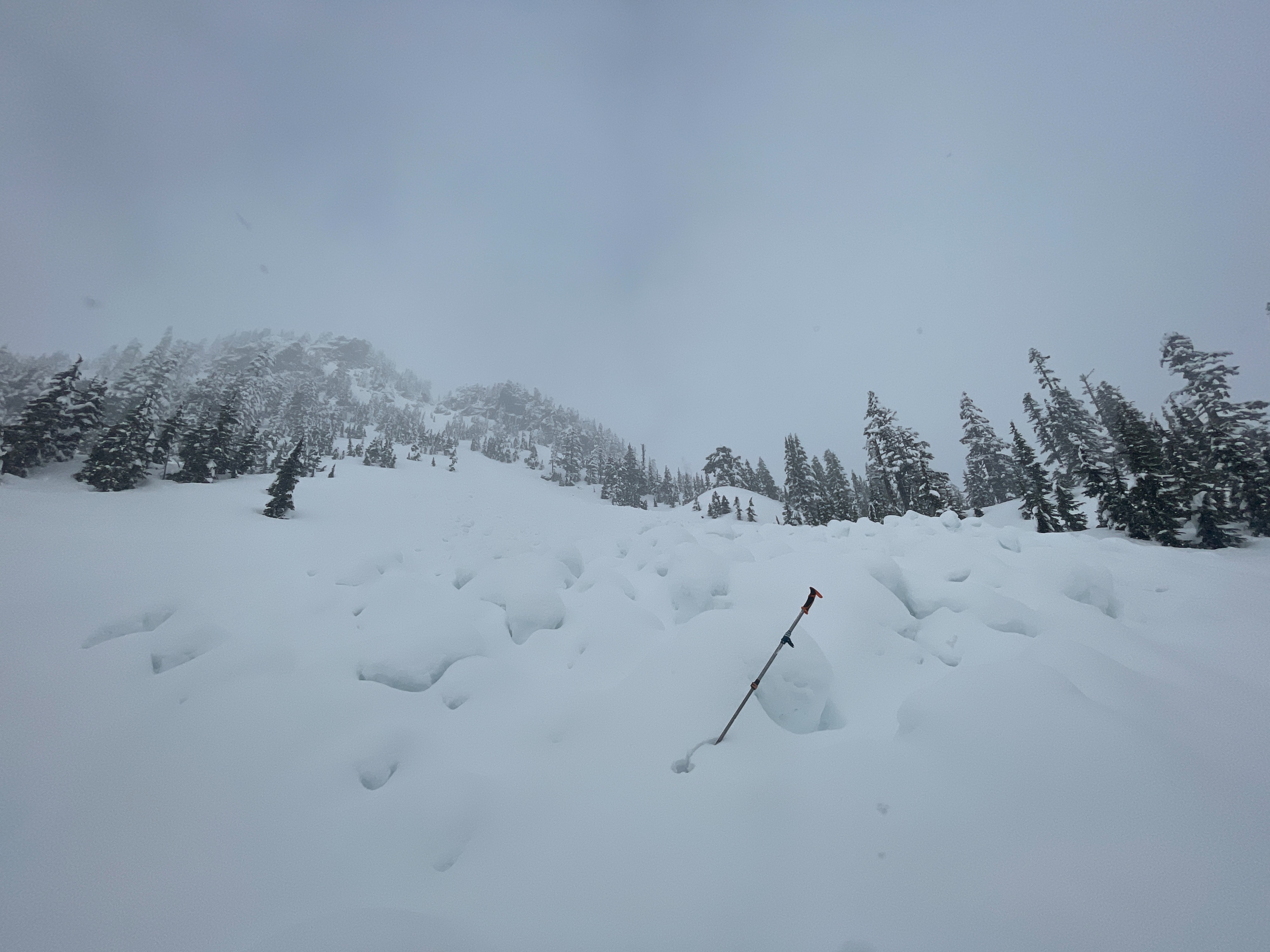
Snow was shedding from rocks and trees all day. They triggered rollerballs on some of the steeper slopes below.Weather
- Air Temp
- 33
- Cloud Cover
- broken
- Wind Loading
- none
- Rain Elevation
- 3500
- Recent Snowfall
- 30
- Snow Avail For Transport
- small smounts
It felt like a greenhouse today. Sure, snow was falling out of the sky, but it was warm and humid. The sun tried to poke through several times. It didn't need to go full sun, for us to feel the affects of the warming. Even moments of filtered sunshine resulted in a bump in temperature. Winds were generally light and not noticed.
Snowpack
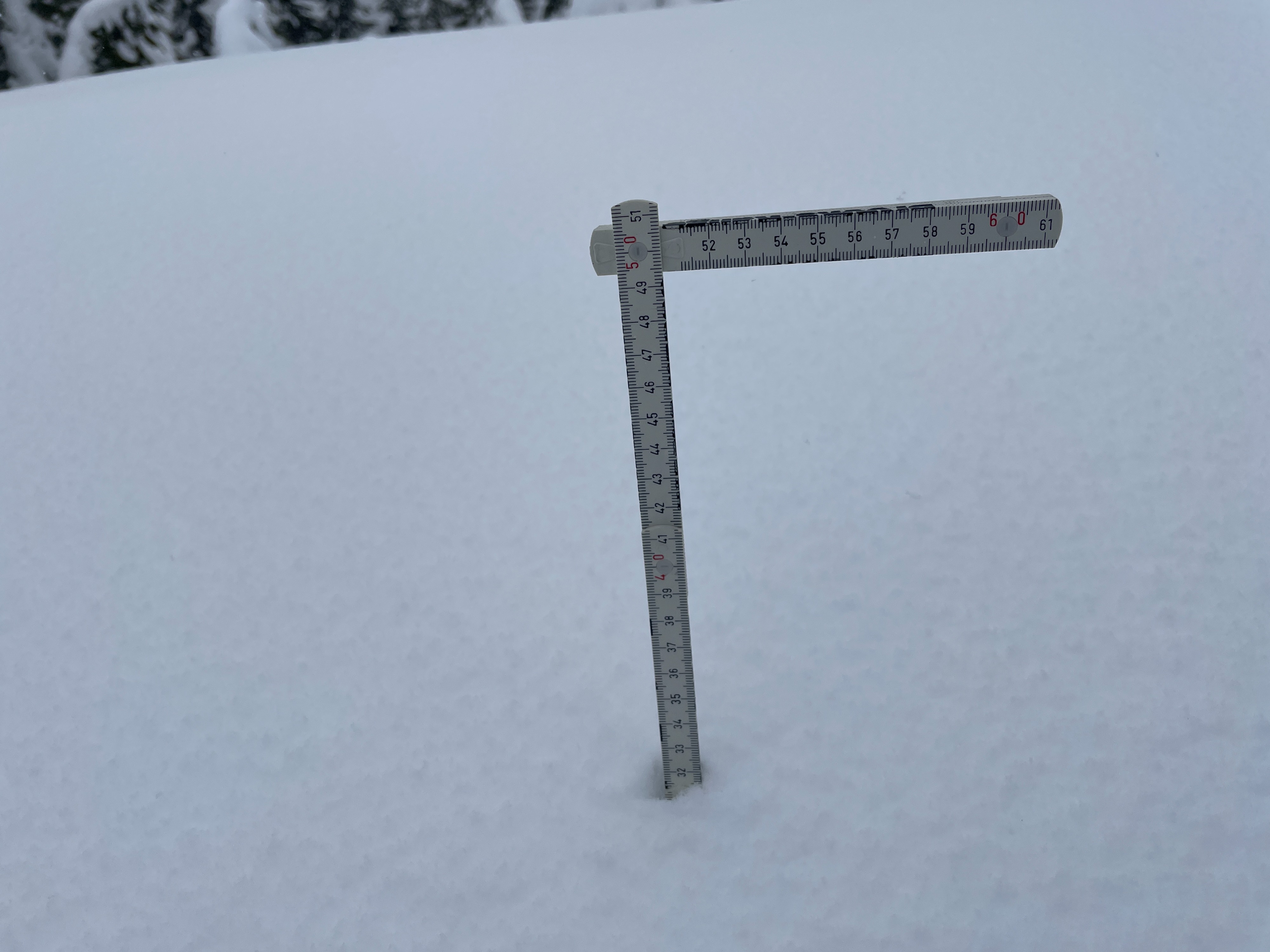
Down low we measured about 6in (15cm) of snow over the 4/2 crust (3500ft). This quickly increased to 12-13in (30-33cm) at 4400ft. The new snow was generally right-side-up, moist, and heavy. Not surprisingly we could push the snow into mini avalanches on small test slopes. It often took a bit to get the snow to start moving, but once it did, it moved easily on the underlying firm snow. Rollerballs up to 3ft in diameter were also observed. This continued to emphasize the wet unstable surface snow.
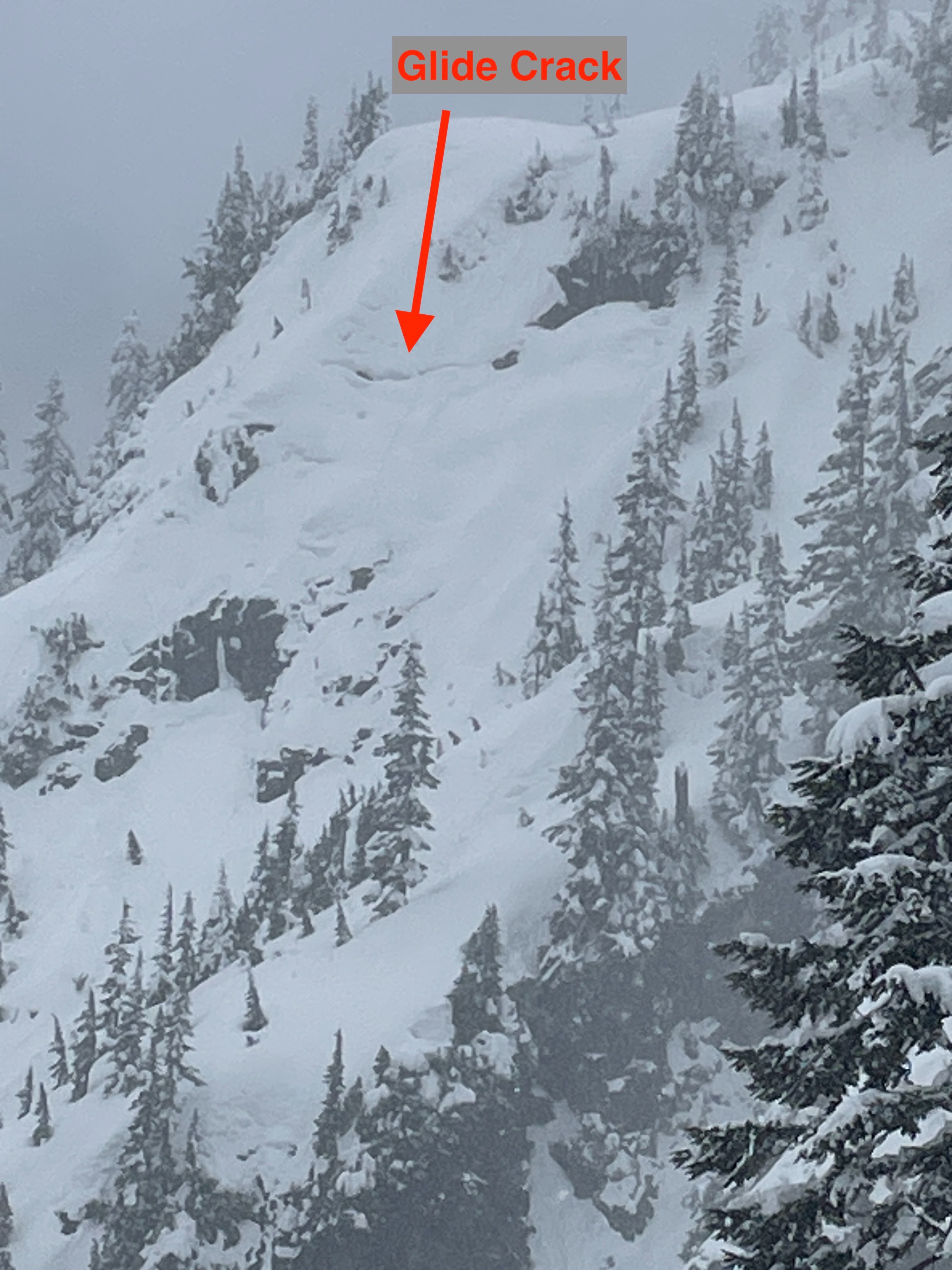
One thing that struck us was how much snow is still left to fall down. Blocks of snow still ling to most rocky slopes. Sure there's been a lot of warm sunny weather, but the mountains don't look like springtime just yet. Similarly, we saw a few glide cracks that show the snowpack is on the mover. It's hard to every say if and when there's crevasse-like cracks could release.
Wind: We didn't travel high enough in the terrain to observe any wind slab issues.
Mid-Snowpack: We measured the Early Feb Crust at 165cm (5.5ft) below the surface.
Other Hazards: Open creeks, holes, and frozen debris/rollerballs/treebombs/track make for potentially hazardous travel.
Avalanche
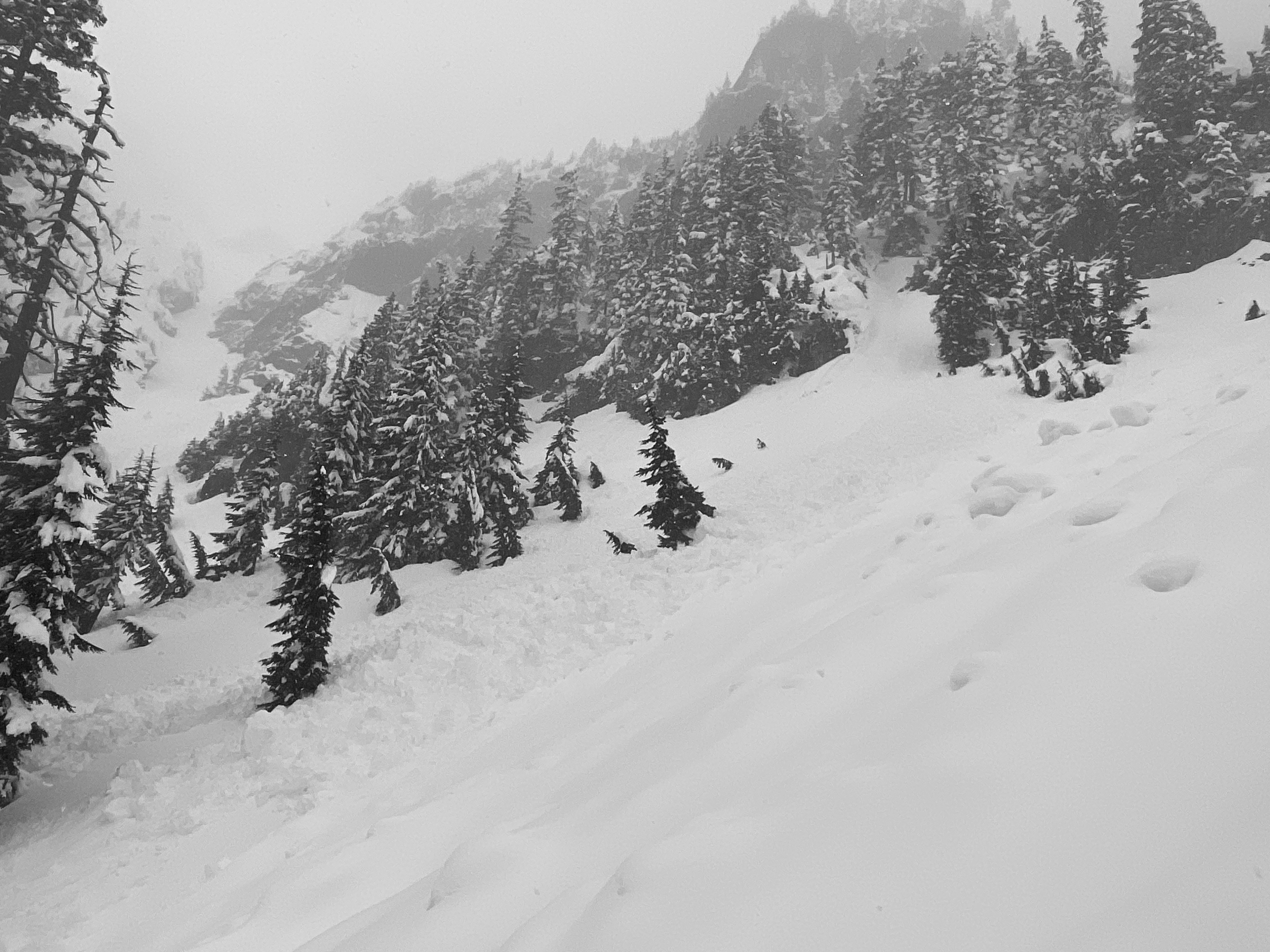
We observed numerous very small wet loose slides falling off cliffs and other very steep rocky faces. Most of the wet loose activity was confined to near and below these craggy areas. We found one larger wet avalanche on the SE Buttress of Chair Peak. It was hard to tell if it ran today or Saturday.