
Quick report
- Cracking
- widespread
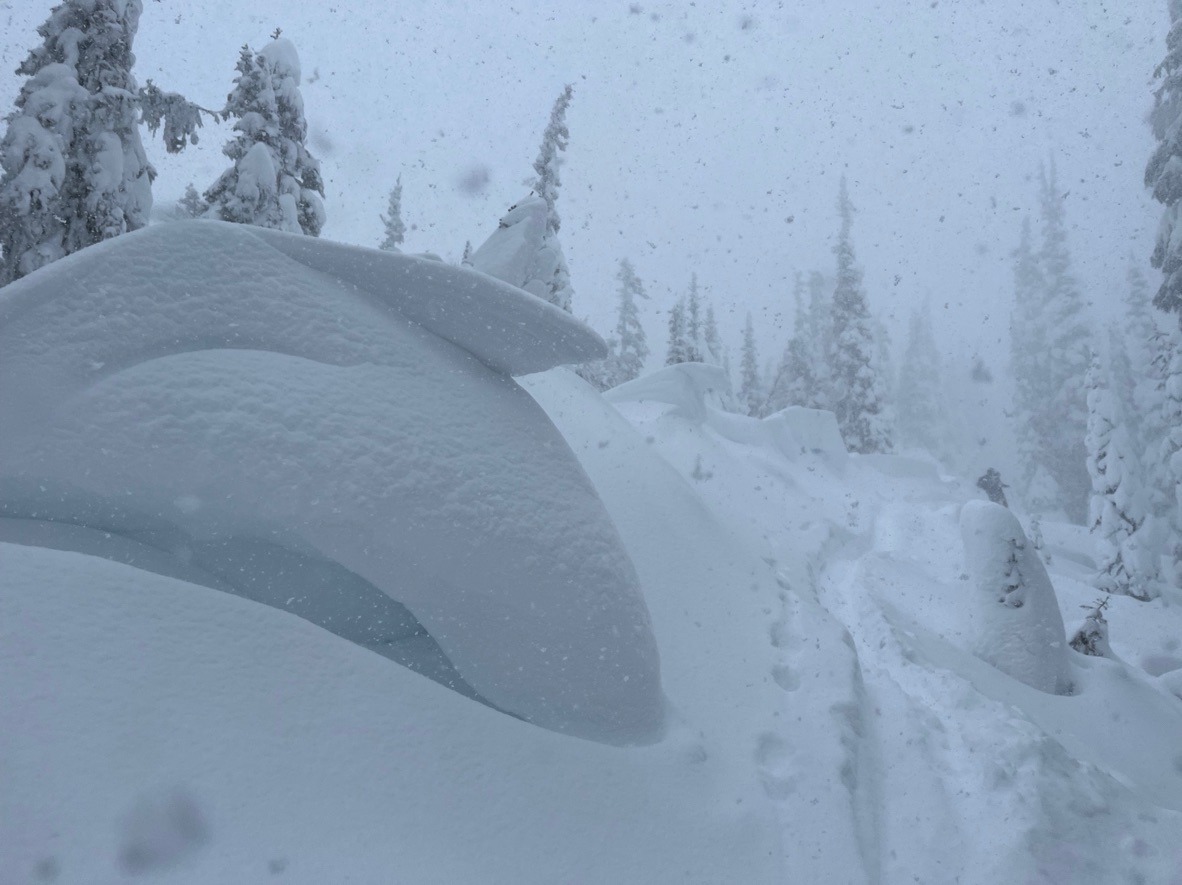
Incredibly heavy snowfall created widespread storm instabilities and very deep conditions. It was a wild snow event, at one time I measured about 6" on the skin track an hour later when we went back up. We stuck to old growth trees and moderate slope angles as it became easy to trigger storm slabs and sluffs that would entrain and could pack a punch. A profile on an E aspect at 5,300ft showed the Solstice crust/facet matrix down 130cm, and it consistently produced sudden collapses with deep tap tests. This showed that although deep, it remains possible to trigger.
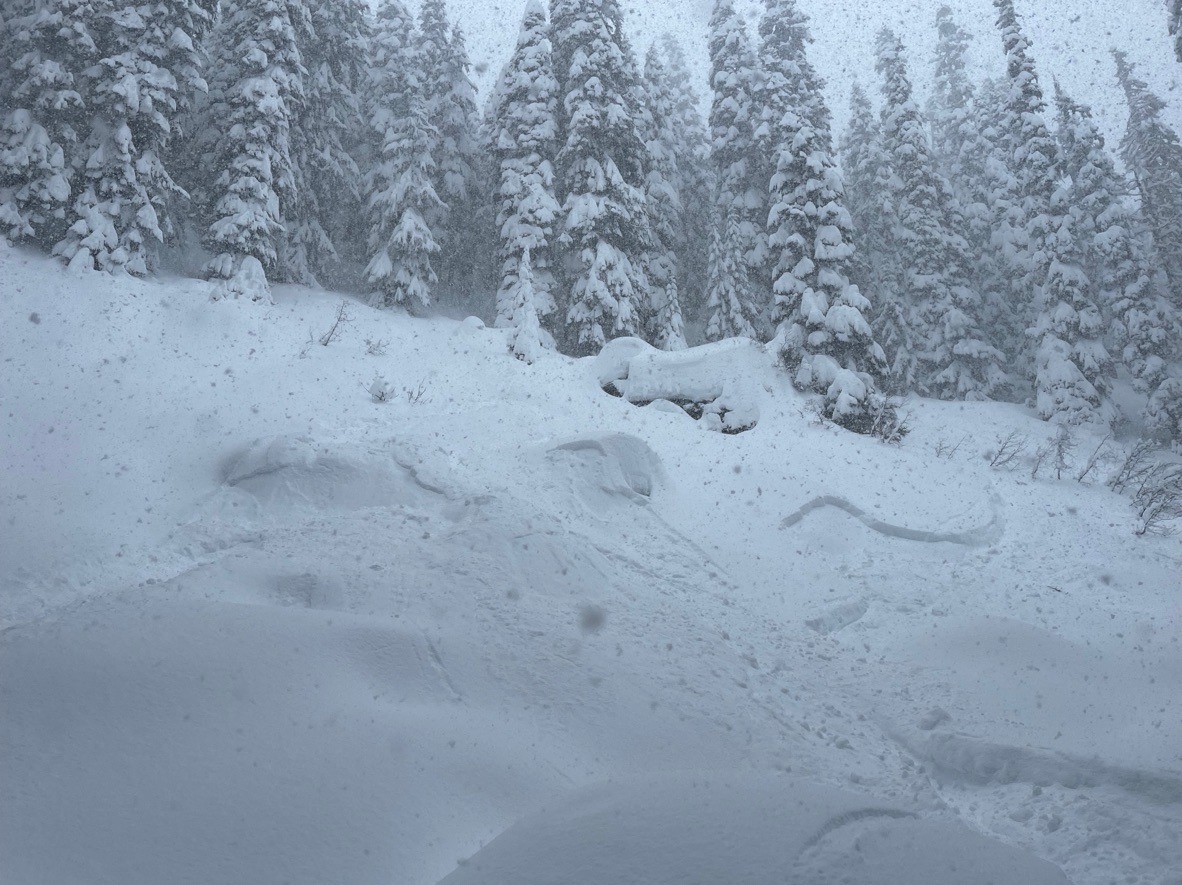
Shallow storm slab and loose dry instabilities picked up when the snowfall rates did. By 1pm slopes were very sensitive, and by then the slabs were about a foot deep. Ski pole swipes and approaches of convex rolls would initiate fractures. If it was steep it probably ran naturally as a loose dry slide though.Weather
Light snow in the morning with strong winds out in the open areas. Saw a couple patches of blue sky at one point, but it didnt last long. Snow began again in earnest at around 10am, and picked up to very heavy snowfall with some periods of heavy snowfall until exiting shortly after 2. Winds were notably less during the meat of this snow event.
Snowpack
Ski pen was knee deep, becoming thigh. Foot pen was above the waist but I didn't dare commit to jumping into an untouched snowpack without skis on! Conditions were scary deep.
On an E aspect at 5,300ft I found an HS of 215cm. Deep tap test targeting both the 12/30 and Solstice interfaces resulted in two Sudden Collapses at 11 on and within the Solstice layer (DT11 SC x2).
10cm down was the new/old interface (at that point, though quickly accumulated to 30+cm in the next couple hours). This interface was fairly difficult to discern but came out in tilt tests.
75cm down was a thin (5mm) crust from the midstorm warmup on 1/9.
115cm down was the 12/30 crust was thin (~5mm). I couldn't make out any weaker snow above this layer as we had found back on the 3rd.
130cm down was the Solstice crust/facet matrix, with 1-2mm faceted melt forms. They still looked pretty sharp and angular under the lens.
Snowpack had a progressive hardness from F- near the surface down to P- above the Solstice layer (with P- to K- crusts). The weakness was the Solstice layer with a hardness that varied between 1F- to 4F.
Avalanche
- Size
- D1
- Aspect
- E
- Trigger
- AS
- Elevation
- 4700 ft
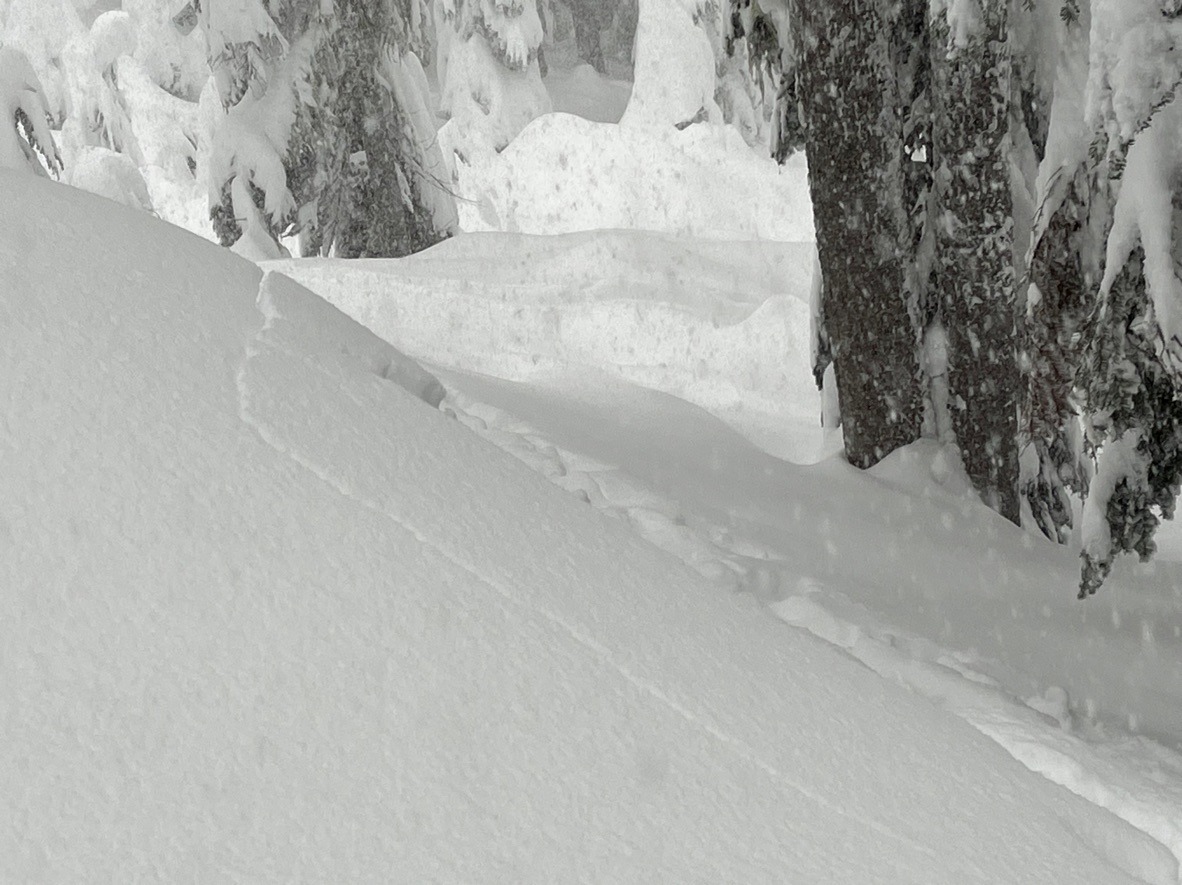
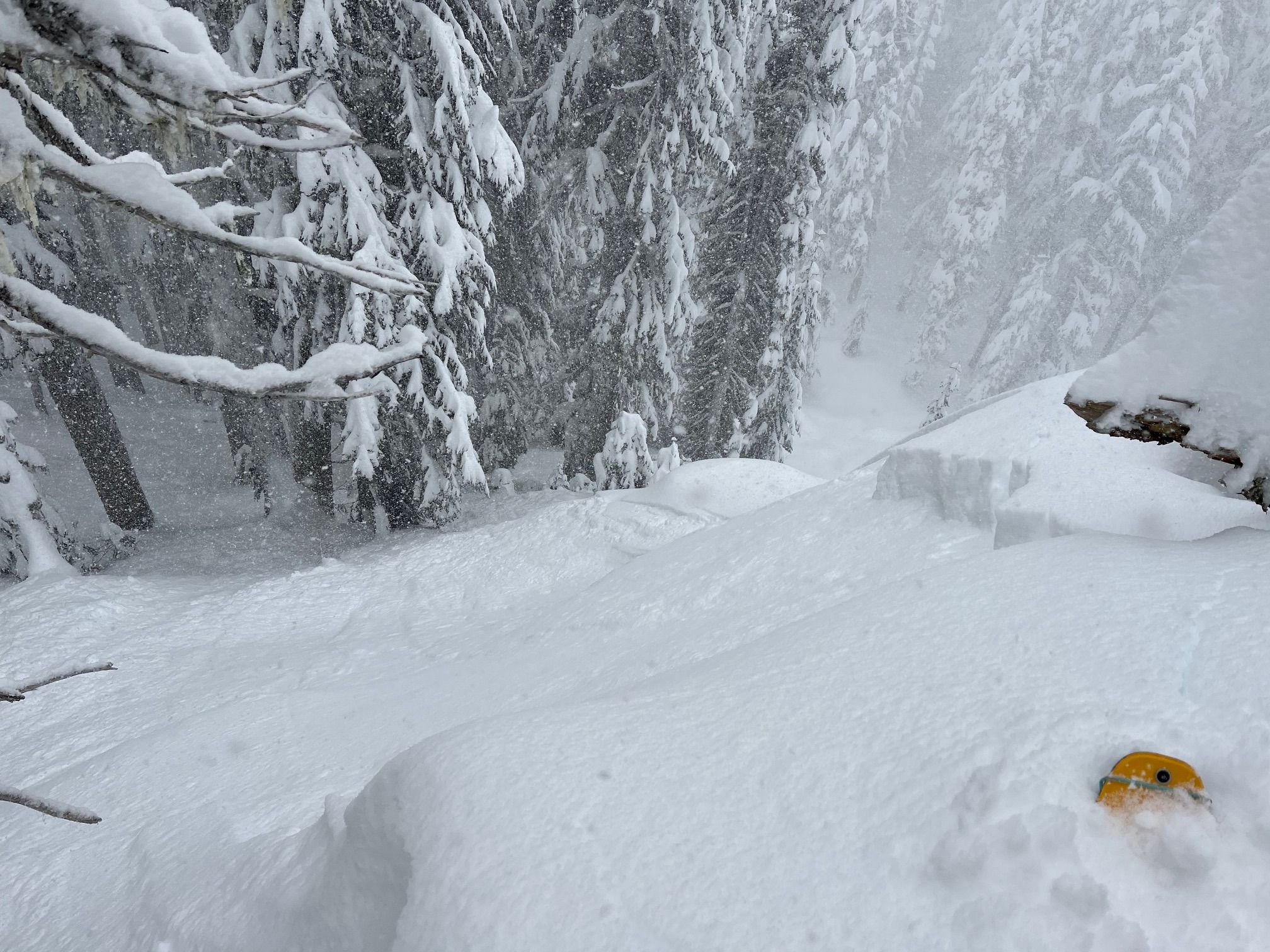
Triggered this small storm slab on approach to a steep convex roll. E at appx 4,700ft.