
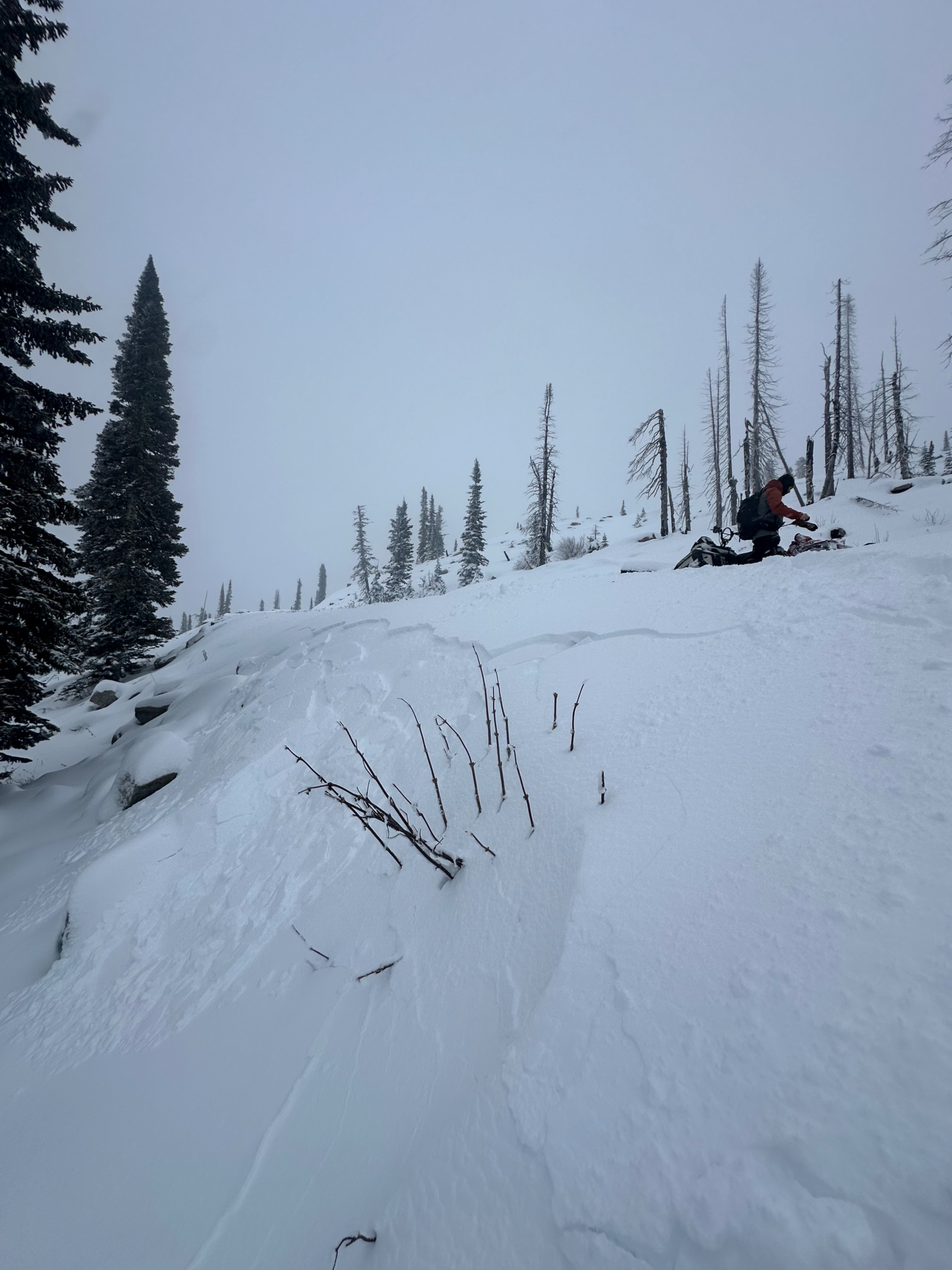
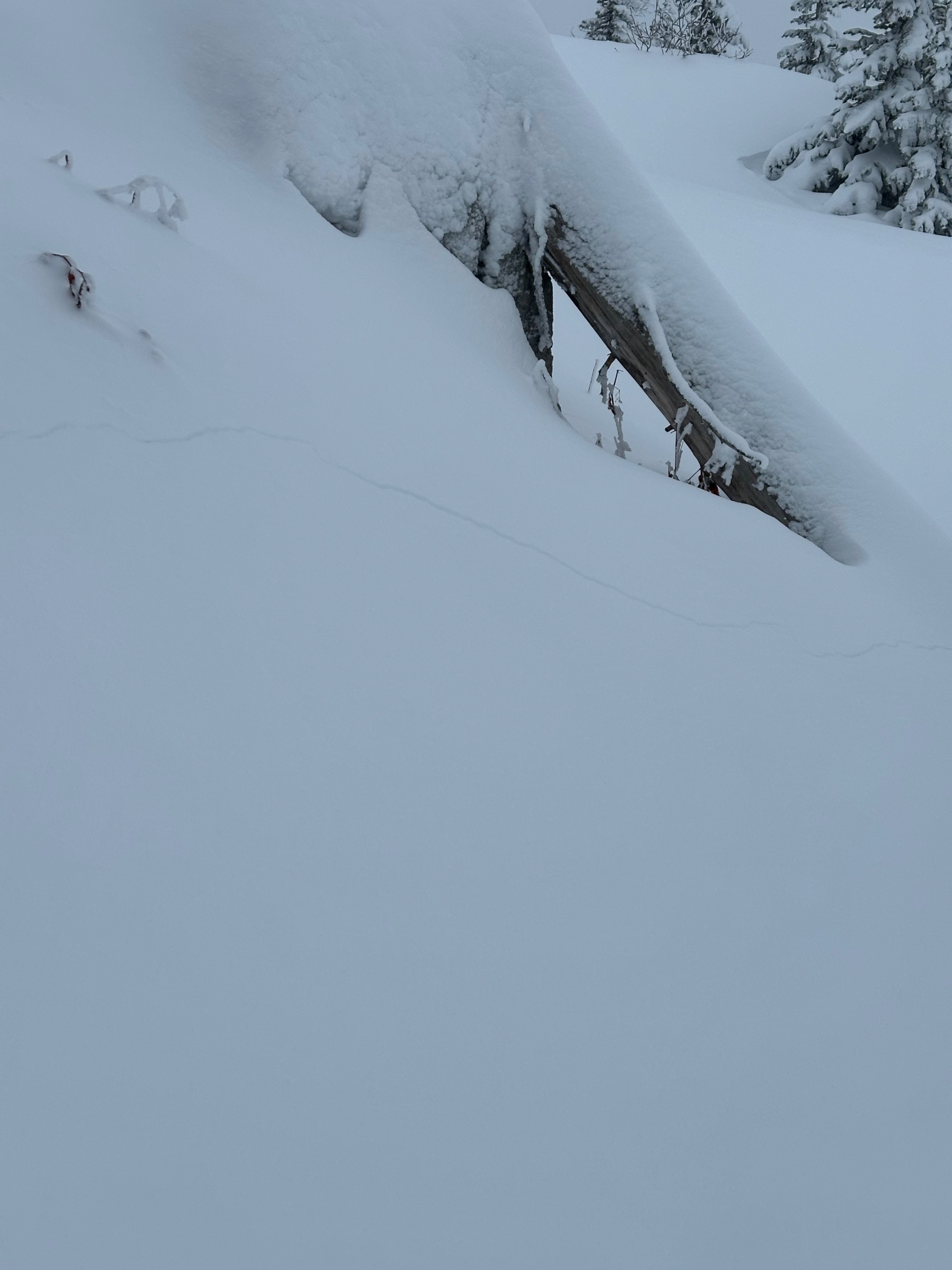
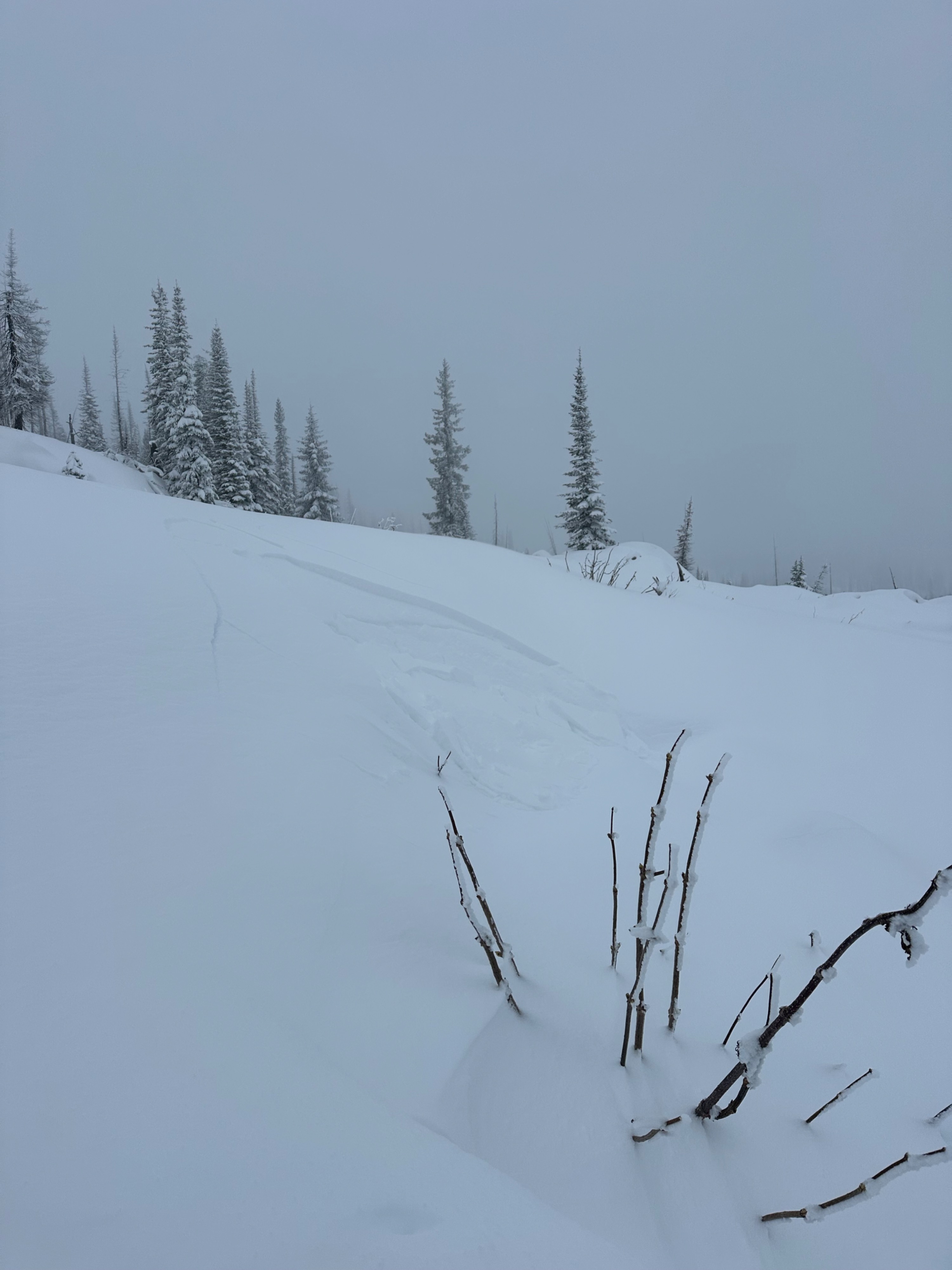
Quick report
- Cracking
- widespread
Really great road pow, but I wouldn't wander off-trail on the snow pony quite yet.
Snowpack structure resembles that which I found in another portion of the zone:
- Snow at the ground is a dense, knife-hard mash of melt-freeze crusts and rounding facets (i.e., not a problem at the moment), around 25cm (8-10 inches) thick here.
- A layer of near-surface facets and surface hoar buried late November, about 8cm (3 inches) thick, rests on top of this crust and is easy to find if you stick a shovel into the snow, with a second, thinner weak layer of snow that fell on ~11/26 and was recently buried starting on 12/1.
- Both of these propagated in snowpit tests (ETCP 8 and 17).
- Regardless of weak layers deeper in the snowpack, the current storm setup is upside-down, with warmer temps and denser snow falling on lighter snow. That in itself makes snow move—and that movement increases the chances of triggering a much larger avalanche in deeper layers.
The takeaway is that the north half of the compass above 6,500 feet has weak snow mid-pack, around 1.5 feet from the snow surface. This snow is waiting for a slab, and it's getting one right now. It will be more sensitive where more snow has fallen or where stronger winds are blowing, creating deeper drifts. You should not rule out southerly aspects (SE-S-SW) for lingering instabilities at upper elevations, as they are guilty until proven innocent.
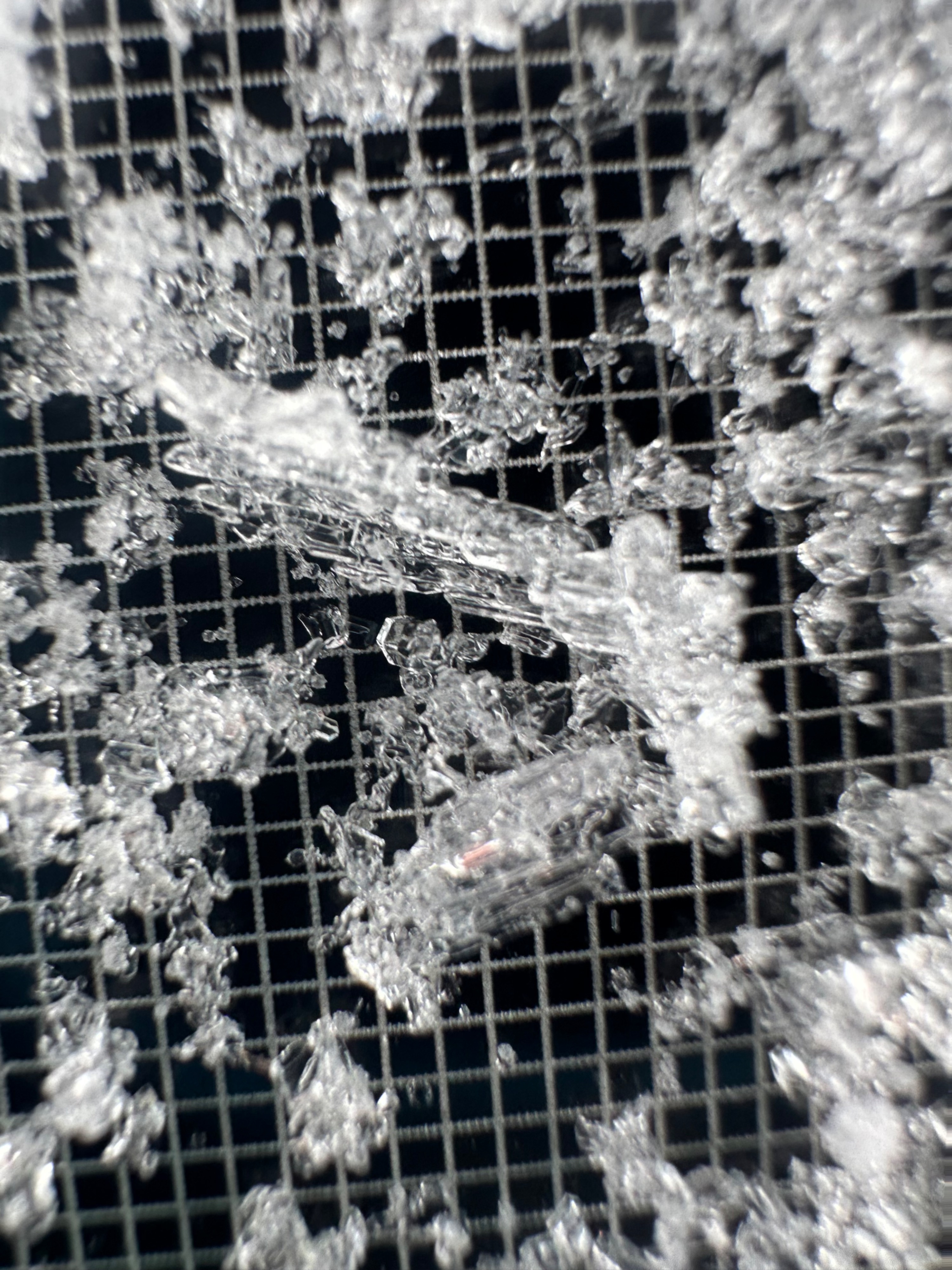
Storm snow illustrating classic storm-slab instability within the new snow, i.e., different snow crystal types within the new snow from one storm can act just like persistent weak layers and cause instability. These are normally short-lived, but very sensitive where we went.
Weather
- Cloud Cover
- overcast
- Wind Loading
- light
- Recent Snowfall
- 20-30
- Snow Avail For Transport
- moderate amounts
Increasing winds and denser, upside-down snowfall incoming