
Quick report
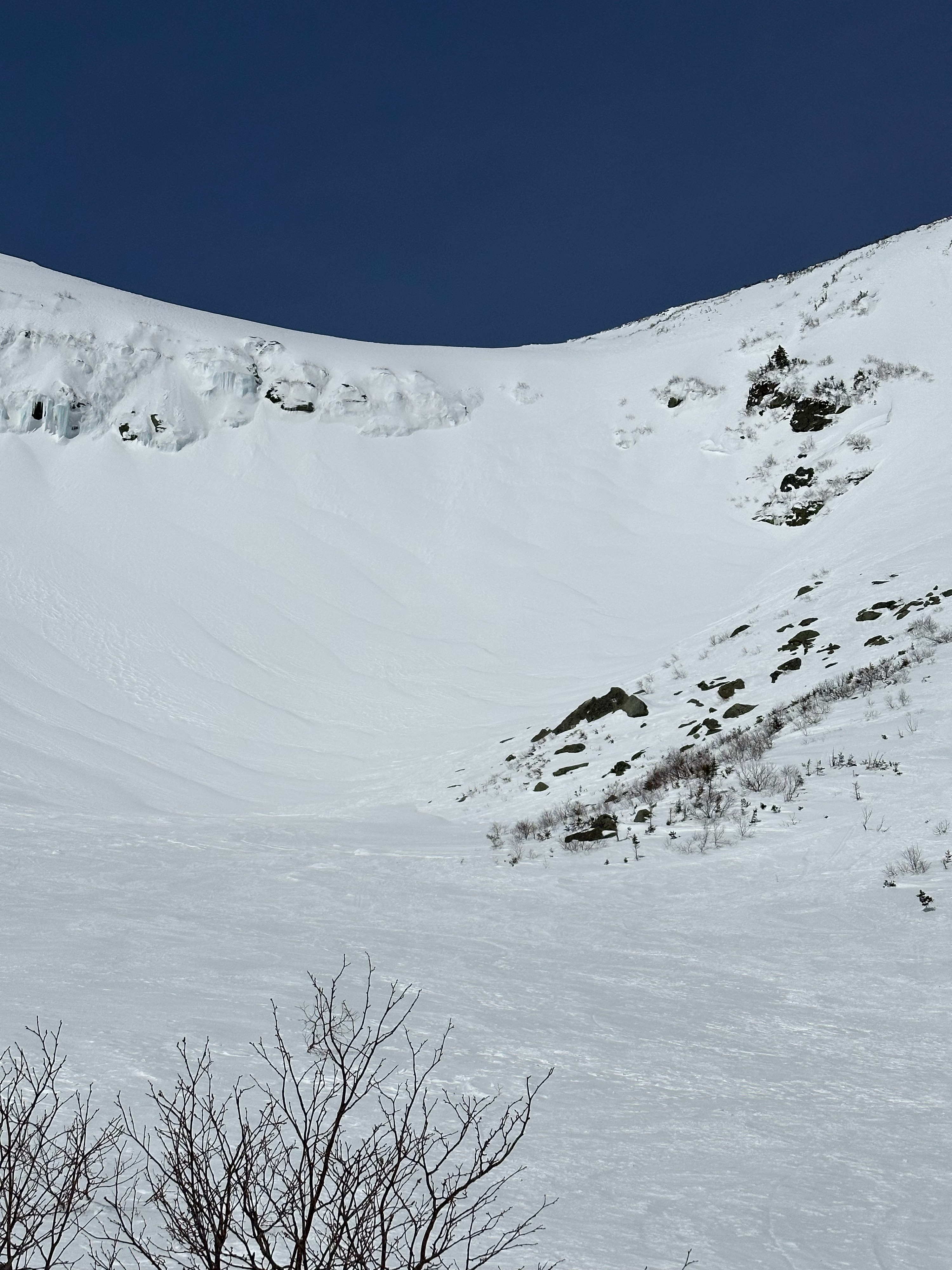
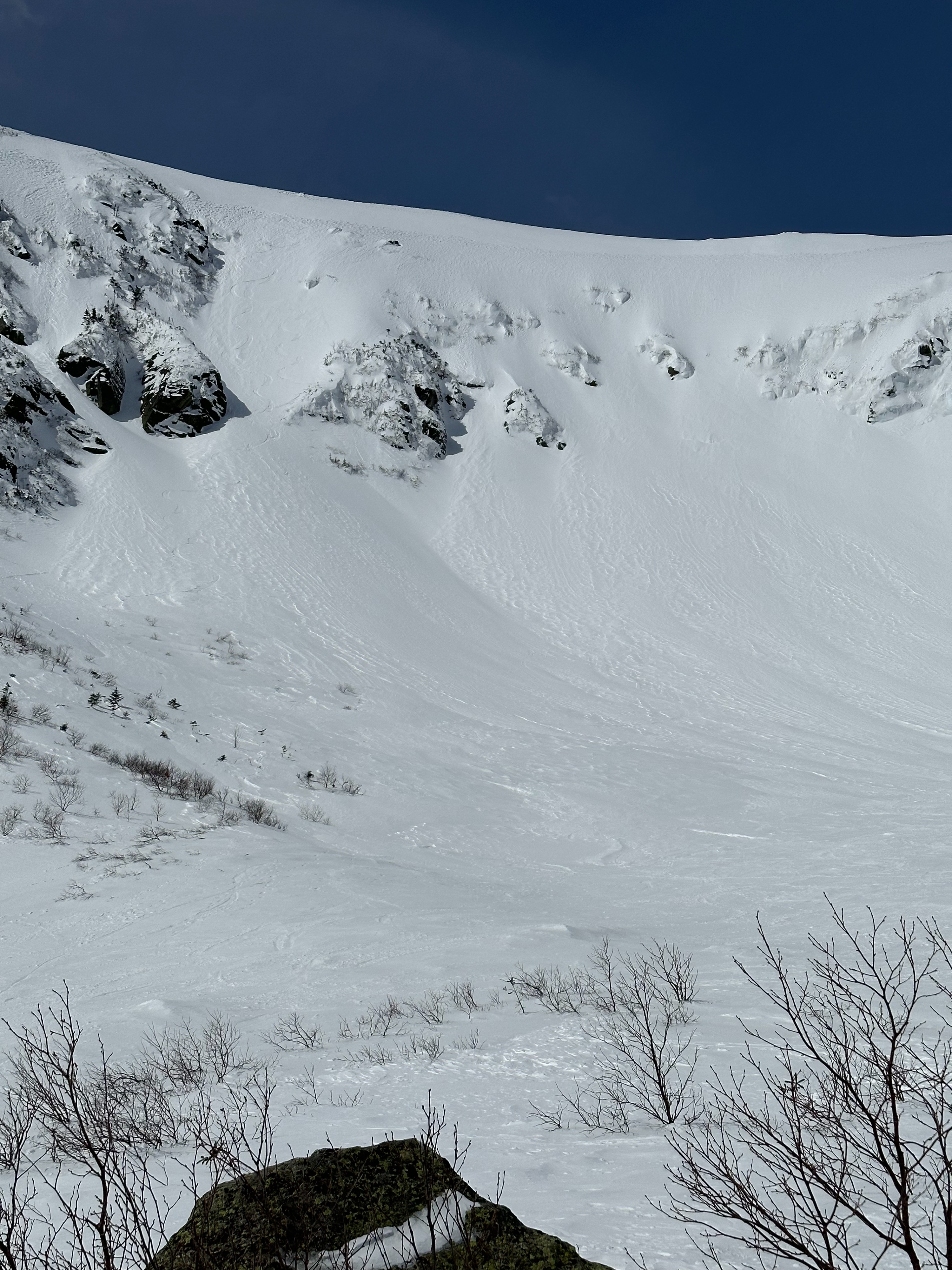
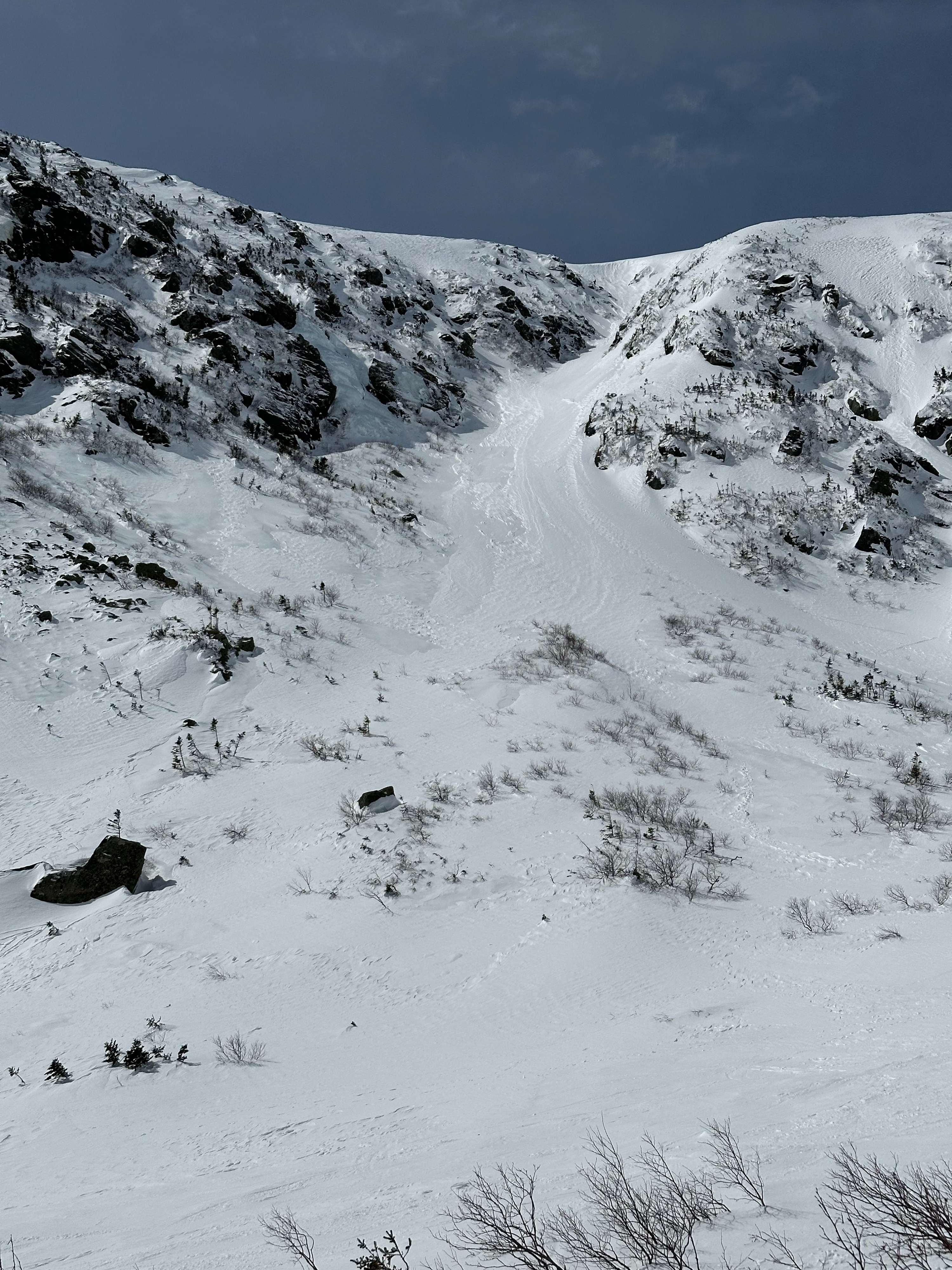
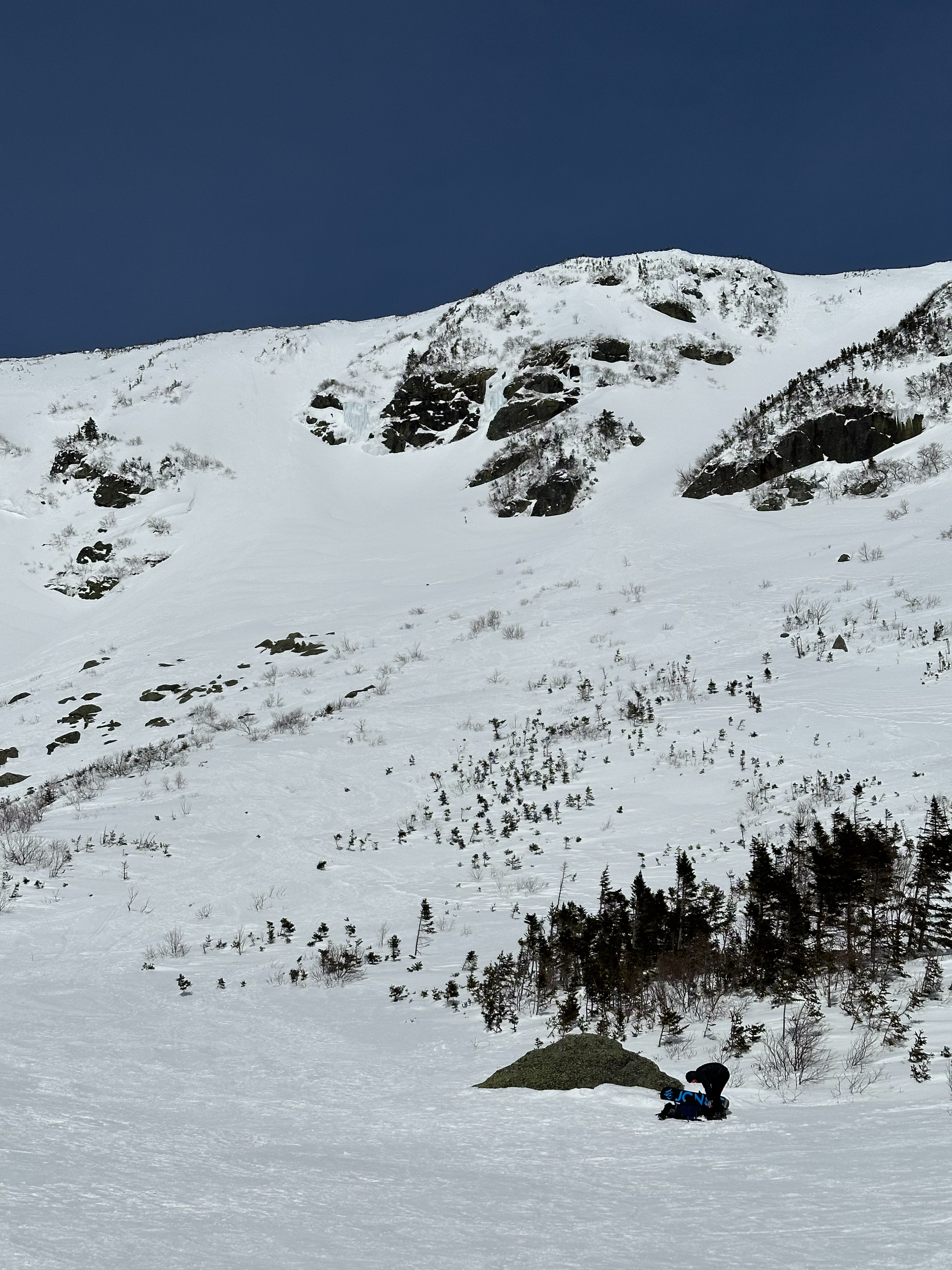
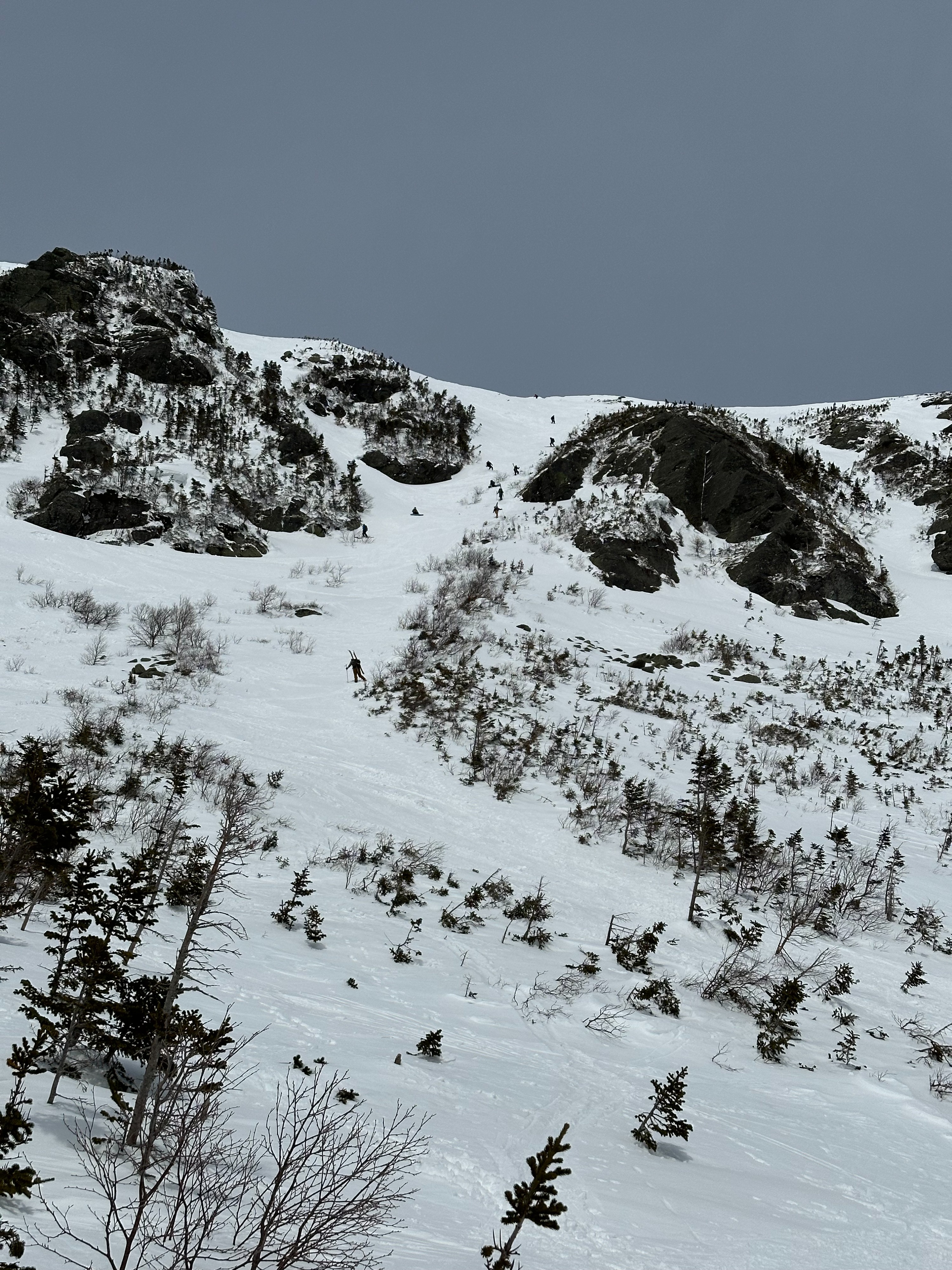
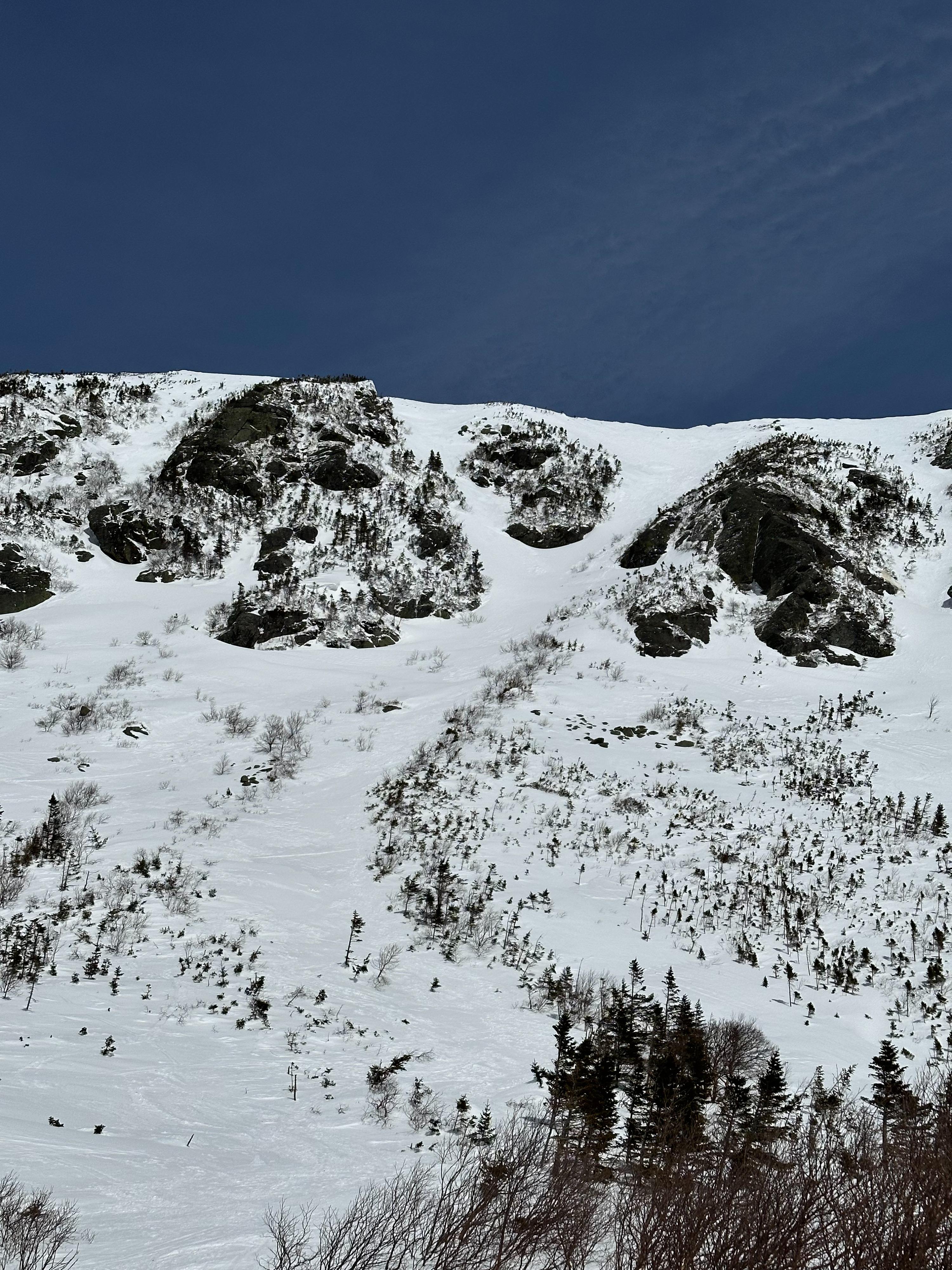
Stubborn wind slabs that were variable in distribution and size were common across Tuckerman Ravine. These slabs (0 - 2 feet deep) rest on top of a very hard melt/freeze crust that is widespread across avalanche terrain. This generally poor snowpack structure saw significant skier traffic today, with no skier-trigger avalanches observed or reported. Though stubborn and lacking energy transer properties in many areas, traveling on deeper wind slabs in steeper, southeast-facing terrain felt "spooky" today. Ambient air temps, increasing cloud coverage, and some light winds kept the snow mostly cold at middle and upper elevations except for on the steepest, south-facing aspects.
Weather
- Air Temp
- 25
- Cloud Cover
- clear
- Wind Loading
- none
- Rain Elevation
- 3800
- Snow Avail For Transport
- none
Clear skies in the morning giving way to overcast skies by around 2:00pm. Temeratures were mild with a freezing line around 3800 feet. Solar warming was noticable, especially on steep south-facing slopes. Winds at observation location were light and variable.
Snowpack
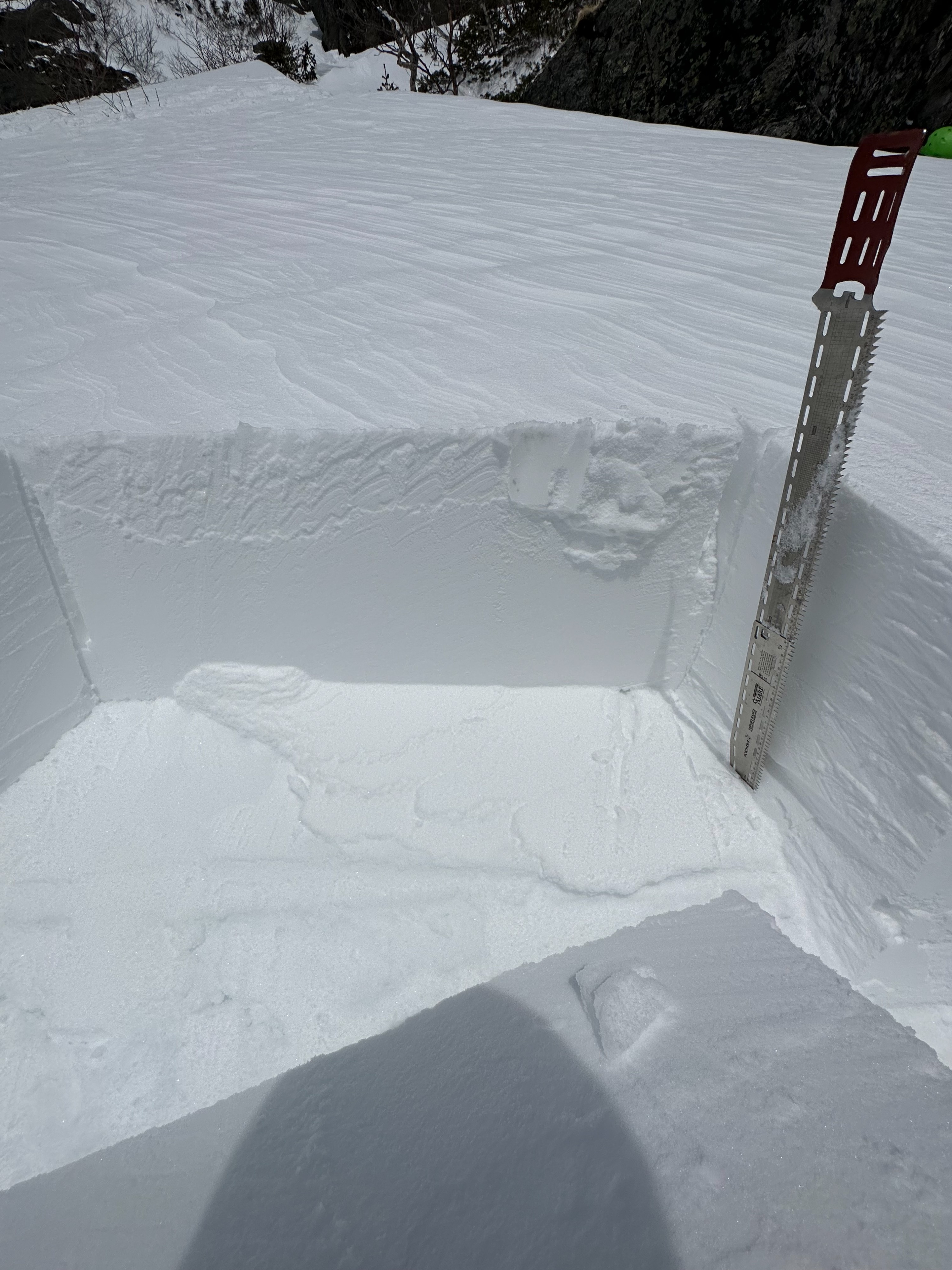
New snow and wind slabs formed from snow and wind over the past several days is sitting on top of a widespread, very hard (Knife) melt/freeze crust. Stubborn wind slabs on top of this crust layer are variable in distribution and depth. Wind slabs were most common and most thick on southeast-facing terrain. Thicknesses of 6 inches to 2 feet were observed. In general, there is a poor bond at the interface of snow and ice and the slab displays strong-over-weak characteristics (Finger+ over 4 Finger) in many locations. Test results revealed that propagation was stubborn but repeatable at the ice crust interface. Clean sheer quality was noted. In the steepest south-facing locations, the snowpack surface warmed enough for the top 1 - 2 inches of snow to become moist, but the snowpack did not become wet. The snowpack below the hard melt/freeze crust was not observed.