
Quick report
Despite the warm temperatures and melt forms on almost all aspects, the snow cover is still quite winter-like.
There were firm, but shallow freezes on most slopes. We found good, almost corn, skiing on southerly aspects 11-11:30. The window between when the surfaces softened and became unsupportive was short.
No chance of avalanches in the AM. By 12p, triggering small, D1, loose wet avalanches seemed possible on steep NE-SE aspects. We were off the snow shortly after 12p, but I imagine westerly aspects warmed significantly in the afternoon.
Weather
- Cloud Cover
- clear
- Wind Loading
- light
- Recent Snowfall
- 0
- Snow Avail For Transport
- none
Intermittent moderate W wind until 9a, then calm. Full sun, warm temps. It appeared that warm air lingered above 7,000ft overnight with no/little freeze there.
Snowpack
Summary
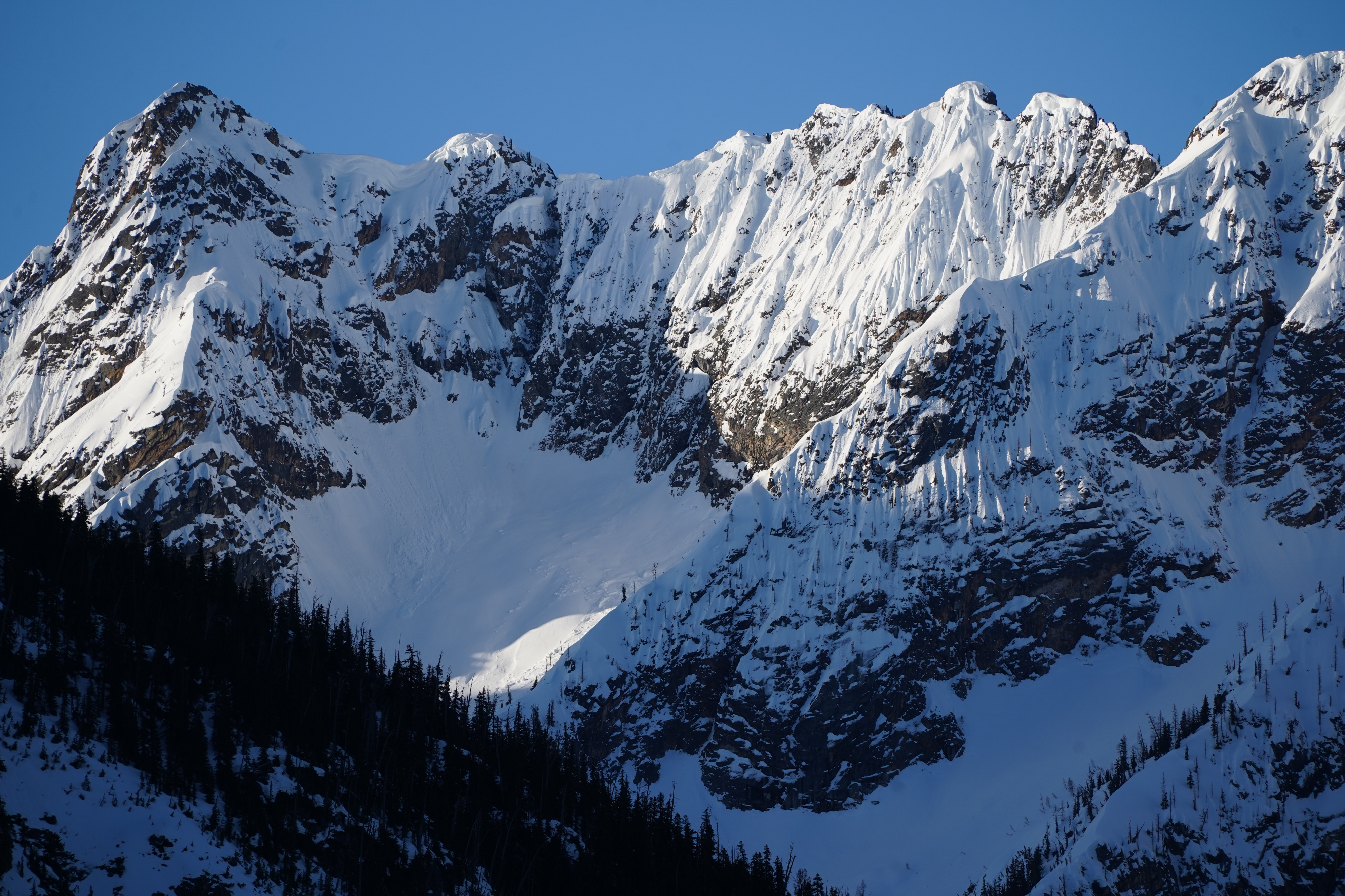
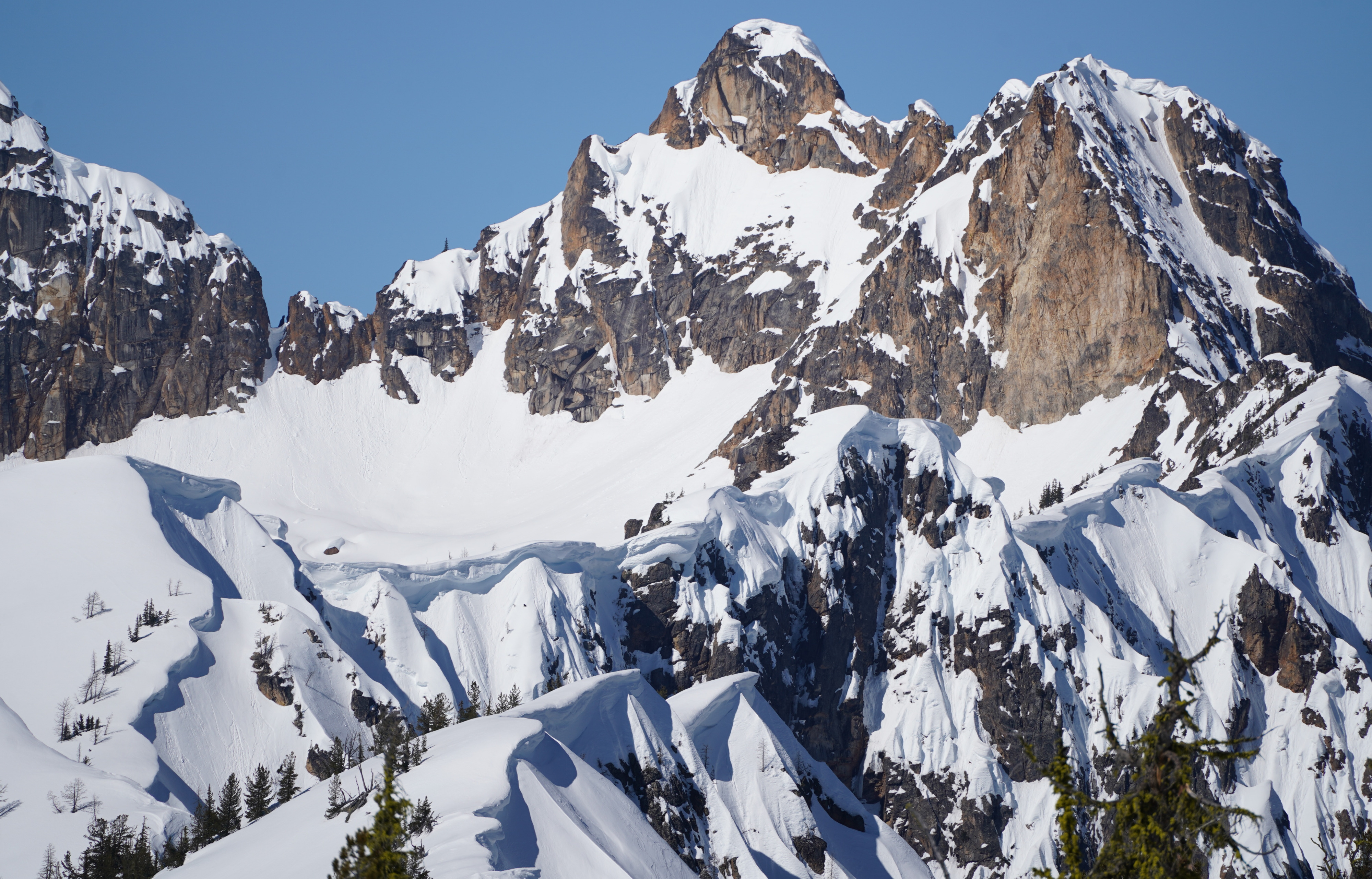
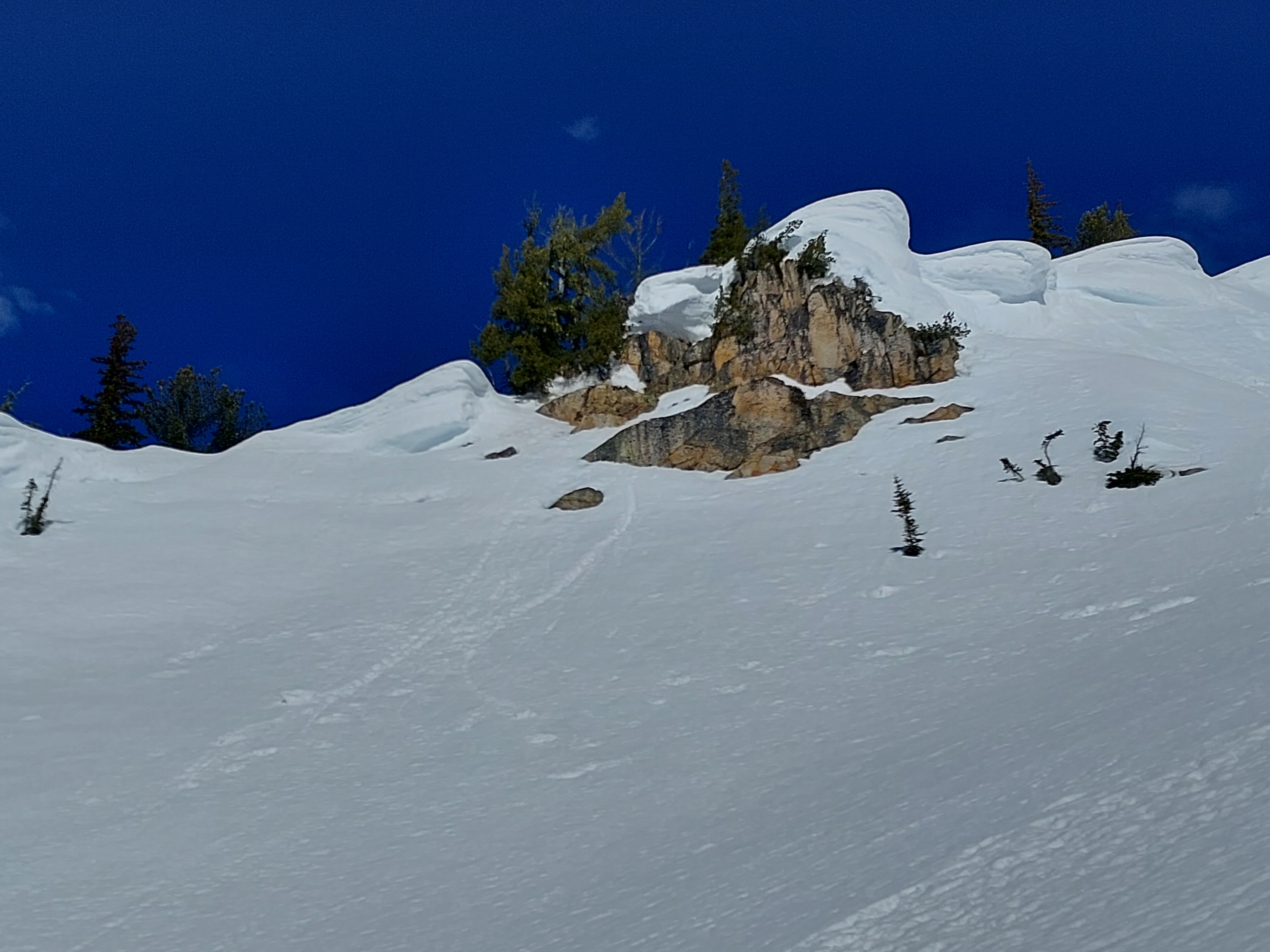
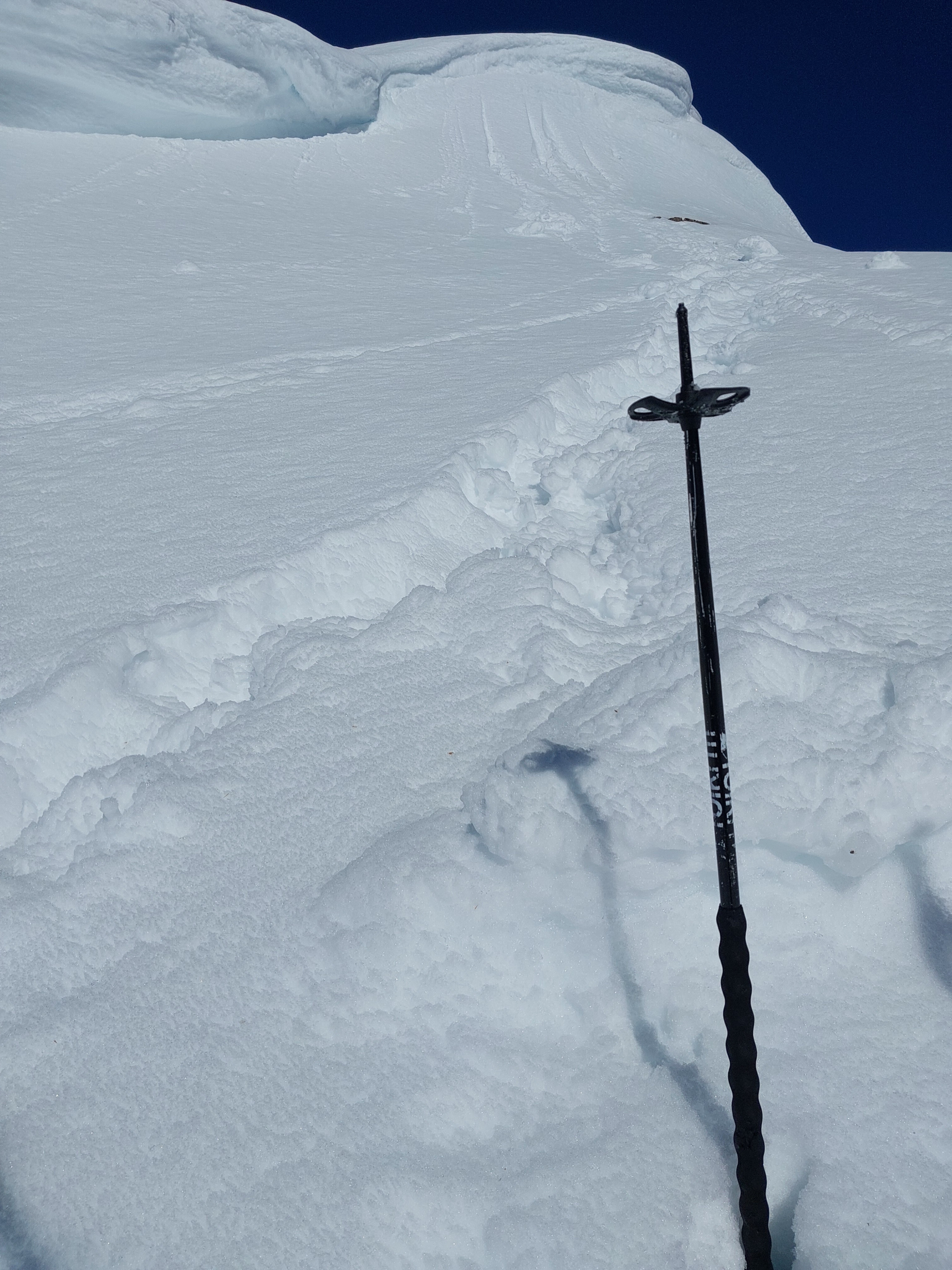
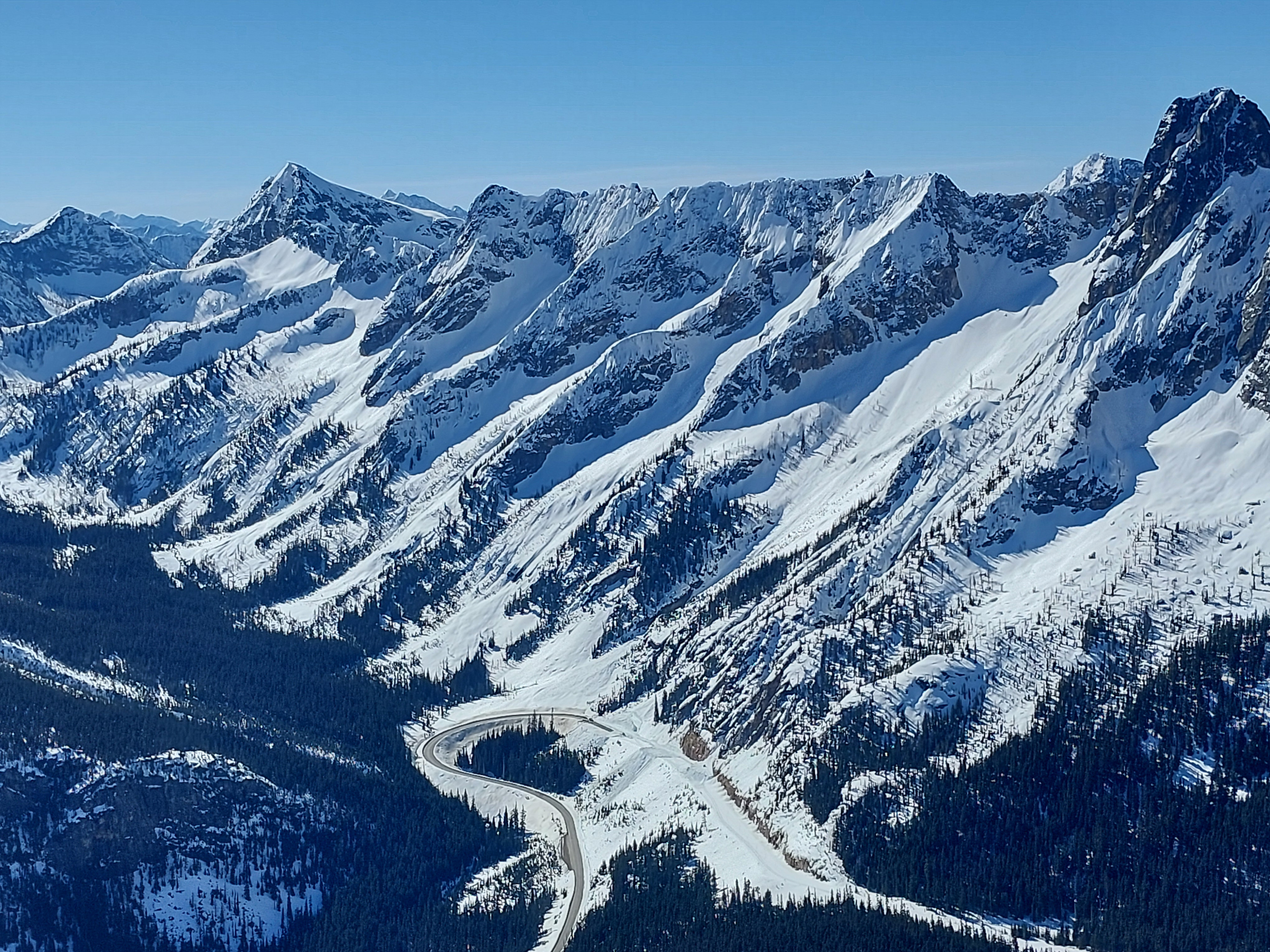
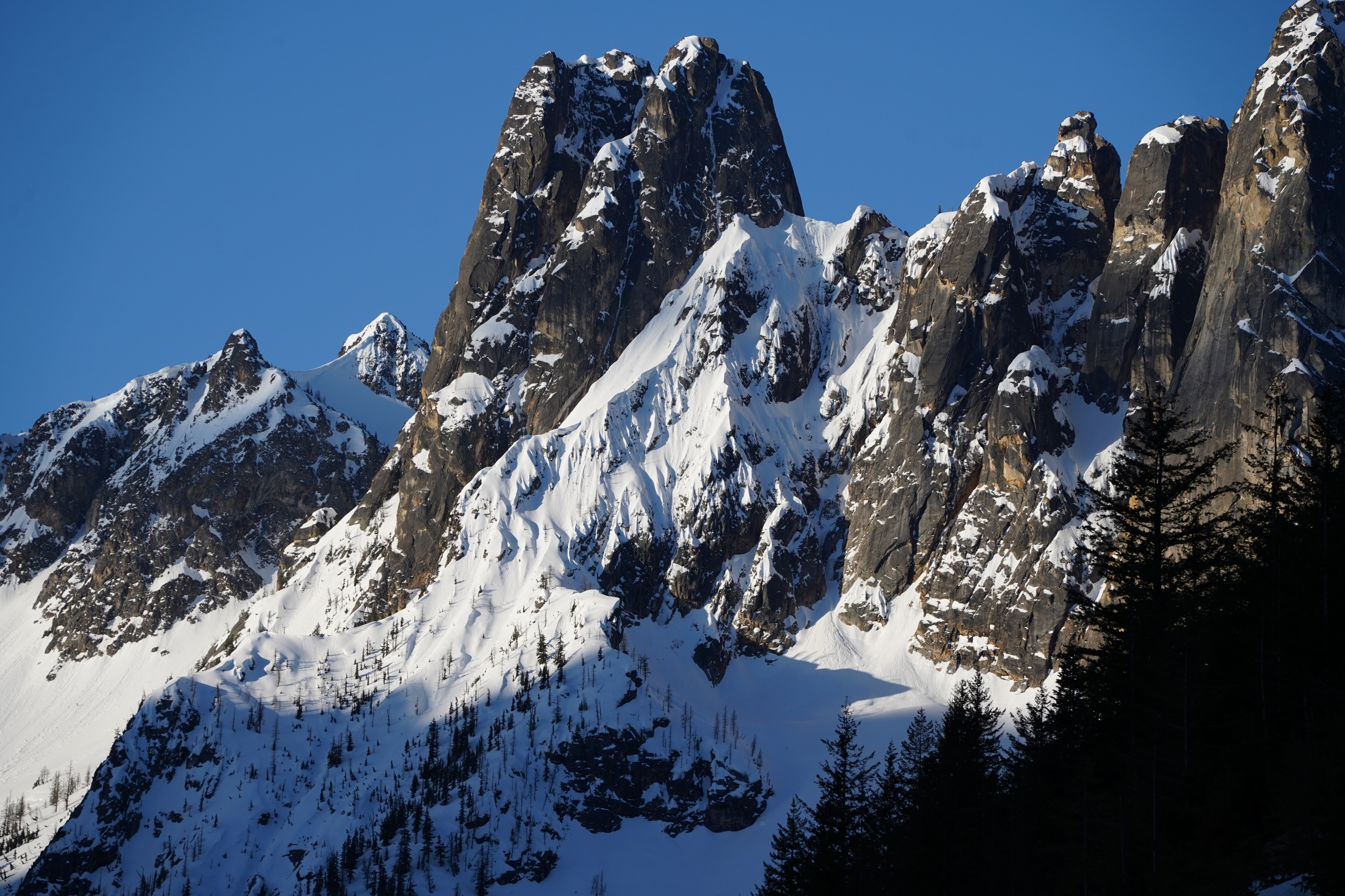
Many steep slopes and cliff faces are still caked with snow. While cornices were cut back to some degree by the mid-March rain event, they're still significant and large on many ridges above N-E-SE aspects. At low elevations, snow becomes intermittent to bare below 5,000-4,500ft on southerly (depending on proximity to the Cascade crest) and ~3,500ft on northerly aspects. Most surfaces where we traveled were firm and supportive to boots and skis at 8a and many stayed supportive to skis through 12p.
S-SSE
From 5,500ft-6,700ft, most S slopes had a 10cm, Knife-hard surface crust. This was firm enough to require ski/boot crampons through 10a, but warmed to decent corn conditions by 11:30a. Occasionally, we'd find areas (often SSE) where the crust was 15cm of Pencil+ hard. By 11:30, SSE became slightly less supportive of skis. From 6,500-7,000ft, we found select areas that were punchy with boot pen up to 30cm at 10a. Above 7,000ft, there was minimal freeze, even at 10a, with consistent boot pen of 25-40cm and up to 60cm near rocks.
ENE-ESE, 5,000-5,400ft
The surface crust broke down quickly. At 12p, ski pen was 10cm with select areas of 20-30cm and becoming unsupportive on skis. Ski cuts on planar slopes initiated rollerballs. The snow was unsupportive enough that we didn't want to test convex rolls.
Profile
Hinkhouse Peak, SSE, 6860ft, 11:20a
HS 245cm, boot pen 25cm
Surface freezes were breaking down quickly with weaker, moist snow was just 14cm below the surface.
0-14cm: 1F+, melt forms, dry
14-35cm: 4F+-1F, melt forms, dry
35-64cm: 1F, melt forms, moist
64-90cm: P, melt forms, moist
90-91cm: I, ice layer, moist
91-100cm: P, melt forms, moist
Avalanche
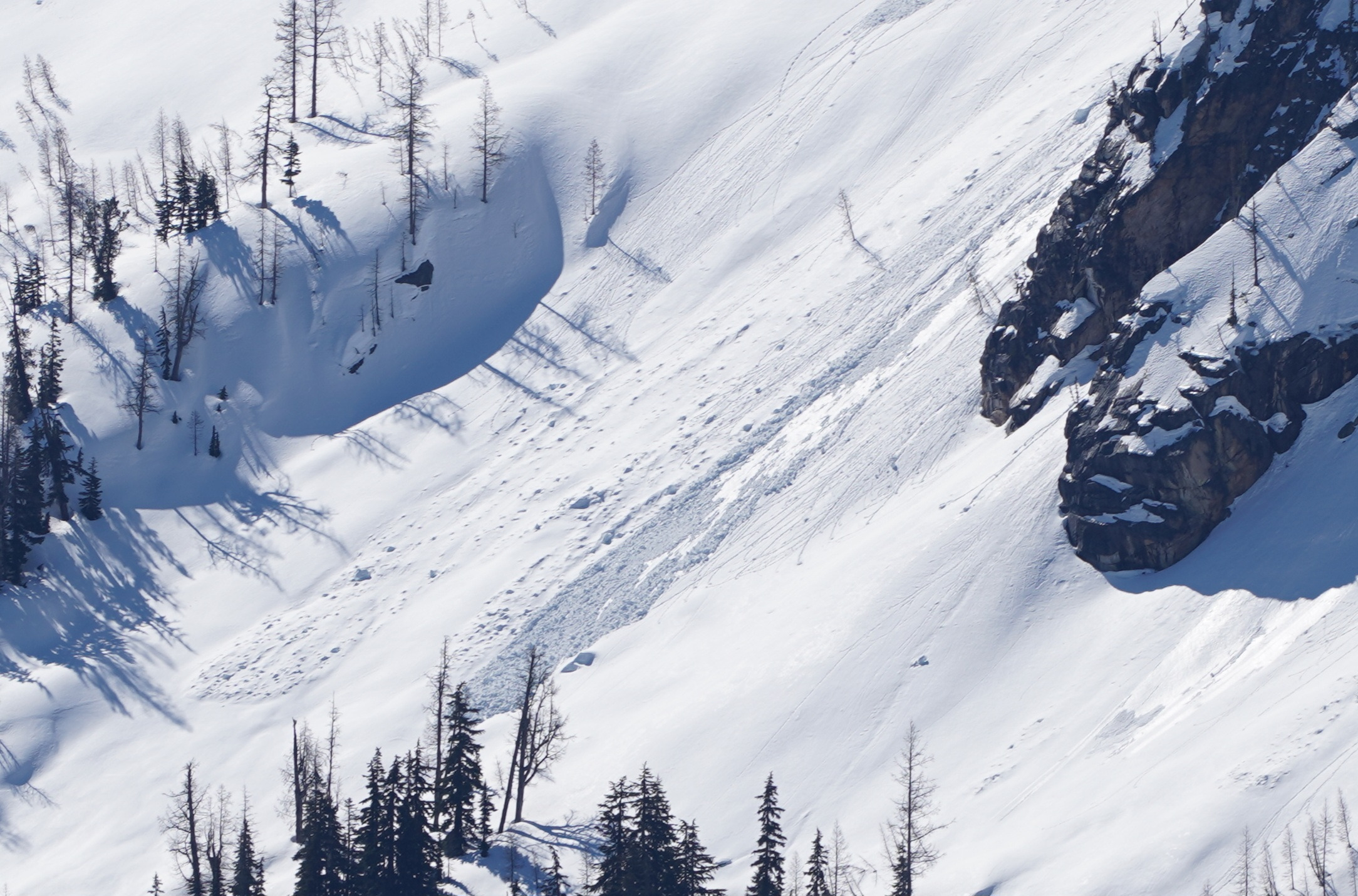
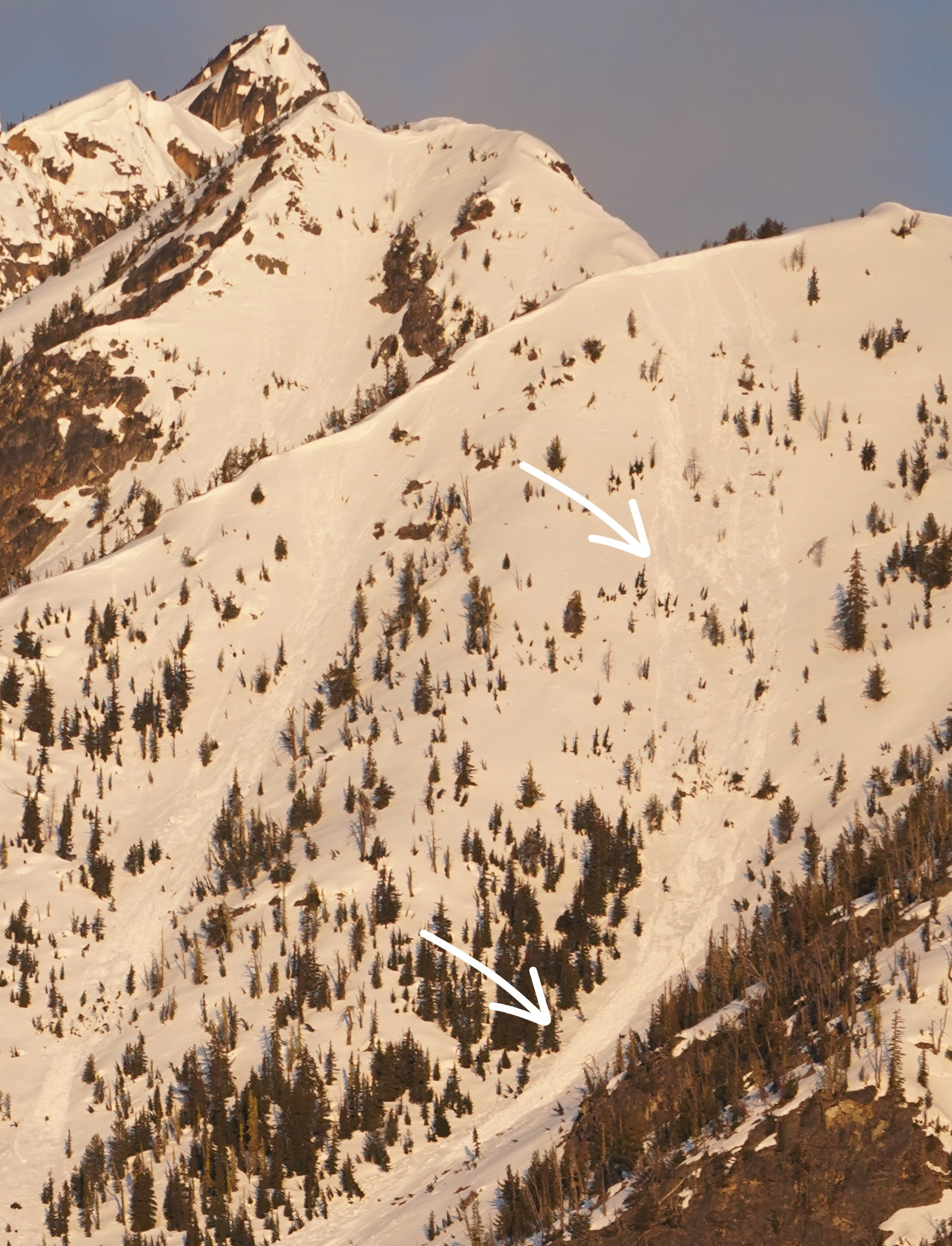
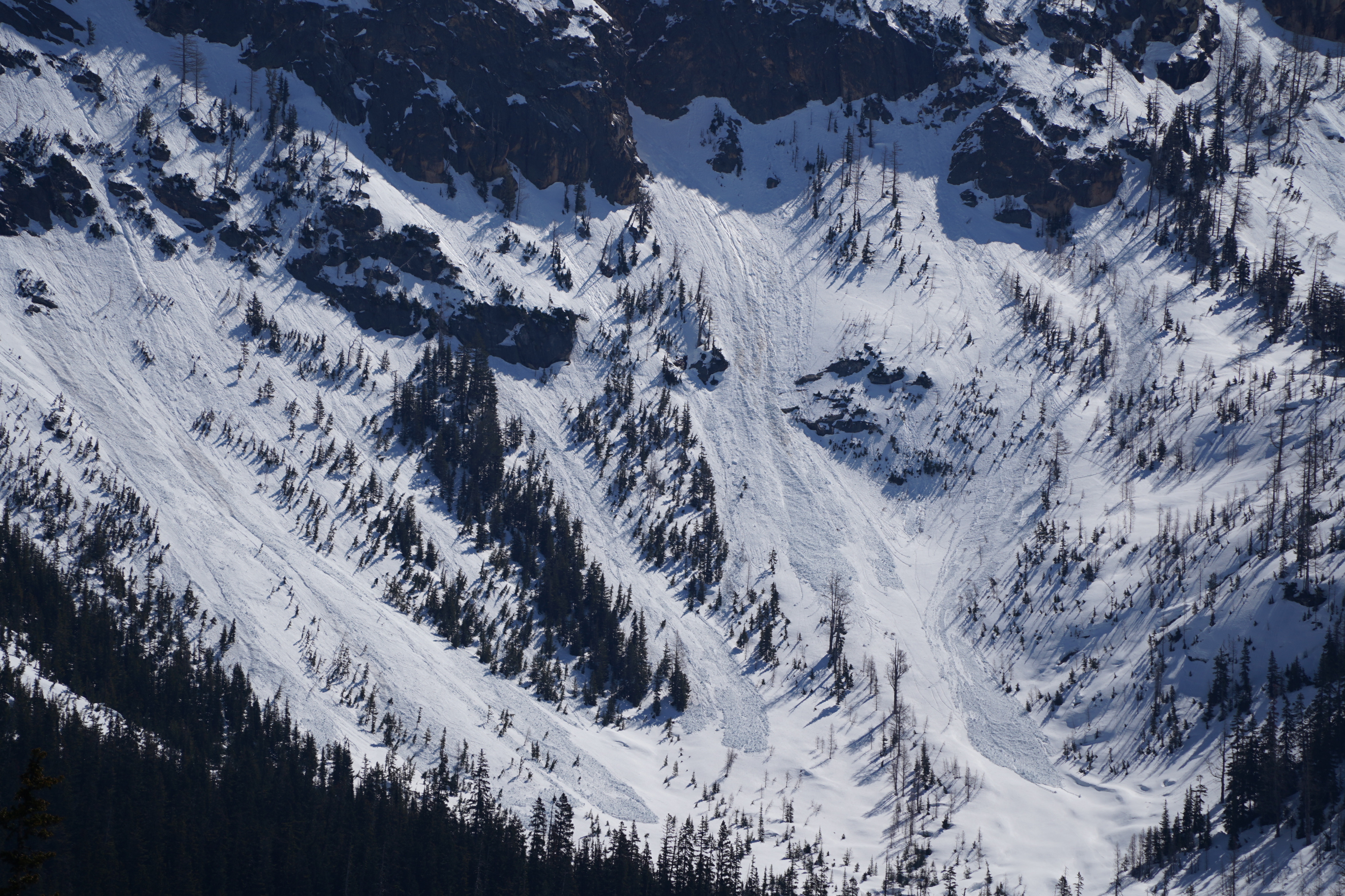
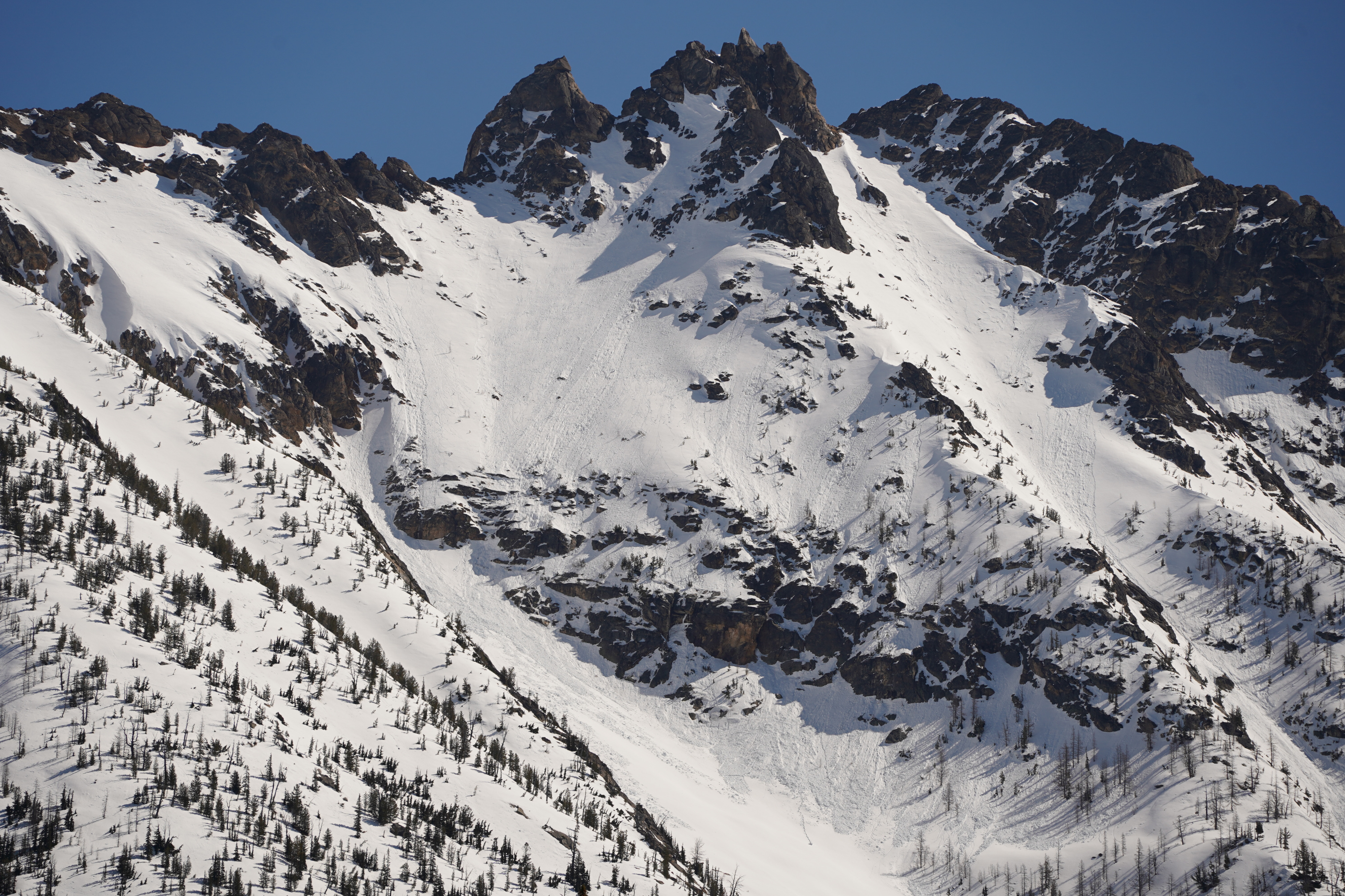
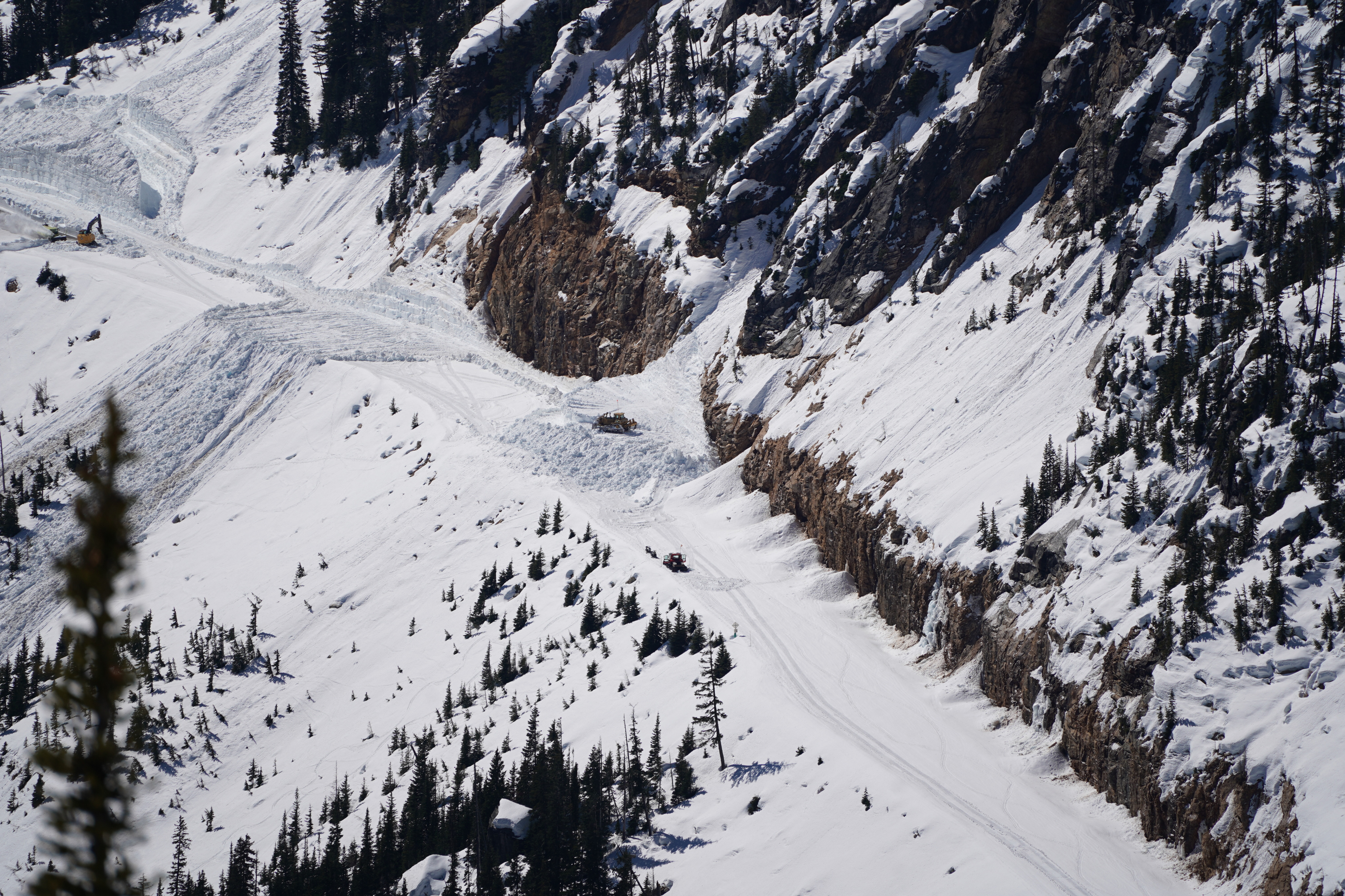
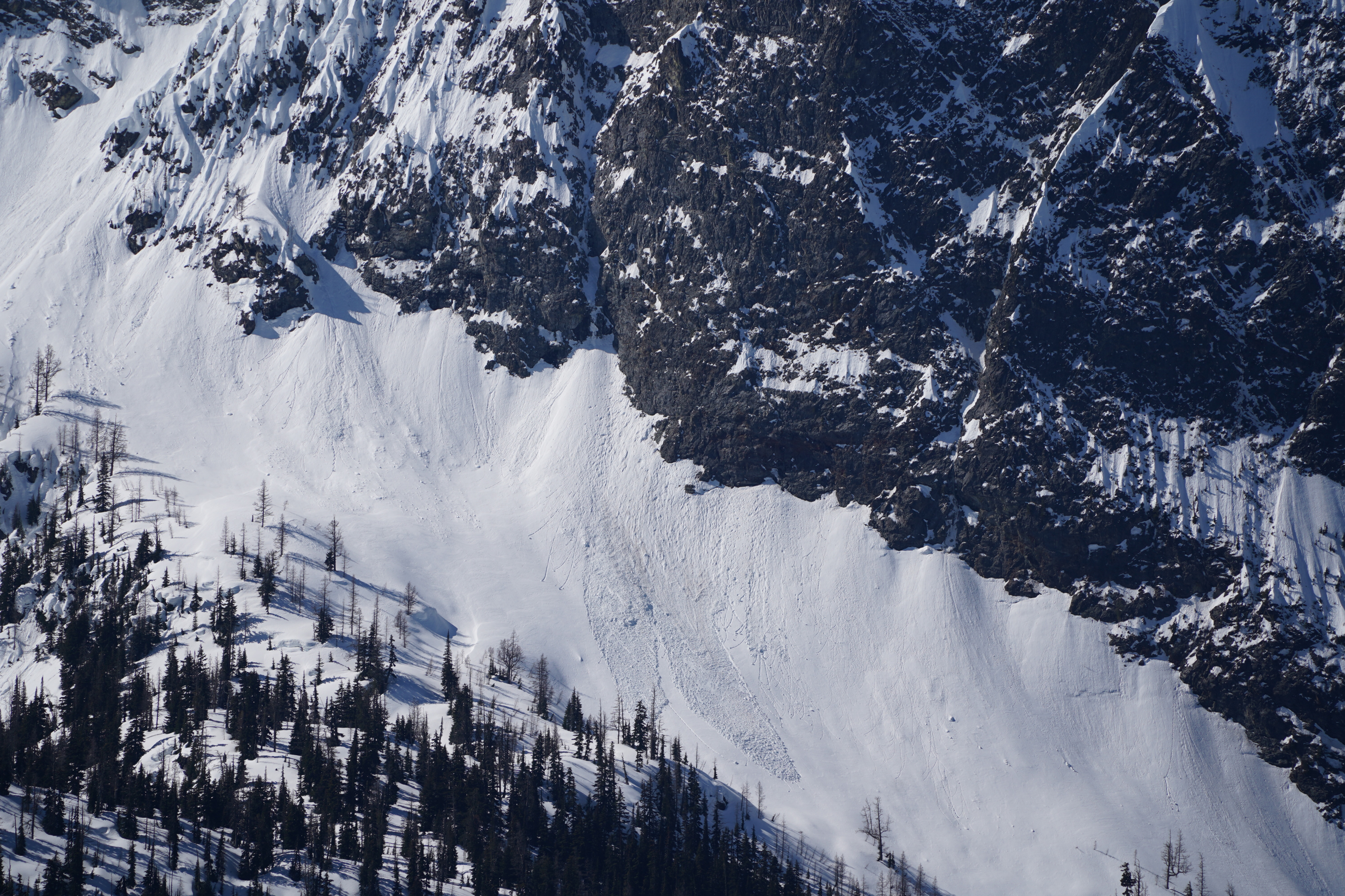
No new natural or triggered avalanches today. DOT machinery was able to initiate some very small areas of loose, wet snow on steep easterly aspects. These were in areas where they were working with previously affected surfaces and didn't entrain slides. Wet loose avalanches on all aspects at middle and upper elevations from the past week. Most slides were D1-1.5, and appeared to be 2-4 days old, tho some may have occurred in the past 24-48 hours. The majority appeared to initiate as roller balls from cliffs, cornices, and the steepest features. Avalanches were numerous, though not widespread. Due to the small and short-running nature of recent avalanches, most paths were smooth and free of debris. There are older, large debris piles from the mid-March AR rain event that are still visible