
Quick report
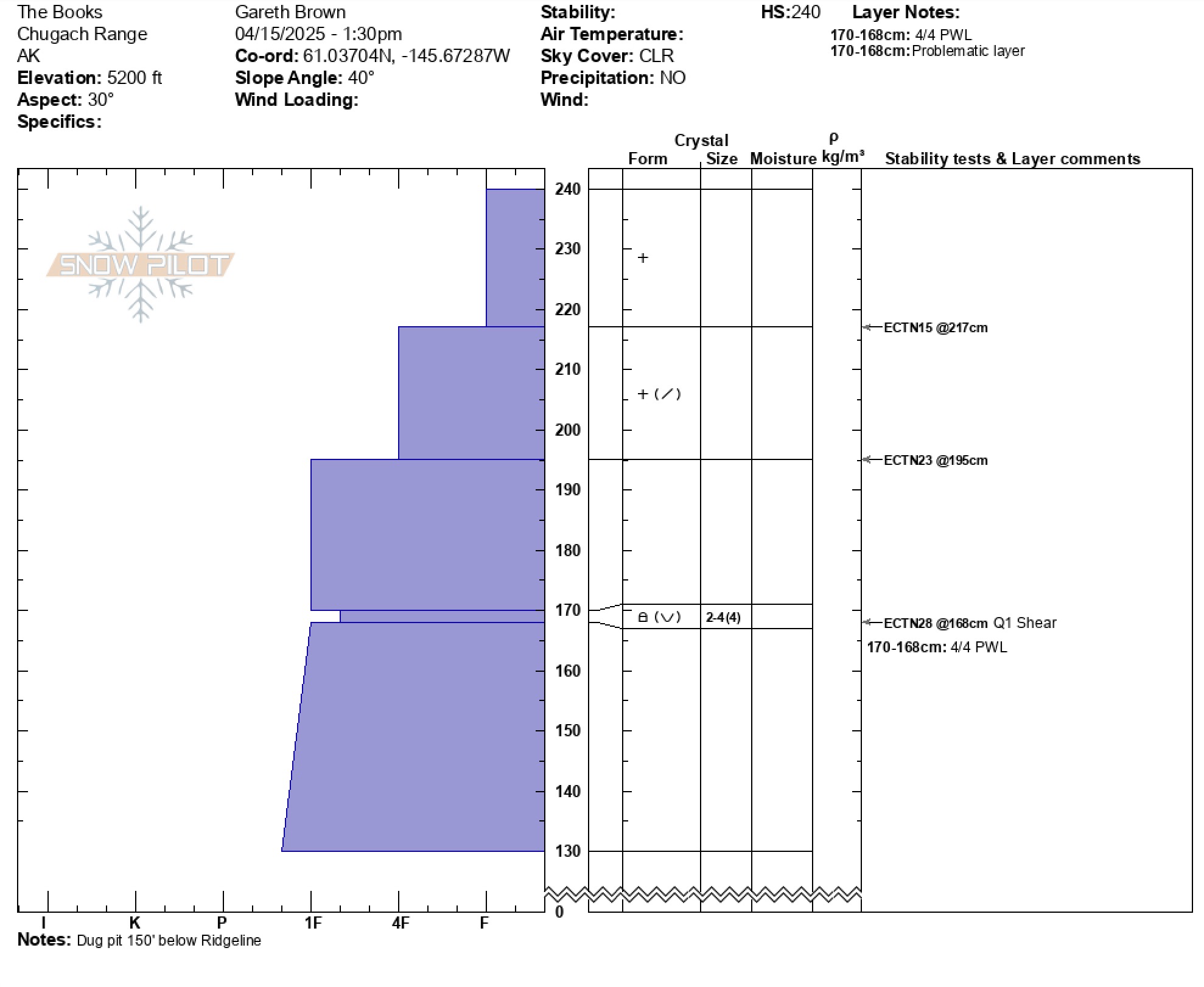
The most recent storm deposited between 10-18 inches in areas observed, depending upon aspect and elevation. This new snow was found to be in the process of bonding with the snowpack, but with the depth of the new snow and the strong sun today, cohesion(Slab) was evident and increasing. Extended column stability tests produced moderate results (14) with no propagation at the most recent snow and hard results (28) at the 4/4 interface.
Despite a lack of signs of instability and no marked ECT scores the snowpack is under stress. After 10 days of limited sun and slowly accumulating snowfall the upper snowpack has been building without the normal solar input of the strong April sun that would normally cause settlement of the snowpack. Instead, the snowpack is still growing, and on days like today, when the sun does come out expect the snowpack to settle and adjust which can build up stress. Triggers such as skiers, snowmachines, or any other large loads can release this stress in the form of avalanches.
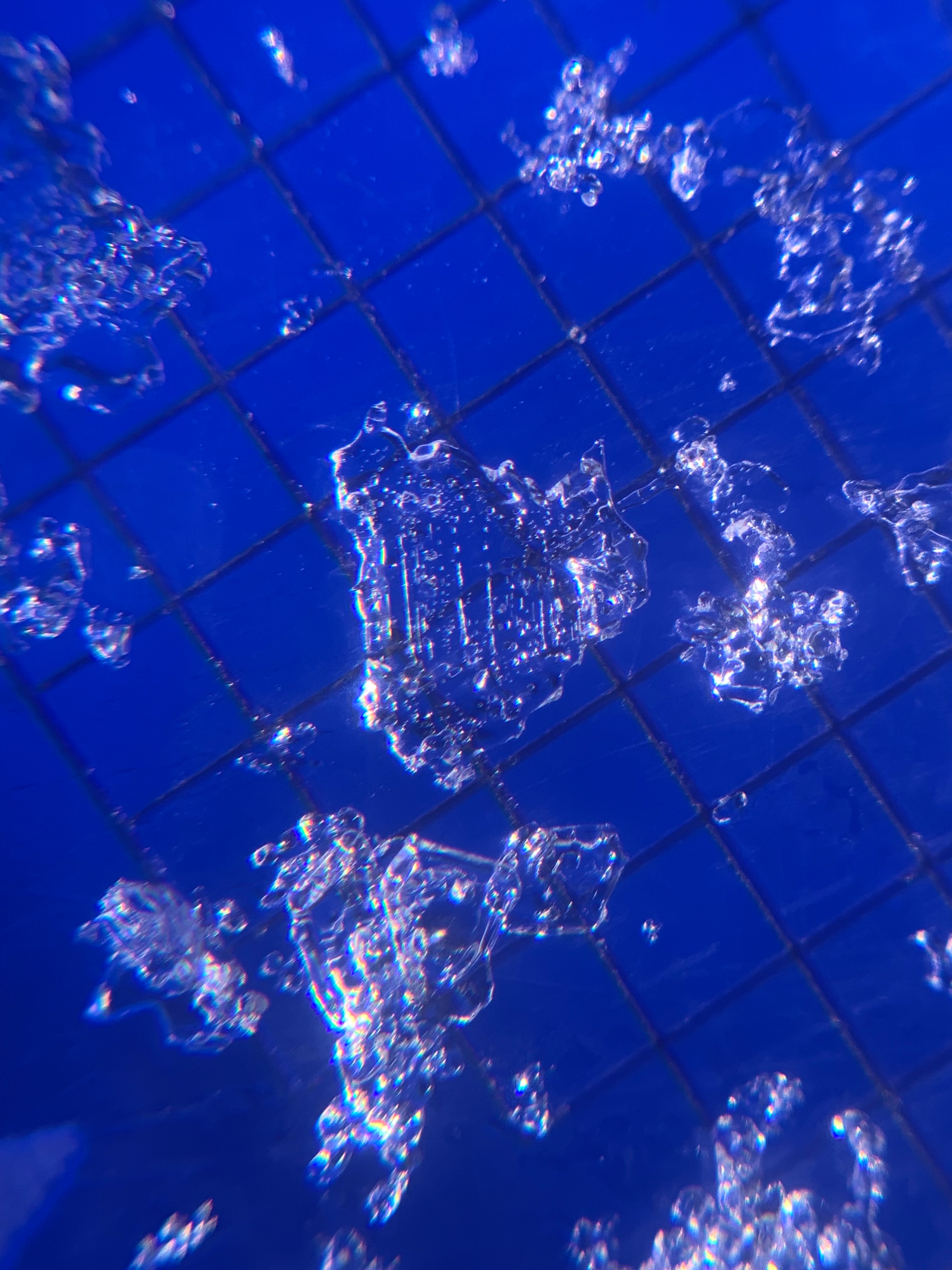
In addition to the new snow, there is also a concern of a persistent weak layer that was buried on 4/4. This layer was identified at 5200' on a NE aspect in a snowpit and although it did not produce propagation in this snowpit, faceted snow was identified with a quality 1 shear over 2 feet in depth.
No signs of instability were present, however the depth and cohesion of the new snow combined with the strong Mid April sun made human triggered avalanches likely today.Weather
- Air Temp
- N/O
- Cloud Cover
- clear
- Wind Loading
- none
- Recent Snowfall
- 25-40cms
- Snow Avail For Transport
- large amounts
Snowpack
The upper snowpack was generally right side up with interfaces difficult to identify on shaded aspects above 5000'. Moderate bonding was observed within the most recent snowfall of 4/13-14.